


Drain Cleaning in Fort Worth: What to Expect and What It Fixes
Clogs cleared, with what's included in the visit and what drives the price explained before we start.
What’s Covered on This Page
- Signs You Need Drain Cleaning Now
- When a Plunger Is Enough and When to Call a Plumber
- What Happens During a Standard Drain Cleaning Visit
- Why Older Fort Worth Homes See Recurring Clogs
- What’s Included in Your Drain Cleaning Cost
- Is it safe to use drain cleaning chemicals before you call a plumber?
- How long does a drain stay clear after a professional cleaning?
- Can I run water right after a drain cleaning to make sure it worked?
- What should I do if water starts rising while I’m plunging a toilet?
Signs You Need Drain Cleaning Now
Your drains almost always warn you before they quit. The trick is noticing which drain is acting up and whether it’s alone. That one detail tells you more than anything else about what’s going on under your floor.
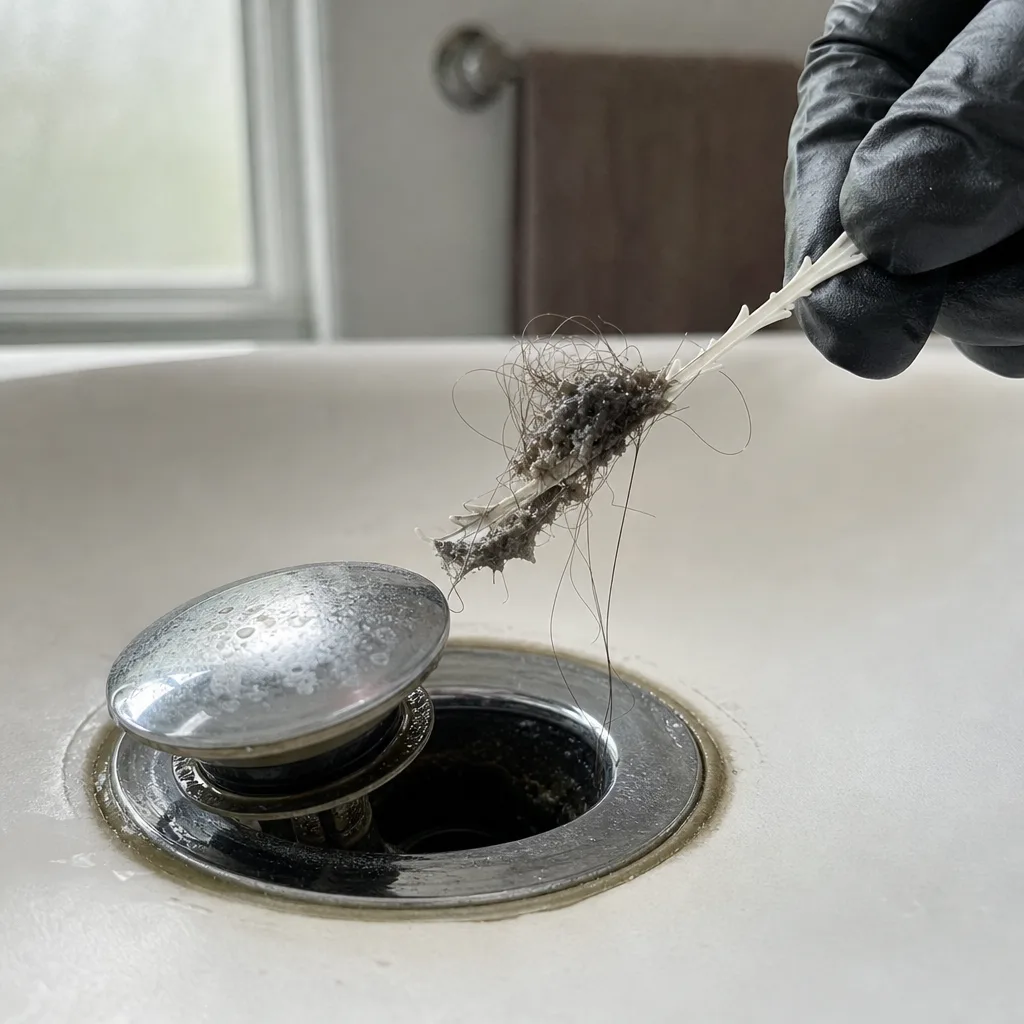
If it’s just one fixture, you’re probably looking at a local clog. Watch for these:
- A bathroom sink that drains slower every week, often from hair and soap buildup near the stopper.
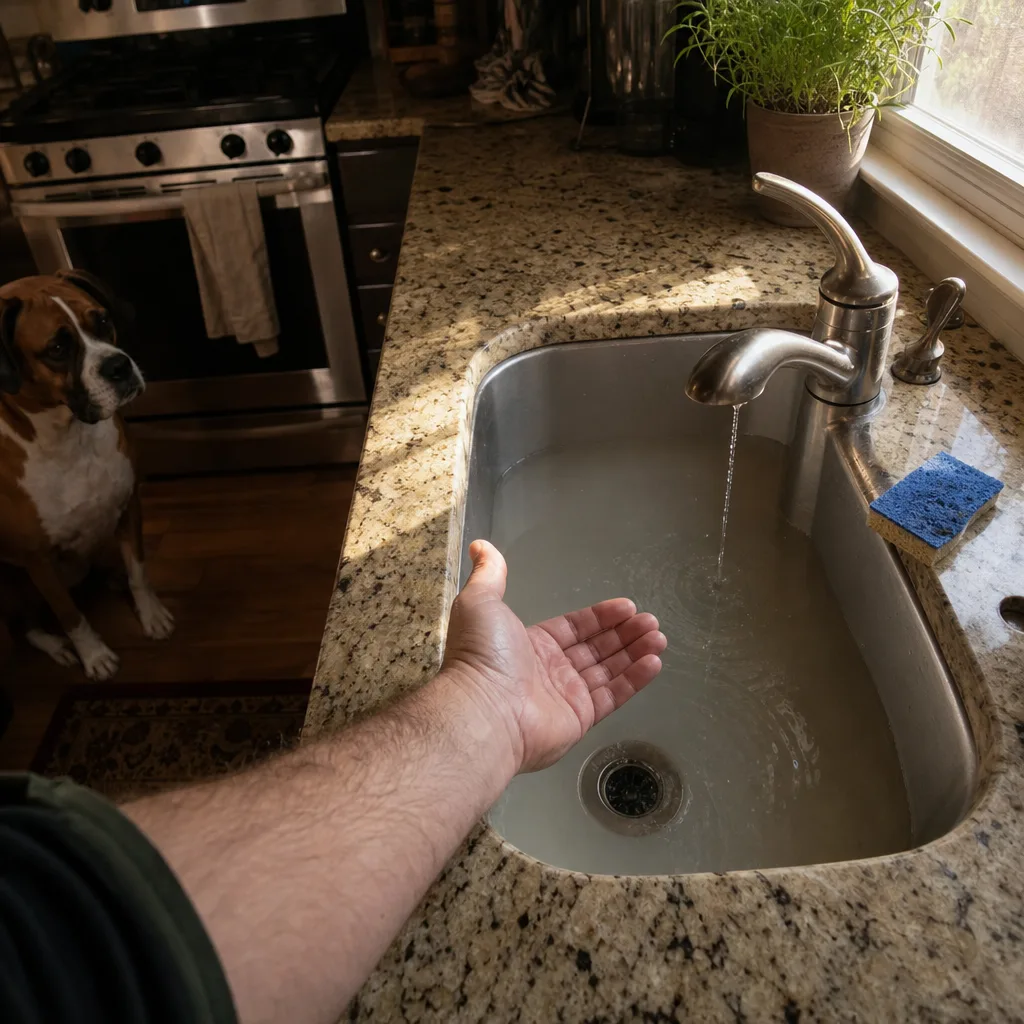
- A kitchen sink that holds water after you run the dishwasher or garbage disposal, which usually means grease and food are building up in the line.
- A shower where you’re standing in an inch of water by the time you rinse off.
- A single toilet that clogs often even when you’re careful with what goes in it.
These are annoying, but they’re rarely an emergency. To be straight with you, a slow bathroom sink is often just hair caught on the stopper. If you can pull the stopper out and clean it, try that first. If the drain’s still slow afterward, or the clog keeps coming back, it’s time for a professional cleaning.
When more than one drain is involved, the problem is usually farther down the line where everything comes together. These signs point to the main line:
- Flushing a toilet makes the tub or shower gurgle or bubble.
- Water backs up into the shower or tub when the washing machine drains.
- Several sinks, tubs, or toilets are slow at the same time.
- Dirty water comes up through a floor drain or the lowest fixture in your home.
- You notice a sewage smell inside, or soggy ground near the cleanout outside.
Don’t wait on a main-line clog. Every time someone runs water, it has nowhere to go but back into your home. Stop using water where you can until the line is cleared.
This matters in Fort Worth because so many homes here, from older ranch houses to newer subdivisions, sit on concrete slabs with the drain lines running underneath. North Texas clay soil swells when it’s wet and shrinks when it dries out. Over the years, that movement can shift pipes and create low spots where waste settles and clogs keep forming. Tree roots can also work their way into older sewer lines through small cracks and joints.
That’s why a drain that clogs in the same place over and over deserves a closer look, not just another cleaning. A sewer camera inspection shows what’s happening inside the pipe, whether it’s buildup, roots, or a sag. That way you’re fixing the cause and not paying to clear the same clog every few months.
When a Plunger Is Enough and When to Call a Plumber
A lot of clogs don’t need us. If you’ve got one stopped-up drain and nothing else in the house is acting strange, it’s worth a few minutes with a plunger before you pick up the phone. Here’s how to tell whether you can handle it or whether it’s time for a professional cleaning.
A plunger usually does the job when:
- A toilet clogs once from too much paper, and the rest of your drains are fine.
- A sink or tub stopped up suddenly, not slowly over several weeks.
- The clog clears after a few good pushes, and the water drains at normal speed when you test it.
Use the right tool. A toilet needs a plunger with a flange, the soft flap that folds out from the bottom of the cup and fits into the bowl’s opening. A sink or tub works better with a flat cup plunger. On a double kitchen sink, cover the other drain with a wet rag so the pressure goes toward the clog and not out the other side.
Here’s the honest test. If you clear it and the drain stays clear for months, you didn’t need a plumber. That’s a good outcome, and we’d rather you know that.
Put the plunger down and call a plumber when:
- You’ve given it several honest tries and the water still won’t go down.
- The same drain clogs again within a few days or weeks. A plunger can open a small hole in a clog without clearing the buildup around it, so it keeps coming back.
- More than one drain is slow or backing up. That’s the main-line pattern from the section above, and a plunger can’t reach it.
- Water comes up in a different fixture while you plunge, like the tub filling when you work on the toilet.
- Something solid went down, like a toy, a phone, or a bottle cap. Plunging can push it deeper and wedge it where it’s harder to get out.
- The kitchen sink is backed up past the trap. Grease that’s cooled and hardened deep in the line usually won’t budge with a plunger.
- The water is rising toward the rim of the toilet. Stop plunging and shut off the valve behind the toilet so it doesn’t spill over.
A word on store-bought drain chemicals. They can sometimes eat through a soft clog of hair or soap, but they don’t do much for a solid object, roots, or a pipe that’s sagged. If the chemical doesn’t work, you’re left with a sink full of harsh liquid sitting on the clog. If you’ve already poured some in, that’s okay. Just tell the plumber what you used before they start, so they can work safely.
One more case where waiting makes sense. If a drain is only a little slow and it’s the only one, you don’t have to drop everything. Clean the stopper or strainer, keep an eye on it, and schedule a visit when it’s convenient if it doesn’t get better. Save the same-day call for backups, multiple slow drains, or a clog that keeps coming back.
What Happens During a Standard Drain Cleaning Visit
A standard drain cleaning visit has one job: clear the clogged drain and make sure water flows the way it should again. With Xtreme Air Services, that visit includes drain clearing, flow testing, and cleanup. Most calls are resolved on the first visit, so in most cases you’re not signing up for a string of return trips.
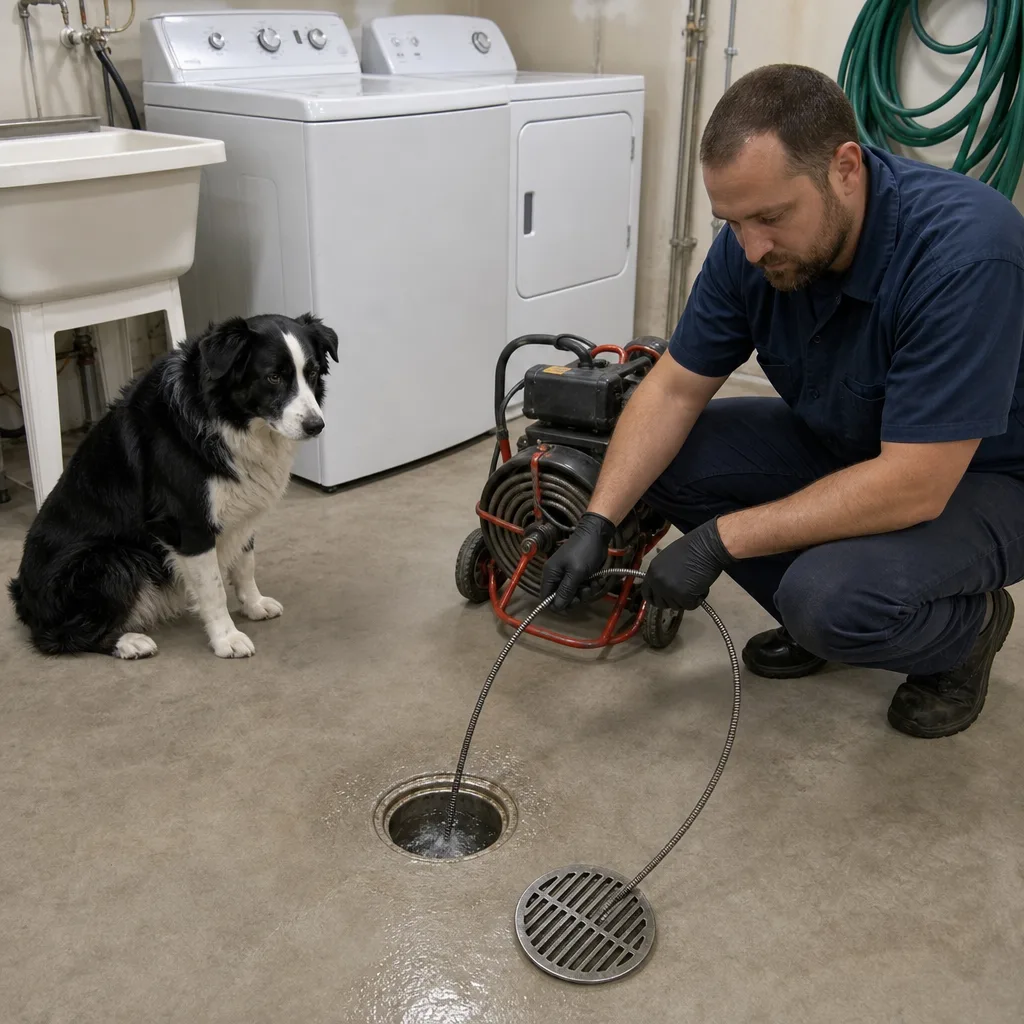
Here’s roughly how a visit goes, so nothing catches you off guard.
- Figuring out where the clog is. Your technician asks which drains are acting up and when it started. That tells them whether it’s one fixture or the main line, and where the best access point is. That might be the drain itself or the cleanout pipe outside.
- Agreeing on the price first. You get upfront pricing before any work starts. No meter running, no surprises when the job’s done. And nights and weekends cost the same as any weekday.
- Clearing the line. The clog gets broken up and cleared, whether it’s grease in a kitchen line, hair in a shower drain, or buildup farther down.
- Testing the flow. This is the step people skip when they clear a drain themselves. Water gets run through the line to confirm it drains at normal speed, not just a little better than before.
- Cleaning up. Drain work can get messy. Cleanup is part of the job, so you’re not left wiping down the floor after your technician leaves.
Some things aren’t part of a standard cleaning, and you should know that going in. Hydro-jetting, pipe repair, and root removal are quoted separately. Hydro-jetting uses high-pressure water to scour heavy buildup off the inside of a pipe. It’s a different job from clearing a single clog. If your technician finds roots, a cracked pipe, or a sag in the line, the kind of problem a camera inspection is built to confirm, you’ll hear about it plainly. You’ll get a separate price and decide for yourself. Nothing extra gets done without your okay.
What drives the cost up or down comes down to a few things: how bad the clog is, where it sits in the line, how easy it is to reach the cleanout, and whether a camera or hydro-jetting turns out to be needed. A slow sink with good access is a simpler job than a main-line backup with a buried cleanout.
A few minutes of prep can make the visit go faster:
- Clear out the cabinet under the problem sink so there’s room to work.
- If you know where your outdoor cleanout is, tell us when you call. In many Fort Worth slab homes, it’s a capped pipe in the yard near the foundation, since the drain lines run under the concrete. If grass or shrubs have grown over it, that’s worth mentioning too.
- Hold off on running water, laundry, or the dishwasher if more than one drain is backing up.
- Keep any drain chemical bottle handy so your technician knows exactly what’s in the pipe.
Your technician is licensed, background-checked, and drug-tested, and treats your home like their own family’s. You’ll know what’s wrong, what it costs, and what’s included before anything gets started.
Ready when you are – get in touch today.
Call Today, Get Service Today. Xtreme Air Services — Fort Worth is ready to help.
Why Older Fort Worth Homes See Recurring Clogs
Maybe you’ve had the same drain cleared twice this year and it’s slow again. If so, the clog probably isn’t the real problem. In an older home, it’s often the pipe itself. A cleaning opens the line, but it can’t change what the pipe is made of or how it has aged.
Many Fort Worth ranch homes built in the decades after World War II have cast iron drain pipes running under the slab. Cast iron is tough, but over the years the inside rusts and flakes. A wall that started out smooth turns rough and bumpy, kind of like the bottom of an old, scratched-up pan. Grease, paper, and hair catch on those rough spots and pile up. When a clog gets cleared, the water flows again, but the rough walls start grabbing waste right away. That’s why the slow drain keeps coming back on its own schedule.
The sewer line running from your house to the street tells a similar story. Older lines were often made of clay tile laid in short sections, so there’s a joint every few feet. Each joint is a weak spot. That’s where roots find their way in, and it’s where the soil movement we covered earlier can push one section a little out of line with the next. Even a small lip at a joint gives waste a ledge to snag on.
These signs suggest the trouble is the pipe, not just a one-time clog:
- The same drain clogs again within a few months of a professional cleaning.
- The backups keep hitting the same fixtures in the same order.
- Bits of root or rust-colored scale come out with the clog.
- The drain never gets back to full speed, even right after it’s cleared.
- Your home is decades old and the original drain lines have never been replaced.
If two or more of those sound familiar, a sewer camera inspection is the step that turns guessing into a plan. What the camera shows points to the right fix. If the walls are coated with scale and grease, hydro-jetting scours them clean far better than a standard cleaning can. That job is quoted separately, as mentioned above. If roots have moved in or a joint has cracked, sewer line repair goes after the actual damage. In some cases, trenchless sewer repair can fix the line without digging a long trench across your yard. If the cast iron under your slab is badly corroded in several places, repiping may make more sense than patching it again and again.
Here’s the honest part. Not every older home needs new pipe. Plenty of older lines work just fine with a good cleaning now and then. The point is to find out which kind you have before you spend more money. Paying to clear the same clog every few months adds up, and it never touches the reason it keeps coming back.
Call 817-677-1907
Watch Our Video
See How We Handle Drain cleaning in Fort Worth
Xtreme Air Services — Fort Worth
What’s Included in Your Drain Cleaning Cost
Here’s the number you came for. Our most common job, clearing a clogged drain and confirming it flows the way it should, runs $150-$300. Across all our drain cleaning calls, the typical price range is $150-$500. Where your job lands depends on the things we covered above: the clog itself, where it sits, and how easy the line is to reach.
There’s also a $26-$99 service-call fee. That covers getting a technician to your home and figuring out what’s wrong. If you go ahead with the work, that fee is credited toward the repair. So you’re not paying twice just to have someone show up.
You’ll see your price and approve it before any work starts. If your technician finds something outside a standard cleaning, like roots or a damaged pipe, that gets its own separate quote, and you decide what happens next.
What does that look like in real life? Say your kitchen sink backed up after a holiday dinner, and the cabinet underneath gives easy access to the line. That’s the kind of call that usually sits in the most common range. Now say three drains are gurgling, the cleanout in the yard is buried under St. Augustine grass, and the clog keeps coming back. That job takes more time and may need a camera to see what’s going on, so it tends to land higher in the range.
About financing: it’s not typically offered for a drain cleaning, since it’s a smaller job. Financing is available on larger repairs and replacements. If a camera shows you need something like sewer line repair or repiping, ask about it then.
Whoever you call, a few questions will tell you a lot about how a plumber prices their work. Ask them before anyone touches your drain:
- Is the price a flat rate for the job, or are you charging by the hour? Hourly billing means a stubborn clog costs more the longer it takes.
- Is there a trip or service-call fee, and does it go toward the repair if I hire you?
- Does the price include testing the flow after the clog is cleared, or just clearing it?
- Is cleanup part of the job?
- If you need a camera or hydro-jetting, will you tell me the price before you use it?
- Do you charge more for nights, weekends, or holidays?
A plumber who gives clear answers to all six is one you can trust with your home. If you get vague answers, or a price that shows up only after the work is done, that tells you something too. You deserve to know what you’re paying before the job starts, not after.
Frequently Asked Questions
Common questions about Drain cleaning
Is it safe to use drain cleaning chemicals before you call a plumber?
Store-bought chemicals are okay for a soft clog of hair or soap, but they won’t clear a solid object, roots, or a sagging pipe. If the chemical doesn’t work, you’re left with harsh liquid sitting in the line. Just tell your technician exactly what you poured in so they can work safely.
How long does a drain stay clear after a professional cleaning?
A good cleaning should keep a drain flowing for months, not days. If the same drain clogs again within a few months, the pipe itself may be the real problem, not just a one-time clog. That’s common in older Fort Worth homes with aging cast iron lines under the slab.
Can I run water right after a drain cleaning to make sure it worked?
Yes, and you should. A flow test is part of a standard visit, where water is run through the line to confirm it drains at normal speed, not just a little better than before. That step catches problems a quick glance can’t.
What should I do if water starts rising while I’m plunging a toilet?
Stop plunging right away and shut off the valve behind the toilet. That keeps it from overflowing while you wait for a plumber. If water backs up into another fixture while you plunge, that’s a sign the clog is farther down the line than a plunger can reach.
Ready to Get Started?
Call (817) 677-1907 Today, Get Service Today.