


Sewer Line Repair in Fort Worth: Know What’s Wrong Before You Dig
Sewer line problems confirmed before anyone digs, with a step-by-step repair and a quote that shows what's included.
What’s Covered on This Page
- Signs Your Sewer Line Needs Repair, Not Just a Drain Cleaning
- When It’s Just a Clog, Not a Broken Sewer Line
- Why Fort Worth Homes Are Prone to Sewer Line Damage
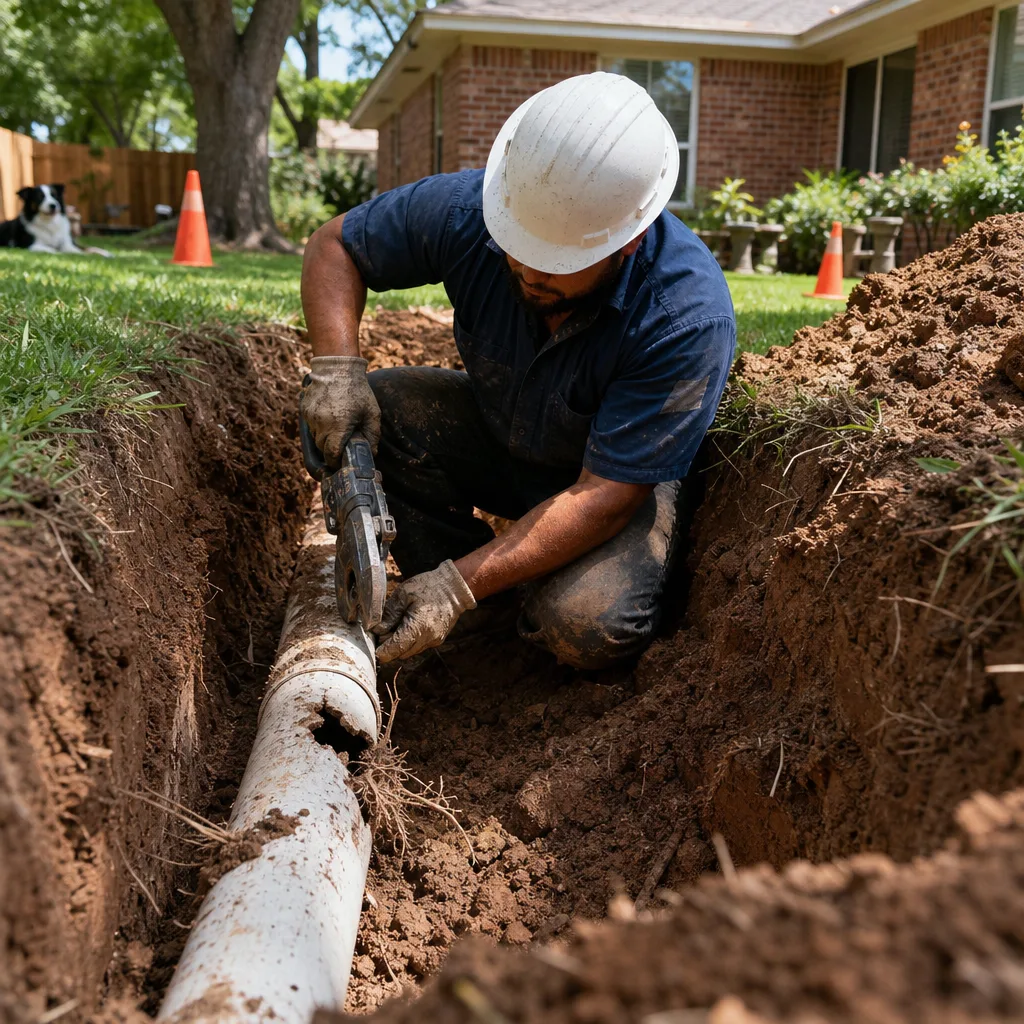
- How Sewer Line Repair Works: Locate, Access, Repair, Verify
- What Drives Sewer Line Repair Cost Up or Down
- How long does a sewer line repair take?
- Can I use my toilets and drains while the repair is happening?
- Will the repair leave a big hole in my yard?
- Does homeowners insurance cover sewer line repair?
Signs Your Sewer Line Needs Repair, Not Just a Drain Cleaning
Let’s start with the good news. Most slow drains aren’t sewer problems. If your kitchen sink is sluggish but every toilet, tub, and shower in the house drains fine, that’s almost always grease, hair, or food stuck in that one branch line. A drain cleaning is the right fix, and you don’t need to worry about your sewer line.
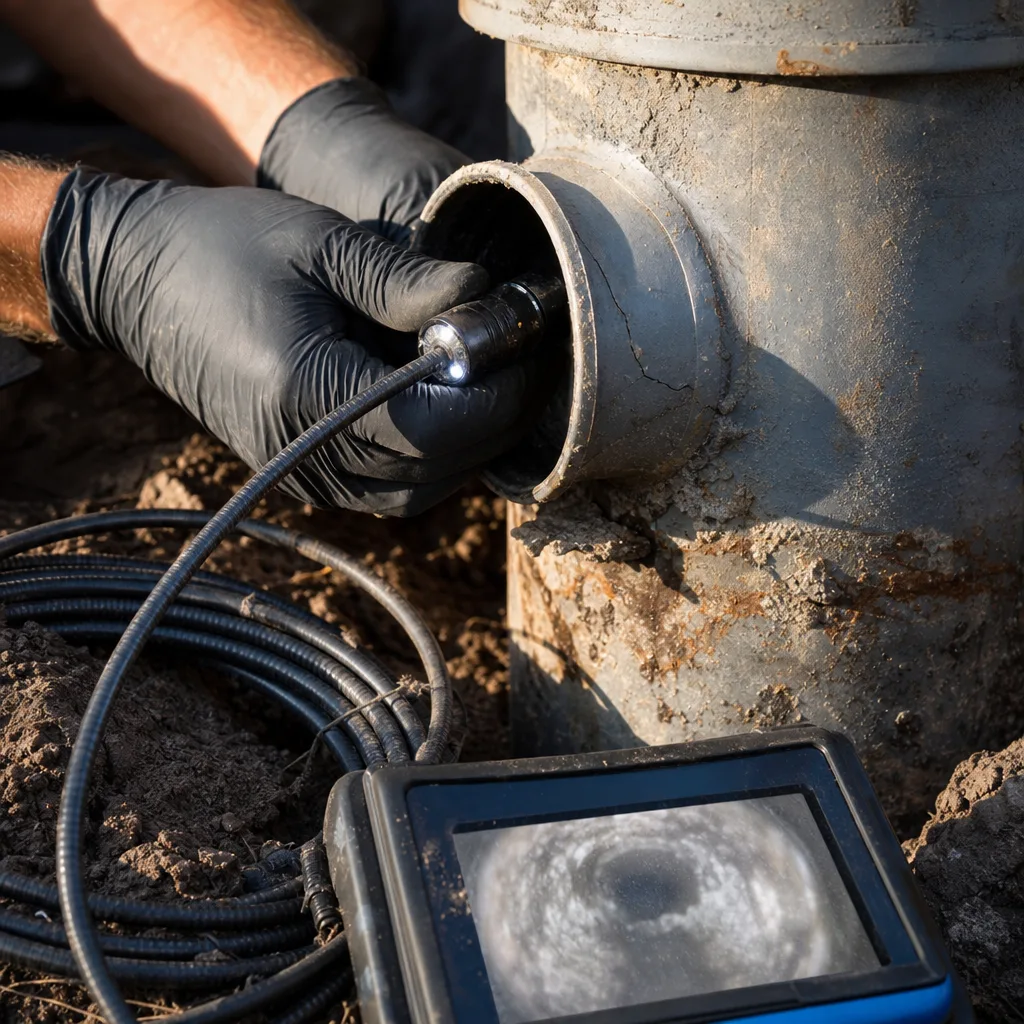
Things change when the trouble shows up in more than one place. Every drain in your home feeds into one main sewer line that runs out to the city connection. When that main line is cracked, sagging, or full of roots, the whole house feels it. Here’s what that tends to look like:
- Several drains back up at the same time, especially fixtures on the lowest level of the house.
- Your toilet gurgles or bubbles when you run the washing machine or drain the tub.
- Water comes up in the shower or tub when you flush a toilet.
- You smell sewage inside the house or out in the yard, even when nothing looks clogged.
- A strip of grass over the sewer path stays soggy or grows greener than the rest of the lawn.
- The ground sinks or dips along the line between your house and the street.
- You’ve had the line cleaned, and the same backup returns within a few weeks or months.
That last one matters most. A drain cleaning clears what’s inside the pipe. It can’t fix a pipe that’s broken. If roots are getting in through a cracked joint, cleaning cuts them back, but they grow right back through the same gap. If a section of pipe has sunk and formed a low spot, waste keeps settling there no matter how often it’s cleared. Paying for cleaning after cleaning is often the clearest sign that the pipe itself needs repair.
In Fort Worth, the soil is part of the story. Much of North Texas sits on expansive clay that swells when it’s wet and shrinks and cracks during long, dry summers. That steady push and pull can shift buried pipe, open up joints, and crack older lines over time. Dry spells also send tree roots hunting for moisture, and a leaking sewer joint is an easy target. Older homes with original sewer pipe are more likely to show these problems, but a newer line can still shift if the ground around it moves.
You don’t have to guess which one you’re dealing with. A sewer camera inspection sends a small waterproof camera down the line so you can see exactly what’s wrong and where. That shows whether a cleaning will do the job or whether one damaged section needs repair. It also helps you avoid paying to replace a whole line when only a short stretch is the problem.
When It’s Just a Clog, Not a Broken Sewer Line
Not every backup means your pipe is broken. Plenty of homeowners brace for a dig-up bill when what they really have is something stuck in the line. We’d rather you know the difference up front, even when the answer is that you don’t need us for a repair.
Even a backup that hits several drains at once can be a plain clog in the main line. That’s especially likely when you can point to a cause. Here are the cases where a clog is the likely culprit:
- The backup started right after something went down that shouldn’t have, like wipes (even ones labeled flushable), paper towels, a kid’s toy, or a big batch of cooking grease after a holiday meal.
- It’s the first backup you’ve had in years, and the line drained fine right up until it didn’t.
- One main line cleaning cleared it, and your drains have stayed clear for months since.
- You have no sewage smell, no soggy patch in the yard, and no sinking ground along the sewer path.
If that sounds like your situation, a cleaning is the fix. A sound pipe that got blocked once doesn’t need to be cut open or replaced. The real test comes after the cleaning. If the problem doesn’t come back, your pipe is doing its job.
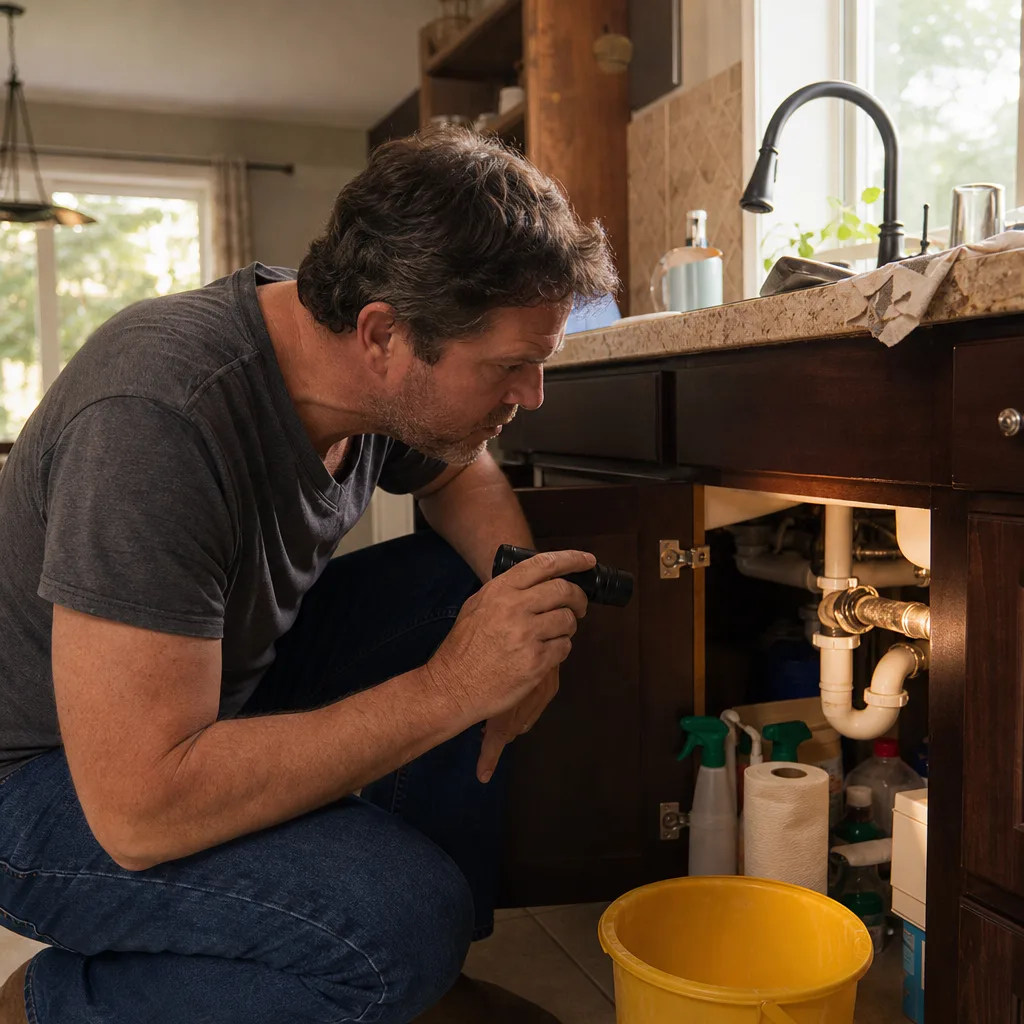
Some clogs you can handle yourself. A toilet that’s backed up on its own can often be cleared with a good plunger. A slow tub or bathroom sink is usually hair caught in the stopper, and pulling it out and cleaning it takes a few minutes. If a single fixture clears up after that and stays clear, you’re done. No service call needed.
Gurgling can fool people too. A toilet that gurgles while every drain in the house still moves well may have a blocked plumbing vent on the roof, not a damaged sewer line. A vent lets air into the drain system so water can flow smoothly. When leaves or debris block it, drains can gurgle and slow down even though the pipe underground is fine.
It’s also worth asking your neighbors. If several homes on your street back up at the same time, the trouble may be in the public sewer main, not your line. In that case, call your city’s water utility first.
Sometimes a camera inspection finds roots or buildup inside a pipe that’s otherwise in good shape. No cracks, no sags, no separated joints. Clearing the line may be all you need for now. Watching how it holds up over the next several months is a reasonable plan, not a gamble.
Sewer line repair makes sense when the pipe itself is failing. That’s the backup that keeps coming back, the low spot that collects waste, or the crack roots keep growing through. A one-time clog with a clear cause isn’t that. Give it a fair chance to stay fixed before you spend money on a repair.
Why Fort Worth Homes Are Prone to Sewer Line Damage
Sewer damage in Fort Worth usually comes down to a few things working together: what your pipe is made of, how your house sits on the ground, and what’s growing or settling around the line. Each of these tends to hit one stretch of pipe, not the whole run. That’s good news for you, because it means the fix is often smaller than you fear.
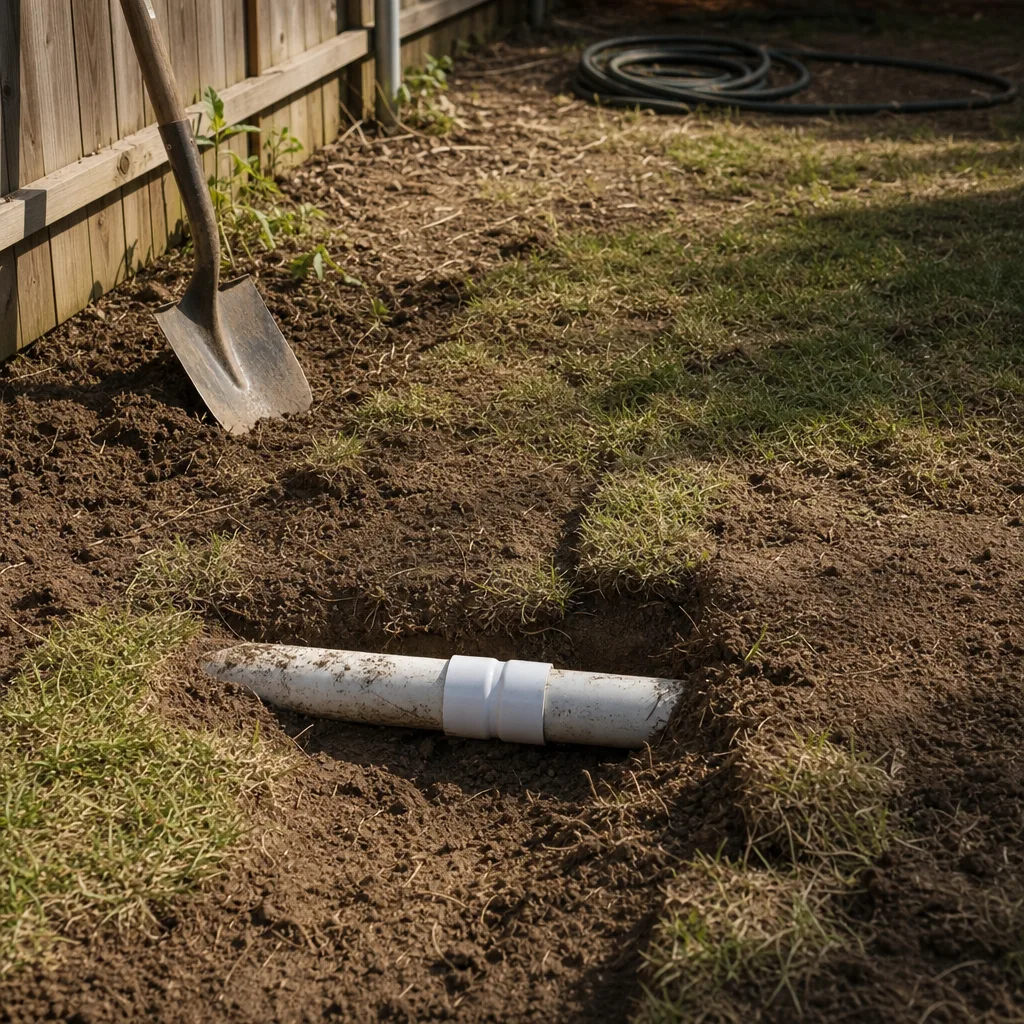
Start with your pipe. What’s buried in your yard depends a lot on when your home was built.
- Clay tile pipe comes in short sections joined every few feet. That means lots of joints, and every joint is a spot where roots or ground movement can break in.
- Cast iron is strong, but it rusts from the inside. Over the years, rough scale builds up, catches waste, and slowly thins the pipe wall until it cracks.
- Orangeburg pipe, found in some mid-century homes, is made from wood fiber and tar. Over decades it can soften, flatten, and lose its round shape.
- PVC, used in most newer homes, holds up much better. Its glued joints and the connection at the house can still pull apart if the ground shifts.
Next is your foundation. Most Fort Worth homes are built on a concrete slab, with the drain pipes running under the concrete and out through the foundation to the yard line. When the clay soil swells and shrinks, the slab and the yard don’t always move by the same amount. That puts a lot of strain right where the pipe leaves your house, so it’s a natural place for a crack or a separated joint. If the break turns out to be under the slab itself, that’s a different job, and slab leak repair has its own page.
Trees matter too, and where they’re planted matters most. A big shade tree growing near the sewer path is a much bigger risk than one on the far side of the lot. Healthy pipe doesn’t usually get crushed by roots. Roots find a joint that’s already weeping and grow in from there, so the damage tends to sit close to the tree.
Heavy rain can cause trouble as well, especially when a hard storm follows a long dry stretch. The soil packed around your pipe when it was laid can soften and settle. When it does, part of the line can drop and form a belly, a low spot where water and waste sit instead of flowing out. Even a sag of an inch or two can be enough to cause repeat backups.
Finally, think about what’s happened in your yard over the years. A new driveway, a pool, fence posts, a heavy truck parked over the line, or utility crews digging nearby can all crack or shift a buried pipe without anyone noticing at the time.
Look at that list again and you’ll notice a pattern. A cracked joint near a tree, a break where the pipe exits the foundation, a short stretch that settled after a storm. Each is one damaged section. It’s rarely the whole line. That’s why finding the exact spot with a camera before anyone digs saves you money. In many cases, it means repairing a few feet of pipe instead of replacing everything from your house to the street.
Need help with Sewer line repair?
Call Today, Get Service Today. Xtreme Air Services — Fort Worth is ready to help.
How Sewer Line Repair Works: Locate, Access, Repair, Verify
A good sewer line repair follows four steps: find the damage, reach it, fix it, and prove it’s fixed. Each step builds on the one before it. The tighter the first step is, the smaller the hole in your yard tends to be.
Step 1: Locate. The camera inspection shows what’s wrong. The next job is pinning down exactly where it is. The camera head carries a small transmitter, and a handheld locator picks up its signal from above ground. That lets a plumber mark the spot on your lawn and estimate how deep the pipe sits. Knowing the spot and the depth turns “somewhere between the house and the street” into a few marked feet of ground.
Step 2: Access. This is where you’ll see the biggest difference from one job to the next. There are two main ways in.
- Dig and replace a section. A trench or pit is opened right over the marked spot, wide enough to work safely around the pipe. When the damage is short and the line isn’t too deep, this is often the simplest fix.
- Trenchless repair. Some lines can be fixed through small access points instead of a long trench. That can spare a driveway, a patio, or mature landscaping. Not every pipe is a good fit. A collapsed or badly sagging section usually has to be dug out. We offer trenchless sewer repair, and we’ll tell you plainly whether your line qualifies.
Before any digging, buried utilities like gas, water, and cable need to be marked so nobody hits them. Your city may also require a permit for sewer work. Ask about permits up front, because they aren’t automatically part of every quote.
Step 3: Repair. On a dig-and-replace job, the damaged section is cut out and a new piece of pipe goes in, joined to the sound pipe on each side with tight couplings. The new section has to be set at the right slope so waste keeps flowing downhill toward the street. The soil around it matters just as much. Packing the bedding and backfill firmly under and around the pipe keeps the new section from settling into a belly the next time Fort Worth’s clay shifts after a hard rain.
Step 4: Verify. A repair isn’t done until water moves the way it should. That means running water through the line and checking that it drains freely, and often sending the camera back down to see the new joints from the inside. You want proof that the low spot is gone and the joints are sealed before the hole gets filled in.
Here’s what’s covered when Xtreme Air Services repairs a damaged section of your sewer line: locating, excavation or access, the repair itself, and testing to confirm proper flow. Some things fall outside that scope unless your quote says otherwise. Those include a full line replacement, putting back landscaping or concrete, and permits. Knowing that before work starts means no surprises when the trench is closed. If you’ve got sod, a sidewalk, or a driveway over the line, ask how the access will affect it. Then you can plan for restoration ahead of time.
Watch Our Video
See How We Handle Sewer line repair in Fort Worth
Xtreme Air Services — Fort Worth
What Drives Sewer Line Repair Cost Up or Down
Here’s the straight answer. Most sewer line repairs we do, finding and fixing one damaged section and confirming the line flows right, run $1,500-$4,000. Across all our sewer line repair work, the typical range is $1,500-$7,000. Where your job lands depends on a few things you can understand before anyone picks up a shovel.
- How deep the pipe sits. A line a few feet down is a much smaller dig than one buried deep near the street. Deeper trenches take more time, more soil moved, and more care to keep the hole safe to work in.
- How long the damaged run is. A single cracked joint near a tree is a short repair. A long stretch that has sagged or broken in several places means more pipe and more digging.
- What’s on top of the line. Open lawn is the easiest access. A driveway, patio, sidewalk, or big tree over the damage makes reaching the pipe harder.
- Whether trenchless repair fits your line. When your pipe qualifies, working through small access points can spare the concrete and landscaping above it. When it doesn’t, a dig-and-replace section is the right call.
Notice that the biggest cost drivers all come back to one question: how much pipe really needs work, and where is it? That’s why the camera and locating steps matter so much. A repair aimed at a few marked feet of ground costs far less than tearing up the yard on a guess. It’s also the difference between fixing a section and paying for a full line you may not need.
To get started, there’s a $26-$99 service-call fee. If you go ahead with the repair with Xtreme Air Services, that fee is credited toward the job. So you’re not paying twice just to find out what’s wrong.
You’ll get upfront flat-rate pricing that you approve before work starts. No meter running while the trench is open, and no extra charge for nights or weekends if your backup happens on a Saturday night. If the bill is bigger than you planned for, flexible financing is available on qualifying installations and larger jobs, on approved credit.
Whoever you call, ask these questions before you say yes:
- Did you see the damage on camera, and can you show me the footage?
- Exactly how many feet of pipe are you repairing, and how deep is it?
- Is my line a fit for trenchless repair? If not, why not?
- Does the price include permits and putting back concrete or sod, or are those separate?
- Is this a set price, or could it change once the ground is open?
A plumber who’s sure of the diagnosis won’t mind any of those. Since restoration and permits sit outside the standard scope unless your quote says otherwise, asking about them now keeps your total honest from the start.
Frequently Asked Questions
Common questions about Sewer line repair
How long does a sewer line repair take?
Most single-section repairs take one day, from locating the damage to backfilling the trench. The timeline depends on how deep the pipe sits and whether the damaged section is short or runs several feet. A trenchless repair through small access points can sometimes move faster than a dig-and-replace job, since there’s less digging and backfilling involved.
Can I use my toilets and drains while the repair is happening?
You’ll need to avoid using water on the affected line while the pipe is open. Since every drain in your home feeds into that one main sewer line, running water or flushing during the repair can send waste right into the work area. Once the new section is joined and tested, normal use can resume right away.
Will the repair leave a big hole in my yard?
It depends on how long the damaged section is and whether your line qualifies for trenchless repair. A short, shallow repair near one cracked joint leaves a small, marked trench. A longer sagging section, or a line too damaged for trenchless methods, needs a wider dig-and-replace trench to reach sound pipe on both sides.
Does homeowners insurance cover sewer line repair?
Most standard homeowners policies don’t cover sewer line repair caused by ground movement, root damage, or old pipe wearing out, since those are considered maintenance issues. Some policies offer a separate sewer line endorsement that covers sudden collapses. Check your policy details or call your insurance agent before assuming coverage either way.
Ready to Get Started?
Call (817) 677-1907 Today, Get Service Today.