


Water Heater Installation in Fort Worth, Done Right by a Licensed Plumber
Like-for-like tank swaps by licensed plumbers, with what the price covers and when a permit applies spelled out.
What’s Covered on This Page
- Signs It’s Time to Replace Your Water Heater
- When a Repair Is Enough and Replacement Can Wait
- Tank vs. Tankless: Choosing the Right Setup
- Why Fort Worth’s Water Makes Installation Quality Matter
- Older Homes vs. Newer Construction: Installation Complexity
- How long does a typical water heater installation take?
- Do I need a permit to replace my water heater?
- Can I install a water heater myself to save money?
Signs It’s Time to Replace Your Water Heater
Most water heaters don’t quit all at once. They give you hints first. Here’s what tells you the tank itself is on its way out, and not just a part that can be swapped.
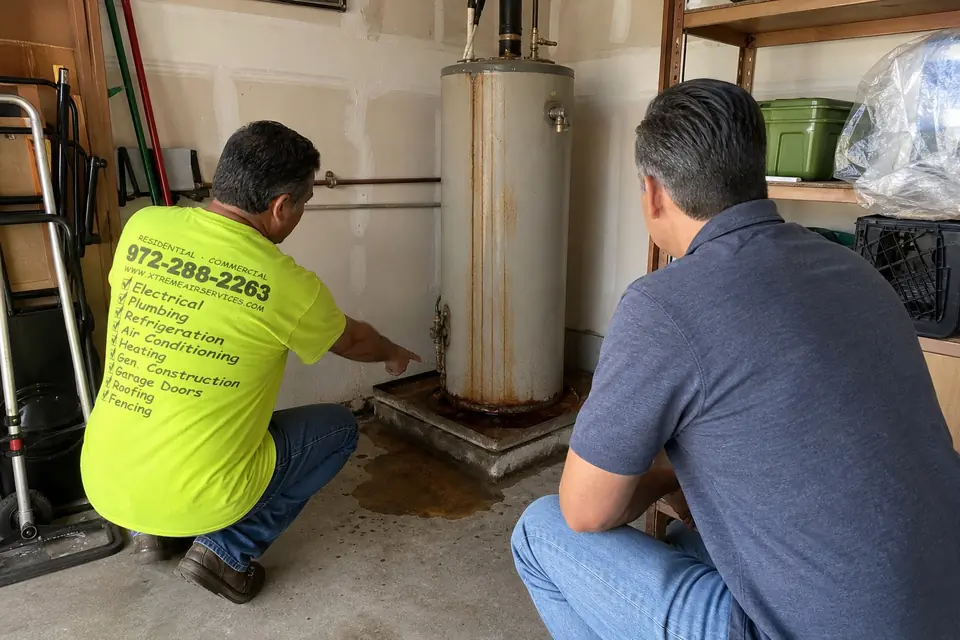
- Water pooling under the tank. If the water is coming from the tank body and not from a fitting or valve, the inside of the tank has rusted through. You can’t patch that. The tank has to be replaced.
- Rusty or brown hot water. If only your hot taps run discolored, rust may be eating the inside of the tank.
- Popping, rumbling, or banging. That noise usually comes from mineral buildup baking on the bottom of the tank. Hard water in North Texas speeds this up. A flush can help early on, but heavy buildup makes the heater work harder and wear out faster.
- Hot water that runs out faster than it used to. Sediment takes up room in the tank, so you get less hot water before it runs cold.
- Repair after repair. If you’ve paid for more than one fix in a short time, more money spent on an aging tank may not be your best move.
- Age. Look for the label on the side of the tank. The manufacture date is usually built into the serial number. An older tank that shows any of the signs above is a strong case for replacement.
Here’s a common scene. You walk into the garage and spot a small puddle by the water heater. Before you assume the worst, look at where it’s coming from. A drip at a pipe connection or at the pressure relief valve is often a repair. A wet spot that seems to come from the tank itself is the one that means replacement.
Now the honest part. Plenty of water heater problems don’t need a new tank at all. No hot water, lukewarm water, or a gas pilot that won’t stay lit can come from a bad thermocouple, a worn heating element, a tripped breaker, or a thermostat issue. Those are usually repairs, and our team handles water heater repair too. If your tank is fairly new and dry, a repair is often the smarter call, and we’ll tell you so.
If you’re not sure which side of the line you’re on, a service visit settles it. Our service-call fee is $26-$99, and it’s credited toward the repair if you proceed with Xtreme Air Services. Either way, you get a clear answer and an upfront price before any work starts, so you’re never paying for a new tank you don’t need.
When a Repair Is Enough and Replacement Can Wait
A repair is enough when the tank is sound and the problem is a part attached to it. Most of what breaks on a younger water heater falls into that group. The steel tank is the expensive part. The pieces around it can usually be swapped on their own.
- Heating elements and thermostats. These are the usual cause when an electric tank runs lukewarm or cold.
- Thermocouple or gas control valve. These are common reasons a gas pilot won’t stay lit.
- Temperature and pressure relief valve. That’s the safety valve on the side or top. If it drips or sticks, the valve gets replaced, not the tank.
- Drain valve. A weep at the spigot near the bottom is a valve problem.
- Anode rod. This metal rod sits inside the tank and corrodes so the tank lining doesn’t have to. Replacing a worn one on a younger tank can help the tank last longer.
- Dip tube. If this tube breaks, cold water mixes in at the top and your showers turn lukewarm fast.
- Fittings and connections. A drip where the pipes meet the tank is usually a connection fix.
Ask yourself three things. Is the tank dry? Is the problem a part outside the tank, or one that can be pulled out of it? Is the heater young enough that you won’t be paying for another fix next season? If you can answer yes to all three, repair it and keep your money.
Some problems don’t need a technician at all. If an electric tank stops heating because a breaker tripped, resetting the breaker may be all it takes. If the breaker trips again, a part is likely failing and needs a look. On a gas tank, the maker’s relighting steps are printed on the label. Follow those exactly, or leave it to a pro if you’re not comfortable doing it.
Age alone isn’t a reason to replace a heater either. An older tank that’s dry, quiet, and still gives your family enough hot water can keep working. You don’t have to pull it out just because the date on the label looks old.
What an older tank does give you is a reason to plan ahead. Check whether it’s gas or electric. Measure the space around it. Think about whether more people live in your home now than when it went in. North Texas hard water keeps adding sediment to the bottom of the tank year after year, so the end will come eventually. Planning now means the swap can happen on a day you pick. You won’t be scrambling after a cold shower or mopping up a flooded garage.
The one case that can’t wait is a leak from the tank body, which is covered above. Short of that, a repair that gives you real years of use is a fair choice. A new water heater should be a decision you make with clear facts in front of you. Nobody should talk you into it.
Tank vs. Tankless: Choosing the Right Setup
For most homes, the simplest and most affordable move is to replace your old tank with a new tank that fits the same spot and the same connections. Tankless can be a great fit, but it usually means changes to your gas, venting, or electrical. Those changes add cost. The right choice depends on how your family uses hot water and how long you plan to stay in the home.
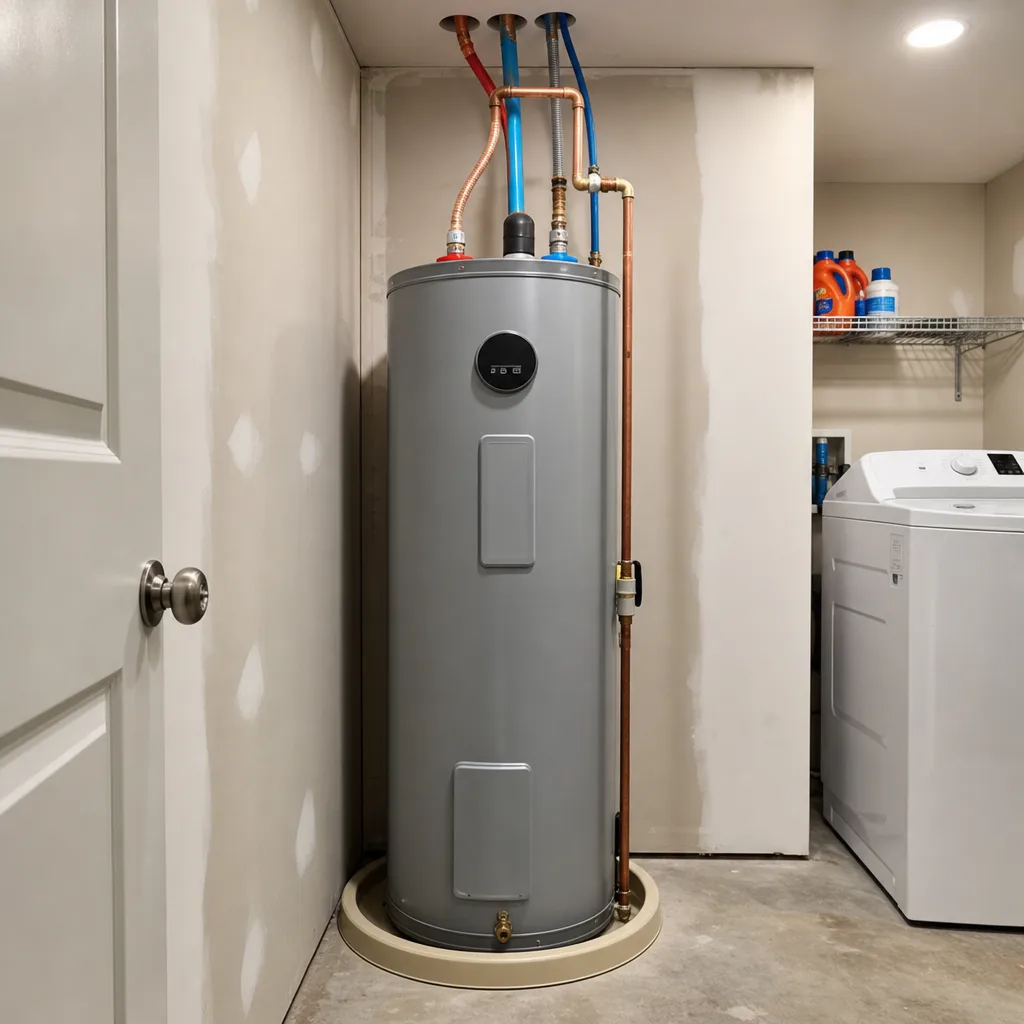
Here’s the basic difference. A tank heater keeps a set amount of water hot and ready, around the clock. A tankless heater has no storage. It heats water only when you turn on a hot tap, so it doesn’t run out the way a tank does.
A like-for-like tank swap is our most common water heater job. That means a standard install using your existing connections, with no major changes. It runs $1,700-$2,600 and covers the equipment and materials, professional installation, standard connections, startup and testing, and haul-away of your old unit. If you need a new heater soon and want to keep things simple, this is usually the cleanest path.
Tankless is a different kind of job. Gas tankless units often need a bigger gas line and new venting. Electric tankless units can need heavy-duty wiring and room in your electrical panel. Duct, electrical, and plumbing modifications, code corrections, and permits aren’t part of a standard install unless they’re stated in your quote. Ask for those to be priced up front. That way you’re comparing the full cost, not just the cost of the unit.
Here’s what each setup does well:
- Tank: lower upfront cost and a faster swap. Plenty of water for several showers in a row, until the stored supply runs low.
- Tankless: hot water that doesn’t run out, and it takes up much less space on the wall. Each unit can only heat so many gallons per minute, though. Two showers and the dishwasher at once can push a small unit past its limit.
- Tank: many gas tank models can still make hot water during a power outage. That matters during a North Texas winter storm.
- Tankless: gas tankless units need electricity to run. When the power’s out, so is your hot water.
Upkeep matters too. With the hard water we covered above, a tankless unit needs regular descaling to keep the minerals from clogging its heat exchanger. A tank needs flushing to clear sediment from the bottom. Neither one is maintenance-free. If scale is wearing out your water heaters, our team also handles water softener installation, which helps either type.
To sort out which one fits your home, ask yourself a few questions:
- Does your family run out of hot water now, or is the old tank big enough?
- How many hot taps run at the same time on a busy morning?
- Do you plan to stay in this home long enough for the extra upfront cost of tankless to pay off?
- Is your heater gas or electric, and is there room to change the venting or wiring?
If you answered no, a few, not sure, and you’d rather not open walls, a new tank is probably your answer. If you’re out of hot water every morning and you’re staying put for years, tankless is worth pricing out. Financing is available on qualifying installations and larger jobs, on approved credit. That can help if tankless is the better fit but the upfront cost gives you pause.
Not sure what your Water heater installation project needs? Ask us.
Call Today, Get Service Today. Xtreme Air Services — Fort Worth is ready to help.
Why Fort Worth’s Water Makes Installation Quality Matter
Hard water doesn’t just wear out a tank. It also exposes every shortcut made on install day. Put the same model in two Fort Worth homes, and the one installed with care can outlast the one that was rushed. The difference isn’t the heater. It’s the small details around it that make it easy to maintain, protect it from pressure, and keep a leak from turning into a repair bill.
Here’s what a solid installation should cover, and what you can ask about before anyone starts:
- A drain valve you can reach. Sediment builds up fast in mineral-heavy water. If the tank is jammed against a wall or boxed in by shelves, nobody flushes it, and the buildup we covered above wins.
- The right fittings where different metals meet. Copper pipe joined straight to a steel tank can corrode at the connection, and hard water speeds that up. Proper dielectric fittings keep those joints from becoming your next leak.
- A plan for thermal expansion. Water grows as it heats. If your home has a pressure regulator or a backflow device, that extra water has nowhere to go. Pressure spikes strain the tank and can make the relief valve drip. An expansion tank gives that water somewhere to go, so ask whether your home needs one.
- A relief valve line that goes somewhere safe. That safety valve needs a discharge pipe aimed at a drain or the floor. It shouldn’t point at a wall or a box of storage.
- A drain pan where a leak would do damage. This matters most when the heater sits in an attic or an upstairs closet. A pan and drain line can catch a slow leak before it soaks through a ceiling.
- A sensible temperature setting. Hotter water forms scale faster. A moderate setting is easier on the tank and safer for your family.
- A careful startup. The tank should be filled all the way and purged of air before the power or gas goes on. An electric element that fires in an empty tank can burn out on day one.
Where your heater sits matters too. Many Fort Worth homes are built on a slab, so the water heater usually ends up in the garage or the attic. Both spaces get hot in summer and cold in a hard freeze. When a winter storm rolls through, exposed water lines in an unheated garage or attic are the first to freeze. Insulating those lines during the install is a small step that helps.
Some of these items are simple parts of a good swap. Others, like adding an expansion tank or fixing an old code problem, can fall outside a standard install, as we covered above. That’s why it pays to ask what’s included before work begins. If an aging pressure regulator turns out to be the reason your relief valve keeps dripping, our team handles pressure regulator replacement as well.
Every standard installation we do includes startup and testing. Ask your technician to walk you through what was checked, where the drain valve is, and how to shut off the water and power if you ever need to. With hard water in the picture, a heater set up right is one you can maintain, and one you won’t have to think about for a long time.
Watch Our Video
See How We Handle Water heater installation in Fort Worth
Xtreme Air Services — Fort Worth
Older Homes vs. Newer Construction: Installation Complexity
The age of your home has a lot to do with how simple your water heater swap will be. A newer house usually has modern connections that line up with today’s heaters. An older house can hide a few surprises behind the old tank. Neither one is a problem if you know what to look for before the work starts.
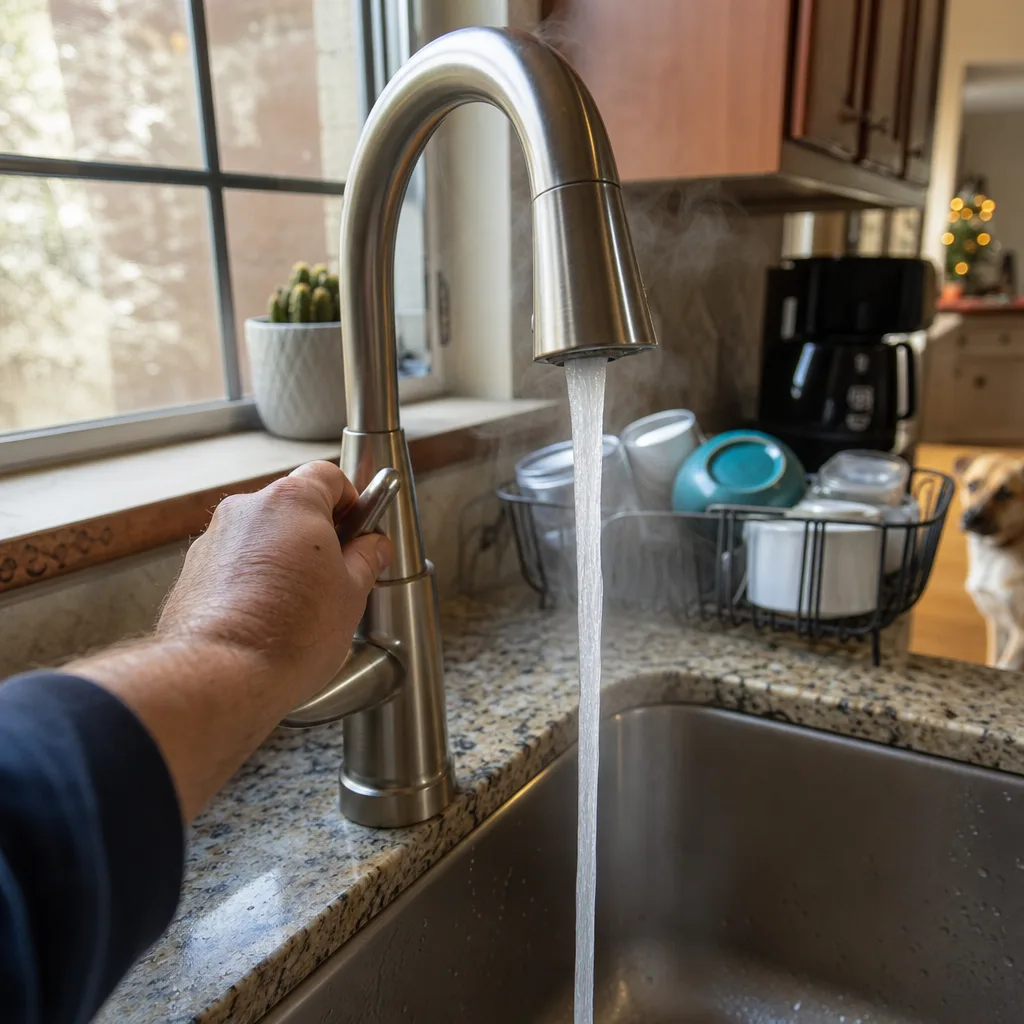
Many older homes in the Fort Worth area are slab-on-grade ranch houses built from the 1950s through the 1990s. The heater often sits in a hall closet, a utility room, or the garage. Here’s what can come up in those homes:
- Old galvanized pipe. Steel water lines rust from the inside over time. When the old tank comes off, the pipe threads can crack or crumble, and a short section may need to be replaced.
- A tight closet. Many new water heaters are wider or taller than the ones they replace because they carry more insulation. A heater that fit a 1970s closet just fine may not fit through the door today.
- Aging vent pipe. Gas heaters need a clear path to send exhaust outside. Old vent pipe can rust, sag, or come loose. In some homes the water heater shares a vent with the furnace, and both have to work together safely.
- Old gas fittings. An aging shutoff valve or an old flexible connector is worth replacing while the line is already open.
- Older wiring. An electric heater needs the right breaker and wire size. Older panels sometimes need a closer look before a new unit goes in.
Newer homes bring their own challenges. Many newer subdivisions put the water heater in the attic to save space downstairs. That makes the job harder in a few ways. The new tank has to fit through the attic opening and travel safely across the joists. Summer attic heat makes the work slower and tougher. Water lines that run through the attic also need to be checked for good support and insulation. Some newer homes also use power-vent or direct-vent gas models. Those need the right replacement unit and, for power-vent models, an outlet nearby.
Garage installs are common in both older and newer homes. A gas heater in a garage is usually set up on a stand so the burner sits up off the floor, away from fumes from cars and stored fuel cans. It also needs protection from being bumped by a car. If your current heater is sitting right on the garage floor, ask about it when you get your quote.
None of this means your job will be expensive. It means the quote should be built around your actual house, not a guess. Any pipe, vent, wiring, or code fixes fall outside a standard install, as we covered above, so you want them spotted and priced before anyone picks up a wrench.
You can help by sharing a few details when you call. Tell us about how old your home is, where the heater sits, and whether it’s gas or electric. If you can, snap a photo of the tank, the label, and the pipes on top. That gives our licensed and insured technicians a clear picture, so your upfront flat-rate price matches the work your home really needs.
Frequently Asked Questions
Common questions about Water heater installation
How long does a typical water heater installation take?
A standard tank swap usually takes a few hours when the new unit goes in the same spot with the same connections. Jobs take longer if old galvanized pipe, aging vent pipe, or electrical issues need fixing first. Tankless installs often take longer because of gas line, venting, or electrical changes. Sharing your home’s age and heater location when you call helps us give you a realistic time estimate.
Do I need a permit to replace my water heater?
Yes, most water heater replacements need a permit, and the rules depend on where your property sits. Permit and inspection authority depends on whether your home is inside Fort Worth city limits or in a neighboring city with its own building department. A licensed plumber handles the permit process for you as part of the installation. This keeps your new heater code-compliant and avoids problems later if you sell your home.
Can I install a water heater myself to save money?
We don’t recommend it, especially for gas units, because of the safety risks involved. Gas connections, venting, and electrical work all need to meet code, and mistakes can lead to gas leaks or carbon monoxide issues. A licensed plumber also knows how to spot problems like old galvanized pipe or bad vent pipe before they become bigger issues. If you’re comfortable resetting a tripped breaker or following the maker’s relighting steps on a gas pilot, those small checks are fine to try yourself first.
Ready to Get Started?
Call (817) 677-1907 Today, Get Service Today.