


Electrical Panel Replacement / Upgrade in Frisco
Panel upgrades for homes that have outgrown their power, done by licensed electricians with the permit pulled.
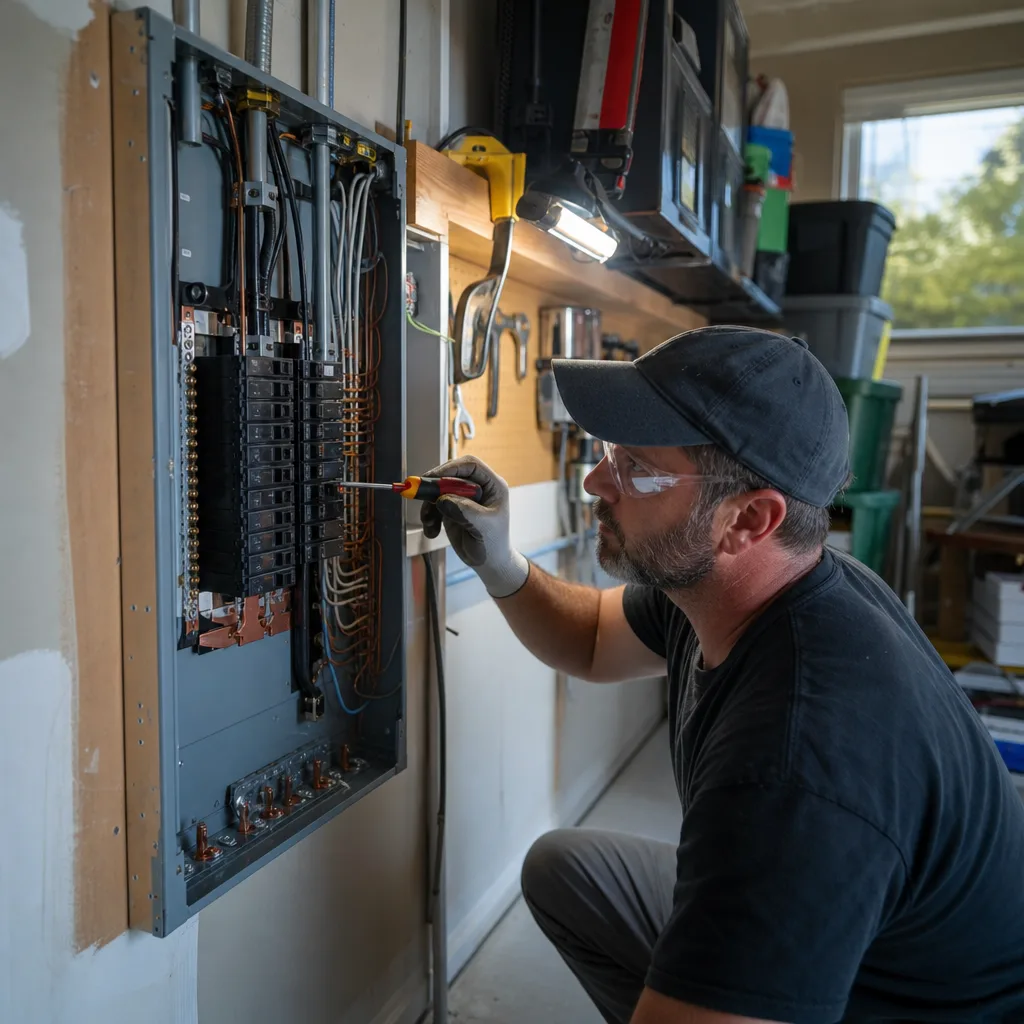
What’s Covered on This Page
- Signs Your Electrical Panel Needs Replacing
- When a Full Panel Replacement Is Not the Fix
- Why Licensing and Permits Matter for This Job
- What Happens During a Panel Upgrade
- What a Panel Upgrade Costs and What’s Included
- Should a 50-year-old electrical panel be replaced?
- How long will my power be off during a panel replacement?
Signs Your Electrical Panel Needs Replacing
Your panel rarely fails out of nowhere. It usually gives you clues first. You just have to know what they look like.
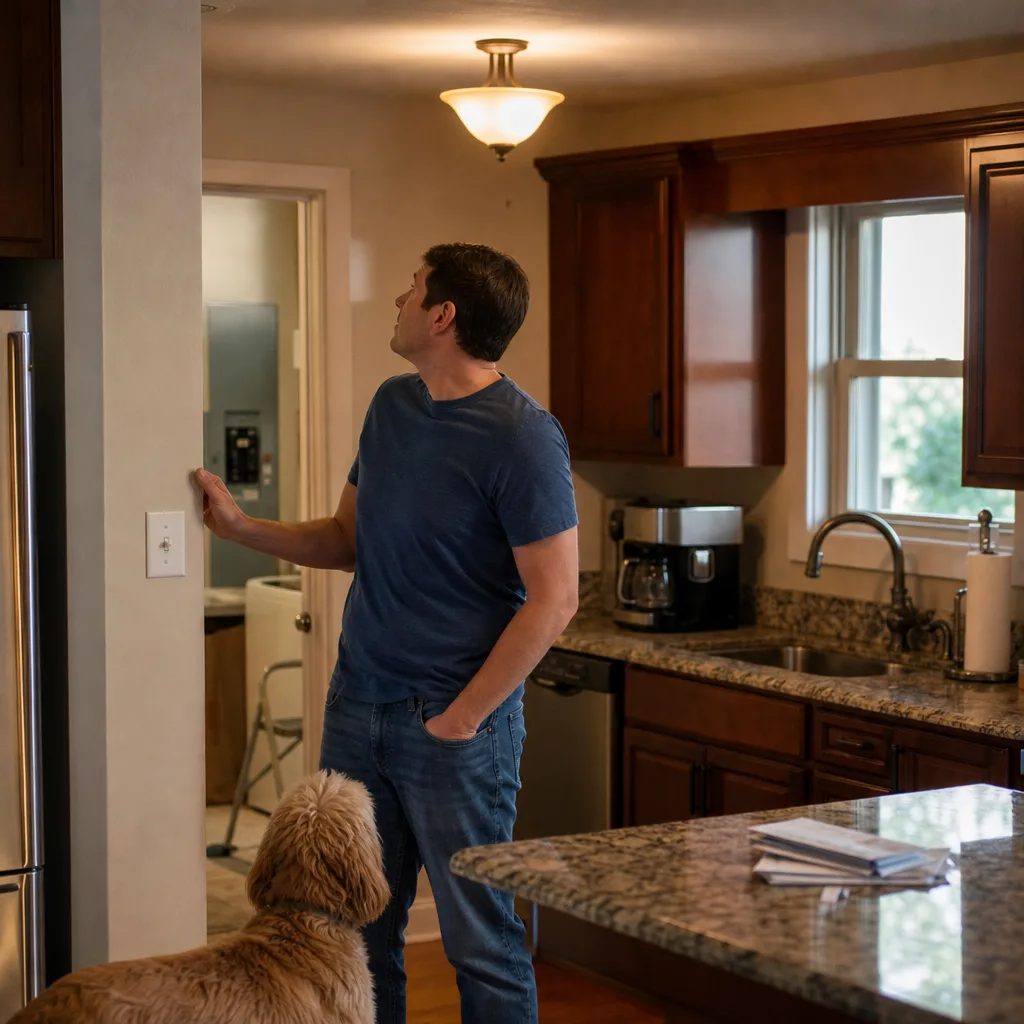
Picture a July afternoon in Frisco. The AC has been running hard since noon. You start the dryer, the kitchen lights dip, and a minute later a breaker snaps off. You reset it, and the next day it happens again. That pattern is your panel telling you it’s working at its limit.
Here are the signs that usually mean it’s time for a new panel or a bigger one:
- Breakers that trip again and again, especially when the AC kicks on or several big appliances run at once.
- Lights that dim or flicker when a large appliance starts up.
- A panel door or cover that feels warm to the touch, or a buzzing or crackling sound coming from the box.
- Scorch marks, melted plastic, or a burning smell anywhere near the panel.
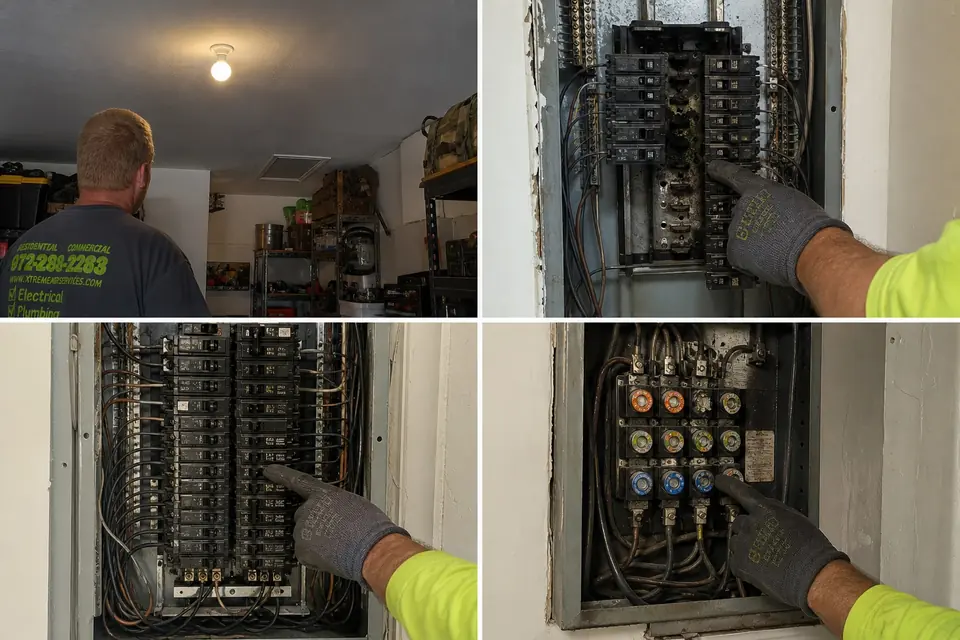
- Rust, corrosion, or water stains inside the box. Garage panels can take on moisture over years of humid Texas summers.
- Fuses instead of breakers, which means the system is far older than your home’s needs today.
- Every slot already full, with doubled-up breakers or extension cords filling in where circuits should be.
- A big new load on the way, like an EV charger, a pool or hot tub, a larger AC, or a home addition.
Scorch marks, melting, or a burning smell are the ones to take seriously. Don’t keep resetting breakers and hoping. Have a licensed electrician look at it right away. Same-day service is available, so you don’t have to wait until next week to find out what’s going on.
A lot of Frisco homes are newer, so age alone often isn’t the problem. Capacity is. A panel sized for the house the day it was built may not have room for the things families add later, like a Level 2 EV charger in the garage, a pool pump out back, or a bigger AC to keep up with the heat. That’s when an upgrade makes sense, and it’s often a move up to 200 amps so the panel can carry what your home uses now.
Not every sign means you need a new panel. If one breaker trips once because the microwave and a hair dryer ran on the same circuit, that breaker did exactly what it’s built to do. A single worn breaker or a loose connection can often be fixed with an electrical panel repair, no full replacement needed. A good electrician will tell you which one you’re dealing with.
That’s how we handle it. Our licensed technicians check the panel, explain what they find in plain English, and tell you straight whether a repair will do the job or whether replacement is the smarter spend. You get upfront pricing before any work starts, so there are no surprises either way.
When a Full Panel Replacement Is Not the Fix
A new panel is a real investment, and it’s the wrong spend if your problem lives somewhere else. Beyond the one-off trips and worn breakers covered above, here are the times a full replacement usually isn’t what you need.
Start with a simple fix you can do yourself. If a bathroom, kitchen, garage, or patio outlet goes dead, look for a GFCI outlet nearby. That’s the outlet with the little “Test” and “Reset” buttons. One GFCI can protect several outlets down the line, so a single trip can knock out a whole row. Press Reset firmly. If power comes back and stays on, your panel was never the problem.
Other times it’s an appliance, not the panel. An old space heater, a failing fridge compressor, or a worn-out garage freezer can trip the same breaker every time it cycles on. Here’s the tell: if the trips stop when you unplug that one item, the appliance needs repair or replacing. Swapping the panel won’t change a thing.
Here are a few more cases where something smaller usually does the job:
- You’re out of slots but not out of power. If the panel is in good shape and has enough capacity, a subpanel installation can add the spaces you need without replacing the main panel.
- You want an EV charger, but your home already has 200-amp service. A load calculation, which adds up what your home really draws, may show there’s plenty of room. In that case, a dedicated circuit installation could be all it takes.
- You’re worried about storm surges and lightning. A whole-house surge protector guards your electronics and appliances. It doesn’t call for a new panel.
- One outlet or switch is warm, loose, or sparking. That’s a problem at the device or the wiring behind it, and an outlet and switch repair is the place to start.
Some problems aren’t on your side of the meter at all. If lights all over the house dim at the same time, or power drops during a storm and the whole street goes dark, the trouble may be in the utility’s lines, the service drop, or the meter. That equipment belongs to the utility, and they’re the ones who fix it. Call them first. A new panel won’t solve a problem that starts at the pole.
If your home is still new, the builder may be on the hook for wiring problems. A lot of Frisco houses are only a few years old, so check your closing paperwork before you pay anyone for panel work.
And if nothing’s wrong, leave it alone. If your breakers hold, the panel is cool and quiet, there’s no rust or scorching, and you aren’t adding a big load, you don’t need an upgrade just because a neighbor got one. A healthy panel sized right for how your family lives can keep doing its job. The time to revisit it is when your home’s needs change, like adding an EV, a pool, or an addition, or when one of the warning signs above shows up.
Why Licensing and Permits Matter for This Job
Your electrical panel is where all the power coming into your home gets split up and sent to every room. Swapping it out means working right next to wires that stay live even with the main breaker off. That’s why this isn’t a weekend project, and it’s why who does the work matters as much as the panel itself.
In Texas, electricians are licensed through the Texas Department of Licensing and Regulation, or TDLR. A license means the person working in your panel has passed the training and testing to do it safely. It also means someone is accountable if something isn’t right. You can look up any electrician’s license on the TDLR website in about a minute, and you should.
A panel replacement also usually needs a permit from your city, followed by an inspection. The permit isn’t just paperwork. The inspector checks the work your eyes can’t judge: whether the grounding is done right, whether the breakers match the wire sizes, and whether everything meets the current electrical code. It’s a second set of trained eyes on the most important part of your home’s electrical system.
Skipping the permit can come back on you later. Here’s how it often shows up. You go to sell your Frisco home a few years from now. The buyer’s inspector spots a newer panel, asks for the permit record, and there isn’t one. Now you’re dealing with a delay, a price cut, or paying to have the work opened up and inspected after the fact. An unpermitted panel can also give an insurance company questions to ask if there’s ever an electrical fire.
Some work isn’t done by any electrician at all. The meter and the service lines coming into your home belong to the utility, which is Oncor in much of North Texas. If your upgrade needs a bigger service or a new meter, the utility has to be part of the plan. A good electrician will tell you that up front instead of surprising you on install day.
Before you hire anyone for a panel job, ask these questions:
- Are you licensed through TDLR, and will a licensed electrician do or oversee the work?
- Are you insured if something gets damaged in my home?
- Is the permit included in your price, or is it extra?
- Will the job be inspected, and when?
- Will this need any meter or service work from the utility, and who coordinates it?
- Does the quote include grounding, new breakers, testing, and hauling away the old panel?
We’ll be straight with you about how our pricing handles this. Our quotes include the panel and materials, professional installation, breakers, grounding, startup and testing, and haul-away of the old panel. Service-entrance or meter work by the utility, rewiring, code corrections, and permits aren’t included unless your quote says they are. We’d rather you know that now than find out later.
Our team is licensed and insured, and every technician is background-checked. You get upfront pricing before any work starts, so you know exactly what you’re paying for and what’s left out.
Have questions? We’re happy to help.
Call Today, Get Service Today. Xtreme Air Services — Frisco is ready to help.
What Happens During a Panel Upgrade
A panel upgrade sounds like a big, messy job, but most of it happens at one wall of your house. Your power will be off for part of the day. Then everything comes back on, tested and ready for what your home uses. Here’s how a typical job goes, start to finish.
It starts with a close look and a load calculation. That’s simply adding up what your home draws: the AC, the range, the dryer, the water heater, the pool pump, and anything you plan to add, like an EV charger. That number tells you what size panel you need. For many homes it’s a 200-amp upgrade, which is also the most common panel job we do. Your old panel gets replaced with new breakers and proper grounding, then it’s inspected and tested.
Next comes the paperwork side. The permit gets pulled, and if your upgrade needs a bigger service or a new meter, Oncor gets scheduled to cut and restore power at the meter. That’s usually what sets the install date.
On install day, the work usually goes in this order:
- Power is shut off. Your lights, outlets, AC, and fridge will all be down while the panel is open.
- The old panel comes out. Each circuit is disconnected and marked so it goes back to the right place.
- The new panel goes in. It’s mounted, and the main service wires are connected.
- Circuits move over. Each wire lands on a new breaker sized to match it. Doubled-up or overloaded spots from the old panel get sorted out here.
- Grounding is brought up to standard. Good grounding gives stray electricity a safe path away from your family and your appliances.
- Everything is labeled. You should be able to open the door and know which breaker runs the kitchen, the garage, or the AC.
- Power comes back on and gets tested. Circuits are checked one by one before the job is called done.
- The old panel is hauled away, so you’re not left with a rusty box in the garage.
After that, the city inspector checks the work. Sometimes current code calls for changes beyond the panel itself, like updated breaker types on certain circuits or a fix to older wiring. Those are code corrections, and a straight-talking electrician will flag them before install day so they’re part of the plan, not a surprise.
A few things on your end make the day go smoother:
- Clear a few feet of space around the panel. In many Frisco homes that means moving bikes, shelves, or storage bins out of the way in the garage.
- Plan for the AC being off. In a Frisco July, your house can heat up fast without it. If your panel isn’t an urgent problem, a spring or fall install or an early morning start keeps things comfortable.
- Keep the fridge and freezer closed while the power is out, and they’ll hold their cold much better.
- Shut down computers and anything that would lose work when the power drops.
- Let someone know if anyone in your home relies on powered medical equipment, so you can plan for it before the shutoff.
By the end of the day, you have a panel that fits how your family lives now, with room left over for what comes next.
Watch Our Video
See How We Handle Electrical panel replacement / upgrade in Frisco
Xtreme Air Services — Frisco
What a Panel Upgrade Costs and What’s Included
Here’s the number you came for. Most electrical panel replacements and upgrades we do fall between $1,500 and $4,500. Our most common job is replacing an aging or undersized panel, usually with a 200-amp upgrade, new breakers, and proper grounding, all inspected and tested. That job typically runs $2,100 to $3,300.
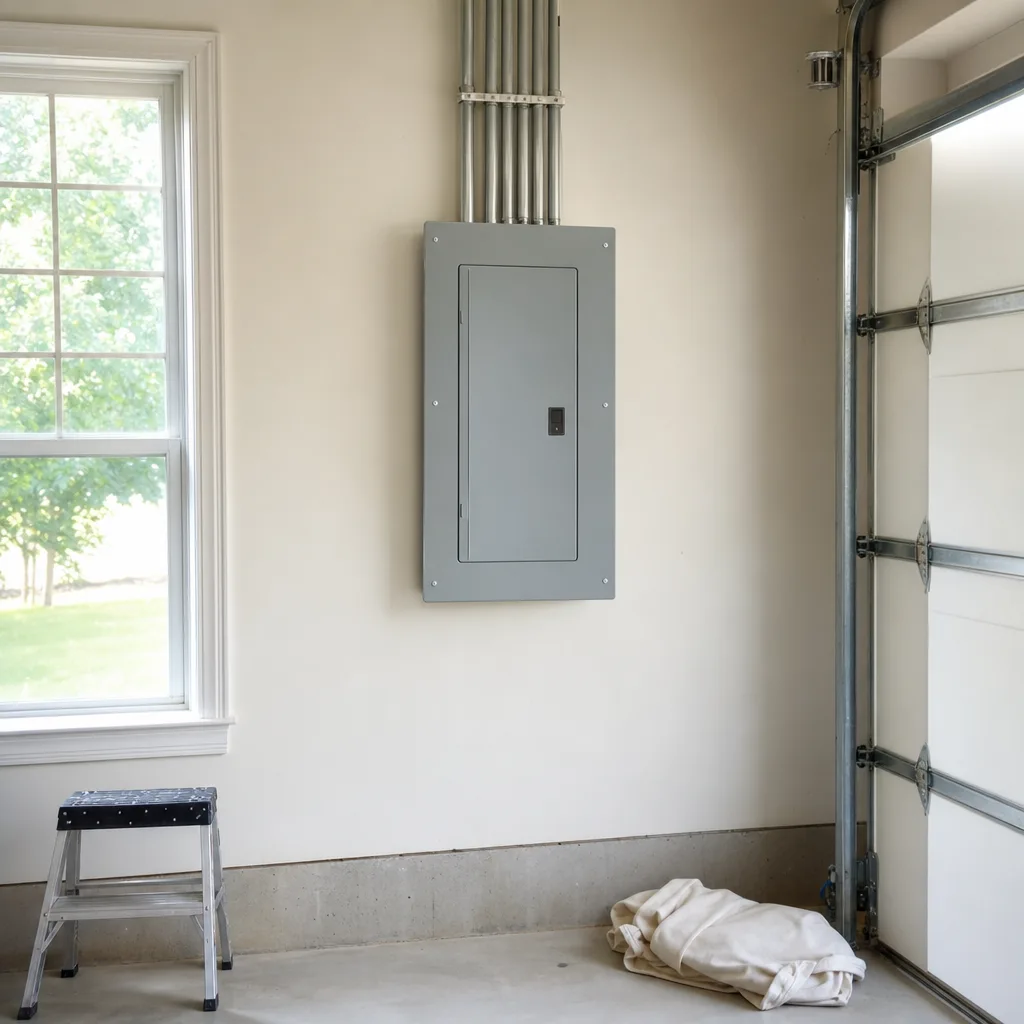
Where your home lands in that range depends on what’s behind your panel door and what your family needs it to carry. A simple swap in an open garage costs less than a bigger service in a tight closet. Here’s what moves the price:
- Panel size. A 200-amp panel costs more than a smaller one, and going bigger than that costs more again. The load calculation tells you what you really need, so you don’t pay for capacity you won’t use.
- The panel itself. Different makes and models carry different price tags.
- Your meter and service. If the meter base or the service wires coming into your home are worn or too small for the new panel, that adds work.
- Grounding. Some homes need their grounding brought up to standard as part of the job.
- Number of circuits. More circuits means more breakers and more wires to move over.
- How easy it is to reach. A panel on an open garage wall is quicker to work on than one boxed in by cabinets or built into a finished wall.
- Utility coordination. If Oncor has to disconnect and reconnect at the meter, that has to be scheduled and planned into the job.
- Code upgrades and permits. The city may require changes to meet current code, and permit fees vary.
We covered what a quote includes and leaves out in the licensing section above. The short version is that the panel, installation, breakers, grounding, testing, and haul-away are in. Utility meter work, rewiring, code corrections, and permits are only included when your quote says so. Ask about each one by name so your total doesn’t change after the fact.
Getting a price starts with a visit. Our service-call fee is $26 to $99, and it’s credited toward the work if you go ahead with Xtreme Air Services. A technician looks at your panel, tells you whether a repair, a subpanel, or a full upgrade makes sense, and gives you upfront flat-rate pricing before anything starts. No meter running, and no extra charge for nights or weekends.
If the total is more than you’d like to pay at once, flexible financing is available on qualifying installations and larger jobs, on approved credit. That can make it easier to handle an upgrade now, before you add the EV charger or the pool, instead of putting it off until a breaker forces the issue on a hot July afternoon.
Our licensed and insured, background-checked technicians will explain your options in plain English and let you decide. Your neighbors trust us with this work across Frisco and the rest of DFW, and we’ll treat your home the same way.
Call 469-490-3595
Frequently Asked Questions
Common questions about Electrical panel replacement / upgrade
Should a 50-year-old electrical panel be replaced?
Yes, a panel that old should be replaced rather than repaired. After five decades, breakers wear out, insulation can get brittle, and the panel often can’t handle what modern homes use, like AC units, EV chargers, or pool pumps. Many older panels also used fuses or breaker brands no longer made, so parts are hard to find. If your panel is this old, have a licensed electrician check it even if you haven’t noticed problems yet.
How long will my power be off during a panel replacement?
Your power is off for the part of the day the panel is open, usually while the old panel comes out and the new one goes in, gets wired, and is tested. The exact time depends on how many circuits need to move over and whether the job needs utility coordination for a bigger service or new meter. Because your AC will be off too, a Frisco home can heat up fast in summer, so many homeowners schedule the work for spring, fall, or early morning.
Ready to Get Started?
Call (469) 490-3595 Today, Get Service Today.