


Electrical Troubleshooting in Frisco: Find the Fault Before You Fix It
The fault traced to where it starts, with a clear written summary before any repair begins.
What’s Covered on This Page
- What an Electrical Troubleshooting Visit Includes
- Common Signs You Need Electrical Troubleshooting
- Why Newer Frisco Homes Still Trip Breakers
- When You Don’t Need a Troubleshooting Call
- What to Expect During and After Your Visit
- How long does an electrical troubleshooting visit usually take?
- Can I troubleshoot an electrical problem myself before calling someone?
- Will a new breaker stop my electrical panel from tripping for good?
What an Electrical Troubleshooting Visit Includes
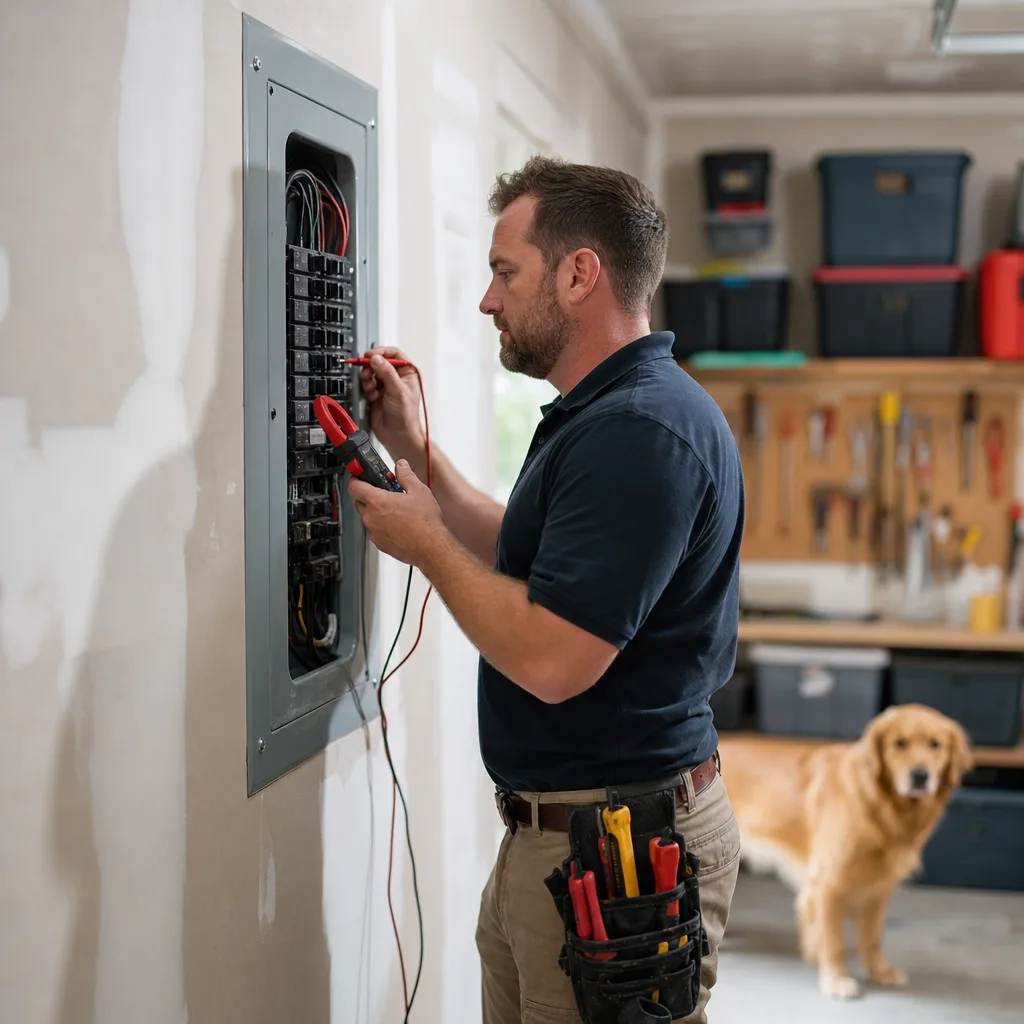
You’re paying for an answer. When an outlet goes dead, a breaker keeps tripping, or lights flicker only some of the time, the job is to trace the problem back to where it starts. Then you get a clear written summary that tells you what’s wrong and what your next steps are. You don’t have to guess, and you don’t have to take anyone’s word for it.
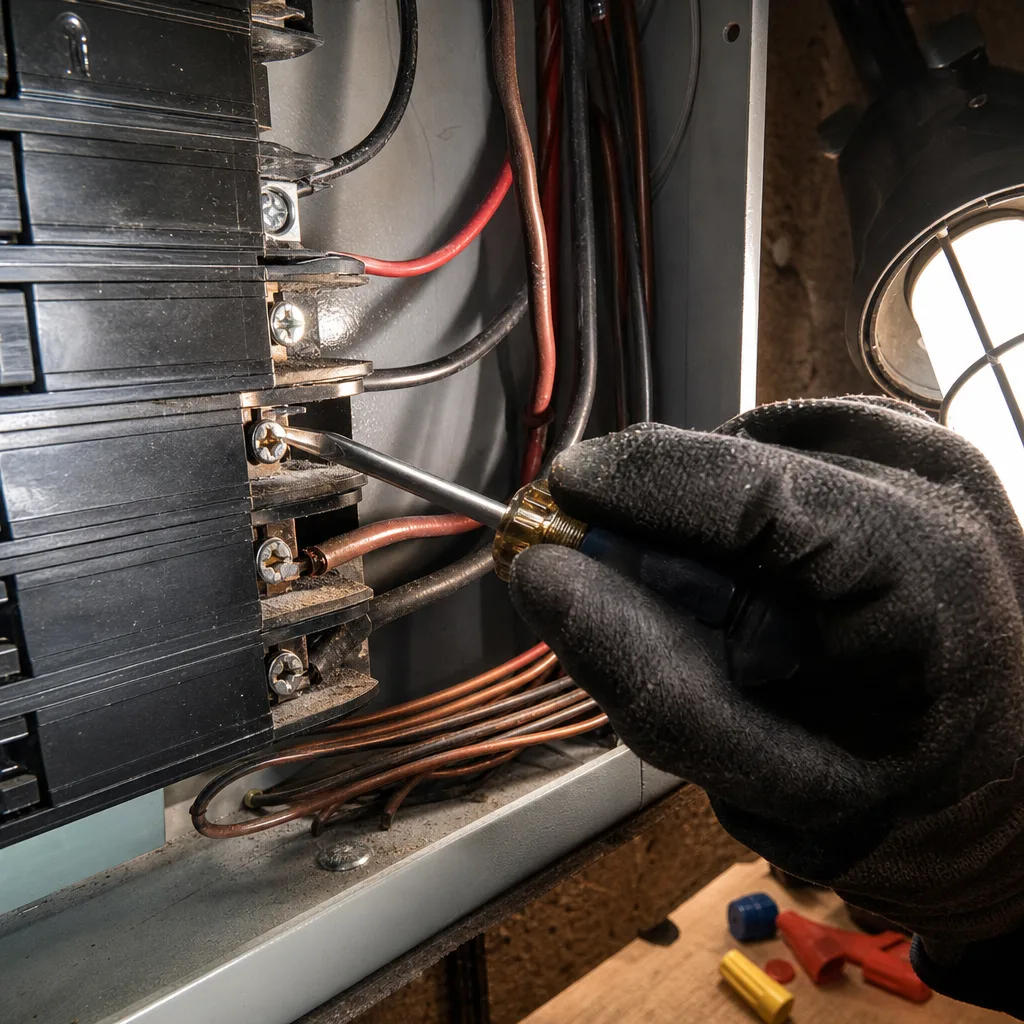
That written summary matters more than most people think. It means you can read the findings at your own pace, show them to your spouse, or hold onto them for your records. It also keeps the conversation honest. If the fix is small, it says so. If it’s bigger, you’ll know why before you decide anything.
- Included: an on-site diagnosis and a written findings and recommendation summary.
- Not included: any repairs or corrective work the diagnosis turns up. Those are quoted separately, with upfront flat-rate pricing you approve before any work starts.
- Service-call fee: $26-$99, credited toward the repair if you move forward with Xtreme Air Services.
- Typical price range for troubleshooting: $100-$350. Our most common job, tracking down a dead outlet, a tripping breaker, or an intermittent fault, runs $100-$200.
So why the range? Four things move the price up or down. The first is how complex the fault is. The second is your home’s size and how many circuits it has. The third is access, meaning how easy it is to reach the wiring. The fourth is whether the problem needs specialized test equipment to find. A breaker that trips every time you run the microwave is usually easier to trace than a flicker that shows up once a week. A bigger home with more circuits simply has more places to check.
Access counts for a lot in North Texas homes. When wiring runs through an attic, summer heat can make that work slower and harder. A junction box hidden behind a finished wall or a packed garage takes more time to reach than an open panel.
Financing isn’t usually offered for a smaller job like troubleshooting. If the diagnosis turns up something bigger, such as a panel upgrade or rewiring, financing is available on larger repairs and replacements. Either way, you’ll see the price first. Nights and weekends cost the same as a weekday, with no extra charge, so you won’t pay more just because the breaker picked a Saturday to quit.
The point of the visit is simple. You walk away knowing what’s wrong, what it’ll take to fix it, and what that fix will cost. That’s what lets you make a calm, informed choice instead of a rushed one.
Common Signs You Need Electrical Troubleshooting
Most electrical problems don’t announce themselves all at once. They show up as small, annoying things you start working around. You stop using one outlet. You learn not to run the microwave and the toaster together. You get used to a light that flickers now and then. When you’ve started building habits around a problem, it’s time to find out what’s causing it.
Here are the signs that point to a fault worth tracing:
- A breaker that trips again after you reset it, especially when nothing new is plugged in.
- An outlet or a whole string of outlets that’s gone dead, even after you’ve checked the breaker and any GFCI outlets nearby.
- Lights that dim or flicker when the AC, a hair dryer, or another big appliance kicks on.
- A problem that comes and goes, like a switch that works some days and not others.
- An outlet cover or switch plate that feels warm to the touch.
- Buzzing, crackling, or a faint burning smell near an outlet, switch, or your panel.
- Scorch marks or discoloring around a plug or outlet.
- Part of your home losing power while the rest still works.
Those last few deserve extra attention. Heat, smell, and sound usually mean a connection is loose or overloaded somewhere. That kind of problem doesn’t fix itself, and it’s not something to keep living with.
Storm season in North Texas adds its own clues. After a hard thunderstorm or a power outage, you might find that one circuit didn’t come back, or that a device is acting strange. A surge can damage wiring, outlets, or breakers in ways you can’t see from the outside. If something hasn’t worked right since the last big storm, that timing is useful to mention when you call.
Intermittent faults are the hardest to live with and the hardest to guess at. A flicker that shows up once a week could be a loose wire in a box, a worn breaker, or a failing fixture. Swapping parts until it stops is a gamble. Tracing it to the source is how you know it’s fixed.
The line is easy to spot. If you’ve tried the simple fix and the problem comes back, or if you notice heat, smell, or sparks at any point, it’s no longer a quick reset. That’s when a trained set of eyes and the right test equipment can tell you what’s really going on behind the wall.
Why Newer Frisco Homes Still Trip Breakers
A lot of Frisco homes are newer construction. So it’s fair to wonder why a house that’s only a few years old keeps tripping breakers. Newer doesn’t mean problem-free. A newer home has more sensitive protection, more things plugged in, and wiring that’s hidden behind finished walls from day one. Any of those can be behind a trip, and from your hallway they all look the same.
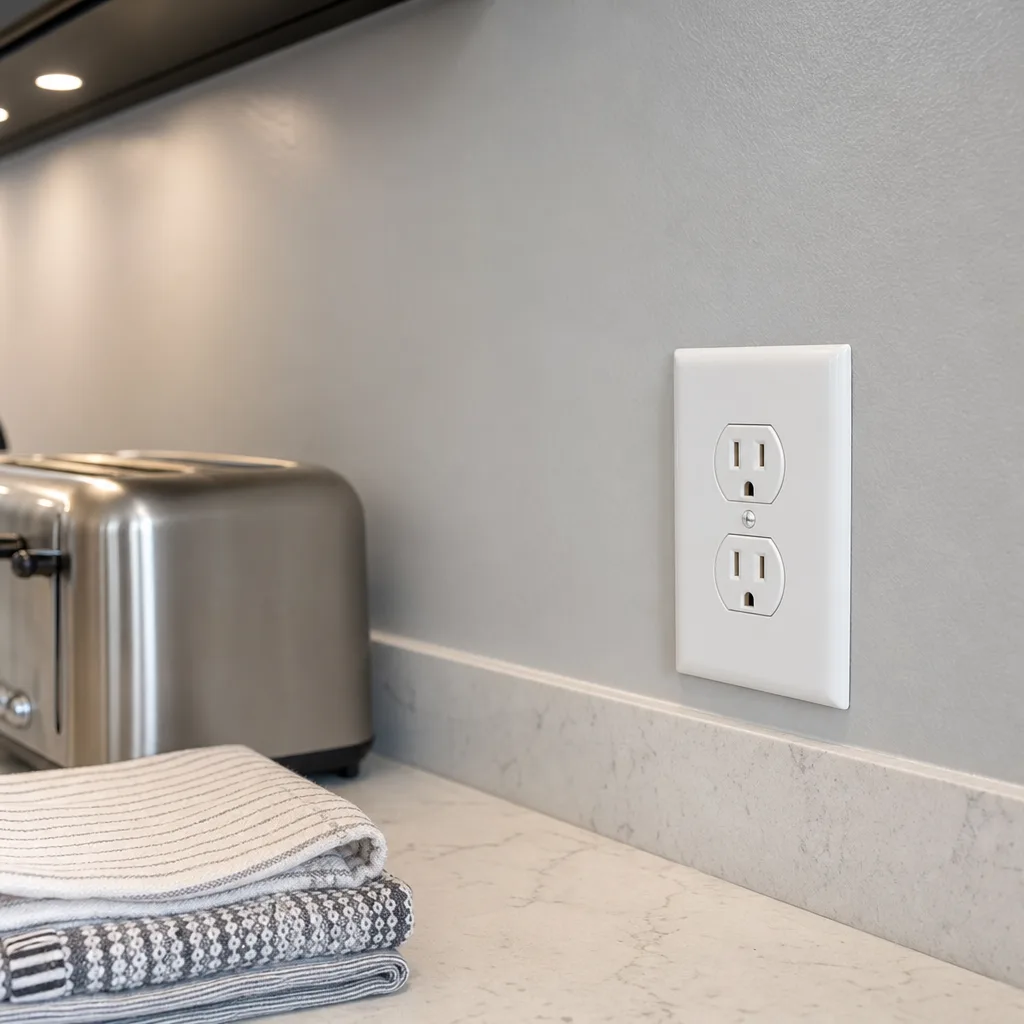
Start with the breakers themselves. Newer homes often have arc-fault breakers. Some are combination breakers that also guard against ground faults. An arc-fault breaker watches for the electrical pattern of a spark inside a wire or connection, something an older standard breaker would ignore. That’s good protection. It also means the breaker reacts to things you’d never notice. A trip can mean a real fault. It can also mean a worn cord or a motor that doesn’t get along with the breaker.
Here are the common causes in newer homes:
- A nail or screw that nicked a wire. This can happen during the build, or years later when someone hangs a TV, shelves, or crown molding. The damage is sealed inside the wall, and the breaker may only trip once in a while.
- A loose connection at an outlet or switch. Some outlets are wired with quick push-in connections that can loosen over time. A loose connection can heat up and spark just enough to trip a sensitive breaker.
- More load than the circuit was planned for. Home offices, space heaters, air fryers, garage fridges, and gaming setups add up fast. A circuit that was fine when you moved in may be working much harder now.
- A specific appliance or cord. An old vacuum, a treadmill, or a damaged extension cord can set off an arc-fault breaker every time it runs.
- Attic heat on fixture and fan connections. North Texas summers push attic temperatures very high. Connections for ceiling lights, fans, and recessed cans that run through the attic go through that heat every year.
Some of these are an easy fix you can test yourself. If the breaker only trips when one appliance runs, try that appliance on a different circuit. If it trips there too, the appliance is the problem, not your wiring. Replace the cord or the device and you may be done.
The trouble starts when the trips don’t follow a pattern. That’s where guessing gets expensive. Swapping in a new breaker might stop the trips for a week, but it doesn’t touch a nicked wire behind the drywall. Replacing a sensitive breaker with a plain one is worse. It quiets the warning and leaves the fault in place, inside a wall you can’t see.
That’s why tracing matters in a newer home. The question isn’t just which breaker tripped. It’s what made it trip: the breaker, the load, a device, or damage in the wiring itself. Once you know which one it is, the fix is usually clear. Sometimes that’s a new outlet. Sometimes it’s moving a freezer to a dedicated circuit. And sometimes it just means unplugging the old shop vac for good.
Not sure what your Electrical troubleshooting project needs? Ask us.
Call Today, Get Service Today. Xtreme Air Services — Frisco is ready to help.
When You Don’t Need a Troubleshooting Call
A troubleshooting visit is for a problem you can’t explain. If you already know what’s wrong, or the cause is outside your walls, you don’t need to pay anyone to find it. Here’s when to skip the diagnosis and save your money.
- The whole street is dark. If your neighbors lost power too, the problem is with the utility, not your wiring. Check your electric provider’s outage map or call them. Nothing inside your home needs tracing until the grid comes back and something still doesn’t work.
- You can see exactly what’s broken. A cracked outlet, a switch that’s snapped or loose in the wall, or a light fixture you just want replaced doesn’t need a hunt. When you call, describe what you see. That way you’re booked for the repair itself, not a search for a cause you already found.
- You want something new, not something fixed. Adding an EV charger, a dedicated circuit for a garage freezer, a ceiling fan, or recessed lights is installation work. That’s a different request. Ask for a quote on the install instead of a troubleshooting visit.
- New LED bulbs flicker on an old dimmer. Many older dimmer switches weren’t made for LEDs. The flicker comes from the mismatch, not a wiring fault. Try bulbs labeled dimmable, or switch to a dimmer made for LEDs. If the flicker stops, the mystery’s solved.
- A smart plug or Wi-Fi switch keeps dropping off. If the device still turns on by hand but won’t respond in the app, that’s usually a network or app issue. Restart your router and the device first. A wiring check won’t fix a weak Wi-Fi signal.
- One outdoor outlet tripped during a hard rain. Water getting into an outdoor box or a holiday light plug can trip protection once. If it resets after things dry out and stays on, it did its job. If it keeps tripping on dry days, that’s a different story.
There’s one more case that’s easy to miss in Frisco. Many homes here are newer construction. If your house is still covered by a builder’s warranty, read it before you call any electrician, including us. A wiring defect from the build may be the builder’s job to fix at no cost to you. Using that coverage first is the smart move.
So how do you tell the difference? Ask yourself one question. Do I know what’s causing this? If the answer is yes, call for the repair or install you need, or handle the simple fix yourself. If the answer is no, the problem keeps coming back, or you can’t find a pattern at all, that’s when tracing it to the source is worth paying for.
Anything with heat, smoke, sparks, or a burning smell is never a wait-and-see problem. Don’t try to sort that one out on your own.
Watch Our Video
See How We Handle Electrical troubleshooting in Frisco
Xtreme Air Services — Frisco
What to Expect During and After Your Visit
A troubleshooting visit goes faster and costs less when the technician can start with good clues. You know your home better than anyone. A few minutes of noticing before we arrive can save real time once we’re there.
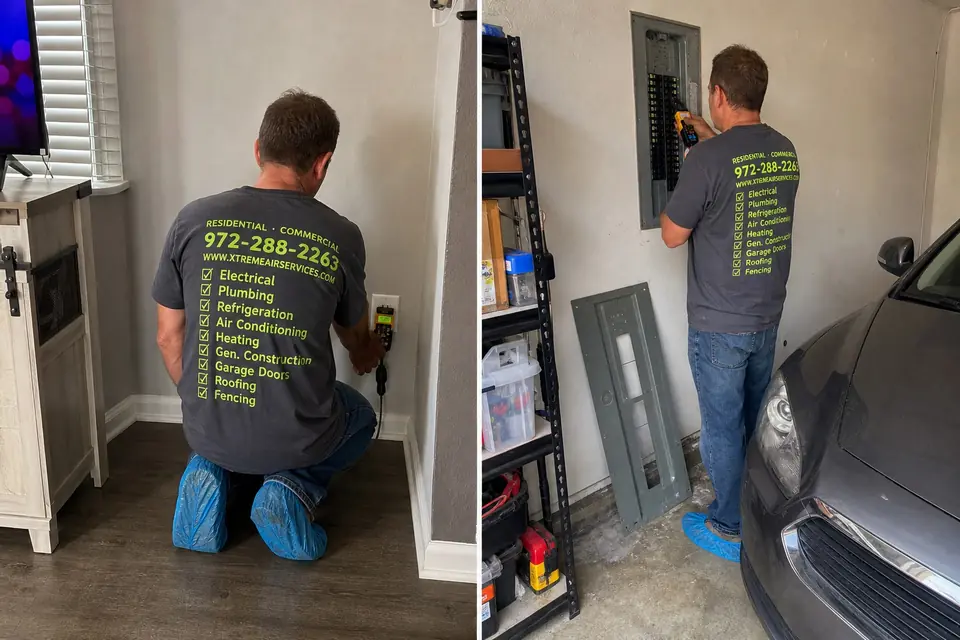
Here’s what helps most to have ready:
- Which breaker trips or which outlets went dead. If your panel labels are faded or wrong, just point to the room.
- What was running when it happened. For example, the AC kicking on, the dryer, a space heater, or nothing at all.
- When it happens. Note the time of day, the weather, or whether it started after a storm or after someone hung something on a wall.
- A clear path to your panel. In many Frisco homes, that’s in the garage, so move anything stacked in front of it.
- Access to the attic hatch and any rooms where the problem shows up.
Jot it down on your phone if that’s easier. Even a simple note like “trips about twice a week, usually at night” gives the technician a head start.
During the visit, the job is an on-site diagnosis. The technician follows the problem back to where it starts. That might be a loose connection in a box, a worn breaker, an overloaded circuit, or a damaged wire. Tracing a fault can mean switching circuits off for short stretches. If you work from home, save your files before the visit and plan for a few brief interruptions.
You’re welcome to watch and ask questions. Our technicians are licensed, insured, background-checked, and drug-tested. They’re there to find the answer and explain it in plain English, not to rush you.
After the diagnosis, you get the written summary of what we found and what we recommend. Then the decision is yours. If you want us to make the repair, you’ll see upfront flat-rate pricing and approve it before any work starts, and the service-call fee is credited as described above. If you’d rather think it over, talk it through with family, or keep the summary for later, that’s fine too. Nobody’s going to pressure you into a fix on the spot.
Sometimes the next step is a small repair, like a new outlet or switch. Sometimes it points to something bigger, like electrical panel repair, a dedicated circuit for a heavy appliance, or wiring repair inside a wall. Either way, you’ll know what the problem is and why it matters before you spend another dollar.
That’s the whole idea behind troubleshooting first. You don’t pay to guess. You pay to find out, and then you choose what happens next with the facts in front of you.
Call 469-490-3595
Frequently Asked Questions
Common questions about Electrical troubleshooting
How long does an electrical troubleshooting visit usually take?
It depends on how hard the fault is to find. A simple issue, like a breaker that only trips with one appliance, can be traced quickly. A problem that comes and goes, like a weekly flicker, takes longer because the technician has to track clues back through your wiring, panel, and attic connections. Having good notes ready about when the problem happens helps speed things up either way.
Can I troubleshoot an electrical problem myself before calling someone?
Yes, for a few simple things. Try resetting a tripped GFCI outlet, moving a space heater off a shared circuit, or swapping a bulb in a flickering lamp. If one of those fixes it and it stays fixed, you’re done. If the problem comes back, or you notice heat, buzzing, or a burning smell, stop trying to fix it yourself and get it traced to the source.
Will a new breaker stop my electrical panel from tripping for good?
Not necessarily, and it can even hide the real problem. Swapping in a new breaker might quiet the trips for a while, but it doesn’t fix a nicked wire or loose connection hiding behind your drywall. Tracing the fault to its actual cause, whether that’s the wiring, an overloaded circuit, or a specific appliance, is what makes the fix last.
Ready to Get Started?
Call (469) 490-3595 Today, Get Service Today.