


Home Rewiring in Frisco: Know If Your House Needs It
A straight answer on whether your house needs rewiring or a smaller repair, and what a full project involves.
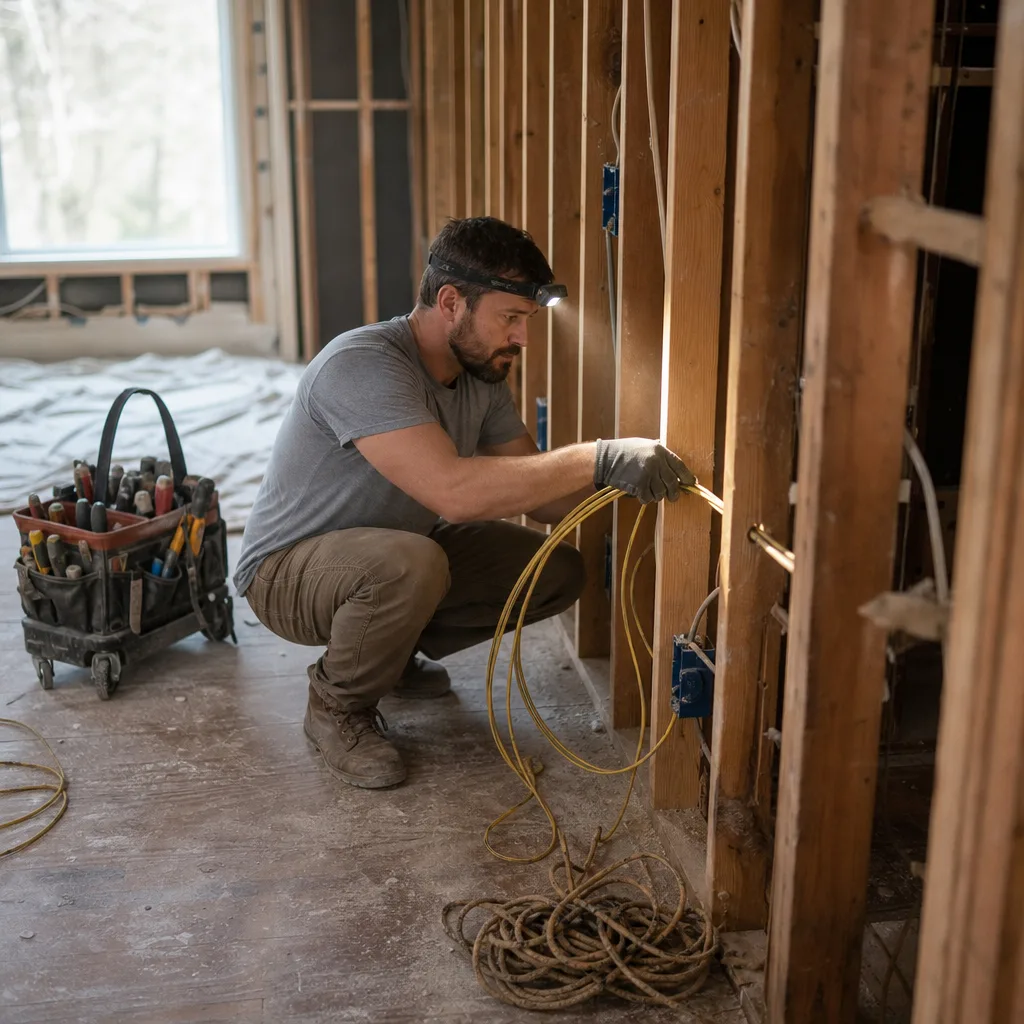
What’s Covered on This Page
- Signs Your Wiring Needs More Than a Repair
- When Full Rewiring Is Not the Right Fix
- What Happens During a Home Rewiring Project
- Licensing, Permits, and Why They Matter for Frisco Homes
- What Drives Home Rewiring Cost
- How long does it take to rewire a 2,000 sq ft house in Frisco?
- Can I stay in my home during a rewiring project?
- Do I need to move my furniture before a rewiring crew arrives?
Signs Your Wiring Needs More Than a Repair
Most electrical problems in your home are small and local. A worn-out switch, a loose connection behind one outlet, or a breaker that trips when the space heater and hair dryer run together can all be fixed without opening up your walls. So the real question isn’t whether something is wrong. It’s whether the problem lives in one spot or runs through the whole house.
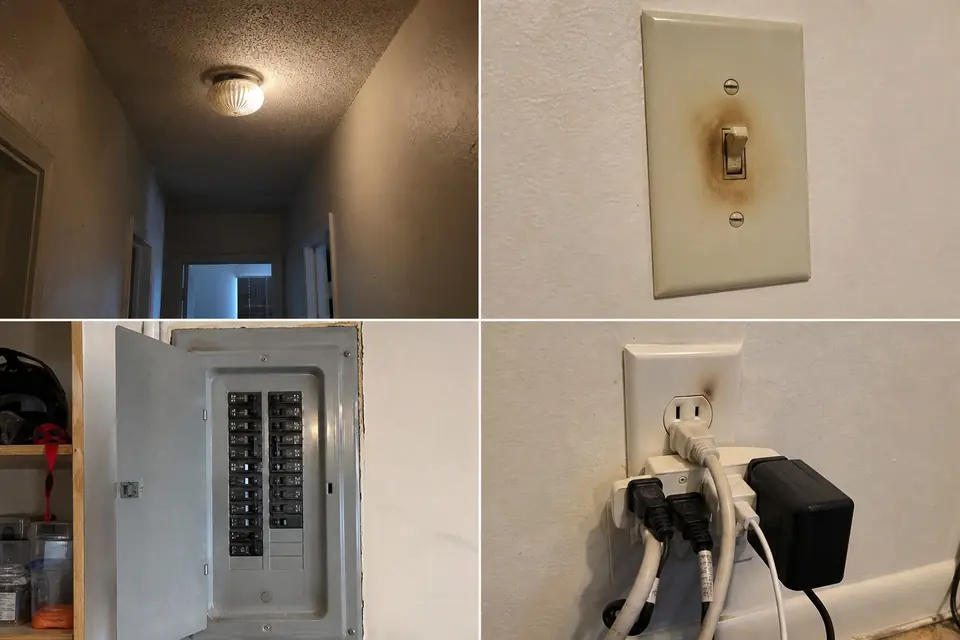
Here’s how to tell the difference. A repair problem stays put. A rewiring problem spreads, repeats, or comes back no matter how many times it gets patched.
- The same trouble in more than one room. Flickering lights in the kitchen, a dead outlet in the bedroom, and a warm switch plate in the hallway may look like three small issues. Together, they often point to the wiring behind all of them.
- Repairs that don’t stick. If you’ve had the same circuit fixed before and it’s acting up again, the part that was replaced probably wasn’t the real cause.
- Outlets, switches, or cover plates that feel warm, look scorched, or give off a faint burning or plastic smell. Heat where there shouldn’t be any is a sign the wire or connection is struggling.
- Breakers that trip often during normal use, not just when you overload one circuit with a big appliance.
- Two-prong outlets throughout the house, or three-prong outlets that were swapped in without a real ground wire behind them.
- Older wiring types, like cloth-covered knob-and-tube or aluminum branch wiring, still running to outlets and lights.
- Lights that dim or flicker when the AC, microwave, or another big appliance kicks on.
Picture it this way. You call about one outlet that stopped working. The fix takes an hour. Two months later, a light in another room starts buzzing, and a breaker you’ve never had trouble with starts tripping. Each call on its own seems minor. Added up, you’re paying again and again to chase symptoms of the same aging wire.
Age and history matter too. If your home has been through a few remodels, added rooms, or past owners doing their own electrical work, you can end up with a patchwork of old and new wire spliced together. Even in a home that isn’t very old, a heavy load from today’s appliances, home offices, and a hard-working AC system through a long Texas summer can push undersized circuits past what they were built for.
None of these signs means you automatically need a full rewire. One warm outlet might just be a loose screw terminal. That’s why the answer comes from looking at the whole system, not guessing from one symptom. A good electrician will tell you plainly when a repair is enough, and when spending more on repairs would only put off a job that’s coming anyway.
If you’re seeing two or more of the signs above, or you know your home still has old wiring types, it’s worth getting the full picture before you pay for the next small fix.
When Full Rewiring Is Not the Right Fix
A full rewire is a big job, and a lot of homes don’t need one. If the wire inside your walls is in good shape, tearing it out won’t make your home any safer. It just costs you money. These are the most common cases where a smaller fix is the right call.
- The problem stays on one circuit. If one outlet is dead, or one switch buzzes, and nothing else in the house acts up, that’s usually a bad device or a loose connection. An outlet or switch repair handles it.
- You added one big load. A new EV charger, hot tub, window unit, or home office full of gear can trip a breaker that never tripped before. The old wire isn’t failing. That circuit just has more on it than it was built for. A dedicated circuit for the new load is often all you need.
- The panel is the weak link, not the wire. An old, worn, or undersized panel can cause tripping, warm breakers, or no room to add circuits, even when the branch wiring is fine. In that case, an electrical panel upgrade fixes the real problem.
- Your outlets lack a ground, but the wire is sound. Two-prong outlets don’t always mean the whole house needs new wire. Depending on what’s behind the walls, adding a ground wire to the circuits that need it or adding GFCI protection may be the better fit.
- Only one part of the house has bad work. If a past owner’s garage conversion or add-on room is the only spot with sloppy wiring, a partial rewire of that area can make more sense than redoing every room.
There are also a few things you can check yourself before you call anyone. If a bathroom, kitchen, or garage outlet goes dead, look for a GFCI outlet nearby with a reset button and press it. If a breaker trips once while the microwave and toaster run together, unplug one, reset the breaker, and see if it holds. If it stays on during normal use, you may not have a wiring problem at all.
Lights that dim for a second when your AC kicks on don’t always point to bad house wiring either. A big motor pulls a lot of power when it starts, and the cause can be the AC itself or the service connection to your home. That needs a look, but it’s a different fix than a rewire.
Sometimes the right answer is to wait. If you’re planning a kitchen remodel or room addition in the next year or so, and nothing in your home is running hot, sparking, or smelling like burnt plastic, it can make sense to time the wiring work with the remodel. The walls will already be open, and you won’t pay to patch drywall twice.
If you’re not sure which group you fall into, an electrical safety inspection gives you a straight answer about the condition of your wiring before you commit to anything. You should come away knowing whether you need a repair, a partial job, or a full rewire, and why.
What Happens During a Home Rewiring Project
A home rewire takes out the old or unsafe wire and puts in new circuits, new outlets and switches, and proper grounding. Then everything gets tested before the job is called done. It sounds like the whole house gets torn apart. In most homes it doesn’t. The work goes one section at a time, and many families stay in the house the whole time.
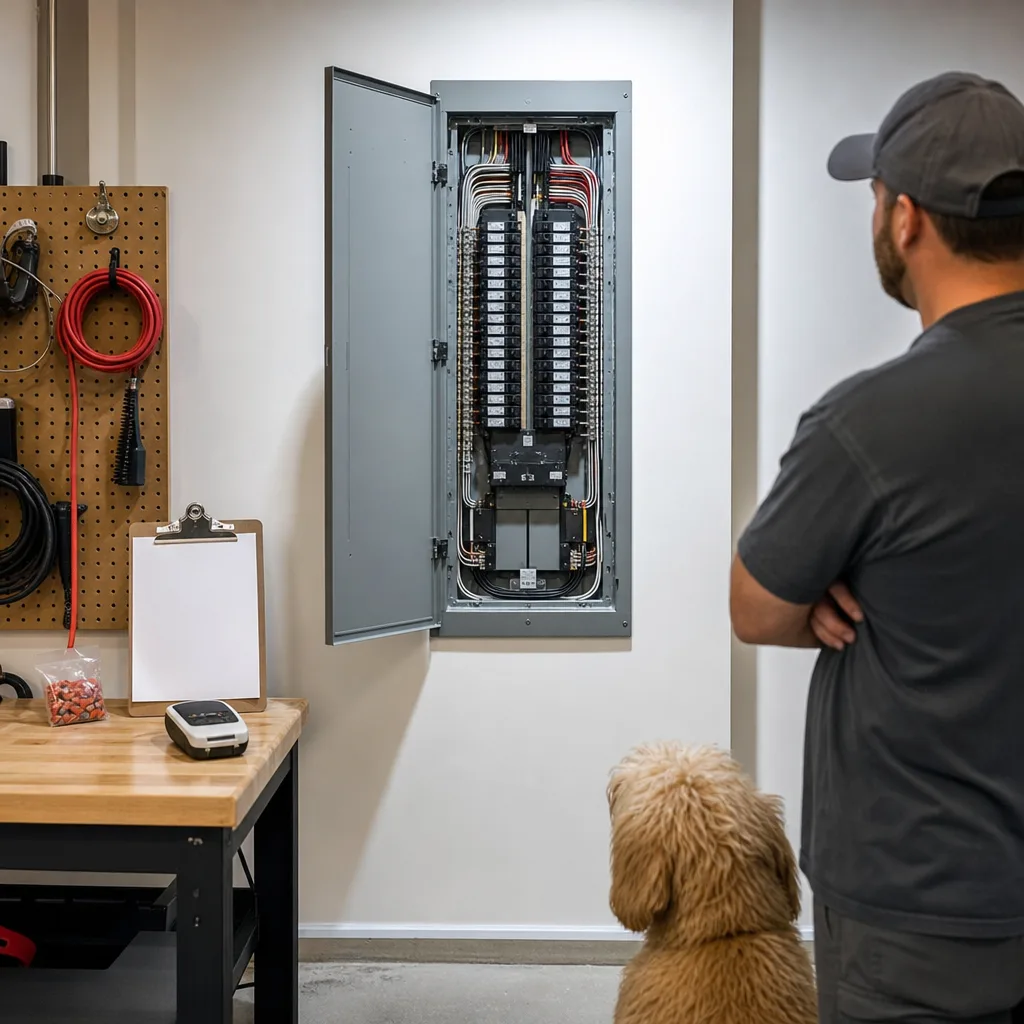
Here’s what the job looks like from start to finish.
- A walkthrough of your home. The electrician looks at your panel, your outlets and switches, and the attic so the scope matches what’s in your walls. With Xtreme Air Services, you get upfront flat-rate pricing that you approve before any work starts.
- Permits and planning. A rewire usually needs a permit and a city inspection. Ask whether the permit is included in your quote. With our pricing, permits aren’t included unless your quote says so.
- Power off, one area at a time. Circuits are shut down section by section, so you won’t be without power in the whole house for the length of the job.
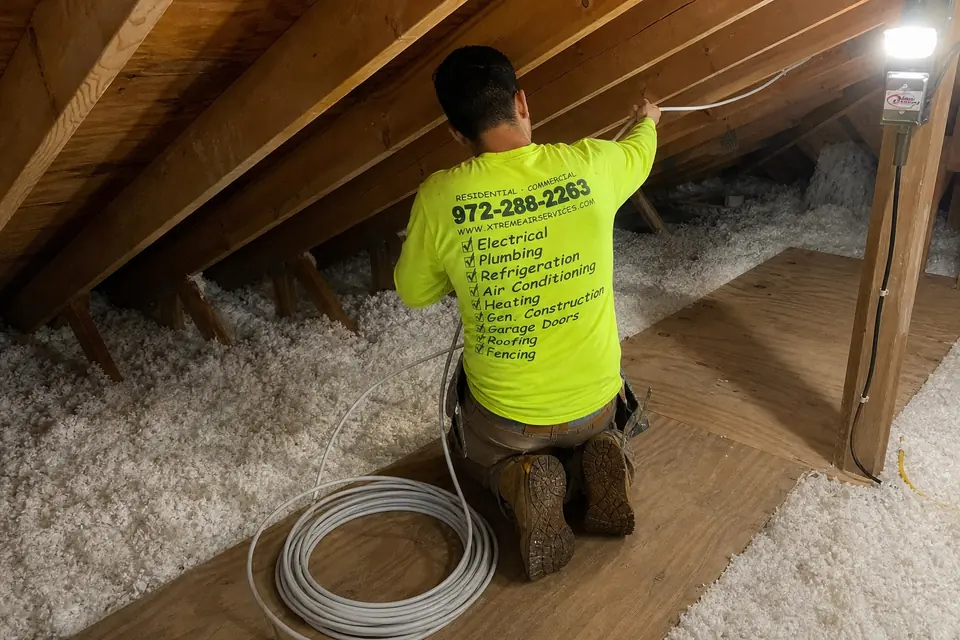
- Running new wire. New cable gets pulled through the attic and fished down inside the walls. Small openings are cut where the wire has to pass a framing board or reach a box.
- New devices and grounding. Outlets, switches, and boxes are replaced, and each circuit gets a real ground. The old wire is cut off and disconnected.
- Inspection, startup, and testing. Each circuit is tested before the job is done, and the city inspector signs off on the permitted work.
Most homes in Frisco and across North Texas sit on a slab, with no crawlspace underneath. That means most new wire runs through the attic and drops down into the walls. It also means attic access matters to the price and the schedule. In July and August, a North Texas attic can get dangerously hot by early afternoon. Ask your electrician how they’ll plan attic work around the heat. Rushed work in a hot attic is how connections get skipped.
You can make the job go smoother with a little prep. Move furniture a couple of feet away from outside walls and outlets. Clear a path to your attic opening and your electrical panel. Tell the crew about any room you need powered at certain times, like a home office or the room where a medical device is plugged in.
Expect some patching afterward. Those small wall openings get closed up, but drywall finishing and paint aren’t part of our rewiring price. Plan to have a drywall pro or painter come in once the inspection is done. New light fixtures you’d like to swap in are a separate choice as well. Our rewiring price covers the wire and materials, professional installation, new devices, grounding, and startup and testing.
When it’s over, you should be able to flip any switch and know exactly which breaker controls it. You should also have outlets that are grounded, and a panel that’s labeled to match. That’s what a finished rewire looks like. Our licensed and insured electricians aim to get it done right the first time, so you’re not calling back to chase the same problems again.
Have questions? We’re happy to help.
Call Today, Get Service Today. Xtreme Air Services — Frisco is ready to help.
Licensing, Permits, and Why They Matter for Frisco Homes
A rewire is only as good as the person doing it and the inspection that checks it. Every connection gets buried behind your walls, so you won’t see the quality of the work once the drywall closes up. A license and a permit are how you know someone qualified did it and someone independent looked at it.
In Texas, electricians are licensed through the Texas Department of Licensing and Regulation, or TDLR. A license means the person has passed testing, put in supervised hours on the job, and answers to the state for the work they do. You can look up any electrician’s license on the TDLR website in a couple of minutes. It’s a good habit before you let anyone open your walls.
The permit matters just as much. It creates a record that your new wiring was installed and then checked by a city inspector, not just by the crew that put it in. That record pays off in ways most people don’t think about until they need it.
- Selling your home. A buyer’s inspector may ask about recent electrical work. A closed permit shows the rewire passed inspection. Unpermitted work can slow a sale, lower an offer, or leave you paying to open walls so it can be checked.
- Insurance claims. If you ever have an electrical fire or damage, your insurance company may ask whether the work was permitted and done by a licensed electrician.
- Peace of mind. A second set of eyes catches mistakes, like a missing ground or a loose splice, before they’re sealed behind drywall.
- Future work. When you add an EV charger, a hot tub, or a room later, the next electrician has clean, documented wiring to tie into.
You’ll sometimes hear that skipping the permit saves time or money. It might save a little up front. But it moves the risk onto you, and the cost of fixing or proving unpermitted work later is almost always higher than doing it right the first time.
Before you hire anyone for a rewire in Frisco, ask these questions:
- Who holds the electrical license, and will a licensed electrician be on the job or supervising it?
- Will you pull the permit with the City of Frisco, and is the permit fee in my quote?
- Will you be there for the city inspection, and what happens if something doesn’t pass?
- Are you insured if someone gets hurt or something gets damaged in my home?
- Will I get a labeled panel and a clear record of what was replaced?
A good contractor won’t mind any of these questions. If you get vague answers, or someone tells you a permit isn’t needed for a whole-house rewire, take that as your cue to keep looking.
Xtreme Air Services is a fully licensed and insured HVAC, plumbing, and electrical contractor, and our technicians are background-checked and drug-tested before they ever step into your home. We’ll tell you up front what’s in your quote, including whether the permit is part of it, so nothing about the paperwork catches you off guard. Our office at 6160 Warren Pkwy in Frisco keeps us close to the homes we serve.
Watch Our Video
See How We Handle Home rewiring in Frisco
Xtreme Air Services — Frisco
What Drives Home Rewiring Cost
A typical home rewiring job with Xtreme Air Services runs $8,000 to $20,000. Our most common job runs $10,500 to $15,000. That job replaces outdated or unsafe wiring throughout the home with new circuits, devices, and grounding, and everything is inspected and tested. Every rewire is priced by home size and scope. So where your home lands in that range depends on what’s behind your walls, not on a one-size price.
These are the things that move the number up or down:
- Home size and number of circuits. More rooms mean more circuits, more wire, and more outlets and switches to replace. A kitchen packed with appliances needs more circuits than a spare bedroom.
- Wall, attic, and crawlspace access. Most slab homes get their new wire through the attic, as covered above. A roomy attic with a clear path keeps labor down. A tight attic, a low roofline, or a finished space with no easy route takes more time.
- Condition of your existing wiring. Clean, simple wiring is quicker to replace. A patchwork of old splices, past do-it-yourself work, or older wire types like knob-and-tube or aluminum takes more care to trace and disconnect safely.
- Panel upgrades. If your panel doesn’t have the room or capacity for the new circuits, a panel upgrade becomes part of the job.
- Drywall repair. Some walls need more openings than others to get wire where it has to go. More openings mean more patching.
- Code upgrades. Your old system was built to older rules. New circuits have to meet today’s code, which can add devices or protection your home never had.
- Permits. The permit fee is part of the real cost of a rewire, even when it’s listed apart from the labor.
Know what isn’t in the price, too. Drywall finishing, paint, and fixture upgrades are separate, as covered above. Code corrections beyond the agreed scope aren’t included either. Permits aren’t included unless your quote says so. If the electrician finds a problem outside the work you approved, you should hear about it and decide before anything changes.
When you compare quotes, compare the scope, not just the total. A lower number can leave out the panel, the permit, or half the circuits. Ask each contractor to spell out how many circuits they’re replacing, whether the panel is part of it, and whether the permit fee is in the price. That’s the only fair way to line two quotes up side by side.
Getting the full picture starts with a visit. Xtreme Air Services charges a $26 to $99 service-call fee. That fee is credited toward the repair if you go ahead with us. From there, you get upfront flat-rate pricing that you approve before any work starts, so there’s no meter running while the crew works.
If the total is more than you’d like to pay at once, flexible financing is available on qualifying installations and larger jobs, on approved credit. A rewire usually falls in that larger-job group, so it’s worth asking about when you get your quote.
Call 469-490-3595
Frequently Asked Questions
Common questions about Home rewiring
How long does it take to rewire a 2,000 sq ft house in Frisco?
A whole-house rewire on a home that size usually takes several days to about two weeks. The timeline depends on attic access, how much of the old wire is in bad shape, and whether your panel also needs an upgrade. Slab homes in Frisco add some time too, since nearly all new wire has to run through the attic and drop down into the walls rather than coming up from a crawlspace. Your electrician should walk the home first and give you a realistic schedule before work starts.
Can I stay in my home during a rewiring project?
Yes, most families stay in their home during a rewire. The work goes circuit by circuit and room by room, so power only goes out in the section being worked on at any given time. You won’t lose power to the whole house for the length of the job. It’s smart to plan around a day or two where one room, like a kitchen or home office, has its power scheduled off.
Do I need to move my furniture before a rewiring crew arrives?
Yes, pulling furniture a couple of feet away from outside walls and outlets helps the crew move faster. You should also clear a path to your attic access and your electrical panel, since both get used throughout the job. If there’s a room you need powered at a specific time, like one with a home office or a medical device, tell the crew ahead of time so they can plan around it.
Ready to Get Started?
Call (469) 490-3595 Today, Get Service Today.