


EV Charger Installation in Frisco You Can Trust to Code
Level 2 home chargers wired on their own circuit, with your panel checked first so the charger runs at full speed.
What’s Covered on This Page
- What a Level 2 Home Charger Install Involves
- Permits Are Required for EV Charger Wiring in Frisco
- Why Licensed Wiring Matters for Charger Safety
- What Drives EV Charger Installation Cost Up or Down
- Signs You Can Skip a Full Panel Upgrade
- Can any electrician install an EV charger, or do I need a specialist?
- Do I need to be home when the inspector checks my new EV circuit?
- What if my electrical panel is already full when I want a charger installed?
What a Level 2 Home Charger Install Involves
The charger on the wall is the easy part. The real work is getting safe, steady power to it. A Level 2 charger runs on 240 volts, the same kind of power your electric dryer or range uses. That’s why it can add range several times faster than plugging into a regular wall outlet.
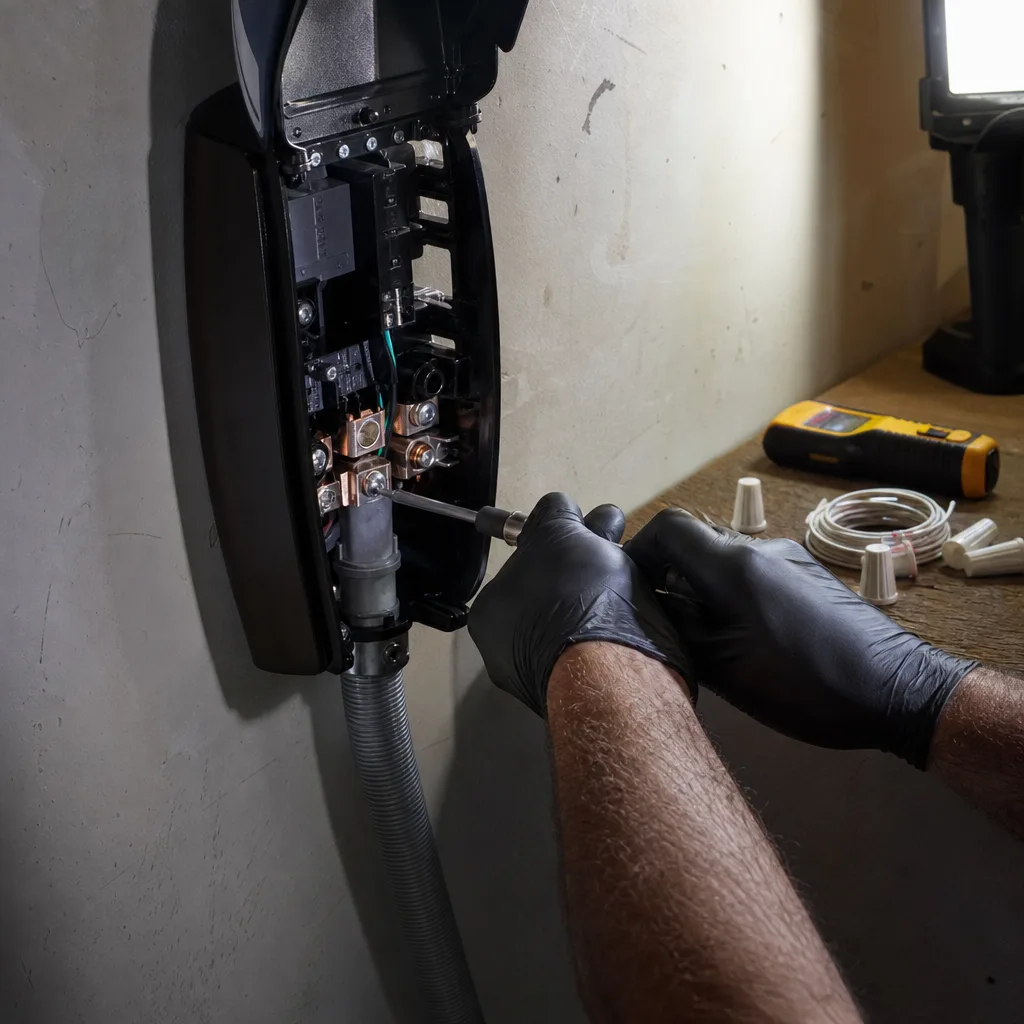
Here’s what the job looks like, step by step:
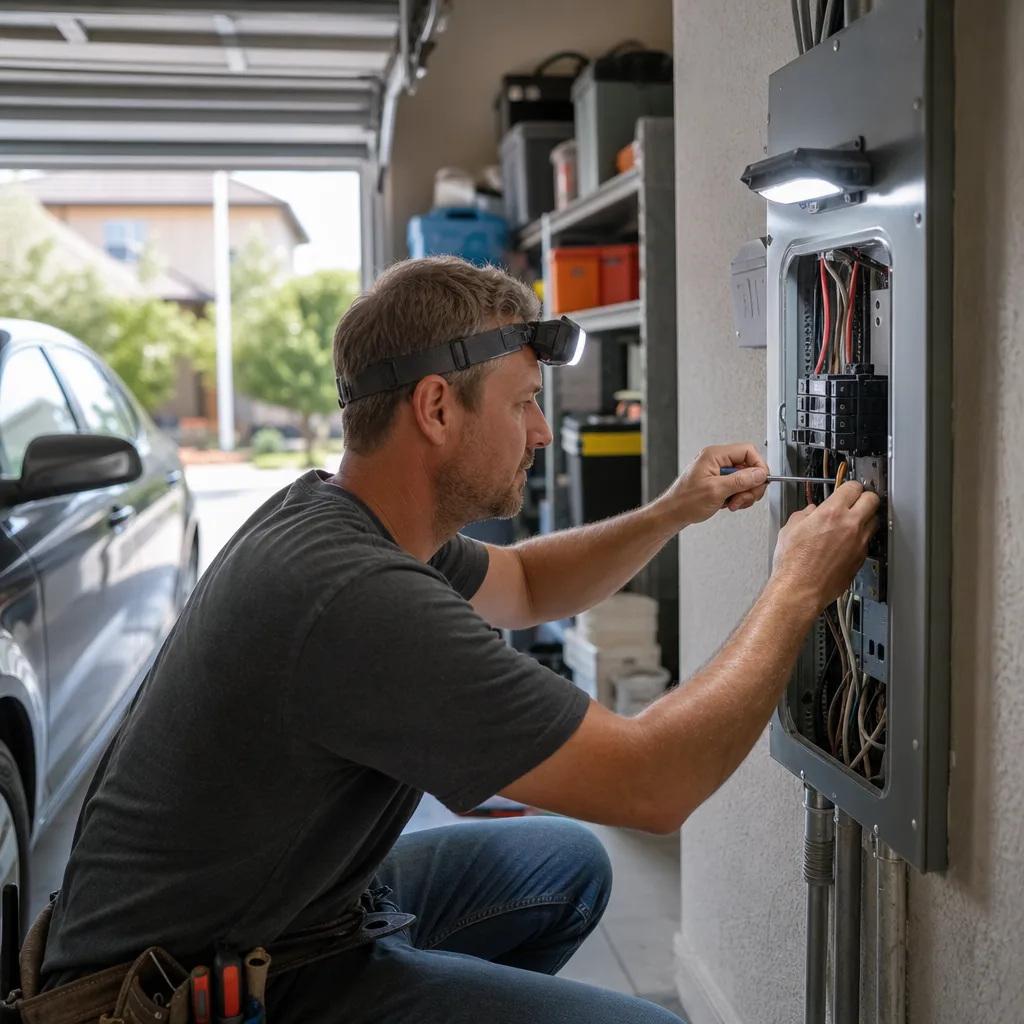
- Check your panel. Before anything else, you need to know whether your panel has the capacity and the open space for a new large circuit. Your AC, water heater, and range already pull from it, and a charger adds a big, steady load on top of that.
- Match the circuit to the charger. EV charging counts as a continuous load, meaning it runs at full draw for hours. Because of that, the circuit is sized above what the charger pulls. A 40-amp charger, for example, usually goes on a 50-amp circuit.
- Plan the route. The wire has to get from the panel to your parking spot. A panel on the garage wall right next to where you park is a short, simple run. A panel on the far side of the house means routing wire through walls, the attic, or along the outside in conduit, which is protective tubing for the wire.
- Install the circuit. A new double-pole breaker goes into the panel, and properly sized wire runs to the charger location.
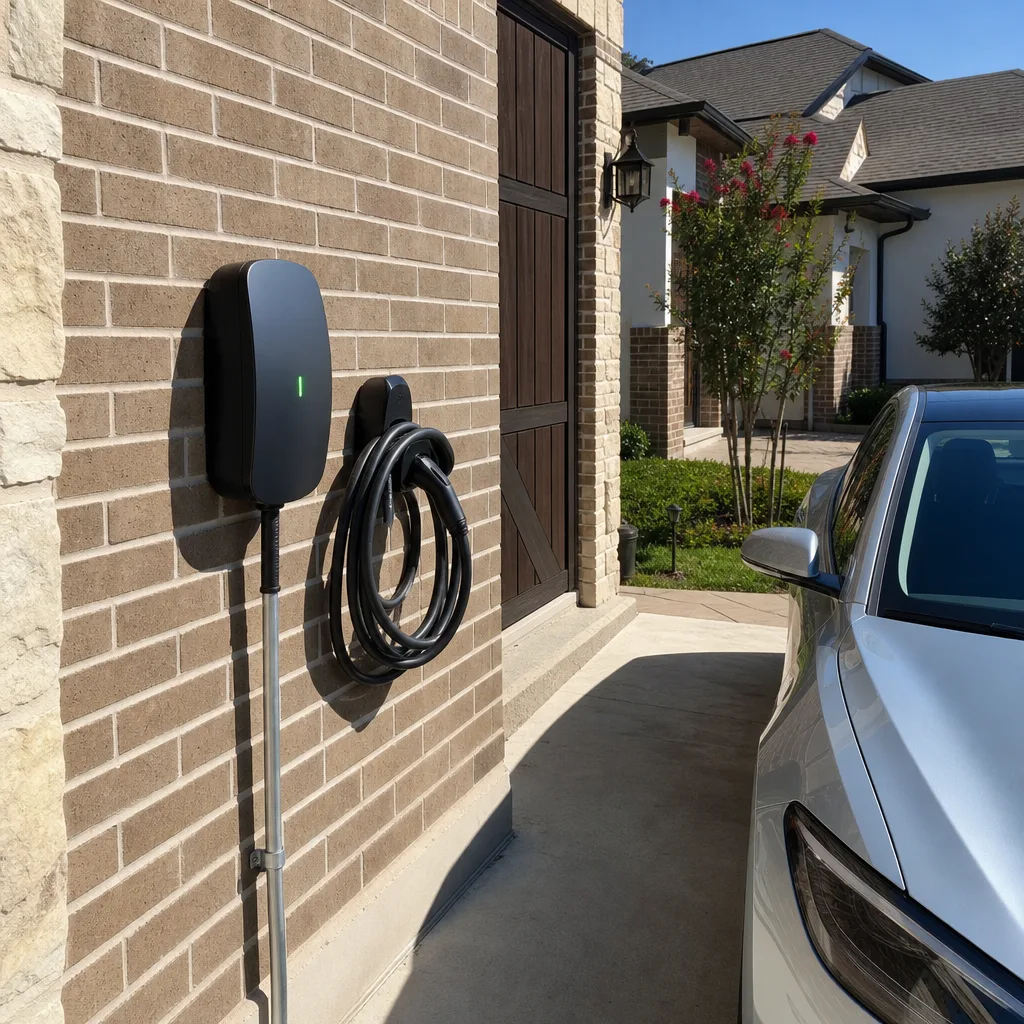
- Mount and connect. The charger is mounted where your cable easily reaches the car’s charging port, then wired to the new circuit.
- Start up and test. The charger is powered on and tested to confirm it’s charging the way it should.
You’ll also want to decide between a hardwired charger and a plug-in model that uses a 240-volt outlet. Hardwired units connect straight to the circuit and can often charge at a higher rate. Plug-in units are easier to take with you if you move. Either way, it still needs its own dedicated circuit. That’s the part that keeps your breaker from tripping every night and keeps the wiring from running hot.
Our standard install covers the dedicated circuit, professional installation, mounting, and startup and testing. A few things fall outside that, depending on your home. The charger itself isn’t included if you don’t supply one, and neither are panel upgrades, trenching to a detached spot, code corrections, or permits unless they’re stated in your quote. If your panel is already full, a panel upgrade or subpanel may come first. We’ll tell you that up front, before any work starts.
Many Frisco homes have an attached garage, so the run from panel to parking spot is often fairly direct. Still, the only way to know for sure is to look at your panel and your garage. Once we’ve seen both, you’ll know exactly what your install involves and what it will cost.
Permits Are Required for EV Charger Wiring in Frisco
Adding a new 240-volt circuit for a Level 2 charger is electrical work that needs a permit from the City of Frisco and an inspection once the wiring is in. That’s true even when the job is simple and the charger sits right next to the panel. If anyone offers to skip the permit to save you time or money, treat that as a warning sign, not a favor.
We know a permit can feel like red tape. It isn’t there to slow you down. An EV charger pulls a big load for hours at a time, every night. A city inspector checks the work with fresh eyes before you start trusting it with that load.
Here’s what an inspection is there to confirm:
- The breaker and wire are the right size for each other and for the charger, so nothing runs hot.
- The circuit is properly grounded and protected.
- Wire running through walls, the attic, or outside in conduit is supported and protected the way it should be.
- Your panel can safely carry the new load along with your AC, water heater, and everything else already on it.
A permit also protects you down the road. If you sell your home, a buyer’s inspector may ask about a charger with no permit on record. And if something ever goes wrong with that circuit, you’ll want a paper trail showing the work was done right and signed off.
There is one case where you don’t need a permit. If you only plan to use the Level 1 cord that came with your car and you plug it into a regular outlet that’s already in your garage, no new wiring is going in, so no permit applies. Level 1 charging is slow. Still, if you drive short distances and park every night, it may cover you just fine for now. You can always add a Level 2 circuit later.
If your home is in a neighborhood with an HOA, check your HOA rules too. That’s separate from the city permit. It matters most if the charger will be mounted outside the garage, where neighbors can see it.
Before you hire anyone, ask these questions:
- Who pulls the permit, and is the permit fee in my quote?
- Who meets the inspector, or do I need to be home?
- If the inspector asks for a change, who fixes it, and does that cost extra?
- Is the electrician doing the work licensed in Texas?
On our quotes, permits aren’t included unless they’re stated in writing, so you’ll see exactly where they stand before any work starts. The same goes for code corrections. If we find an older wiring problem that has to be fixed for the job to pass, we’ll show you what it is and what it costs first. Xtreme Air Services is a licensed and insured electrical contractor, so the circuit going into your Frisco garage is installed to pass inspection, not just to power up.
Why Licensed Wiring Matters for Charger Safety
Your EV charger is the hardest-working circuit in your home. A lamp or a TV barely notices a small wiring mistake. A charger pulling close to its full load for several hours every night will find that mistake, and it shows up as heat. Licensed wiring matters because the details that keep a charger safe are small, easy to miss, and invisible once the cover goes back on.
Here’s where charger installs most often go wrong when the person doing the work doesn’t know this kind of load:
- Loose connections. A wire that isn’t tightened correctly at the breaker or charger can work fine on day one. Over months of heating up and cooling down, it can loosen, spark, and scorch the terminal.
- Wire that’s too small. Thin wire on a big breaker won’t always trip. It just runs hot inside your wall where you can’t see it.
- The wrong outlet. If you’re using a plug-in charger, a basic 240-volt outlet can wear out from heavy daily use. The outlet should be rated to handle that kind of load night after night.
- Mixed metals. Some wire and terminals aren’t made to work together. When they’re paired anyway, the connection can break down over time.
- A panel pushed past its limit. Adding a charger without checking what your AC, water heater, and range already use can overload the whole panel, not just the new circuit.
North Texas summers add one more factor. Many Frisco homes have attached garages, and that’s usually where the charger goes. A closed garage in July gets very hot, and wiring that’s already working hard has less room for error in that heat. A licensed electrician plans for where the charger lives, not just whether it turns on.
If you already have a charger, a few signs suggest the wiring needs a closer look: an outlet or plug that feels hot or looks discolored, a burning or melted-plastic smell, a breaker that trips during charging, or a charger that keeps slowing down or showing faults.
To be fair, there’s plenty you can handle yourself. You can pick the charger, decide where you want it mounted, and figure out which side of the car your charging port is on. Measuring the distance from your panel to your parking spot is helpful too. The wiring itself is a different story. It’s the one part of the job where a small shortcut can turn into a big problem years later.
When you hire a licensed and insured electrical contractor, you’re also getting accountability. If something isn’t right, you know exactly who did the work and who stands behind it. At Xtreme Air Services, your install is done by licensed, background-checked technicians who treat your home with respect. You’ll get upfront flat-rate pricing before any work starts, so you know the job is being done right the first time and what it costs before we begin.
Not sure what your EV charger installation project needs? Ask us.
Call Today, Get Service Today. Xtreme Air Services — Frisco is ready to help.
What Drives EV Charger Installation Cost Up or Down
Most home EV charger installs we do land between $900-$1,700. That’s for the most common job: a Level 2 charger on a dedicated circuit from your panel, mounted, connected, and tested. Across all the installs we handle, the typical range runs $500-$2,500. Where your job falls depends on your home, not on a guess.
Here’s what moves the number, starting with the biggest factors:
- Distance from the panel. Wire and labor add up with every foot. A charger a few feet from your panel costs less than one at the far end of a long driveway or a detached spot.
- Panel capacity. If your panel has room and enough capacity for the new load, you’re in good shape. If it’s full or maxed out, a panel upgrade or subpanel comes first, and that’s the single biggest cost jump on most jobs.
- Charger amperage. A higher-amp charger fills your battery faster, but it needs a larger breaker and heavier wire. Heavier wire costs more, especially on a long run.
- Wall and conduit routing. Running wire through an open garage wall is quick. Fishing it through finished walls or the attic, or running it outside in conduit, takes more time and material.
- Code upgrades. If older wiring or panel issues have to be fixed for the new circuit to pass inspection, that adds to the job.
- Permits. As covered above, the City of Frisco requires one, and the fee shows up as its own line unless your quote says it’s included.
So what does a lower-cost job look like? Picture a 40-amp charger going on the garage wall right beside a panel with open space. It’s a short, simple run. Now picture a 48-amp charger on the outside of the house, 60 feet from a full panel. That job needs more wire, conduit, and possibly a panel upgrade, so it heads toward the top of the range.
You can lower your cost a little with some planning. Pick your charger before we quote, and choose the amperage you’ll use. If your car only accepts a certain charging rate, paying for a bigger circuit than it can use doesn’t help you. Mounting the charger close to the panel, when that spot works for your parking, also keeps the run short.
The service call fee is $26-$99, and it’s credited toward the work if you go ahead with Xtreme Air Services. You’ll get upfront flat-rate pricing before anything starts, so there’s no meter running and no surprise at the end. If your install needs a panel upgrade or runs larger, flexible financing is available on qualifying installations and larger jobs, on approved credit.
The fastest way to know your real number is to have a licensed electrician look at your panel and your parking spot. Talk to a real person on our team about your Frisco install today.
Call 469-490-3595
Watch Our Video
See How We Handle EV charger installation in Frisco
Xtreme Air Services — Frisco
Signs You Can Skip a Full Panel Upgrade
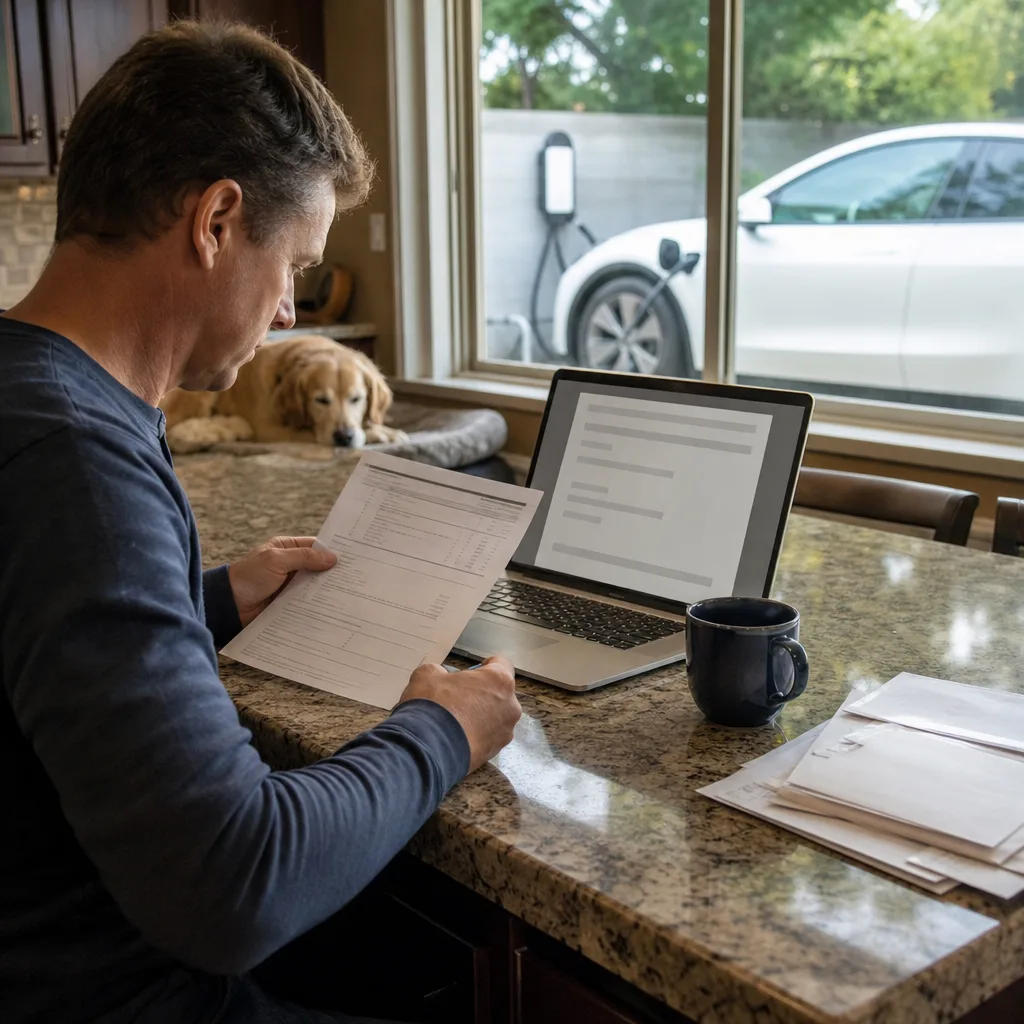
A lot of people hear “EV charger” and assume a new electrical panel comes with it. Often it doesn’t. A full panel upgrade is a big job, and it should only happen when the numbers say your home can’t safely carry the charger any other way. Here’s how to tell if you’re likely in good shape.
- You have open breaker spaces. Look inside your panel door. If you see empty slots with room for a double-pole breaker, that’s a good start. It doesn’t prove you have enough capacity, but a packed panel is the first thing that pushes people toward an upgrade.
- Some of your big appliances run on gas. A gas furnace, gas water heater, gas range, or gas dryer takes a lot of steady demand off your panel. That leaves more room for a charger.
- Your home has 200-amp service. The main breaker at the top of your panel usually shows its rating. A 200-amp panel can often take a Level 2 charger with room to spare. A 100-amp panel in an all-electric home is a much tighter fit.
- Your daily driving is modest. If you drive 30 or 40 miles a day, you probably don’t need the biggest charger on the market. A lower-amp charger on a smaller circuit can still fill your battery overnight, and it asks much less of your panel.
- Your breakers don’t trip now. If your AC, dryer, and oven all run on a hot afternoon without a breaker tripping, your panel isn’t struggling with the load it already carries.
None of these signs replaces a real load calculation. A licensed electrician adds up what your home uses, like your AC, water heater, range, and dryer, and checks whether the charger fits on top of it. That’s the honest answer to “Do I need a new panel?” A guess isn’t.
There’s also a middle path that many homeowners don’t know about. Some smart chargers and load-management devices watch how much power your home is using. When the house gets busy, they slow charging down, then speed it back up when demand drops. If your panel is close to its limit but not over it, this can let you add a charger without replacing the panel. Just know that Frisco summer nights stay warm, so your AC may still be running while the car charges. The device has to account for that.
On the other hand, a few signs point toward a real upgrade. These include a panel with no open spaces, a breaker that already trips under normal use, a panel that feels warm or shows scorch marks, or an older panel brand with a poor safety history. In those cases, adding a charger without fixing the panel first isn’t worth the risk.
If your home checks most of the boxes above, there’s a good chance your charger can go right onto the panel you already have. That keeps your install simpler, faster, and closer to the lower end of the cost range. You shouldn’t pay for a bigger job than your home needs.
Frequently Asked Questions
Common questions about EV charger installation
Can any electrician install an EV charger, or do I need a specialist?
A licensed electrician can install an EV charger, but not all of them work with continuous 240-volt loads every day. You want someone who checks your panel’s full capacity, not just whether a breaker slot is open. Ask if they handle EV circuits regularly before you book the job.
Do I need to be home when the inspector checks my new EV circuit?
That depends on who your electrician sends to meet the inspector. Before you hire anyone, ask who meets the inspector and whether you need to take time off work for it. A good contractor will spell this out before the job starts, so you aren’t caught off guard on inspection day.
What if my electrical panel is already full when I want a charger installed?
If your panel has no open breaker spaces, a panel upgrade or subpanel usually comes first. This is the single biggest cost jump on an EV charger job. A licensed electrician can run a load calculation on your home’s AC, water heater, and range to tell you for sure before any work begins.
Ready to Get Started?
Call (469) 490-3595 Today, Get Service Today.