


Emergency / No-Heat Furnace Repair in Frisco: Is It Safe to Wait?
When the heat quits, know whether it's an emergency tonight or can wait until morning – and what a repair visit involves.
What’s Covered on This Page
- Is a No-Heat Furnace an Emergency Right Now
- Checks You Can Make Before Calling for Repair
- Common Reasons a Furnace Stops Heating
- What Happens During an Emergency Repair Visit
- What Emergency Furnace Repair Costs in Frisco
- Is it safe to just keep resetting the breaker if my furnace won’t start?
- Can a dirty air filter really stop my furnace from heating?
- Why does my furnace click on and then quit without lighting?
- Should I worry if my furnace is in the attic and hard to reach?
Is a No-Heat Furnace an Emergency Right Now
You’re standing by the thermostat. It says 64 and dropping, and the vents are blowing nothing or cold air. The real question isn’t whether the furnace is broken. It’s whether you need help tonight or whether this can wait until morning. Here’s how to tell.
Call tonight if any of these fit your situation:
- A cold front has pushed temperatures toward freezing. North Texas winters can swing from mild to a hard freeze in a single day, and a house without heat loses ground fast once that happens.
- Someone in your home struggles with the cold, like a baby, an older parent, or a family member with a health condition.
- The indoor temperature keeps falling hour by hour instead of leveling off.
- You’ll be away or asleep for hours and won’t be able to watch how cold the house gets.
- You have pets that stay home alone while you’re at work.
It can probably wait for a daytime appointment if it’s a mild afternoon, the house is holding its temperature, and everyone is comfortable with an extra blanket. That’s an honest answer, and we’d rather you hear it from us. There’s no need to pay for a visit you don’t need tonight.
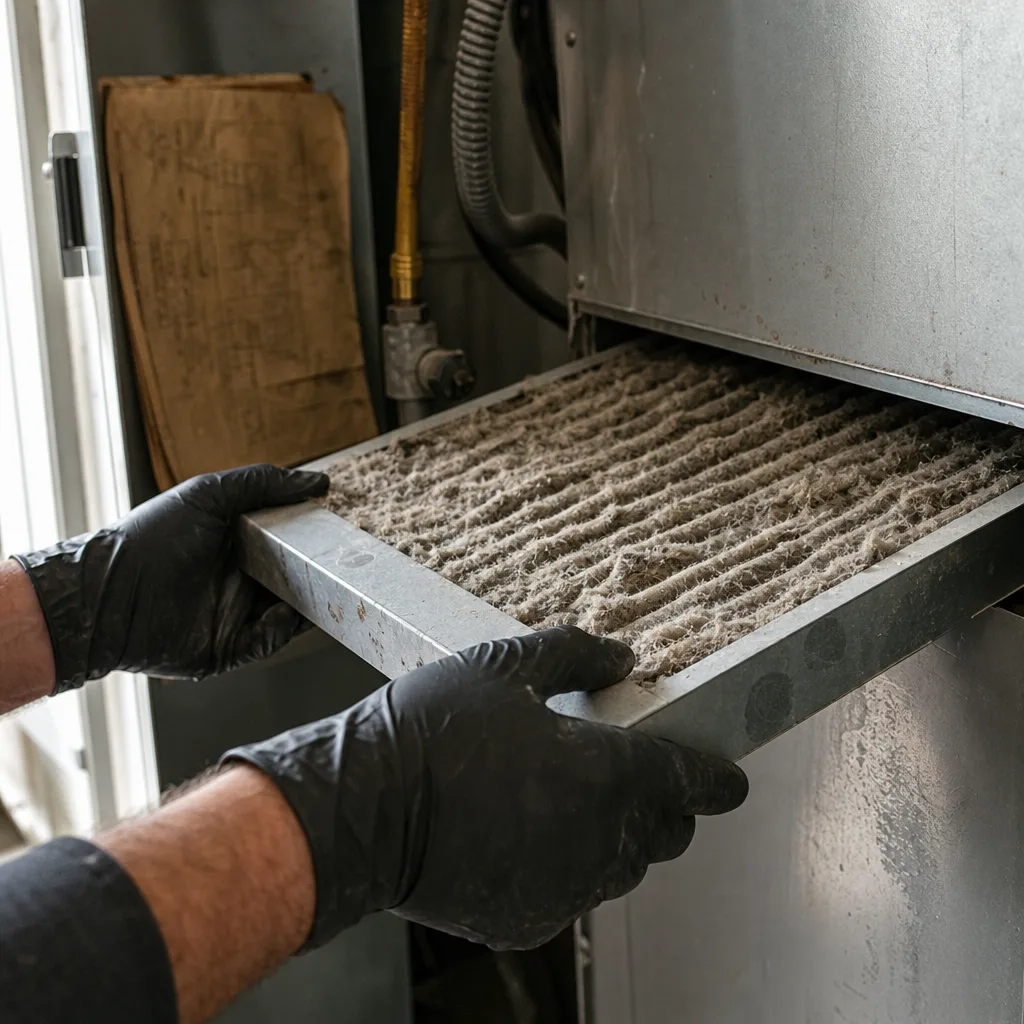
Before you decide either way, take two minutes to check the simple things. Make sure the thermostat is set to Heat, not Cool or Off, and set a few degrees above the room temperature. If your thermostat runs on batteries and the screen is blank or dim, swap them out. Look at your air filter, too. A filter that’s packed with dust can choke airflow badly enough that the system struggles to heat the house. If one of these fixes it, you’re done, and you just saved yourself a service call.
In a lot of Frisco homes, the furnace sits up in the attic, so there isn’t much else you can safely check from the hallway. If the easy checks don’t bring the heat back, the problem is almost always inside the furnace. That means a failed part, a sensor, or a control issue that needs a technician with the right tools.
Many people wait until Monday because they’re afraid of a weekend or after-hours bill. With us, that worry doesn’t apply. Xtreme Air Services charges no extra for nights or weekends, so a Saturday night visit costs the same as a Tuesday morning one. Our team answers the phone around the clock, and same-day service is available, so you can talk to a real person and decide together whether this needs a visit tonight.
If your gut says the house is getting too cold, trust it. A furnace that quits during a freeze rarely fixes itself overnight, and your family’s comfort is worth the call.
Checks You Can Make Before Calling for Repair
You’ve already checked the thermostat, the batteries, and the filter. If the heat still isn’t coming on, a few more things can shut a furnace down without anything being broken. None of these need tools, and each one takes about a minute.
- The breaker. Go to your electrical panel and find the breaker marked furnace, heat, or air handler. If it’s tripped, flip it fully off, then back on. If it trips again, leave it off. That points to an electrical problem inside the system, and it’s not something to keep resetting.
- The furnace power switch. Most furnaces have a switch that looks just like a regular light switch, mounted on or near the unit. In attic installs, it’s usually close to the furnace or near the attic opening. It’s easy to bump while you’re moving holiday boxes, so make sure it’s on.
- The front panel. Furnaces have a small safety switch behind the front cover. If that cover is loose or wasn’t pushed back on all the way after a filter change, the furnace won’t start. Press it firmly into place.
- The status light. Many furnaces have a small window with a blinking light. Count the blinks and check the chart on the inside of the panel door. Write down what you see. It gives the technician a head start.
- The drain line on high-efficiency furnaces. If your furnace has white plastic vent pipes, it makes water as it runs. A clogged drain or a full drain pan can trip a float switch that shuts the heat off. If you see standing water around the unit, that’s likely why it stopped.
- Your other gas appliances. If your stove or water heater runs on gas and they’re working, gas is reaching your home. If they’re out too, the problem may be your gas service, not your furnace.
Here’s an honest note about attics. In a lot of Frisco homes, getting to the furnace means pulling down a ladder and crossing joists in a tight, dark space. If you can’t get to it easily and safely, skip the furnace checks. The breaker panel and your other gas appliances still tell you plenty from the ground floor.
There are also a few things you shouldn’t do. Don’t take off the burner cover, don’t hold anything to the burners, and don’t keep turning the power off and on hoping it’ll catch. Furnaces lock themselves out after several failed tries to start. That’s a safety feature, and forcing restarts can turn a small repair into a bigger one.
If one of these checks brings the heat back, great. Keep an eye on it, though. A furnace that shut off from a tripped breaker or a full drain pan may do it again, and that usually means something underneath still needs attention.
If none of them work, you’ve done everything a homeowner can safely do. What’s left is inside the furnace, like an ignitor, a flame sensor, a pressure switch, a blower motor, or the control board. Finding which one failed takes testing, not guessing. And the notes you just took, like the blink code, the breaker that tripped, or the water in the pan, make that diagnosis faster when the technician arrives.
Common Reasons a Furnace Stops Heating
If the easy checks didn’t bring the heat back, the cause is usually one part inside the furnace that has worn out or gotten dirty. That’s better news than it sounds. Most calls are a single common failure fixed on the first visit. Here’s how each one shows up, so you can match it to what you’re seeing and hearing.
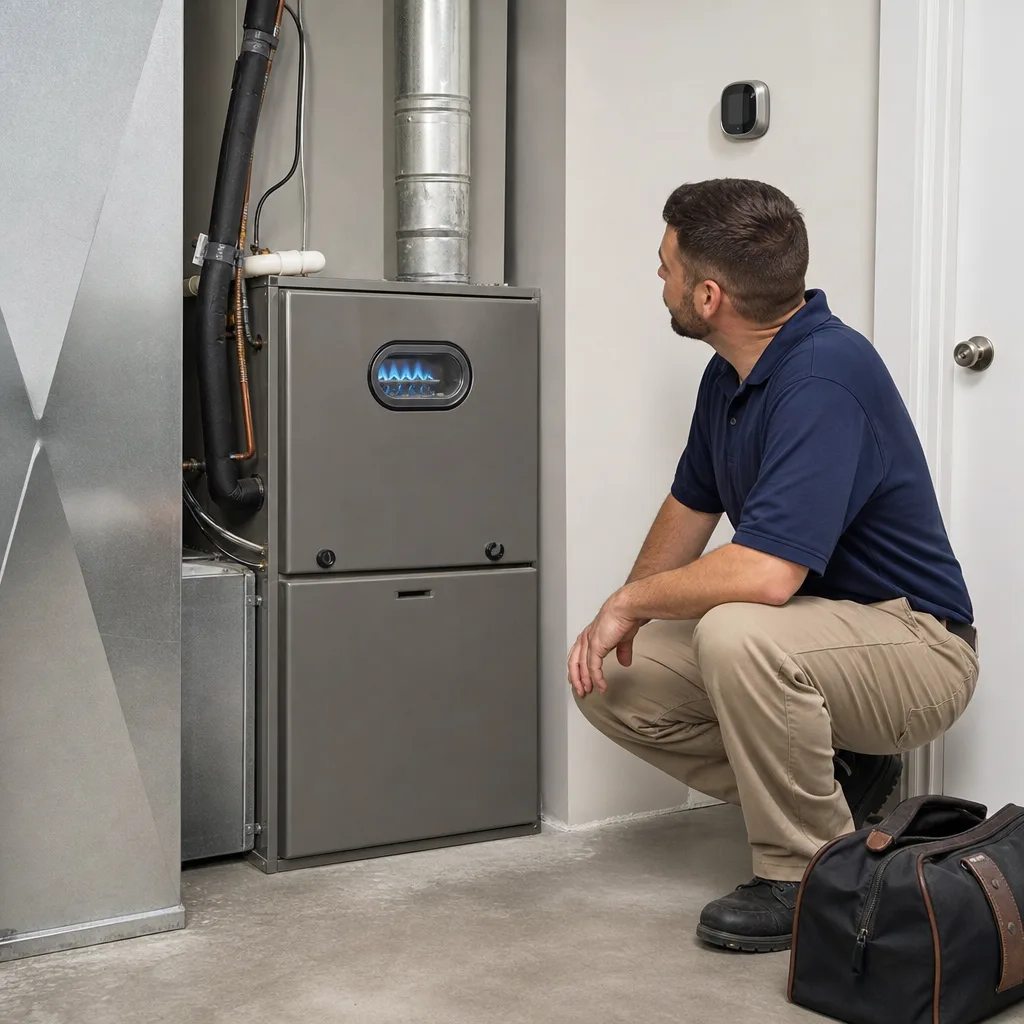
- The ignitor. Most gas furnaces light with a small part that glows bright orange, a lot like the wire in a toaster. It gets very hot every time the heat comes on, and over the years it can crack. You’ll hear the furnace click on and a small fan start up, but the burners never light. After a few tries, it gives up and goes quiet.
- The flame sensor. This thin metal rod tells the furnace that a flame is really there. When it gets coated with grime, it can’t sense the flame. The burners light, run for a few seconds, then shut off. The furnace tries again, repeats the same thing, and finally locks out. Cleaning the sensor often solves it.
- The pressure switch or inducer motor. Before the burners light, a small fan pushes exhaust out the vent pipe. A pressure switch checks that this is working. If the fan is weak, the tiny rubber hose is clogged, or the vent is blocked, the switch won’t let the furnace light. You may hear a hum or a whine but see no flame.
- The blower motor. This is the big fan that pushes warm air through your ducts. If it fails, the burners may light, but the heat never reaches your rooms. With no air moving, the furnace overheats and a safety switch shuts it down. A steady hum or a hot, burning smell near the unit are common signs. Sometimes the problem is only the capacitor, a small part that gives the motor its push to start.
- The control board. This is the furnace’s brain. It tells every other part when to run. A power surge during a storm, or plain age, can knock it out. You might see a furnace with power that does nothing at all, or a blink code pointing to the board.
An electric furnace has no flame at all. It heats with metal coils, like a big hair dryer. A burned-out heating element, or a bad sequencer, can leave the fan blowing cool air. The sequencer is the switch that turns those coils on one at a time.
Attic furnaces in Frisco have a hard life. They sit through months of North Texas summer heat up there, then get asked to run hard on the first cold front. That heat wears on wires, ignitors, and motors. A part that’s been getting weaker all year can give out on the first night you really need it.
Several of these problems look the same from the hallway. A furnace that clicks and then stops could have a bad ignitor, a dirty flame sensor, or a stuck pressure switch. Swapping parts until something works is how a simple repair turns into an expensive one. Testing each part shows which one failed, so you pay to fix only that part. The blink code you wrote down earlier helps narrow it down even faster.
Have questions? We’re happy to help.
Call Today, Get Service Today. Xtreme Air Services — Frisco is ready to help.
What Happens During an Emergency Repair Visit
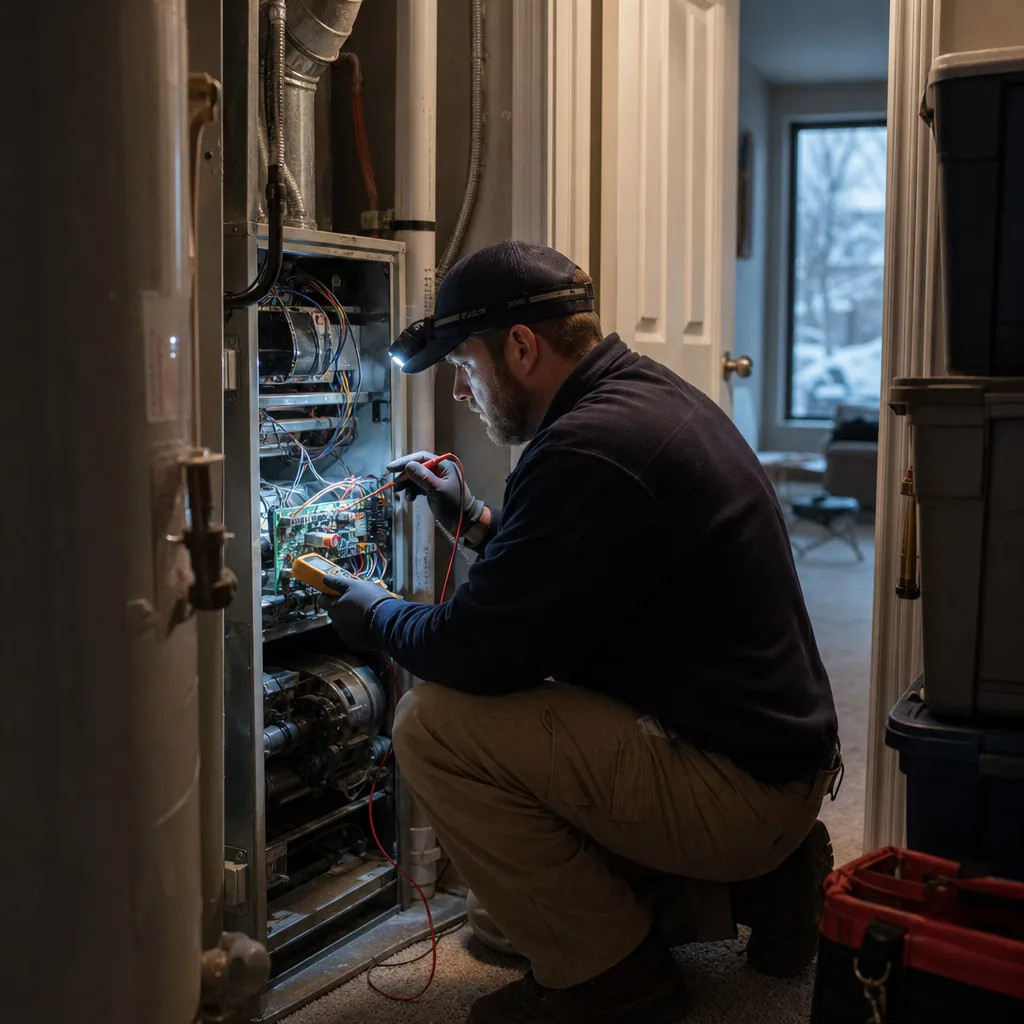
When you call about a furnace that won’t heat, the goal of the visit is simple. We find the part that failed, repair or replace it, and make sure your system runs the way it should before we leave. Most calls are a single common failure fixed on the first visit.
Here’s how that plays out once the technician gets to your home.
- Finding the problem. The technician starts with what you saw. The blink code, the breaker that tripped, or the furnace that clicked and quit all point the testing in the right direction. Then they check the likely parts one at a time until they find the one that failed.
- Hearing what’s wrong, in plain English. You’ll learn which part failed and why the furnace shut down. If it’s a cracked ignitor or a dirty flame sensor, you’ll hear that in words that make sense.
- Approving the price first. You get upfront flat-rate pricing before any work starts. No meter is running while you decide, and nothing happens until you say yes.
- The repair. Diagnosis, labor, and the standard replacement part are included. So are testing and cleanup when the job is done.
- Making sure it works. Once the part is in, the technician runs the furnace through a full heating cycle. That means the burners light, the flame holds, and warm air reaches your vents.
The price you approve covers the repair you agreed to. Some things sit outside that price: a second failed part, a major component, code upgrades, or permits. If any of those come up, you’ll get a separate quote before anything changes. You stay in charge of the decision.
Sometimes the testing turns up more than one worn part, or a bigger problem with an older furnace. When that happens, you’ll get a straight answer about your choices. You can fix what’s needed to get the heat back tonight, or plan for something larger. Financing is available on larger repairs and replacements if that’s the direction you go. You don’t have to make a big decision in a cold hallway at 10 p.m.
A little prep makes the visit faster, especially if your furnace is up in the attic like so many in Frisco.
- Clear the space under the attic ladder and move any boxes blocking the path to the furnace.
- Turn on the attic light if you have one.
- Have your notes ready: the blink code, when the heat stopped, and any sounds or smells you noticed.
- Put pets in another room so the door can stay open for tools and parts.
If something about the furnace has you worried beyond the cold, like a strange smell or a carbon monoxide alarm going off, say so when you call. Carbon monoxide testing and furnace safety inspections are services we offer, and it helps to know up front what you’re worried about.
Every technician who comes to your door is licensed and insured, background-checked, and drug-tested. That matters when someone is walking through your home late at night. You should feel just as comfortable with the person fixing your furnace as you do with the warm air coming back through the vents.
Watch Our Video
See How We Handle Emergency / no-heat furnace repair in Frisco
Xtreme Air Services — Frisco
What Emergency Furnace Repair Costs in Frisco
Most emergency no-heat furnace repairs with Xtreme Air Services cost $200-$525. That covers the most common job: finding the failed part, repairing or replacing it, and making sure your furnace runs right. Our typical range for furnace repairs overall is $200-$900. The higher end usually means more than one part failed or a bigger part is involved.
There’s also a $26-$99 service-call fee. If you go ahead with the repair, that fee is credited toward it. You’re not paying twice just to get someone to your door.
So why the spread? A few things move the price:
- How big the failure is. Cleaning a dirty flame sensor is a smaller job than replacing a control board or a blower motor.
- The part itself. Some parts cost more than others, and some are easier to get than others.
- Your furnace’s age and brand. Parts for older or less common furnaces can cost more or take longer to track down.
- More than one problem. If testing finds a second worn part, that adds to the job. You’ll see that price before anything is done.
- Timing. This one doesn’t apply with us. A 2 a.m. call costs the same as a weekday afternoon.
Here’s what that looks like in real life. Say a cold front comes through Frisco and your furnace clicks, tries to light, and quits. If the cause is one worn part, like an ignitor, you’re likely looking at that most common job range. If the testing shows the ignitor failed and the control board is damaged too, the price goes up because there’s more to fix. Either way, you hear the number and approve it before the work starts.
Financing isn’t usually offered for a repair this size. If your furnace needs a larger repair or a full replacement, financing is available for those.
Whoever you call, these questions protect you from a surprise bill:
- Is there a service-call or trip fee, and does it go toward the repair?
- Is the price flat-rate, or are you billing by the hour?
- Do nights, weekends, or holidays cost more?
- Will I get the full price before you start working?
- If you find another problem, will you stop and ask me first?
Hourly billing at night is where heating bills tend to get scary. The clock keeps running while the technician hunts for the problem, and you don’t know the total until the end. Upfront flat-rate pricing flips that around. You know the cost first, and then you decide.
If your house is getting colder and you want a real answer on cost, call us. You’ll talk to a real person, any hour, and a licensed, background-checked technician can be on the way the same day. And you’ll pay the same price at midnight that you would at noon.
Call 469-490-3595
Frequently Asked Questions
Common questions about Emergency / no-heat furnace repair
Is it safe to just keep resetting the breaker if my furnace won’t start?
No, don’t keep flipping the breaker if it trips more than once. A furnace that trips its breaker repeatedly has an electrical problem inside, and repeated resets can turn a small issue into a bigger repair. Flip it once, and if it trips again, leave it off and call for a technician.
Can a dirty air filter really stop my furnace from heating?
Yes, a clogged filter can choke airflow badly enough that your furnace struggles to heat your home or shuts itself off. This is one of the fastest things to check before calling for repair, since swapping a dirty filter for a clean one sometimes solves the problem on the spot. If your vents are still blowing cold air after a filter change, the cause is likely something else inside the unit.
Why does my furnace click on and then quit without lighting?
A furnace that clicks and then stops usually points to a failed ignitor, a dirty flame sensor, or a stuck pressure switch. All three can look and sound alike from the hallway, which is why testing each part is the only way to know which one failed. Guessing and swapping parts tends to cost more than finding the real problem first.
Should I worry if my furnace is in the attic and hard to reach?
You don’t need to risk climbing into a tight, dark attic space just to check your furnace. If you can’t safely get to it, you can still check your breaker panel and see whether your other gas appliances, like your stove or water heater, are working. Those checks alone tell a technician a lot before they ever arrive.
Ready to Get Started?
Call (469) 490-3595 Today, Get Service Today.