


Furnace Installation in Frisco: What a Full Replacement Involves
Furnace installs matched to the cooling coil and blower they work with, so your whole system runs as one.
What’s Covered on This Page
- Furnace-Only Installation Is Not the Same Job as a Full System Replacement
- Signs Point to Replacement Instead of Repair
- When Repair Makes More Sense Than Full Installation
- What Drives the Cost of a New Furnace Up or Down
- Frisco’s Mechanical Permit Requirement for Furnace Replacement
- What is the $5000 rule for a furnace?
- How much does a new furnace cost for a 2,000 square foot house?
- Does furnace size need to match my home’s square footage exactly?
Furnace-Only Installation Is Not the Same Job as a Full System Replacement
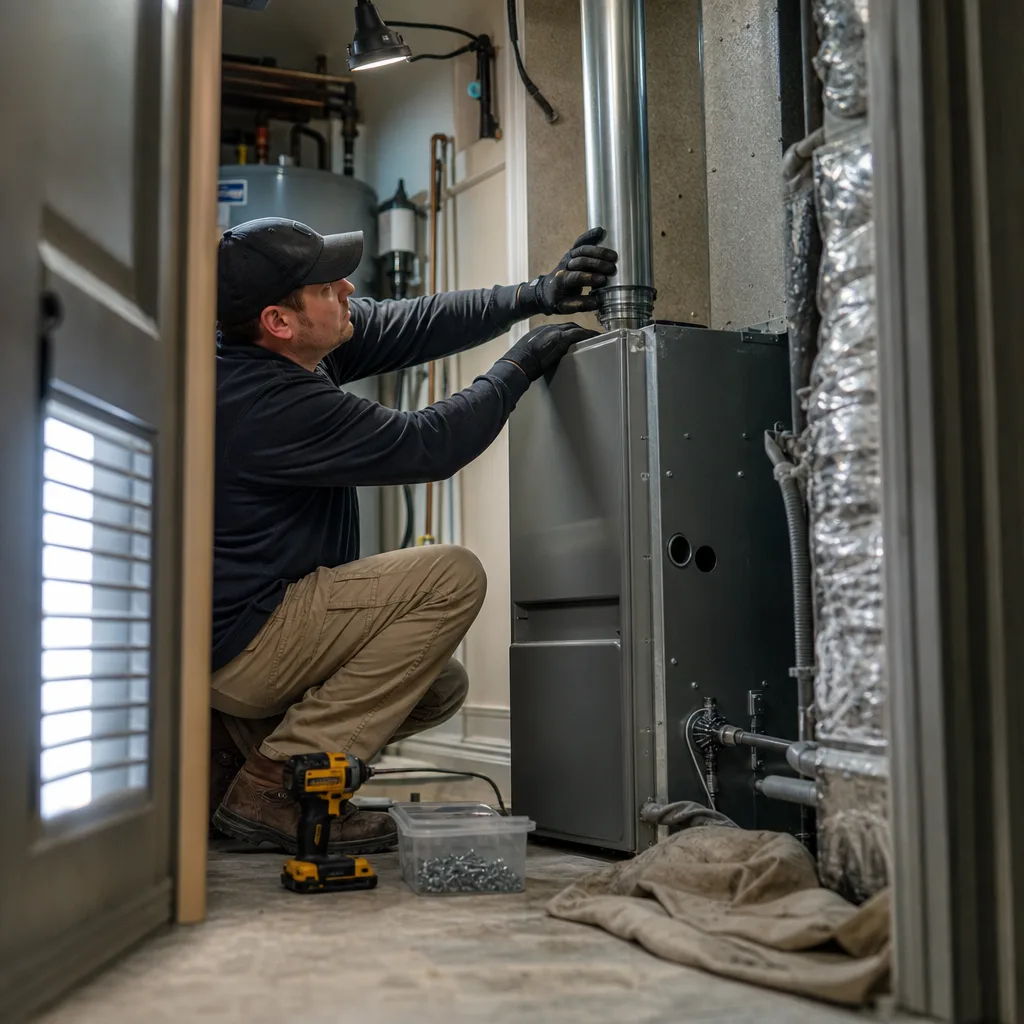
Most North Texas homes don’t have a furnace that works alone. Your furnace usually sits in the attic or a closet with the indoor cooling coil mounted right on top of it. In summer, the furnace’s blower pushes cold air from your AC through the house. So when you replace the furnace, you’re also replacing the fan your air conditioner depends on.
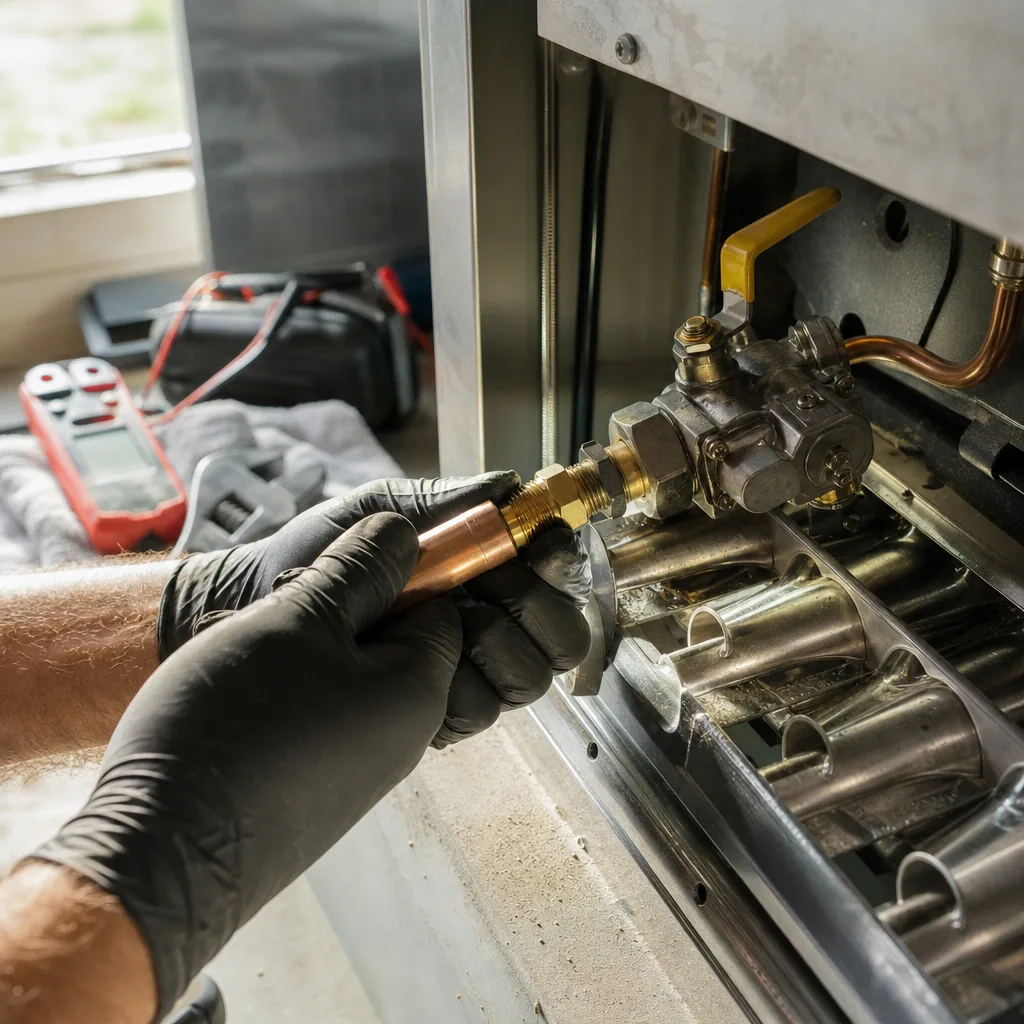
That’s why a furnace-only job and a full system replacement are two different decisions. One isn’t automatically better than the other. They just fit different homes.
A furnace-only installation tends to make sense when:
- Your outdoor AC unit was replaced in the last several years and still cools well.
- The new furnace’s blower can move the right amount of air for the AC you already have.
- Your ductwork, gas line, venting, and wiring are in good shape and can be reused.
- You want to spread out the cost of upgrades over time.
A full system replacement is often worth a closer look when:
- Your furnace and AC were installed around the same time, so the AC may be near the end of its life too.
- Your AC uses an older refrigerant that’s no longer made, which makes future repairs harder and more expensive.
- Some rooms run hot in summer and cold in winter, which can point to a sizing or airflow problem a new furnace alone won’t fix.
- Your cooling coil is leaking or corroded and would need replacing anyway.
Here’s a simple way to picture it. Say your furnace is 18 years old and the igniter keeps failing, but you put in a new AC four years ago. Replacing the whole system there would mean pulling out good equipment. A new furnace matched to that AC is the practical fix.
Now say both units are 16 years old and your summer bills keep climbing. Swapping only the furnace now could mean paying for a second install in a year or two, with crews back in your attic twice.
Matching matters either way. Your furnace’s blower and your AC need to work as a team. If they’re mismatched, you can end up with weak airflow, poor humidity control in our muggy summers, and equipment that wears out faster than it should. As a Trane Comfort Specialist, our team can walk you through which furnace pairs properly with the system you already have.
The scope also changes the price. Our most common furnace installation is a standard like-for-like job that uses your existing connections with no major modifications. That job runs $4,300 to $5,900 and covers the equipment and materials, professional installation, startup and testing, and haul-away of your old unit. Duct, electrical, or plumbing changes, code corrections, and permits aren’t included unless they’re stated. If your home needs any of those, you’ll know before work starts, with upfront flat-rate pricing and no surprises.
You don’t have to figure this out alone or guess. A licensed technician can look at the age and condition of both units and tell you plainly whether a furnace by itself will do the job.
Signs Point to Replacement Instead of Repair
Not every furnace problem means you need a new furnace. A lot of no-heat calls come down to one worn part. A furnace igniter that won’t glow, a dirty flame sensor that shuts the burners off after a few seconds, or a clogged filter choking airflow can all be fixed, and your furnace can go right back to work. If that’s your situation, a repair is the smart move.
Replacement starts to make more sense when the problem isn’t one part. It’s the whole unit wearing out. Here are the signs worth paying attention to.
- The heat exchanger is cracked or badly rusted. This is the metal chamber that keeps burner exhaust separate from the air you breathe. When it’s damaged, replacing it often costs close to what a new furnace does, so most homeowners choose the new furnace.
- You’re calling for repairs every winter. One fix is normal. A new problem each season, on top of last year’s, usually means more breakdowns are coming.
- The repair quote is a big chunk of what a new furnace would cost. Spending that much on a unit near the end of its life rarely pays off.
- Parts are hard to find. On older models, some control boards and motors aren’t made anymore. That means longer waits with no heat and higher part prices.
- Your furnace is 15 years old or more. Age alone isn’t a reason to replace, but an older furnace that also shows other signs on this list is telling you something.
- Your gas bills keep climbing even though you use the heat the same way.
That last sign ties into efficiency. Furnaces are rated by AFUE, which in plain English is how much of the gas you pay for turns into heat for your home. An older furnace may waste a good share of that gas up the vent. A newer, higher-efficiency model puts more of it to work warming your rooms.
Here in North Texas, there’s a twist. Our winters are mild most of the time, so your furnace may run fewer hours than one up north. That can make an older furnace look healthier than it is.
But many homes here have the furnace in the attic, where it bakes through long summers. That heat is hard on wiring, controls, and metal parts, even in months when the furnace isn’t running. Then a sudden cold front rolls in, the furnace fires up hard after months of sitting, and that’s often when a tired unit quits.
Comfort counts too. If some rooms never get warm, the blower sounds louder than it used to, or you see rust, soot, or water around the cabinet, those are signs of a furnace that’s struggling to keep up.
You don’t have to make this call based on a guess. A licensed technician can check the heat exchanger, test the parts, and give you a straight answer on whether a repair will hold or a new furnace is the better use of your money. If it’s a repair, we’ll tell you so. Our service call runs $26 to $99, and that fee is credited toward the repair if you go ahead with Xtreme Air Services.
When Repair Makes More Sense Than Full Installation
If your furnace is still fairly young and the heat exchanger checks out, a repair is usually the better use of your money. A new furnace makes sense when the whole unit is worn out. It doesn’t make sense when one part failed in an otherwise healthy system.
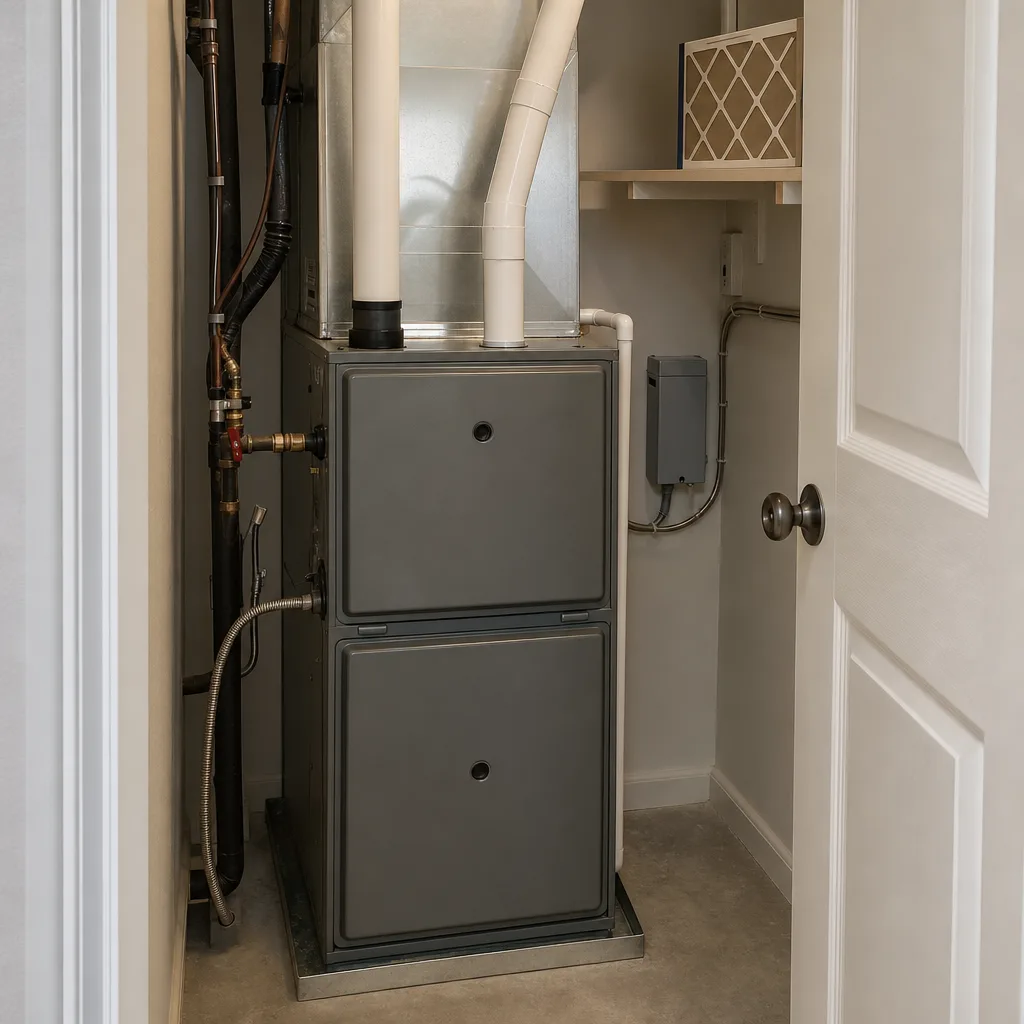
Before you call anyone, check a few simple things. They cause plenty of no-heat moments, and they cost nothing to fix:
- Your thermostat is set to Heat, it’s set a few degrees above the room temperature, and it has fresh batteries if it uses them.
- The breaker for your furnace hasn’t tripped.
- The furnace power switch is on. It often looks like a regular light switch on or near the unit, and it’s easy to flip off by mistake.
- The front panel on your furnace is pushed in tight. Many furnaces have a safety switch that won’t let them run if the door is loose.
- On a high-efficiency furnace, the drain line for condensation isn’t clogged or backed up. A full drain can shut the furnace down.
- Your other gas appliances, like the stove or water heater, are working. If they are, your gas supply is probably fine.
If one of those was the problem, you didn’t need a technician at all. That’s a good day.
Some repairs are worth making even when they’re not free. A furnace that’s in good shape overall can go back to work for years after one part is replaced. Common examples include the blower motor, the control board, the inducer motor (a small fan that pushes exhaust out the vent), the pressure switch, or the gas valve. The key questions are whether the part is still made and whether the rest of the furnace is sound. If both answers are yes, a repair is often the smart call.
Some comfort problems aren’t furnace problems at all. If one bedroom stays cold while the rest of the house is fine, the cause may be a loose or leaky duct in the attic, a crushed duct run, or registers that are closed or blocked by furniture. Attic ducts take a beating in long Texas summers, and a joint that pulls apart can dump warm air into the attic instead of your room. Duct repair or sealing fixes that. A new furnace pushing air through the same leaky ducts won’t.
Timing matters too. If your furnace is getting older but the repair is modest and safe, it’s reasonable to fix it, get through the winter, and plan a replacement on your own schedule. You’ll make a better choice when you’re not deciding in a cold house during a cold front. The one exception is a safety problem with the heat exchanger or venting. That’s not something to nurse through another season.
When a technician gives you a repair quote, ask four questions. What part failed, and why? Is the rest of the furnace healthy? Is the part still made? Would you fix it if this were your home? A good technician should answer all four plainly, and those answers should make the repair-or-replace choice clear.
Need help with Furnace installation?
Call Today, Get Service Today. Xtreme Air Services — Frisco is ready to help.
What Drives the Cost of a New Furnace Up or Down
Most of our furnace installations land between $3,500 and $7,500. Where your home falls in that range comes down to a short list of things. Most of them you can see for yourself once you know what to look for. A simple like-for-like swap sits near the lower middle, as we covered above. Each item below can push the price up or bring it down.
- Size and capacity. A bigger home needs a furnace that puts out more heat, and the blower has to move the right amount of air for your AC’s tonnage. Bigger isn’t better, though. A furnace that’s too large for your home short-cycles, wears out sooner, and costs more up front for no gain.
- Efficiency. A higher AFUE rating costs more to buy. Here’s an honest point for North Texas: our winters are mild, so your furnace runs fewer hours than one up north. A top-tier unit can take a long time to pay back the extra cost in gas savings. For many homes, a solid mid-range model is the smarter buy.
- Blower and burner type. A basic single-stage furnace runs full blast or not at all. Two-stage burners and variable-speed blowers cost more, but they run quieter, keep rooms more even, and help your AC pull humidity out of the air in summer.
- Brand and model. Within any brand, the price climbs as you move up the product line and add features.
- Ease of access. A furnace in a hall closet is easier to reach than one tucked into a tight attic with a narrow walkway. Hard-to-reach spaces take more time and labor.
- Ductwork, wiring, and gas line condition. If your ducts are leaking or crushed, or your wiring or gas line doesn’t meet the needs of the new unit, that work adds to the job.
- Code upgrades and permits. Older installs sometimes have venting, clearances, or gas connections that don’t meet today’s code. Bringing them up to code is a separate cost, and so is the permit.
- Custom fabrication. A new furnace may be a different height or width than your old one. Then a piece of sheet metal has to be built so it connects cleanly to your cooling coil and ducts.
One more thing can quietly add cost. Moving from a standard furnace to a high-efficiency one usually changes how the furnace vents. High-efficiency units often vent through plastic pipe and need a drain line for the water they make. If your home was set up for a standard furnace, that conversion is part of the job, and it should be in the quote.
When you compare bids, make sure you’re comparing the same job. Ask each contractor what size and efficiency they’re quoting and why. Ask whether the permit, haul-away of your old unit, and any venting or sheet-metal work are included. A low number that leaves those out can end up costing more than a higher one that covers them.
With us, you’ll see upfront flat-rate pricing before any work starts, so you know the full number and what’s in it. If the total is more than you’d planned for, flexible financing is available on qualifying installations, on approved credit.
Watch Our Video
See How We Handle Furnace installation in Frisco
Xtreme Air Services — Frisco
Frisco’s Mechanical Permit Requirement for Furnace Replacement
Yes, replacing a furnace in Frisco generally means pulling a mechanical permit through the City of Frisco and passing an inspection afterward. It can feel like red tape when you just want heat back. But the permit is the one point in the job where someone who doesn’t work for your contractor checks the work.

A gas furnace burns fuel inside your home, often in the attic right above your bedrooms. If the gas connection, the vent pipe, or the airflow around the unit isn’t right, the problem might not show up for months. An inspection is there to catch that before it becomes your problem.
Inspectors commonly look at:
- The gas line connection, the shutoff valve, and whether the connection is tight and leak-free.
- The vent pipe, so exhaust leaves your home the way it should and doesn’t spill back inside.
- Clearance around the furnace, so it isn’t packed too close to wood, insulation, or stored boxes.
- Safe access in the attic, so a technician can reach the unit to service it later.
- The condensate drain on high-efficiency units, so water doesn’t end up in your ceiling.
- Electrical hookup and the power shutoff at the unit.
On older installs, an inspection can turn up items that don’t meet today’s code. That’s where the code upgrades we mentioned in the cost section come from. Finding them during a planned replacement is a lot better than finding them after a failure.
In Texas, HVAC work has to be done by a contractor licensed through the Texas Department of Licensing and Regulation. Ask anyone who quotes your job for their license number. You can look it up yourself. Ours is HVAC License #TACLA29023C.
Be careful if a contractor suggests skipping the permit to save time or money. It may look like a few dollars saved now. But unpermitted work can come up when you sell your home, when a buyer’s inspector asks questions, or after an insurance claim. You’d also lose that second set of eyes on the gas and venting work.
On cost, our standard furnace installation price doesn’t include the permit unless it’s stated in your quote. That’s not a hidden fee. It’s a separate city charge, and you should see it written out before work starts. When you compare bids, ask each contractor the same three questions:
- Who pulls the permit, and is the fee included in this price?
- Who schedules the inspection, and do I need to be home for it?
- If the inspector asks for a correction, who fixes it, and does it cost extra?
A contractor who answers those plainly is one you can trust with a gas appliance in your attic. If an answer is vague, take that as a warning sign. You’ll get clear answers on the permit from us, along with the rest of the job, so the paperwork never catches you off guard.
Frequently Asked Questions
Common questions about Furnace installation
What is the $5000 rule for a furnace?
It’s a rule of thumb some technicians use: multiply the furnace’s age by the repair cost, and if that number tops $5,000, replacement usually makes more sense than repair. For example, a 12-year-old furnace with an $800 repair quote scores 9,600, which leans toward replacing. It’s a quick gut check, not a hard rule, so a licensed technician should still look at the heat exchanger and parts before you decide.
How much does a new furnace cost for a 2,000 square foot house?
Size alone doesn’t set the price. What matters more is the furnace’s output, your ductwork, and whether your home needs code upgrades or custom sheet metal to connect the new unit. A 2,000 square foot home can land anywhere in a wide cost range depending on efficiency level, access to the furnace, and the condition of your existing gas line and wiring. A technician can give you an accurate number after seeing your attic or closet setup and your current ductwork.
Does furnace size need to match my home’s square footage exactly?
Not exactly, but it needs to match your home’s heat loss, not just its square footage. A furnace that’s too big for your home short-cycles, wastes gas, and wears out sooner, while one that’s too small runs constantly and still leaves rooms cold. The right size depends on insulation, window count, ceiling height, and duct layout, not square footage alone. That’s why a proper load calculation matters more than guessing based on the size of the house next door.
Ready to Get Started?
Call (469) 490-3595 Today, Get Service Today.