


Furnace Replacement in Frisco: Know When It’s Time to Replace
An honest way to tell if your furnace is worth one more repair, and what a full replacement includes.
What’s Covered on This Page
- Signs Your Furnace Needs Replacing, Not Another Repair
- When Repair Still Makes More Sense Than Replacement
- What a Furnace Replacement Includes in Frisco
- What Drives Furnace Replacement Cost Up or Down
- What Happens on Furnace Replacement Day
- Is it worth replacing a 30 year old furnace?
- How much does it cost to remove and replace a furnace for a typical Frisco home?
Signs Your Furnace Needs Replacing, Not Another Repair
Nobody wants to buy a furnace they don’t need. Here’s the honest way to tell if yours is worth fixing one more time, or if you’re throwing good money after bad.
- The same furnace keeps needing repairs. One service call in a few years is normal. A second or third call in the same couple of winters means parts are wearing out faster than you can replace them.
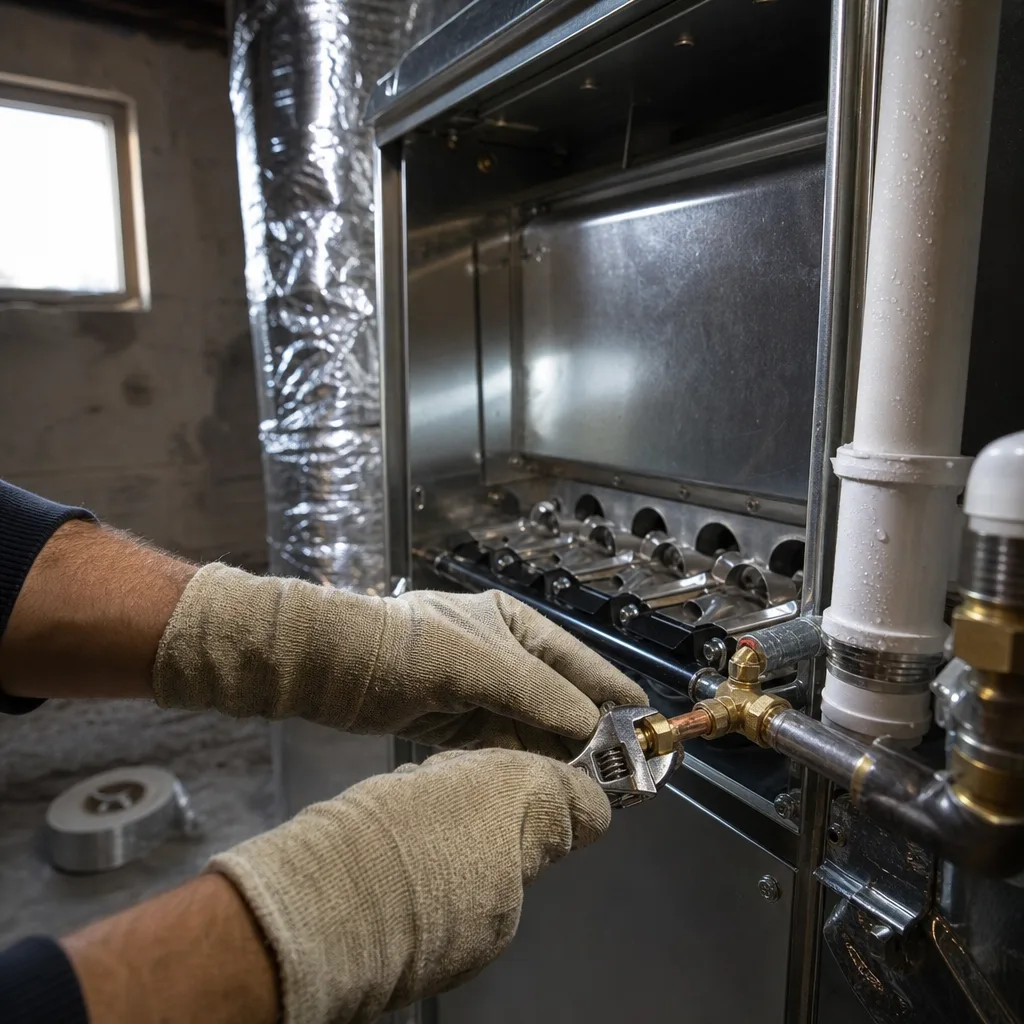
- A major part has failed on an older unit. A cracked heat exchanger is the big one. It’s the metal wall that keeps burning gas and exhaust separate from the air you breathe. When it cracks, replacement is usually the right call, not a patch.
- Your gas bills keep climbing even though your habits haven’t changed. An older furnace slowly loses efficiency, so it burns more fuel to give you the same heat.
- Rooms heat unevenly, or the furnace turns on and off in short bursts. If the system has been checked and the problem keeps coming back, the equipment itself may be the issue.
- Your air conditioner is being replaced too. The furnace and AC share the same blower and ductwork. Replacing both together lets them work as a matched system instead of pairing a new AC with a tired furnace.
Here’s something a lot of contractors won’t tell you. In Frisco, a furnace might sit idle for most of the year. Our winters are mostly mild, with a handful of hard cold fronts that push the system hard for a few days at a time. That means a furnace here often sees far fewer run hours than the same furnace in a colder state. A 15-year-old unit that’s been maintained could still have good years left. Age is a reason to start watching it closely, not a reason by itself to replace it.
The flip side is that those sudden cold snaps are exactly when a worn furnace tends to quit. If yours is older, has needed repeated work, and sits in a hot Frisco attic where summer temperatures bake the parts year after year, it’s smart to make the decision on your schedule, not in the middle of a freeze.
Some problems just aren’t replacement problems. A furnace that won’t light is often a worn ignitor or a dirty flame sensor. Weak airflow can be as simple as a clogged filter. These are quick, affordable fixes, and if that’s all your furnace needs, that’s what you should do.
When our technicians look at your furnace, you get upfront flat-rate pricing before any work starts. If a repair makes sense, you’ll see that price. If replacement makes more sense, you’ll see that too, along with the reason why. Then you decide with real numbers in front of you, not a guess.
When Repair Still Makes More Sense Than Replacement
A repair is the smarter move when one part has failed on a furnace that’s otherwise in good shape. If the cabinet is clean, the heat exchanger is sound, and this is the first real problem in years, fixing it is almost always better for your wallet than buying a new system.
Beyond the small stuff covered above, like ignitors and flame sensors, some bigger-sounding repairs are still worth doing on a healthy unit:
- A blower motor that’s gone out. It’s a real repair, but swapping the motor puts a sound furnace right back to work.
- A bad control board. This is the furnace’s brain. When it fails, the furnace may act dead or behave strangely, but the rest of the equipment can be perfectly fine.
- A thermostat problem. Sometimes the furnace is fine and the thermostat just isn’t telling it to run. A thermostat repair or replacement costs far less than new heating equipment.
- Airflow trouble caused by ducts. Leaky or crushed ductwork in a hot Frisco attic can make rooms feel uneven. Fixing the ducts may solve a comfort problem that looks like a furnace problem.
A good way to think about it: if the repair costs a small slice of what a new furnace would, and the unit hasn’t needed repeated work, repair it. Because furnaces here sit idle most of the year, a well-kept older unit can earn that repair back.
There are also times to simply wait. If your furnace still heats the house and nothing unsafe has turned up, you don’t have to replace it the moment someone mentions its age. Spring and fall are calmer times to plan, compare options, and look at financing without the pressure of a cold front bearing down.
Waiting can make sense if your air conditioner is getting close to the end too. If the AC is likely due in the next year or two, a modest furnace repair now lets you replace both together later as a matched set instead of doing two separate jobs.
Before you call anyone, check a few things yourself. Make sure the thermostat is set to heat and the temperature is set above the room temperature. Replace the batteries if your thermostat uses them. Look at your breaker panel to see if the furnace breaker has tripped. Make sure the furnace door is closed all the way, because many furnaces won’t run with the panel off. If one of these was the problem, you just saved yourself a service call.
Here’s the honest bottom line. If your furnace is safe, has a clean repair history, and just had one part give out, keep it. Replacement makes sense when the problems stack up or a major part fails. It doesn’t make sense just because a furnace is getting older.
What a Furnace Replacement Includes in Frisco
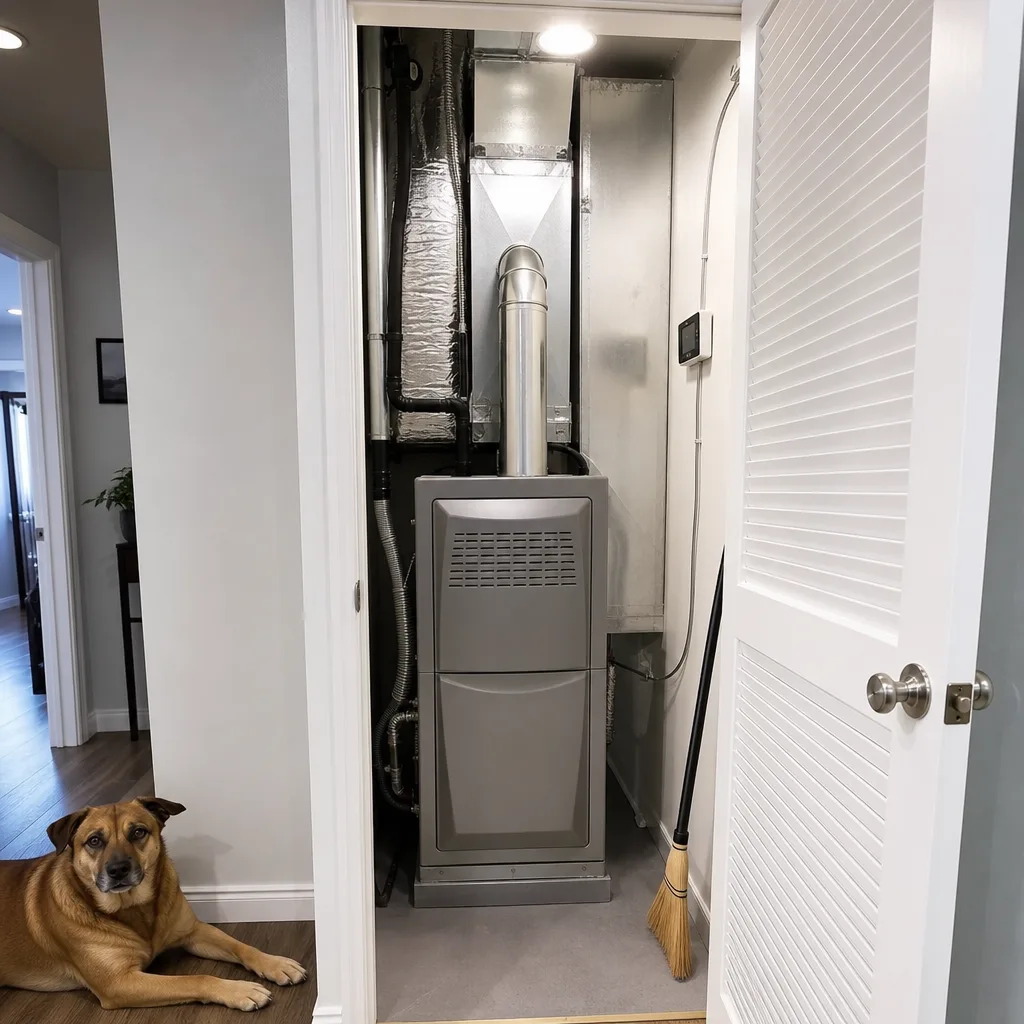
A standard furnace replacement with Xtreme Air Services covers the new equipment and materials, professional installation, standard connections, startup and testing, and hauling away your old unit. Our typical price range is $3,800 to $8,000. Most jobs are a like-for-like swap that uses your existing connections with no major changes, and those usually land between $4,600 and $6,300.
Knowing exactly what’s in the price is how you compare quotes fairly. A low number that leaves out haul-away or startup testing isn’t really lower. Here’s what you get on a standard job:
- The furnace and materials. This is the new unit and the parts needed to set it in place.
- Professional installation. Our licensed and insured technicians remove the old furnace and put the new one in.
- Standard connections. The new furnace hooks up to your existing gas, electrical, and duct connections when they’re in good shape and fit the new unit.
- Startup and testing. The system gets fired up and checked before we call it done, so you know it’s heating your home the way it should.
- Haul-away. Your old furnace leaves with us. You don’t have to figure out how to get rid of it.
Some work isn’t part of a standard replacement, and you should know that up front. Unless your quote says otherwise, these are extra: duct, electrical, or plumbing modifications, code corrections, and permits. That doesn’t mean your job will need any of them. It means that if it does, you’ll see it listed on your price before anything starts.
Two furnace jobs on the same street can cost different amounts. These are the things that move the price up or down:
- Size and efficiency. A furnace has to be the right size for your home. Efficiency is measured by AFUE, which tells you how much of the gas you pay for turns into heat in your house. Higher AFUE costs more up front and burns less fuel.
- Brand and model. Different lines come with different features and price points.
- Ease of access. A furnace in a tight attic takes more time and care to swap than one in a roomy closet. Many North Texas homes have the furnace up in the attic, so this one comes up a lot.
- Condition of what’s already there. Worn ductwork, wiring, or gas lines may need attention before a new furnace can be hooked up safely.
- Code upgrades, permits, and custom fabrication. Older setups sometimes need updates to meet current code, or custom-fit parts to connect the new unit.
If you’re replacing your air conditioner at the same time, as covered above, that changes the scope too, so ask for both on the same quote.
Getting a price starts with a service call. The fee runs $26 to $99, and it’s credited toward the work if you go ahead with Xtreme Air Services. From there, you get upfront flat-rate pricing that you approve before any work begins. There’s no meter running and there are no surprise add-ons at the end.
If the total is more than you planned for, flexible financing is available on qualifying installations and larger jobs, on approved credit. That way a cold front doesn’t force you into a decision your budget isn’t ready for.
Not sure what your Furnace replacement project needs? Ask us.
Call Today, Get Service Today. Xtreme Air Services — Frisco is ready to help.
What Drives Furnace Replacement Cost Up or Down
The biggest swing in your price usually comes down to two choices: how efficient the furnace is, and how hard it is to install where yours sits. In Frisco, the most expensive furnace isn’t automatically the smartest buy. Your furnace runs fewer hours than one up north, so you’ll want to spend where it pays you back.
A higher-AFUE furnace saves gas every hour it runs. Because Frisco winters are mostly mild, yours doesn’t run many hours. That means the savings from a top-efficiency model add up more slowly here than they would in a colder state. For some homes, a high-efficiency unit still makes sense, especially if you run the heat a lot or plan to stay put for many years. For others, a standard-efficiency furnace gives you reliable heat for less money up front. Neither is wrong. The right answer depends on how you use your heat and how long you’ll own the house.
Efficiency also changes the install itself. High-efficiency furnaces make water as they run, so they need a drain line. Many also vent through plastic pipe instead of the metal flue an older furnace uses. If your current furnace is a standard model in the attic, moving up to high efficiency can mean new venting and a new drain path. That’s real work, and it shows up in the price.
A furnace that’s too big for your home costs more to buy. It also heats in short bursts, turns off before the house feels even, and wears its parts faster. Bigger isn’t safer or better. If your old furnace was oversized, the right replacement might be smaller and cost less. Newer Frisco homes with good insulation and tight windows often need less heating capacity than you’d guess.
Stage count is another choice that moves the price. A single-stage furnace runs at full blast or not at all. A two-stage or variable-speed furnace can run low and steady on a cool night, then ramp up when a hard cold front hits. You’ll pay more for that, but you get quieter running, more even heat from room to room, and better comfort in a two-story home where the upstairs runs cold.
Attic installs have their own cost drivers. An attic furnace in a Frisco home usually means working in heat for much of the year, carrying equipment up a pull-down ladder, and moving across joists. If the walkway to the furnace is narrow or the opening is small, the job takes longer.
Ask these questions about any quote, ours included:
- How did you decide what size furnace my home needs?
- Is this the same efficiency as my old furnace? If it’s higher, what changes with the venting and drain?
- Is it single-stage, two-stage, or variable-speed, and why is that right for my house?
- What’s left out of this price that my job might need?
A good contractor answers each one in plain English. If the answers don’t add up, the quote probably doesn’t either.
Watch Our Video
See How We Handle Furnace replacement in Frisco
Xtreme Air Services — Frisco
What Happens on Furnace Replacement Day
A straightforward like-for-like furnace swap is often a one-day job. Your heat is off while the old unit comes out and the new one goes in. It’s back on once the new furnace is started and tested. Jobs that need new venting, a drain line, or duct changes take longer, and your approved quote should tell you that ahead of time.

A little prep makes the day go faster and keeps your home cleaner:
- Clear a path from the door to the furnace. If it’s in the attic, move anything stored under the pull-down ladder and make room in the garage or hallway below it.
- Clear space around a closet furnace so the old unit can come out without bumping walls or doorframes.
- Keep pets and kids away from the work area. Doors stay open and tools come in and out.
- Find your thermostat manual if you have it, and know where your breaker panel and gas meter are.
Once work starts, the order is pretty standard across the trade. The gas and power to the furnace get shut off first. Then the old unit is disconnected from the gas line, the wiring, the venting, and the ductwork. In an attic, that means carrying it across the joists and down the ladder, which is why easy access matters so much to how long the job takes.
Next, the new furnace is set in place and connected. The gas line, electrical, and thermostat wiring get hooked up, and the unit is joined to your ductwork where the supply and return meet the cabinet. If you’ve moved up to a high-efficiency model, this is when the new venting and drain path covered above get installed.
Startup and testing are part of every standard replacement with Xtreme Air Services. This is the step you don’t want rushed. A new furnace that lights up isn’t the same as a furnace that’s set up right. Testing confirms that it ignites cleanly, that the blower moves air through your ducts, and that warm air reaches your rooms the way it should. Then your old furnace is hauled away, so you’re not left with a dead unit in the garage.
Timing matters in Frisco. A replacement planned in fall or spring means no cold house during the swap and no crew working in a summer attic that can get dangerously hot. If your furnace quits during a cold front, the work still gets done. You’ll just want a warm room or a plan for the few hours the heat is off.
Before the crew leaves, ask a few quick questions. Have them show you where the filter goes and what size it takes. Have them run the thermostat through a heat cycle with you. If you upgraded to high efficiency, ask where the drain line runs so you know what a clog would look like. You’re the one living with this furnace for years, so it’s worth five minutes to understand it.
Our licensed and insured technicians work from the upfront flat-rate price you approved before anything started. If something unexpected turns up behind the old unit, you hear about it and decide before any extra work happens.
Frequently Asked Questions
Common questions about Furnace replacement
Is it worth replacing a 30 year old furnace?
Yes, a furnace that old is almost always worth replacing, even if it still runs. Parts for a 30-year-old unit are harder to find, and the heat exchanger has had decades of heating and cooling cycles that weaken metal over time. Add in the fact that it’s likely sat through years of attic heat here in Frisco, and the risk of a crack or failure during a cold front goes up. At that age, you’re better off planning a replacement on your own schedule than waiting for it to quit.
How much does it cost to remove and replace a furnace for a typical Frisco home?
Most like-for-like furnace swaps in Frisco run $4,600 to $6,300, and the full range for a standard replacement with Xtreme Air Services is $3,800 to $8,000. Where you land in that range depends on things like efficiency, how hard the furnace is to reach, and whether your ductwork or gas line needs any work. A service call fee of $26 to $99 gets credited toward the job if you move forward, and you’ll see the full price before any work starts.
Ready to Get Started?
Call (469) 490-3595 Today, Get Service Today.