


Heating System Repair in Frisco: Fix It Right the First Visit
Furnace and heat pump problems fixed on the first visit, with an honest call on repair versus replace.
What’s Covered on This Page
- Signs Your Furnace Needs Professional Repair
- When You Don’t Need a Service Call Yet
- What Happens During a Heating System Repair Visit
- What a Heating Repair Visit Costs in Frisco
- Repair or Replace: Knowing When a Fix No Longer Makes Sense
- What is the $5000 rule for HVAC systems?
- What is the most common problem with HVAC heating systems?
- How much is a service call for heating repair?
Signs Your Furnace Needs Professional Repair
Your furnace or heat pump usually tells you when something’s wrong. The trick is knowing which signs mean “keep an eye on it” and which mean “get it looked at.” Here’s what to watch for.
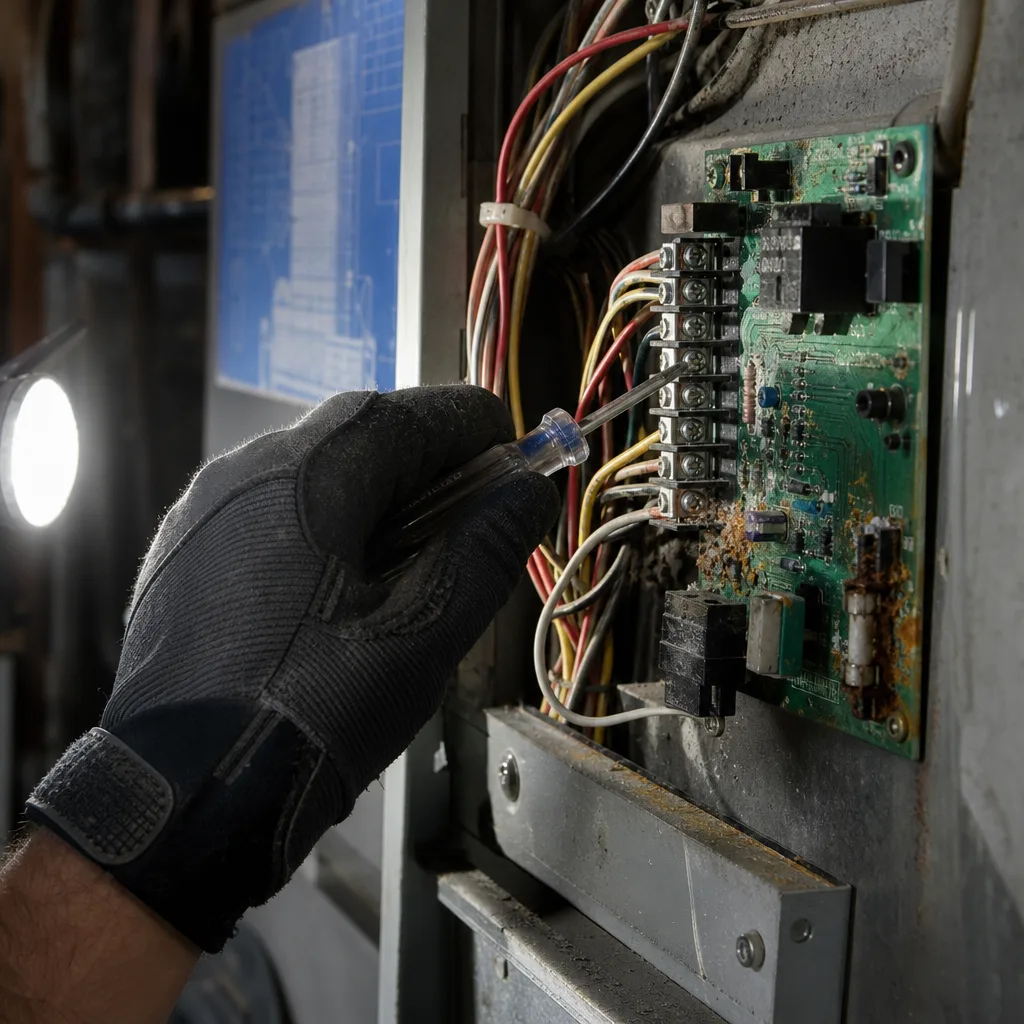
- No heat at all. The thermostat calls for heat, but nothing happens. Or you hear the system click on and try to start, then it gives up.
- Cold or lukewarm air from the vents. The fan runs, but the air never gets warm. That often points to an ignition or burner problem on a gas furnace, or a heat pump that isn’t switching into heating mode the way it should.
- Short cycling. The heat kicks on, runs a few minutes, shuts off, and starts again. It wears out parts faster and never gets your home comfortable.
- A blower that won’t stop. If the fan keeps running long after the heat cycle ends, a control or relay may not be doing its job.
- New noises. Squealing, grinding, rattling, or a loud bang when the system starts aren’t normal. Each one points to a different part, and a technician can usually tell which one by listening.
- Rooms that don’t match. One bedroom stays cold while the living room feels fine. Sometimes it’s airflow or ductwork. Sometimes it’s the system struggling to keep up.
- Resetting it over and over. If you keep flipping the switch or pressing reset to get heat back, the system is shutting itself down for a reason. Resetting hides the problem but doesn’t fix it.
- A heating bill that jumps for no reason. If the weather is about the same as last winter but your bill isn’t, the system may be running longer to make the same heat.
Timing matters here in North Texas. Cold fronts can drop into Frisco fast, and a system that has sat idle since spring gets pushed hard on that first cold night. That’s often when a weak part finally gives out. If you noticed a strange noise or a slow start during a mild week, it’s worth having it checked before the next front blows through.
Many homes in the area also have the furnace or air handler up in the attic, where it’s out of sight. Attic temperatures swing hard between summer and winter, and a lot of homeowners don’t go up there often. So the first sign you’ll get is usually from inside the house: weak heat, odd sounds through the vents, or a thermostat that can’t hold the temperature you set.
None of these signs means you need a whole new system. Most of the time, one part has failed, like an ignitor, a flame sensor, a capacitor, or a blower motor. Our team finds that part, repairs or replaces it, and checks that your heat runs right before we leave. The sooner you call, the better your odds of keeping it a simple, one-visit fix.
When You Don’t Need a Service Call Yet
Not every cold house needs a technician. Some heating problems come down to a setting, a switch, or a filter, and you can fix those yourself in a few minutes. Try these first. If one of them brings your heat back and it stays steady, you’ve saved yourself a service fee.
- Check the thermostat. Make sure it’s set to Heat, not Cool or Off, and that the temperature you’ve set is a few degrees above what the room feels like now. If the screen is blank or dim, replace the batteries.
- Look at the breaker panel. Find the breaker for your furnace or air handler. If it’s tripped, flip it fully off and then back on one time. If it trips again, leave it off. That’s a sign of an electrical problem, not a fix-it-yourself job.
- Find the service switch. Most furnaces and air handlers have a switch that looks like a regular light switch, mounted on or near the unit. If your system is in the attic, it’s often near the attic access, and someone may have bumped it during storage or holiday decorating.
- Change the filter. A filter packed with dust can choke airflow enough that the system overheats and shuts itself off. If you can’t see light through it, swap it out.
- Check the furnace door. Many furnaces have a safety switch that won’t let them run if the front panel isn’t seated all the way. Press it closed and make sure it’s latched.
- Open the vents. A closed register or a couch pushed over a floor vent can make one room feel cold while the rest of the house is fine.
Some things look like trouble but are just your system doing its job.
- A light burning smell the first time you turn the heat on for the season. That’s usually dust burning off the heating parts after months of sitting. It should fade within an hour or so.
- Steam or a little frost on a heat pump’s outdoor unit on a cold, damp morning. Heat pumps run a defrost cycle to melt ice off the coil, and you may see a puff of steam or hear a whoosh when it switches. That’s normal as long as the unit doesn’t stay caked in ice.
- Air from a heat pump that feels warm but not hot. A heat pump delivers steadier, milder air than a gas furnace. If your home reaches the temperature you set, the system is working.
Stop there, though. Anything involving the gas valve, burners, wiring, or the inside of the control panel belongs to a licensed technician. Opening those parts up without the right training and tools can make a small problem bigger, or unsafe.
If your heat is working but something feels a little off, like a slightly louder start or a system that seems slower than last year, you don’t need an urgent call. A scheduled heating tune-up before the next cold front is often the better move. It gives a technician time to catch a worn part while your home is still warm.
If you’ve run through these checks and the heat still won’t come on, or it comes back and quits again, you’ve ruled out the easy stuff. At that point, a part has most likely failed, and that’s when a repair visit makes sense.
What Happens During a Heating System Repair Visit
A heating repair visit has three jobs. Find the part that failed, repair or replace it, and prove your system runs right before the technician leaves. That’s it. Most calls come down to one common failure that gets fixed on the first visit, so you’re usually not looking at days of back-and-forth.
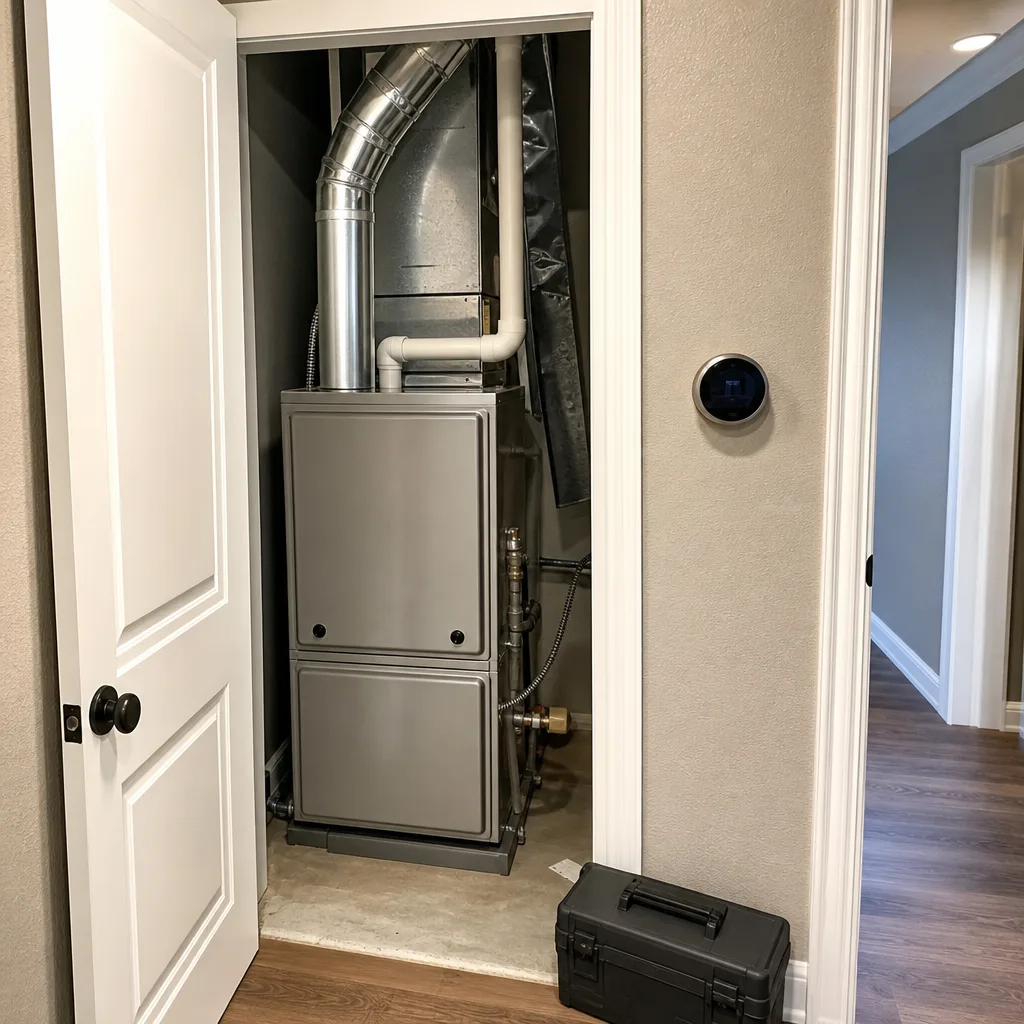
You can help the visit go faster. When you call, tell us what you noticed and when it started, like a click with no flame, cold air from the vents, or a bang at startup. Mention which of the quick checks above you already tried. If your furnace or air handler is in the attic, as it is in many Frisco homes, clear a path to the attic access and move anything stored under the pull-down ladder.
A good diagnosis follows the system’s own startup order. That’s how a technician finds the real cause instead of guessing. Expect them to check:
- Whether the thermostat is sending the call for heat
- Power, breakers, and the safety switches that can shut the unit down
- The ignition sequence on a gas furnace, including the ignitor and flame sensor
- The blower motor and capacitor, the part that gives the motor its starting kick
- On a heat pump, whether it’s switching into heating mode and defrosting the way it should
- Airflow, including the filter and any blocked returns
Once the problem is found, you get the price before any work starts. We use upfront flat-rate pricing that you approve first, so there’s no meter running while someone works in your attic. The service-call fee is $26-$99, and it’s credited toward the repair if you go ahead with Xtreme Air Services. A night or weekend visit costs the same as a weekday one, because we charge no extra for nights or weekends.
Your repair price includes the diagnosis, the labor, the standard replacement part, testing, and cleanup. If the technician finds a second failed part, or the problem is a major component, that gets quoted separately. You’ll hear about it before anything is done, and you decide whether to move forward.
After the fix, the technician runs your system through a full heating cycle. On a gas furnace, that means watching it light, checking that warm air reaches the vents, and making sure it shuts off cleanly when the thermostat is satisfied. On a heat pump, it means confirming steady heat and normal switching. If you’d like extra peace of mind on a gas system, you can ask about carbon monoxide testing during the same visit.
Sometimes a repair isn’t the smart money. The system may be old, or the failed part may cost close to what a newer system would. If that’s the case, you’ll get a straight explanation of both paths, not a sales pitch. Financing is available on larger repairs and replacements if you need it. Either way, the person in your home is a licensed, background-checked technician who’s there to get your heat back and explain things in plain English.
Ready when you are – get in touch today.
Call Today, Get Service Today. Xtreme Air Services — Frisco is ready to help.
What a Heating Repair Visit Costs in Frisco
Most heating repairs with Xtreme Air Services fall between $150-$700. The most common job costs $150-$400. That job is finding the one part that failed, repairing or replacing it, and making sure your system runs right. Most calls turn out to be a single common failure fixed on the first visit, so that second range is the one to keep in mind.
A range that wide can feel vague when you’re standing in a cold house. It isn’t random, though. A few clear things move the price up or down:
- How much failed. Cleaning a dirty flame sensor is a small job. Replacing a control board, the furnace’s main circuit board, is a bigger one. Both are “no heat” calls, but they aren’t the same repair.
- Part cost and availability. Some parts fit many furnaces and heat pumps and are easy to get. Others are built for one brand or model, so they cost more or take longer to arrive.
- Your equipment’s age and brand. Parts for an older system can be harder to find and cost more than parts for a newer one.
- More than one bad part. One weak part can wear out another. A failing capacitor, for example, makes the blower motor work harder every time it starts. If both need help, the price reflects both.
- Time of day. This one doesn’t count with us. A 2 a.m. call on a Saturday costs the same as a Tuesday afternoon.
Because the service-call fee is credited toward the repair when you go ahead, you aren’t paying twice just to find out what’s wrong.
Some costs sit outside a normal repair price. Code upgrades and permits aren’t part of a standard repair. They’re quoted separately if your job needs them, so you see them before you agree to anything.
Heating companies don’t all price the same way. Some charge by the hour. Some add fees for nights and weekends. Some quote the part but not the labor. Whoever you call, these questions will help you compare fairly:
- Is the price flat-rate, or does the clock run while you work?
- Does the quote include the part, the labor, testing, and cleanup?
- Is the trip or diagnostic fee credited if I hire you for the repair?
- Do you charge more after hours or on weekends?
- Will you stop and ask me before doing any extra work?
Clear answers to those questions mean you know what you’re paying for. Fuzzy answers are a reason to keep calling around.
Financing usually isn’t needed at this price. It’s there for larger repairs and replacements if the diagnosis points that way.
Call 469-490-3595
Watch Our Video
See How We Handle Heating system repair in Frisco
Xtreme Air Services — Frisco
Repair or Replace: Knowing When a Fix No Longer Makes Sense
Most of the time, repair is the right call. If one part failed and the rest of your system is in good shape, fixing that part gets your heat back for a fair price. Replacement only makes sense when the repair stops being a good use of your money. Here’s how to tell the difference.
Repair usually makes sense when:
- It’s a single common part, like an ignitor, flame sensor, capacitor, or blower motor.
- Your system has been reliable up to now and keeps your whole home comfortable.
- The part is easy to get, so you’re not waiting days in a cold house.
Replacement is worth a real look when:
- You’re calling for repairs every season. One fix is normal. A new problem each winter means more parts are wearing out together.
- A major component has failed. On a gas furnace, that’s often the heat exchanger, the metal chamber that keeps burner gases separate from the air you breathe. On a heat pump, it’s often the compressor, the heart of the system.
- The repair price comes close to what a newer system would cost. Putting a big repair into old equipment can mean paying twice in a few years.
- Your home has never felt even. If some rooms stayed cold even when the system was working, a repair won’t change that.
If you have a heat pump, think about summer too. In Frisco, that same outdoor unit cools your home through the long Texas heat and heats it when cold fronts come through. It runs hard almost all year. A failing compressor isn’t just a winter problem. It’s your air conditioning next July, too.
A few questions can help you decide. How many times have you called for heating repairs in the last couple of years? How long do you plan to stay in your home? Would a quieter, steadier system be worth it to you, or do you just need heat back tonight? There’s no wrong answer. It’s your home and your budget.
If replacement is on the table, our technician lays out both options with real prices, the repair and a new system, so you can compare them side by side. As a Trane Comfort Specialist, we install Trane furnaces and heat pumps. You may hear two ratings. AFUE tells you how much of the gas a furnace burns turns into heat for your home. HSPF2 tells you how well a heat pump heats for the electricity it uses. Higher numbers mean less wasted energy and lower bills.
And if the repair is the smarter move, we’ll tell you that. Doing right by our customers means fixing what makes sense, not selling what doesn’t.
Call 469-490-3595
Frequently Asked Questions
Common questions about Heating system repair
What is the $5000 rule for HVAC systems?
It’s a simple way to decide between repair and replacement. Multiply the repair cost by the age of your system in years. If that number is above $5,000, replacement is usually the smarter choice. For example, a $600 repair on a 10-year-old furnace equals $6,000, which leans toward replacing. A $300 repair on a 5-year-old system equals $1,500, which leans toward fixing it.
What is the most common problem with HVAC heating systems?
The most common failure is a single worn-out part, not the whole system. Ignitors, flame sensors, capacitors, and blower motors wear out one at a time and are the usual reason a furnace won’t start or blows cold air. Most heating calls end up being this kind of one-part fix, which is why a first visit often solves the problem.
How much is a service call for heating repair?
With Xtreme Air Services, the service-call fee runs $26-$99, and it’s credited toward the repair if you move forward with the work. You get a flat-rate price before anything starts, and it costs the same whether you call on a weekday afternoon or a weekend night.
Ready to Get Started?
Call (469) 490-3595 Today, Get Service Today.