


Boiler Repair in Irving: When to Call an HVAC Pro vs. Try a Quick Fix
Boiler repair is its own job, not a furnace call – the signs that need service now, and when a quick fix will do.
What’s Covered on This Page
- Boiler Repair Is Different From Furnace or Water Heater Repair
- Signs Your Boiler Needs Service Now
- When You Might Not Need a Repair Call
- What Happens During a Boiler Repair Visit
- What Drives Boiler Repair Cost
- What do you call a person who fixes boilers?
- How often should a boiler get a tune-up?
- Can I run my boiler if the pressure gauge looks off but the heat still works?
Boiler Repair Is Different From Furnace or Water Heater Repair
Most homes in North Texas heat with forced air. That means a lot of heating calls are furnace calls, and a lot of hot water calls are water heater calls. A boiler doesn’t fit neatly into either one, and that’s where people get stuck. You might have one in an older home, a building with radiators or baseboard heat, or a house with heated floors.
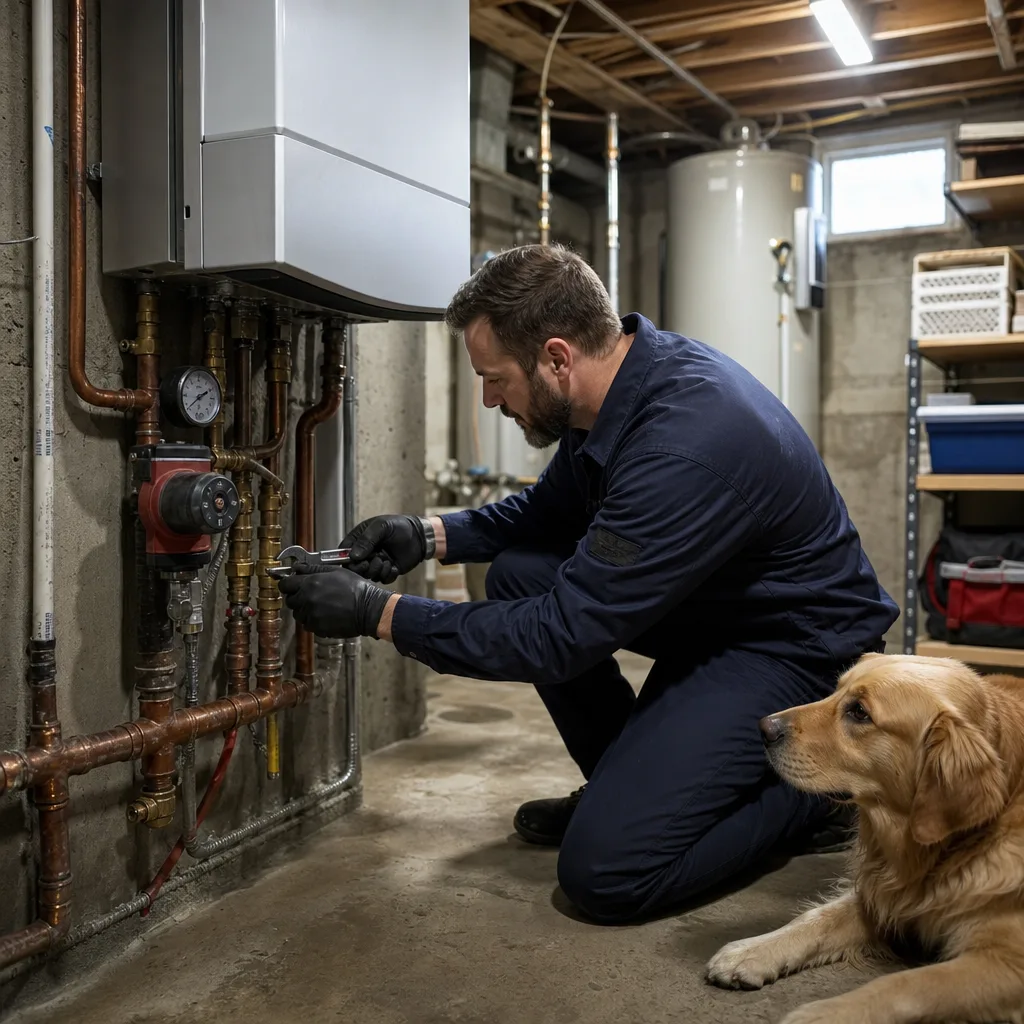
Here’s the simple difference. A furnace warms air and blows it through ducts. A water heater warms the water that comes out of your taps. A boiler warms water, then a pump pushes it through pipes to radiators, baseboards, or tubing under the floor. The water gives off its heat, cools down, and flows back to the boiler to be heated again. It’s a closed loop, and it runs under pressure.
That loop is why boiler repair takes a different eye. The burner can light just fine while your rooms stay cold, because the real problem is somewhere else in the system. These are the parts a furnace or water heater doesn’t have in the same way:
- Circulator pump: moves the hot water through the pipes. If it stops, the boiler gets hot but the heat never reaches your rooms.
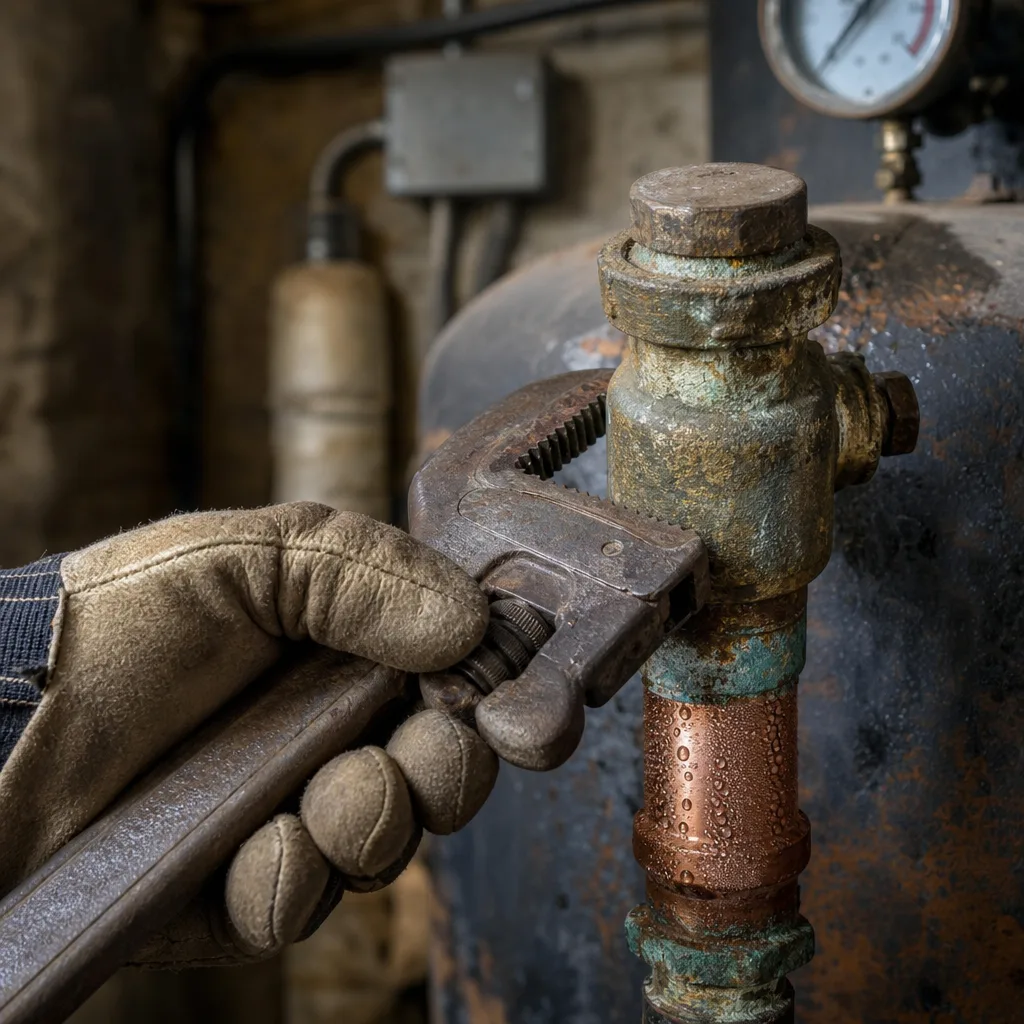
- Expansion tank: gives the water room to grow as it heats. When it fails, pressure can climb too high.
- Pressure relief valve: lets water out if pressure gets too high. A drip from this valve is a sign the pressure is off.
- Zone valves: open and close to send heat to different parts of the home. A stuck valve can leave one area cold.
- Air in the lines: trapped air blocks hot water and causes gurgling or cold spots at the top of radiators.
So what do you notice? Maybe the boiler is running, but the radiators in the back bedrooms stay cool. Maybe you hear banging or gurgling in the pipes when the heat kicks on. Maybe the needle on the pressure gauge sits higher or lower than it used to, or there’s a small puddle under the unit. Each of those points to the loop, not just the flame.
One more wrinkle. Some boilers, often called combi boilers, heat your rooms and your tap water from the same unit. If your showers went cold at the same time your heat quit, it may be one boiler problem, not two separate ones. That’s worth mentioning when you call.
This is why it pays to have one team that knows heating, plumbing, and the controls that tie them together. Boiler repair touches all three. Our licensed and insured technicians handle boiler repair, boiler servicing, and boiler maintenance, along with furnace and water heater work, so you don’t have to guess which trade to call before someone even looks at it.
Signs Your Boiler Needs Service Now
Not every boiler quirk is an emergency. Some signs mean you should get a technician out today. Others can wait for a regular visit. Here’s how to tell the difference, so you don’t panic over a small noise or ignore something that’s getting worse.
Call today if you notice any of these:
- The boiler won’t fire, or it lights and then shuts off. Many units show an error code or a lockout light when this happens. Resetting it over and over can hide the real cause, so write down the code and stop there.
- Water is leaking from the unit or a fitting, not just a drip from the relief valve. Water near controls and wiring needs attention fast.
- You keep having to add water. If the pressure keeps dropping and you’re topping it off every few days, water is escaping somewhere. That leak won’t fix itself.
- The flame looks yellow or lazy, or you see soot or dark marks around the boiler. A healthy burner flame is usually crisp and blue. A change in color can mean it isn’t burning clean.
- You smell something burning or hot, or a carbon monoxide alarm goes off. Don’t try to troubleshoot these yourself.
- It starts and stops every few minutes. This is called short cycling. It wears out parts and wastes fuel, and it usually points to a control, sensor, or pressure problem.
- Your heat and hot water both quit on a combi boiler. With one unit doing both jobs, one failure leaves you with no heat and cold showers.
Timing matters in North Texas. A boiler can sit idle for months through a long, hot summer. Then a cold front rolls through, everyone turns the heat on the same night, and that’s when a weak part finally gives out. If yours made odd sounds or acted up near the end of last winter, it’s better to have it looked at before the first real freeze than in the middle of one. Hard winter freezes are also when a small leak or low pressure can turn into a bigger problem in a hurry.
Listen for a rumbling or popping sound, a bit like a kettle about to boil. Techs call this kettling. It often means minerals have built up inside the heat exchanger, the part where the flame heats the water. North Texas has hard water, so scale is a real factor here. Kettling won’t stop your heat tonight, but it makes the boiler work harder and run hotter than it should, and it tends to get worse over time.
Some signs can usually wait for a scheduled visit. A heating bill that crept up a little this year, one radiator that warms slower than the rest, or a boiler that hasn’t been serviced in a few years are good reasons to book maintenance. They’re not reasons to treat it like an emergency. If the heat works, the pressure holds steady, and nothing is leaking, you have time to plan.
If you’re not sure which group your problem falls into, tell us what you’re seeing and hearing when you call. Details like the pressure reading, any error code, and when the problem started help the technician come prepared, and that often means the repair gets done on the first trip.
When You Might Not Need a Repair Call
Sometimes the boiler is fine and something simple is keeping it off. Before you book a visit, take five minutes to check a few things. If one of them fixes it, you’ve saved yourself the service-call fee, and that’s a good outcome.
- The thermostat. Make sure it’s set to heat and turned up above the room temperature. If it runs on batteries and the screen is blank or dim, swap the batteries. A dead thermostat looks a lot like a dead boiler.
- The power. Most boilers have a switch on or near the unit that looks like a regular light switch. It’s easy to bump off by accident. Also check your breaker panel for a tripped breaker.
- The fuel. If you have a gas boiler, see whether your gas stove or other gas appliances work. If they don’t, the problem may be your gas service, not your boiler.
- A recent power outage. After a storm knocks the power out, some boilers need one reset to start again. One reset is fine. If it locks out again, stop and call, as we covered above.
- Every room or just one? If only one radiator is cold at the top, that’s often the air we talked about earlier. Many owners bleed their own radiators with a small key. Your owner’s manual will show you how for your system.
On pressure, your manual is the boss. Some systems let you top off the water yourself with a fill valve, and some don’t. If yours allows it and the pressure holds after one top-off, you may be set. If you’re adding water again a few days later, that’s the leak sign from the last section, and it’s time for a technician.
Don’t take a boiler’s cover off or poke around the burner, wiring, or gas valve. Those checks belong to a licensed tech. Everything in the list above is safe to look at without opening anything up.
There are also times when a repair isn’t the right next step, even though something’s off.
- Your heat works, but the boiler hasn’t been looked at in years. That’s a job for boiler maintenance or servicing, not a repair. It’s planned, not rushed, and it can catch a worn part before it fails.
- You’re fixing the same old boiler again and again. If the parts keep failing, ask about a boiler consultation before you pay for another repair. Sometimes a replacement makes more sense than chasing one fix after another. That’s your call to make with good information, not a decision anyone should push on you.
- It’s a mild week and the issue is minor. If the heat runs, nothing’s leaking, and the pressure is steady, you can wait and book a time that works for you.
If you’ve checked these and the boiler still won’t heat, you’ve already done the easy part. You’ll also have useful details to share when you call, like what you checked and what you saw, so the visit starts further along.
Need help with Boiler repair?
Call Today, Get Service Today. Xtreme Air Services — Irving is ready to help.
What Happens During a Boiler Repair Visit
Once you’ve decided the boiler needs a pro, you probably want to know two things. What’s going to happen in your home, and what’s it going to cost you? Here’s the plain answer, so nothing catches you off guard.
It starts with a phone call to a real person. Same-day service is available, and there’s no extra charge for nights or weekends. If your boiler quits on a Saturday night, you pay the same as you would on a Tuesday morning.
Before the technician arrives, clear a path to the boiler. Move anything stored around it so there’s room to work on the unit and the pipes coming off it. If it’s in a closet or utility room, make sure the light works.
When our licensed and insured technician gets there, the job follows three steps:
- Find the failed part. The tech looks at the whole system, not just the burner, because the cause can sit anywhere in the loop.
- Repair or replace it. You get a clear explanation of what broke and an upfront flat-rate price before any work starts. Nothing happens until you say yes.
- Verify it runs correctly. The tech tests the boiler after the fix, so you know your heat is working before anyone leaves. Cleanup is part of the job.
Most calls turn out to be a single common failure that gets fixed on the first visit. That’s the goal every time: done right the first time, so you’re not waiting on a second trip.
Here’s how the money works. The service call costs $26-$99, and that fee is credited toward the repair if you go ahead with us. The most common boiler repair runs $300-$1,100. Our typical range for boiler repair is $300-$2,000, depending on what failed.
Your flat-rate price covers diagnosis, labor, the standard replacement part, testing, and cleanup. A few things can change the price. They’re always quoted separately, so you’ll see them before you agree to anything:
- A second part that has also failed
- A major component, like a heat exchanger
- Code upgrades the system needs
- Permits, when the work requires one
The age and brand of your boiler matter too. So does how easy the part is to get. A common part for a newer boiler is often simpler to source than one for an older or less common unit.
Financing isn’t usually offered for a smaller repair like this. It is available on larger repairs and replacements. If the tech finds a bigger problem, you can ask about financing then.
Our office is at 5000 Riverside Dr in Irving, and our background-checked, drug-tested team members treat your home like family. If your boiler isn’t heating and you want a clear price before anyone picks up a wrench, give us a call.
Call 469-200-2166
Watch Our Video
See How We Handle Boiler repair in Irving
Xtreme Air Services — Irving
What Drives Boiler Repair Cost
You’ve seen our numbers. Here’s what moves a boiler repair bill up or down, so a quote makes sense before you agree to it.
Start with how you’re being charged. Some contractors bill by the hour plus parts. That means the final number isn’t known until the job is done, and a tricky diagnosis can run up the clock. Others, including us, quote one flat-rate price for the whole repair before work starts. Hourly billing isn’t always a bad deal. But with a flat rate, you know your total going in, and a slow repair doesn’t cost you more.
Next is which part failed. Boiler parts vary a lot in size and cost. These tend to land on the smaller side:
- A sensor, igniter, or flame rod that’s worn out or dirty
- A pressure relief valve that keeps dripping
- A zone valve that’s stuck open or shut
- Air bled out of the lines and the pressure set right
These usually push the price higher:
- A circulator pump that has seized or burned out
- An expansion tank that has lost its air charge and needs replacing
- A control board or gas valve
- A cracked or badly scaled heat exchanger, the biggest part in the boiler
Hard water plays a part here too. Scale buildup, the kettling we talked about earlier, can wear down a heat exchanger over the years. A boiler that’s been flushed and serviced on a schedule is less likely to need that kind of repair.
Waiting can also change the bill. A slow leak or pressure that keeps dropping might start as one small fix. If the boiler keeps running that way for weeks, or short cycles all winter, other parts start wearing out too. That’s how a single repair turns into two. We’re not saying that to rush you. It’s just the honest reason why the leak and pressure signs we covered are worth a call sooner rather than later.
Then there’s the repair-or-replace question. If your boiler is older and the part that failed is a big one, the repair price starts to get close to what new equipment costs. A good tech will tell you plainly when you’ve reached that point and let you decide. You shouldn’t feel pushed either way.
Whoever you call, ask these questions before you say yes:
- Is this a flat price for the whole job, or an hourly rate plus parts?
- Does the service-call fee count toward the repair?
- What’s not included, and will you tell me before adding anything?
- Does this repair need a permit, and who pulls it?
- Do you charge more for nights or weekends?
- Are you licensed through the Texas Department of Licensing and Regulation?
A contractor you can trust will answer all of these right away, without making you feel like you asked something odd. You can ask us every one of them on the phone before anyone comes out.
Call 469-200-2166
Frequently Asked Questions
Common questions about Boiler repair
What do you call a person who fixes boilers?
A person who fixes boilers is usually called an HVAC technician or a boiler technician, and the work often overlaps with plumbing too. That’s because a boiler problem can come from the heating controls, the plumbing loop, or both at once. A tech who handles heating, plumbing, and controls together can trace the issue faster instead of guessing which trade to call first.
How often should a boiler get a tune-up?
Most boilers do best with a yearly check before cold weather sets in. North Texas winters can swing from mild to a hard freeze within days, and a boiler that sat idle all summer is more likely to show a weak part once it finally has to run hard. A yearly look catches small issues like scale buildup or a sticky valve before they turn into a no-heat call on a cold night.
Can I run my boiler if the pressure gauge looks off but the heat still works?
You can run it short term if the pressure is only a little off and nothing is leaking, but don’t ignore it for long. A gauge reading that keeps drifting, high or low, usually means water is escaping somewhere in the loop or the expansion tank isn’t holding its charge. If you’re topping off the water every few days just to keep heat going, that’s a sign to get it checked rather than keep refilling it yourself.
Ready to Get Started?
Call (469) 200-2166 Today, Get Service Today.