


Cooling Tower Installation in Irving: Repair, Replace, or Install New
Cooling tower installs for commercial chilled-water plants, with the permit and mechanical code requirements explained.
What’s Covered on This Page
- Cooling Tower Installation Covers New Systems and Full Replacements
- Signs Your Building Needs a New Cooling Tower, Not a Repair
- When a Repair Is Enough – Don’t Install a Whole New Tower for a Bad Motor
- What’s Included in a Standard Cooling Tower Installation
- What Drives Cooling Tower Installation Cost Up or Down
- How long does a cooling tower installation take once work begins?
- Can my building run without cooling during the installation?
- Do I need a permit to replace a cooling tower?
Cooling Tower Installation Covers New Systems and Full Replacements
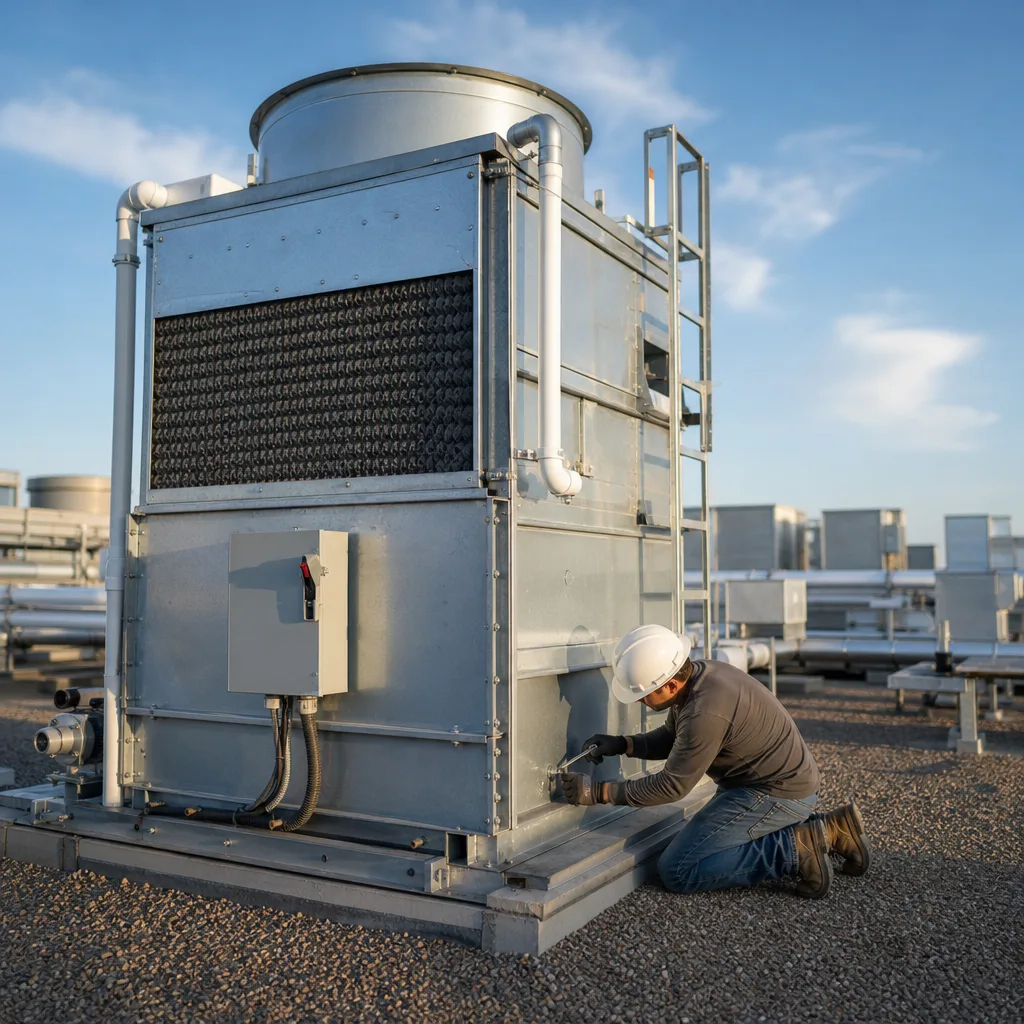
A cooling tower is the big box on the roof or pad that gets rid of heat for your building. Warm water from your chiller or process equipment flows over it. A small part of that water evaporates and carries the heat away, and the cooled water goes back to do the job again. When that box isn’t there, or can’t keep up, your building or your equipment runs hot. That’s why most people searching for this have a business to keep running, not just a room to cool.
A new installation usually makes sense when:
- You’re building new, or adding space that needs more cooling than you have now.
- You’re adding a water-cooled chiller or process equipment that needs somewhere to send its heat.
- Your current tower is too small for how the building is used today.
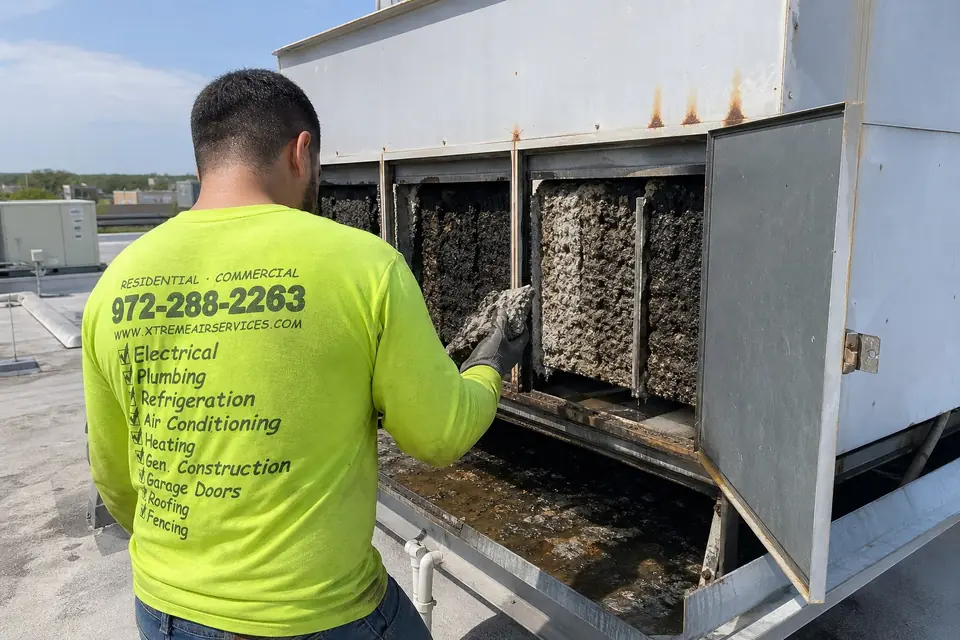
A full replacement fits when the tower you have is near the end of its life. You might see these signs on your own walk-around:
- Rust holes or leaks in the basin or casing.
- Fill, the honeycomb-like material water runs over, that’s sagging, crumbling, or caked with scale.
- Chillers that trip or struggle on the hottest afternoons.
- Repair bills that keep coming back for the same tower.
Scale deserves a word for Irving buildings. North Texas water tends to run hard. As tower water evaporates, it leaves minerals behind on the fill and in the basin. Over the years that buildup can choke a tower’s ability to shed heat. A replacement is a good time to look at how that water gets managed going forward.
The most common job is a standard like-for-like replacement. That means the new tower uses your existing connections with no major modifications. It covers the equipment and materials plus professional installation, startup, and testing, and we haul away the old unit. Duct, electrical, and plumbing modifications, code corrections, and permits aren’t included unless they’re stated in your quote. If your new tower is a different size or sits in a new spot, expect those items to come into the conversation.
Cooling towers rarely work alone, so it helps that one licensed and insured team handles the pieces around them. Our HVAC license is #TACLA29023C. Along with cooling tower installation, our commercial work includes chiller installation, pump installation and repair, piping installation, building automation, and commercial electrical and plumbing. If the tower is one part of a bigger change, we also handle central plant upgrades and mechanical equipment retrofits.
A tower is a big purchase for any business. Flexible financing is available on qualifying installations and larger jobs, on approved credit.
Signs Your Building Needs a New Cooling Tower, Not a Repair
Here’s the simple line. If the problem is a part, you repair it. If the problem is the tower itself, meaning its structure, its basin, or its size, you replace it. Most of the decision comes down to which side of that line you’re on.
Many cooling tower problems are part problems. If your tower’s shell and basin are still solid, fixes like these can give you more good years:
- A worn fan motor, belt, or bearing.
- A noisy or leaking gearbox.
- A few clogged spray nozzles that leave dry spots on the fill.
- A sticking float valve, so the basin overfills or runs low.
- Damaged drift eliminators, the panels that keep water mist from blowing off the tower.
- One section of fill that needs replacing, not the whole pack.
If that’s what you’re dealing with, you probably don’t need a new tower. A good repair is the right call.
It’s a different story when the tower itself is the problem. These are the signs that a repair won’t hold for long:
- The basin or frame is failing in more than one place, and you’re patching on top of old patches.
- The tower can’t cool the water as much as your chiller needs, even after cleaning and repairs.
- Your building now has a bigger cooling load than when the tower went in, from new tenants, added equipment, or a change in how the space is used.
- Parts for your older model are hard to find, so each breakdown means a long wait.
- Several major parts are wearing out at the same time, like the fan, the gearbox, and the fill.
Then there’s the money side. Add up what the next round of repairs will likely cost. Then think about what a day of downtime means for your tenants, your equipment, or your product. If you’re spending real money to keep an old tower going, compare that to replacing it. For reference, our most common job, a standard like-for-like cooling tower installation using existing connections, runs $28,000-$64,000. That includes equipment and materials, professional installation, startup and testing, and haul-away of the old unit.
Timing matters too. Your tower works hardest when Irving summers are at their peak. If you can see a replacement coming, plan it for the cooler months. That way you choose when the downtime happens, instead of the tower choosing for you on a hot afternoon.
Not sure which side of the line you’re on? A technician can look at the tower and tell you straight whether a repair is enough. Our service-call fee is $26-$99, and it’s credited toward the repair if you proceed with Xtreme Air Services. If a fix will do the job, that’s what we’ll recommend. If it won’t, you’ll know why, and you’ll see your options with upfront pricing before any work starts.
When a Repair Is Enough – Don’t Install a Whole New Tower for a Bad Motor
Before you price out a new tower, rule out the problems that only look like a dying tower. When a tower can’t keep the water cool enough, it’s easy to blame the tower. Often the real cause is something smaller, cheaper, and fixable in a day or two.
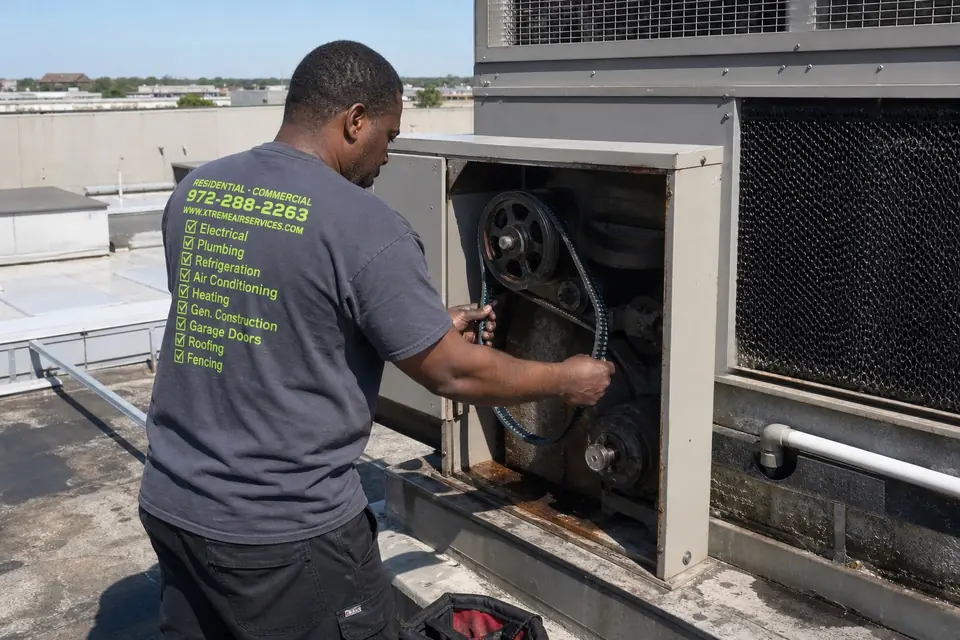
These are the usual stand-ins for a failing tower:
- Dirty or scaled fill that’s still in one piece. The hard water buildup we covered earlier slows heat transfer, but if the fill isn’t sagging or crumbling, a good cleaning and descaling can bring back much of the lost cooling.
- A clogged basin strainer or suction screen. Leaves, scale flakes, and trash can starve the pump, so less water moves over the tower and it looks weak.
- A pump problem. If the condenser water pump is worn or the wrong size, the tower never gets enough flow to do its job. That’s a pump repair, not a tower purchase.
- Controls and sensors. A bad temperature sensor, a drive fault, or a setting that keeps the fan running too slow can make a healthy tower underperform.
- Trouble on the chiller side. Dirty condenser tubes inside the chiller can make the tower seem like it’s falling behind when the tower is fine.
- Blocked or recycled air. Debris on the air inlets, or a new wall, screen, or stack of equipment too close to the tower, can make it pull in its own hot, wet exhaust.
If any of these is the cause, fix it and keep your tower. A new tower bolted to a clogged strainer or a bad sensor will have the same problem on day one.
Waiting can also be the right answer. Maybe your lease is up in two years. Maybe you’re planning to sell the building, add a floor, or change your chiller, and you don’t know yet how much cooling you’ll need. Buying a tower now could mean buying the wrong size. As long as the basin and frame are sound, a repair that bridges the gap is a reasonable choice. You can plan the full replacement once you know your future load, and set it for the cooler months as mentioned above.
There’s also work your own maintenance staff can keep up with between service visits. None of it is complicated, and it helps any technician who looks at the tower later:
- Keep the air inlets and the area around the tower clear of leaves, trash, and stored items.
- Watch the basin water level and note if it’s running high, low, or overflowing.
- Stay on your water treatment program so scale and growth don’t build back up.
- Write down the water temperature leaving the tower on a few hot Irving afternoons. That simple log shows whether the tower is truly falling short or just having a bad week.
A new cooling tower should solve a problem that a repair can’t. If the issue is airflow, water flow, controls, or a dirty surface, it isn’t that kind of problem yet.
Have questions? We’re happy to help.
Call Today, Get Service Today. Xtreme Air Services — Irving is ready to help.
What’s Included in a Standard Cooling Tower Installation
You’ve already seen the short version of what’s in and what’s out. Here’s what that looks like on the ground, and why two jobs with the same label can land in very different spots in the price range.
A standard like-for-like job has a few main stages. The old tower gets drained, disconnected, and taken apart or lifted out. The new tower is set on the existing base or steel. It’s then tied into the same supply and return piping, the same makeup water line, and the same power feed. After that comes startup and testing. That generally means filling the basin, checking that the fan spins the right way without shaking, confirming water spreads evenly over the fill, and watching the outlet temperature to make sure it’s doing its job. The old unit is hauled away, so you’re not left with a pile of rusted steel on your roof or pad.
These are the things that move the cost up or down:
- Size and capacity. A bigger tower that sheds more heat costs more to buy and to set.
- Brand and model. Different builds and features come at different prices.
- Ease of access. A tower on a pad by the loading dock is simpler than one on a tall roof that needs a crane and a street closure.
- Condition of what’s already there. Corroded piping, worn wiring, or a tired water line can turn a simple swap into extra work.
- Code upgrades and permits. Bringing older connections up to today’s code adds cost, and permits are extra unless your quote says otherwise.
- Custom fabrication. If the new tower’s connections don’t line up with the old ones, adapters or new steel may need to be built.
You can help the job go smoothly before anyone shows up. Gather the nameplate info from your current tower and chiller. Let your property manager or landlord know early if a crane or roof access is involved. Pick a downtime window, ideally in the cooler months, and tell your tenants or staff when cooling will be off. If you work with a water treatment company, loop them in so treatment starts right when the new tower fills. With Irving’s hard water, a fresh tower deserves a clean start.
When a quote lands on your desk, read it with a few questions in mind:
- Does it name the exact tower model and capacity?
- Are permits listed, or left out?
- Is crane work or rigging included?
- What happens if the existing piping or wiring turns out to be in bad shape?
- Does startup and testing include checking the water temperature leaving the tower under load?
Clear answers to those questions are how you avoid surprises. Our pricing is upfront and approved before work starts. If something outside the standard scope comes up, like a code correction or a piping change, you’ll hear about it and see the price before we touch it. That’s how a tower job gets done right the first time, without a bill that grows after the crane leaves.
Watch Our Video
See How We Handle Cooling tower installation in Irving
Xtreme Air Services — Irving
What Drives Cooling Tower Installation Cost Up or Down
Our full range for cooling tower installation is $10,000-$100,000. That’s a wide spread, and it’s wide for a reason. Our most common job, a standard like-for-like swap using existing connections, runs $28,000-$64,000. Where your job lands depends mostly on how far it strays from that standard swap.
Three questions will tell you a lot before anyone climbs your roof:
- Is it the same size tower in the same spot? A new tower on the old base, tied into the same piping, water line, and power, is the most predictable price you’ll get.
- Is it bigger, or going somewhere new? Moving up in size or moving to a new pad or roof spot brings in the piping, electrical, and structural changes that sit outside the standard scope. Those are usually what push a job higher in the range.
- Is there no tower there today? A first-time install means building the supply and return piping, the makeup water line, and the power feed from scratch, plus a base for the tower to sit on.
The price on the quote isn’t the only number that matters. Once the tower is running, you pay to run it. That cost comes from three places: the electricity that spins the fan, the makeup water that replaces what evaporates, and the water treatment that keeps scale and growth in check. With the hard water mentioned earlier, treatment in Irving is a real line in your budget, not an afterthought.
That’s why the lowest installed price isn’t always the lowest cost. A tower sized right for how your building runs today won’t run its fan flat out all summer just to keep up. A fan that can slow down on mild days uses less power than one that only runs full speed. When you compare options, ask what each one will cost to run over a full Texas summer, not just what it costs to set.
Downtime is the cost that never shows up on a quote. If your tower fails in August, every day without cooling costs you something. It might be comfort for your tenants, a chiller that can’t run, or product that has to stay cool. Planning the swap for the cooler months keeps that cost low. If you can’t wait, there’s no extra charge for nights or weekends, so a rush schedule doesn’t come with an overtime surprise.
However your job shakes out, you’ll see the number before work starts. Our pricing is upfront and flat-rate. Anything outside the standard scope gets priced and approved with you first. That way you can weigh a repair, a like-for-like swap, or a bigger upgrade with real numbers in front of you, not guesses.
Frequently Asked Questions
Common questions about Cooling tower installation
How long does a cooling tower installation take once work begins?
A standard like-for-like swap usually takes one to a few days, depending on crane access and startup testing. The old tower has to be drained, disconnected, and removed before the new one goes in, then tied into the existing piping and power. Startup and testing add time too, since the fan, water flow, and outlet temperature all need to check out before the job is done. Jobs needing new piping, electrical work, or a different pad take longer.
Can my building run without cooling during the installation?
Plan on a downtime window, and it’s smart to schedule it for the cooler months so you control when it happens. Your tower works hardest during peak Irving summer heat, so swapping it then means more pressure if something takes longer than expected. Telling your tenants or staff ahead of time, and picking a planned window, keeps the disruption predictable instead of a surprise.
Do I need a permit to replace a cooling tower?
It depends on your property and the scope of work, since code corrections and permits aren’t included in a standard quote unless stated. A technician can tell you upfront whether your job needs permitting before work starts. Reading your quote closely and asking whether permits are listed is the best way to avoid a surprise later.
Ready to Get Started?
Call (469) 200-2166 Today, Get Service Today.