


One-Stop Commercial HVAC, Plumbing & Electrical Service in Irving
One licensed team for your building's HVAC, refrigeration, plumbing and electrical, instead of juggling four contractors.
What’s Covered on This Page
- What a One-Stop Commercial Contract Covers
- Verify Licensing Before You Sign a Multi-Trade Agreement
- Deciding Between One Vendor and Separate Specialists
- Response Priorities for Business-Critical Failures
- How Pricing Works for Bundled Commercial Service
- Can I just add one trade now and bring in the rest later?
- What happens if my landlord already handles some of my building’s systems?
- Who do I call if I’m not sure which trade caused the problem?
What a One-Stop Commercial Contract Covers
Here’s the plain version. You get one team covering the systems that keep your doors open. You don’t need four phone numbers and four sets of schedules. We build the scope around your building, because a restaurant and an office suite don’t need the same things.
Depending on what your business runs, your contract can pull in work from each trade:
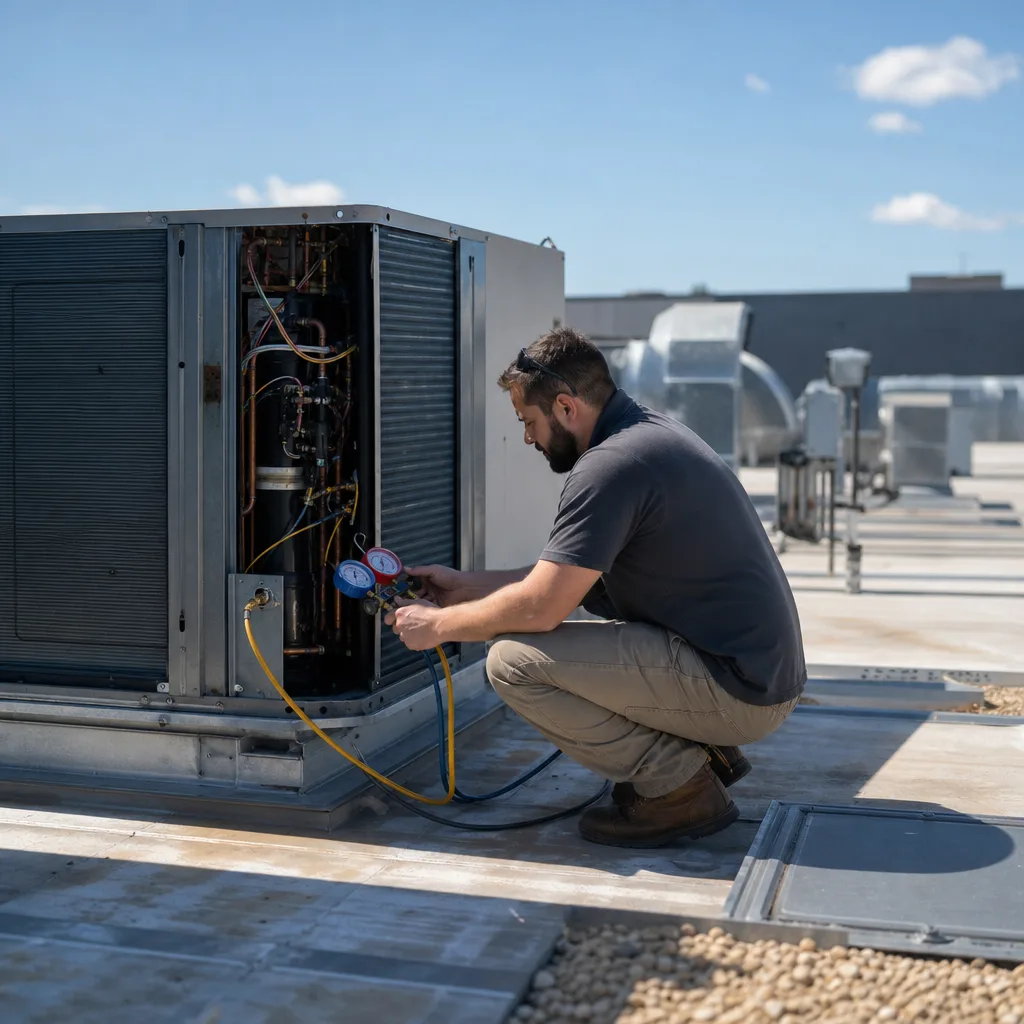
- HVAC: commercial HVAC repair and maintenance, rooftop unit (RTU) service, building automation and controls, and commercial preventive maintenance.
- Refrigeration: walk-in cooler repair, walk-in freezer repair, ice machine repair, and refrigeration leak detection.
- Plumbing: commercial plumbing, commercial water heater service, drain cleaning, hydro jetting, and backflow testing.
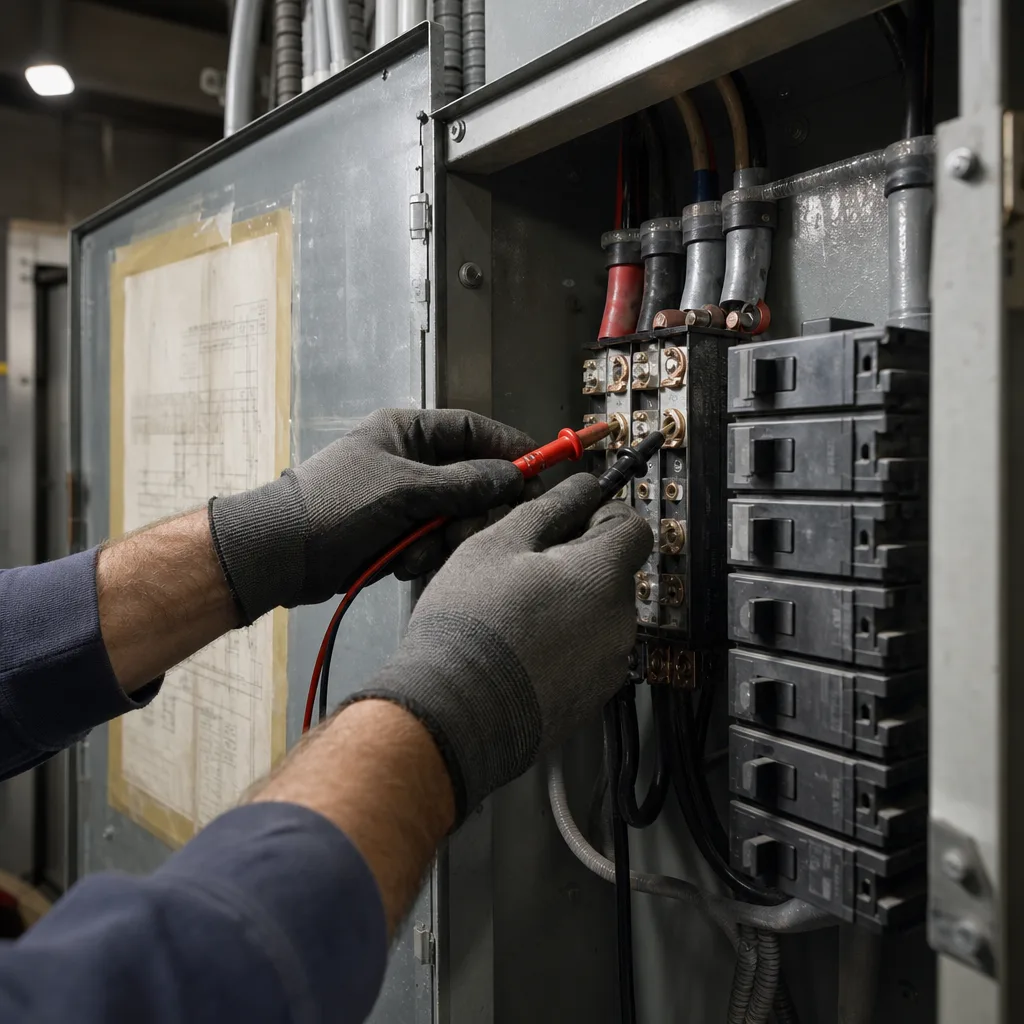
- Electrical: commercial electrical work, electrical panel repair, dedicated circuit installation, and light fixture repair.
- Kitchen and air: commercial kitchen ventilation and make-up air systems, if your space cooks.
Why does the mix matter? Think about a walk-in freezer that keeps tripping its breaker. Is that a refrigeration problem or an electrical one? When two vendors each say it’s the other guy’s job, your inventory sits there warming up. When one company covers both trades, there’s nobody else to point at. That’s the whole idea.
What’s included: coordinated multi-trade service under one vendor. What’s excluded: anything outside your agreed scope gets itemized, so you’ll see it on its own line. Large installs are quoted separately. If a rooftop unit needs replacing or you’re adding a new walk-in, you’ll get its own quote. It isn’t folded into your regular service.
Your price is a custom quote. Four things move it up or down: building size, number of systems, service frequency, and the mix of trades covered. A small office with one rooftop unit and two restrooms will look very different from a restaurant with a walk-in cooler, a freezer, an ice machine, a hood, and drains that work hard every day.
There’s a $26-$99 service-call fee. It’s credited toward the repair if you go ahead with Xtreme Air Services. For bigger projects, flexible financing is available on qualifying installations and larger jobs, on approved credit.
Before you sign with any commercial service vendor, ask these questions. A good provider will answer them straight:
- Which of my systems are in the scope, by name, and which aren’t?
- How often will each system be serviced?
- How is work outside the scope priced and approved?
- Which jobs count as large installs that get quoted separately?
- Does one company handle every trade, or are some passed to subcontractors?
If the answers are fuzzy, the contract will be too. You should know exactly what you’re covered for before anything breaks, not after.
Verify Licensing Before You Sign a Multi-Trade Agreement
A one-stop contract only protects you if the company is licensed in every trade it promises to cover. In Texas, HVAC and refrigeration work, electrical work, and plumbing work each need their own state license. One license doesn’t cover the others. So a company that’s licensed for air conditioning but has nobody licensed for plumbing or electrical isn’t really one-stop. It’s one company with gaps, and those gaps usually get filled by subcontractors you never met.
That matters for your business. If a breaker panel repair or a commercial water heater swap needs a city permit in Irving, the permit has to go through someone who holds the right license for that trade. If your vendor can’t pull it, the job stalls, or it gets done without the paperwork it should have had.
Here’s how to check any vendor before you sign:
- Ask for the license number for each trade in your scope: HVAC and refrigeration, plumbing, and electrical. You want a number for each one, not a general “we’re licensed.”
- Look the HVAC and electrical numbers up yourself through the Texas Department of Licensing and Regulation (TDLR). Make sure the name on the license matches the company on your contract.
- Ask who the license holder is for plumbing. A real person should hold that license, and you should be able to get their name.
- Ask for a certificate of insurance. Check that it’s current and that it covers commercial work.
- Ask straight out which trades, if any, go to subcontractors. If some do, ask for those companies’ license numbers too.
None of this is rude. A good contractor expects it and has the answers ready. If a vendor gets cagey, or hands you one license and changes the subject, that tells you what you need to know.
Here’s ours, so you don’t have to dig. Xtreme Air Services is a licensed and insured HVAC, plumbing, and electrical contractor. Our HVAC license is #TACLA29023C. Our plumbing work runs under master plumber Larry Breedlove. Our technicians are background-checked. Ask us for any license number or our insurance details on the phone, and we’ll give them to you. Then check them yourself. We’d rather you verify than take our word for it.
This check is the reason one-stop service works. When one licensed team covers your rooftop units, your walk-in, your drains, and your panel, nobody can say a problem belongs to someone else. You’ve got one name on the contract and one license holder for each trade. You also have one number to call when something stops working at 2 p.m. on a busy Friday.
Call 469-200-2166
Deciding Between One Vendor and Separate Specialists
One vendor isn’t the right answer for every building. It’s the right answer when your systems touch each other and your vendors don’t. Here’s how to tell which side you’re on.
One-stop service usually fits best when:
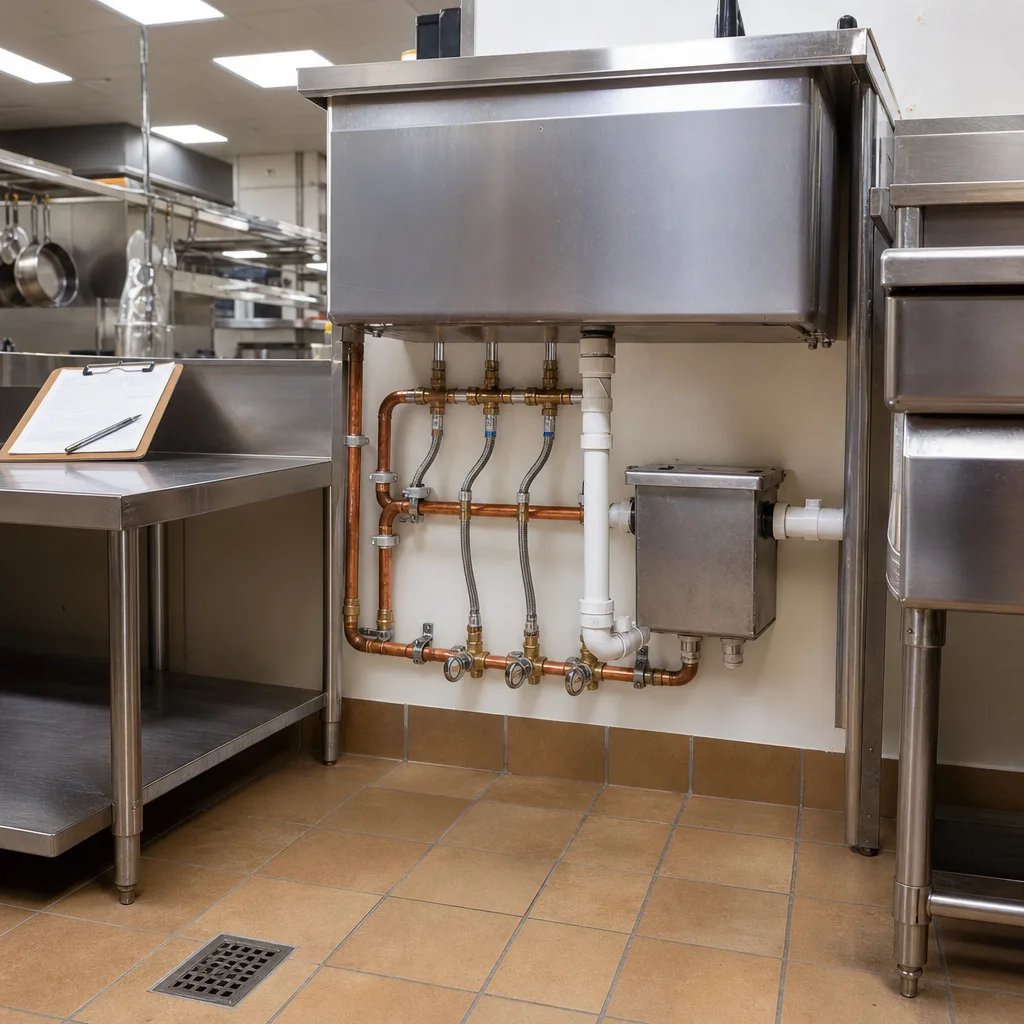
- Your problems cross trades. A restaurant is the classic case. The walk-in, the ice machine, the hood, the drains, and the panel all lean on each other. When something fails, you want one team tracing it from end to end.
- You’re juggling too many contracts. If you’re tracking four renewal dates, four invoices, and four people who each say “not my department,” consolidating saves you real time every month.
- You don’t have a facilities person. In a lot of small and mid-size businesses, the owner or the manager is the facilities department. One phone number means one call instead of a morning spent figuring out who to call.
- Downtime costs you money. If a warm cooler means tossed inventory, or a dead rooftop unit in an Irving summer means closing early, you need the fix started fast, not a debate about whose job it is.
Separate specialists can make more sense when:
- Your lease already splits the work. In many leased spaces, the landlord handles the base plumbing, electrical, or rooftop equipment. If you’re only responsible for one system, a full multi-trade contract covers things you don’t pay for anyway. Read your lease first.
- You’ve got a specialist who’s doing a great job. If your refrigeration tech knows your equipment and always shows up, there’s no reason to fire someone who’s working. Keep what works and fix what doesn’t.
- Your building really only runs one trade. An office suite with one rooftop unit and nothing else unusual may just need a solid HVAC maintenance plan, not a bundle.
- A vendor can’t show a license for every trade. As covered above, a one-stop company with license gaps is just a middleman. In that case, licensed specialists for each trade are the safer choice.
It doesn’t have to be all or nothing, either. The mix of trades you cover is one of the things that shapes your quote. So you can bundle the systems that keep causing headaches, like refrigeration and electrical in a kitchen, and leave out the ones your landlord or another vendor already handles well.
A quick gut check helps. Think back over the last year. How many times did a repair stall because one vendor blamed another, or because you had to wait for a second company to come out? If the answer is never, your current setup is probably fine. If you can name two or three times without thinking hard, you’re paying for that gap in lost hours, spoiled stock, or unhappy customers.
There’s no wrong answer here, only a wrong fit. Be honest about how your building runs, and the choice usually makes itself.
Not sure what your One-stop commercial service project needs? Ask us.
Call Today, Get Service Today. Xtreme Air Services — Irving is ready to help.
Response Priorities for Business-Critical Failures
When something breaks in your building, the real question isn’t which trade it belongs to. It’s how much it costs you every hour it stays broken. That’s how you should rank it, and it’s how you should describe it when you call.
Here’s a simple way to sort a failure by what it puts at risk:
- Call the same day if it threatens stock you’d have to throw out. A walk-in cooler or freezer that won’t hold temperature, or an ice machine that quits during a rush, gets worse by the hour.
- Call the same day if it shuts your doors or sends people home. That means no cooling in a full dining room on a hot Irving afternoon, a dead panel or circuit that takes down your registers, or a backed-up drain that closes your restrooms or kitchen.
- Call the same day if water is going where it shouldn’t. A leak near electrical equipment or spreading across a floor is both a damage problem and a safety problem.
- Book it soon if it’s working but getting worse. A rooftop unit that runs nonstop, a cooler that’s slow to recover after deliveries, or a breaker that trips now and then won’t fix itself. These are cheaper to handle before they turn into a shutdown.
- Schedule it if it’s annoying but stable. A flickering fixture or a slow sink can wait for a regular visit.
When you call, a few details help us get the right person headed your way faster. Tell us which system stopped, what you’re seeing or hearing, and when it started. Mention anything else acting strange at the same time, like a tripped breaker next to a dead cooler or water pooling under a rooftop unit. Those clues often point to a crossover problem. Let us know about access, too. Who has the roof key? Does the landlord need a heads-up? Which door should the tech use?
That crossover clue is where one-stop service earns its keep. If your freezer and your breaker are failing together, you don’t need to guess who to call first. You make one call, and the same company handles both trades. You don’t book a second vendor and wait for them to show up.
Timing shouldn’t change your price. There’s no extra charge for nights or weekends, so a Saturday breakdown costs the same as a Tuesday one. Our pricing is upfront and flat-rate, and you approve it before any work starts. The service-call fee covered above still gets credited if you go ahead with the repair. You’ll know what you’re paying before we pick up a tool.
Even if nothing’s broken today, it’s worth planning for the day something does. Decide now which systems would hurt most to lose, and make sure they’re in your scope by name. You’ll make a faster call when it counts.
Call 469-200-2166
Watch Our Video
See How We Handle One-stop commercial service in Irving
Xtreme Air Services — Irving
How Pricing Works for Bundled Commercial Service
A bundled commercial quote isn’t one big number that covers anything that could ever break. It’s built in layers. Once you can see the layers, you can read any quote with confidence, whether it’s ours or someone else’s.
- Planned service: The scheduled visits for each system named in your scope. How often each system gets a visit is agreed up front, and it’s one of the biggest levers on your price.
- Repairs on covered systems: The fixes when something in your scope breaks between visits. You approve each repair price before any work starts, as covered above.
- Work outside your scope: Anything not in your agreement shows up on its own line, so you can say yes or no to it separately.
- Large installs: New or replacement equipment gets its own quote and isn’t folded into your regular service.
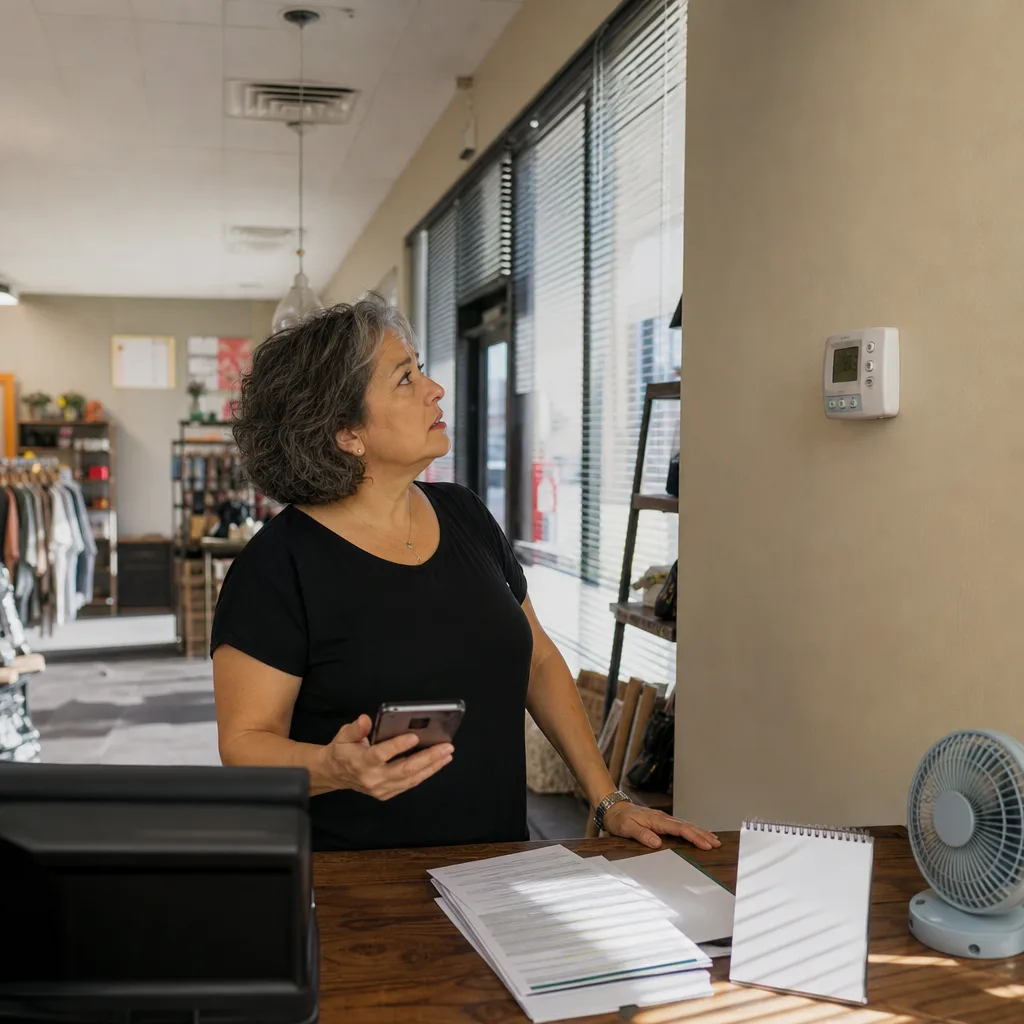
You have more control over the price than you might think. Visit frequency doesn’t have to be the same for every system. A walk-in freezer, an ice machine, and kitchen drains that work hard all day may need more frequent attention. A rooftop unit over a quiet office may need much less. You can also leave out a trade your landlord already handles. That keeps you from paying twice for the same equipment.
To know whether bundling makes sense for your business, compare it with what you really spend now, not just the invoices. Pull last year’s numbers and add these up:
- Every maintenance contract and trip charge from each separate vendor
- Emergency calls, and repeat visits when the first company said it was someone else’s problem
- Stock you threw out while you waited on a repair
- Hours you or your manager spent calling, scheduling, and letting people in
Don’t expect a bundle to beat your current costs on every single line. The value usually shows up in the gaps: fewer wasted trips, fewer stalled repairs, and less of your time spent playing referee between vendors. If those gaps barely cost you anything last year, that’s worth knowing too.
Watch for a few warning signs in any bundled quote. Be careful with one price that has no list of equipment behind it, or words like “full coverage” that never say what’s covered. Look for a clear process for approving extra work, and for an honest answer about which trades go to subcontractors. A clear quote should tell you what you’re paying for, system by system.
You’ll get a more accurate quote, faster, if you have a few things ready before the walkthrough:
- A rough list of your equipment: rooftop units, walk-ins, ice machines, water heaters, hoods
- Your building’s approximate square footage
- Recent service records or invoices, if you have them
- The part of your lease that says who’s responsible for which systems
Even a partial list helps. We’ll fill in the rest when we see the building in person. Then you’ll get a quote you can hold up next to what you spend today.
Request your estimate
Frequently Asked Questions
Common questions about One-stop commercial service
Can I just add one trade now and bring in the rest later?
Yes, you can start with the trade causing you the most trouble and add others as you see how it works. Many buildings start with refrigeration or HVAC because those failures cost the most in spoiled stock or closed doors, then add plumbing or electrical once the first piece proves useful. Your scope is built per building, so adding a trade later just means updating what’s listed by name in your agreement.
What happens if my landlord already handles some of my building’s systems?
You should only bundle the systems you pay for and control, not ones your lease already assigns to your landlord. Read your lease before signing a multi-trade agreement, because many leased spaces split responsibility for the rooftop unit, base plumbing, or panel between tenant and landlord. A bundled contract that includes equipment you don’t pay for just adds cost without adding value.
Who do I call if I’m not sure which trade caused the problem?
You call the same number either way, since one licensed team covers HVAC, refrigeration, plumbing, and electrical under one contract. A common example is a walk-in freezer that keeps tripping a breaker. That could be a refrigeration issue or an electrical one, and with separate vendors each one can blame the other while your inventory warms up. With one vendor covering both trades, there’s nobody left to point at, so the tech just fixes it.
Ready to Get Started?
Call (469) 200-2166 Today, Get Service Today.