


Electrical Panel Replacement / Upgrade in Irving: Do You Need a New Panel?
Panel upgrades for homes that have outgrown their power, done by licensed electricians with the permit pulled.
What’s Covered on This Page
- Signs Your Electrical Panel Needs Replacing, Not Just a Repair
- When a Panel Upgrade Makes Sense Even Without a Problem
- When You Don’t Need a Full Panel Replacement
- Who Is Legally Allowed to Replace an Electrical Panel in Texas
- Permits and Inspection for Panel Upgrades in Irving
- How long does an electrical panel replacement take?
- What size panel do I need, 100 amp or 200 amp?
- Will my power be shut off during a panel upgrade?
Signs Your Electrical Panel Needs Replacing, Not Just a Repair
Your panel is the box that takes power from the utility and splits it into circuits for every room. Breakers do wear out, and a single bad one is a small job. The real question is whether you have one tired part or a box that’s worn out or too small for your home today. Here are the signs that point toward replacement.
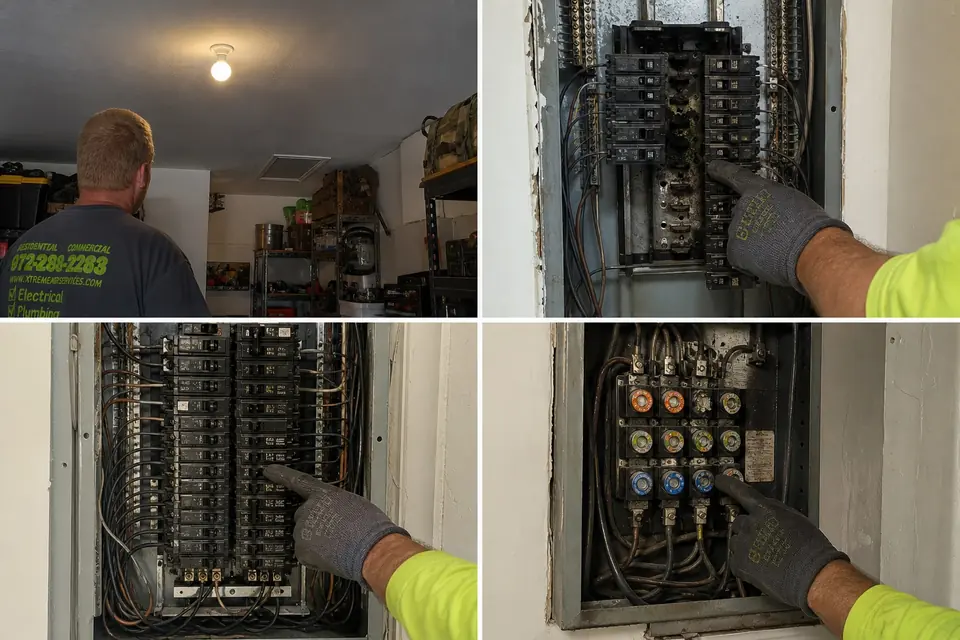
- Breakers trip over and over, even after you’ve unplugged things or spread out the load. One breaker that trips all the time may just need swapping. Trips across several circuits usually mean the panel can’t keep up.
- The panel cover, a breaker, or the wall around the box feels warm. You might also smell something hot near it. A healthy panel shouldn’t give off heat you can feel.
- You see rust, water stains, or corrosion inside the box. Moisture and metal parts don’t mix, and corrosion spreads to connections you can’t see.
- There’s no room left. If every slot is full and someone has added doubled-up breakers to squeeze in more circuits, the panel has been stretched past what it was built for.
- Lights dim or flicker when the AC kicks on or a big appliance starts. That points to a panel or service that’s short on capacity.
- The panel still uses screw-in fuses instead of breakers. Fuse boxes came from a time when homes ran far fewer appliances.
- Breakers won’t reset, won’t stay on, or feel loose when you flip them. If that’s happening in more than one spot, the parts they snap into may be worn out.
There’s another reason to replace a panel that has nothing to do with damage. You might be adding something big, like an EV charger, a hot tub, a larger air conditioner, or a room addition. Each one needs its own circuit and a share of your home’s capacity. If the panel is already near its limit, adding more is where trouble starts. That’s why many upgrades move a home to 200 amps, which leaves room for what you have now and what you’ll add later.
Now, the honest side. You may not need a new panel at all. If one breaker trips because a space heater and a hair dryer share a circuit, moving one of them may be all it takes. If a single breaker has gone bad, it can be replaced. A loose wire on one circuit can be tightened and tested. In those cases, electrical panel repair is the right call. It costs less, and nobody should talk you into more than you need.
The tipping point is usually when problems stack up. You might have an old panel, a full box, and a new appliance on the way. Or you might be fixing breakers for the second or third time. Then a repair only buys time, and a replacement fixes the root of the problem. If you can’t tell which side of that line you’re on, have a licensed electrician open the panel and look. Five minutes inside the box tells you more than any checklist.
When a Panel Upgrade Makes Sense Even Without a Problem
Sometimes your panel isn’t failing at all. Nothing trips, nothing feels warm, and the box looks fine. An upgrade can still make sense when you know a change is coming and you’d rather handle it on your own schedule than in a hurry.
That’s the biggest reason to plan ahead. When you choose to upgrade, you pick the day. You get the quote, read what’s included, and ask your questions before anyone touches a wire. A panel that gives out during an August heat wave doesn’t give you any of that. Your AC is down while you wait, and you’re making a big decision in a hot house. Planning ahead turns a stressful day into an ordinary one.
Here are the situations where an upgrade before trouble starts is worth a look:
- You’re adding a whole-home standby generator. It needs a transfer switch, the part that safely moves your home from Oncor power to generator power and back. That work ties right into your panel, so it’s smart to check the panel’s age and capacity at the same time.
- You’re switching from gas to electric. A heat pump, an electric water heater, or an electric range each adds steady load. One swap may fit fine. Two or three in a few years can push an older panel past what it can handle.
- You’re remodeling. When walls are already open for a kitchen or an addition, it’s the easiest time to add circuits and give your panel room to grow.
- You’re buying or selling a home. A home inspector may flag an old fuse box, a full panel, or doubled-up breakers. If you’re selling, handling it before you list takes one question off the table for buyers. If you’re buying, it helps to know what you’re getting before closing.
- You want whole-house surge protection. That device mounts at the panel. An older or crowded panel may not have the space or condition to take it cleanly.
Your home’s age plays a part too. Irving has a mix of established neighborhoods and newer builds. If your house was built decades ago, its panel was sized for the way people lived then, with fewer big appliances and nothing charging in the garage. North Texas summers add to that, because your AC runs hard from late spring well into fall. A panel that was fine in 1985 may be running close to its limit for months at a time today.
Timing matters as well. A panel swap means your power is off for part of the day, and some jobs need Oncor to disconnect and reconnect service. That takes scheduling. Spring and fall are easier windows than the middle of summer, when you need your AC most.
If cost is what’s holding you back, we offer flexible financing on qualifying installations and larger jobs, on approved credit. That can make a planned upgrade easier to fit into your budget.
Here’s the honest part. You don’t need to upgrade just because your panel is older. If it’s in good shape, has open spaces, and you’ve got no big projects coming, it’s fine to leave it alone. An upgrade makes sense when it lines up with a real plan for your home, not just because the panel has a few years on it.
When You Don’t Need a Full Panel Replacement
A full replacement is the right fix for a panel that’s worn out or maxed out. Plenty of panel worries have a smaller answer, though. Before you budget for a new box, check whether one of these fits your situation better.
- The appliance is the problem, not the panel. If a breaker trips only when one thing runs, like an old window unit, a garage freezer, or a microwave, look at that appliance first. A failing motor or a damaged cord can trip a perfectly good breaker. Fix or replace the appliance and the trips stop.
- A GFCI outlet keeps tripping. These are the outlets with test and reset buttons in kitchens, baths, garages, and outside. Rain getting into an outdoor box after a storm, or a worn-out outlet, is a common cause. That calls for outlet repair. It has nothing to do with your panel.
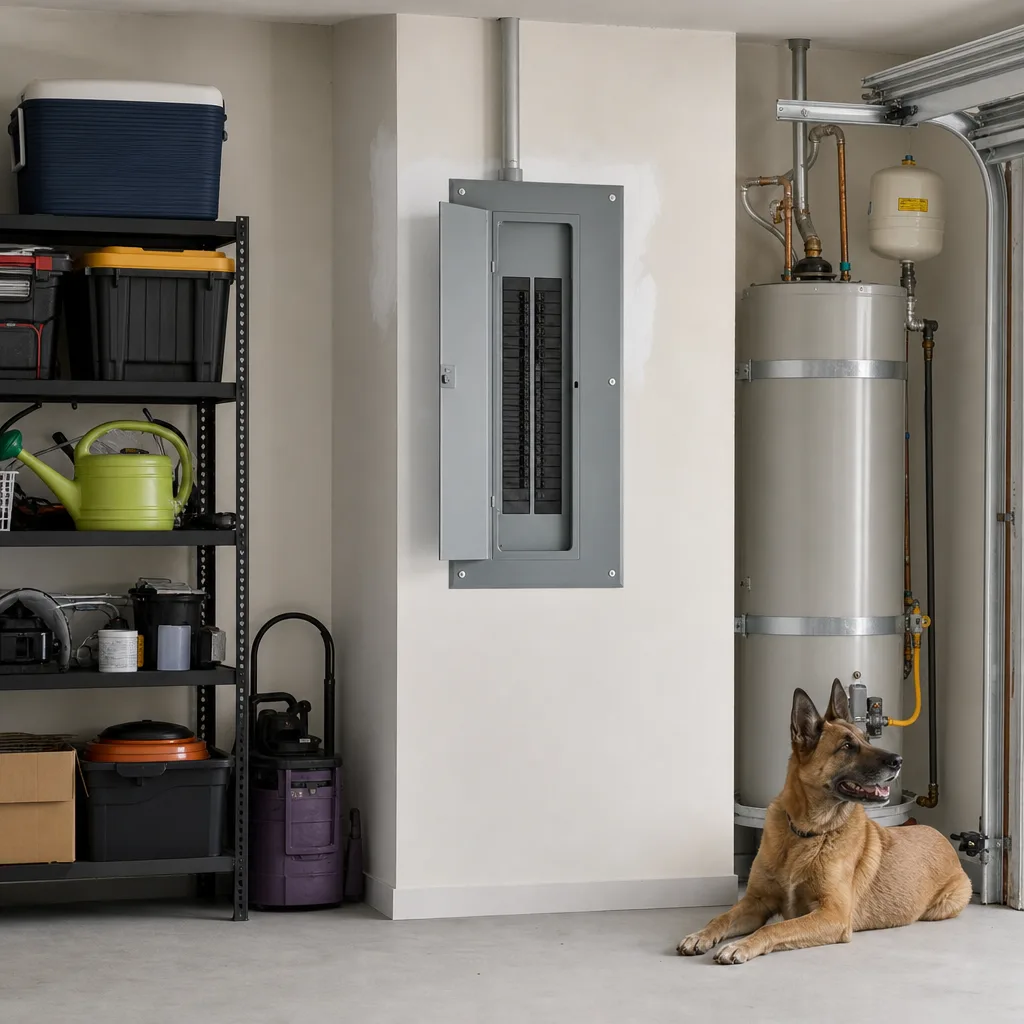
- You need more space, not more power. If your panel is in good shape and your home already has enough total capacity, a subpanel can add the circuits you need. A subpanel is a smaller box fed from your main panel. It often goes in a garage or workshop, close to where the new circuits are needed.
- You only need one new circuit. If your panel has an open slot and room to spare, a dedicated circuit for a new appliance can often go in with no other changes.
- You want an EV charger. Many home chargers can be set to draw less power, and a slower overnight charge covers most daily driving. Depending on your home’s numbers, your current panel may handle it without an upgrade.
- Your doubled-up breakers may be fine. Some panels are built to take slim tandem breakers in certain slots. The label inside the panel door shows which ones. If yours are the right type in the right slots, they aren’t a problem by themselves.
The tool that settles most of these questions is a load calculation. It’s a simple idea. An electrician adds up what your home pulls when the big things run at the same time, like the AC, the dryer, the water heater, and the oven on a hot evening. Then they compare that total to what your panel and service can safely deliver. Sometimes the numbers say you need a bigger panel. Sometimes they say a subpanel will do. Sometimes they say you’re fine as you are.
Ask any electrician you’re considering to walk you through those numbers. You should be able to see why they’re recommending what they’re recommending. If someone says you need a new panel and can’t explain the load or point to a sign like heat, rust, or worn breaker slots, get a second look.
Have questions? We’re happy to help.
Call Today, Get Service Today. Xtreme Air Services — Irving is ready to help.
Who Is Legally Allowed to Replace an Electrical Panel in Texas
In Texas, a panel replacement should be done by a licensed electrician working for a licensed electrical contractor. The state licenses electricians through the Texas Department of Licensing and Regulation, or TDLR. A handyman, a general contractor, or a friend who’s good with tools can’t legally do this work for you unless they hold the right electrical license.
The license isn’t just paperwork. A panel swap means disconnecting every circuit in your home, setting new breakers, and getting the grounding right. It’s work you can’t see once the cover goes back on. The license shows the person has the training and hours to do it right, and that the contractor answers to the state if they don’t.
Texas law does leave some room for homeowners to do electrical work on a home they own and live in. That doesn’t mean skipping the rules. Your city can still require a permit and an inspection, so check with the City of Irving before you plan anything. A panel is also one of the riskiest jobs to try yourself. The heavy wires coming in from the meter stay live even when the main breaker is off. Changing a light fixture is one thing. Changing the box that feeds your whole house is another.
There’s also the part nobody at your house controls. In Irving, the meter and the lines that bring power to your home belong to Oncor. Many panel jobs need Oncor to cut power at the meter and turn it back on after the work passes inspection. Don’t break the meter seal or pull the meter yourself. Your electrician should handle that scheduling with Oncor.
Unpermitted panel work can come back to bite you later. It may show up on a home inspection when you sell. It can also raise questions if you ever file an insurance claim tied to an electrical problem. A permit and a passed inspection give you a paper trail showing the work was done to code.
Before you hire anyone, ask a few simple questions:
- Who will do the work, and are they licensed? You can look up any electrician or electrical contractor by name on the TDLR website in a couple of minutes.
- Who pulls the permit? The answer should be the contractor, not you.
- Is the permit included in the price? At Xtreme Air Services, permits aren’t included unless they’re stated in your quote, so you’ll know up front.
- Who handles the Oncor disconnect and reconnect? Meter and service-entrance work done by the utility is separate from the panel job itself.
- Are you insured? If someone gets hurt or something gets damaged, you don’t want that landing on you.
Xtreme Air Services is a licensed and insured electrical contractor. Our technicians are background-checked and drug-tested. Any contractor who gets vague when you ask about licenses or permits is giving you an answer. It’s just not the one you wanted.
Watch Our Video
See How We Handle Electrical panel replacement / upgrade in Irving
Xtreme Air Services — Irving
Permits and Inspection for Panel Upgrades in Irving
A panel upgrade in Irving isn’t finished when the new cover goes on. It’s finished when a City of Irving inspector has looked at the work and signed off. The permit is what puts the job on the city’s radar, and the inspection is the independent check that what’s behind that cover was done to code.
Here’s how it usually goes. The permit gets filed before any work starts. The panel is swapped and wired. Then an inspector comes out to look at it before the job is closed. As covered above, Oncor typically won’t restore power at the meter until that step clears. That means the inspection isn’t paperwork that happens weeks later. It’s part of the day your power comes back on.
Inspectors aren’t there to admire the breakers. They’re looking at the parts that keep your home safe over the long run, including:
- Grounding and bonding. This is the path that sends stray electricity safely into the earth instead of through a person or your home’s metal pipes.
- Breaker and wire sizing. Each breaker has to match the wire it protects. A breaker that’s too big for its wire can let that wire overheat without ever tripping.
- Clean, tight connections and a neat panel, with no loose strands or crowded wiring.
- A clear circuit directory, so you can tell which breaker runs the kitchen and which one runs the AC.
- Open working space in front of the panel, so someone can safely reach it and work on it.
This is where older Irving homes can turn up surprises. Many houses here were built decades ago, under the rules of their day. When a new panel goes in, the work around it has to meet today’s code. A grounding setup that was fine in 1975 may need to be brought up to current standards. Some circuits may need newer types of protection once they’re connected to the new panel.
That matters for your budget. Grounding is included in our panel replacement work. Separate code corrections and rewiring aren’t included unless your quote says so. A good electrician should look for these issues before the job starts and tell you about them up front, so you’re not hearing about them for the first time while your power is off. Ask directly: “Is there anything in my home the inspector is likely to flag?” A clear, specific answer is a good sign.
A few things on your end make inspection day go smoothly:
- Clear the area around the panel and the meter. Move storage boxes, shelving, and anything stacked in the garage.
- Make sure the inspector can get to the outside meter. That means an unlocked gate and a secured dog.
- Ask whether someone needs to be home for the inspection, and plan around it.
When it’s all done, ask for proof that the permit was closed out and passed. Keep it with your home records. If you sell, a buyer’s inspector may ask about the panel. A passed city inspection answers that question in one page.
Frequently Asked Questions
Common questions about Electrical panel replacement / upgrade
How long does an electrical panel replacement take?
Most panel swaps take a full day, but your power will be off for only part of that time. The electrician needs time to disconnect every circuit, set the new panel, and wire breakers back in before Oncor restores power at the meter. Jobs that also need code corrections, like updated grounding, can run longer. Ask your electrician for a time estimate before the day starts so you can plan around it.
What size panel do I need, 100 amp or 200 amp?
It depends on what your home runs today and what you plan to add, and a load calculation gives you the real answer. An electrician adds up what pulls power when your AC, dryer, water heater, and oven all run at once, then compares that to what your panel can safely deliver. Many Irving homeowners move to 200 amps when they’re adding an EV charger, a larger AC, or a room addition, since it leaves room to grow. If you’re not planning big additions, a smaller upgrade may be all you need.
Will my power be shut off during a panel upgrade?
Yes, your power is off for part of the day during a panel replacement. Every circuit in your home connects to the new panel, so there’s no way around a temporary shutoff. Many panel jobs also need Oncor to disconnect power at the meter before work starts and reconnect it after the city inspection passes. Your electrician should handle scheduling that with Oncor so you know roughly when power will come back on.
Ready to Get Started?
Call (469) 200-2166 Today, Get Service Today.