


Home Rewiring in Irving: Whole-House Rewire or Targeted Repair – How to Tell
A straight answer on whether your house needs rewiring or a smaller repair, and what a full project involves.
What’s Covered on This Page
- Signs Your Wiring Needs More Than a Quick Repair
- Home Age Signals How Urgent the Problem Is
- When You Don’t Need a Full Rewire
- What Happens During a Rewiring Project
- What Drives Rewiring Cost Up or Down
- Will my homeowners insurance care if my wiring isn’t up to date?
- Can I add a circuit for an EV charger without rewiring the whole house?
- What should I do with my pets and furniture on rewiring work days?
Signs Your Wiring Needs More Than a Quick Repair
Here’s the simplest way to think about it. If one outlet in your kitchen stops working, that’s a part problem. If outlets in your kitchen, your bedroom, and your living room all act up at different times, that’s a wiring problem. Patching it piece by piece can cost you more over time and still leave the real issue behind your walls.
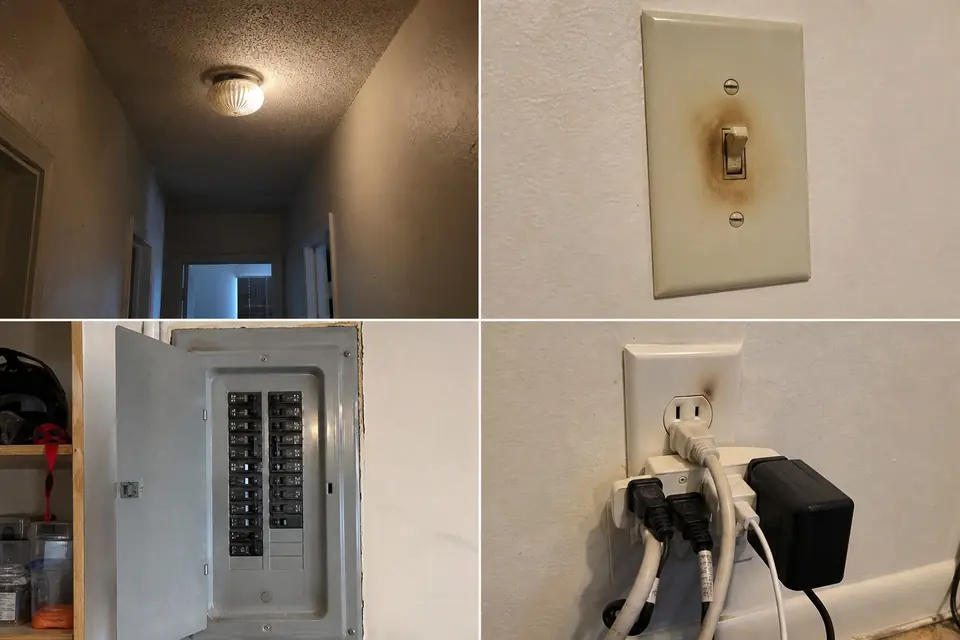
These are the signs that point past a quick repair:
- Outlets or switch plates that feel warm, look scorched, or give off a burning smell, especially in more than one spot.
- Lights that flicker or dim around the house when the AC, microwave, or hair dryer kicks on.
- Breakers that trip often on several circuits, not just the one you overload with a space heater.
- Two-prong outlets throughout the home, which usually means there’s no ground wire behind them.
- Knob-and-tube wiring, the old system of wires run on ceramic knobs, which wasn’t built for today’s power use.
- Aluminum branch wiring, common in some homes built in the late 1960s and early 1970s, which can loosen at connections over time.
- Cloth-covered or brittle, cracking wire insulation you can see in the attic, at the panel, or behind a removed outlet cover.
- Mild tingles or small shocks when you touch an appliance or switch.
- A string of DIY or past-owner add-ons, like extension cords run as permanent wiring or splices with no junction box.
Any one of these deserves a look. Two or three together, or one that keeps coming back after it’s been fixed, is a strong hint that your wiring has reached the end of its useful life.
Now for the honest part. Plenty of electrical problems don’t need rewiring at all. A single dead outlet often just needs a new receptacle. A GFCI outlet in the bathroom or garage that tripped can usually be reset with the button on its face. A breaker that trips once when you run too many things on one circuit is doing its job. A burned-out light bulb or a worn-out switch is a small fix. If your home has modern copper wiring with a ground and only one problem spot, a simple repair is very likely the right call. You shouldn’t let anyone talk you into more.
The tricky cases are in the middle. Warm outlets and flickering lights can come from one loose connection, or from wiring that’s failing all over the house. You can’t tell which from the outside. That’s where real electrical troubleshooting matters. A licensed electrician checks the panel, opens up the problem spots, looks at the wire type and its condition, and tests the circuits. Then you get a clear answer: fix this one thing, or plan for a rewire. Either way, you’re making the choice with the facts in front of you, not a guess.
Home Age Signals How Urgent the Problem Is
The year your house was built won’t tell you if it needs a rewire. It does tell you what kind of wiring is probably behind your walls and how hard that wiring has worked. That helps you decide whether to get it checked this month or keep an eye on it.
Here’s a rough guide by era. Treat it as a starting point, not a verdict.
- Before about 1950: This is the highest-priority group. Homes this old may still have knob-and-tube wiring somewhere, and they almost never had a ground wire. Even when part of the house has been updated, old runs can hide in the attic or in walls nobody opened. If you own one of these homes and have never had the wiring checked, don’t wait for a problem.
- 1950s and 1960s: Many North Texas ranch homes come from this period. Wiring from these years often has no ground, older cloth or rubber insulation, and fewer circuits than a family uses today. These homes were wired before central AC, big TVs, and a phone charger in every room. Get these checked soon, especially if you’re also seeing any of the signs listed above.
- Late 1960s to mid-1970s: This is the window when aluminum branch wiring was sometimes used. Your house may be all copper, or it may not. You won’t know until someone looks at the wire at the panel or behind a few outlet covers. That check is quick, and it’s worth doing.
- Late 1970s through the 1990s: Most homes from these years have grounded copper wiring. Problems here usually come from worn-out outlets and switches, a panel that’s too small, or add-ons a past owner did. A full rewire is less common. Targeted repairs or a panel upgrade often solve it.
- 2000s and newer: A rewire is rarely the answer. If something’s wrong, it usually points to one bad connection, one damaged circuit, or a poor install that needs fixing.
North Texas adds a few twists. Most homes around Irving sit on slab foundations, so there’s no crawlspace to run wire through. Much of the wiring runs through the attic and down inside the walls. In summer, that attic gets extremely hot. Over many years, heat like that wears down older wire insulation faster, and the attic is often where brittle wire shows up first. Long Texas summers also mean your AC runs hard for months. That puts a steady load on older circuits and panels that were never sized for it.
Age also doesn’t account for what’s happened since the house was built. A 1960s home might have been fully rewired during a remodel. A 1990s home might have a garage or added room wired by someone who cut corners. If you have inspection reports, remodel records, or seller disclosures, look for any mention of electrical work. That paper trail can move your home up or down this list.
So here’s how to use this. Older home plus any warning sign means you should get it checked soon. Older home with no signs means a planned check is smart, not urgent. Newer home with a problem means you should start with troubleshooting, not a rewire quote.
When You Don’t Need a Full Rewire
A full rewire isn’t the only big fix out there. Lots of homes with real electrical problems still have wiring that’s in decent shape. The trouble is in one area, one part of the system, or one choice a past owner made. In those cases, a targeted fix solves the problem for much less money and much less mess.
Here are the most common times a smaller job makes more sense:
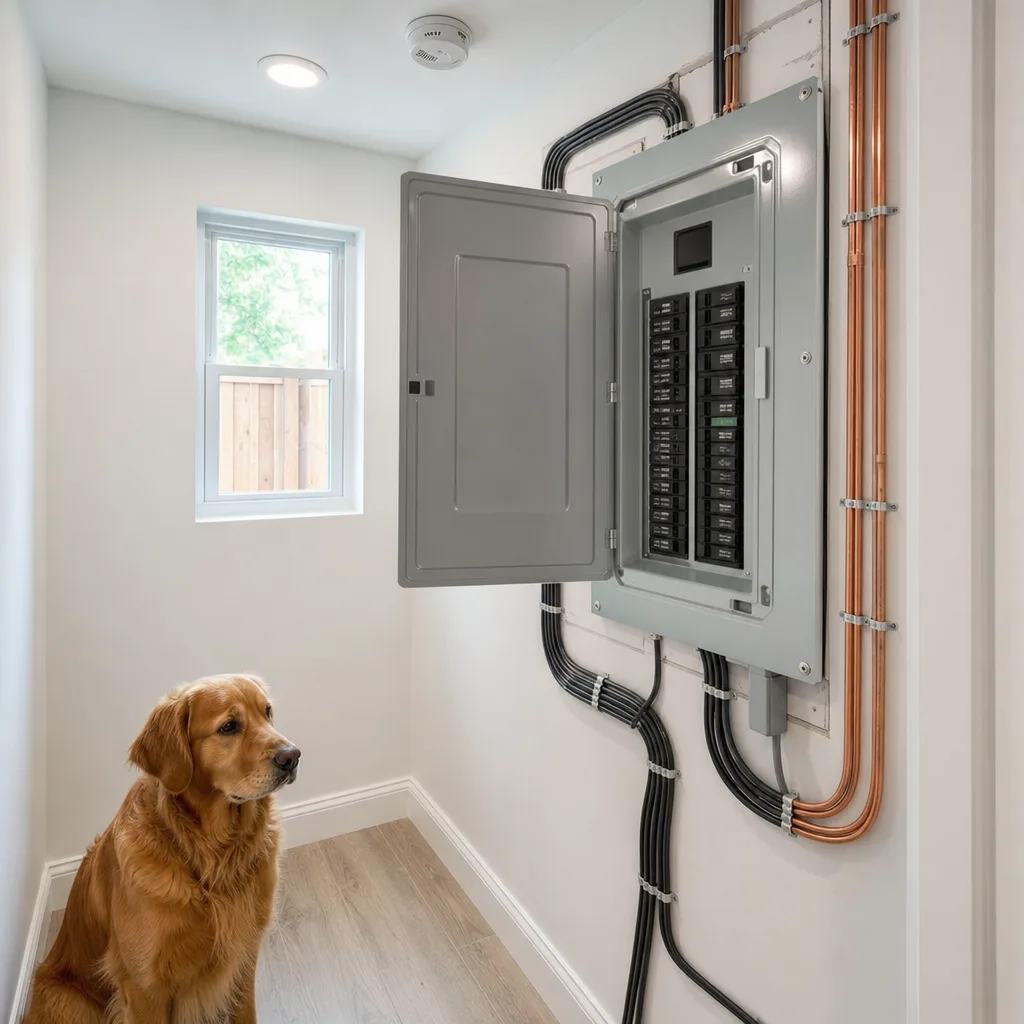
- Your lights dim when the AC kicks on, or the kitchen breaker trips when the microwave and toaster run together. That often means your home has too few circuits or a panel that’s too small. The wire itself may be fine. A panel upgrade or a new dedicated circuit for the heavy hitters can clear it up.
- You have two-prong outlets, but the wiring tested sound. You may not need all new wire. A ground wire can sometimes be added to the circuits that need it most, like the ones feeding your computer, TV, or fridge. A GFCI outlet can also add shock protection on an ungrounded circuit. Just know it doesn’t create a true ground, so sensitive electronics still do better on a grounded circuit.
- You have aluminum branch wiring that’s still in good condition. The weak spot with aluminum is usually where it connects to outlets, switches, and splices. Depending on what an electrician finds, fixing those connection points with the right parts may be an option instead of pulling every wire.
- The problems trace back to one room or one add-on. A garage, sunroom, or converted patio wired by a past owner can be redone by itself. The rest of the house stays as it is.
- Damage is limited to one area of the attic. Heat near attic equipment, a past roof leak, or critters chewing wire can ruin one run while the rest holds up fine. Replacing that section may be all you need.
Waiting can also be a smart choice. If your wiring was checked and found sound, and you aren’t seeing any of the warning signs listed earlier, you don’t need to rush. If you’re planning a kitchen or bathroom remodel in the next year or two, it often makes sense to update the wiring then. The walls will already be open, so you’ll save on patching and drywall work later.
Waiting isn’t the same as ignoring a problem, though. Planning around a remodel only works when nothing is acting up right now.
So what’s the takeaway? The right answer depends on what’s behind your walls, not on the year your house was built or on the worst-case guess. A good electrician should be just as willing to tell you that a panel upgrade, a few new circuits, or one room of new wire will do the job as they are to quote a full rewire. If a smaller fix truly solves your problem and keeps your family safe, that’s the fix you should get.
Have questions? We’re happy to help.
Call Today, Get Service Today. Xtreme Air Services — Irving is ready to help.
What Happens During a Rewiring Project
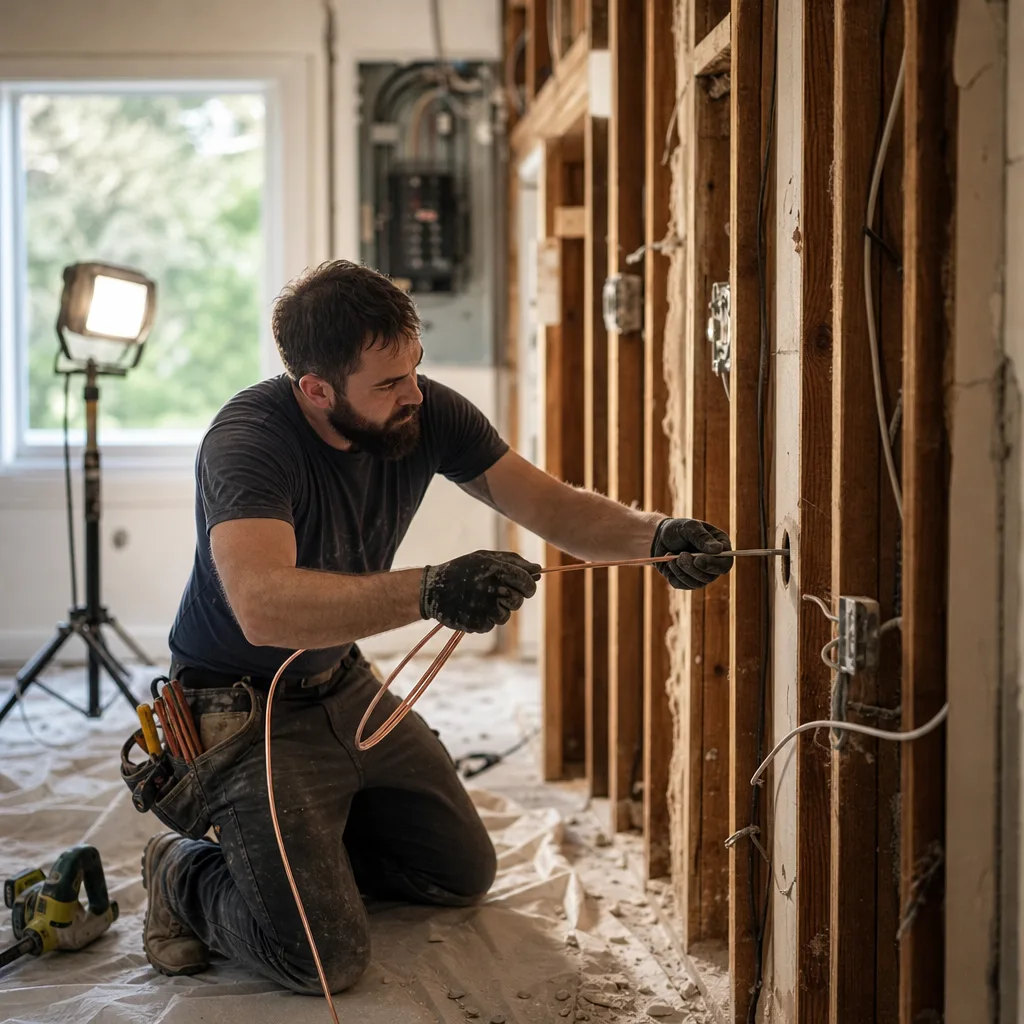
A rewire sounds like your house gets torn apart. It usually doesn’t. Most of the work happens through the attic and through small openings in your walls, not by stripping rooms to the studs. Here’s what the project looks like from start to finish, so you know what you’re agreeing to.
- Walkthrough and plan. An electrician looks at your panel, counts your circuits, and maps which outlets and lights belong to each one. This is when you talk about how you use your home, like a home office, a big kitchen, or a future EV charger. That way the new layout fits your life, not decades-old habits. It’s also when you find out if your panel can handle the new circuits or needs an upgrade.
- Permits. A job this size typically needs a city permit and inspection. Our pricing doesn’t include permits unless your quote says so, so ask how they’re handled before work starts.
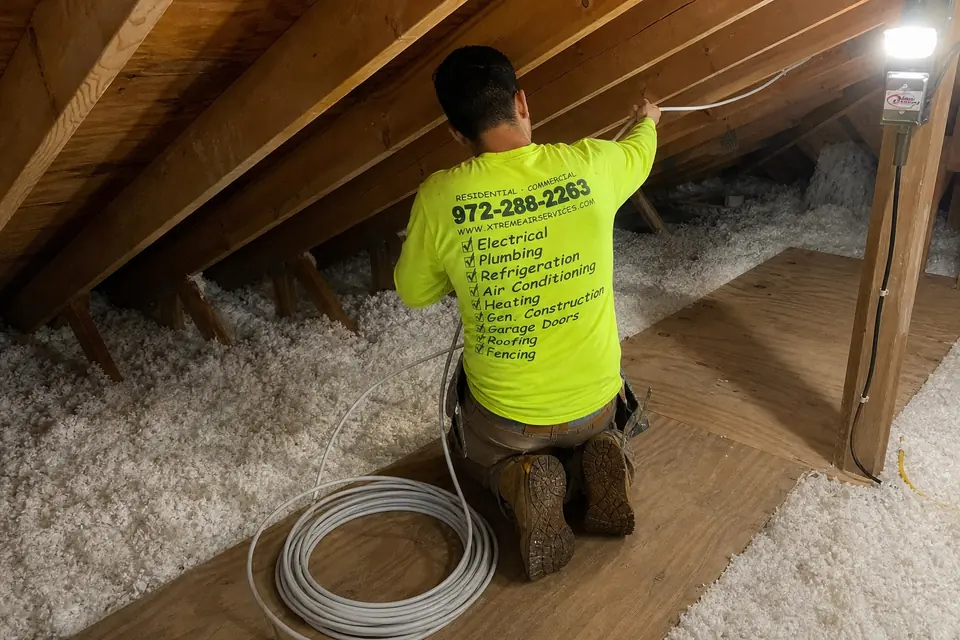
- Running new wire. Because most Irving homes sit on a slab, new wire is usually fished from the attic down inside the walls to each outlet, switch, and light. Small access holes may be cut near the ceiling or at device boxes where the wire has to pass. Old wire that can’t easily be pulled out is often cut off and left dead in the wall, where it can’t carry power.
- Rough-in inspection. With access holes still open, the new wiring can be checked before anything gets covered up.
- Devices and grounding. New outlets, switches, and a proper ground go in, and each new circuit is connected at the panel. That’s when two-prong outlets become grounded three-prong outlets.
- Startup and testing. Every circuit is powered up and tested to confirm it works and is wired right before the job is called done.
Wire and materials, installation, devices, grounding, and startup and testing are all part of our home rewiring work. Some things aren’t. Drywall finishing and paint, fixture upgrades, code corrections beyond the agreed scope, and permits are not included unless your quote states them. Knowing that up front helps you plan. Some homeowners line up a drywall or paint pro for the end of the job. Others use the moment to pick new light fixtures.
Can you stay in your home during a rewire? In most cases, yes. Rewires are commonly done a section at a time, so power is off in part of the house while the rest stays on. Plan for a few things. Know which room your fridge, Wi-Fi router, and work computer are in. Keep a phone charged. If someone in your home uses medical equipment that needs power, bring it up during the walkthrough. How long the whole job takes depends on your home’s size, the number of circuits, and how easy the attic and walls are to reach.
You can make the work go smoother with a little prep. Clear a path to your attic hatch and electrical panel. Pull furniture a couple of feet away from outlets and switches. Cover anything fragile in rooms where walls will be opened. Keep pets in a closed room or out of the house on work days. In an Irving summer, the attic can get dangerously hot by midday, so it’s fair to ask how attic work will be scheduled around the heat.
Watch Our Video
See How We Handle Home rewiring in Irving
Xtreme Air Services — Irving
What Drives Rewiring Cost Up or Down
Here’s the straight answer. Home rewiring with Xtreme Air Services typically runs $8,000 to $20,000. Our most common job is replacing outdated or unsafe wiring throughout the home with new circuits, devices, and grounding, inspected and tested. That job runs $10,500 to $15,000. It’s priced by your home’s size and the scope of work, not by a meter that keeps running.
That’s a wide range, so here’s what moves your home up or down inside it.
- Home size and number of circuits. More rooms, more outlets, and more circuits mean more wire and more hours. A 1,400-square-foot ranch house with a simple layout costs less than a two-story home with a big kitchen, a home office, and a workshop in the garage.
- Attic, wall, and crawlspace access. Wire has to get from the panel to every outlet. A roomy attic with clear paths over each wall keeps labor down. A low-pitched roof, a cramped attic, or a second floor with no attic space above the first floor takes more time and more openings.
- Condition of the existing wiring. If old runs can be cut off and left dead, the work moves faster. Messy past add-ons, buried splices, or damage from heat or critters take longer to sort out.
- Panel upgrades. If your current panel can’t handle the new circuits, it has to be upgraded as part of the job. That’s often the biggest single swing in price.
- Drywall repair. More access holes mean more patching. Drywall finishing and paint aren’t part of our scope, as noted earlier, so plan for that cost on your side.
- Code upgrades. A rewire has to meet today’s code. That can mean extra circuits, more protection devices, or other changes an older home never had.
- Permits. These add to the total, and they aren’t included unless your quote says so.
What should you ask before you hire anyone? Get the scope in writing. Ask how many circuits the price covers. Ask whether a panel upgrade is included or extra, and who pulls the permit. Ask what happens if the electrician opens a wall and finds something unexpected. A fair quote answers all of that before work starts, so you aren’t hit with surprises halfway through. That’s how we handle it. You get upfront flat-rate pricing that you approve before we begin.
There’s a service-call fee of $26 to $99 for the visit. If you go ahead with Xtreme Air Services, that fee is credited toward the work, so you aren’t paying twice just to find out where you stand.
If the full cost is a stretch right now, flexible financing is available on qualifying installations and larger jobs, on approved credit. That can let you fix a real safety problem now instead of putting it off for another summer of your AC pulling hard on tired wiring.
And remember the honest part from earlier. If your problem can be solved with a panel upgrade, a few new circuits, or one room of new wire, that costs far less than these figures, and it’s the quote you should be getting.
Frequently Asked Questions
Common questions about Home rewiring
Will my homeowners insurance care if my wiring isn’t up to date?
Yes, some insurers ask about wiring type during underwriting or renewal, especially for older homes. Knob-and-tube or aluminum branch wiring can sometimes raise premiums or even affect coverage. If your home was built before 1950 or between the late 1960s and mid-1970s, it’s worth getting the wiring checked before your next policy review, not just for safety but for your insurance paperwork too.
Can I add a circuit for an EV charger without rewiring the whole house?
Often yes, if your panel has room and your existing wiring is in good shape. During the walkthrough, an electrician checks whether your panel can handle a new dedicated circuit for a charger. If your panel is already maxed out or your home still has older wiring with ongoing problems, a panel upgrade or broader rewire may need to happen first.
What should I do with my pets and furniture on rewiring work days?
Keep pets in a closed room or out of the house, and pull furniture a couple of feet away from outlets and switches. This gives the crew clear access to walls and panels and keeps your animals safe while access holes are open. Covering anything fragile in rooms where walls will be opened is also a smart step before work starts.
Ready to Get Started?
Call (469) 200-2166 Today, Get Service Today.