


Electrical Troubleshooting in Irving: Know When to Call and What It Costs
The fault traced to where it starts, with a clear written summary before any repair begins.
What’s Covered on This Page
- What Electrical Troubleshooting Covers
- Signs Your Electrical Problem Needs a Licensed Electrician Now
- When You Don’t Need to Call an Electrician Yet
- Why Irving Homes Trip Breakers More Often in Summer
- What Happens During a Diagnostic Visit
- What exactly counts as electrical troubleshooting versus a repair?
- Can I find an electrical problem myself before calling someone?
- Why does my breaker only trip in the afternoon, not the morning?
What Electrical Troubleshooting Covers
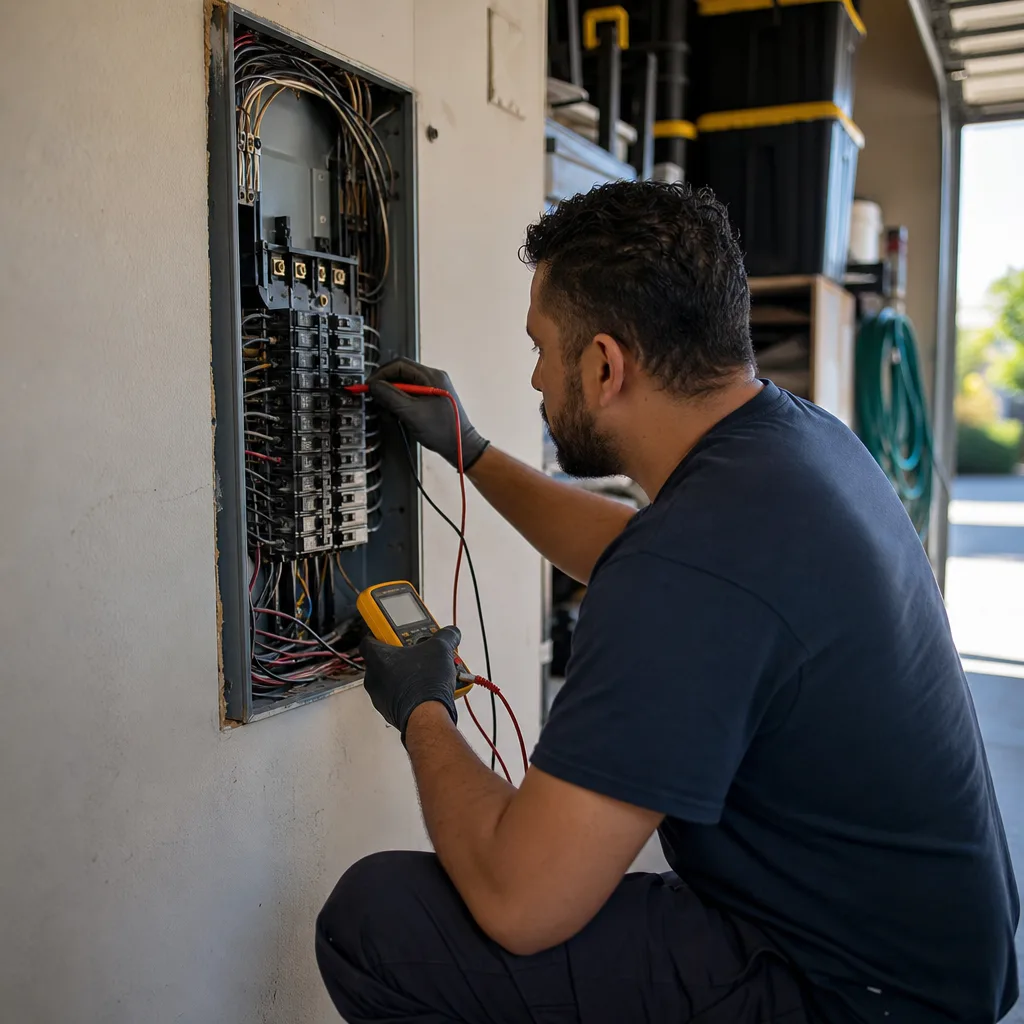
Think of it as paying for an answer. Something in your home isn’t working right, and you want to know why before anyone starts cutting into walls or swapping parts. The goal is simple: trace the problem back to where it starts. That spot isn’t always where you notice it. A dead outlet in the living room can come from a connection somewhere else on the same circuit.
Here are the problems most people call about:
- A dead outlet, or a few outlets in a row that quit at the same time.
- A breaker that trips again soon after you reset it.
- An intermittent fault. Lights flicker, or a circuit works one day and not the next.
Intermittent problems are the hardest to pin down on your own, because they’re often working fine when you go to look. That’s exactly when a careful, trained diagnosis is worth it.
What’s included: an on-site diagnosis and a written summary of what we found and what we recommend. What’s not included: the repair itself or any corrective work the diagnosis turns up. We keep those two things separate on purpose. You get the facts first, in writing, so you can decide what to do without anyone standing over you. You can read it at the kitchen table, ask questions, and choose your next step.
Our typical price range for electrical troubleshooting is $100 to $350. The most common job, finding the cause of a dead outlet, a tripping breaker, or an intermittent fault, runs $100 to $200. A few things move the price up or down:
- How complex the fault is. A single dead outlet is simpler than a problem that comes and goes.
- The size of your home and how many circuits it has.
- Access. Wiring that’s easy to reach takes less time than wiring that’s hard to get to.
- Whether specialized test equipment is needed to find the problem.
There’s also a service-call fee of $26 to $99. If you go ahead with the repair through Xtreme Air Services, that fee is credited toward it. Financing isn’t usually offered for a smaller job like this, but it is available on larger repairs and replacements if the diagnosis points to one.
The work is done by our licensed, background-checked technicians, with upfront pricing so you know the cost before anything starts. No meter running and no surprises when the visit’s done.
Signs Your Electrical Problem Needs a Licensed Electrician Now
Most electrical problems can wait for a scheduled visit. A few can’t. The difference usually comes down to one question: is something getting hot? Heat where it doesn’t belong is how wiring problems turn into bigger ones. Here’s how to tell which group you’re in.
Call a licensed electrician today if you notice any of these:
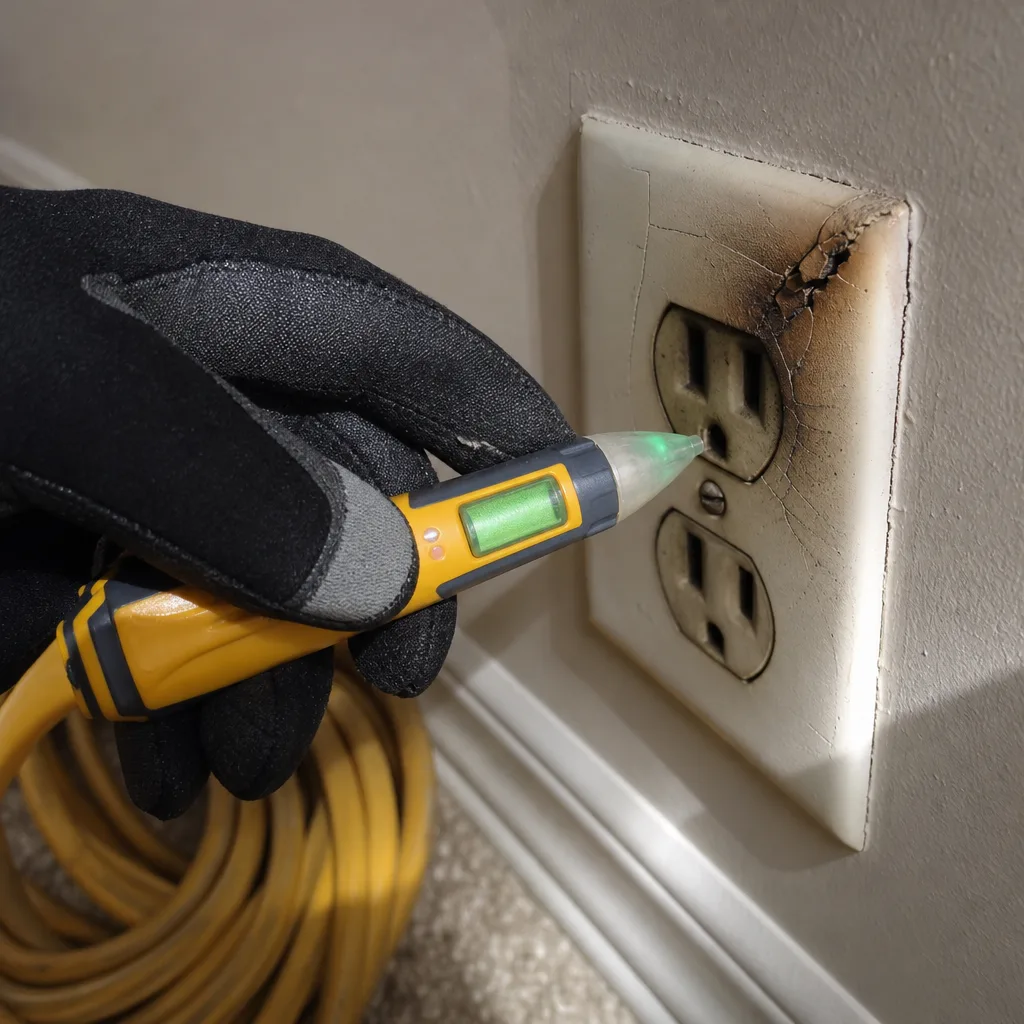
- A burning smell or a hot plastic smell near an outlet, switch, light, or your breaker panel.
- An outlet cover or switch plate that feels warm to the touch, or one with brown or black marks around it.
- Sparks, buzzing, or a crackling sound coming from an outlet, switch, or the panel.
- A breaker that trips again right after you reset it, or one that won’t reset at all.
- A small shock or tingle when you touch a switch, an appliance, or a faucet.
- Lights that dim hard or flicker across the house when a big appliance turns on. In a North Texas summer, your AC is often the biggest load in the home, so this one tends to show up when it’s hottest.
- Water that has reached outlets, wiring, or the panel, such as after a storm or a leak.
While you wait, don’t keep resetting a breaker that keeps tripping. It’s tripping for a reason, and forcing it back on hides the clue we need to find the cause. If you can do it safely, unplug what’s on that circuit and leave the breaker off. If you ever see smoke or flames, get everyone out and call 911 first.
Now the honest part. Some problems don’t need us at all.
If an outlet in your bathroom, kitchen, garage, or outside went dead, look for a GFCI outlet nearby. That’s the outlet with the Test and Reset buttons. One GFCI can protect several outlets down the line, so the dead one may not be the one that tripped. Press Reset. If power comes back and stays on, you’re done.
The same goes for a breaker that trips once because you ran the microwave, toaster, and coffee maker at the same time. Reset it, spread those appliances across different outlets, and see if it holds. If it does, that circuit was just asked to do too much at once. You don’t need to pay anyone to tell you that.
Then there’s the middle ground. Maybe one outlet is dead and the GFCI reset didn’t help, or a single light flickers now and then with no smell, heat, or sound. That’s worth a look, but it isn’t an emergency. It’s a good fit for a regular troubleshooting visit at a time that works for you.
Call now
When You Don’t Need to Call an Electrician Yet
You already know about the tripped GFCI and the breaker that trips once when the kitchen is busy. There are a few more simple things worth checking before you spend a dime. You won’t need tools for most of them, just a flashlight and maybe a step stool.
- The whole street is dark. Look out the window or text a neighbor. If their power is out too, the problem is on the utility side, not inside your home. Oncor runs the power lines in Irving, so report the outage to them and wait it out. No electrician can fix a utility outage from inside your house.
- The outlet is on a wall switch. Lots of living rooms and bedrooms have an outlet wired to a switch by the door so you can turn a lamp on as you walk in. Flip every switch in the room before you decide that outlet is dead.
- The bulb is the problem. One light that flickers is often just a loose or worn-out bulb. Turn it off, let it cool, and tighten it. If that doesn’t help, try a new bulb.
- LED bulbs on an old dimmer. Many older dimmer switches were made for old-style bulbs. Put LEDs on them and you can get flicker, a faint hum, or lights that won’t dim all the way down. Try bulbs marked dimmable, or turn the dimmer to full. A soft hum from a dimmer is different from crackling, heat, or a burning smell at an outlet. Those still belong in the call-today group.
- One appliance keeps tripping things. If a hair dryer, space heater, or old vacuum trips a breaker or GFCI in every room you plug it into, the appliance is the likely problem, not your wiring. Stop using it and get it repaired or replaced.
- A power strip or extension cord quit. Many power strips have their own on/off switch or reset button. Check it, then plug your lamp straight into the wall to see if the outlet works on its own.
Some things are fine to just watch. Did your lights blink once during a thunderstorm and then go right back to normal? That’s usually the power grid switching over, not a problem in your home. If everything works after, you don’t need to do anything.
The same goes for an older home where one switch has always felt a little loose but works every time with no heat, sound, or smell. It’s worth fixing at some point, but you can plan for it. It doesn’t need a visit today.
If one of these checks fixes it, you’re done. If the problem comes back, write a few things down: the time it happened, what was running, and which outlets or lights quit. Intermittent problems are hard to catch, and that short note can save real time on a diagnosis, no matter who you call.
Not sure what your Electrical troubleshooting project needs? Ask us.
Call Today, Get Service Today. Xtreme Air Services — Irving is ready to help.
Why Irving Homes Trip Breakers More Often in Summer
If your breaker only seems to trip on hot afternoons, you’re not imagining it. Summer in Irving puts more strain on your electrical system than any other time of year. That doesn’t mean something is broken. But it does mean the trip has a cause, and summer gives it several places to hide.
Most home breakers react to heat. Inside each one is a small strip of metal that bends as it warms up. When too much power flows for too long, the strip heats and bends far enough to shut the circuit off. That’s its job. Now picture that breaker in a panel on a sun-baked exterior wall or in a garage that hits well over 100 degrees in July. The breaker starts the day warmer, so a circuit already running close to its limit can tip over the edge sooner.
Then there’s everything you’re running to stay cool. Your central AC runs for hours instead of minutes. You might add a window unit in a hot bedroom, box fans, or a garage fridge that works overtime in the heat. A pool pump may run longer. Each one adds load, and some of them share circuits you never thought about.
Sometimes the AC itself is the real problem. Your outdoor unit pulls a big burst of power every time it starts. If a part like the capacitor, which gives the compressor its starting push, is getting weak, the unit has to strain harder to start. That can trip the AC breaker even though the breaker and your wiring are fine. Swapping the breaker won’t fix that. A good diagnosis checks both sides. Because we handle HVAC and electrical under one roof, the answer doesn’t stop at the panel.
Heat is also hard on weak connections. A wire that’s slightly loose at a breaker, outlet, or switch heats up more under heavy load. Heat makes the connection worse, and the worse connection makes more heat. In cool weather it may never cause trouble. In August, with everything running, it can start tripping a breaker or making an outlet warm.
When the breaker trips is one of the best clues you have:
- It trips after running a while, often in the hottest part of the day. That points toward overload, heat at the panel, or a struggling motor.
- It trips the moment you reset it or turn something on. That points toward a short or a ground fault, which is a wiring problem, not a summer problem.
- It’s always the AC breaker. Start with the AC unit and its wiring, not your kitchen circuits.
- It’s an outdoor or garage outlet after a summer storm. Moisture may have gotten into the outlet or its cover.
This is exactly why it pays to find the cause first. A summer trip could come from the breaker, the AC, a tired connection, or just too much on one circuit. Each one has a different fix and a different cost. Guessing means you might pay for a new breaker when the AC needed a part, or rewire a circuit that only needed its load spread out. Your written summary tells you which one it is, so you only pay to fix what’s wrong.
Watch Our Video
See How We Handle Electrical troubleshooting in Irving
Xtreme Air Services — Irving
What Happens During a Diagnostic Visit
A diagnostic visit has one job: find where the problem starts and tell you about it in plain English. You stay in charge the whole time. Nothing gets fixed unless you say so, and you’ll know the price before you say yes.
A few minutes of prep can save real time once the visit starts:
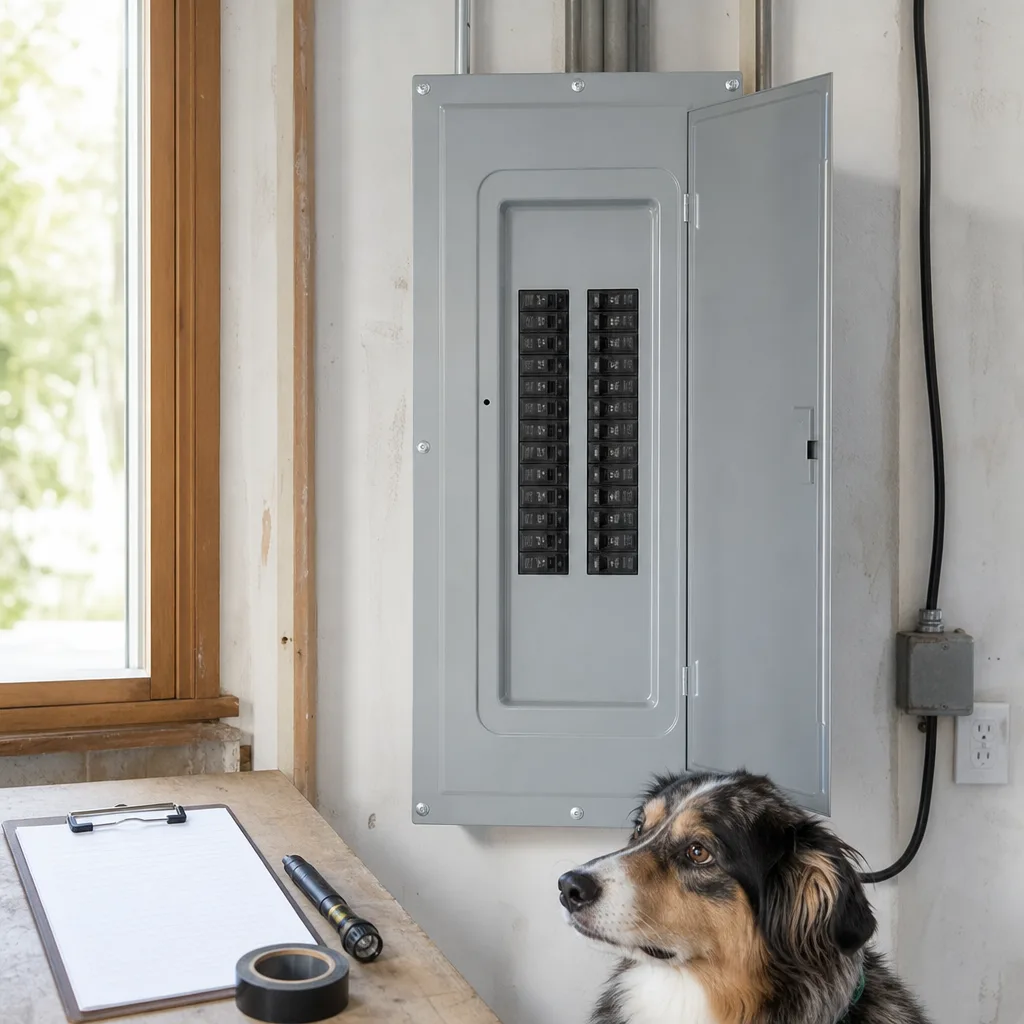
- Clear a path to your breaker panel. If it’s in a packed garage or behind a coat rack, move things so it’s easy to open.
- Have your notes ready: when the problem happens, what was running, and which outlets or lights quit.
- Walk the house once and mark every outlet that’s dead. A piece of tape works fine.
- Mention any recent work, like a new ceiling fan, a remodel, or a breaker you swapped yourself.
- Put pets in another room, since the power may go off briefly while circuits are tested.
A careful diagnosis starts with questions, not tools. What you’ve noticed often points straight to the right circuit. Does the problem come and go? Did it start after a storm? Does it happen only when the AC kicks on? Those answers narrow the search before anything gets opened up.
From there, the work moves from the panel out to the problem. Here’s what that usually involves:
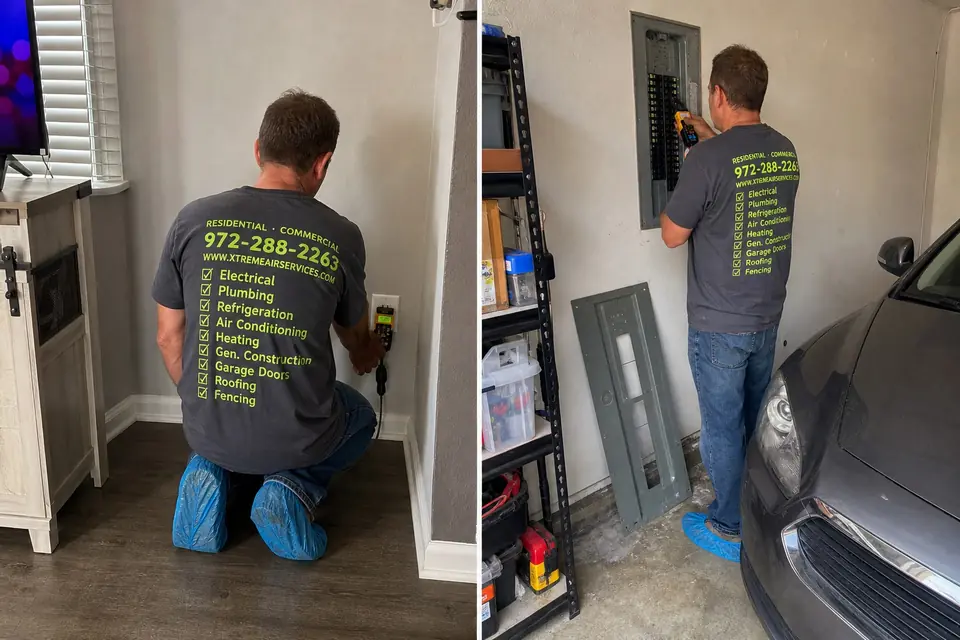
- Checking the breaker panel for tripped breakers, signs of heat, and loose or damaged connections.
- Figuring out which outlets and lights share a circuit, since the trouble spot is often somewhere other than where you noticed it.
- Testing outlets, switches, and wiring with test equipment to see where power stops or where a fault shows up.
- Opening outlet or switch covers along the circuit to look for burned, loose, or worn connections.
- Turning circuits off and on in a set order to confirm what’s causing the trip or the outage.
You’re welcome to watch and ask questions. A good troubleshooter will show you what they’re seeing, like the scorched outlet or the loose wire, instead of just telling you.
Let’s be honest about one thing. Intermittent problems don’t always act up on cue. If your lights only flicker on hot afternoons and the visit is at 9 a.m., the fault may be quiet. That’s why your notes matter so much. They help point the testing to the right circuit even when the problem isn’t happening in front of us.
When the testing is done, you get a written summary of what we found and what we recommend. It should answer three things in plain words: where the problem is, why it’s happening, and what fixing it involves. If a repair is needed, you’ll see upfront pricing before any work starts. No meter running. You can say yes on the spot, take time to think it over, or get a second opinion. It’s your home and your call.
If the cause turns out to be your AC and not your wiring, the summary will say so. Since our team handles HVAC and electrical, you won’t have to start over with someone new.
Call now
Frequently Asked Questions
Common questions about Electrical troubleshooting
What exactly counts as electrical troubleshooting versus a repair?
Troubleshooting means finding and explaining the cause of a problem, not fixing it. We check your panel, trace circuits, and test outlets and wiring until we find where the fault starts. You get a written summary of what we found and what we recommend. Any repair work is a separate step you approve afterward, with upfront pricing before it begins.
Can I find an electrical problem myself before calling someone?
Sometimes, yes. Check for a tripped GFCI outlet first, since one GFCI can control several outlets on the same line. If a breaker tripped because you ran the microwave, toaster, and coffee maker together, reset it and spread those appliances out. If the fix holds, you don’t need to pay anyone to confirm it.
Why does my breaker only trip in the afternoon, not the morning?
Heat is almost always the reason. Breakers react to temperature, and a panel on a sun-baked wall or in a hot garage starts the day already warm. Add hours of AC runtime plus fans, window units, or a pool pump, and a circuit that was fine in the morning can tip over the edge by mid-afternoon. When a trip happens tells us a lot about the cause before we even open the panel.
Ready to Get Started?
Call (469) 200-2166 Today, Get Service Today.