


Furnace Installation in Irving: Repair, Replace, or Upgrade?
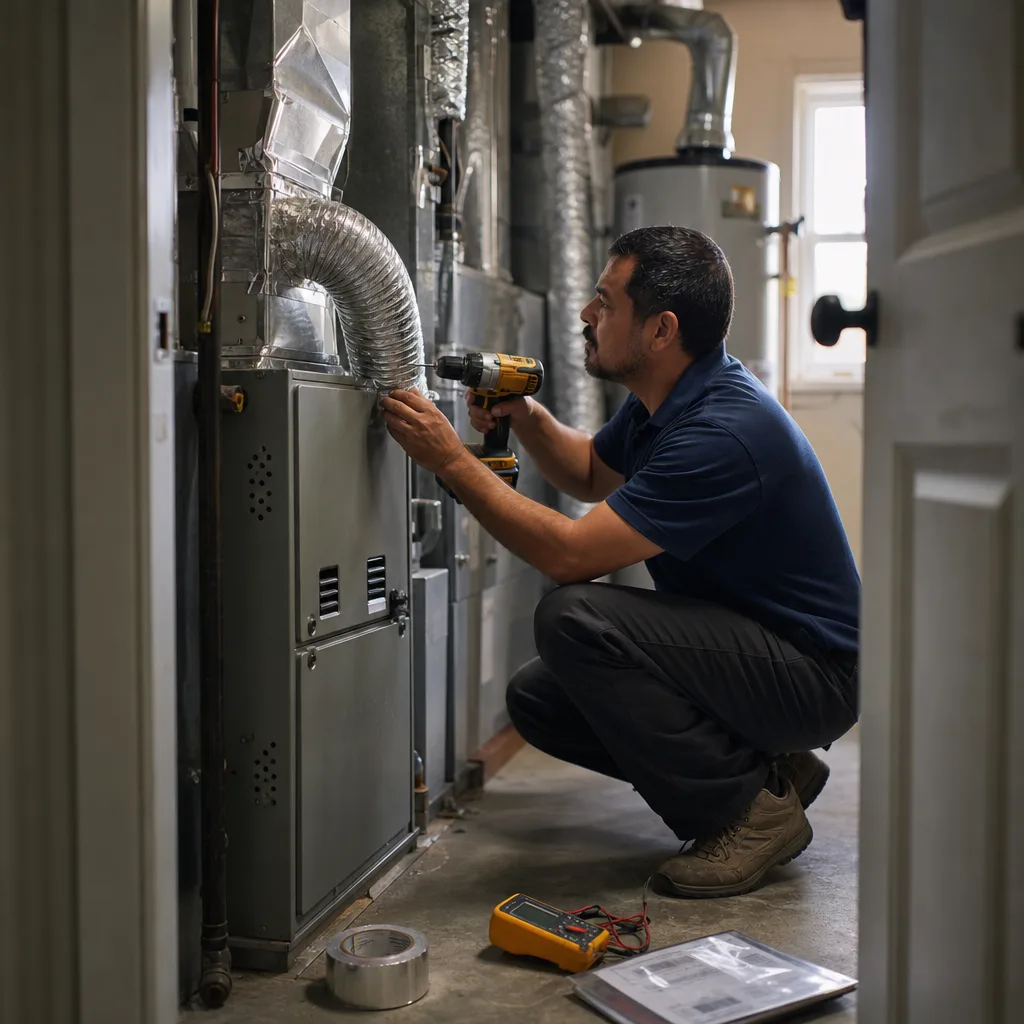
Furnace installs matched to the cooling coil and blower they work with, so your whole system runs as one.
What’s Covered on This Page
- Know When You Need Replacement, Not Just a Repair
- What a Standard Furnace Installation Includes
- What Drives Your Installation Cost Up or Down
- Choosing the Right Furnace for Your Home
- What Happens on Installation Day
- Can I buy my own furnace and just hire someone to install it?
- Will a big box store install my furnace cheaper than a local contractor?
Know When You Need Replacement, Not Just a Repair
Let’s start with the good news. A furnace that won’t fire on the first cold morning often has one small problem. It’s usually not the whole system. A worn ignitor, a dirty flame sensor, a failing blower motor, or a bad control board can all stop your heat cold. Each of those is a repair, not a reason to buy a new furnace. If your furnace is in decent shape and the fix is one part, a repair is usually the smart money.
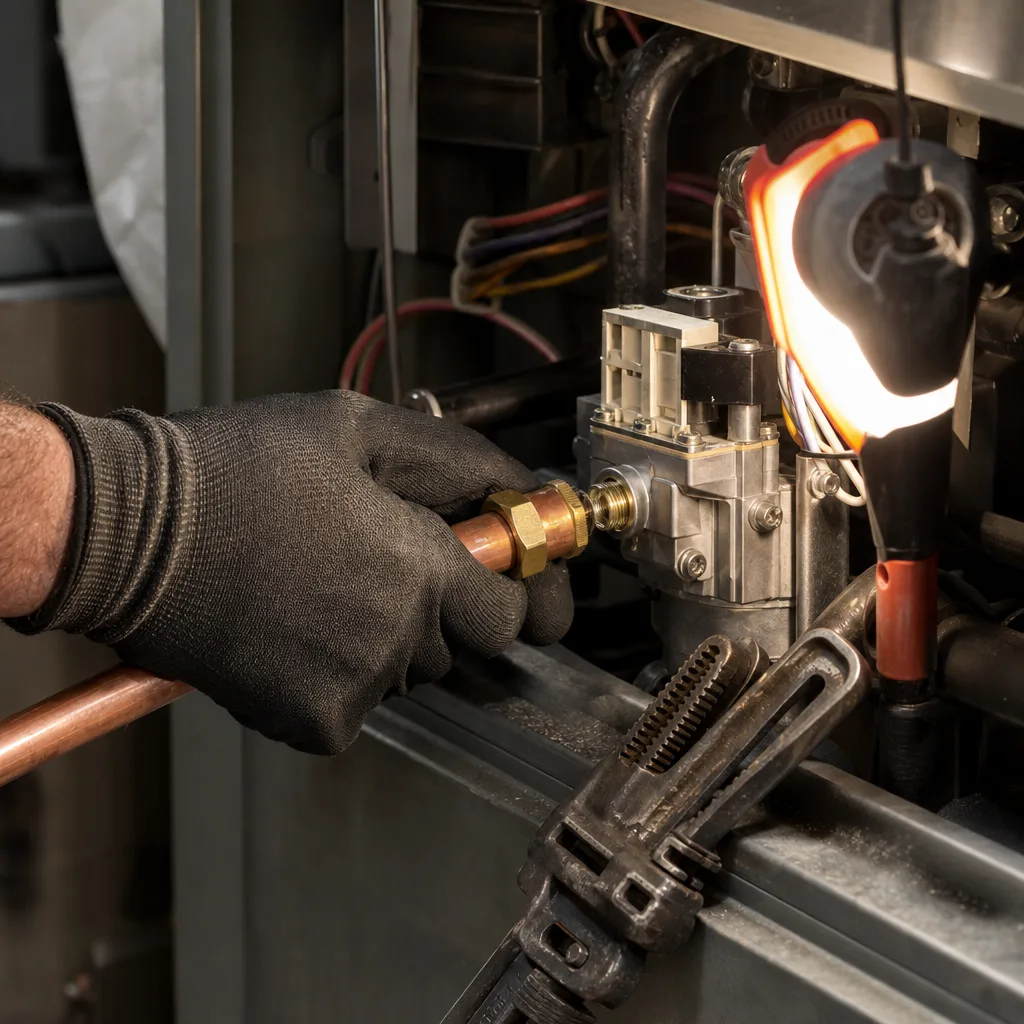
Sometimes the answer isn’t a furnace problem at all. A dead thermostat battery, a tripped breaker, or a clogged filter can look like a broken furnace. Check those first. Plenty of no-heat calls end right there, and you shouldn’t pay for a new system to solve a five-minute issue.
Here’s when replacement starts to make more sense than another repair:
- A cracked heat exchanger. This part keeps combustion gases away from the air you breathe. If it’s cracked, the furnace isn’t safe to run, and replacing it usually isn’t worth the cost on an older unit.
- Repairs keep stacking up. If you’re calling for help every winter and the bills are adding up, that money may be better spent on a furnace you can count on.
- The repair costs a big share of what a new furnace would. Putting a major part into an old furnace means you still have an old furnace.
- Some rooms stay cold no matter what you do. Uneven heat can mean the furnace is the wrong size for your home or is simply worn out.
- Your gas bills keep rising while your comfort doesn’t. Older furnaces lose efficiency over time and burn more fuel to give you the same warmth.
- The furnace is well into its second decade. Age alone isn’t a reason to replace a furnace. Age plus any of the signs above usually is.
North Texas adds a twist. Our winters are mild most of the time, so a furnace can sit unused for months and then get pushed hard when a sudden cold front rolls through. That’s often when a tired furnace gives out. Many homes here also have the furnace up in the attic, where summer heat bakes the equipment and wiring for months at a time. A furnace that’s lived through a lot of Texas summers in a hot attic may be closer to the end than its age suggests.
If you smell gas, or your carbon monoxide alarm goes off, don’t troubleshoot. Leave the house and call your gas utility or 911 from outside. A furnace safety inspection and carbon monoxide testing can tell you whether your system is safe to keep running.
Your decision should come down to three things: Is it safe? Is it reliable? Is the repair worth the money compared to what a new furnace gives you? If the honest answer is that a repair gets you through the next several winters safely, that’s the answer you deserve to hear. If it doesn’t, a properly sized furnace installation is how you stop paying for the same problem twice.
What a Standard Furnace Installation Includes
Once you know a new furnace is the right call, the next question is simple: what am I paying for? Here’s the straight answer, so you know what’s in the price before anyone shows up with a truck.
Our most common job is a standard like-for-like furnace installation. That means the new furnace goes in where the old one was and uses your existing connections with no major changes. For that job, the price is $4,300 to $5,900. Across all of our furnace installations, the typical range is $3,500 to $7,500.
A standard installation includes:
- The new furnace and the materials to put it in
- Professional installation by our licensed and insured technicians
- Standard connections to your existing system
- Startup and testing, so you know it runs before we leave
- Haul-away of your old furnace, so it doesn’t end up in your garage or your trash
Some things aren’t included unless your quote says so. Duct, electrical, or plumbing changes are extra. So are code corrections and permits. We’d rather tell you that up front than have you find out halfway through the job. If your home needs any of these, you’ll see them on your quote and approve the price before work starts. That’s what upfront flat-rate pricing means to us. No meter running, no surprises.
Your price can land higher or lower in that range. Here’s what moves it:
- Size and capacity. A furnace has to fit your home. Too small and it can’t keep up on a cold night. Too big and it turns on and off too often.
- Efficiency. AFUE tells you how much of the gas a furnace turns into heat for your home. A higher number means less fuel wasted, and those furnaces usually cost more up front.
- Brand and model. Different furnaces come with different features and price tags.
- Ease of access. Lots of North Texas homes have the furnace up in the attic. A tight attic or a hard path to the unit takes more time than a furnace in a hall closet or garage.
- Condition of what’s already there. Old ductwork, wiring, or gas plumbing may need work before a new furnace can connect safely.
- Code upgrades, permits, and any custom fabrication your setup needs.
Here’s an example. Say your furnace sits in a closet and the new one matches the old one’s size and connections. That’s a like-for-like swap, and it should fall in the most common price range. Now say the furnace is in a cramped attic, the ducts are worn, and the venting doesn’t meet current code. Each of those adds work, and your quote should spell out every one.
If the full cost is more than you want to pay at once, flexible financing is available on qualifying installations and larger jobs, on approved credit. That way a cold front doesn’t force you to choose between heat and your budget.
The point is that you should know what you’re getting before you say yes. A clear, itemized quote is how you compare your options fairly and avoid paying twice for a job that wasn’t done right the first time.
What Drives Your Installation Cost Up or Down
Two quotes for the same house can be a thousand dollars or more apart. That doesn’t always mean one company is overcharging. Often one quote includes work the other one skipped. Here’s where the real differences hide, so you can tell a complete quote from a lowball one.
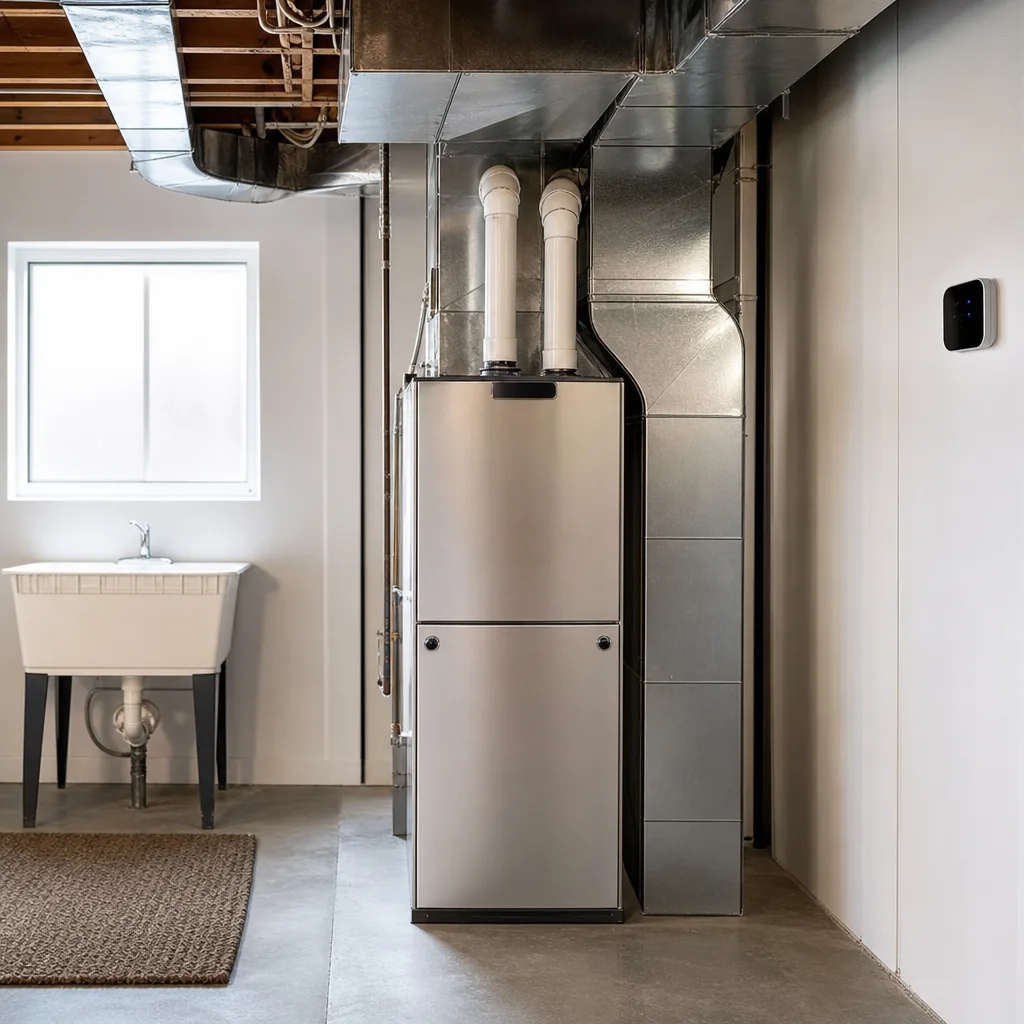
The biggest one is the efficiency jump. If you’re moving from a standard furnace to a high-efficiency one, it isn’t just a bigger number on the box. High-efficiency furnaces pull so much heat out of the gas that they make water. That water needs a drain line, and the furnace usually needs new plastic venting instead of the old metal flue. In an attic, the drain line has to run somewhere safe, with a pan under the unit to catch any overflow. That’s extra labor and parts. It’s worth it for some homes and not for others. With North Texas winters this mild, a furnace may only run hard for a few weeks a year. Ask how long the fuel savings would take to pay back the extra cost in your home.
Your furnace also works with your AC. In most Texas homes, the furnace blower pushes the cold air all summer too. The new furnace has to fit the indoor coil sitting on top of it and move the right amount of air for your AC. If the coil is old or a poor match, a careful quote will say so. A cheaper quote might just ignore it.
Ductwork can change the math, too. A new furnace hooked to ducts that are too small or leaky won’t heat evenly, no matter how good the furnace is. Sometimes a few fixes, like sealing or resizing a trunk line, make the whole system work better. Sometimes the ducts are fine as they are.
Then there are add-ons you get to choose. A smart thermostat, a whole-home humidifier, or a zoning system can make your home more comfortable. None of them is required to get heat back on. A good quote lists them separately so you can say yes or no to each one.
Before you sign anything, ask these questions:
- How did you decide what size furnace my home needs?
- Does this price include venting, the condensate drain, and the gas connection?
- Will the new furnace match my current AC coil?
- Are permits included, or are they extra?
- Which items on this quote are optional?
- Is this the final price, or could it change once work starts?
With us, the visit to look at your system comes with a $26 to $99 service-call fee, and it’s credited toward the job if you move forward with Xtreme Air Services. There’s no extra charge for nights or weekends, so a cold front on a Saturday doesn’t cost you more. You’ll see every line on your quote and approve it before we start.
Need help with Furnace installation?
Call Today, Get Service Today. Xtreme Air Services — Irving is ready to help.
Choosing the Right Furnace for Your Home
The right furnace isn’t the biggest one or the fanciest one. It’s the one that fits your home, your fuel, and the way you live. Get those three right and you’ll be warm on the coldest night without paying for features you’ll never use.
Start with fuel. If your home has a gas line to the furnace, a new gas furnace is usually the simplest swap. If your home is all-electric, your choice is an electric furnace or a heat pump. An electric furnace heats with coils, a lot like a giant toaster. A heat pump moves heat instead of making it, so it can cost less to run in mild weather. With winters as mild as ours, a heat pump is worth a look if you’re replacing your AC at the same time. We can talk you through heat pump installation if that fits your plans.
Next comes size. A furnace is sized by how much heat your home loses on a cold day, not by square footage alone. Windows, insulation, ceiling height, and which way your house faces all change the answer. A room-by-room heat load calculation gives you a real number. If someone sizes your new furnace by reading the label on the old one, ask why. The old furnace may have been wrong from day one, and that could be why some rooms never felt right.
Then decide how the furnace should run. This is where comfort really changes:
- Single-stage: The furnace is either fully on or off. It’s the simplest and lowest-cost option, and it does the job in many homes.
- Two-stage: The furnace runs on a low setting most of the time and goes to high only when it’s really cold. You get steadier heat, fewer temperature swings, and a quieter system.
- Variable-speed blower: The fan speeds up and slows down in small steps. Since that same fan moves your cool air all summer, it can help with even airflow and humidity control year-round.
Here’s an honest take. In a home where the furnace only works hard a few weeks a year, a single-stage furnace may be all you need. A two-stage or variable-speed furnace makes more sense if you have rooms that run hot or cold, a two-story home, or you care about a quiet system. Pick it for comfort, not because the brochure looks nice.
Location matters too. Furnaces are built to sit upright, upside down, or on their side. Many attic installs need a furnace that lies flat, so the new unit has to be made for that position and fit through your attic opening. A good installer checks this before ordering the equipment, not on install day.
As a Trane Comfort Specialist, we install Trane furnaces and can show you how each option fits your home. You’ll hear the plain truth about what you need and what’s just nice to have. Then the choice is yours.
Call 469-200-2166
Watch Our Video
See How We Handle Furnace installation in Irving
Xtreme Air Services — Irving
What Happens on Installation Day
Installation day should feel calm, not chaotic. A straight like-for-like swap is often finished in one day. An attic install, duct changes, or a switch to a high-efficiency furnace can take longer. Your quote should tell you which kind of job you have, so you can plan around it.
A little prep on your end makes the day go faster:
- Clear a path to the furnace. If it’s in the attic, move boxes away from the pull-down ladder and the space around the unit.
- Make room in the garage or driveway for the new furnace and for carrying the old one out.
- Keep pets in a closed room. Doors will be opening and closing all day.
- Plan for the heat to be off for part of the day. On a cold morning, a space heater in one room can help.
Here’s what a proper install looks like. The power and gas to the old furnace get shut off first. Then the old unit is disconnected and removed. The new furnace is set in place, level and in the right position for your space. After that come the connections: the gas line, the venting, the electrical, the thermostat wiring, and the ductwork that joins the furnace to your AC coil. If you’re moving to a high-efficiency furnace, the new drain line and venting we talked about earlier go in now.
The part that matters most comes after the furnace is hooked up. Startup and testing is where a good install proves itself. A careful installer should:
- Check every gas connection for leaks before lighting the furnace.
- Confirm the burners light cleanly and the flame looks right.
- Make sure the venting carries combustion gases safely out of your home.
- Measure the temperature of the air going into and coming out of the furnace, so it heats the way it was designed to.
- Test the safety switches that shut the furnace down if something goes wrong.
- Run a full heating cycle with the thermostat set the way you’ll use it.
Don’t feel shy about asking to see these checks or hear the results. It’s your home and your family breathing that air. A good installer will be glad to show you. Since your furnace blower also moves your cool air in summer, it’s fair to ask whether the airflow was set for your AC too.
Before the installer leaves, you should know three things: where your filter goes and how often to change it, how to work your thermostat, and what the furnace sounds like when it’s running normally. Your old furnace gets hauled away, so it won’t end up sitting in your garage.
Watch the first few cold nights. If a room feels different than it should, or you hear a noise that wasn’t there on day one, call it in right away. Small adjustments are easier to make early than after a whole winter.
Call 469-200-2166
Frequently Asked Questions
Common questions about Furnace installation
Can I buy my own furnace and just hire someone to install it?
You can buy a furnace yourself, but it often costs you more in the end. Many manufacturer warranties only apply when a licensed contractor supplies and installs the unit, so a self-bought furnace may lose that coverage. You also take on the risk of buying the wrong size or efficiency for your home. A licensed installer can size the furnace correctly, handle the gas and electrical connections safely, and stand behind the whole job.
Will a big box store install my furnace cheaper than a local contractor?
Big box stores often contract the install out to a local HVAC company anyway, so you’re not avoiding that step. What you may lose is a direct relationship with the installer, since the store is the middleman between you and the crew. A local contractor can also size the furnace for your specific home, check your ductwork and AC coil match, and answer questions about your gas line or attic setup on the spot.
Ready to Get Started?
Call (469) 200-2166 Today, Get Service Today.