


Furnace Replacement in Dallas: What It Costs and What’s Included
An honest way to tell if your furnace is worth one more repair, and what a full replacement includes.
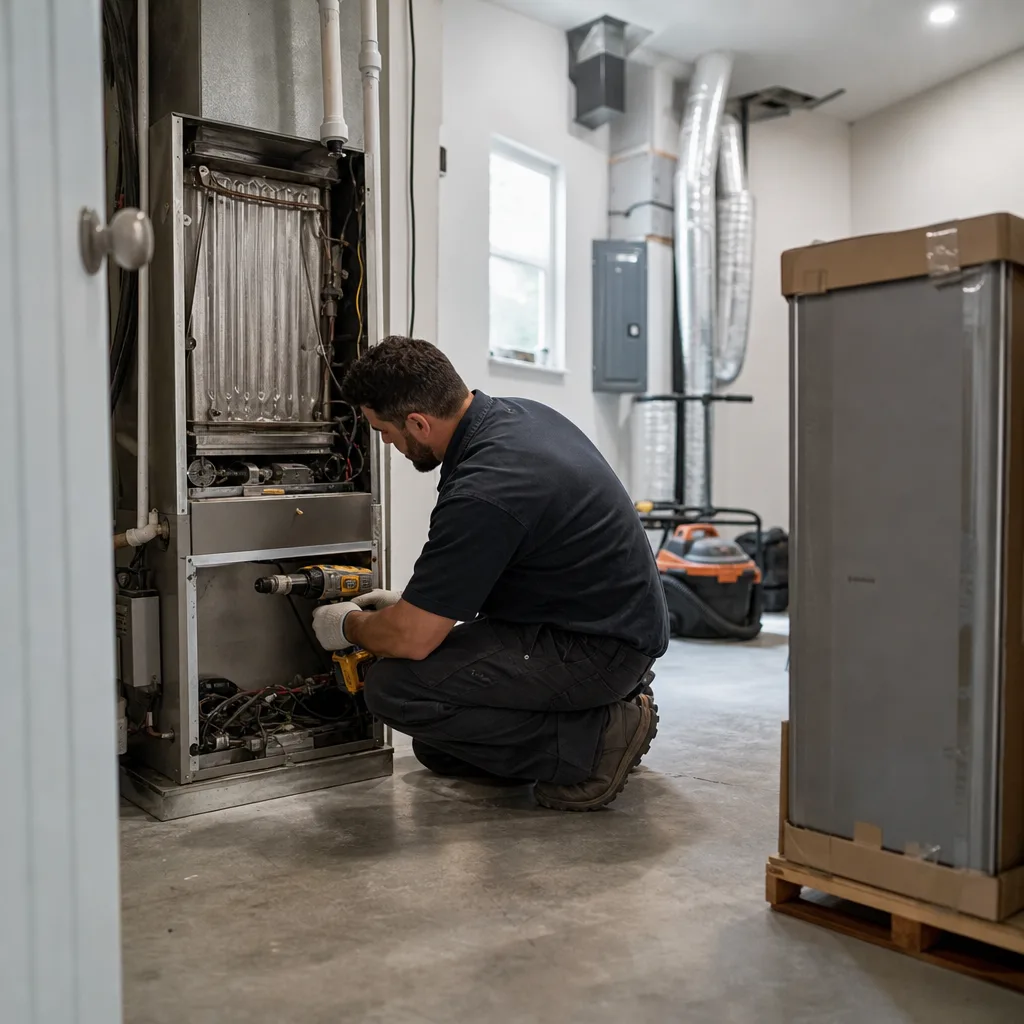
What’s Covered on This Page
- Signs Your Furnace Needs Replacing, Not Repairing
- When Repair Still Makes More Sense Than Replacement
- Furnace Replacement Cost in Dallas and What’s Included
- What Drives Furnace Replacement Cost Up or Down
- Permits and Licensing Dallas Homeowners Should Confirm
- Is it worth replacing a 30 year old furnace?
- Is there a tax credit for putting in a new furnace?
Signs Your Furnace Needs Replacing, Not Repairing
Not every cold night means you need a new furnace. A lot of no-heat calls come down to a small part, like an ignitor or a dirty flame sensor. So how do you know when you’ve crossed the line from repair to replacement? Look for a pattern, not just one bad day.
- It’s getting up there in age. Many gas furnaces last somewhere around 15 to 20 years. Once yours is in that range, every repair is money spent on a system with less time left.
- The repairs keep coming. One fix in ten years is normal. A service call every winter, or several in one season, means parts are wearing out one after another.
- The repair quote is a big chunk of a new furnace. A common rule of thumb is that if a repair costs about half of what a replacement would on an older unit, replacement is usually the better value.
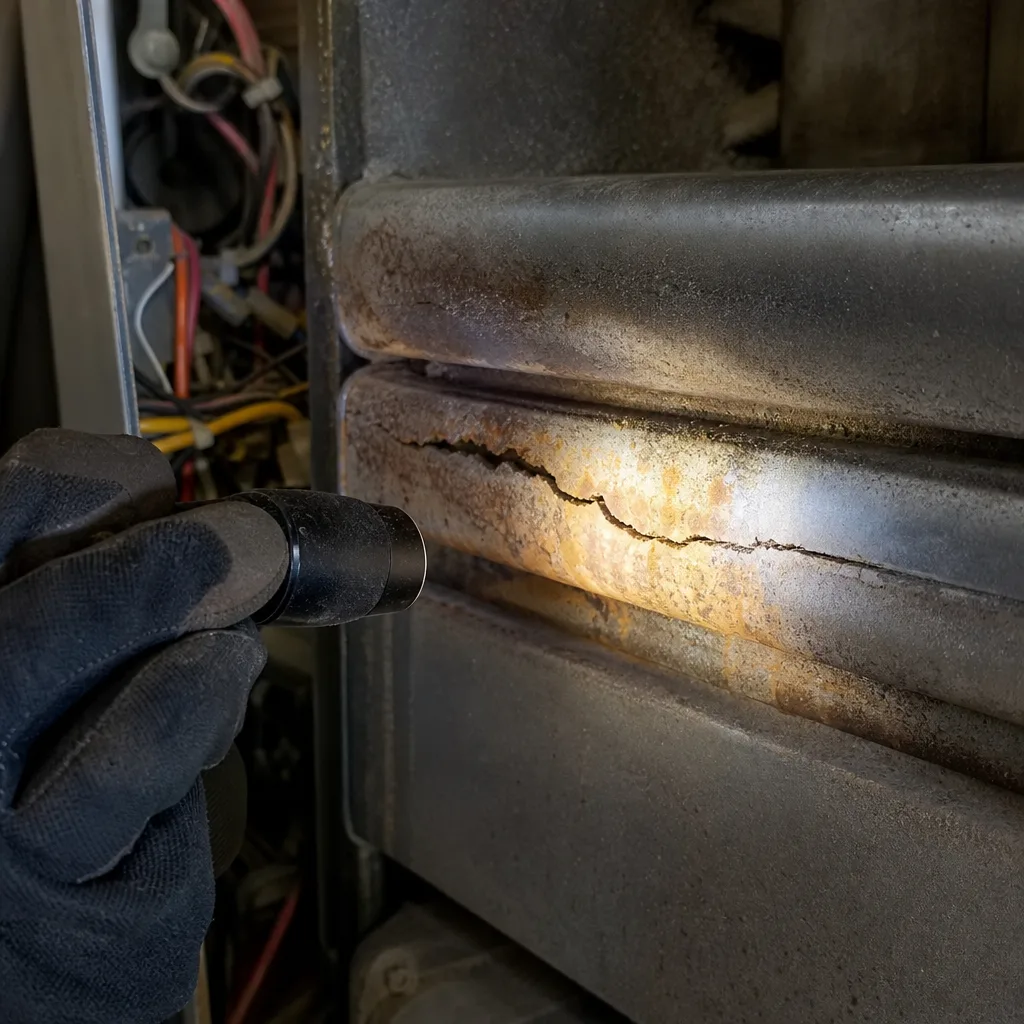
- The heat exchanger is cracked. This is the metal part that keeps combustion gases apart from the air you breathe. When it cracks, replacement is usually the answer, not a patch.
- Your rooms won’t heat evenly anymore. If some rooms stay cold and the furnace runs and runs, it may be worn out or the wrong size for your home.
- Your gas bill keeps climbing. Older furnaces lose efficiency over time. If your usage looks about the same but the bills keep going up, the furnace may be working harder to make the same heat.
- You see rust, soot, or a yellow flame. These can point to venting or burner problems that a technician should look at closely.
In a lot of Dallas homes, especially the slab-on-grade ranch houses built from the 1950s through the 1990s, the furnace sits up in the attic. That attic can bake through a long Texas summer. Then the furnace gets pushed hard when a sudden cold front drops temperatures overnight. That cycle is rough on older parts, so it’s worth watching for the signs above if your system lives up there.
Here’s the honest part. If your furnace is under about 10 years old, has been reliable, and the problem is one part like a blower motor, ignitor, or control board, a repair is often the right choice. You don’t need a new furnace just because it quit on the first cold night of the year. Many of those fixes take care of the problem for years.
The fairest way to decide is to get both numbers side by side: the repair price and the replacement price. Then ask the technician how old the furnace is, what failed, and what’s likely to fail next. If they can’t show you the worn part or explain it in plain English, keep asking until they can. You should feel sure about the choice, not rushed into it.
When Repair Still Makes More Sense Than Replacement
A repair is the better call when your furnace is basically sound and only one part let you down. That happens more often than people expect, and nobody should talk you into a new system you don’t need.
Dallas winters can work in your favor here. Our cold weather tends to come in short bursts, not months of steady freezing. So a furnace here often runs fewer hours each year than one in a colder state. A 14-year-old unit in your attic may have a lot less wear on it than its age suggests. Age is a reason to look closer. It isn’t a verdict.
These problems usually point to a repair, not a new furnace:
- A cracked or burned-out ignitor. The furnace clicks and tries to start, but it never lights.
- A dirty flame sensor. The burners light, then shut off a few seconds later. After a dusty summer in a hot attic, this is a common problem on the first cold front of the year.
- A weak blower motor or capacitor. You can hear the burners, but little or no air comes out of the vents.
- A bad control board. The furnace acts confused, starts and stops at random, or flashes an error code.
- A clogged filter. Too little airflow can make the furnace overheat and shut itself off to stay safe.
- A thermostat problem. Dead batteries, the wrong setting, or worn wiring can look just like a dead furnace.
You can check two of these yourself before you call anyone. Make sure the thermostat is set to heat and set a few degrees above the room temperature. Then pull out your filter. If it’s gray and packed with dust, put in a new one. If the heat comes back, you just saved yourself a service call.
Waiting can also be the right move, even on an older furnace. Say yours is 17 years old, the repair is small, and it’s already late February. Fixing it now and planning a replacement for the fall means a cold house isn’t rushing your decision. You get time to compare efficiency options and look at flexible financing, which is available on qualifying installations and larger jobs, on approved credit.
The same goes if you plan to sell your home soon, or if your air conditioner is also near the end of its life. Replacing both together can make sense. A repair that buys you a season or two lets you plan one bigger project instead of two rushed ones.
The big exception is the cracked heat exchanger covered above. That’s not a part you patch to get through the winter.
If you’d like a technician to take a look, the $26-$99 service-call fee is credited toward the repair if you proceed with Xtreme Air Services. You’ll see the price and approve it before any work starts, so you can weigh the fix against a replacement with real numbers in hand.
Furnace Replacement Cost in Dallas and What’s Included
Most furnace replacements with Xtreme Air Services fall between $3,800-$8,000. The job we do most often is a standard like-for-like swap. That means a new furnace goes into the same spot and uses your existing connections, with no major changes. That job runs $4,600-$6,300 and covers the equipment and materials, professional installation, startup, and testing.
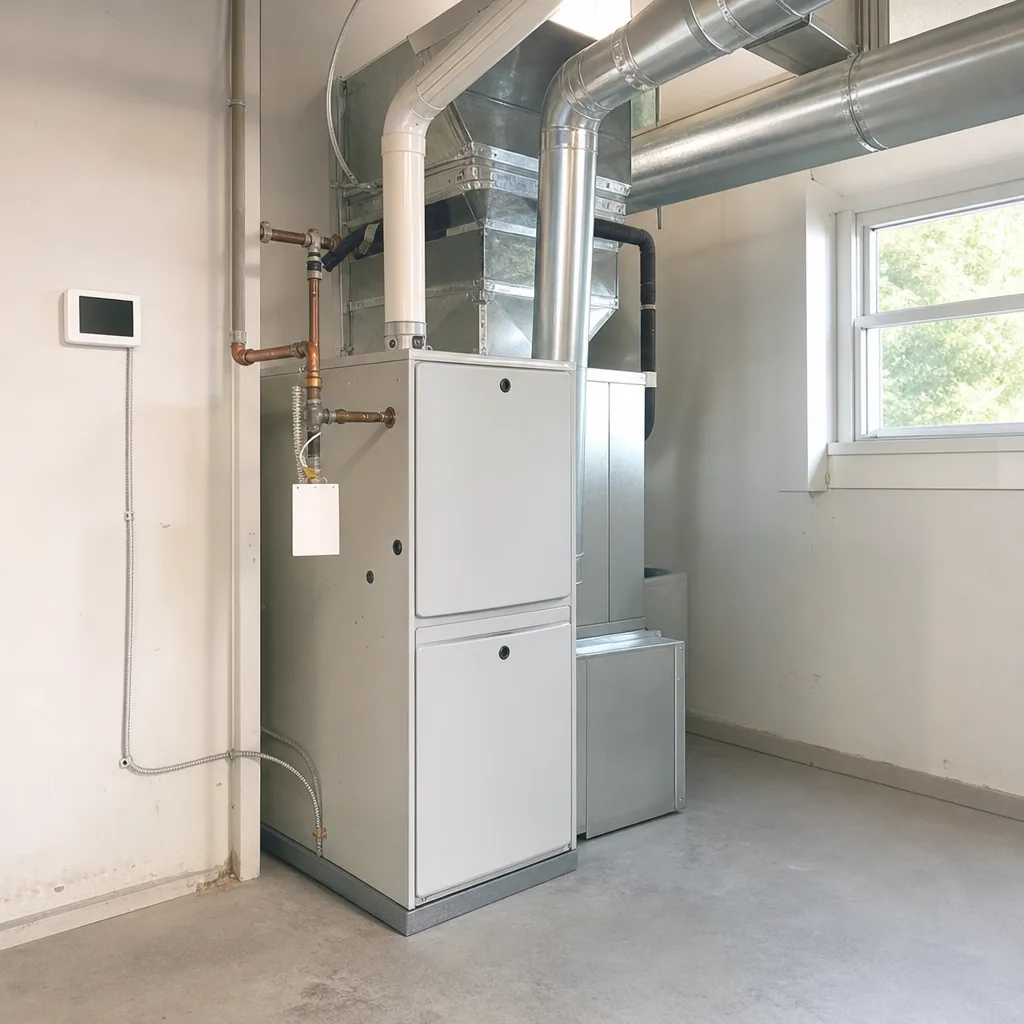
You’ll see your price up front and approve it before any work starts. It’s flat-rate pricing, so there’s no meter running while the crew works in your attic.
Here’s what moves your price up or down within that range:
- Size and efficiency. A furnace has to match your home. One that’s too small runs nonstop, and one that’s too big turns on and off too much. Efficiency is rated by AFUE, which tells you how much of the gas you pay for turns into heat. Higher AFUE costs more up front and less each month. If you replace your AC at the same time, its size in tons and its SEER2 cooling rating also affect the total.
- Brand and model. Basic single-stage models cost less. Furnaces with variable-speed blowers cost more, but they heat more evenly and run more quietly.
- How easy it is to reach. Many Dallas ranch homes have the furnace in a tight attic with a pull-down ladder. A cramped space or a long carry takes more time than a furnace in a hall closet or garage.
- The condition of what’s already there. Older homes built from the 1950s through the 1990s may have ductwork, wiring, or gas lines that need work before a new furnace can go in safely.
- Code upgrades and permits. Venting, gas connections, and clearances that met code decades ago may need updating today.
- Custom fabrication. If the new furnace doesn’t line up with your old ductwork, the crew may need to build a custom metal fitting to connect them.
This is what’s included and what’s not, so nothing catches you off guard:
- Included: equipment and materials, professional installation, standard connections, startup and testing, and haul-away of the old unit.
- Not included: duct, electrical, or plumbing changes, code corrections, and permits, unless your quote says otherwise.
That second list matters most when you compare quotes. A low number that leaves out a needed vent fix or permit isn’t really lower. It just means you’ll pay that cost later. So when you look at any estimate, ask these questions:
- How did you decide what size furnace my home needs?
- What AFUE rating is this furnace, and what would a higher one cost?
- Does this price include permits and any code work my home needs?
- Do my ducts, venting, or gas line need changes, and are those priced in?
- Is haul-away of the old furnace included?
A good technician will answer each one in plain English. If your home needs any of the extra work, it should be written into your quote before you say yes. If the total is more than you planned for, financing is available on qualifying installations, on approved credit, as covered above.
Not sure what your Furnace replacement project needs? Ask us.
Call Today, Get Service Today. Xtreme Air Services — North Dallas is ready to help.
What Drives Furnace Replacement Cost Up or Down
You’ve seen what goes into your price. Some of those factors are set by your house, like where the furnace sits and what shape your ducts are in. Others are choices you get to make. The smart move is to spend where it pays off in Dallas and save where it doesn’t.
Start with efficiency. Our cold weather comes in short bursts, so a furnace here runs fewer hours each year than one up north. That means a top-efficiency furnace takes longer to earn back its higher price in gas savings. For many Dallas homes, a standard-efficiency furnace is a fair choice. Stepping up makes more sense if you plan to stay in your home for a long time or your winter gas bills already run high. Ask your technician to estimate the yearly savings for your house, not a home up north.
There’s a hidden cost with high-efficiency furnaces, too. These are called condensing furnaces because they pull so much heat from the gas that they make water. They need plastic vent pipe and a drain line instead of the metal flue your old furnace used. In an attic, that can mean a new vent route and a drain line that’s protected from a hard freeze. That counts as a modification, not part of a standard like-for-like swap. So the real price gap can be bigger than the gap between the two furnaces.
The blower is where Dallas homeowners often get the most for their money. Your furnace blower pushes air for your air conditioner all summer long, not just for heat in winter. A variable-speed blower runs slower and steadier. That helps pull humidity out of the air in July and keeps upstairs and back bedrooms closer to the same temperature. You’ll likely feel that upgrade more months of the year than a jump in AFUE.
Here are honest ways to keep your total in check without cutting corners:
- Go like-for-like when it fits. If your old furnace was the right size and your ducts are in good shape, a straight swap avoids extra work.
- Pair it with your AC if that’s near the end, too. One install shares the labor and gives you parts that are made to work together.
- Plan ahead when you can. Replacing in the fall, before the first cold front, gives you time to compare options instead of picking whatever’s fastest.
- Handle known duct problems in the same visit. Leaky ducts waste heat no matter how good the new furnace is, and duct sealing is easier while the crew is already in your attic.
- Ask for two options in writing, such as a standard model and one step up, so you can see exactly what the extra money buys.
One place you shouldn’t try to save is safety work. A needed vent fix, gas line update, or permit protects your family and your home. A quote that skips them only looks smaller on paper. We’d rather show you the full picture up front and let you decide with real numbers.
Watch Our Video
See How We Handle Furnace replacement in Dallas
Xtreme Air Services — North Dallas
Permits and Licensing Dallas Homeowners Should Confirm
Before anyone puts a new furnace in your home, confirm two things. First, the person doing the work should hold a Texas HVAC license. Second, the job should be permitted and inspected if your city requires it. These two checks take a few minutes, and they protect your family long after the crew drives away.

Here’s why they matter so much with a furnace. A gas furnace burns fuel inside your home, and it sends the exhaust out through a vent. In many Dallas ranch homes, that vent runs from the attic up through the roof. If the vent is the wrong size, sloped the wrong way, or not sealed tight, exhaust can leak back into the house. That’s how carbon monoxide problems start. A licensed installer knows how to get this right, and an inspection gives you a second set of eyes on it.
In Texas, HVAC contractors are licensed through the Texas Department of Licensing and Regulation, also called TDLR. You can look up any contractor’s license on the TDLR website before you sign anything. Ours is HVAC License #TACLA29023C, and we’re glad to have you check it.
Ask these questions before you hire anyone:
- What’s your Texas HVAC license number? A real contractor will give it to you right away.
- Are you insured? If someone gets hurt in your attic or something gets damaged, you don’t want that bill landing on you.
- Does my job need a city permit, and who will pull it? The installer should handle it. If you’re asked to pull the permit yourself, the responsibility for the work shifts to you.
- Will an inspector check the work? Ask when the inspection happens and whether you need to be home for it.
- Will you test for carbon monoxide and check the venting at startup? This should be part of any gas furnace install.
Some contractors offer to skip the permit to save you money. It can sound like a favor, but it isn’t. An unpermitted furnace can cause trouble when you sell your home, because buyers and their inspectors often ask about recent HVAC work. It can also make an insurance claim harder if something goes wrong. Paying for the permit now costs far less than fixing those problems later.
Older Dallas homes deserve extra attention here. A furnace that went in during the 1970s or 1980s was put in under the rules of that time. Clearances around the unit, gas line fittings, and venting that passed back then may not pass today. A permitted job brings those items up to current standards, which is part of why permits and code corrections show up as separate line items, as covered above.
Our licensed and insured technicians are background-checked, so you know who’s coming into your home and up into your attic. If the permit or any code work your house needs isn’t written into your quote, ask us. We’ll explain exactly what’s required and why, in plain English, before you say yes.
Frequently Asked Questions
Common questions about Furnace replacement
Is it worth replacing a 30 year old furnace?
Yes, almost always. A furnace that old has outlived the typical 15 to 20 year lifespan most gas furnaces are built for. At that age, parts are harder to find and each repair is money spent on a system with little time left. You’ll also likely see better efficiency and steadier heat with a new unit, especially if yours sits in a hot attic like many Dallas homes built from the 1950s through the 1990s.
Is there a tax credit for putting in a new furnace?
Federal tax credits can apply to certain high-efficiency furnaces, but the rules and qualifying equipment change over time. Check the current federal guidelines before you buy, since not every model qualifies. Ask your installer which furnace models on your quote meet the efficiency requirements so you don’t miss out on a credit you’re eligible for.
Ready to Get Started?
Call (469) 213-3107 Today, Get Service Today.