


Heat Pump Installation in Dallas: Is It the Right Fit for Your Home?
Heat pumps that cool in summer and heat in winter, sized for Dallas's mixed climate and installed to spec.
What’s Covered on This Page
- Why Dallas’s Climate Makes Heat Pumps a Smart Option
- Signs Your Home Is a Good Candidate for a Heat Pump
- When a Heat Pump Installation Is Not the Right Call
- What Drives the Cost of a Heat Pump Installation
- What Happens During Your Heat Pump Installation
- How many hours a day should my heat pump run in winter?
- Is a heat pump a good fit for a hot water heater too, or just heating and cooling?
Why Dallas’s Climate Makes Heat Pumps a Smart Option
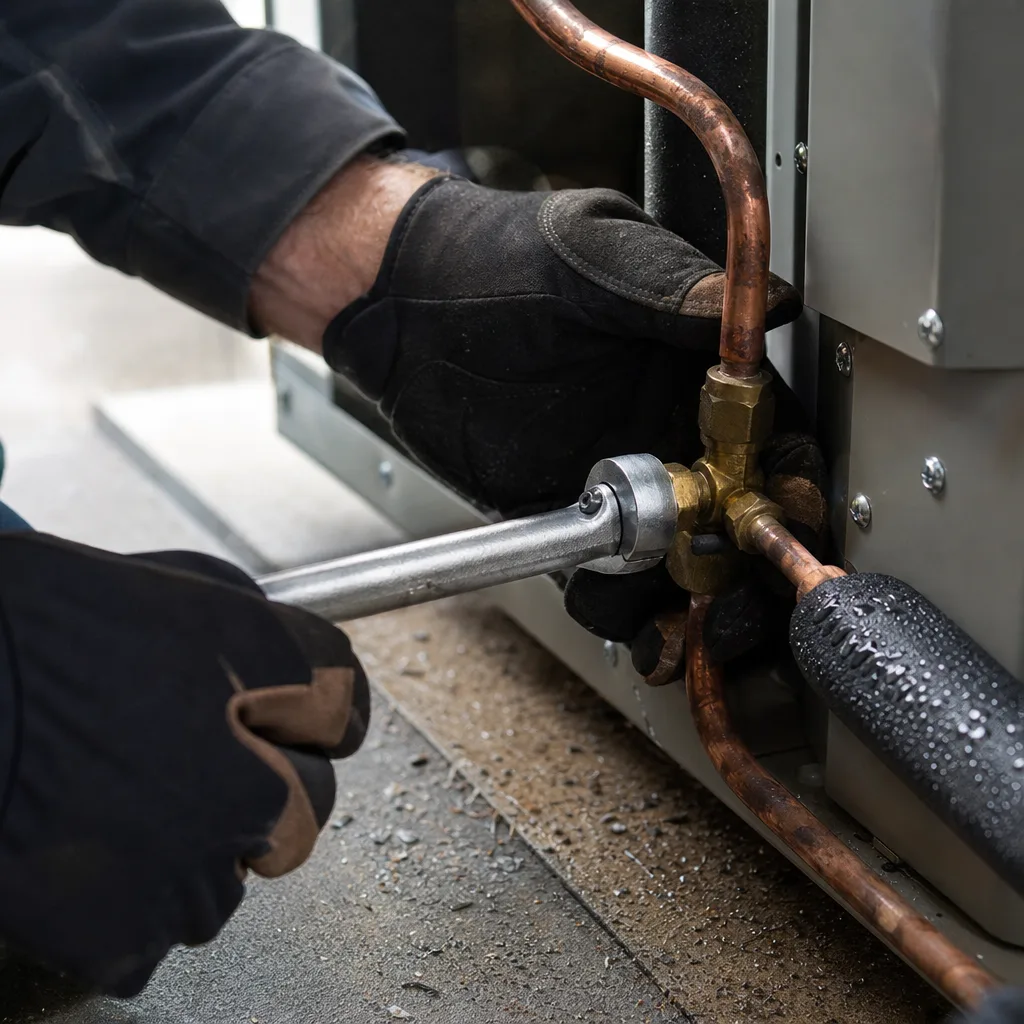
A heat pump doesn’t make heat by burning fuel. It moves heat. In summer, it pulls heat out of your house and dumps it outside, just like a regular AC. In winter, it runs the other way and pulls heat from the outdoor air into your home. That’s why one outdoor unit can do both jobs.
Here’s why that matters in Dallas. Your cooling season is long. It often starts in spring and hangs on well into fall. So the cooling side of your system does most of the work all year. A heat pump cools just as well as a standard central AC of the same size and efficiency. You’re not giving anything up in July.
Most Dallas winter days are cool, not bitter. That’s the sweet spot for a heat pump. When it’s chilly but not freezing, it can move a lot of heat for the electricity it uses. Compared with older electric heat that warms coils like a toaster, that’s a real difference on your winter bill.
The honest catch is our cold fronts. North Texas can swing from mild to a hard freeze fast, and a few nights each winter get cold enough that a heat pump has to work much harder. That’s normal, and a well-planned install accounts for it. Here’s what makes the difference:
- Backup heat. Most heat pumps have electric heat strips in the indoor unit that kick in when it gets too cold outside. They keep you warm during a freeze. They just cost more to run, so you want them as backup, not as the main heat.
- Dual fuel, if you already have gas. If your home has a gas furnace in good shape, a heat pump can pair with it. The heat pump handles mild days and the furnace takes over in deep cold.
- The right size. A system that’s too small leans on backup heat too often. One that’s too big short-cycles in summer and leaves your house feeling sticky.
- Good ratings for both seasons. SEER2 tells you how efficiently it cools. HSPF2 tells you how efficiently it heats. Higher numbers mean less electricity for the same comfort.
Your house matters too. Many established Dallas homes are slab-on-grade ranches with the air handler and ducts up in the attic. Those attics bake in summer and get cold in a freeze. Leaky or poorly insulated ducts up there waste a lot of what any system makes. So it’s worth checking the ducts when you plan a heat pump, not just the equipment.
One more thing to know. A heat pump runs on electricity, so your heating cost moves onto your electric bill instead of a gas bill. For a lot of Dallas homes that already run all-electric, that’s no change at all. For homes with gas heat, it’s worth talking through whether a full switch or a dual fuel setup fits you better.
Signs Your Home Is a Good Candidate for a Heat Pump
Not every house gets the same payoff from a heat pump. Some homes are a near-perfect match. Others are fine where they are for now. Here’s how to tell which one you’ve got, using things you can check yourself.
- You heat with electric resistance today. If your indoor unit is an electric furnace, or your thermostat shows you running on heat strips most of the winter, a heat pump is often the biggest upgrade you can make. You keep the same all-electric setup, but most of your heat comes from moving warmth instead of making it from scratch.
- Your AC is getting older and starting to need bigger repairs. A heat pump cools just like a central AC, so if you’re replacing the outdoor unit anyway, you can get heat out of the same piece of equipment. The label on your outdoor unit usually shows the year it was made, sometimes tucked inside the serial number.
- Your ducts are in fair shape. If rooms heat and cool fairly evenly and you don’t feel big drafts or dust from the vents, your existing ducts can likely carry a heat pump’s air without major work.
- You have a gas furnace with life left in it. That’s a strong setup for the dual fuel pairing covered above. You don’t have to give up gas to get the benefits.
- Your summer bills sting more than your winter ones. In Dallas, that’s most homes. Since cooling is where your system spends most of its year, a high-efficiency heat pump earns its keep where you use it most.
Picture a 1970s ranch with an electric furnace in the hall closet and a tired outdoor unit out back. Every winter, the bill jumps the moment a cold front rolls through. That home checks almost every box on this list.
Some homes need a little extra planning, but they can still be good fits:
- Rooms the ducts never reached, like a garage conversion or a back addition. A ductless mini-split, which is a small wall-mounted heat pump, can handle those spaces on their own.
- Older electrical panels. A heat pump with backup heat strips needs enough electrical capacity. That’s worth checking before the install, not after.
- Attic ducts that leak or sag. As mentioned earlier, fixing them first keeps a new system from wasting what it makes.
And here’s when it may not make sense yet. If your AC and furnace are only a few years old and running well, there’s usually no reason to rip them out early. You’ll get more value by waiting until the outdoor unit is due for replacement. If your ducts are badly damaged, crushed, or the wrong size, a new heat pump won’t fix that. The duct problem comes first, or the new system will feel no better than the old one. And if you’re planning to sell soon, a big equipment change may not pay you back before you move.
If you see your home in that first list, a heat pump deserves a serious look. If you see it in the last paragraph, it’s fine to keep what you have and plan ahead for the day your system needs replacing.
When a Heat Pump Installation Is Not the Right Call
A new heat pump is a big purchase. Sometimes it’s the wrong fix for the problem you have. Beyond the timing cases covered above, here are the times we’d tell you to hold off or look at something else.
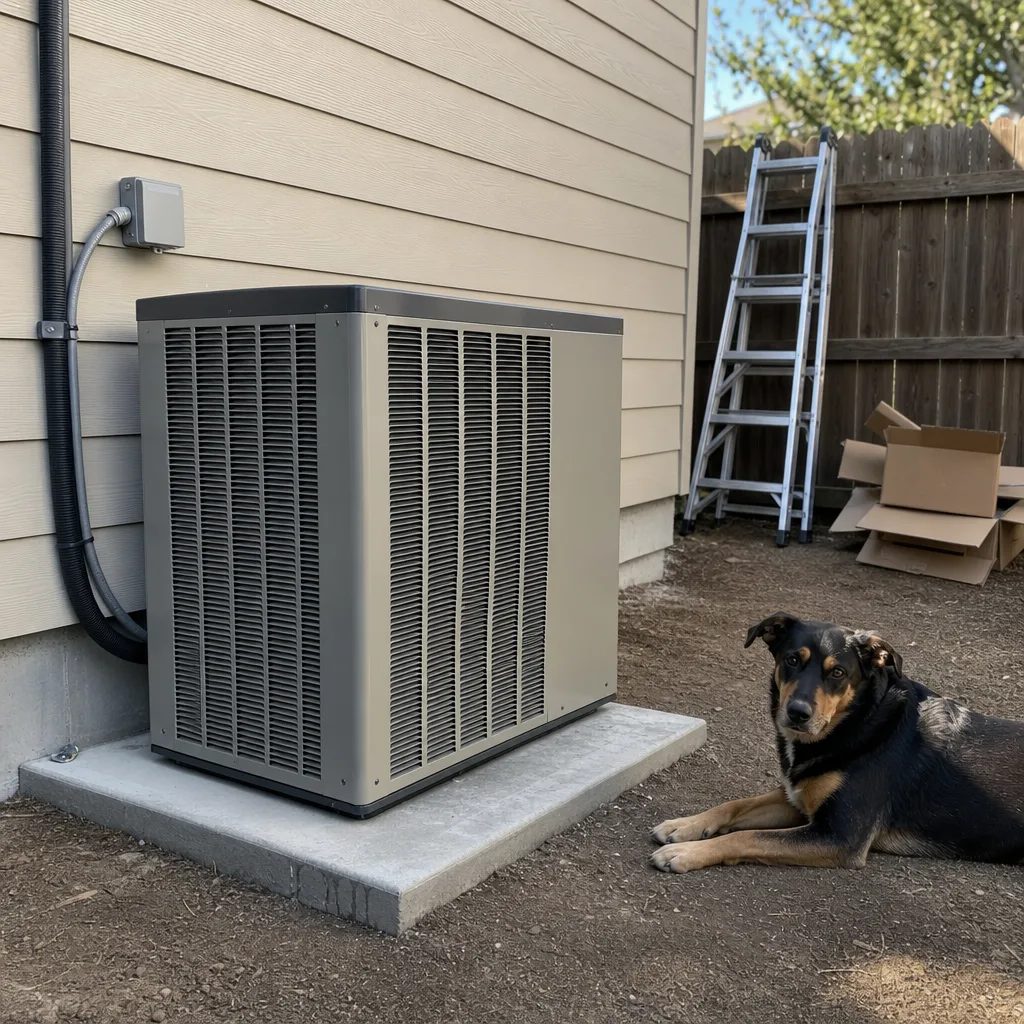
Your heat pump is acting strange in a cold snap, but it’s still working. When a hard freeze hits Dallas, a heat pump does a few things that look alarming. The outdoor unit may frost over, then stop and blow off a cloud of steam for a few minutes. That’s the defrost cycle, and it’s normal. Your thermostat may also show backup or auxiliary heat running more than usual. On the coldest nights, that’s expected too. None of this means you need a new system.
You already have a heat pump with one fixable problem. A failed capacitor, a refrigerant leak, a stuck valve, or a fan motor that quit doesn’t always mean the whole unit is done. If your system is fairly young and the rest of it is in good shape, heat pump repair usually makes more sense than starting over. Replacement starts to make sense when repairs keep stacking up or a major part like the compressor fails on an older unit.
Only one room is uncomfortable. If the rest of your house feels fine and one bedroom or a back addition stays hot or cold, a whole new system won’t fix that. The answer is usually closer to that room. It could be a duct repair, duct sealing, a zoning system, or a ductless mini-split for that space alone.
Your real complaint is a sticky, clammy house. A system that’s too big for your home cools fast, shuts off, and never runs long enough to pull moisture out of the air. Swapping in a new heat pump the same size as the old one just repeats the problem. Ask for a cooling load calculation first. That’s a room-by-room math check of what your home needs. In some homes, a whole-home dehumidifier is part of the fix.
Your electrical panel can’t handle it, and you’re not ready to upgrade it. A heat pump with backup heat strips needs enough electrical capacity. If your panel is maxed out and a panel upgrade isn’t in the budget right now, keeping a working gas furnace for a few more years is a perfectly reasonable choice.
Your system died during a freeze and you feel rushed. A broken system in January makes any decision feel urgent. If a repair can safely get you through the cold, it’s okay to take it and plan the bigger choice when you’re not shivering. You’ll make a better call on size, efficiency, and whether dual fuel fits your home.
None of these mean a heat pump is a bad idea for you. They mean the timing or the problem isn’t right yet. Fixing what’s wrong, and waiting until you have a clear reason to replace, is a smart way to spend your money.
Need help with Heat pump installation?
Call Today, Get Service Today. Xtreme Air Services — North Dallas is ready to help.
What Drives the Cost of a Heat Pump Installation
Here’s the straight answer. A heat pump installation with Xtreme Air Services typically runs $5,000 to $12,000. Our most common job is a standard like-for-like swap that uses your existing connections with no major modifications. That job runs $6,400 to $9,200. It covers the equipment and materials plus professional installation, startup, and testing.
Where your home lands in that range depends on a handful of things. None of them are mysteries, and you can ask about every one.
- Size and capacity. Bigger homes need more tonnage, which means more cooling and heating power. A system sized from a cooling load calculation can cost a little more or a little less than your old one. Either way, you’re paying for the right fit, not a guess.
- Efficiency. Higher SEER2 and HSPF2 ratings cost more up front and less every month after. In Dallas, where the system cools most of the year, that monthly savings adds up.
- Brand and model. Variable-speed systems that run low and steady cost more than single-stage units that only switch fully on or fully off. In return, you get even temperatures and better humidity control.
- Ease of access. Many older Dallas ranch homes have tight attic hatches or an air handler squeezed into a hall closet. When the crew has more trouble reaching the equipment, the job takes more labor.
- Condition of what’s already there. Your ductwork, wiring, and refrigerant lines all play a part. If they’re in good shape, you stay closer to a like-for-like price. If they need work, the price goes up.
- Code upgrades, permits, and custom fabrication. Older installs sometimes don’t meet today’s code. A new unit may also need a custom-made transition piece to connect to your existing ducts.
Know what your quote covers before you sign. Our installation price includes the equipment and materials, professional installation, standard connections, startup and testing, and haul-away of your old unit.
Some things aren’t included unless your estimate states them. Duct, electrical, and plumbing modifications are extra. So are code corrections and permits. Those are the items that can turn a like-for-like swap into a bigger job, like the duct repairs or panel work covered earlier. That’s why we spell them out up front with flat-rate pricing you approve before any work starts.
If the number feels like a stretch, we offer flexible financing on qualifying installations and larger jobs, on approved credit.
Whoever you call, ask these questions before you hire. Good answers tell you the price is real.
- Did you size this system with a load calculation, or by matching my old unit?
- What exactly is included, and what would count as an extra?
- Are permits part of this price, or separate?
- Did you check my ducts and electrical panel before quoting?
- Is this a flat price, or can it change once the work starts?
A quote that answers all five clearly protects you from surprises. You’ll know what you’re paying for, and you can compare estimates fairly.
Watch Our Video
See How We Handle Heat pump installation in Dallas
Xtreme Air Services — North Dallas
What Happens During Your Heat Pump Installation
A good install isn’t just swapping one box for another. Most of what makes a heat pump last and run efficiently happens in steps you’ll never see once the job is done. Here’s what a proper installation looks like, so you know what to watch for.
Before anyone picks up a tool, you should have a clear plan and a price. That means the system size is settled, ideally from a load calculation, and any extra work like duct or panel fixes is written down. With Xtreme Air Services, you approve upfront flat-rate pricing before work starts, so there’s no meter running while the crew is in your home.
On install day, the work usually goes in this order:
- Removing the old system. The refrigerant in your old unit gets recovered with proper equipment, not vented into the air. Then the old outdoor unit and indoor coil come out.
- Setting the outdoor unit. It sits on a level pad with room around it for airflow. North Texas clay soil swells when it’s wet and shrinks when it’s dry, so a pad that starts level can tilt over time. Getting it right at the start helps the unit drain and run the way it should.
- Installing the indoor side. That’s the air handler or coil, often up in the attic or in a hall closet in older Dallas homes. A summer attic install is hot, slow work, and it’s worth doing carefully, not quickly.
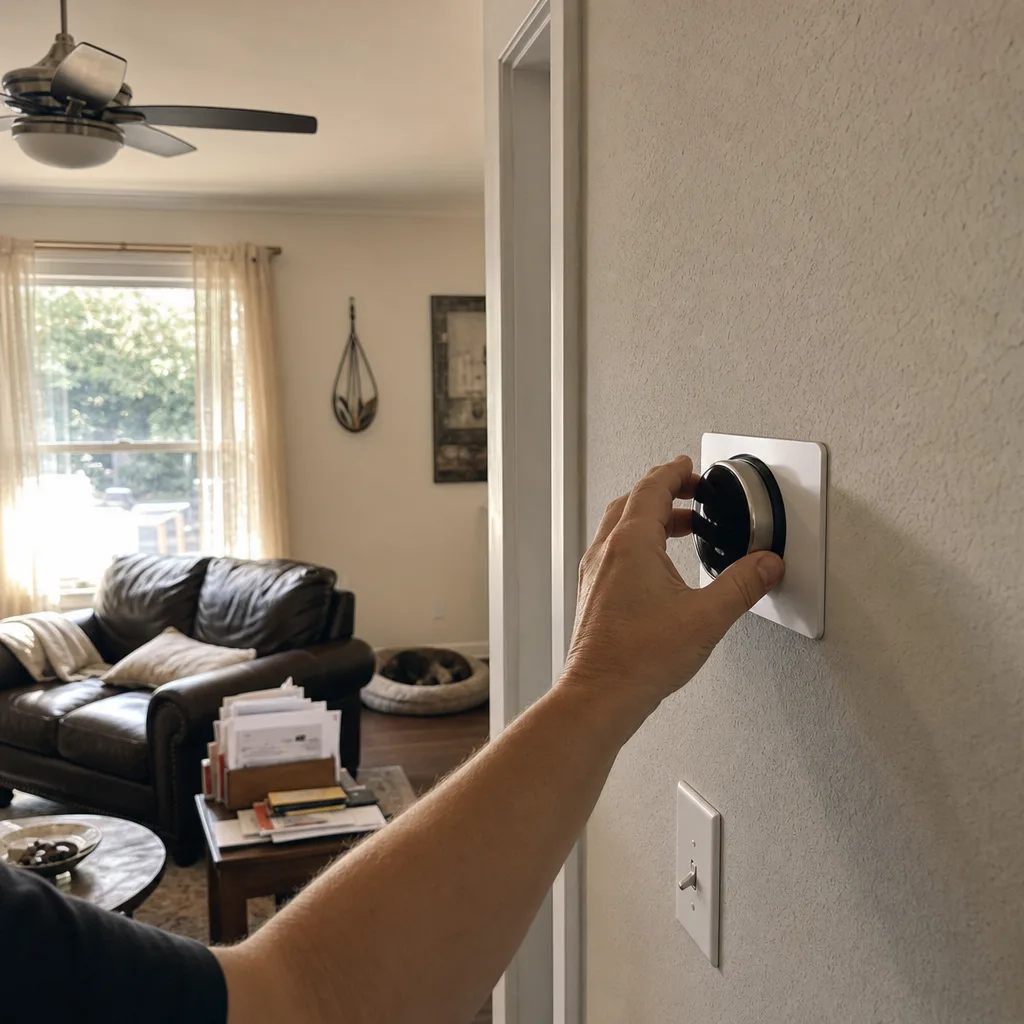
- Connecting the lines. The refrigerant lines, the drain line, and the wiring all get hooked up. If your old lines are reused, they should be checked first. A new thermostat that knows how to control a heat pump and its backup heat is part of a clean setup.
- Pulling a vacuum. Before refrigerant goes in, a vacuum pump removes air and moisture from the lines. Skipping or rushing this step is one of the most common ways a new system gets shortchanged.
- Charging and startup. The refrigerant charge gets set to the manufacturer’s specs, then the system runs in cooling and heating mode.
Startup and testing are part of our installation price, along with haul-away of your old unit. Testing should confirm a few things you can ask about: that air is moving well through your vents, that the system switches between heating and cooling, and that the backup heat strips come on when they’re called. On a Dallas summer day, cooling is easy to check. Heating is easy to forget, so make sure someone tests it before they leave.
How long does it take? A straightforward like-for-like swap is often done in a day. A tough attic, duct repairs, electrical work, or a permit inspection, which we covered in the cost section, can add time. You should know that up front, not learn it halfway through.
Before the crew wraps up, ask them to walk you through your new thermostat. Ask how to tell when backup heat is running and where your filter goes. You’ll feel a lot better about the first cold front if you already know what normal looks like.
Call 469-213-3107
Frequently Asked Questions
Common questions about Heat pump installation
How many hours a day should my heat pump run in winter?
On a mild Dallas winter day, it’s normal for your heat pump to run in long, steady cycles rather than short bursts, since that’s how it moves heat most efficiently. During a hard freeze, it may run almost constantly along with backup heat strips, and that’s expected too. If it’s short-cycling on mild days, or running nonstop when it’s only in the 40s outside, that’s worth a call since it can point to sizing or airflow problems.
Is a heat pump a good fit for a hot water heater too, or just heating and cooling?
The heat pump installation covered here is for home heating and cooling, not domestic hot water. A hot water heat pump is a separate piece of equipment that heats your water tank instead of your air, and it has its own sizing and cost considerations apart from a whole-home system.
Ready to Get Started?
Call (469) 213-3107 Today, Get Service Today.