


Furnace Not Working? Heating Repair Guide for Dallas Homeowners
Furnace and heat pump problems fixed on the first visit, with an honest call on repair versus replace.
What’s Covered on This Page
- Why Dallas Furnaces Fail at the First Cold Snap
- Common Heating Problems That Call for a Repair Visit
- Checks to Try Before Calling for Repair
- Signs the Problem Cannot Wait
- What a Repair Visit Includes and What It Costs
- How long does a typical heating repair visit take?
- Can a bad thermostat really make it seem like my whole furnace is broken?
- Is it normal for my furnace to smell when I first turn on the heat for the season?
- Why does my heat pump keep running on expensive backup heat instead of normal heat?
Why Dallas Furnaces Fail at the First Cold Snap
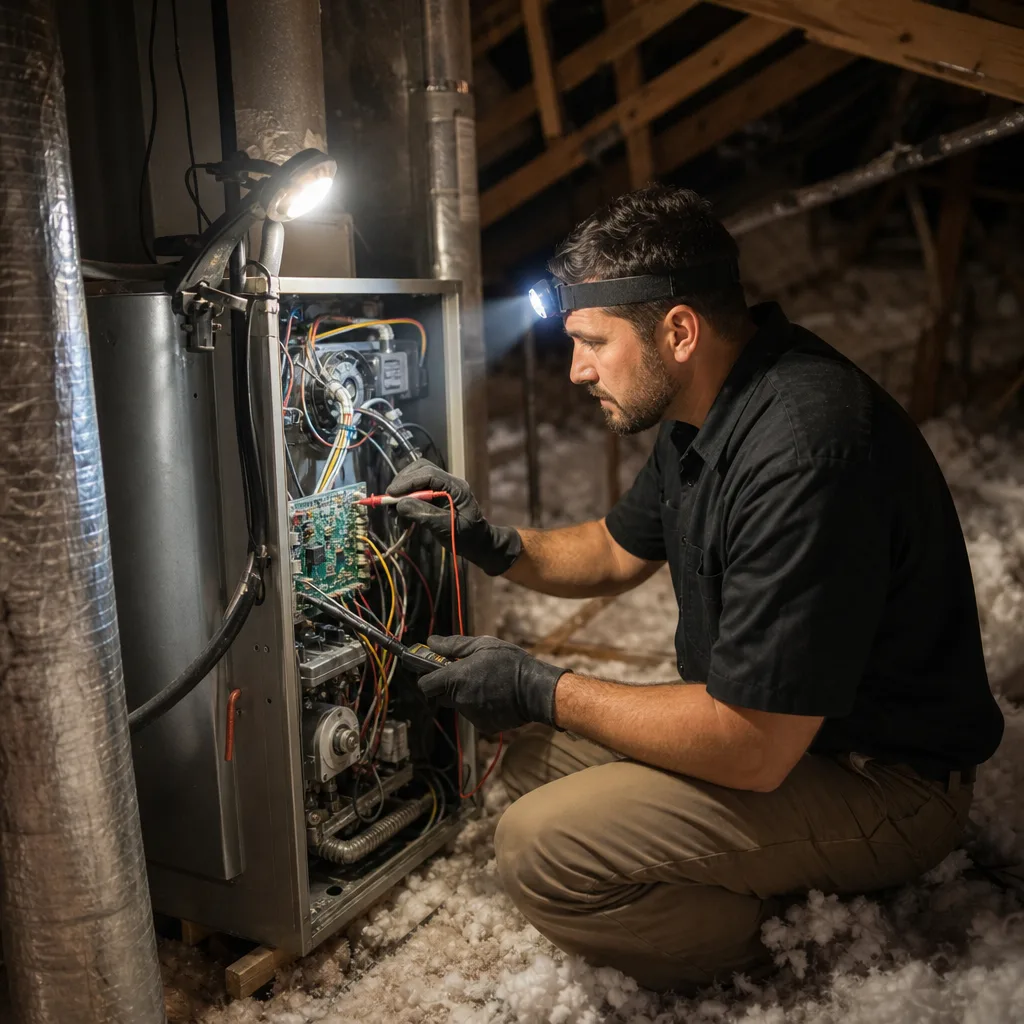
Here’s the thing about heat in Dallas. Your furnace might only run a few months a year. The rest of the time it just sits there. In a lot of homes it sits up in the attic, baking through a long Texas summer. Then a cold front blows through, the temperature drops overnight, and you flip the thermostat to heat. Parts that haven’t moved since last winter now have to fire up right on the first try.
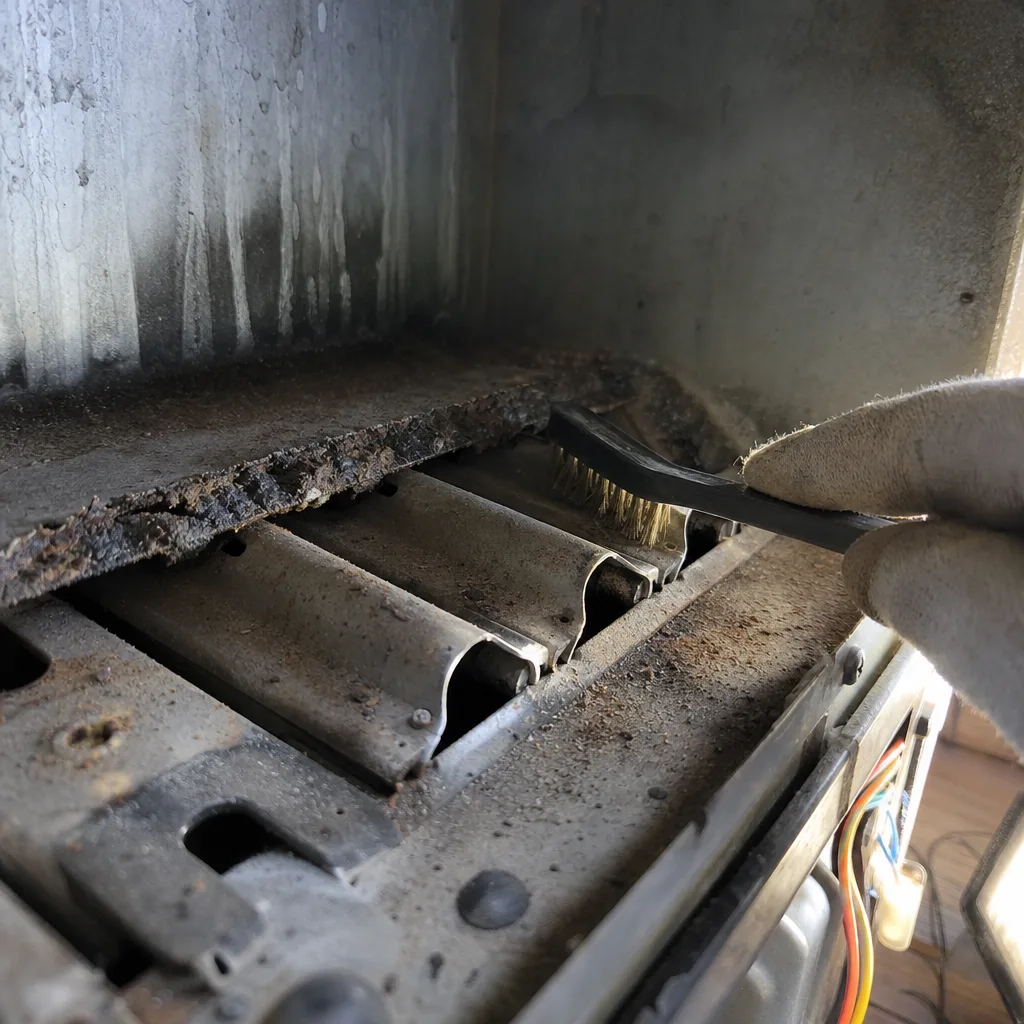
That’s why the first cold snap is when so many systems quit. It’s rarely a mystery. It’s usually one of a short list of parts:
- Hot surface ignitor: This small part glows red-hot to light the gas. It’s brittle, and it can crack after years of heating up and cooling down. You might hear the furnace start, but no flame shows up. Then it shuts off and tries again.
- Dirty flame sensor: This thin metal rod tells the furnace that a flame is burning. A light coat of buildup can make it miss the flame. The furnace lights for a few seconds, then shuts down. A cleaning often fixes it.
- Clogged filter: The same filter has been catching dust for your AC all summer. When it’s packed, air can’t move through the furnace. The furnace runs hot, and a safety switch shuts it off to protect itself.
- Thermostat trouble: Dead batteries, loose wires, or a thermostat still set to cool can look exactly like a broken furnace.
- Heat pump problems: If you have a heat pump, the parts that switch it from cooling to heating have been sitting in one position for months. If it won’t switch over, or the outdoor unit ices up and stays that way, something isn’t working right.
- Blocked condensate drain: High-efficiency furnaces make water as they run. If the drain line or trap clogs, a safety switch can stop the furnace from running.
Age plays a part too. Many older Dallas ranch homes still have the furnace that came with the house, or one close to it. Newer subdivisions have younger equipment, but even a newer furnace that sat in a hot attic all summer can have a weak ignitor or a dirty sensor.
One quick note so you don’t worry for nothing. A dusty, burning smell during the first few minutes of the season is common. That’s the dust that settled on the furnace over the summer burning off.
The good news is in that list itself. Every item is a single part. A cold house feels like a big problem, but the cause usually isn’t. With Xtreme Air Services, most heating repair calls come down to a single common failure that gets fixed on the first visit. We find the part that quit, repair or replace it, and then test the whole system. That way you know it’ll hold up on the next cold night, not just tonight.
Common Heating Problems That Call for a Repair Visit
You’ve already checked the thermostat, put in a fresh filter, and made sure the breaker isn’t tripped. The house is still cold, or something just seems off. These are the signs that it’s time to have a technician take a look.
- No heat at all. The thermostat calls for heat and nothing happens. There’s no click, no fan, and no warm air. That points to a power, control, or ignition problem inside the furnace.
- It starts, then quits, over and over. The furnace fires up, runs for a few seconds or a few minutes, and shuts off. Then it tries again. This kind of short cycling is the classic sign of the ignitor, sensor, or overheating trouble covered above. It won’t fix itself, and every restart adds wear.
- The fan blows, but the air is cool. Air is moving, but it never warms up. The burners may not be lighting, or a heat pump may not be switching over to heat.
- Some rooms are warm and others are freezing. In many Dallas homes, the ducts run through the attic. A duct that’s come loose, gotten crushed, or torn can dump your heat into the attic before it ever reaches the back bedroom. A weak blower can cause the same thing.
- New or loud noises. A bang when the burners light, a high squeal, or a grinding hum isn’t normal. Squealing and grinding often mean the blower motor or its bearings are wearing out.
- A burning smell that hangs around. That first-day dusty smell should fade within a few hours. A smell of hot plastic, burning wires, or anything that keeps coming back is different.
- Water around the furnace. A puddle under a high-efficiency furnace usually means the condensate drain is backing up. Left alone, it can stop the furnace and soak the floor or ceiling below.
- A blinking light on the furnace. Most modern furnaces have a small light on the control board that flashes a code when something’s wrong. Counting the blinks helps a technician narrow things down, but the code alone won’t fix the part.
Heat pumps have a few signs of their own. Frost on the outdoor unit for a short time is normal, and the unit clears it on its own. A unit that stays buried in ice isn’t. Another thing to watch is your thermostat showing auxiliary or emergency heat almost all the time. That backup heat uses electric strips that cost a lot more to run. If your electric bill jumps after the first real Dallas cold front, the heat pump may not be pulling its weight.
One more sign to take seriously: your breaker trips every time the heat kicks on. Resetting it over and over just hides the real problem. Something in the system is drawing more power than it should.
None of these problems mean you need a new system. Most of them trace back to one part or one connection. Our team handles the repairs these symptoms usually lead to, from thermostat repair and blower motor repair to control board replacement, heat pump repair, and duct repair. If what you’re noticing isn’t on this list but still feels wrong, trust that feeling. You know how your home normally sounds and feels better than anyone.
Checks to Try Before Calling for Repair
Before you pick up the phone, take ten minutes and run through these checks. A good share of no-heat problems come down to a setting, a switch, or a filter. If one of these gets your heat going, you don’t need a repair visit, and you shouldn’t pay for one.
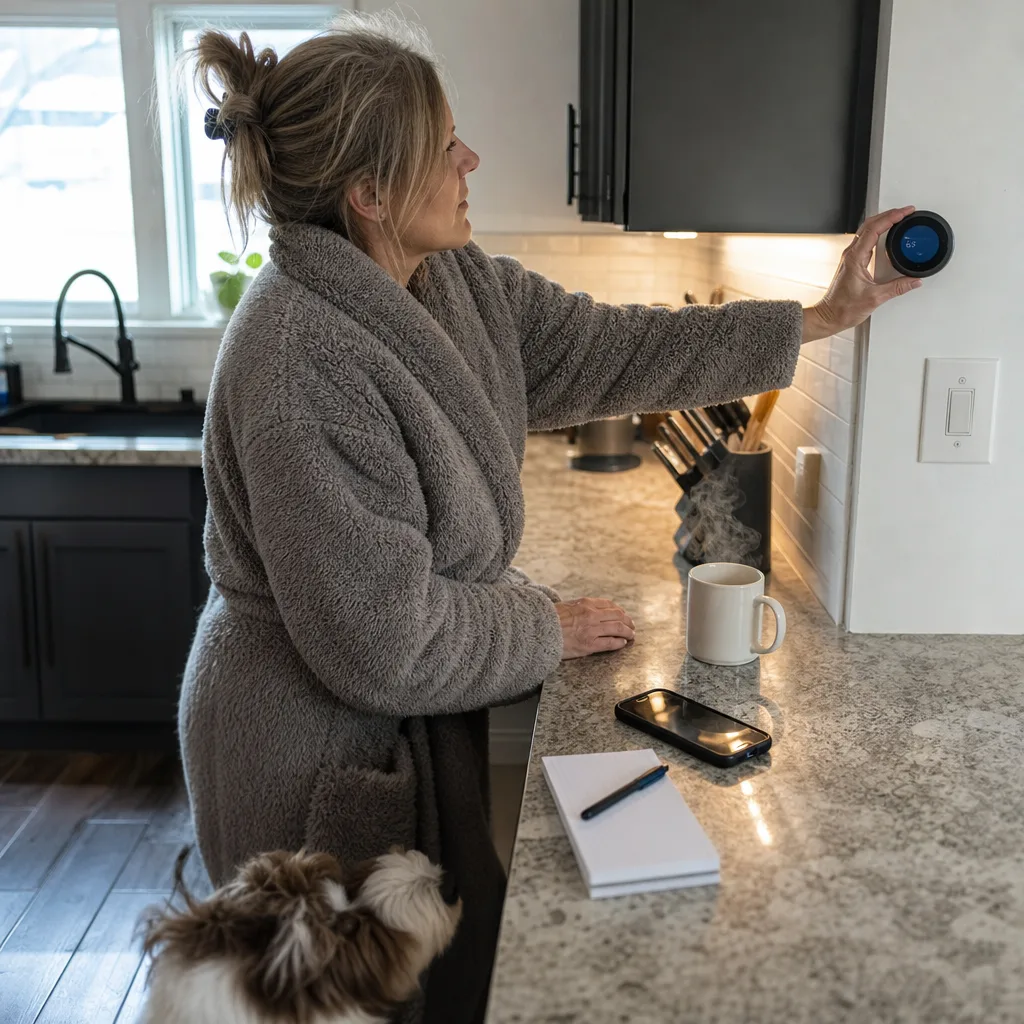
- Look at the thermostat settings. Make sure it says Heat, not Cool or Off. Set it three or four degrees above the room temperature so it calls for heat. If the screen is blank or dim, put in fresh batteries.
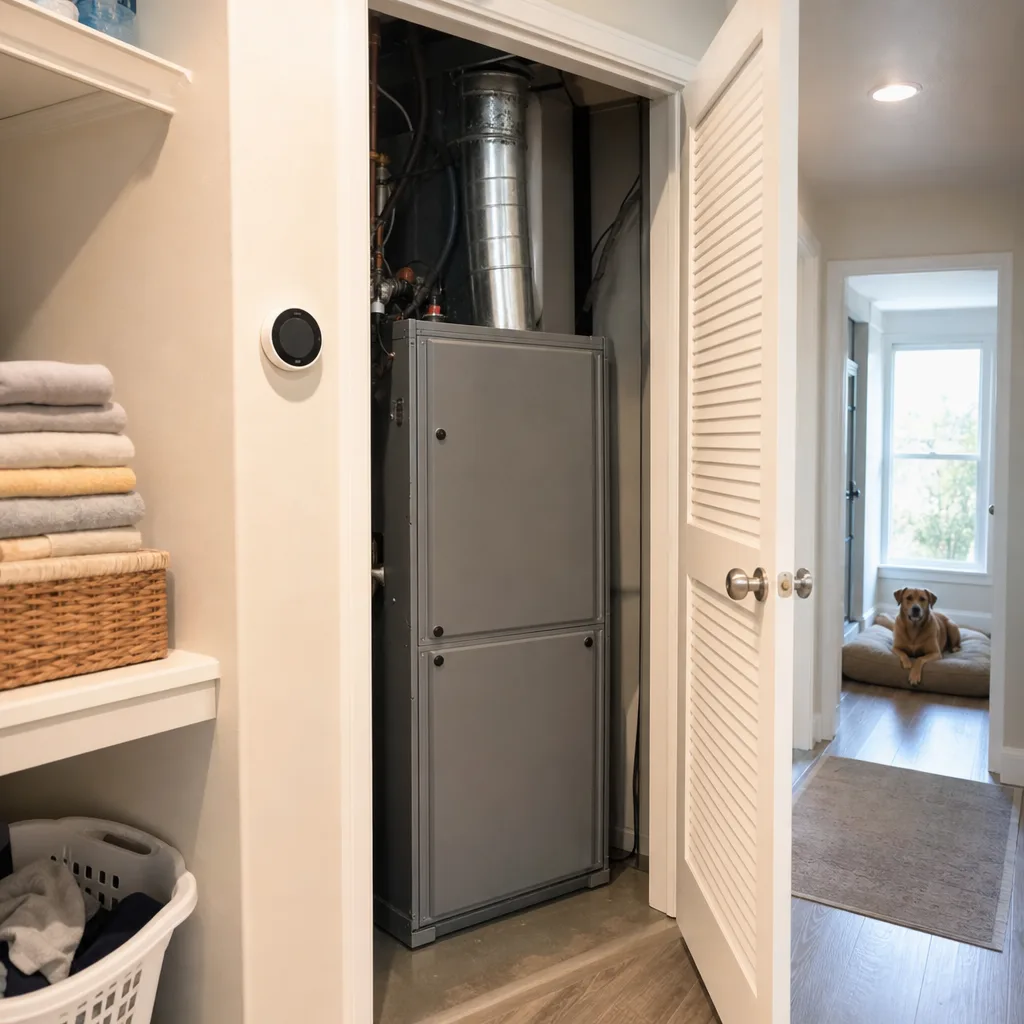
- Find the furnace power switch. Most furnaces have a switch that looks just like a light switch. It’s usually on the wall or a nearby post, often in the attic or a hall closet. People flip it off by mistake all the time, thinking it runs a light. Make sure it’s on.
- Check the breaker. Look in your panel for the furnace or air handler breaker. If it’s tripped, reset it one time. If it trips again, leave it off. As we covered above, that’s a sign of a real problem, not a fluke.
- Change the filter if it’s dirty. Pull it out and hold it up to a light. If you can’t see light through it, swap it out. The correct size is printed on the edge of the old one.
- Make sure the furnace door is on tight. Most furnaces have a small safety switch behind the front panel. If that panel isn’t seated all the way, the furnace won’t run at all. Press it firmly into place.
- Check that the gas valve is open. On a gas furnace, follow the gas pipe to a small valve with a handle. The handle should run in the same direction as the pipe. If your stove or water heater also has no gas, the issue may be with your gas supply, not your furnace.
- Open your vents. Walk through the house and make sure registers aren’t closed or covered by rugs, beds, or furniture. Blocked vents can make a room feel like the heat isn’t working.
- Clear around a heat pump. Rake leaves and pull back plants so the outdoor unit has room to breathe. After a rare Dallas ice storm, gently clear snow or sleet piled against the unit. Don’t chip at ice on the coils.
After you fix something, give the system a few minutes. Many furnaces run through a short startup before warm air comes out of the vents. Some will also lock themselves out for a while after several failed tries to light, then try again on their own.
If the thermostat setting, a flipped switch, or a fresh filter brought your heat back, you’re done. Keep an eye on it for the next day or two. If it runs normally, there’s no need to have anyone come out.
If you’ve worked through this list and the house is still cold, you’ve already ruled out the easy stuff. That makes the next step simpler. Whoever comes out can go straight to the parts that need a trained hand.
Ready when you are – get in touch today.
Call Today, Get Service Today. Xtreme Air Services — North Dallas is ready to help.
Signs the Problem Cannot Wait
Most heating problems are a hassle, not a danger. A cold house is miserable, but on a mild Dallas day it can usually wait a few hours. A few signs are different. They point to gas, fire, carbon monoxide, or water damage. Don’t wait on those.
- You smell rotten eggs or sulfur. Gas companies add that smell to natural gas on purpose so you’ll notice a leak. Don’t flip light switches, use the thermostat, or try to relight anything. Get everyone outside, then call your gas company or 911 from there.
- Your carbon monoxide alarm goes off. Carbon monoxide has no smell and no color, so the alarm is your only warning. Treat it as real. Get everyone into fresh air and call 911. If people in the house have headaches, dizziness, or an upset stomach that gets better once they step outside, take that seriously too.
- You see scorch marks, soot, or melted wire around the furnace. This also applies if the burning smell we talked about earlier won’t fade. Turn the heat off at the thermostat and at the furnace power switch, and leave it off.
- The burner flame looks wrong. A healthy gas flame is mostly steady and blue. Big, lazy yellow flames, or flames that seem to roll out of the burner area, mean the furnace isn’t burning gas the way it should. Shut it off.
- Water is spreading, not just sitting. In many Dallas homes the furnace sits in the attic, right above a bedroom or hallway. A backed-up drain up there can soak insulation and stain or sag the ceiling below. If you see a wet spot growing overhead, act now.
- The heat is out during a hard freeze. Dallas doesn’t get many of them, but when one hits, a cold house can freeze attic-run water lines and pipes in outside walls. If you have a baby, an older family member, or anyone who’s sick at home, a night without heat is more than an inconvenience.
With gas or carbon monoxide, your family’s safety comes first. Let the gas company or fire department clear the house first. After that, the furnace needs a trained technician to find the cause before it runs again. Please don’t turn it back on just to see if it works.
Now for the other side. A furnace that won’t light on a 50-degree afternoon, with no smell, no alarm, and no water, isn’t an emergency. It’s still worth fixing today. But you don’t need to panic, and you don’t need to pay emergency-style prices to get it handled.
That’s also how Xtreme Air Services charges. Nights and weekends cost no more than a weekday. Our licensed, background-checked technicians answer the phone around the clock and get to you the same day. You’ll talk to a real person, not a recording.
Call now
Watch Our Video
See How We Handle Heating system repair in Dallas
Xtreme Air Services — North Dallas
What a Repair Visit Includes and What It Costs
You should know what you’re paying for before anyone touches your furnace. Here’s how it works with Xtreme Air Services, in plain numbers.
First, there’s a service-call fee of $26 to $99. That gets a licensed technician to your door to find out what’s wrong. If you go ahead with the repair, that fee is credited toward the job. You aren’t paying for the same trip twice.
Once the technician finds the problem, you get an upfront flat-rate price, and you approve it before any work starts. No meter running while someone works in your attic. If you’d rather think it over, that’s your call.
Our heating repairs typically run $150 to $700. The most common job, where we find the one part that failed, repair or replace it, and confirm the system runs right, usually costs $150 to $400. That price covers:
- Diagnosis, so you know what failed and why
- Labor to make the repair
- The standard replacement part
- Testing the whole system after the fix
- Cleanup, so your hall closet or attic isn’t left a mess
Some things aren’t included unless they’re quoted to you separately. That means extra parts that also failed, major components, code upgrades, and permits. A cracked heat exchanger or a heat pump compressor, for example, is a much bigger job than a worn ignitor. If we find one of those, you’ll hear about it and see the price before anything happens.
What moves your price up or down comes down to a few things:
- How big the failure is. Cleaning a dirty flame sensor is a smaller job than replacing a control board.
- Part cost and availability. Some parts are easy to get. Others take longer or cost more.
- The age and brand of your equipment. An older furnace, like the original unit in some Dallas ranch homes, can need parts that are harder to find.
- Whether more than one part quit. A furnace that short cycled for weeks may have worn out a second part along the way.
Timing won’t change your price, since nights and weekends cost the same as a weekday.
Financing usually isn’t offered for a smaller repair like this. It is available on larger repairs and full replacements, so if the news turns out bigger than you hoped, ask about it.
Whoever you call, a few questions will tell you a lot. Is the trip fee credited if I go ahead? Will I get a set price before you start? What’s included, and what would cost extra? Will you show me the part that failed? A company that answers those clearly and without hesitation is one you can trust in your home.
Call 469-213-3107
Frequently Asked Questions
Common questions about Heating system repair
How long does a typical heating repair visit take?
Most heating repairs take one visit from start to finish. A technician diagnoses the problem, gives you a flat-rate price, and then makes the fix the same day, whether it’s a cracked ignitor or a dirty flame sensor. Bigger jobs, like a failed control board or a part that has to be special-ordered, can take longer if parts aren’t on the truck.
Can a bad thermostat really make it seem like my whole furnace is broken?
Yes, and it happens often. Dead batteries, a loose wire, or a thermostat still switched to Cool can look exactly like a dead furnace, with no click and no warm air at all. That’s why checking the thermostat settings and batteries is one of the first things worth doing before assuming the furnace itself has failed.
Is it normal for my furnace to smell when I first turn on the heat for the season?
Yes, a dusty or slightly burning smell in the first few minutes of running is normal. It’s just dust that settled on the furnace over the summer burning off, and it should fade within a few hours. If the smell keeps coming back, smells like hot plastic or burning wires, or doesn’t fade, turn the furnace off and have it checked.
Why does my heat pump keep running on expensive backup heat instead of normal heat?
This usually means the heat pump isn’t pulling its weight and is relying on electric auxiliary strips, which cost much more to run. If your thermostat shows auxiliary or emergency heat almost all the time, or the outdoor unit stays coated in ice instead of clearing itself, the heat pump likely needs a repair before your next electric bill arrives.
Ready to Get Started?
Call (469) 213-3107 Today, Get Service Today.