


Drain Cleaning in Plano: Know If It’s a Simple Clog or a Bigger Problem
Clogs cleared, with what's included in the visit and what drives the price explained before we start.
What’s Covered on This Page
- What a Standard Drain Cleaning Visit Covers
- Signs Your Clog Is More Than a Simple Blockage
- When You Might Not Need a Plumber Yet
- Why Expansive Clay Soil Affects Older Plano Drain Lines
- How Pricing Works for Drain Cleaning
- Does pouring boiling water down a drain help unclog it?
- Is it safe to put hydrogen peroxide down the drain at night?
- Can a plumber clean drains in a slab home without digging up the yard?
What a Standard Drain Cleaning Visit Covers
When you’ve got a sink that won’t drain or a tub filling up with gray water, you want to know two things. Will this get fixed today? What’s it going to cost? Here’s what you get with our most common job and where the price can change.
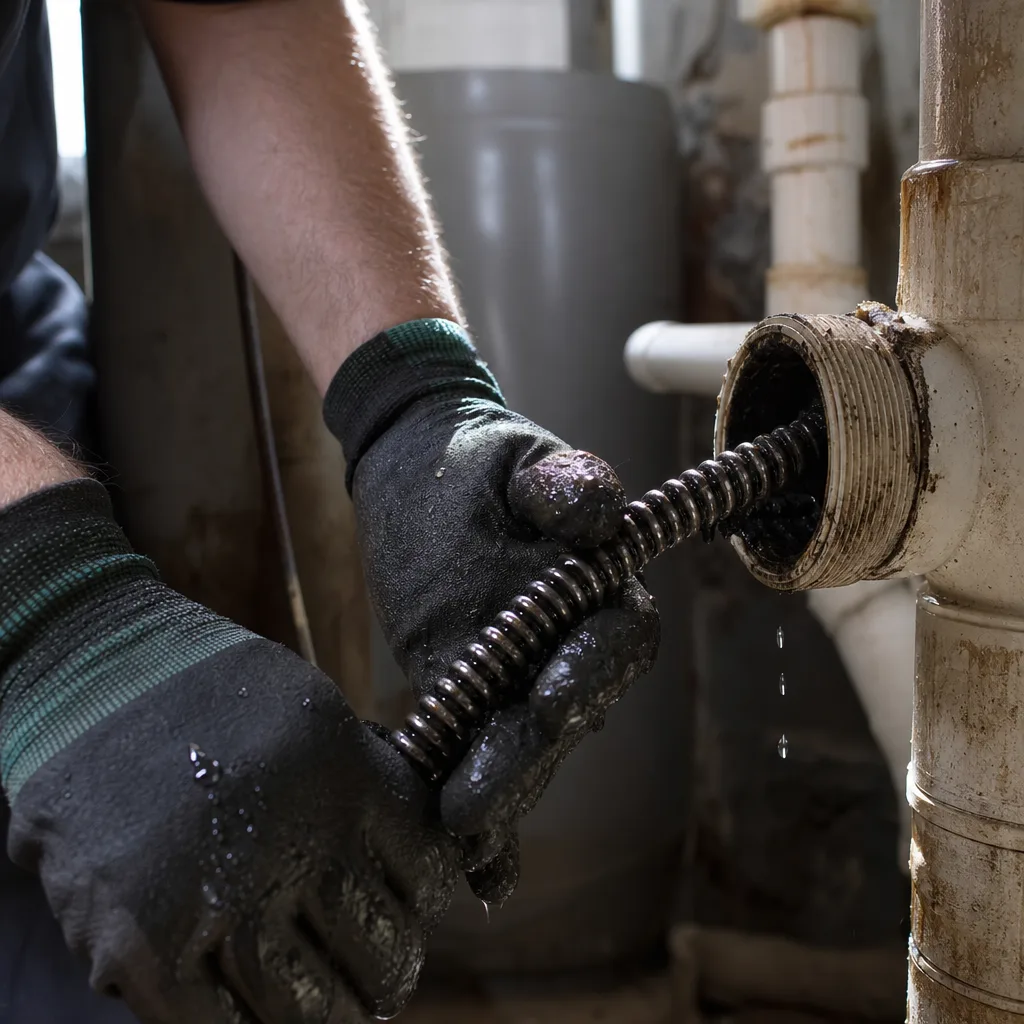
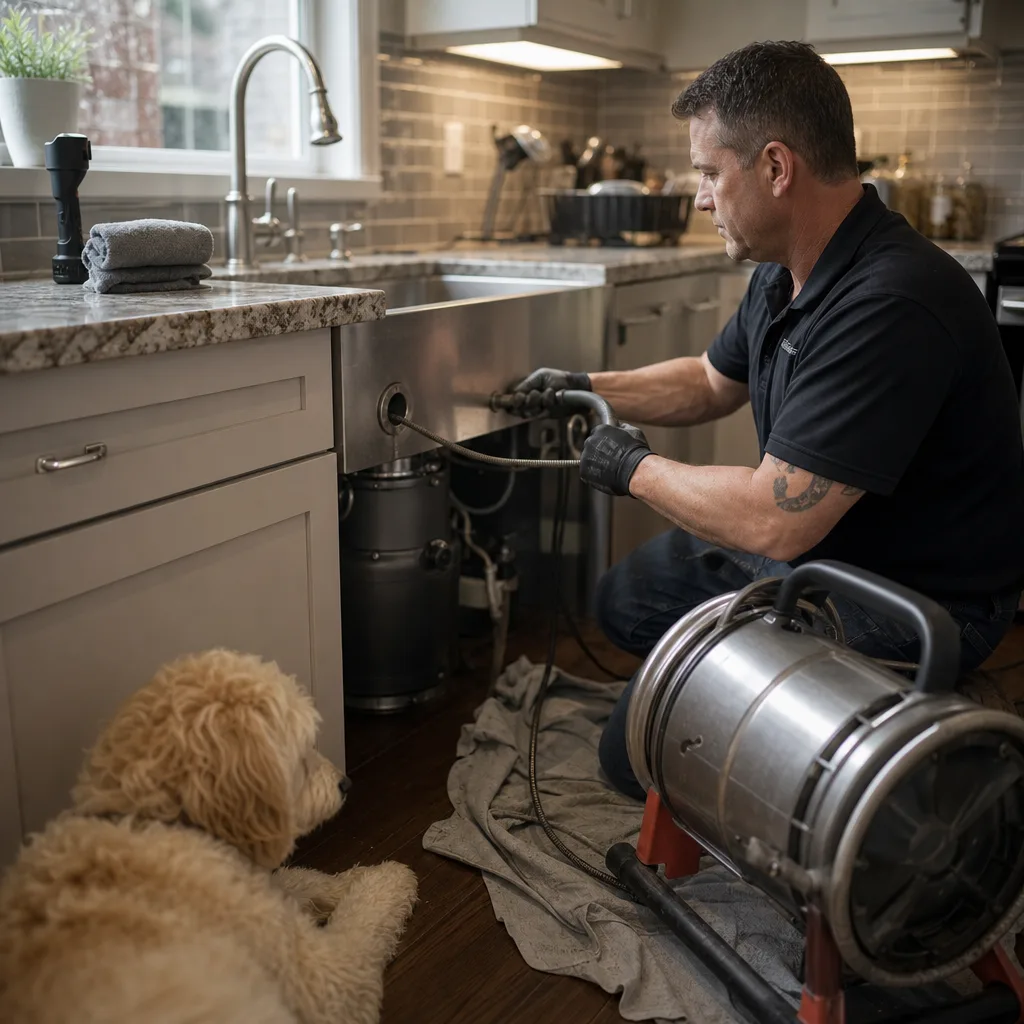
Our most common job is simple. We clear the clogged drain and confirm proper flow. Most calls are resolved on the first visit, so you aren’t left waiting on a second trip just to use your kitchen sink again.
- Drain clearing: we remove the clog that’s backing up your sink, tub, shower, or toilet line.
- Flow testing: we run water through the line to make sure it drains freely. A drain that’s only partly open usually backs up again soon.
- Cleanup: we leave the area clean. You shouldn’t have to mop up after the plumber leaves.
Some problems need more than a standard clearing. Hydro-jetting, pipe repair, and root removal aren’t included in the standard visit. If your line needs one of these, we’ll quote it separately so you can decide before any added work starts. Hydro-jetting uses high-pressure water to scour the inside of a pipe, and we offer it as its own service. A sewer camera inspection lets us see inside the line when the cause of the clog isn’t clear.
Drain cleaning usually falls in a typical range of $150-$500. The most common job runs $150-$300. A few things push the price up or down:
- How bad the clog is and where it sits. A hair clog near a bathroom drain is a different job from a blockage far down the main line.
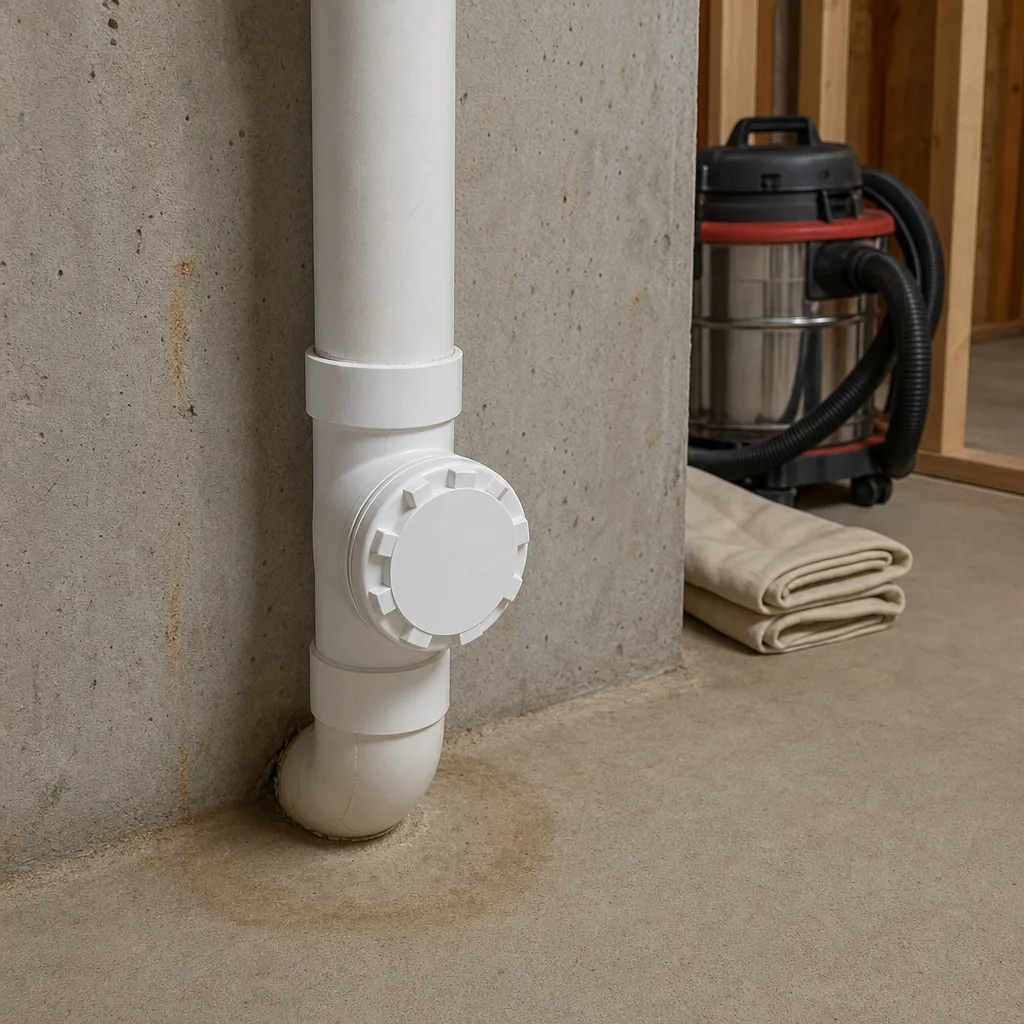
- Access to the cleanout. The cleanout is a capped pipe that gives a straight path into your drain line. Easy access makes the job faster.
- Whether a camera or hydro-jetting is needed. These are extra steps for tougher or repeat clogs.
There’s a $26-$99 service-call fee. If you go ahead with the work, that fee is credited toward the repair. You’ll see our upfront flat-rate price and approve it before we start. There’s no meter running while you wonder what the final bill will be, and there’s no extra charge for nights or weekends.
Financing isn’t usually offered for a smaller job like this. If the problem turns out to be a bigger repair or a replacement, financing is available.
Signs Your Clog Is More Than a Simple Blockage
Most clogs are local. Hair in the shower drain, grease in the kitchen sink, or too much paper in one toilet. If only one fixture is slow and everything else in your home drains fine, the problem is almost always close to that drain. A standard clearing usually takes care of it.
The signs below point to something further down the line. That usually means your main drain, the single pipe that carries everything out of the house.
- More than one fixture backs up at the same time. When the tub and the toilet are both slow, the clog sits past the point where those lines join.
- Water shows up where it shouldn’t. You flush the toilet and water rises in the tub, or you run the washing machine and the shower drain fills. Water that can’t get out takes the next easiest path.
- Your lowest drain backs up first. A downstairs shower or floor drain is usually the first place a main line blockage shows itself.
- You hear gurgling. A toilet that bubbles when the sink drains means air is being pushed through the water because the line can’t move freely.
- The clog keeps coming back. If you plunge a drain and it’s slow again in a week or two, you cleared a hole through the blockage, not the blockage itself.
- You smell sewage inside, or you notice a soggy spot or extra-green patch of grass in the yard over the sewer line.
Any one of these is worth a closer look. Two or more together is a strong hint that the problem is in the main line and not in a single sink.
Homes in Plano sit on slab foundations in clay soil that swells when it’s wet and shrinks when it dries out. Over years of Texas summers and wet springs, that movement can shift buried drain pipes. A pipe that sags or has a joint that’s pulled slightly apart creates a low spot where waste and grease settle. In older homes, mature tree roots can also find their way into small cracks in the line. Clogs like these come back no matter how many times you plunge, because the cause is the pipe itself, not just what’s stuck in it.
That’s why repeat clogs deserve a real answer instead of another quick fix. Clearing the drain gets you running again today. If the same line keeps backing up, a camera look at the pipe, covered in the section above, shows whether you’re dealing with buildup, roots, or a damaged section. Then you can decide what to do with the facts in front of you.
One more thing to watch for. If sewage is coming up into a tub or floor drain, stop running water in the house. Every flush or load of laundry adds to the backup with nowhere to go. Hold off until the line is clear.
When You Might Not Need a Plumber Yet
Not every slow drain needs a service call. If one sink, tub, or shower is slow and every other drain in your home works fine, you can often fix it yourself in a few minutes. Paying someone to pull out a clump of hair you could reach with your fingers doesn’t make sense, and we’d rather tell you that up front.
Here’s what’s worth trying first:
- Pull the stopper or strainer. Bathroom sink stoppers and tub strainers catch hair and soap scum. Lift the stopper out, wipe it clean, and put it back. This alone fixes a lot of slow bathroom sinks.
- Use the right plunger. A flat cup plunger works best on sinks and tubs. A plunger with a flange, the soft lip that sticks out the bottom, is made for toilets. On a sink or tub, hold a wet rag over the overflow hole so the push goes down the drain instead of out the top.
- Fish out shower hair. A cheap plastic drain strip with little barbs can grab the hair sitting just below the shower drain cover.
- Plunge a one-time toilet clog. If a toilet backs up once from too much paper and clears with a few good plunges, that’s not a plumbing problem. It’s just a Tuesday.
Go easy on store-bought chemical drain cleaners. They often don’t break up a solid clog. What they do leave behind is harsh water sitting in your pipe, and that makes the job harder and less safe for whoever opens the line next, even if that’s you. If you’ve already poured some in, just let the technician know before they start.
Sometimes the right move is to wait and watch. A drain that’s a little slow but still empties, with no smell and no water showing up anywhere else, isn’t an emergency. Keep an eye on it for a few days. If it doesn’t get worse, you’ve lost nothing by waiting.
Know when to stop. If you’ve cleaned the stopper and plunged a couple of times and the drain is still slow, more force usually won’t help. Hard plunging on a stubborn clog can push dirty water into nearby fixtures. A rented snake can kink inside the pipe or scratch your tub or toilet bowl. And if you notice any of the main-line warning signs described above, like more than one fixture backing up or water rising in a different drain, the clog is too far down for a plunger to reach.
That’s the honest line. One slow fixture with a clog you can reach is a do-it-yourself job. A clog that won’t budge, keeps coming back, or shows up in more than one drain is where a professional is worth calling.
Ready when you are – get in touch today.
Call Today, Get Service Today. Xtreme Air Services — North Plano is ready to help.
Why Expansive Clay Soil Affects Older Plano Drain Lines
If your drain gets cleared and then clogs again a few months later, you probably weren’t sold a bad job. The pipe may have changed shape. Clay soil movement under and around your home doesn’t snap a drain line all at once. It slowly bends, tilts, and loosens the pipe, and each kind of damage acts differently after a cleaning.
Here’s what that movement can leave behind in an older line:
- A belly. This is a section of pipe that has sunk lower than the pipe on either side. Water sits in it and never fully drains, and grease and paper settle there. A cable can clear the clog, but the low spot starts filling again the next time you use the sink.
- An offset joint. This is where two pipe sections have shifted so they no longer line up. The edge it leaves inside the pipe catches toilet paper and wipes. You might get a clean run for a while, then a sudden backup.
- A gap or crack. When a joint pulls apart, tree roots can find the opening. Clearing the line cuts back what’s inside, but the roots are still there and will grow back.
- Worn pipe. Older homes may have cast iron or clay drain pipe. Cast iron can rust and get rough inside, and clay pipe has many joints. Both make it easier for buildup to grab hold after the soil has stressed the line.
Timing can give you a clue. Clay shrinks the most during long, dry stretches of a Plano summer, and it swells after heavy spring rain. If your clogs seem to start or get worse after a big change in the weather, ground movement may be playing a part. A slow drain that showed up out of nowhere after a dry August is worth mentioning when you call.
None of this means you need a big repair. A belly that holds a little water might only need cleaning now and then. Some homeowners are fine with that once they know what’s down there. A root problem or a badly offset joint is different. Cleaning it again and again costs you more over time than fixing the bad section once.
That’s the decision. Clearing the line gets your home working again today. If it keeps coming back, a camera look shows which of these problems you have. Then you can choose between cleaning it on a schedule and fixing the damaged section, and you’ll know why. If a repair makes sense, we also handle sewer line repair, trenchless sewer repair, and slab leak detection when a drain under the slab is the concern. You’ll see the price and approve it before any of that work starts.
On a slab home, easy access to the cleanout helps a lot with this kind of check. If you know where yours is, tell us when you call. It’s often a capped pipe near the foundation or out in the yard.
Call 469-527-5131
Watch Our Video
See How We Handle Drain cleaning in Plano
Xtreme Air Services — North Plano
How Pricing Works for Drain Cleaning
When your drain is backing up, the price question is really a trust question. Will the number you hear on the phone be the number you pay? That depends a lot on how the plumber charges, so it helps to know the two common ways it’s done.
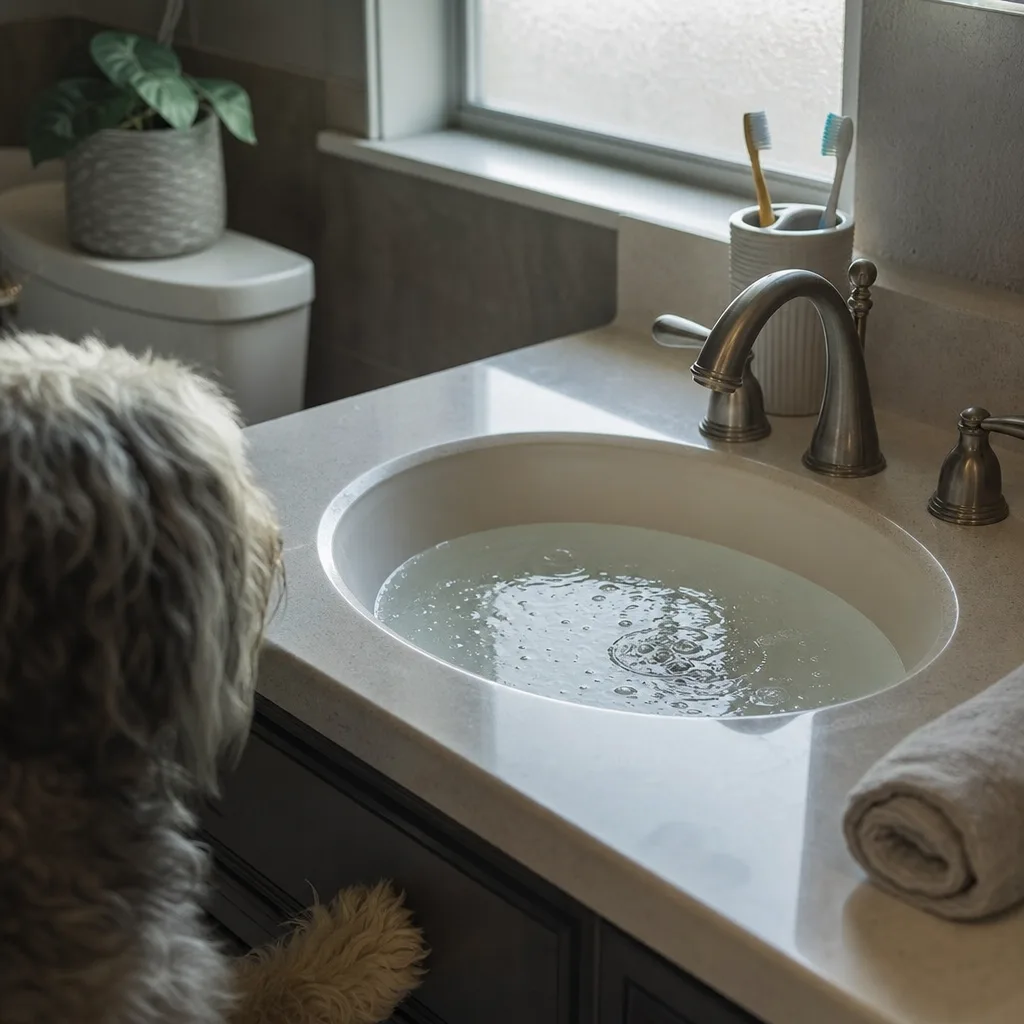
Hourly pricing, sometimes called time and materials, means you pay for the minutes on the job plus any parts. That sounds fair until you get a stubborn clog. If the cable has to go down the line a second or third time, the bill keeps climbing. You don’t know the real cost until the work is done. Some companies also add a separate trip charge or a higher rate after hours.
Flat-rate pricing means the price is set for the job before the work starts. If your clog takes longer than expected, that’s on the plumber, not you. You hear the number, you say yes or no, and that’s what you pay. This is how we work, with the price approved up front and no extra charge for nights or weekends, as covered above.
Most surprise bills don’t come from the first price. They come from the job changing partway through. A simple clearing turns into a camera check, then jetting, then talk of a repair. Sometimes that’s honest, because the line really does need more. The fair way to handle it is simple. The plumber stops, shows you what they found, gives you a new price, and lets you decide. Nobody should keep working and hand you the extra cost at the end.
Whoever you call, these questions will tell you a lot in about two minutes:
- Is this a flat price for the job, or are you charging by the hour?
- Is there a trip or service-call fee, and does it count toward the work if I go ahead?
- What’s included? Does the price cover testing the flow and cleaning up, or just running the cable?
- If the clog doesn’t clear the first way you try, what happens next, and will you check with me before doing more?
- Do you charge more at night or on the weekend?
- Are your technicians licensed and insured?
If a company dodges these or can’t give you a straight answer, that tells you something too.
There are also a few things you can do to help the visit go smoothly and get the right fix the first time:
- Clear the cabinet under the sink or the area around the toilet so the technician can get right to work.
- If you know where your cleanout is, mention it when you call.
- Say whether this drain has clogged before and how long ago. A repeat clog points to a different problem than a first-time one.
- Tell the technician if you’ve poured in a chemical drain cleaner, so they can open the line safely.
- Note whether other drains are slow or whether water is showing up in a second fixture.
With flat-rate pricing, these details don’t change the price of the clearing. What they do is help the technician figure out sooner whether it’s a simple clog near the fixture or something deeper in the line. That means fewer wrong guesses and a clearer answer about what your drain needs.
Frequently Asked Questions
Common questions about Drain cleaning
Does pouring boiling water down a drain help unclog it?
Boiling water only helps with soft buildup like grease that’s still fresh near the drain opening. It won’t touch hair clogs, soap scum, or anything lodged further down the line. It can also crack older PVC fittings if poured too fast. If a slow drain doesn’t clear after one try, skip repeated hot water and check the stopper or try a flat cup plunger instead.
Is it safe to put hydrogen peroxide down the drain at night?
Hydrogen peroxide is safer than harsh chemical drain cleaners, but it won’t break up a real clog. It can help cut down odor and light grime sitting in the trap. Letting it sit overnight is fine since it’s not corrosive like store-bought drain cleaners, but don’t expect it to clear hair or a solid blockage. If the drain is still slow after a few days, that’s a sign it needs more than a home remedy.
Can a plumber clean drains in a slab home without digging up the yard?
Yes, most drain cleaning on a slab home is done through an existing cleanout, not by digging. A cleanout is a capped pipe near the foundation or out in the yard that gives a straight path into the line. If you know where yours sits, pointing it out when you call speeds up the visit, since many Plano homes built on slab foundations have one already in place.
Ready to Get Started?
Call (469) 527-5131 Today, Get Service Today.