


Water Heater Installation in Plano: Done Right, Permit Included
Like-for-like tank swaps by licensed plumbers, with what the price covers and when a permit applies spelled out.
What’s Covered on This Page
- Know When Full Installation Is the Right Call
- Rule Out a Simple Repair First
- What a Professional Installation Includes in Plano
- Tank, Attic, Garage, and Exterior Tankless Installations
- What Drives Water Heater Installation Cost
- Do I need a plumber or an electrician to install my water heater?
- Is it worth repairing my water heater instead of replacing it?
- Why does an attic water heater install cost more than one in the garage?
Know When Full Installation Is the Right Call
Not every cold shower means you need a new water heater. Sometimes it does. The trick is knowing the difference, so you don’t throw money at a dying tank or replace one that had years left in it.
These signs usually point to a full installation:
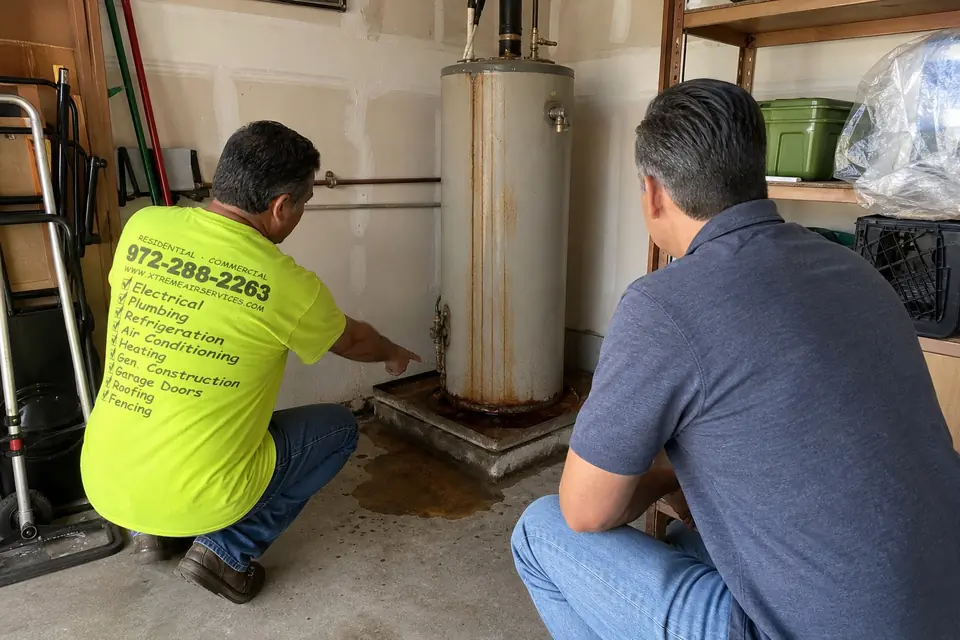
- Water is coming from the tank itself, not from a pipe or fitting on top. Once the steel tank leaks, there’s no fixing it.
- Your hot water looks rusty or brown and your cold water looks fine. That often means the inside of the tank is corroding.
- You hear loud popping or rumbling while it heats. That’s usually built-up sediment, and once it’s thick, the tank works harder and wears out faster.
- You keep running out of hot water because your family grew, or you added a bathroom, and the tank is simply too small now.
- You’ve already paid for a couple of repairs, and another part just failed.
Hard water plays a part here in North Texas. The minerals in it settle at the bottom of the tank over time. That layer of scale is a big reason tanks get noisy and slow to heat. If yours has been rumbling for a while, it’s likely been wearing down for a while too.
Where your water heater sits matters as well. Many homes around here have the tank in the garage or up in the attic. A garage leak is a mess on the floor. An attic leak can soak through your ceiling. So if an attic tank shows rust or slow seeping around the base, it makes sense to replace it sooner rather than wait for it to give out.
Now the honest part. A lot of water heater problems don’t need a new unit at all. If your tank is in good shape and isn’t leaking, these issues are usually repairs:
- A gas unit whose pilot won’t stay lit, which is often a worn thermocouple or a dirty burner
- An electric unit that only gives lukewarm water, which is often one bad heating element or thermostat
- A drip from a valve or a loose connection on top, not from the tank body
- Water that’s too hot or not hot enough because the setting is off
If that sounds like your situation, you probably need our water heater repair service, not a new install. A fix like that costs far less, and there’s no reason to replace a good tank.
Then there’s the gray zone. Say your tank is older, the element just went out, and the water’s been a little rusty lately. You can repair it, but you might be back in the same spot next year. In that case, ask for both prices side by side. We give you upfront flat-rate pricing before any work starts, so you can weigh a repair against a replacement and pick the one that fits your budget.
If you’re not sure what you’ve got, that’s normal. Our service-call fee is $26-$99, and it’s credited toward the repair if you go ahead with Xtreme Air Services. A licensed technician will look at the tank, the connections, and the venting, and then tell you straight whether it’s worth fixing.
Rule Out a Simple Repair First
Before you book an install, take five minutes and make sure the water heater is really the problem. Some no-hot-water calls turn out to be something small. If one of these checks solves it, you’re done, and you don’t need us.
- Is it the whole house or just one spot? Turn on hot water at the kitchen sink and in a bathroom. If only one shower runs lukewarm and everything else is hot, the heater is probably fine. The trouble is likely the valve inside that shower, which is a much smaller fix.
- Did your family just use a lot of hot water? Back-to-back showers, a load of laundry, and the dishwasher can drain a tank fast. It needs time to heat a fresh batch. Wait about an hour and test again before you decide anything.
- Is it an electric heater? Check your breaker panel. If the water heater breaker tripped, reset it one time. If it trips again, leave it off. A breaker that keeps tripping is telling you something inside needs a technician.
- Is it a gas heater? Make sure your other gas appliances, like the stove, are working. If they’re not, the problem may be your gas supply, not the water heater.
- Did someone bump the dial? Kids, pets, and storage boxes in the garage can knock the setting down or switch it to vacation mode. Turn it back and give the tank time to catch up.
Water on the floor is the one that scares people most, so look closely before you assume the tank is leaking. In a lot of homes, the water heater sits right next to the furnace or air handler. During a long North Texas summer, your AC pulls a lot of moisture out of the air, and a clogged or loose condensate line can drip right next to the tank. Follow the water back to where it starts. Check the pipes on top of the tank and the overflow pipe on the side too. If the tank is dry and the water is coming from somewhere else, you have a different problem, and your water heater may be fine.
Cold weather can fool you too. When a winter cold front rolls through, the water coming into your home is much colder than usual. Your tank has to work harder to heat it, so hot water may run out sooner for a few days. If your hot water comes back to normal once it warms up, the tank isn’t failing. It was just doing extra work.
Stop after these checks. Don’t take off the access panels on an electric unit, and don’t try to fix anything on the gas side yourself. Those jobs need a licensed technician.
If none of these checks brings your hot water back, or the water is clearly coming from the tank body, use the signs in the section above to figure out whether you need a repair or a new water heater. Either way, you’ll know you didn’t skip the easy answer first.
What a Professional Installation Includes in Plano
A professional water heater installation should cover three things: the new unit, the hookups, and proof that it all works safely before anyone packs up. Here’s what’s in our standard job, what isn’t, and what a good install looks like. That way you can compare any quote with clear eyes.
Our standard installation includes:
- The new water heater and the materials it takes to put it in
- Professional installation by licensed and insured technicians
- Standard connections to the water, gas, or electric lines you already have
- Startup and testing, so you know you’ve got hot water and it’s running right
- Haul-away of your old unit, so you’re not stuck with a rusty tank in the garage
Our most common job is a like-for-like swap. That means a standard install using your existing connections with no major changes. If your new tank is the same type and size as the old one and the hookups are in good shape, this is likely what you’ll need.
Some things aren’t part of the standard job unless your quote says so:
- Plumbing, electrical, or duct changes
- Code corrections
- Permits
We list those apart for a reason. Every home is different, and no one can price those items until they’ve seen your setup. An older tank may have been put in under older rules, so the hookups or venting might need updates to meet today’s code. Moving to a bigger tank can mean new lines. Switching from tank to tankless is a different job altogether, and we cover it on our tankless water heater installation page. You’ll get upfront flat-rate pricing approved before work starts, so any extra item shows up on paper first, not on a surprise bill.
Whoever you hire, a good install should take care of these points:
- The right size for your home. A tank that’s too small leaves your family taking cold showers. One that’s too big wastes energy keeping water hot that nobody uses.
- A temperature and pressure relief valve with a discharge pipe that’s routed the right way. This valve lets out pressure if the tank ever gets too hot or too full.
- Safe venting on gas units, so exhaust goes outside and not into your garage or attic.
- A drain pan where a leak could do damage. That matters most for the attic tanks we talked about above.
- Dry, tight connections and a safe temperature setting before the job is called done.
One more thing to think about while the old tank is out. North Texas hard water is a big part of why tanks wear down. If scale is what killed your last one, ask about our water softener installation. Softer water can help your new tank stay quieter and heat more efficiently for longer.
If a quote doesn’t spell out what’s included, ask before you sign. You should know whether haul-away, testing, and permits are covered before the old tank comes out.
Not sure what your Water heater installation project needs? Ask us.
Call Today, Get Service Today. Xtreme Air Services — North Plano is ready to help.
Tank, Attic, Garage, and Exterior Tankless Installations
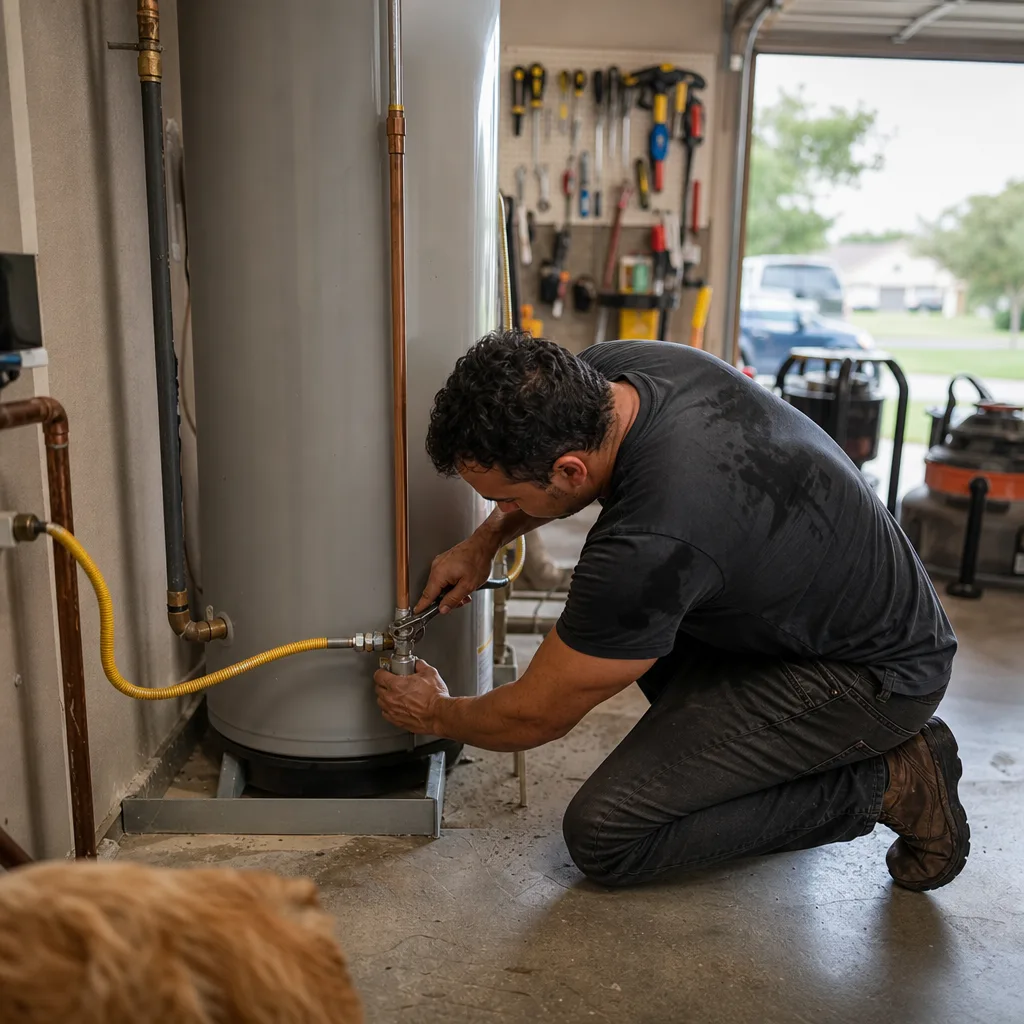
Where your water heater lives changes the job almost as much as which unit you pick. A tank in the garage, a tank in the attic, and a tankless unit on an outside wall are three very different installs. Knowing which one you have helps you understand your quote before anyone shows up.
Garage installs are usually the most direct. The old tank comes out on a dolly, the new one goes in the same spot, and the hookups are easy to reach. Gas water heaters in a garage often sit up on a stand. That keeps the flame higher off the floor, away from fumes from cars, gas cans, and lawn equipment. If your old stand is rusty, wobbly, or missing, plan on it being part of the conversation. Garages also take more knocks than other parts of the house, so keep bikes and storage boxes clear of the tank and its gas line.
Attic installs take more work, and that’s normal. A full tank is heavy, and getting the old one down and a new one up often means working through pull-down stairs and narrow walkways. A Plano attic in July can get far hotter than the outside air, so the work is slower and harder on the crew. That’s why ease of access is one of the things that moves the price of a water heater job up or down. The attic is also where a good drain pan and a properly routed relief line matter most, since a leak there lands on your ceiling instead of a concrete floor.
If your attic tank is getting near the end, it’s fair to ask whether it should stay up there at all. Sometimes the answer is yes, because moving it would mean running new lines. Sometimes a different spot makes more sense for your home. Either way, a good installer should explain the trade-off instead of just swapping tank for tank.
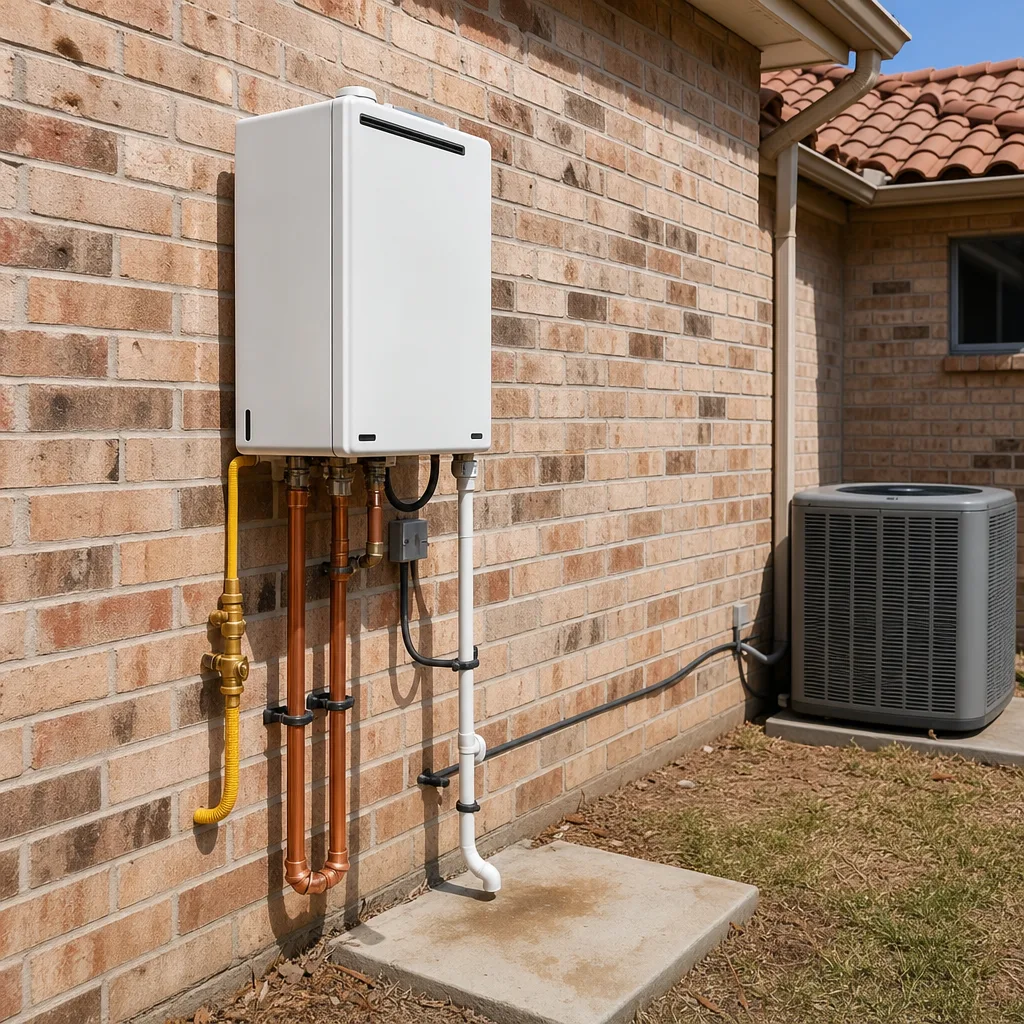
Exterior tankless installs skip the tank completely. The unit mounts on an outside wall and heats water only when you turn on a tap. That frees up garage or closet space and takes the weight out of your attic. It still needs a few things done right:
- A gas line big enough to feed it. Tankless units often need more gas at once than an old tank did.
- Protection from hard winter freezes, since the unit and its water lines sit outside in North Texas cold snaps.
- Hard water care. Scale builds up inside a tankless unit too, so flushing or softer water helps it keep heating well.
Going from a tank to tankless is a bigger change than a like-for-like swap, and we cover it in full on our tankless water heater installation page.
Whatever your setup, tell us where your current water heater sits and whether it’s gas or electric when you call. That one detail goes a long way toward a quote you can trust.
Watch Our Video
See How We Handle Water heater installation in Plano
Xtreme Air Services — North Plano
What Drives Water Heater Installation Cost
Most water heater installations we do fall between $1,200-$3,500. Our most common job is a standard like-for-like swap that uses your existing connections with no major changes, and that usually runs $1,700-$2,600. Where your job lands in that range comes down to a handful of things you can see and ask about.

Here’s what moves the price:
- Size and capacity. A bigger tank costs more up front. If your family has outgrown your old one, going up a size is often money well spent. If it’s been keeping up fine, there’s no reason to pay for more tank than you use.
- Efficiency. Higher-efficiency models cost more to buy but use less gas or power to keep water hot. Ask how long it would take to earn that difference back on your bills before you pick one.
- Brand and model. Different makes and features carry different prices. We’ll walk you through the options that fit your space and budget.
- Ease of access. A garage tank is quicker to swap than an attic tank, as we covered above. More time and more hands mean a higher number.
- Condition of your existing plumbing, gas line, or wiring. If the hookups are worn, corroded, or the wrong size for the new unit, they may need work before the new tank goes in.
- Code upgrades and permits. An older install may not meet today’s rules, so venting, relief lines, or other parts might need to be brought up to code. Permits can add to the total too.
- Custom work. Moving the water heater to a new spot, changing from electric to gas, or going tankless all add work beyond a simple swap.
Those last few items are the ones that can turn a simple job into a bigger one. That’s why they sit outside our standard installation unless your quote says otherwise. They aren’t hidden fees. They just can’t be priced until someone has looked at your setup.
So when you compare quotes, look past the bottom number. Ask each company a few plain questions:
- Is this a flat price, or will it change once the work starts?
- Is haul-away of the old tank included?
- Are permits and any code fixes in this number, or extra?
- What size and type of water heater is this, and why is it right for my home?
A low quote that leaves out testing, haul-away, or code work can end up costing you more than a higher one that covers it all.
With us, you get upfront flat-rate pricing approved before any work starts, so the price you say yes to is the price you pay. There’s no extra charge for nights or weekends either. If you need to spread out the cost, flexible financing is available on qualifying installations and larger jobs, on approved credit.
Not sure if you need a repair or a new unit yet? Our service-call fee is $26-$99, and it’s credited toward the work if you go ahead with Xtreme Air Services. A licensed and insured technician will look at your water heater, tell you straight what it needs, and give you a clear price before anything happens.
Call 469-527-5131
Frequently Asked Questions
Common questions about Water heater installation
Do I need a plumber or an electrician to install my water heater?
You need a licensed technician who handles both the plumbing and the power or gas side, since a water heater install touches water lines, venting, and either an electrical circuit or a gas connection. A licensed plumber alone may not be set up for electrical or gas code work, so look for a company whose technicians are licensed and insured for the whole job, not just part of it.
Is it worth repairing my water heater instead of replacing it?
It depends on the tank, not the age alone. If the tank itself isn’t leaking or rusting inside, a repair like a new thermocouple or heating element is usually the cheaper, smarter fix. If you’ve already paid for a couple of repairs and another part just failed, or the tank is rusting from the inside, replacing it is usually the better long-term call.
Why does an attic water heater install cost more than one in the garage?
Attic installs take more time and more care, which is why they often cost more than a garage swap. Crews have to move a heavy tank through pull-down stairs and tight walkways, often in attic heat that runs well above the outside temperature. That extra time, plus the added importance of a solid drain pan and properly routed relief line above your ceiling, is what drives the price up.
Ready to Get Started?
Call (469) 527-5131 Today, Get Service Today.