


Emergency Plumbing in Plano: Know When to Call Now
Active leak, backup or no water? Call, tell us what you're seeing, and a licensed plumber heads your way.
What’s Covered on This Page
- Signs You Have a True Plumbing Emergency
- When Your Plumbing Problem Can Wait
- What Happens During an Emergency Plumbing Visit
- What an Emergency Repair Covers and What It Costs
- Steps to Take Before Help Arrives
- What is the 135 rule for plumbing?
- Will a plumber come out at night for a true emergency in Plano?
- Does homeowners insurance cover emergency plumbing repairs?
Signs You Have a True Plumbing Emergency
When something goes wrong with your plumbing, it’s hard to tell if you’re overreacting. Here’s the simple way to think about it. An emergency is anything that’s actively damaging your home or leaves your family without water or a working toilet. Everything else can usually wait for a scheduled visit.
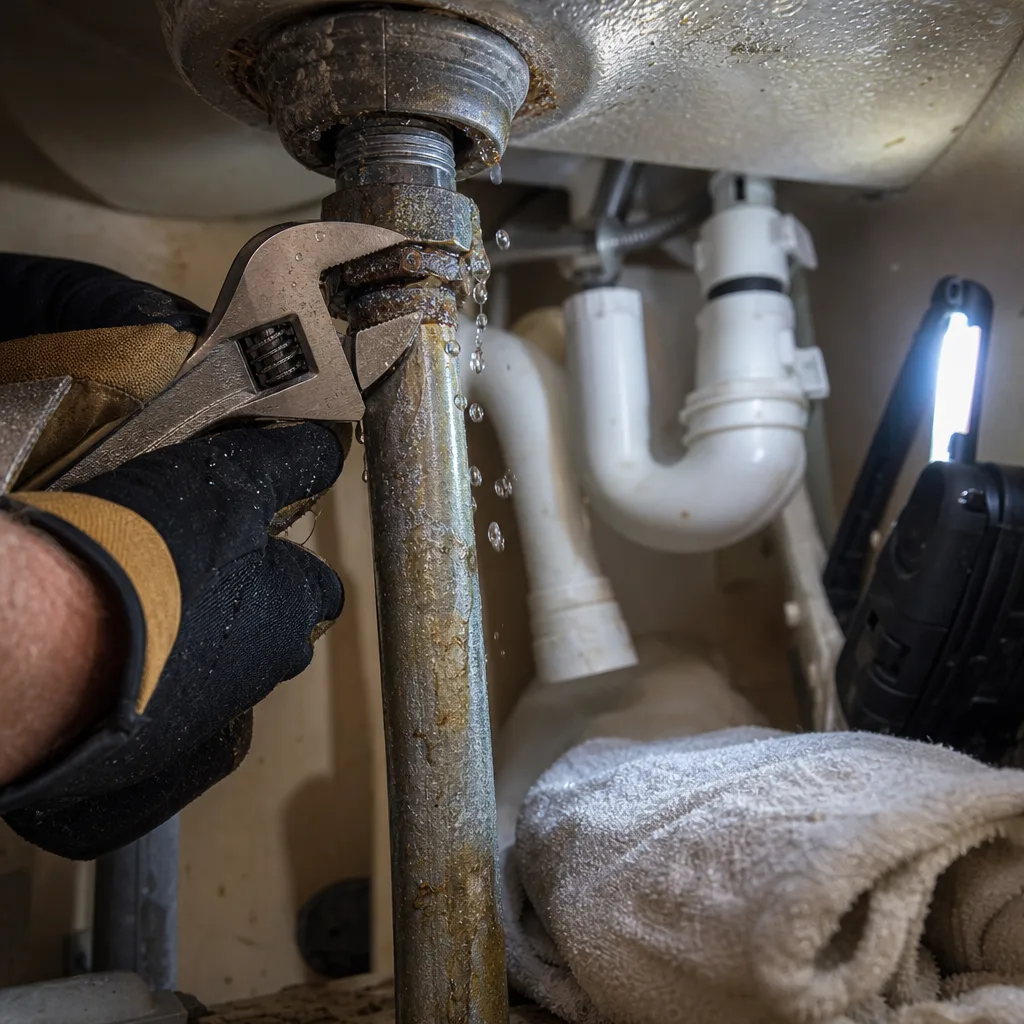
- Water spraying or pouring from a pipe, fitting, or supply line that keeps flowing even after you close the shutoff valve right at that fixture.
- A wet stain on your ceiling that’s growing. Many North Texas homes have water lines or the water heater up in the attic, so a leak up there often shows up first as a soft, spreading spot on the ceiling below.
- Sewage or dirty water backing up into a tub, shower, or floor drain, or several drains backing up and gurgling at the same time. When more than one drain is acting up, the problem is usually in the main sewer line, not a single clog.
- No water anywhere in the house, or a sudden drop in water pressure at every faucet at once.
- A water heater leaking from the tank itself, not just dripping from a valve or fitting.
- Pipes that froze or burst after a hard cold snap. North Texas freezes don’t come often, but when they do, pipes in attics, outside walls, and garages take the hit.
- Warm spots on your floor, the sound of running water when nothing’s on, or a water bill that suddenly jumps. These can point to a slab leak. Plano homes sit on slab foundations over clay soil that swells when wet and shrinks when dry, and that movement can stress the pipes under your floor.
Some problems feel urgent but really aren’t, and we’d rather tell you that straight. A dripping faucet, a toilet that keeps running, one slow drain, or a small drip under the sink that stops when you close the valve under the cabinet can usually wait. Catch the drip with a bucket or towel, and book a regular appointment for when it suits you. You’ll save yourself a stressful night, and the fix will be the same either way.
Still not sure? Ask yourself four quick questions. Can you stop the water? Is the water spreading into walls, ceilings, or floors? Is sewage involved? Does your family still have water and a working toilet? If you answered no to stopping it, yes to spreading or sewage, or no to working water, treat it as an emergency.
Timing matters because water doesn’t stay put. A leak that starts as a drip in the attic or under a slab keeps soaking into drywall, insulation, and flooring for as long as it runs. Waiting until Monday can turn a simple repair into a much bigger one. With Xtreme Air Services, there’s no extra charge for nights or weekends, so you never have to gamble on waiting just to avoid a higher bill.
When Your Plumbing Problem Can Wait
Plenty of plumbing problems are annoying but harmless for a day or two. If the water stays where it belongs and your family still has water and a working toilet, you can almost always wait for a regular appointment. Here’s how to keep a small problem small until then.
- A drip at the sink or tub. Close the small valve under the sink, or put a cup under the tub spout. The drip wastes a little water, but it won’t hurt your home overnight.
- A toilet that keeps running. Jiggle the handle or lift the tank lid and check whether the flapper is sealing. If it won’t stop, turn the oval valve behind the toilet to the right. You can still flush by pouring a bucket of water into the bowl.
- Low pressure at one faucet only. North Texas has hard water, and mineral scale builds up in the little screen at the tip of the faucet, called the aerator. Unscrew it, rinse out the grit, and screw it back on. That often brings the pressure right back.
- A disposal that hums but won’t spin. Turn it off and press the red reset button on the bottom of the unit. Never reach inside it.
- One slow drain. Try a plunger first. Skip the harsh chemical drain cleaners. They can be rough on older pipes and dangerous for whoever opens the drain next.
If one of these fixes works, great. You just saved yourself a visit. If it doesn’t, book a regular appointment for a time that works for you. The repair is the same whether it happens tonight or on Tuesday afternoon.
A few situations can turn a “can wait” problem into one that can’t, even when the problem itself looks minor.
- It’s your only toilet. A clog you can’t clear is a nuisance in a house with three bathrooms. In a house with one, it’s a real problem for your family tonight.
- The drip is getting faster, or the valve won’t fully close. A shutoff valve that won’t hold means you can’t stop the water.
- You’re leaving town. A small leak nobody’s watching for a week can do the same damage as a big one.
- You smell gas near a gas water heater. That isn’t a plumbing question. Leave the house and call your gas utility or 911 from outside.
No hot water with no leak is usually in the middle. It’s uncomfortable, but it isn’t damaging anything. With an electric water heater, check your breaker panel for a tripped breaker first. If the tank itself is leaking, go back to the emergency signs above.
Keep an eye on whatever you’re waiting on. Set a towel under the spot, check it in the morning, and notice whether it’s the same, better, or worse. A small problem that stays the same can wait. One that’s growing is telling you it’s time.
What Happens During an Emergency Plumbing Visit
Once you know it’s a real emergency, you want two things. You want the water stopped, and you want to know what it’ll cost before anyone starts working. Here’s how a visit with Xtreme Air Services goes, step by step, so nothing catches you off guard.
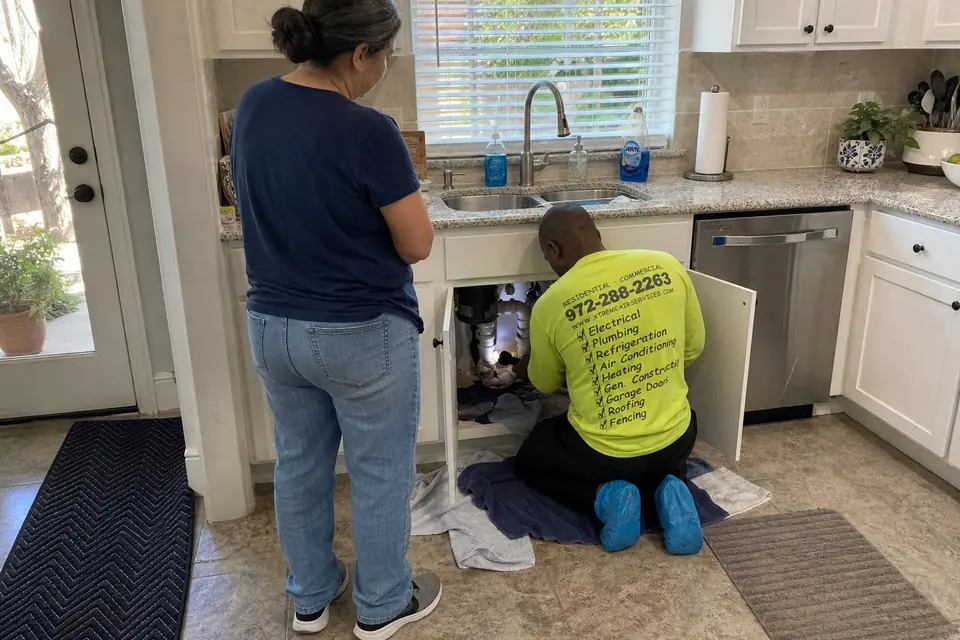
It starts with a phone call. You’ll talk to a real person, not a recording. Tell us what you’re seeing and where it is, like a spreading spot on the ceiling under the attic or water pooling around the water heater. That helps our technician come ready for your problem. Same-day service is available, and there’s no extra charge for nights or weekends.
The person who comes to your door is a licensed and insured technician who’s been background-checked and drug-tested. That matters when someone’s walking through your home late at night, maybe with your kids asleep down the hall.
From there, the visit follows a simple order:
- Find the problem. Your technician tracks down where the water is coming from or where the blockage is. Sometimes the leak shows up in one spot but starts somewhere else.
- Explain it and give you the price. You’ll hear what’s wrong in plain English and get an upfront flat-rate price. You approve it before the repair work starts. There’s no meter running while you decide.
- Stop the leak or clear the blockage. The first job is getting the water under control so it stops soaking into your drywall, insulation, or floors.
- Make the repair. The goal is to get your water, drains, or toilet working again, done right the first time.
- Test and clean up. Your technician checks that the fix holds and cleans up the work area before leaving.
Diagnosis, labor, the standard repair, testing, and cleanup are all part of the job. A few things aren’t included unless you get a separate quote for them first. These include replacing a major component, code upgrades, and permits. If the trouble turns out to be bigger than one visit can handle, you’ll get a separate quote before anything moves forward. A leak under a slab foundation that needs slab leak repair is one example. A cracked sewer line that needs sewer line repair is another.
That can happen in Plano. Homes here sit on slab foundations over clay soil that shifts with wet and dry spells, so a leak under the floor is a different job than a burst supply line under the sink. You stay in control either way. You’ll know what’s going on and what it costs before you say yes.
Your technician isn’t there to talk you into extra work. The job is to stop the damage, fix what’s broken, and give you a straight answer about anything else they notice. Then you decide what happens next.
Thinking about Emergency plumbing? Let’s talk.
Call Today, Get Service Today. Xtreme Air Services — North Plano is ready to help.
What an Emergency Repair Covers and What It Costs
Most emergency plumbing repairs with Xtreme Air Services fall between $200 and $1,000. Our most common emergency job is finding the problem, stopping the leak or blockage, and making the repair so your water works again. That job typically runs $200 to $550. The price covers the full visit described above, from diagnosis through testing and cleanup, so you aren’t paying for each step on its own.
Where your repair lands in that range comes down to three things:
- How serious the emergency is and what kind it is. A burst supply line under your kitchen sink is a different job than a backed-up main line that’s sending water into every tub in the house.
- The parts your repair needs. A short piece of pipe and a new fitting cost less than a larger section of line or a harder-to-reach valve.
- When it happens. Many plumbers charge more after hours. We don’t. There’s no extra charge for nights or weekends, so a pipe that bursts at 2 a.m. on a Sunday costs the same to fix as one that bursts on a Tuesday afternoon.
Here’s what that looks like in real life. If a supply line under your bathroom sink splits and the fix is a quick part swap, you’re likely near the lower end. If a water line in your attic starts leaking and your technician has to work in a tight, hot space and replace more pipe, the job takes more time and more parts. If the trouble turns out to be under your slab or in your sewer line, that work gets its own quote before anything starts.
It also helps to know how plumbers price work in general, so you can compare fairly. Some charge by the hour. That means the bill keeps growing while they search for the leak, and a slow diagnosis comes out of your pocket. Others give a flat-rate price for the whole job before they begin. With our upfront flat-rate pricing, you know the number and approve it first. If it takes your technician longer than expected, your price doesn’t change.
Whoever you call, ask these questions before any work starts:
- Is this price for the whole job, or is it by the hour?
- Do you charge more for nights, weekends, or holidays?
- Is there a service-call fee, and does it count toward the repair?
- What’s not included in this price?
- Will this job need a permit, and who handles it?
With us, you already know those answers. The price is for the job. Nights and weekends cost the same. Your $26 to $99 service-call fee is credited toward the repair if you go ahead with us. Anything outside the standard repair, like a major part or a permit, is quoted separately before you decide.
Call now: 469-527-5131
Watch Our Video
See How We Handle Emergency plumbing in Plano
Xtreme Air Services — North Plano
Steps to Take Before Help Arrives
Once you’ve called, the next few minutes are yours. A few simple moves can keep a bad night from turning into a bigger repair. You don’t need tools or plumbing know-how for any of them.
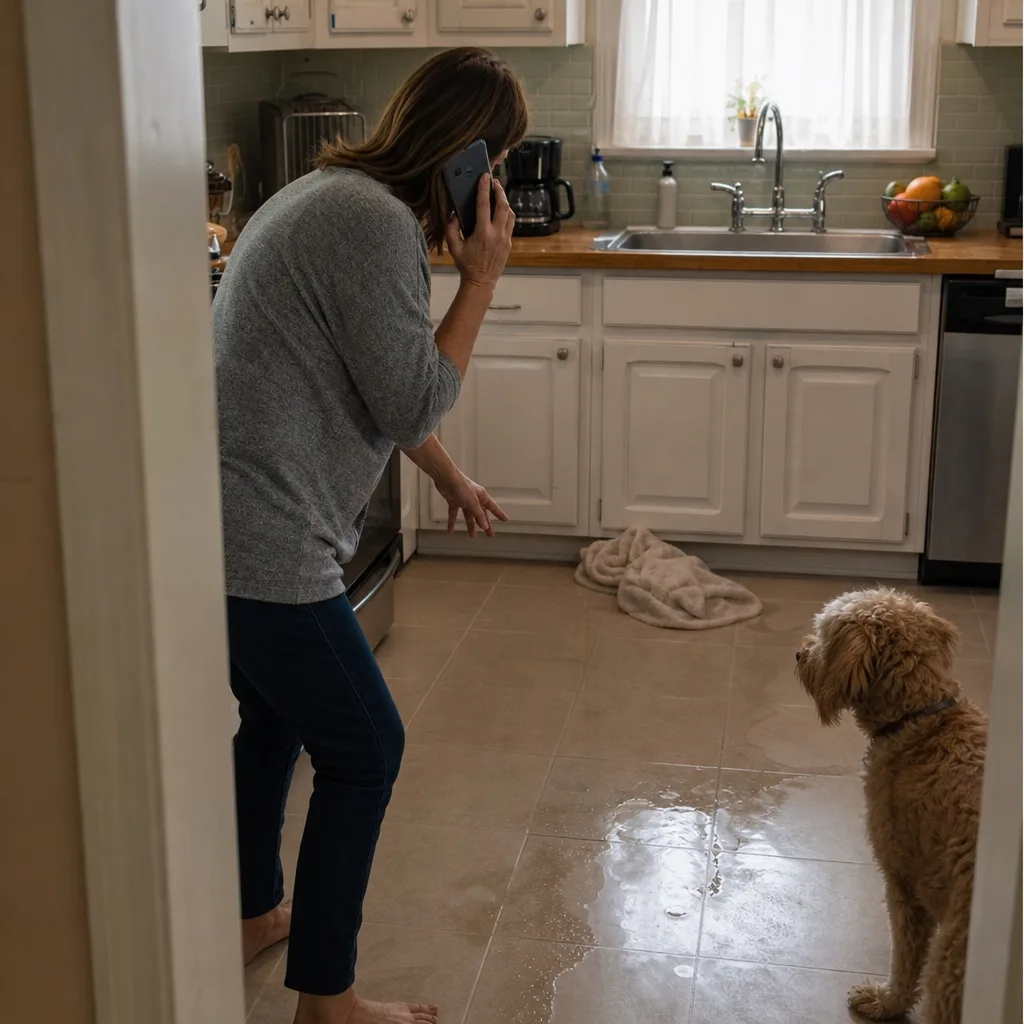
- Shut off the main water to your house. If the leak won’t stop at the fixture, this is your next move. In most homes, the main shutoff is where the water line comes into the house, often in the garage or on an outside wall. You’ll also find one at the meter box near the curb. Turn the valve to the right until it stops. A lever handle gets turned so it sits crosswise to the pipe.
- Turn off your water heater. If the leak is at the tank or you’ve shut off the main, turn the heater off too. For an electric heater, flip its breaker in your panel. For a gas heater, turn the dial on the front to pilot or off. If you smell gas, skip this step and follow the gas advice above.
- Open a faucet on the lowest level of your home. This drains the water that’s still sitting in the pipes so less of it leaks out. Open an outdoor spigot too if you can.
- Keep water and electricity apart. Don’t walk through standing water near outlets, cords, or appliances that are plugged in. If water is near your breaker panel or you’re not sure it’s safe, stay out of that area and tell us when we get there.
- Stop using the drains if sewage is backing up. Don’t flush, run the dishwasher, or start a load of laundry. Every gallon you send down the line has nowhere to go but back up into your tub or floor drain.
- Move what you can. Pull rugs, boxes, electronics, and furniture away from the water. If a ceiling spot is sagging, set a bucket under it and keep your family out of that room.
- Take photos and video. Get the wet ceiling, the puddle, and anything that got damaged before you clean up. If you file a claim with your insurance company later, those pictures help.
One more thing saves real time. Clear a path to the problem. If your water heater or the leak is in the attic, move what’s stored around the pull-down ladder. If it’s in the garage, make room around the heater and the main shutoff. If you have pets, put them in a closed room. Your technician can get straight to work instead of moving boxes, and you’ll get your water back sooner.
If you can’t find your main shutoff, or the valve is stuck and won’t turn, don’t force it. Old valves can snap, and then you’ve got a second leak. Mop up what you can and let us handle the valve when we arrive. The same goes for a warm spot on the floor or water you can hear but can’t see. Plano’s slab foundations sit over shifting clay, so those leaks often start under the floor where you can’t reach them. Shutting off the main is all you need to do.
Call 469-527-5131
Frequently Asked Questions
Common questions about Emergency plumbing
What is the 135 rule for plumbing?
There isn’t a real industry standard called the “135 rule,” so don’t worry if you’ve heard that term somewhere. It’s not something plumbers follow when pricing or diagnosing a repair. What matters more is whether your problem fits the true emergency signs, like water you can’t stop or sewage backing up, so you know whether to call right away or book a regular visit.
Will a plumber come out at night for a true emergency in Plano?
Yes, nights and weekends get the same response as any other time. A burst pipe at 2 a.m. on a Sunday gets handled the same way as one on a Tuesday afternoon, with no extra after-hours charge. That matters most during a hard winter freeze, when pipes in attics and garages can burst after dark and the water won’t wait until morning.
Does homeowners insurance cover emergency plumbing repairs?
That depends on your policy, so call your insurance company to ask before you assume either way. Sudden damage, like a burst pipe or a ceiling leak, is more often covered than gradual damage from a slow drip you ignored for weeks. Take photos of the wet ceiling, the puddle, or any damaged items before cleanup starts, since those pictures help if you file a claim later.
Ready to Get Started?
Call (469) 527-5131 Today, Get Service Today.