


Boiler Repair in Dallas: What a Technician Who Knows Boilers Checks
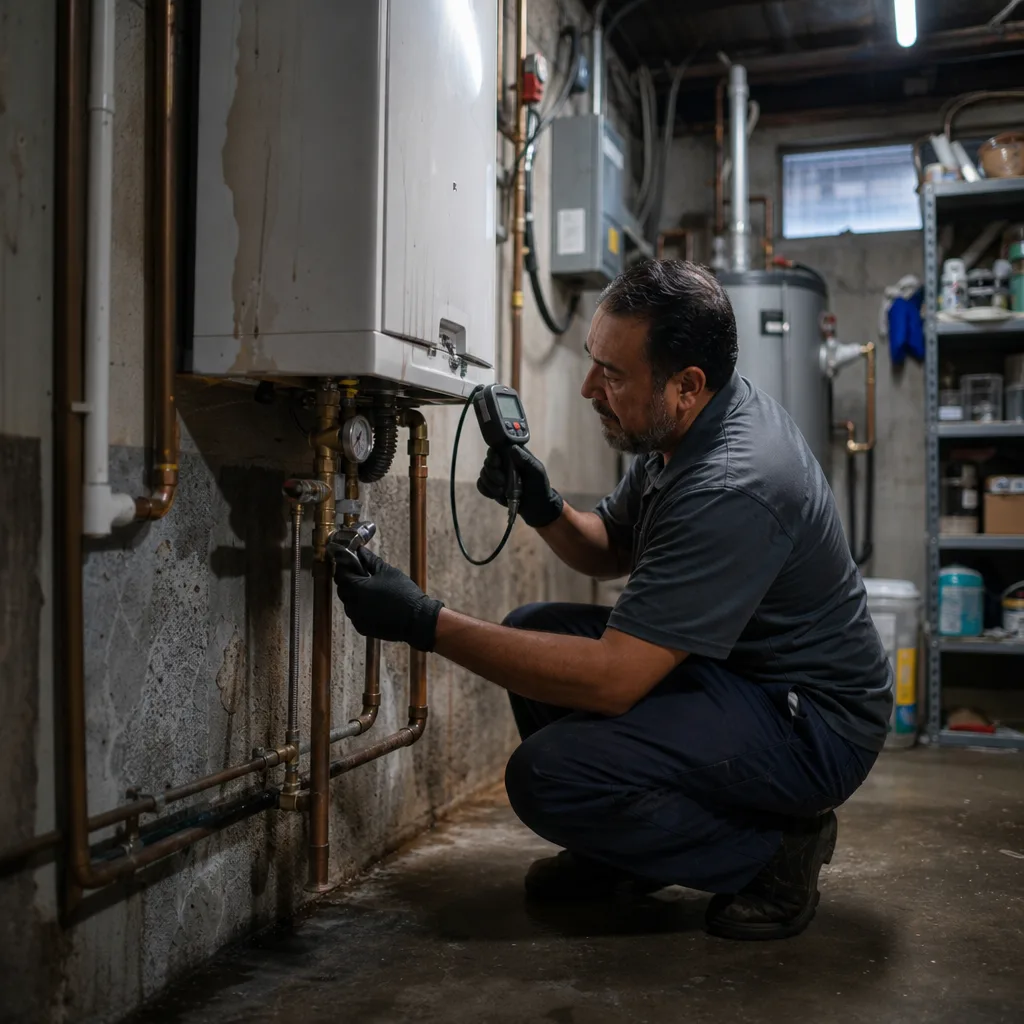
Residential and commercial boilers repaired by finding the part that failed – and the system tested before we leave.
What’s Covered on This Page
- Signs Your Boiler Needs a Repair Call
- Why Finding a Boiler-Qualified Technician in Dallas Is Harder Than It Should Be
- What Happens During a Boiler Repair Visit
- What Boiler Repair Costs and What Changes the Price
- When You Can Skip the Repair Call
- How many years does a boiler usually last?
- Is a boiler repair expensive, or should I just replace the boiler?
- What’s the first thing you check when a boiler seems broken?
Signs Your Boiler Needs a Repair Call
Your boiler usually tells you something’s wrong before it quits for good. If you know what to watch for, you can get boiler repair while the problem is still one worn part and not three. In Dallas, a lot of boilers sit quiet for most of the year. Then a cold front rolls in, the heat kicks on hard, and a weak part finally gives out on the first chilly night.
Here’s what’s worth a call:
- No heat, or only some heat. The boiler runs, but some radiators or baseboards stay cold, or the house never warms up. That often points to a pump, a zone valve, or a control that’s stopped doing its job.
- Banging, gurgling, or a kettle-like rumble. Hard water leaves mineral scale inside the boiler over time. Water trapped under that scale can boil and pop, and you’ll hear it.
- Water where it shouldn’t be. A drip under the boiler, a wet floor, rust streaks, or water coming out of the relief valve pipe all mean something’s off. Don’t wait on a leak.
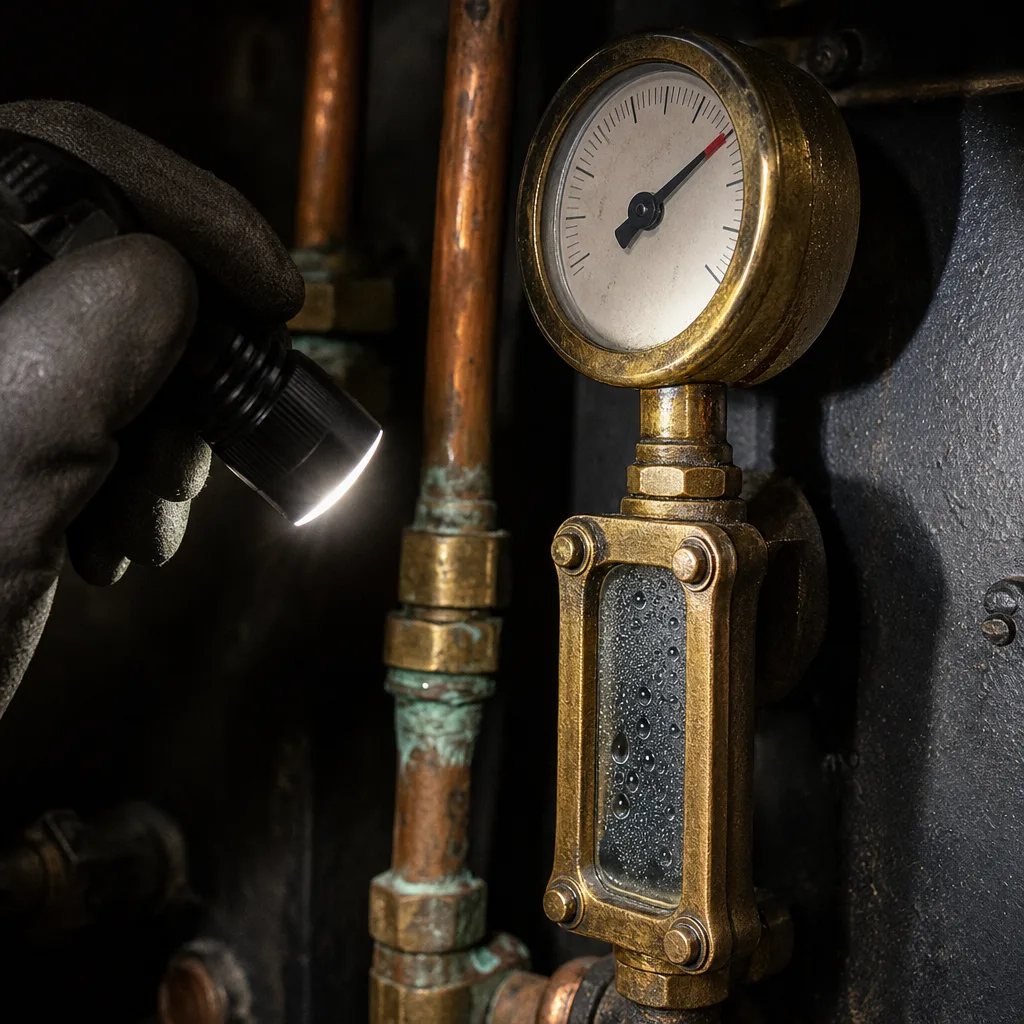
- A pressure gauge that won’t sit still. If the needle keeps dropping, or keeps climbing, something’s either losing water or failing to control it.
- It won’t light or stay lit. The burner clicks and gives up, the pilot keeps going out, or the boiler locks out and shows an error code.
- Short cycling. The boiler turns on and off over and over without ever heating the house. That wears parts out faster and drives up your gas bill.
- Hot water problems. If your boiler also heats your tap water, lukewarm showers can come from the same failing part.
Before you call, try a few simple checks. They take five minutes and can save you a visit:
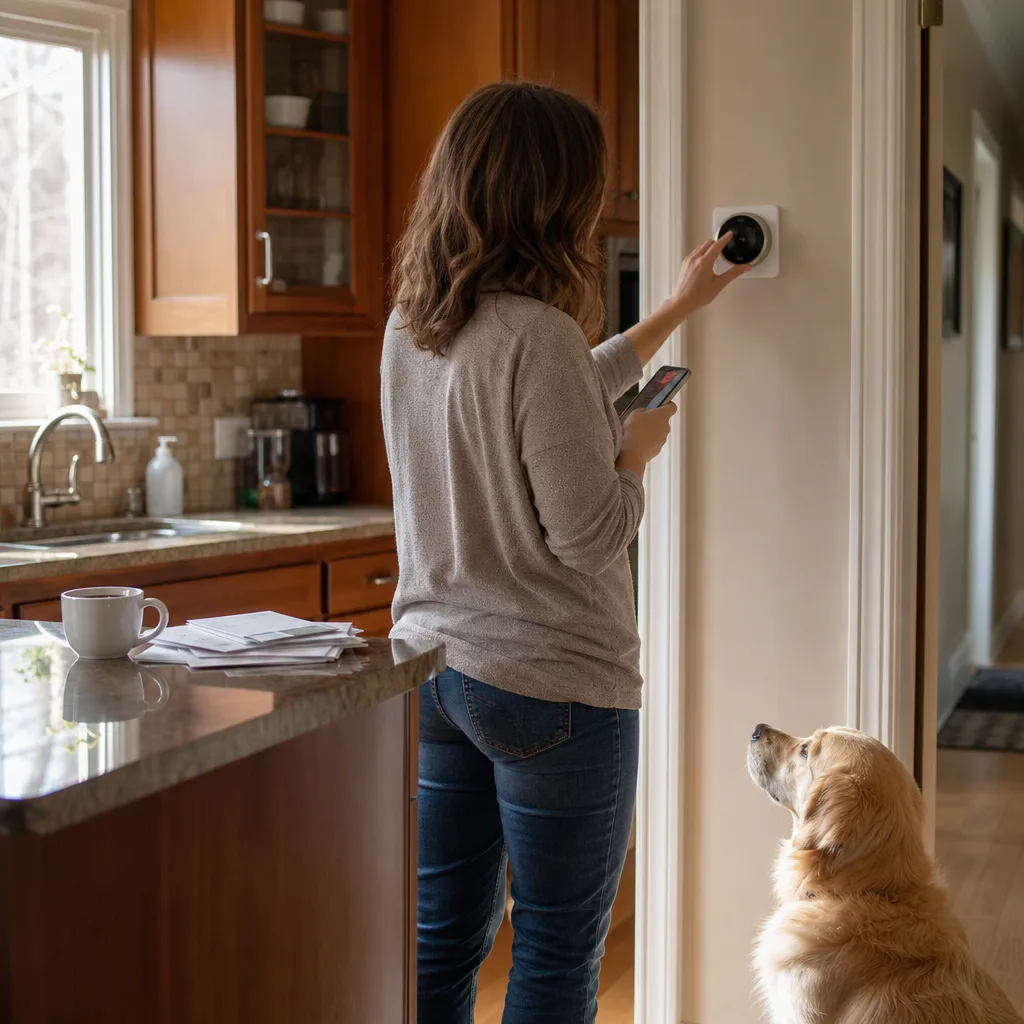
- Make sure the thermostat is set to heat, turned up past room temperature, and has fresh batteries.
- Look for a tripped breaker or a service switch near the boiler that’s been flipped off.
- If one radiator is cold at the top and warm at the bottom, it may just have trapped air. If you’ve got a radiator key and know how to bleed it, that might fix it.
If those checks don’t solve it, the problem is inside the boiler or its controls, and it’s time for a technician. Boilers are found more often in older Dallas homes, apartment buildings, and commercial spaces than in newer houses. Many of those systems have been running for decades. An older boiler isn’t automatically on its way out, though. In most cases, one part has worn out, and a good diagnosis finds which one.
So don’t turn up the thermostat and hope a strange noise or a slow drip goes away. It almost never does. A part that’s struggling puts strain on the parts around it. That’s how a single repair turns into several.
Why Finding a Boiler-Qualified Technician in Dallas Is Harder Than It Should Be
Most Dallas homes heat with a furnace or a heat pump, so most heating calls here involve ducts, blowers, and coils. That’s normal for North Texas. It also means that when you call around about a boiler, the technician who shows up may not work on one very often.
That matters because a boiler is a different machine. A furnace heats air. A boiler heats water and uses a pump to push it through pipes to your radiators or baseboards. It runs under pressure, so it has parts a furnace doesn’t have. It uses a relief valve to let off extra pressure. It uses an expansion tank to give hot water room to grow. It uses a fill valve to add water when the level drops. When one of these parts fails, the signs can look like a different problem.
Take a pressure gauge that keeps dropping. Someone who doesn’t know boilers might add water and call it fixed. The water is still going somewhere, though. It could be a slow leak, a worn relief valve, or an expansion tank that’s lost its air charge. Add water without finding the cause, and the problem comes back. Meanwhile, the boiler keeps working under strain.
This is how a one-part repair grows. Guessing leads to swapping parts until the symptom goes away, and you pay for each one. A good diagnosis checks the system step by step. Is the pump moving water? Is the zone valve opening? Is the relief valve opening because the pressure really is too high, or because the valve itself is worn out? Answer those in order, and you usually land on the one part that failed.
If you manage an older Dallas apartment building or commercial space, the stakes are higher. A wrong guess can leave tenants without heat for another day while someone orders the next part.
Before you let anyone work on your boiler, ask a few plain questions:
- Do you repair hot-water boilers, and have you worked on one like mine?
- Will you show me what failed and explain why before you replace anything?
- Is the price set before you start, or does the clock run by the hour?
- What happens if you find a second failed part? Will I get a separate quote first?
- Is your company licensed through the Texas Department of Licensing and Regulation? What’s the license number?
Good answers are specific. If a tech can’t tell you which part failed or why, or won’t give you a price until the work is done, keep looking.
Here’s how we answer those questions. Xtreme Air Services is licensed and insured, under HVAC License #TACLA29023C. Boiler repair is one of our services, along with boiler servicing and pump repair. You get upfront flat-rate pricing, and you approve it before work starts. Our repair price includes the diagnosis, labor, the standard replacement part, testing, and cleanup. If we find another failed part, a major component, or a needed code upgrade or permit, we quote it separately. That way, nothing gets added without you knowing first.
What Happens During a Boiler Repair Visit
Our boiler repair visit has one goal. We find the one part that failed, fix it, and prove the system works before we leave. Most calls come down to a single common failure, and we fix most of them on the first visit.
Here’s how it goes, step by step.
- You call and talk to a real person. Tell us what you’re seeing or hearing and when it started. If the boiler shows an error code, read it to us. Same-day service is available, and there’s no extra charge for nights or weekends. That matters when the first cold front of the year hits on a Saturday night.
- A technician comes to you. There’s a service-call fee of $26 to $99. If you go ahead with the repair, we credit that fee toward it. You aren’t paying twice to get someone out.
- We find the failed part. This is the diagnosis we described above. We check the system in order instead of guessing. Is water moving? Is pressure holding? Is the burner lighting and staying lit? Are the controls telling it to run? We stop when we find the cause, and we show you the failed part.
- You get the price before any work starts. We explain what failed, why it failed, and what fixing it involves. Then we give you an upfront flat-rate price. The most common boiler repair runs $300 to $1,100. Nothing happens until you approve it.
- We repair or replace the part. Then we fix what you agreed to and nothing else. If we find another problem along the way, you get a separate quote first.
- We test the whole system. Swapping a part isn’t the end of the job. We run the boiler through a heating cycle and watch it work. Pressure should hold steady. The burner should light clean. Every radiator or baseboard should warm up. If something’s still off, we keep at it.
- We clean up. Cleanup is part of the price, so your boiler room or closet looks the way we found it.
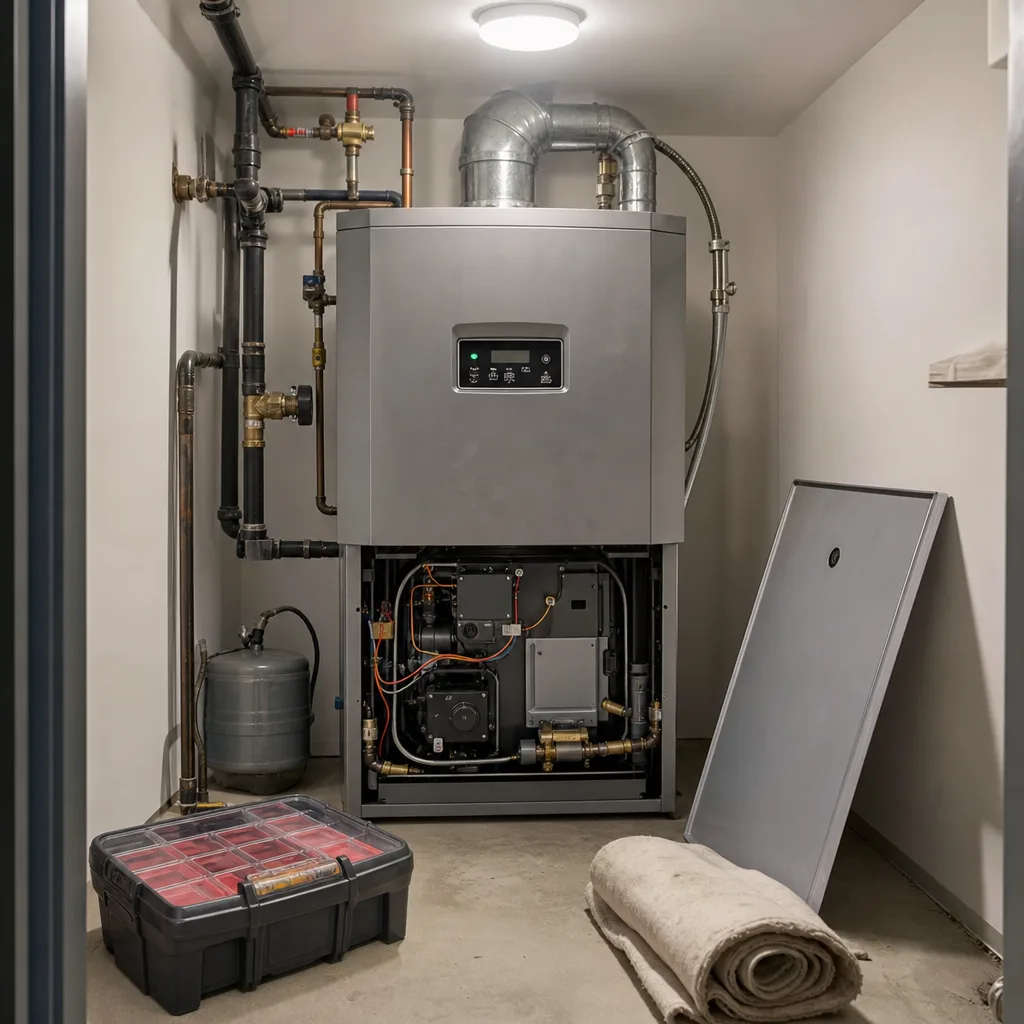
You can make the visit go faster with a little prep. Clear a path to the boiler, and move anything stored around it. In older Dallas homes and apartment buildings, boilers often sit in tight closets, basements, or mechanical rooms that turned into storage over the years. If you manage a building, tell us which units or zones are cold. That points us to the right valve or pump sooner. Write down anything you noticed, too, like a noise that only happens at startup or a gauge that drops overnight. Small details like that can save time on the diagnosis.
You’ll know what failed before we touch it, and you’ll know the price before we start. You’ll see the system run before we leave. Our licensed and insured technicians are background-checked, and they treat your home like family.
Need help with Boiler repair?
Call Today, Get Service Today. Xtreme Air Services — Oak Lawn is ready to help.
What Boiler Repair Costs and What Changes the Price
Most boiler repairs we do cost between $300 and $2,000. The most common job, which is finding one failed part, fixing or replacing it, and testing the system, runs $300 to $1,100. That price covers the diagnosis, labor, the standard replacement part, testing, and cleanup. The service-call fee we mentioned above goes toward the repair if you move forward with us.
So why would one boiler repair cost $350 and another cost much more? It comes down to a handful of things.
- How far the failure has gone. A part that’s just starting to fail is a simpler fix than one that’s been struggling for weeks and has worn down the parts around it.
- How many parts have failed. This is the big one. One worn part is one repair. If a weak pump or a bad relief valve was left running, there may be two or three parts to deal with by the time someone looks.
- The part itself. Some parts cost more than others, and some are easier to get. If a part has to be ordered, that can affect both the price and the timing.
- Your boiler’s age and brand. Many boilers in older Dallas homes and buildings have been running for decades. Parts for an older or less common model can cost more or take longer to find.
- When it breaks. Lots of companies charge extra after hours. We don’t. There’s no extra charge for nights or weekends, so a Saturday night breakdown costs the same as a Tuesday morning one.
Notice what’s at the top of that list. The cheapest boiler repair is almost always the one that happens early, done by a technician who finds the real cause the first time. Waiting on a dripping relief valve, or adding water to a pressure gauge that keeps dropping, doesn’t save money. It usually means more parts to replace later.
Some work falls outside the standard repair price. That includes extra failed parts, major components, code upgrades, and permits. You’ll see each of those as a separate quote, and nothing happens until you say yes. Your price is set before work starts, so no clock is running while we work.
What about financing? For a smaller job like a typical boiler repair, we don’t usually offer it. Financing is available on larger repairs and replacements. If your boiler needs a major component, or replacing it starts to make more sense than repairing it, ask us about your options. We’ll walk you through the numbers on both choices so you can decide what’s right for your home or building.
When you call, tell us what you’re seeing, how old the boiler is if you know, and whether it heats your tap water too. That helps us give you a clear picture from the start.
Call 469-269-6373
Watch Our Video
See How We Handle Boiler repair in Dallas
Xtreme Air Services — Oak Lawn
When You Can Skip the Repair Call
Not every odd sound or smell means your boiler is failing. Some things that worry people are just a boiler doing its job, especially here in Dallas, where it may sit off for months before the first cold front. If you’ve already tried the quick checks above and what you’re seeing matches one of these, you probably don’t need us yet.
- A dusty or slightly burnt smell the first time it runs. Dust settles on the boiler and pipes over a long Texas summer. When the burner fires that first cold night, the dust burns off. The smell should fade within a few hours. If it stays, or it smells like gas, that’s different.
- Light ticking or clicking in the pipes. Metal pipes grow a little as they heat up and shrink as they cool, and you can hear that. A soft tick as the heat comes on is normal. Loud banging or a rumble from the boiler itself is the scale problem we covered earlier, and that one’s worth a call.
- Slow warm-up. A boiler heats water first, then that water warms your radiators, and the radiators warm the room. If you’re used to a furnace blasting hot air, this feels slow. Radiators that get warm steadily over time are working fine.
- Pressure that rises when it’s running and drops when it’s off. The gauge should move some. Hot water takes up more room than cold water. What matters is whether the needle settles back to the same spot once the boiler cools. A needle that keeps falling day after day, or keeps climbing, is the real warning sign.
- One radiator cold because its valve is shut. Check the knob on the radiator itself. Someone may have turned it down over the summer, or a thermostatic valve may be set low. Open it up and give it time.
- A shutdown after a power outage. If your boiler went off when the power blinked, then came back and is heating normally, it simply restarted. One outage isn’t a repair.
There’s another case where you don’t need a repair. If your boiler works fine and you just want it looked at before winter, that’s boiler servicing or maintenance, not a repair visit. It’s a different kind of appointment, and it’s built for a system that’s already running.
Here’s where the line is. Bleeding a radiator, opening a closed valve, and checking the thermostat or breaker are fair game for you. Opening up the boiler is not. The burner, gas valve, relief valve, and controls are a job for a technician. So is any leak, any error code that keeps coming back, and any problem that hasn’t cleared up after a day of normal running.
If you’re not sure which side of that line you’re on, it’s fine to describe what you’re seeing and ask. Sometimes the honest answer is “give it a day and watch the gauge,” and that’s an answer worth hearing before you pay for a visit.
Frequently Asked Questions
Common questions about Boiler repair
How many years does a boiler usually last?
Most boilers last 15 to 20 years, and some older units in Dallas homes and apartment buildings have run for decades longer. Age alone doesn’t mean a boiler is failing. A well-maintained older boiler can still run fine, it just needs a good diagnosis when a part starts to wear out instead of a guess.
Is a boiler repair expensive, or should I just replace the boiler?
That depends on what failed and how many parts are involved. A single worn part is usually the cheaper path, while a boiler with several failed parts or a major component may cost close to what a replacement would. If your boiler needs a major component, we’ll walk you through both the repair and replacement numbers so you can compare them before deciding.
What’s the first thing you check when a boiler seems broken?
We start by ruling out the simple stuff before touching the boiler itself. That means checking the thermostat settings and batteries, looking for a tripped breaker or flipped service switch, and seeing if a cold radiator just has trapped air. If those checks don’t fix it, the problem is inside the boiler or its controls, and that’s when a technician needs to look at the pump, zone valves, and pressure system.
Ready to Get Started?
Call (469) 269-6373 Today, Get Service Today.