


Commercial HVAC Repair & Maintenance in Dallas
Commercial and rooftop systems repaired before one failing part takes the rest down – plus preventive maintenance.
What’s Covered on This Page
- Signs Your Commercial System Needs Repair Now
- What Happens During a Commercial Repair Visit
- Commercial HVAC Repair Costs and What’s Included
- Rooftop Units and the Building Types Common in Dallas
- Maintenance Plans That Prevent Downtime
- How do I know if it’s worth repairing my rooftop unit or if I should replace it?
- Who is responsible for HVAC repairs in a leased commercial space?
- Can a bad commercial HVAC repair estimate really be thousands of dollars apart from a fair one?
Signs Your Commercial System Needs Repair Now
Most commercial HVAC problems give you a warning before the system quits. The trouble is that in a busy building, nobody’s job is to notice them. A tenant mentions the conference room feels stuffy. Someone sees a water stain on a ceiling tile. The rooftop unit sounds a little different. Each one is easy to ignore until the system stops on a 100-degree afternoon.
Here’s how to sort what you’re seeing.
- Warm air from the vents. If the thermostat is calling for cooling and the air coming out isn’t cold, something has failed. Common causes are a bad capacitor, a compressor problem, or a refrigerant leak.
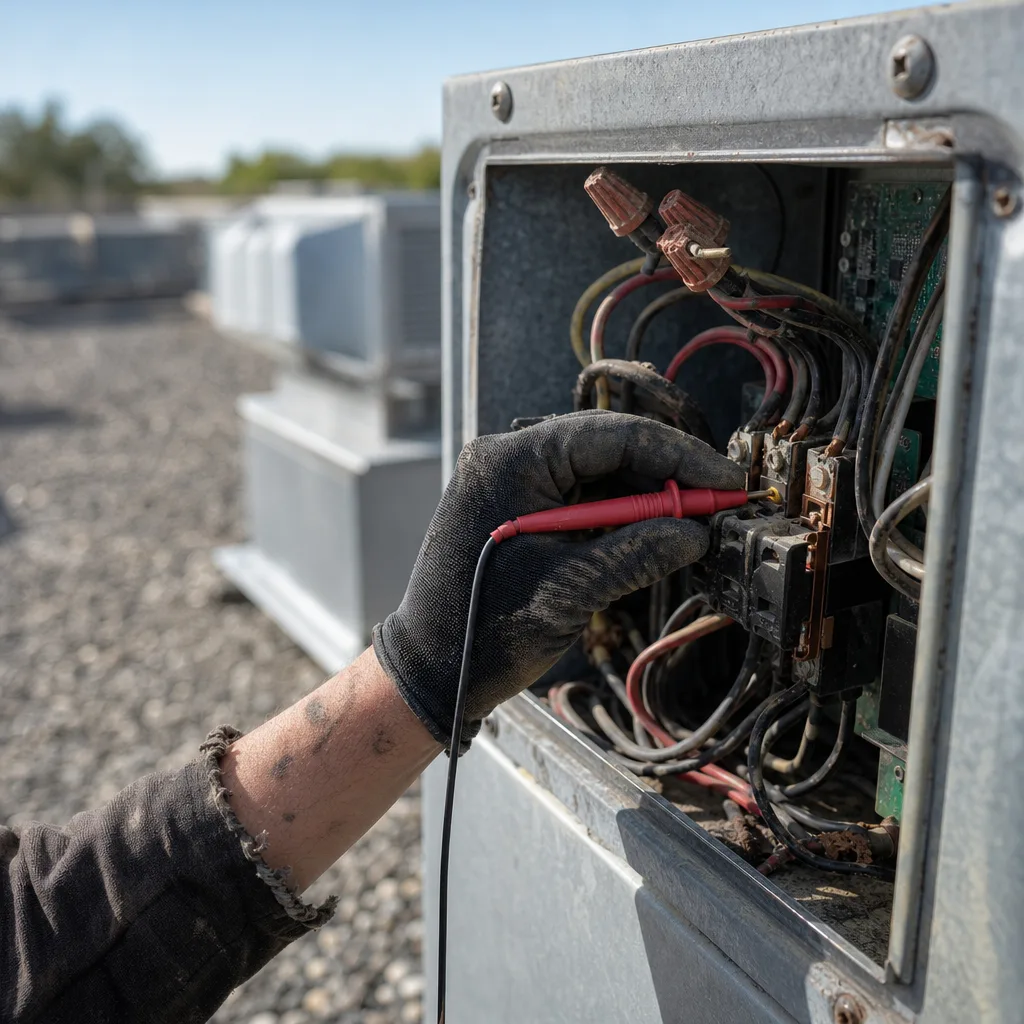
- The unit keeps tripping a breaker. That’s an electrical problem inside the equipment, not a nuisance. Resetting it over and over can turn a small part failure into a bigger one.
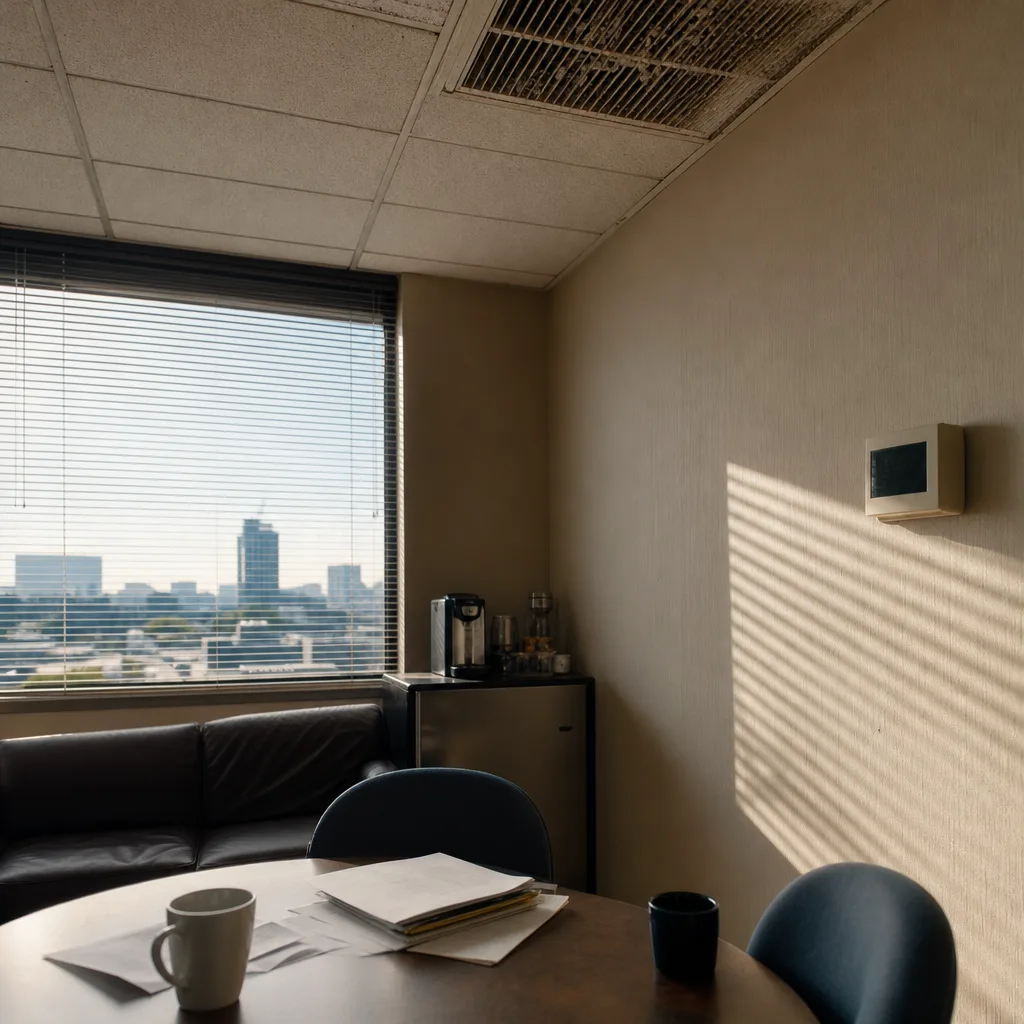
- Water where it shouldn’t be. Wet ceiling tiles, puddles near an air handler, or water dripping from a rooftop unit usually means a clogged drain line or an overflowing drain pan. In an office or retail space, that can damage ceilings, flooring, and stock fast.
- Ice on the refrigerant lines or coil. Frozen coils point to an airflow problem or low refrigerant. The system will keep losing cooling until it’s fixed.
- A burning or electrical smell. Treat this as a call-today sign. It can mean a motor or wiring is overheating.
- The system won’t turn on at all, or it starts and stops every few minutes. That short cycling wears out parts quickly and usually means a failing component or control problem.
Some signs are less urgent, but they’re still telling you something. You can usually book these within a few days instead of the same hour:
- Energy bills that jump without a change in how you use the space.
- One zone or suite that’s always hotter than the rest.
- New grinding, squealing, or rattling from a rooftop unit or air handler.
- Air that feels sticky or damp even though the space is cool enough.
- Weak airflow from vents that used to blow strong.
Dallas summers make the second list matter more than it would in a milder place. Rooftop units on flat commercial roofs sit in direct sun through long stretches of triple-digit days, so a part that’s struggling in May often fails outright by July, right when every repair company in town is busy. Catching it early gives you control over the timing.
Before you call, take a minute to check that the thermostat is set to cool and the filter isn’t caked with dust. If that’s all it was, you’ve saved yourself a service call. If not, you’ll be able to tell the technician exactly what you’ve noticed and when it started. That helps them find the failed part faster and get your business back to normal.
What Happens During a Commercial Repair Visit
A commercial repair visit comes down to three jobs. We find the part that failed, repair or replace it, and then make sure your system runs correctly before we leave. Most calls turn out to be one common failure that gets fixed on the first visit. That’s why the details you noticed before calling matter so much. They point the technician to the right place faster.
Here’s how the visit goes, step by step.
- You talk to a real person. Tell them what’s going on, when it started, and what kind of equipment you have if you know it, such as a rooftop unit, a split system, or a ductless mini-split. Same-day service is available, and nights and weekends cost no extra.
- A licensed, background-checked technician arrives and finds the problem. Diagnosis is part of the visit. The goal is to find the part that failed, not to swap parts until something works.
- You see the price before any work starts. We use upfront flat-rate pricing that you approve first. No meter is running while the technician works, so a tricky rooftop or a hard-to-reach air handler won’t add to the bill.
- The repair gets done. The quoted price covers labor and the standard replacement part.
- The system gets tested and the area gets cleaned up. Testing and cleanup are included, so you’re not left with a unit that only seems fixed or a mess in your tenant’s suite.
There’s a $26-$99 service-call fee. If you go ahead with the repair through Xtreme Air Services, that fee is credited toward the job. If you decide not to, you still leave with a clear answer about what’s wrong.
That second quote is your decision point. Say the technician replaces a burned-out capacitor and then finds the compressor is also failing. You’ll hear about it in plain English, with a separate price, before anything else happens. Then you can fix it now, plan for it, or get more information. For larger jobs, flexible financing is available on approved credit.
A little setup on your end makes the visit go faster, especially in a commercial building:
- Arrange roof access ahead of time if your units are on the roof. That might mean a ladder, a hatch key, or a call to building management.
- Name one person on site who can approve the quote and answer questions.
- Let tenants or staff know a technician will be working near their space.
- Have any past service paperwork for the unit handy if you can find it.
When the visit is done, you should know three things: what failed, what was fixed, and whether anything else needs your attention. If you’re missing any of those answers, ask before the technician leaves. A good repair visit doesn’t leave you guessing.
Commercial HVAC Repair Costs and What’s Included
Most commercial HVAC repairs with Xtreme Air Services cost between $300 and $2,400. That range covers the most common job: we find the failed part, repair or replace it, and confirm the system runs right. Across all commercial repair and maintenance work, our typical range is $300-$5,000. The higher end usually means more than one part failed or a major component needs attention.
That’s a wide spread, so here’s what moves your number.
- How far the failure went. A capacitor that quit is a small fix. A capacitor that quit and then took the compressor down with it is a much bigger one. This is why catching the early signs pays off.
- Part cost and availability. Some parts are common and easy to get. Others are pricier or take longer to track down, especially for less common equipment.
- Equipment age and brand. Older units and some brands use parts that cost more or are harder to find. Age also affects whether a repair makes sense or whether you’re putting money into a unit near the end of its life.
- More than one failed component. When one part fails, it can stress the parts around it. Two or three failures on the same call will cost more than one.
- Timing. This is where many businesses get hit with overtime rates elsewhere. With us, there’s no extra charge for nights or weekends. A rooftop unit that dies on a Saturday costs the same to fix as one that dies on a Tuesday.
Dallas heat plays into this too. A rooftop unit that’s limping along in spring is working against long stretches of triple-digit days by midsummer. A part that would have been a simple swap in May can take other parts with it by August. If you’ve noticed one of the slower warning signs, getting it looked at before peak season usually keeps you closer to the low end of the range.
Your quote covers diagnosis, labor, the standard replacement part, testing, and cleanup. Anything beyond that, like additional failed parts, major components, code upgrades, or permits, gets its own price before any work happens, as covered above. Because we use upfront flat-rate pricing, the number you approve is the number you pay for that repair. A hard-to-reach air handler or a long climb to the roof doesn’t add to it.
Whoever you call, ask these questions before you agree to any commercial repair:
- Is the price flat-rate, or is it billed by the hour?
- Do you charge more for nights, weekends, or holidays?
- What exactly does this quote include, and what would be priced separately?
- Is the service-call fee applied to the repair if I go ahead?
- If you find another problem, will I get a separate price before you start on it?
Clear answers to those five questions tell you a lot about how a company will treat your business. You should never have to guess what you’re paying for, and you should never get a bill that’s bigger than what you approved.
Not sure what your Commercial HVAC repair & maintenance project needs? Ask us.
Call Today, Get Service Today. Xtreme Air Services — Oak Lawn is ready to help.
Rooftop Units and the Building Types Common in Dallas
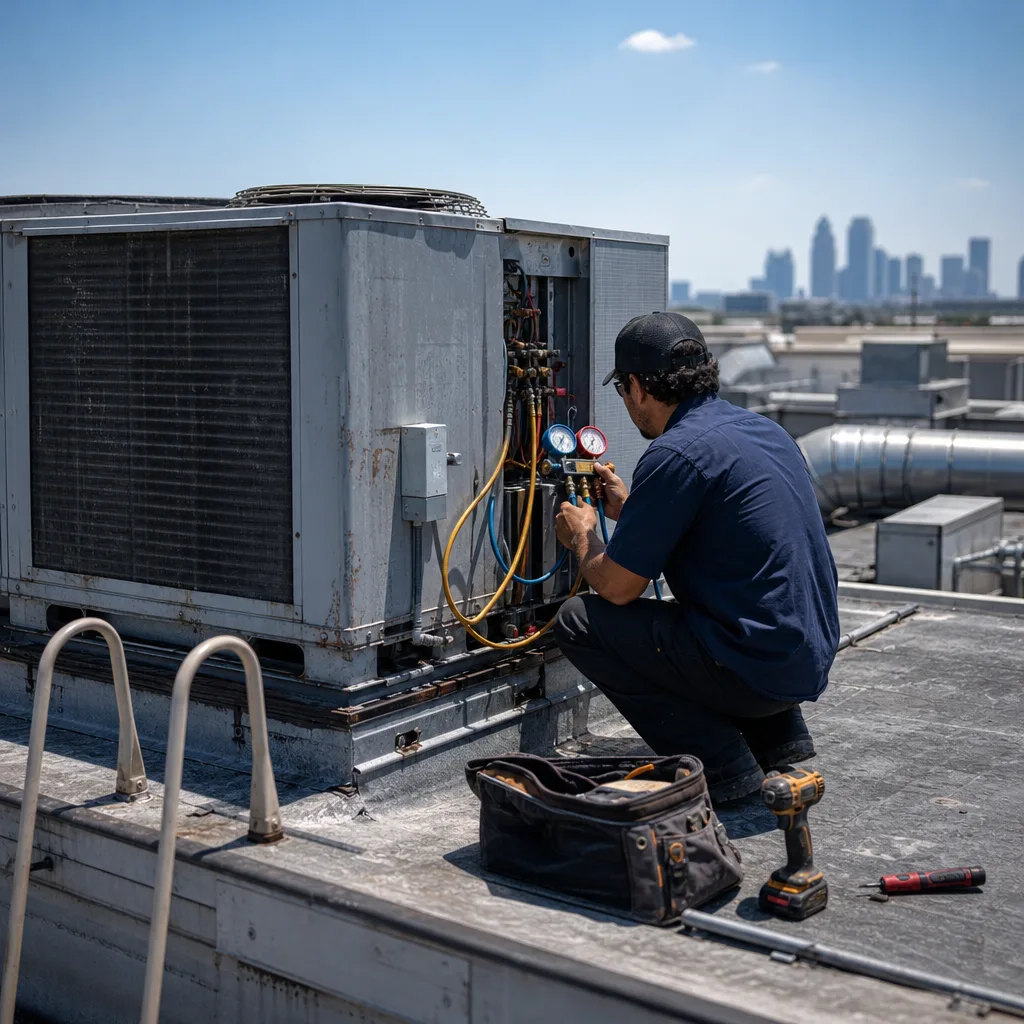
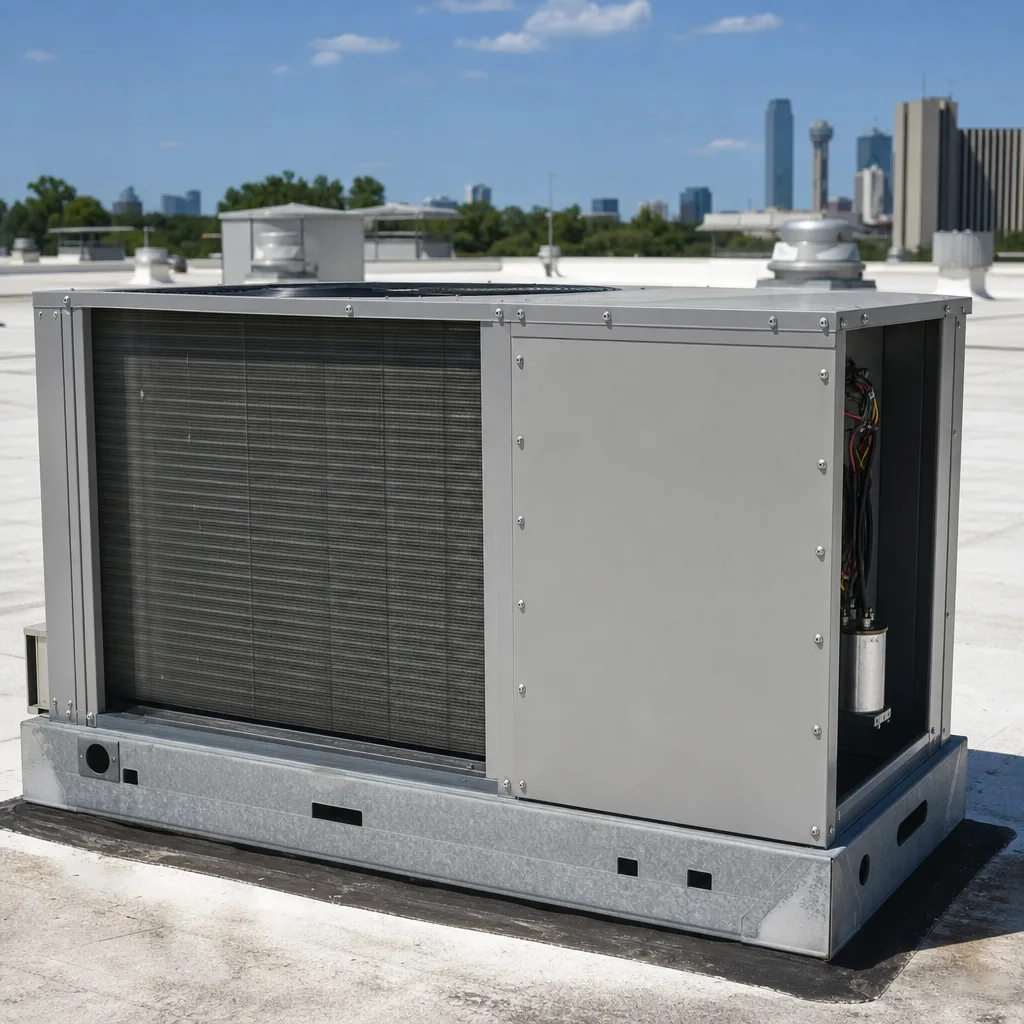
Most commercial buildings around Dallas are cooled by rooftop units, often called RTUs. A rooftop unit is one big box that holds everything: the compressor, both coils, the blower, and often a gas heat section. Because everything sits in one place on the roof, a good technician can test the whole system at once. That speeds up finding the failed part. The tradeoff is that the unit sits up there taking the full Dallas summer sun, as covered above.
Your building type changes what a repair call looks like. Here’s what matters for the kinds of spaces you’ll find across Dallas.
- Strip centers and retail suites. Each suite usually has its own rooftop unit, so one tenant can be hot while the shop next door is fine. Check your lease before you call. Some leases make the tenant responsible for the unit, and some leave it to the landlord. Knowing who approves the repair saves time once the technician is on the roof.
- Restaurants. A kitchen throws off a lot of heat, and exhaust hoods pull air out of the building all day. If the make-up air system that replaces that air isn’t keeping up, the dining room can feel hot and stuffy even when the rooftop unit works fine. Grease in the air can also coat nearby coils. We also handle commercial refrigeration, walk-in cooler repair, and kitchen ventilation, so one call can cover more than the AC.
- Office buildings. Offices often run several rooftop units or split systems tied to a set of thermostats or building controls. When one zone runs hot, the cause might be the equipment, or it might be a control problem telling it the wrong thing. Server and equipment rooms that need cooling around the clock sometimes get their own ductless mini-split, which has to be checked separately.
- Warehouses and light industrial spaces. Big open floors, dock doors that open all day, and dust from stock or forklifts mean filters and coils clog faster. A clogged coil makes the unit work harder and can lead to the frozen coils and weak airflow described earlier.
Hail is the other North Texas factor that hits rooftop units hard. A rooftop unit has no shelter. A spring storm can bend the thin metal fins on the condenser coil, and bent fins block airflow the same way dirt does. The unit may keep running, but it cools less and costs more to run. If a hailstorm rolls through and your space doesn’t cool down like it did the week before, have someone look at the coil. Sometimes condenser coil cleaning and straightening is enough. Heavy damage can mean condenser coil replacement, and that part would be quoted separately before any work starts.
When you call, tell us what kind of building you’re in and what you know about the equipment. Is it one rooftop unit or several? Do you have a kitchen, a walk-in, or a server room? Has there been a storm lately? Those answers help the technician show up ready for your building, not a generic one, and that’s how a single failed part gets fixed on the first visit instead of the second.
Watch Our Video
See How We Handle Commercial HVAC repair & maintenance in Dallas
Xtreme Air Services — Oak Lawn
Maintenance Plans That Prevent Downtime
A maintenance plan puts your commercial units on a regular schedule. A technician checks the parts that wear out before they quit. Most of the failures on this page start small, like a weak capacitor, a dirty coil, or a slow drain line. Maintenance is how you catch them while they’re still small, on a day you pick, not on a 100-degree Saturday with a full building.
Whoever you hire, a good commercial maintenance visit should cover these basics:
- Filters changed or checked, so air moves freely and coils stay cleaner.
- Condenser and evaporator coils cleaned, so the unit doesn’t have to work harder to cool.
- Drain lines and drain pans cleared, so water ends up outside and not on your ceiling tiles.
- Capacitors, contactors, and wiring tested. A weak part can be swapped before it fails and drags the compressor down with it.
- Belts, blower motors, and fan motors checked for wear and noise.
- Refrigerant pressures and temperatures read, so a slow leak shows up early.
- Thermostats and controls tested, so each zone gets the right signal.
- The gas heat section on rooftop units checked before cold weather sets in.
Timing matters in Dallas. The visit that pays off most is in spring, before cooling season, while there’s still time to replace a tired part on your schedule. A fall visit gets the heat side ready before the first hard cold front. If you run a restaurant or a dusty warehouse, ask about filter and coil checks between those two visits, for the reasons covered above.
To be straight with you, not every business needs a formal plan. If you lease one small suite and your lease makes the landlord responsible for the rooftop unit, maintenance may already be handled. Read the lease and ask the property manager before you pay for it twice. If your unit is fairly new, runs one small space, and has no history of trouble, one spring tune-up a year may be all you need. A plan makes the most sense when you have several units, a kitchen or walk-in, a server room, or tenants who’ll call you the minute it gets warm.
Before you sign up for any maintenance plan, ask a few simple questions. How many visits do you get each year, and when? What exactly gets checked on each visit? Are filters included? If the technician finds a worn part, will you get a separate price before anything is replaced? A good plan should leave you with a short written list of what was checked and what to watch. That way you know where each unit stands before summer hits.
Our licensed and insured team handles commercial repair, preventive maintenance, and rooftop unit service across Dallas. We’ll help you decide whether a plan fits your building or whether a single tune-up makes more sense. Same-day service is available, and there’s no extra charge for nights or weekends.
Call 469-269-6373
Frequently Asked Questions
Common questions about Commercial HVAC repair & maintenance
How do I know if it’s worth repairing my rooftop unit or if I should replace it?
It usually comes down to the unit’s age and how many parts have already failed. If the equipment is older and you’re now facing a second or third major failure, like a compressor going out after a capacitor already quit, that’s a sign you’re paying to patch a system near the end of its life. A technician can tell you what failed and whether the repair makes sense against the age and condition of the unit, so you can decide with real information instead of guessing.
Who is responsible for HVAC repairs in a leased commercial space?
It depends on what your lease says, and this trips up a lot of tenants in strip centers and retail suites. Some leases make the tenant responsible for the rooftop unit serving their suite, while others leave repair and maintenance to the landlord. Check your lease and talk to your property manager before you schedule or pay for a repair, so you know who needs to approve the work.
Can a bad commercial HVAC repair estimate really be thousands of dollars apart from a fair one?
Yes, and getting a second opinion on a large estimate is worth the time. Repair and replacement quotes for the same equipment can vary by thousands of dollars depending on who you call and what they’re recommending. Before agreeing to a big-ticket repair or replacement, ask exactly what’s included and whether a smaller fix could solve the problem first.
Ready to Get Started?
Call (469) 269-6373 Today, Get Service Today.