


Boiler Installation in Dallas
Boiler installs for buildings that heat with water, with what's included and what drives the cost explained.
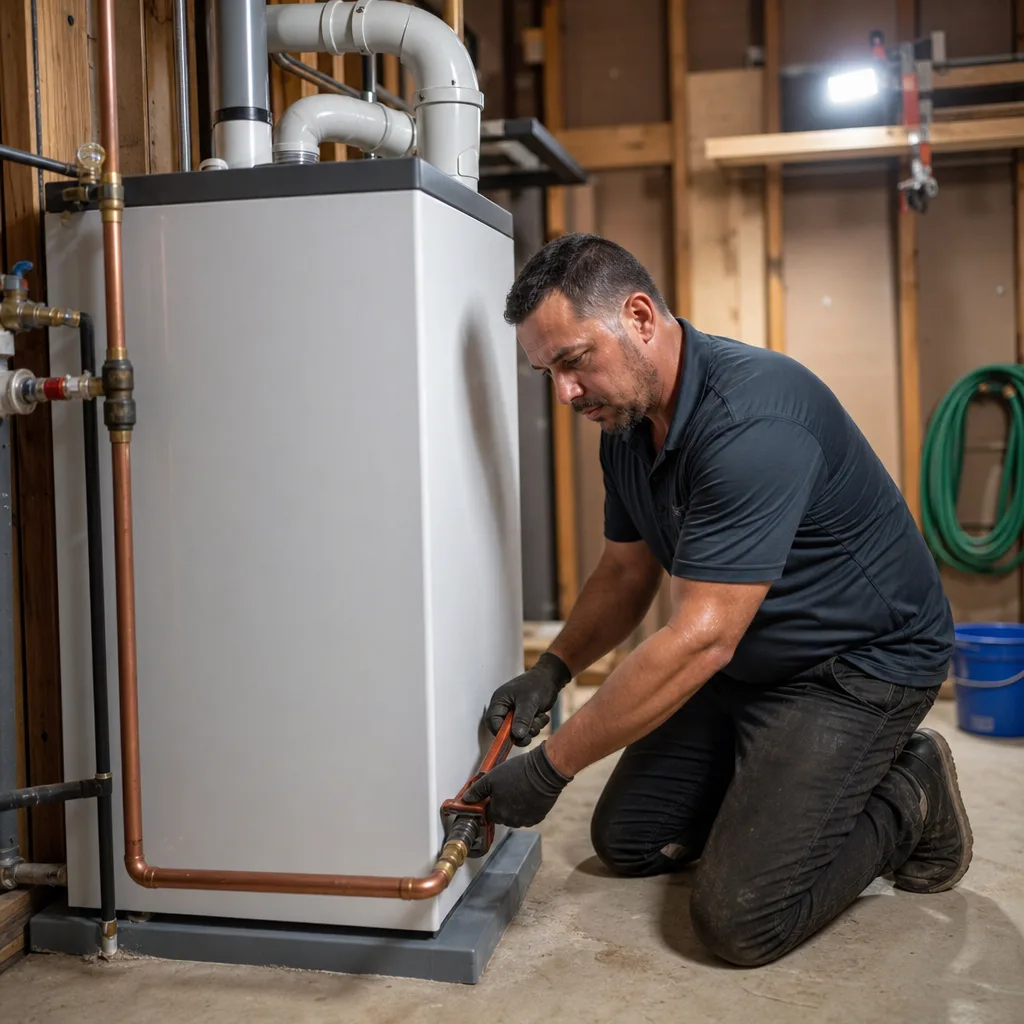
What’s Covered on This Page
- Boiler Installation Is a Different Job Than Furnace Replacement
- Signs Your Boiler Needs Replacing, Not Repairing
- When Boiler Installation Isn’t the Right Call
- What Happens During a Boiler Installation
- What Drives Boiler Installation Costs in Dallas
- What does mounting mean when installing a boiler?
- What are the main types of boilers I might end up choosing between?
- Are there well-known boiler brands worth asking about?
Boiler Installation Is a Different Job Than Furnace Replacement
If you’ve only ever replaced a furnace, a boiler can catch you off guard. A furnace warms air and pushes it through your ductwork. A boiler warms water, or sometimes makes steam, and sends it through pipes to radiators, baseboard heaters, or tubing under the floor. That means boiler installation is closer to a plumbing job with a heating appliance in the middle of it.
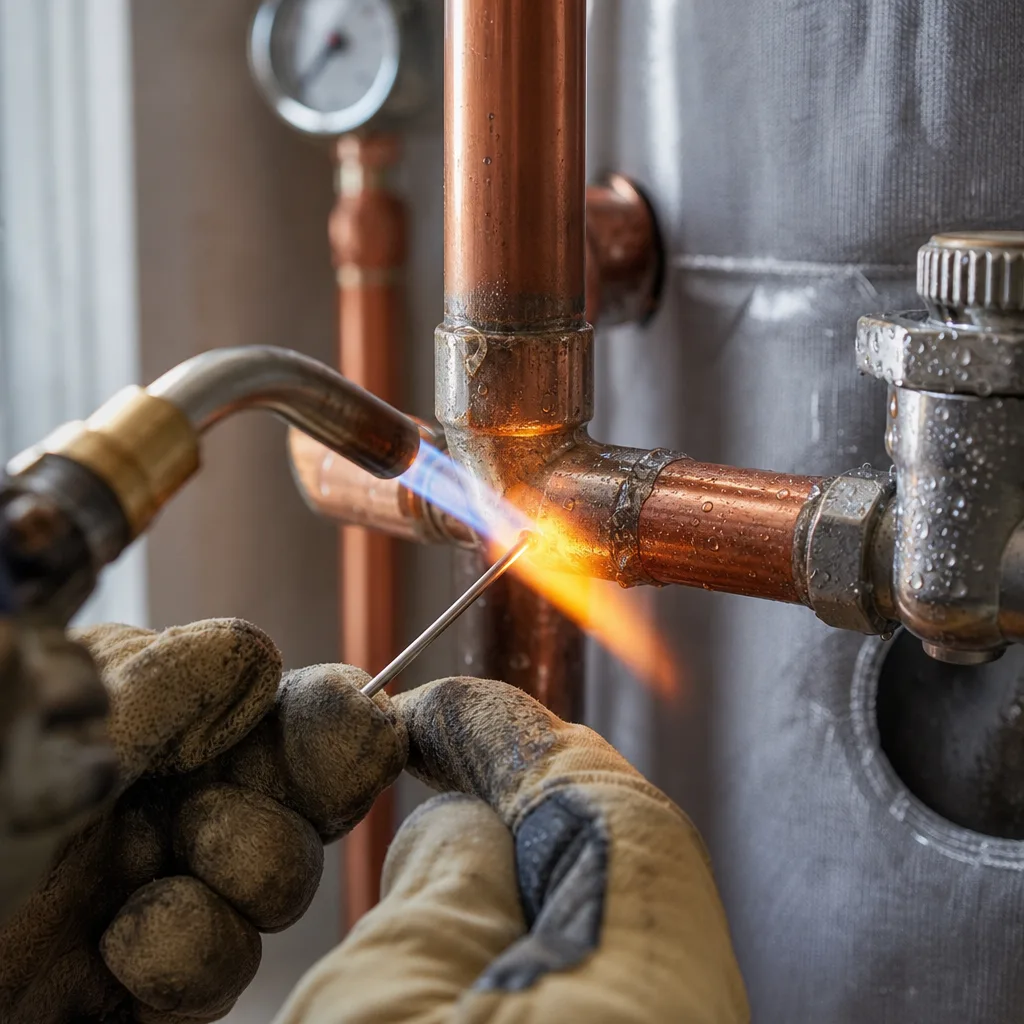
Here’s what a boiler install touches that a furnace swap usually doesn’t:
- The water side: the fill valve, the closed loop of pipe that carries hot water, and the pump that keeps it moving.
- The pressure side: the expansion tank that gives heated water room to grow, and the relief valve that lets off pressure if something goes wrong.
- The gas and venting side: the gas line to the boiler and the vent that carries exhaust safely out of your home or building.
- The electrical side: power to the boiler and pump, plus the controls and thermostat wiring that tell it when to run.
Each of those has to work with the others. If the pump is the wrong size, some rooms stay cold. If the expansion tank is too small, pressure creeps up. If the boiler puts out far more heat than your space needs, it turns on and off in short bursts, which wastes gas and wears parts faster. Old boilers are often bigger than the building needs, so copying the number off the old nameplate isn’t a safe shortcut. The right size comes from how much heat your home or building loses on a cold day.
In Dallas, this matters more than you might think. Most homes here heat with forced air through ducts, so boilers aren’t something every heating crew works on every week. You’re more likely to find them in older homes, apartment buildings, and commercial spaces, where the pipes and radiators may have been in place for decades. Hard water is also common across North Texas, so it’s fair to ask your installer how the system will be filled and protected from mineral buildup over time.
This is why the company you pick matters as much as the boiler itself. Xtreme Air Services is a licensed and insured HVAC, plumbing, and electrical contractor (HVAC License #TACLA29023C). The water, gas, and wiring sides of your boiler are covered by one team. You don’t need to line up a plumber, an electrician, and a heating tech and hope they agree on who handles what.
Many boiler jobs are straight like-for-like replacements that reuse your existing connections. Others need new piping, controls, or venting. Knowing which kind of job you have is the first step to a clear, honest quote.
Signs Your Boiler Needs Replacing, Not Repairing
Not every boiler problem means you need a new boiler. A lot of what goes wrong is in the parts around it, and those can usually be fixed for far less than a replacement. Here’s how to tell the difference.
These problems are usually repairs, not a reason to replace the whole boiler:
- A pump that hums but won’t move water, so some rooms stay cold.
- A relief valve that drips or lets off water now and then.
- An expansion tank that’s filled with water and lets pressure climb.
- An ignitor, pilot, or flame sensor that keeps the burner from lighting.
- A thermostat or control that won’t tell the boiler to run.
If your boiler is otherwise sound, fixing one of these is the smart move. Any company that jumps straight to replacement for a bad pump or a leaky relief valve isn’t doing right by you. Xtreme Air Services handles boiler repair too, and our $26-$99 service-call fee is credited toward the repair if you go ahead with us. So getting an honest look doesn’t push you toward a new system.
Replacement starts to make more sense when the problem is the boiler itself, or when the repairs keep coming back:
- Water leaking from the boiler body. A crack in the heat exchanger or in a cast iron section is often not worth fixing, and some can’t be fixed at all.
- Rust and corrosion on the boiler, not just on a fitting. Once the metal that holds the hot water is wearing through, patches don’t last.
- The same breakdown over and over. If you’re calling about the same issue every winter, you’re paying for repairs that only buy time.
- Parts that are hard to get. On older boilers, a simple part can take a long time to track down, and that’s a long time without heat.
- Gas bills that keep creeping up while you heat the same space the same way. That points to a boiler that’s lost efficiency.
- A building that’s changed. If you’ve added insulation, closed off rooms, or finished a space, the old boiler may now be the wrong size.
In Dallas, hard water adds one more thing to look at. Minerals can build up inside a boiler over the years, which makes it work harder to heat the same water. A good tech can tell you whether that buildup can be cleaned out or whether it’s already done lasting damage.
Age matters, but it’s not the whole story. An older boiler that’s been cared for and still runs clean can keep going. A newer one with a cracked section may not. The better question is this: what’s the condition of the boiler itself, and how much are you spending to keep it running?
Here’s a simple way to think about it. If the fix is a part around the boiler, repair it. If the fix is the boiler itself, or you’re paying for the same fix again and again, it’s time to price out a replacement. Then you can compare the two side by side before you spend a dime on either one.
When Boiler Installation Isn’t the Right Call
A new boiler is a big job and a big check. Sometimes it’s the right answer. Sometimes it isn’t, even if you came here ready to buy one. If your boiler just needs a part around it, we covered that above: repair it and move on. Here are the other times we’d tell you to hold off or go a different way.
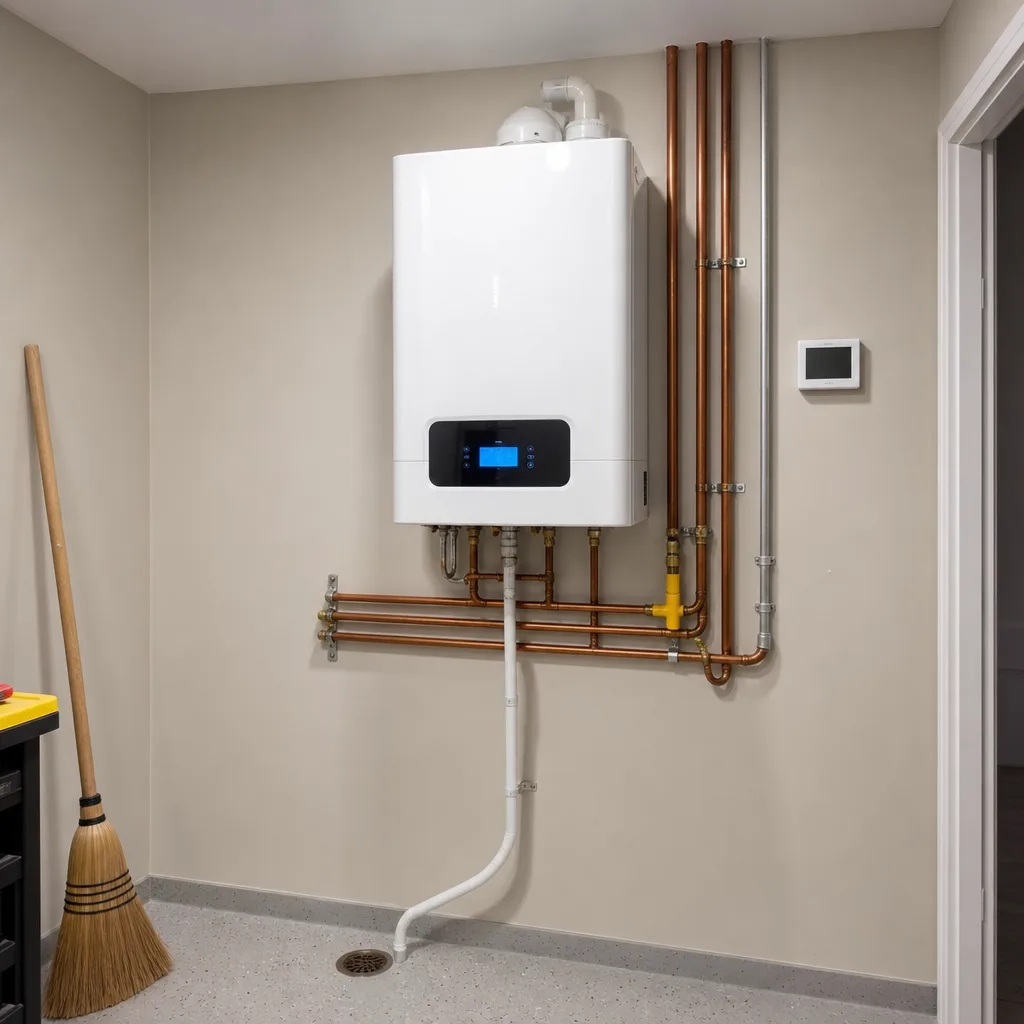
You want to add a boiler to a home that already has ducts and central air. Some folks love the idea of quiet radiant heat. But a boiler only heats. In Dallas, cooling is the bigger job for most of the year, so you’d still need your AC and your ductwork. You’d end up paying for and caring for two separate systems. If your ducts are in decent shape, a new furnace or heat pump usually makes more sense for your home and your budget. Both are services our team handles too.
You’re planning to get rid of the boiler anyway. If you already know you want to switch to forced air, don’t put a new boiler in first. What you need is boiler decommissioning, which means safely shutting down and taking out the old system. Then you need the new heating system you want. Putting in a fresh boiler you plan to pull out in a few years is money you won’t get back.
You’re about to remodel. Maybe you’re gutting a floor, adding rooms, or finishing an attic. Wait until those plans are set. A boiler is sized to how much heat your space loses, and a remodel changes that number. Install now and you may end up with a boiler that’s too big or too small for the home you finish with.
Your boiler still works and it’s the middle of a cold snap. If the old one is running and a tech has checked it and found nothing unsafe, you don’t have to replace it during the coldest week of the year. Dallas winters come in short bursts. Planning the swap for spring or fall gives you time to get a proper sizing, compare options, and schedule the work without rushing. Nobody should make a decision this big while the house is cold and everyone’s tired of it.
You only need heat in one or two rooms. A boiler is built to heat a whole home or building. If the real problem is a cold sunroom or a converted garage, a ductless mini-split may do the job for much less. It also gives you cooling for those Texas summers.
None of these mean you’ll never need a new boiler. They just mean today might not be the day, or a boiler might not be the right tool. A good installer should tell you that out loud, even when it means a smaller job. If a company won’t talk you out of anything, that tells you something too.
Have questions? We’re happy to help.
Call Today, Get Service Today. Xtreme Air Services — Oak Lawn is ready to help.
What Happens During a Boiler Installation
Once you’ve decided a new boiler is the right move, it helps to know what the work looks like. A good install isn’t just pulling out the old box and setting a new one in its place. Most of what makes it last happens before the new boiler fires up and in the hour after it does.
Here’s how a proper boiler installation usually goes:
- Look before you quote. A tech checks the space, the pipes, the vent, the gas line, and the wiring, and works out the right size from your building’s heat loss, as covered above. This visit also shows whether you have a like-for-like swap or a job that needs new piping, controls, or venting.
- Shut down and drain. The gas and power to the old boiler get shut off, and the water in the system is drained so the old unit can be taken apart safely.
- Remove the old boiler. Cast iron boilers can be very heavy, so this step takes care and the right equipment, especially in a tight basement or mechanical room.
- Set and connect the new boiler. The new unit goes in place, then the water piping, gas line, vent, and electrical connections are made. The pump, expansion tank, and relief valve get matched to the new boiler rather than just reused because they were already there.
- Fill and get the air out. The system is refilled and the trapped air is bled out of the pipes and radiators. Air left in the loop is a common reason for gurgling pipes and rooms that never warm up.
- Start up and test. The boiler is fired, the gas connections are checked for leaks, the venting is confirmed to carry exhaust outside, and the pressure and temperature are watched as the system heats. Each zone should be run to make sure heat reaches every room it’s supposed to.
- Walk you through it. Before the job is done, you should know where the shutoffs are, what normal pressure looks like on the gauge, and how the thermostat or controls work.
On a straight replacement that reuses your existing connections, the work stays mostly in the room where the boiler sits. Jobs that need new piping, a new vent route, or new controls take longer and touch more of your home or building. The visit before the quote is where you should find that out, not halfway through install day.
At Xtreme Air Services, a standard boiler installation includes the equipment and materials, professional installation, standard connections, startup and testing, and haul-away of the old unit. Duct, electrical, or plumbing modifications, code corrections, and permits aren’t included unless your quote says so. We tell you that up front so you can see exactly what you’re paying for before any work starts.
That last step matters more than it sounds. A boiler that lights isn’t the same as a boiler that’s heating your whole space evenly and safely. Testing every zone, checking for gas leaks, and watching the pressure settle is how you know the job was done right the first time.
Watch Our Video
See How We Handle Boiler installation in Dallas
Xtreme Air Services — Oak Lawn
What Drives Boiler Installation Costs in Dallas
Here are our real numbers. Our most common boiler job is a standard like-for-like replacement, where the new boiler uses your existing connections and needs no major changes. That job runs $8,800-$14,500. Across all the boiler installations we do, the typical range is $6,000-$20,000. Commercial jobs run higher, since the boilers are bigger and the systems more involved.

Where your job lands in that range comes down to a few things:
- Size and capacity. A boiler that puts out more heat costs more. Sizing it to your building’s heat loss, not the old nameplate, keeps you from paying for heat you’ll never use.
- Efficiency. A boiler’s AFUE rating tells you how much of the gas it burns turns into heat for your home. A higher number costs more up front and burns less gas each winter. Dallas winters are short, so ask how long the savings would take to cover the extra cost in your building.
- Brand and model. Different boilers come with different features, controls, and price tags, even at the same size.
- Ease of access. A boiler in an open basement is quicker to swap than one in a cramped closet, a tight mechanical room, or an upper floor. More time and more hands mean more labor.
- The condition of your plumbing and wiring. Old pipes, worn valves, or outdated wiring may need work before the new boiler can safely connect.
- Code upgrades and permits. Venting or piping that passed years ago may not meet today’s code. Those fixes and the permit are listed on your quote if your job needs them.
- Custom fabrication. If the new boiler doesn’t line up with your old pipes or vent, parts may need to be built to fit.
That’s why two buildings on the same street can get very different quotes. An older home where the boiler drops right into place is close to the low end. An apartment building that needs new venting, fresh piping, and upgraded controls can climb fast.
We give you upfront flat-rate pricing that you approve before any work starts. No meter running, and no surprise line items on install day. If anything beyond a straight swap is needed, you’ll see it on paper first.
When you compare quotes from any installer, ask a few plain questions. What size and AFUE are you recommending, and why? Is this a like-for-like job or does it need changes? Is the permit in the price? A good installer will answer all three without dodging.
If the number is bigger than you planned for, you have options. Flexible financing is available on qualifying installations and larger jobs, on approved credit.
Call 469-269-6373
Frequently Asked Questions
Common questions about Boiler installation
What does mounting mean when installing a boiler?
Mounting is how the boiler gets physically set and secured in place, whether that’s on the floor or hung on a wall bracket. Floor-mounted boilers are common in older homes with basements or utility rooms, while wall-hung units save floor space in tighter mechanical closets. Your installer should pick the mounting method based on your boiler’s weight, the wall or floor structure, and how much clearance the space allows for service access later.
What are the main types of boilers I might end up choosing between?
The main types are gas-fired, oil-fired, electric, combi, and steam boilers, and most homes end up choosing between gas-fired and combi units. Gas-fired boilers heat water that circulates through radiators or floor tubing, while combi boilers also provide instant hot water without a separate tank. In Dallas, where boilers are more common in older homes and apartment buildings than new construction, the right type usually depends on what piping and venting are already in place.
Are there well-known boiler brands worth asking about?
Several established brands make residential and commercial boilers, and each offers different features, efficiency ratings, and control options at similar sizes. Rather than picking a brand name first, it’s more useful to ask your installer which models fit your building’s heat loss and your venting setup. The brand matters less than making sure the unit is sized correctly and matched to your gas line and existing piping.
Ready to Get Started?
Call (469) 269-6373 Today, Get Service Today.