


Boiler Replacement in Dallas: Know the Rules Before You Replace
Repair or replace decided first, then a boiler sized to your building – with the Dallas permit and Texas inspection rules covered.
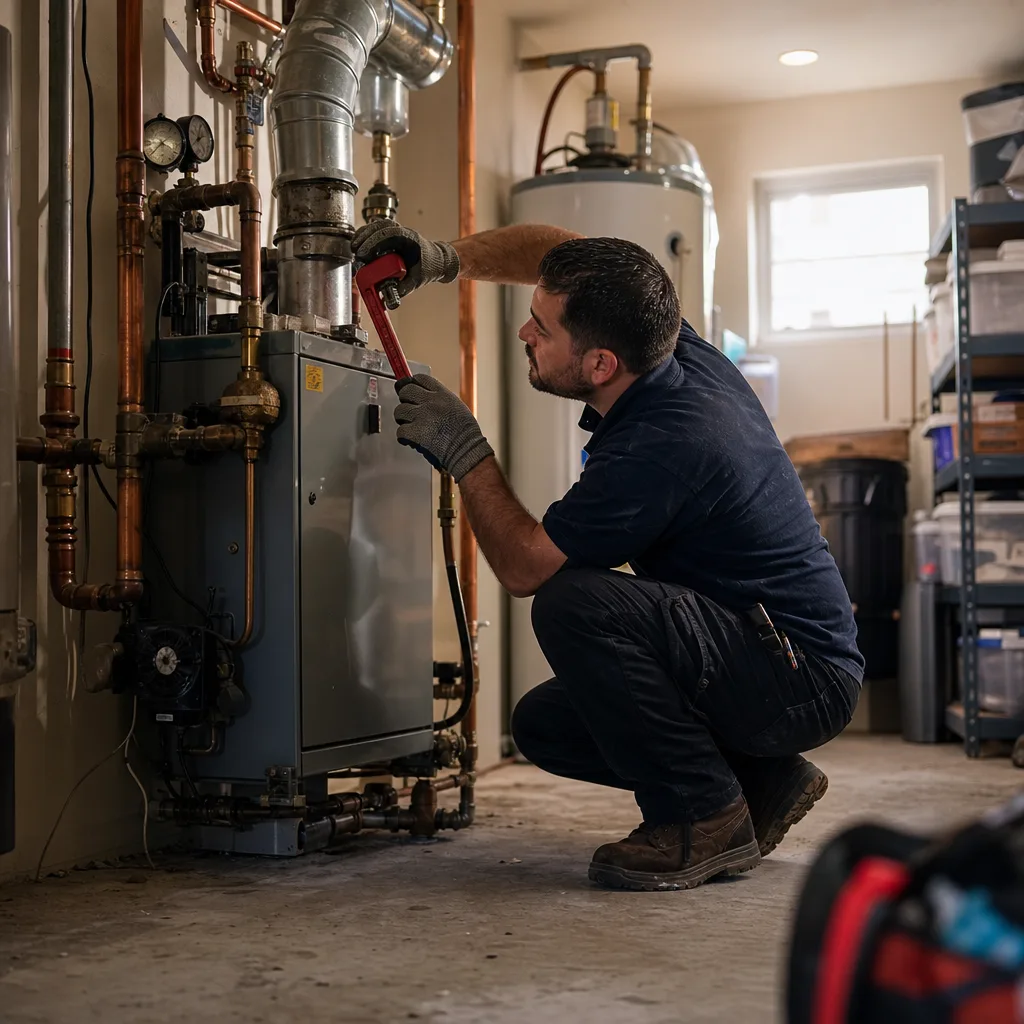
What’s Covered on This Page
- Repair Or Replace: Make The Right Call First
- Dallas Permit And Texas Boiler Inspection Rules
- What Happens During A Boiler Replacement
- Sizing A New Boiler To The Building, Not The Old Unit
- What Replacement Costs And What’s Included
- Is a 20-year-old boiler automatically due for replacement?
- How much does a boiler replacement usually cost for a typical Dallas home?
Repair Or Replace: Make The Right Call First
A boiler that quits on a cold Dallas night doesn’t automatically need to be replaced. Lots of no-heat calls come down to one worn part. If the rest of the system is healthy, fixing that part gets you warm again for far less money. We’d rather tell you that up front than sell you equipment you don’t need.
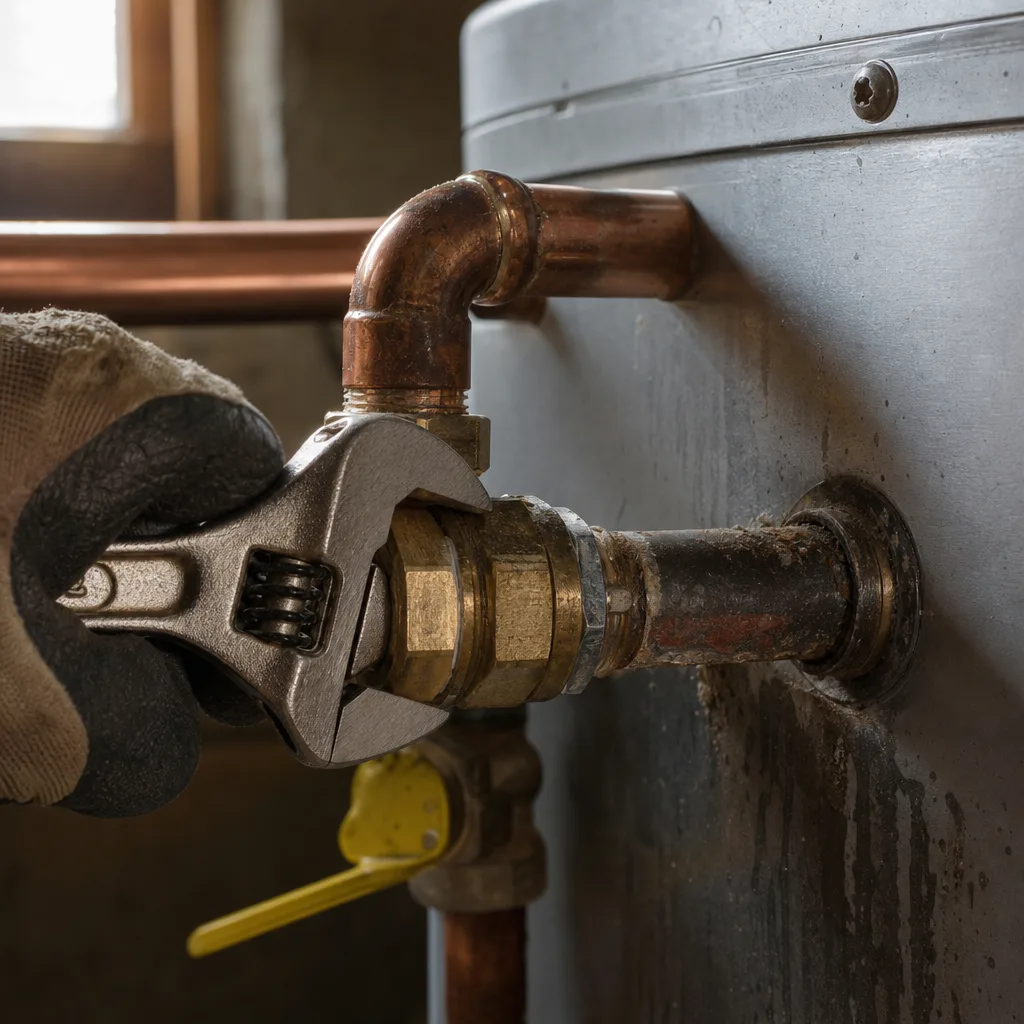
A boiler is really two things: the main body, where water gets heated, and the parts around it that move water, light the burner, and control pressure. Your answer depends on which one failed.
A repair usually makes sense when:
- One part stopped working, like the circulator pump, igniter, zone valve, pressure relief valve, or expansion tank.
- The boiler body and heat exchanger show no cracks, rust-through, or leaks.
- This is the first real problem you’ve had in years.
- Parts for your model are still easy to get.
Replacement starts to make more sense when:
- Water is leaking from the boiler itself, not from a valve or pipe joint you can swap out.
- The heat exchanger is cracked. On most boilers, that’s the heart of the unit and the hardest part to justify fixing.
- You’ve called for repairs more than once in the last couple of heating seasons, and the bills keep adding up.
- Parts for your model are discontinued or hard to track down, so every breakdown turns into a long wait in the cold.
- The repair quote is getting close to what a new boiler would cost.
Age matters, but don’t let it decide for you. Dallas winters are mostly mild, broken up by hard freezes. A boiler here may log fewer working hours than one up north, so an older unit can still have life in it. On the other hand, a boiler that sat idle for months can show problems right when the first cold front hits. Condition tells you more than the date on the label.
Here’s a common example. Your radiators stay cold, but you can hear the boiler firing. That often points to water not moving through the system, which can mean a pump or valve problem rather than a dead boiler. If you see a puddle under the unit and rust streaks on the boiler’s body, that’s a very different conversation.
The way to know for sure is a diagnosis before anyone talks about new equipment. Our service-call fee runs $26 to $99, and it’s credited toward the repair if you go ahead with Xtreme Air Services. You get upfront, flat-rate pricing before any work starts. If a repair is the honest answer, that’s what we’ll recommend. If replacement is the better use of your money, we’ll show you why, so you can make the call with real facts in front of you.
Dallas Permit And Texas Boiler Inspection Rules
A new boiler isn’t just a swap of one box for another. It’s gas, water, pressure, and exhaust all in one machine. That’s why replacing one in Dallas usually needs a permit from the city, and why the work gets checked once it’s done. The paperwork can feel like a hassle. It’s really your proof that someone besides the installer looked at the job.
The permit is how the city makes sure the new boiler is hooked up to today’s rules, not the rules from when your old one went in. If your current boiler has been in place for decades, some of what was fine back then may not pass now.
When an inspector looks at a boiler job, they’re mostly focused on safety. That usually covers:
- The gas line and shutoff, so fuel reaches the burner safely and can be turned off fast.
- The vent or flue, so exhaust, including carbon monoxide, leaves your home and doesn’t leak back in.
- Enough fresh air for the burner to burn cleanly, especially when the boiler sits in a closet or small utility room.
- The pressure relief valve and where its discharge pipe drains, so a pressure spike can’t hurt anyone.
- Electrical connections to the controls and pump.
Texas also has its own boiler program, run by the Texas Department of Licensing and Regulation (TDLR). It’s separate from the city permit. Whether your boiler falls under it depends on the type of building and the boiler’s size and use. Boilers in businesses, schools, and larger apartment buildings are the ones most likely to need state inspections and an operating certificate. A typical boiler in a single-family home is treated differently. If you own or manage a commercial building in Dallas, ask up front whether your new boiler will need a state inspection. Then you can plan for it and won’t find out later.
That’s why a few questions are worth asking any contractor before you sign, including us:
- Who pulls the permit, and is the permit fee in the quote or separate?
- Does anything in my current setup look like it won’t pass inspection?
- If it does, what will that fix cost, and is it listed on the quote?
- Does my building fall under the state boiler program?
Be careful with any offer to skip the permit to save a little money or time. An unpermitted gas appliance can cause trouble when you sell your home or file an insurance claim. More important, nobody checked the venting. Xtreme Air Services is licensed and insured, under HVAC License #TACLA29023C, and we’d rather walk you through the rules than work around them.
What Happens During A Boiler Replacement
Once you’ve decided on a new boiler, the job itself follows a clear order. Knowing the steps helps you plan your day, and it gives you a way to check that nothing got skipped.
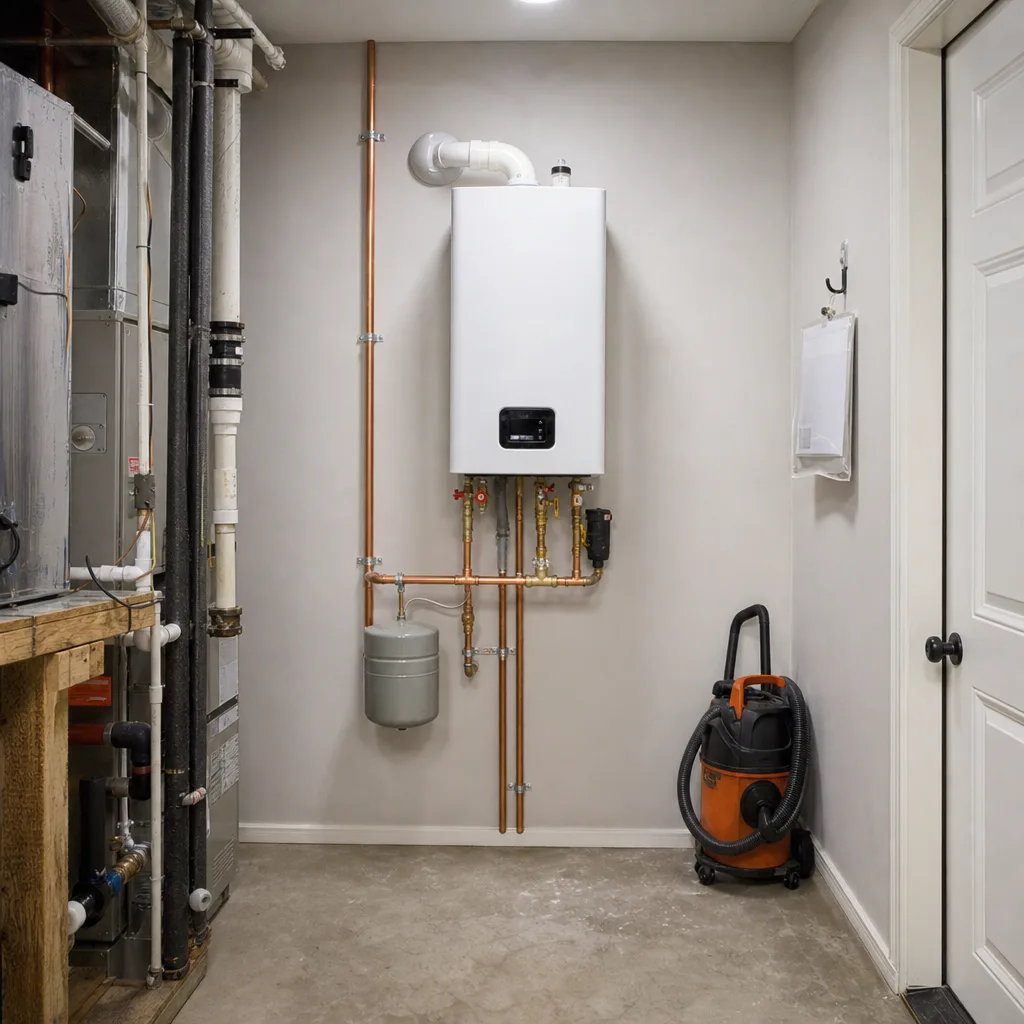
It starts before any old equipment comes out. The new boiler has to be the right size for your home or building, not just the same size as the old one. If your house has new windows, added insulation, or a closed-in porch since the last boiler went in, it may need less heat than it used to. A boiler that’s too big turns on and off in short bursts, which wears it out faster and wastes gas. A good quote should explain how the size was picked.
On install day, the work usually goes like this:
- Shut it down. Gas, power, and water to the old boiler get turned off, and the system gets drained.
- Take out the old unit. Old boilers are heavy, and getting one out of a closet, basement, or tight mechanical room can take some care.
- Set the new boiler. It goes in place, level and with the space around it that the maker calls for.
- Make the connections. The gas line, water piping, vent, and wiring for the controls and pump all get hooked up.
- Fill and bleed the system. Water goes back in, and trapped air gets pushed out so it doesn’t block the flow or make the pipes bang and gurgle.
- Start it up and test it. The burner gets fired, and pressure, venting, and safety controls get checked while the boiler runs.
That last step matters most. A boiler that turns on isn’t the same as a boiler that’s working right. Startup is when someone confirms the exhaust is leaving your home, the pressure holds steady, and every radiator or zone gets warm.
Here’s what our standard boiler replacement covers: the equipment and materials, professional installation, standard connections, startup and testing, and haul-away of the old unit. Our most common job is a like-for-like swap using your existing connections with no major changes, and it runs $9,200 to $15,500. Our full range runs $6,000 to $22,000, depending on the boiler’s size and efficiency, the brand and model, how easy it is to reach, and the shape of your existing piping and wiring.
Changes to your plumbing, electrical, or ductwork aren’t part of that standard scope, and neither are code corrections or permits unless they’re stated. If your old setup needs a new vent run or a reworked gas line to pass the inspection covered above, you should see that listed on the quote before work begins.
Timing is worth thinking about in Dallas. Most winter days here are mild, so it’s easy to put off a tired boiler until a hard freeze rolls in. That’s also when everyone else’s boiler gives out. If you already know a replacement is coming, getting it done before the first real cold front means you pick the day instead of the weather picking it for you.
Before the job wraps up, ask to see the boiler running. Have someone show you where the shutoffs are, what normal pressure looks like on the gauge, and what you should keep an eye on. You’ll know your system better than you did before.
Ready when you are – get in touch today.
Call Today, Get Service Today. Xtreme Air Services — Oak Lawn is ready to help.
Sizing A New Boiler To The Building, Not The Old Unit
Copying the old boiler’s size feels like the safe choice. Often it’s the wrong one. The number on your old boiler only tells you what someone picked years ago, maybe decades ago. It doesn’t tell you how much heat your home or building loses on a cold night today.
The right way to size a boiler is a heat loss calculation. That’s a room-by-room look at how fast heat escapes the building on the coldest days you can expect here. It accounts for things like:
- Square footage and ceiling height in each room
- How much insulation is in the walls and attic
- How many windows and doors you have, and what kind
- Drafts and air leaks around the building
- How many radiators or baseboard runs each room has, and how much heat they can give off
Dallas buildings change a lot over their lives. An older home might have new double-pane windows, a better-insulated attic, or a garage or porch turned into living space. Each of those changes how much heat the house needs. A small commercial building may have been split into new suites or had walls moved. Your old boiler was sized for a building that may not exist anymore. That’s how you end up with the short-cycling problem covered above.
Dallas winters matter here too. Most of the heating season is mild, with a few hard freezes mixed in. So your boiler spends most of its hours running well below full power. A boiler that can turn its flame down low, often called a modulating boiler, can match those mild days instead of blasting and shutting off. That affects your comfort and your gas bill, not just the size on the label.
Then there’s efficiency. AFUE is the rating that tells you how much of the gas you pay for turns into heat in your home. A 95% AFUE boiler turns about 95 cents of every gas dollar into heat. High-efficiency condensing boilers hit their best numbers when the water coming back from your radiators is cooler. Some older radiator systems were built to run on very hot water, so a condensing boiler may not always reach its rated efficiency on them. That doesn’t rule one out. It just belongs in the conversation before you pay for an efficiency rating you might not fully get.
For larger commercial buildings, it’s worth asking whether two smaller boilers make more sense than one big one. One can carry the mild days, the second joins in when it gets cold, and if one goes down, you’ve still got heat for your tenants or staff.
Before you sign any quote, ask:
- How did you figure out the size? Did anyone measure rooms and check the windows and insulation?
- Did you count my radiators or baseboards and check how much heat they put out?
- Will the efficiency rating hold up with the radiators I already have?
- Is this boiler bigger, smaller, or the same as my old one, and why?
Size and efficiency are two of the biggest things that move the price of a new boiler. A quote that explains both is one you can compare, and it’s one you can trust to keep you warm without wasting gas.
Watch Our Video
See How We Handle Boiler replacement in Dallas
Xtreme Air Services — Oak Lawn
What Replacement Costs And What’s Included
A price on a quote only helps you if you know what it buys. Our standard range and what it covers are laid out above. Here’s what moves your job toward the low end or the high end, so the number makes sense before you sign.
Your price tends to stay closer to the low end when:
- The new boiler is a like-for-like swap, about the same size and type as the old one.
- The boiler is easy to reach, with clear space to carry the old one out and the new one in.
- Your existing gas line, water piping, vent, and wiring are in good shape and can be reused.
- Your current setup already meets code, so nothing needs fixing to pass inspection.
Your price tends to climb when:
- Your building needs a larger boiler, or you choose a higher-efficiency model.
- The brand and model you pick cost more.
- The boiler sits in a tight closet or cramped mechanical room that slows the work.
- Old piping or wiring is worn out and can’t safely connect to new equipment.
- The new boiler doesn’t line up with your old connections, so piping has to be custom fit.
- Code upgrades and permits are needed, since those sit outside the standard scope.
Higher efficiency is worth a moment of thought here. A more efficient boiler costs more on day one and pays you back through lower gas bills. Because most Dallas winter days are mild, that payback can come slower than it would up north. It can still be the right choice. Just make sure you’re weighing real savings against your real heating season, not a rating on a sticker.
When you’re comparing quotes, put them side by side and check that each one spells out:
- The exact boiler model and its size
- Installation labor, and whether startup and testing are included
- Haul-away of the old boiler
- Whether the permit is included or billed separately
- Any vent, gas line, or code work your setup needs
- What’s not included, in writing
Watch the lowest number closely. A quote that leaves out the permit, the vent work, or the code fixes isn’t cheaper. It’s just incomplete, and those costs tend to show up halfway through the job. A higher quote that lists everything is often the better deal, because you know what you’re paying before anyone picks up a wrench. That’s how our upfront, flat-rate pricing works. You approve the price before work starts, so there’s no meter running.
If the full cost is hard to cover at once, we offer flexible financing on qualifying installations and larger jobs, on approved credit. It lets you get reliable heat in place now and spread out the cost, instead of nursing a failing boiler through one more cold snap.
Xtreme Air Services is licensed and insured under HVAC License #TACLA29023C. We’re a Trane Comfort Specialist with a 4.8-star reputation across 2,900+ reviews on Google, Angi, and HomeAdvisor. When you call, you’ll talk to a real person who can walk you through what your replacement should cost and what your quote should include.
Call 469-269-6373
Frequently Asked Questions
Common questions about Boiler replacement
Is a 20-year-old boiler automatically due for replacement?
No, age alone doesn’t mean it’s time to replace a boiler. What matters most is the condition of the boiler body and heat exchanger, not the number on the install date. A 20-year-old boiler with no leaks, no cracks, and a clean repair history can still have good years left in it, especially since most Dallas winters are mild and the unit logs fewer hard-running hours than one up north. If you’re calling for repairs every season or the heat exchanger is cracked, that’s a stronger signal than age by itself.
How much does a boiler replacement usually cost for a typical Dallas home?
A like-for-like boiler swap using your existing connections typically runs $9,200 to $15,500, and the full range for Xtreme Air Services runs $6,000 to $22,000 depending on size, efficiency, brand, and how easy the boiler is to reach. House size matters, but it’s not the only factor. A heat loss calculation that accounts for insulation, windows, and your existing radiators gives a far more accurate picture than square footage alone, since two 2,000 sq ft homes can need very different boiler sizes.
Ready to Get Started?
Call (469) 269-6373 Today, Get Service Today.