


Commercial HVAC Installation in Dallas, Done Right From Quote to Startup
New commercial heating and cooling done right from quote to startup, with what's included and what drives the cost.
What’s Covered on This Page
- What Counts as Commercial HVAC Installation
- Signs Your Dallas Business Needs a New System Instead of a Repair
- What’s Included in a Standard Commercial Installation
- What Drives the Cost of a Commercial Installation Up or Down
- Permits and Licensing Required for Commercial Mechanical Work in Dallas
- What is the best HVAC system for a Dallas commercial building?
- Why do commercial AC unit costs vary so much from building to building?
- Do I need a crane to replace a rooftop commercial AC unit in Dallas?
What Counts as Commercial HVAC Installation
Here’s the simple test. If your business is getting new heating or cooling equipment, that’s an installation. If a tech is fixing one part inside a unit you’re keeping, that’s a repair. The two get planned, priced, and scheduled differently.
Most commercial installs fall into one of three types:
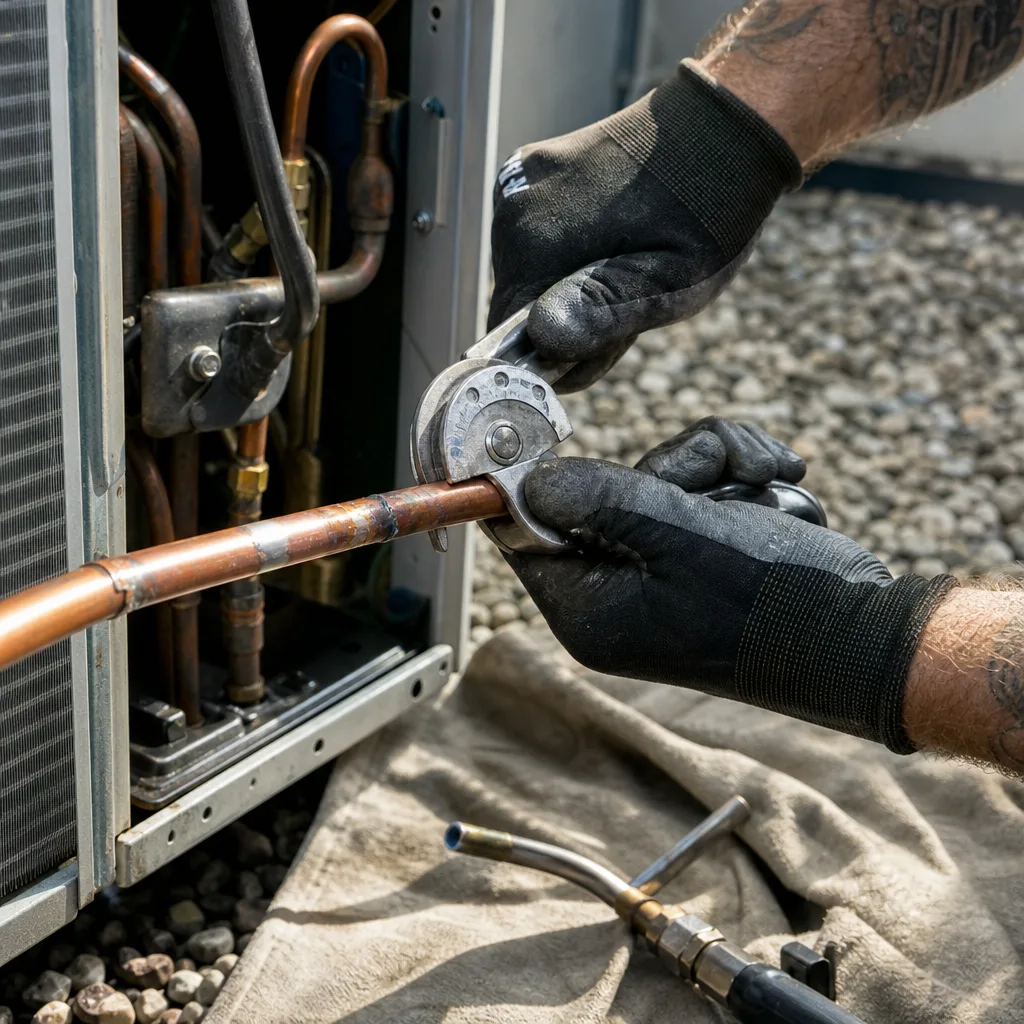
- Like-for-like replacement. The old unit comes out and a new one goes in, using the existing connections with no major changes. This version has the fewest surprises.
- Replacement with changes. You’re going bigger or smaller, switching to a different type of system, moving the unit, or finding that the ductwork, wiring, or roof curb won’t work with the new equipment.
- New construction or a buildout. You have a shell space, a tenant finish-out, or a change in how the space gets used. These jobs start with a design, not a swap.
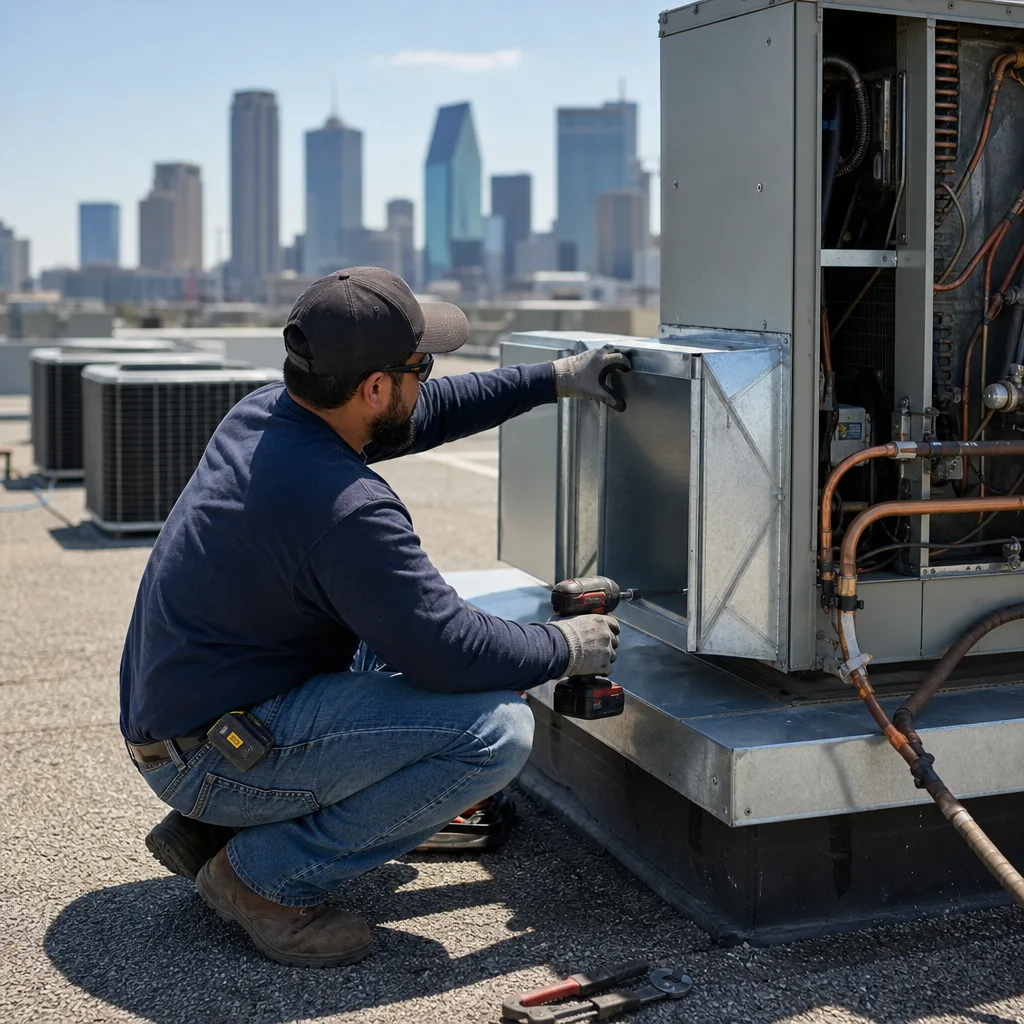
Many strip centers, restaurants, and low-rise offices run on rooftop packaged units. That means the cooling, the heating, and the fan all sit in one box on the roof. Smaller offices may use split systems or ductless mini-splits. Bigger buildings may run on chillers or VRF systems, which move refrigerant to many indoor units so different zones can stay at different temperatures. All of these count as commercial installs. They just aren’t the same size of project.
An install can also include the parts around the main equipment. Depending on your space, that might mean building controls, commercial ductwork, a cooling load calculation to size the system right, balancing so air reaches every room, or make-up air for a commercial kitchen. We list each of these as a separate service, so you can ask about any one of them.
Here’s how a job can jump from one type to another. Picture a restaurant moving into a space that used to be a clothing store. The old rooftop unit still runs. But a kitchen hood pulls a lot of air out of the building, and that air has to be replaced. Now the space needs make-up air, likely more cooling capacity, and possibly duct changes. What looked like a simple swap is really a type two or type three job. It’s much better to find that out on paper than on install day.
Some jobs don’t count as installation at all. Replacing a compressor, a capacitor, or a fan motor, fixing a refrigerant leak, or doing a seasonal tune-up are repair and maintenance work. If your unit is fairly young and one part failed, a repair may be the smarter money. A good contractor should tell you that straight.
Knowing your install type up front protects your business, not just your budget. A rooftop swap usually means a crane, a planned shutdown, and a heads-up to your staff or tenants. A buildout can mean permits, inspections, and coordination with other trades. When the scope is clear from day one, you can plan around your busiest hours instead of losing them.
Signs Your Dallas Business Needs a New System Instead of a Repair
Most of the time, the question isn’t whether your unit can be fixed. It almost always can. The real question is whether fixing it again is the best use of your money and your downtime. A replacement you plan for is a lot easier on your business than one forced on you by a breakdown in August.
Here are the signs that point toward a new system:
- The repairs keep stacking up. One service call a year is normal. A tech on your roof every few weeks, each time for a different part, means the whole unit is wearing out, not just one piece of it.
- A major part failed on an older unit. A dead compressor or a failed heat section on a unit near the end of its life is a big repair bill for equipment that may have little time left. Paying for that repair can mean you pay twice.
- Your unit runs on a refrigerant that’s being phased out. Many older systems use a refrigerant that’s no longer made. Recharging them gets harder and pricier each year, and a leak can turn into a replacement conversation fast.
- It can’t keep up on the hottest days. If your space is fine in May but warm by 3 p.m. in July, the unit may be undersized for how you use the space now, or simply too worn to hit its rated capacity.
- Your energy bills climb while your use stays the same. Worn equipment has to run longer to do the same work. You pay for that every month.
- Hail or storm damage hit the rooftop unit. North Texas hail can dent and flatten the thin fins on outdoor coils, which chokes off airflow. On a newer unit, a coil repair may make sense. On an older unit, that damage is often the tipping point.
- Your staff, tenants, or customers keep complaining. Hot spots, stuffy rooms, and humid air cost you in ways that don’t show up on a repair invoice.
One sign alone doesn’t always mean replace. Two or three together usually do. If you’re also changing how the space gets used, like adding a kitchen or more people, that pushes the decision toward one of the bigger install types we covered above.
Think about it this way. Say your rooftop unit just needed a new fan motor, and the tech mentioned the coil is corroded and the refrigerant is the old kind. You can fix the motor and hope. Or you can treat that service call as your early warning and plan a replacement for a slower week, with a crane booked and your staff told ahead of time. Same unit, two very different outcomes for your business.
The honest flip side is that a younger unit with one failed part is usually worth repairing. Nobody should talk you into new equipment you don’t need.
If you’re not sure which side of the line you’re on, start with a diagnostic visit. Our service-call fee is $26 to $99, and it’s credited toward the repair if you proceed with Xtreme Air Services. You get a clear look at the unit’s condition, and you can weigh the repair against a replacement with real numbers in front of you, not guesses.
What’s Included in a Standard Commercial Installation
A standard commercial install is the like-for-like replacement we covered above. The old unit comes out and a new one goes in on your existing connections, with no major changes. That’s our most common commercial job, and it typically runs $28,000 to $64,000 depending on the size of the system. Across all the commercial installs we quote, the typical range is $10,000 to $100,000. That’s why knowing your install type matters before you look at any number.
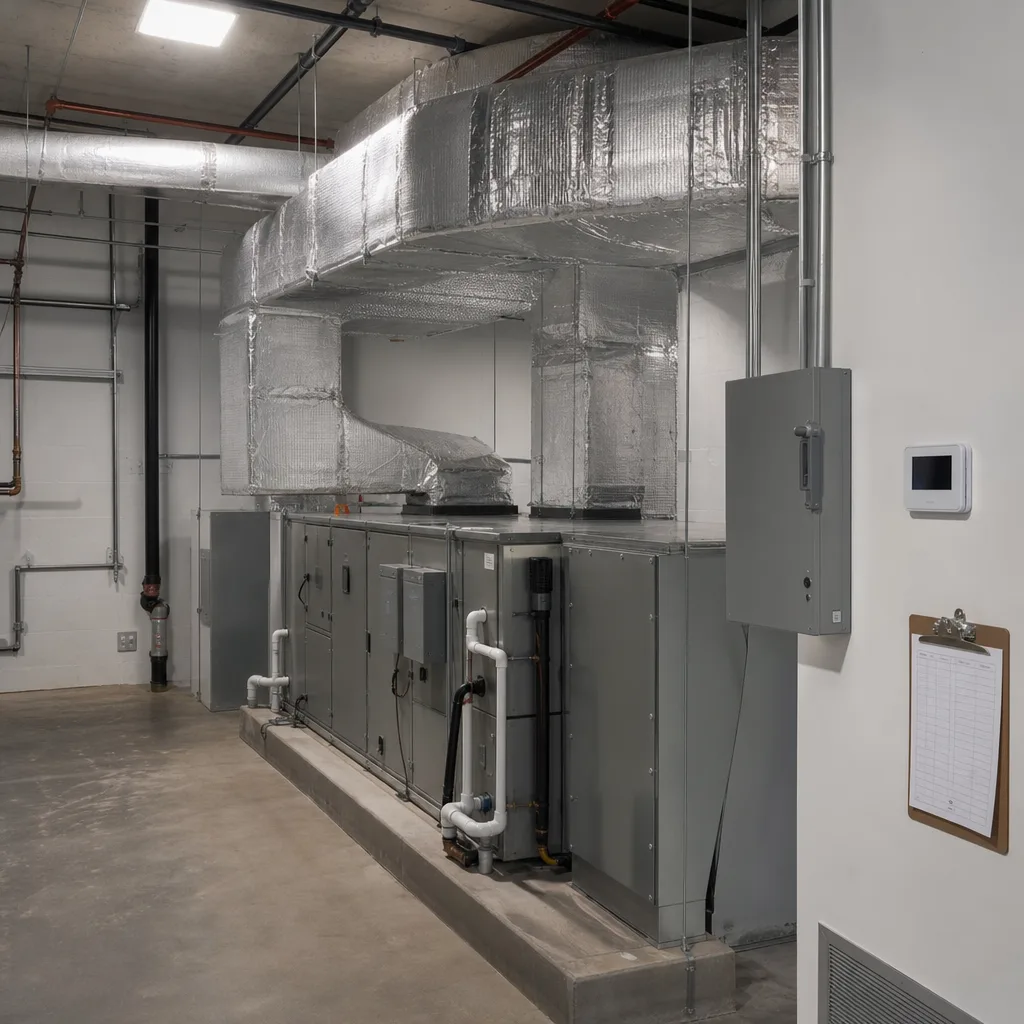
Here’s what a standard install includes:
- Equipment and materials. The new unit and the materials it takes to set it in place.
- Professional installation. Setting the new equipment and connecting it to your building.
- Standard connections. Hooking the new unit up to the ductwork, power, and lines already in place, as long as they fit the new equipment.
- Startup and testing. The new system gets turned on and checked so you know it’s cooling and heating the way it should before you count on it.
- Haul-away of the old unit. You aren’t left with a dead rooftop unit sitting in your lot or on your roof.
And here’s what isn’t included unless your quote says so:
- Duct, electrical, or plumbing modifications. If your existing ductwork, wiring, or plumbing has to change to work with the new unit, that’s added work.
- Code corrections. If something in the current setup doesn’t meet code, fixing it is a separate line.
- Permits. These aren’t part of the standard price unless they’re stated in your quote.
Those exclusions aren’t fine print. They’re exactly where a simple swap turns into one of the bigger install types. Picture a low-rise office whose new rooftop unit is the same size as the old one, but the electrical feeding it is older and doesn’t match what the new equipment needs. The swap itself is still standard. The electrical update isn’t. You’d rather see that line on the quote than hear about it on install day.
What moves the price inside that standard range? Mostly the equipment itself: its size in tons, its efficiency rating, and the brand and model. SEER2 is the cooling efficiency number, and higher usually means lower power bills over time. Access matters too, along with the condition of your existing ductwork, wiring, and plumbing, plus any code upgrades, permits, or custom fabrication your space needs.
Before you sign any commercial quote, ask three things. Is this a like-for-like job, or does it include changes? Which exclusions apply to my building? Are permits included or separate? Clear answers on paper are what keep your budget and your schedule intact.
If a full replacement is a big hit to plan for all at once, we offer flexible financing on qualifying installations and larger jobs, on approved credit. That can make it easier to replace a failing unit on your schedule, not wait for it to quit in the middle of a Dallas summer.
Need help with Commercial HVAC installation?
Call Today, Get Service Today. Xtreme Air Services — Oak Lawn is ready to help.
What Drives the Cost of a Commercial Installation Up or Down
We named the big cost drivers above: equipment, access, the shape your building is in, and paperwork. Here’s how each one moves your number, so a quote makes sense when it lands on your desk.
Size, measured in tons. A ton is how much heat a unit can pull out of your space. One ton removes about 12,000 BTUs per hour. More floor space, more people, kitchen equipment, and big west-facing windows all call for more tons, and more tons cost more. The right size comes from a cooling load calculation, not from copying the label on the old unit. Your old unit may have been sized wrong, or the way you use the space may have changed. Too big, and it shuts off before it pulls the moisture out, so the room feels damp. Too small, and it runs nonstop and still falls behind on a July afternoon.
Efficiency and features. A higher SEER2 rating costs more up front and less to run each month. Dallas has a long cooling season, so that monthly savings has plenty of time to add up. For gas heat, AFUE tells you how much of the fuel becomes heat in your building. Features like variable-speed fans and staged cooling also raise the price. In return, the system runs at lower speeds most of the day, keeps temperatures steadier, and does a better job with humidity.
Access. Most rooftop swaps need a crane. A single-story strip center with an open lot out back is a simple lift. A taller building, a tight site, or a unit that has to be lifted over another structure needs a bigger crane and more setup time. Equipment in a cramped mechanical room or above a finished ceiling takes more labor to get in and out.
The condition of what’s already there. Old ductwork can leak cooled air into the hot space above your ceiling. Wiring may not match what the new unit needs. Gas lines and drain lines may need rework. None of this shows up until someone looks, which is why a site visit beats a phone quote.
Code upgrades and permits. New equipment has to meet today’s rules, not the rules from when the old unit went in. Bringing the setup up to date can add work, and whether a permit is needed depends on the scope of your job.
Custom fabrication. If the new rooftop unit has a different footprint than the old one, it may not sit right on your existing roof curb. Then you need a curb adapter or new transition ductwork made from sheet metal to fit your building.
Some things keep your cost toward the lower end:
- A new unit that fits the existing curb and connections
- Ductwork and wiring that are still in good shape
- Easy crane access and a clear path to the equipment
- Planning ahead, so you can compare equipment options instead of taking whatever is in stock during a breakdown
When you get a quote, ask for each of these items as its own line. If you can see the tonnage, the efficiency rating, the access plan, and any added work spelled out, you’ll know exactly what you’re paying for and where you still have choices.
Watch Our Video
See How We Handle Commercial HVAC installation in Dallas
Xtreme Air Services — Oak Lawn
Permits and Licensing Required for Commercial Mechanical Work in Dallas
Most commercial HVAC installs in Dallas need a permit and an inspection. A like-for-like rooftop swap often still counts as mechanical work the city wants to see. Jobs that change the system, the ductwork, the wiring, or the gas lines almost always need one. Permits aren’t in the standard price unless your quote says so, so you’ll want to know early whether your job needs one and who’s handling it.
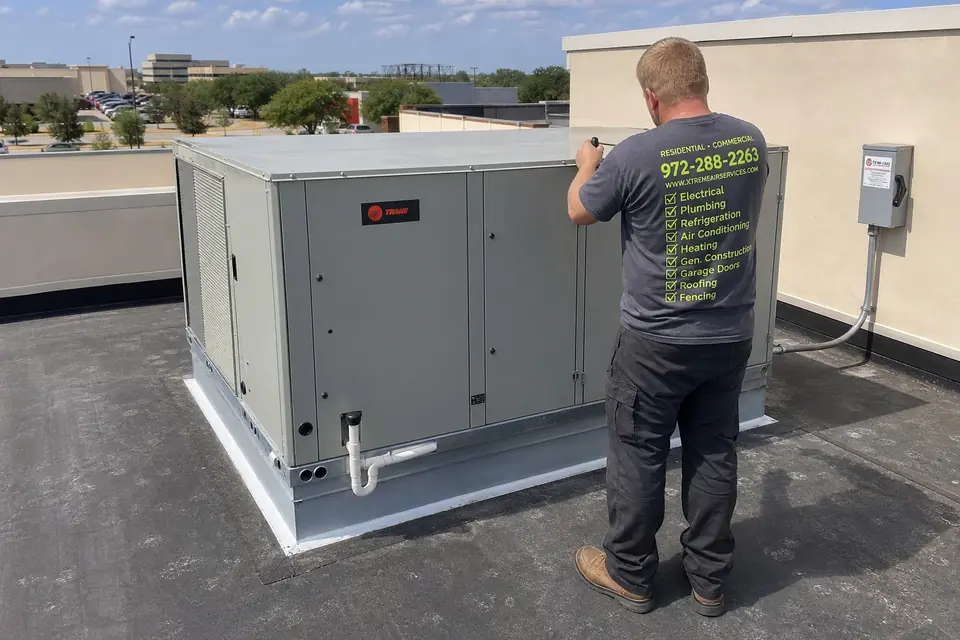
The permit isn’t just paperwork. It’s how a city inspector checks the new equipment, the electrical feed, the gas connection, and the venting against today’s rules, not the rules from when your old unit went in. That second set of eyes protects your building and the people inside it.
Skipping it can cost you later, and usually at a bad moment:
- Selling or refinancing. A buyer’s inspector or lender may flag mechanical equipment that has no permit on record.
- Insurance claims. If something goes wrong, your insurer may ask whether the work was permitted and inspected.
- Your lease. Many commercial leases require permitted work and the landlord’s sign-off before any equipment changes. If you’re a tenant, check your lease before the crane shows up.
- Rework. Unpermitted work that gets caught later can mean opening things back up so they can be inspected.
Licensing is the other half. In Texas, HVAC contractors are licensed through the Texas Department of Licensing and Regulation, also called TDLR. A licensed contractor is accountable to the state for the work. You can look up any contractor’s license on the TDLR website before you sign anything. Ours is HVAC License #TACLA29023C, and we’re licensed and insured.
A commercial install often touches more than one trade. The HVAC side needs an HVAC license. New wiring or a bigger breaker for the unit is electrical work. Gas piping for the heat section is plumbing work. Each one should be done by someone licensed for that trade. Anyone who handles refrigerant also needs federal EPA certification. When one company covers HVAC, plumbing, and electrical, you don’t have to juggle separate contractors on separate schedules. You also don’t have to wonder who’s responsible if an inspector flags something.
Here’s how this plays out. Say you manage a small office building and the new rooftop unit needs a heavier electrical feed than the old one. The HVAC swap and the electrical upgrade may both need inspection. If the work isn’t planned together, you could pass one inspection and wait on the other while your space sits warm. Planning the trades and the inspections at the same time keeps your shutdown short.
Before you sign a commercial quote, ask these questions:
- Does my job need a permit, and is the permit included in this price or separate?
- Who pulls the permit and schedules the inspection?
- What’s your TDLR license number?
- Who’s doing the electrical and gas work, and are they licensed for it?
- What happens to my timeline if an inspection needs a follow-up visit?
Get clear answers on paper. Then the permit and the inspection become just another step on the schedule, not a surprise that holds up your business.
Frequently Asked Questions
Common questions about Commercial HVAC installation
What is the best HVAC system for a Dallas commercial building?
It depends on your building type, not a single best answer. Strip centers, restaurants, and low-rise offices usually run on rooftop packaged units because they hold cooling, heating, and the fan in one box. Smaller offices often do well with split systems or ductless mini-splits. Larger buildings may need chillers or VRF systems that send refrigerant to many indoor units so each zone stays at the right temperature. The right choice comes from your space, your use, and a proper cooling load calculation, not a one-size-fits-all pick.
Why do commercial AC unit costs vary so much from building to building?
Your cost depends on size, efficiency, access, and the condition of what’s already in place. A unit is sized in tons, and more floor space, more people, or kitchen equipment all call for more tons. A higher SEER2 rating costs more upfront but saves on monthly bills during Dallas’s long cooling season. Crane access, old ductwork, outdated wiring, and any code upgrades or permits also move the price. That’s why a site visit gives a far more accurate number than a phone quote.
Do I need a crane to replace a rooftop commercial AC unit in Dallas?
Most rooftop unit swaps do need a crane to lift the old unit off and set the new one in place. A single-story building with open space around it, like many strip centers, makes for a simple lift. A taller building, a tight site, or a unit that has to clear another structure needs a bigger crane and more setup time. This is one of the main reasons two buildings with the same size unit can end up with different installation costs.
Ready to Get Started?
Call (469) 269-6373 Today, Get Service Today.