


Furnace Installation in Dallas: Know What’s Included Before You Book
Know what's included in a furnace price, what drives it up or down, and the Dallas permit and licensing rules.
What’s Covered on This Page
- What a Standard Furnace Installation Includes
- What Drives Furnace Installation Cost Up or Down
- Furnace Permits and Licensing Requirements in Dallas
- Signs You Need Furnace Installation, Not a Repair
- How the Furnace Installation Process Works
- What is the $5000 rule for furnace replacement?
- Can I install my own furnace in Dallas?
- How much does a new furnace cost for a 2,000 square foot house?
What a Standard Furnace Installation Includes
When you hear a furnace price, the first thing you should ask is what’s in it. Here’s our straight answer, so you can compare quotes fairly and know what you’re signing up for.
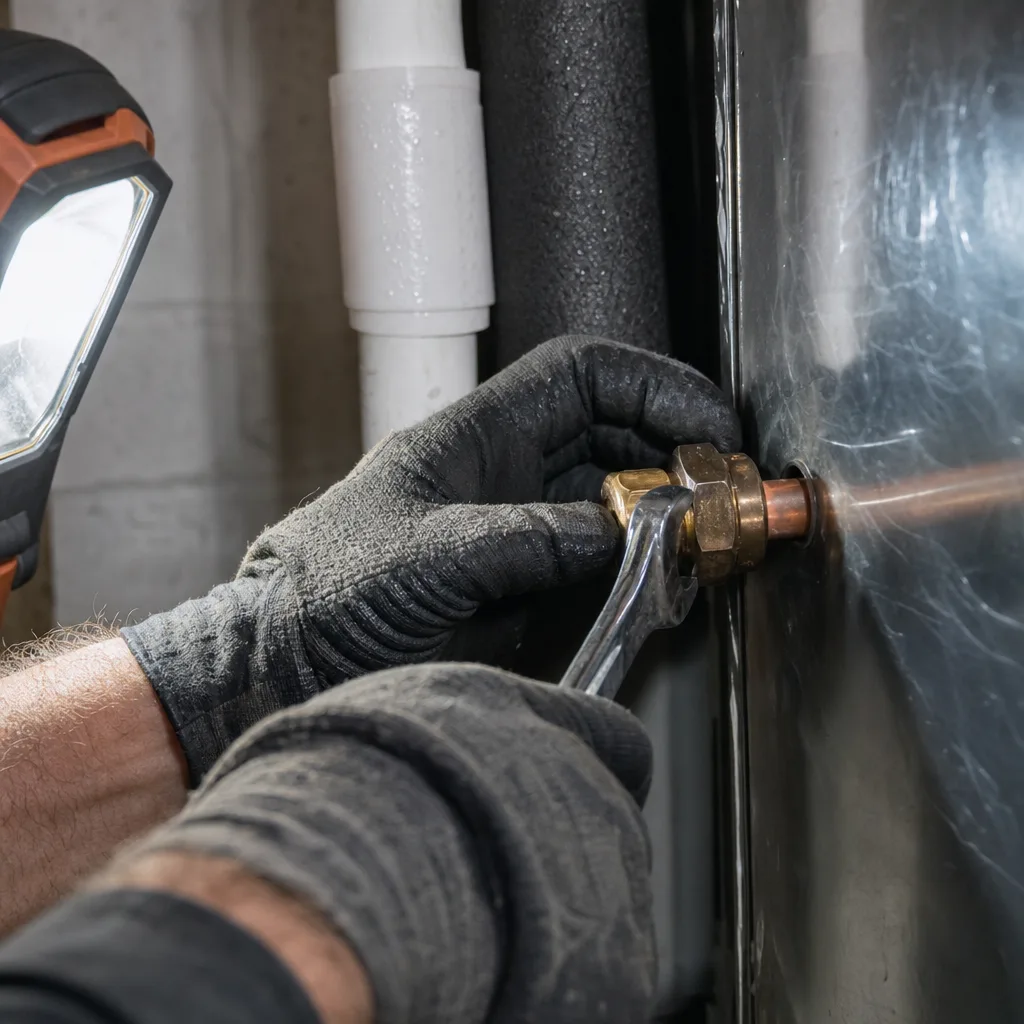
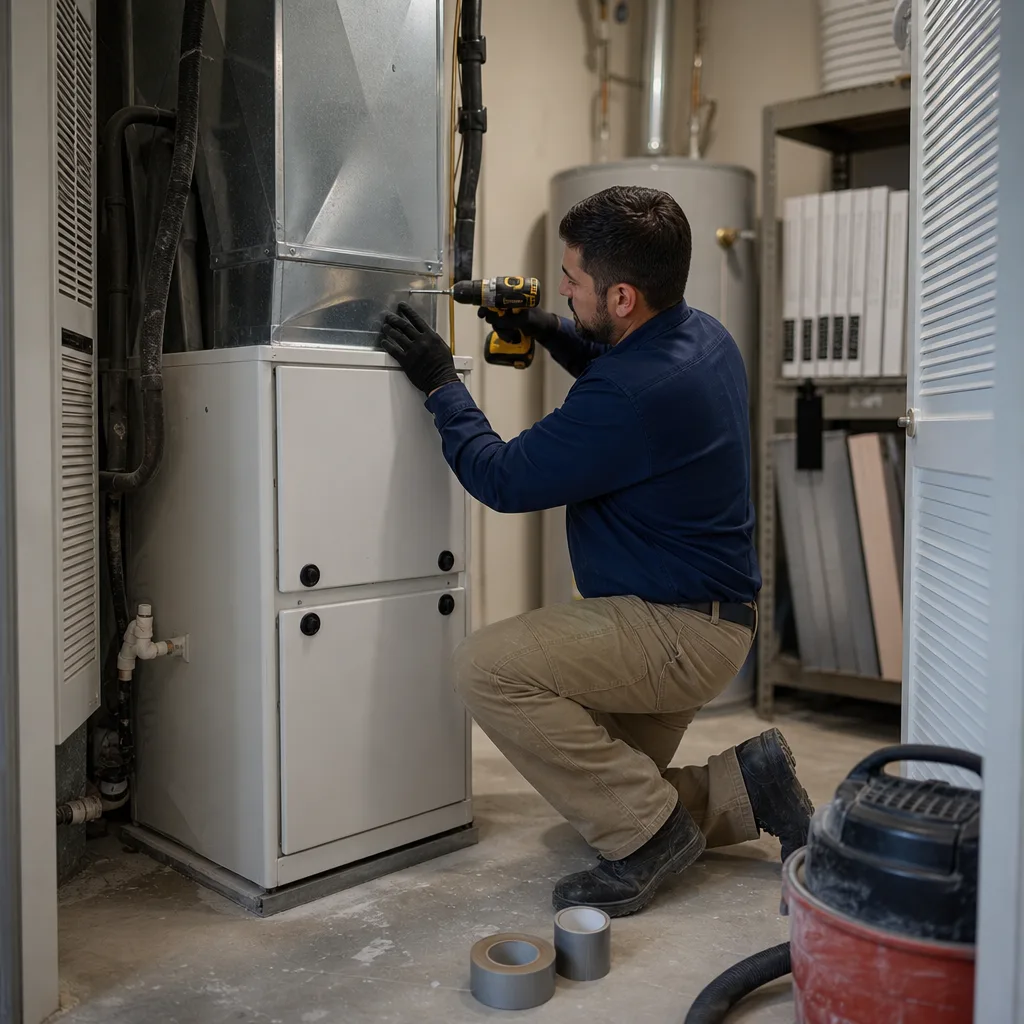
A standard job means we’re replacing your old furnace with a new one that fits the same spot and hooks up to the connections you already have. Nothing major gets moved or rebuilt. For that kind of job, here’s what’s included:
- The new furnace and the materials needed to put it in
- Professional installation by our licensed and insured technicians
- Standard connections to your existing setup
- Startup and testing, so your system is running before we leave
- Haul-away of your old unit, so it isn’t left sitting in your garage or attic
Some homes need more than a swap. If your ductwork, wiring, or gas and plumbing lines need changes, that work isn’t part of the standard price. The same goes for code corrections and permits, unless your quote says they’re included. We’d rather tell you that now than surprise you on install day.
Across all of our furnace installations, prices typically fall between $3,500 and $7,500. Where your home lands in that range comes down to a few things:
- Size and efficiency. A bigger furnace or one with a higher AFUE rating costs more up front. AFUE is simply how much of the fuel you pay for turns into heat in your home.
- Brand and model. Different furnaces come with different features and price points.
- Ease of access. Lots of North Texas homes have the furnace up in the attic, and a tight or hard-to-reach space takes more time and care.
- Condition of what’s already there. Old ductwork, wiring, or plumbing may need work before the new unit can go in.
- Code upgrades, permits, and custom fabrication, if your home needs them.
That access point matters a lot in Dallas. Older slab-on-grade ranch homes and newer subdivisions often put the furnace in different places, and the attic can be the toughest place to work, especially during a hot Texas summer. A furnace in an open hall closet is usually a simpler job than one tucked behind attic framing.
If we come out to look at your system, there’s a service-call fee of $26 to $99. That fee is credited toward the work if you go ahead with Xtreme Air Services, so it isn’t money lost if you choose us.
If the full cost is a stretch right now, flexible financing is available on qualifying installations and larger jobs, on approved credit. Either way, you’ll get upfront flat-rate pricing to approve before any work starts, so you’re never watching a meter run.
What Drives Furnace Installation Cost Up or Down
You’ve seen the list of things that move the price. Here’s how those choices play out in a real Dallas home, so you can tell which ones are worth paying for and which ones aren’t.
Efficiency changes more than the sticker. A standard furnace turns about 80% of its fuel into heat. A high-efficiency furnace gets 90% or more. It pulls so much heat out of the exhaust that the exhaust cools and turns into water. That means it needs plastic vent pipe and a drain line, not the old metal flue your current furnace probably uses. If your home isn’t set up for that, the switch adds venting and drain work, and that work isn’t part of a like-for-like swap.
Dallas winters matter here, too. Cold snaps hit hard, but they’re short compared with winters up north. So the fuel savings from a high-efficiency furnace take longer to pay you back. A solid standard-efficiency furnace makes good sense for a lot of homes. If you plan to stay put for years, an upgrade can be worth it. We’ll price both options so you can see the real difference.
Attic installs need extra care with high-efficiency units. That drain line runs through an attic that can freeze during a hard North Texas freeze, so it has to be routed and protected the right way. It’s careful work, and it’s one more reason an attic job can cost more than a closet job.
Bigger isn’t better. A furnace that’s too big heats the house fast, shuts off, and starts again over and over. You get hot and cold rooms and more wear on the parts. Your old furnace may have been the wrong size from the start, so the right size should come from your home’s size, insulation, and windows, not from copying the old label.
The blower works all year. A basic furnace runs at one speed, full blast or off. Two-stage furnaces run on low most of the time, and a variable-speed blower ramps up and down gently. You get quieter, more even heat. In Dallas, that same blower pushes cool air for your AC all summer, so a better blower helps with comfort and humidity for many more months than the furnace runs.
Gas or electric is often decided by what’s already there. If your home has no gas line, an electric furnace or a heat pump is usually the simpler path. Adding a gas line is separate work, which we also handle.
Ducts can make or break a new furnace. Many older slab-on-grade ranch homes have ducts running through hot attics, and leaky or undersized ducts waste the heat you’re paying for. Duct sealing or repair can be worth doing at the same time, but only if your ducts need it.
Before you hire anyone, ask these questions:
- How did you size this furnace for my home?
- Is this a straight swap, or does it need venting, drain, or duct changes?
- Are permits included in this price?
- Do you haul away the old unit?
- Is this a flat price in writing, approved before work starts?
A good contractor answers all five without hedging. You should only pay for what your home truly needs.
Furnace Permits and Licensing Requirements in Dallas
Yes, a new furnace in Dallas usually needs a permit, and the person installing it needs to be licensed. That isn’t red tape for its own sake. A gas furnace burns fuel inside your home, so the permit and inspection give you a second set of eyes on the parts of the job that keep your family safe.
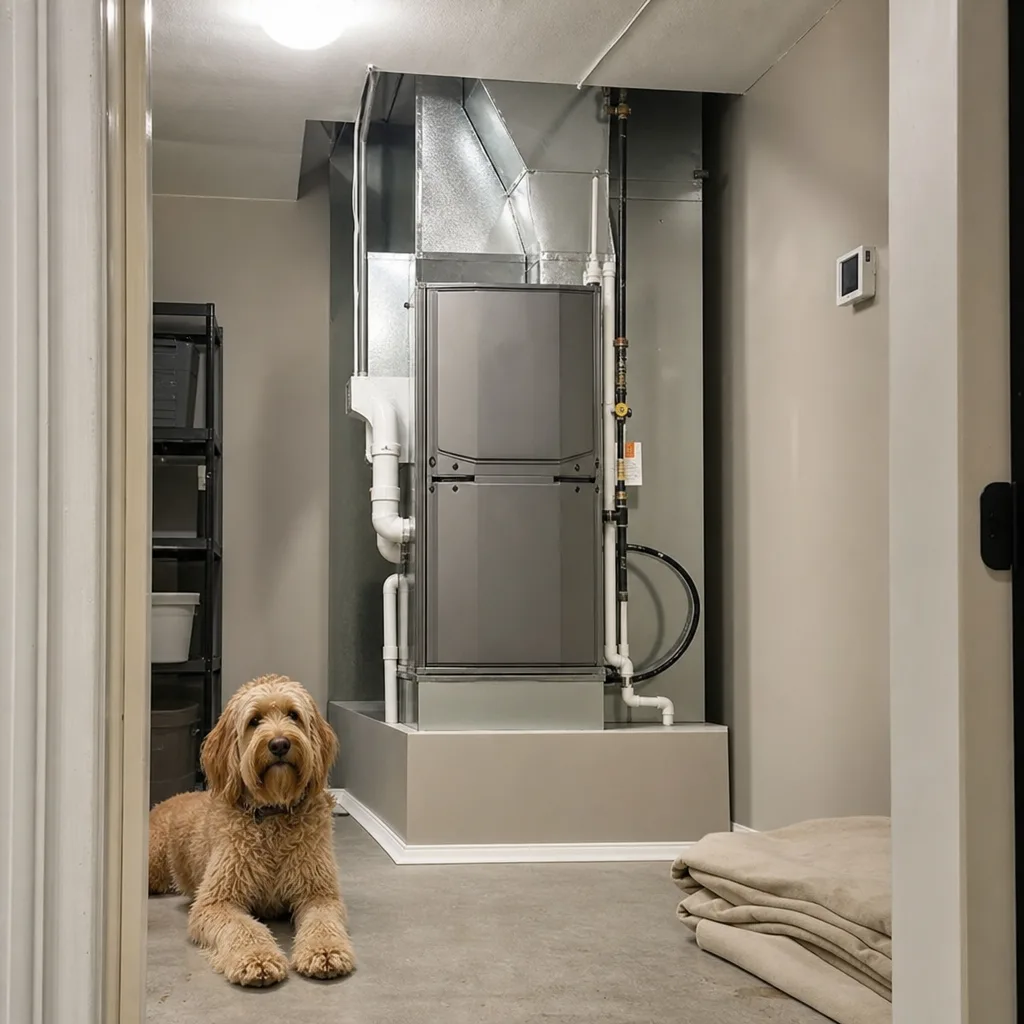
Replacing a furnace generally calls for a mechanical permit through the City of Dallas. A city inspector then checks the finished work. If you live in a nearby town, your city or county runs its own permit office, and the rules can differ a bit from Dallas. A good contractor knows which office covers your address and handles it for you.
Here’s what an inspector is looking at on a furnace job:
- Gas connections that are tight and leak-free
- Venting that carries exhaust safely out of your home, which matters even more when a high-efficiency unit switches to plastic vent pipe
- Proper clearance from wood framing, especially in a cramped attic
- Enough fresh air for the furnace to burn fuel cleanly
- Electrical hookups done the right way
Each of those ties back to carbon monoxide and fire risk. A crooked vent or a loose gas fitting might work fine on day one and still put your home at risk. The inspection is how you find out before it matters.
Some contractors offer to skip the permit to save you money. Say no. You’d save a little now and take on all the risk yourself. Unpermitted work can also come up later when you sell your home or file an insurance claim. As we mentioned in the pricing section, permits are listed separately on our quotes unless stated otherwise. That way you can see exactly what you’re paying for instead of having it quietly left out.
In Texas, HVAC contractors are licensed by the Texas Department of Licensing and Regulation, also called TDLR. You can look up any contractor’s license on the TDLR website in about a minute. Do it before anyone starts work in your home. Ours is HVAC License #TACLA29023C, and we’re glad to have you check it.
A furnace job can also touch other trades. If your new furnace needs a new gas line or changes to existing gas piping, Texas requires that work to be done under a plumbing license. New circuits or wiring changes fall under an electrical license. Xtreme Air Services is a licensed and insured HVAC, plumbing, and electrical contractor, so one accountable team can cover all of it. You won’t have to juggle three companies or wonder who’s responsible if something isn’t right.
Before you sign, ask any contractor these three things: Who pulls the permit? What’s your license number? Is your company insured? You should get clear, quick answers. If you hear hesitation or a reason why a permit isn’t needed, keep looking.
Need help with Furnace installation?
Call Today, Get Service Today. Xtreme Air Services — Oak Lawn is ready to help.
Signs You Need Furnace Installation, Not a Repair
A furnace that quits on a cold night doesn’t always need replacing. Plenty of furnaces just need one part fixed and have years of life left. The real question is simple: will a repair give you reliable heat, or are you about to pay to patch something that’s wearing out?
Here’s when a repair is usually the smart move:
- Your furnace is fairly young and this is its first real problem.
- The trouble comes from one worn part, like an igniter, a dirty flame sensor, a blower motor, or a control board. These are normal repairs, not signs the whole system is done.
- A clogged filter or a thermostat problem is behind it. Those are quick fixes, and a new filter is something you can often change yourself.
- The rest of the system is in good shape, and the repair costs a small part of what a new furnace would.
If that sounds like your situation, fix it. A new furnace you didn’t need isn’t a good deal at any price.
Now here’s when installation starts to make more sense:
- It’s getting old. Many gas furnaces last somewhere around 15 to 20 years. Past that point, more parts wear out at once, and fixing one often just moves you on to the next.
- You’re calling for repairs every winter. If this is your second or third service call in a couple of seasons, that money may be better spent on a furnace you can count on.
- The heat exchanger is cracked. This is the metal part that keeps burning gas and exhaust away from the air you breathe. A crack is a safety problem, and on most furnaces fixing it isn’t practical.
- Parts are hard to get. Older models can sit for days waiting on a part, and that’s a long time without heat during a hard freeze.
- Your bills keep climbing and some rooms never get warm, even after repairs.
- You’re replacing your AC anyway. Your furnace’s blower moves the cool air too, so a worn-out furnace can hold a new AC back.
Dallas adds a twist here. Our winters are short, so a furnace might not run many hours each year. But a lot of homes here keep the furnace in the attic, where it bakes in summer heat month after month. That heat is hard on wiring, motors, and other parts. So the age on the label doesn’t tell the whole story. How the unit has held up matters just as much.
If you’re not sure which side you’re on, ask for both numbers: what the repair costs today, and what a replacement costs. Then think about how long you plan to stay in your home. A fair technician will lay out both options and let you make the call. You shouldn’t feel pushed either way.
Call 469-269-6373
Watch Our Video
See How We Handle Furnace installation in Dallas
Xtreme Air Services — Oak Lawn
How the Furnace Installation Process Works
Knowing what happens on install day takes a lot of the worry out of it. Here’s how a furnace replacement should go, from the first look at your system to the moment warm air comes out of your vents.
- The home visit and quote. A technician looks at your current furnace, where it sits, and the ducts, venting, and gas line around it. This is where the sizing and swap-or-modify questions from earlier get answered. You get upfront flat-rate pricing to approve before any work starts.
- Getting your home ready. Clear a path to the furnace. If it’s in the attic, move stored boxes away from the opening and the walkway. Put pets in a closed room, and point out anything fragile along the route.
- Taking out the old furnace. Gas and power to the unit get shut off first. Then the old furnace is disconnected from the gas line, vent, ducts, and wiring and carried out. With us, haul-away is part of the standard job, so it doesn’t end up in your garage.
- Setting the new furnace. The new unit goes in level, with safe space around it. It’s then hooked up to the gas line, venting, ductwork, power, and thermostat. On a like-for-like swap, those connect to what’s already there. Any vent, drain, or duct changes in your quote happen at this step.
- Startup and testing. This is the part you shouldn’t let anyone rush. Gas fittings get checked for leaks. The furnace lights, the flame burns clean, air moves through every vent, and the thermostat turns the heat on and off the way it should. Startup and testing are included in our standard installation, so your system is running before we leave.
- The walkthrough. You should see the furnace run, know where the filter goes and how to change it, and get your questions answered.
- The inspection. If a permit was pulled, the city inspection comes after the install, as covered in the permit section.
How long does it take? A straight swap is often done in about a day. Extra venting, duct, or gas work can stretch it longer. Your quote should tell you which kind of job you’ve got, so you’re not guessing.
Timing matters in Dallas, too. Attic installs in the middle of summer are slow, careful work, because attic heat makes every step harder. If your furnace is limping along, replacing it in the fall or spring gives you more breathing room than waiting for the first hard cold front, when everyone needs heat at once.
Watch for two warning signs on any install. One is a crew that leaves without running the furnace through a full heating cycle while you watch. The other is being asked to sign before the price is clear. A job done right the first time ends with a working system, a clean space, and no surprises on the bill.
Call 469-269-6373
Frequently Asked Questions
Common questions about Furnace installation
What is the $5000 rule for furnace replacement?
It’s a rule of thumb, not a law, that helps you decide between repair and replacement. You multiply the furnace’s age by the repair cost, and if that number tops $5,000, replacement usually makes more financial sense than another repair. It’s a quick gut check, not a hard rule, so weigh it alongside how old your furnace is and how often it’s been breaking down.
Can I install my own furnace in Dallas?
No, you shouldn’t install your own furnace in Dallas. A new furnace needs a mechanical permit and an inspection, and the gas and electrical connections involved require a licensed contractor under TDLR rules. A furnace burns fuel inside your home, so a crooked vent or loose gas fitting can create a carbon monoxide or fire risk that may not show up until it’s serious.
How much does a new furnace cost for a 2,000 square foot house?
It depends more on your home’s insulation, windows, and duct condition than square footage alone. A furnace sized by square footage without those factors is often the wrong size, which leads to short cycling and uneven heat. The right way to price it is a home visit where sizing is based on your actual house, not just a 2,000 square foot number.
Ready to Get Started?
Call (469) 269-6373 Today, Get Service Today.