


Electrical Troubleshooting in Plano: Find the Fault Before You Pay for a Fix
The fault traced to where it starts, with a clear written summary before any repair begins.
What’s Covered on This Page
- What Electrical Troubleshooting Fixes
- Older Plano Homes Add a Layer to the Diagnosis
- What Happens During the Visit
- What a Diagnostic Visit Costs and What Changes the Price
- Signs You Need Troubleshooting Now Versus a Simple Reset
- How long does electrical troubleshooting usually take?
- Can a tripping breaker fix itself, or will it keep happening?
- Should I worry if only part of my house loses power while my neighbors still have it?
- What should I check before assuming my outlet is broken?
What Electrical Troubleshooting Fixes
Most electrical problems show up in one spot but start somewhere else. A dead outlet in your living room might be perfectly fine on its own. The real trouble could be a loose wire a couple of boxes down the line, a tripped GFCI outlet in another room, or a worn breaker in the panel. Troubleshooting means following that circuit, step by step, until the cause turns up.
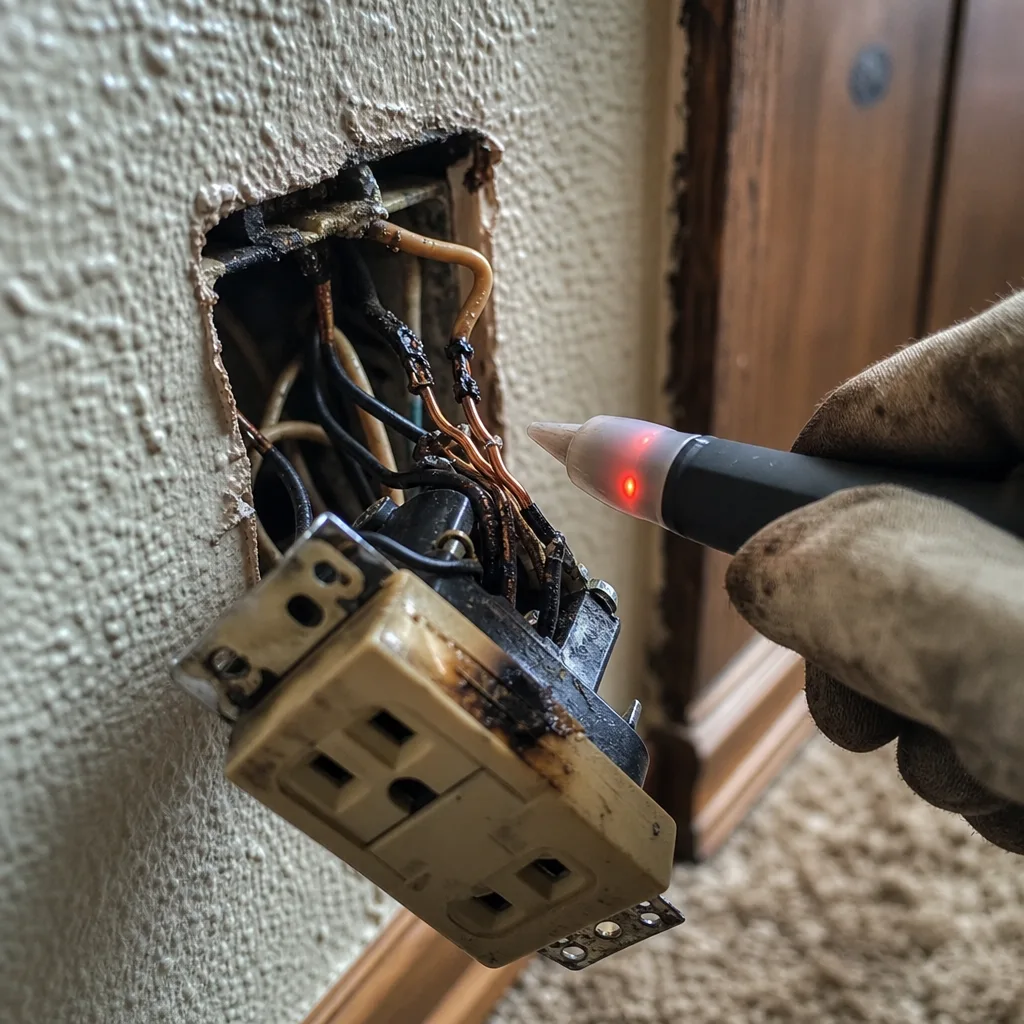
Here’s what it’s built to track down:
- A dead outlet or switch. The fault can be in the device itself, in a connection upstream, or in the breaker that feeds it.
- A breaker that trips again and again. That can point to too much load on one circuit, a short in a wire or device, or a breaker that’s wearing out.
- Lights that flicker or dim. This can come from a loose connection, a circuit shared with a big appliance, or a problem back at the panel.
- A problem that comes and goes. Intermittent faults are the hardest to pin down because they may not act up while someone’s looking.
- Outlets or switch plates that feel warm, buzz, or smell hot. Heat or buzzing at a device often means a connection isn’t tight.
- Part of the house losing power. Half the outlets in a room going dark can trace back to one bad splice or one failing breaker.
Say your kitchen outlets quit whenever the microwave and coffee maker run at the same time, and flipping the breaker back on only works until the next morning. That pattern tells a story. Troubleshooting is how you read it, so you know whether it’s a load problem, a worn breaker, or a connection that’s starting to fail.
Plano summers add their own pressure. Your AC, refrigerator, and other big loads run hard for months at a time. That steady demand can expose a weak connection or an overloaded circuit that seemed fine back in the spring.
This is why finding the cause has to come first. Swapping a dead outlet won’t help if the problem is a loose splice behind a different one. Replacing a breaker won’t stop the trips if a damaged cord or appliance is the real trigger. Guessing can mean paying for parts you didn’t need while the actual fault stays put.
When our team handles electrical troubleshooting, the visit includes on-site diagnosis and a written summary of what we found and what we recommend. Any repair work is separate. You see the cause and your options in writing first, and then you decide what happens next. No one’s rushing you into a fix before you understand the problem.
Older Plano Homes Add a Layer to the Diagnosis
If your Plano home has been around a few decades, the wiring behind the walls has a history. That history matters. The outlet that quit today might be fine on its own while the real cause is something a past owner or an earlier era of building left behind.
A newer house usually has one set of wiring put in at one time by one crew. An older house often has layers. There’s the original work, then a room added on, a kitchen updated, a ceiling fan hung by a weekend handyman, and a few outlets added where someone needed them. Each change can be done well or done poorly, and none of it comes with a map.
Here’s what can turn up in older homes that changes how a fault gets traced:
- Panels running close to their limit. A panel sized for a house decades ago now has to feed today’s AC, big TVs, home offices, and maybe an EV. Breakers can trip because the system is stretched, not because one device is broken.
- Two-prong outlets with no ground wire. These limit what you can safely plug in. Swapping them for three-prong outlets without adding a ground can make them look safer than they are.
- Aluminum branch wiring in some homes from the 1960s and 1970s. Aluminum expands and shrinks more than copper as it heats and cools, so connections can loosen over time and run warm.
- Splices hidden inside walls or ceilings instead of in a proper junction box. A dead run of outlets can trace back to one buried connection that’s hard to reach.
- Older repairs that don’t match. Mixed wire sizes, overloaded boxes, or an outlet wired backward can cause problems that seem random.
North Texas heat plays a part too. Wiring that runs through a hot attic goes through big temperature swings every summer day for years. That slow cycle of heating and cooling is hard on older connections, and it’s one more reason an intermittent problem can show up in July and disappear by October.
All of this is why guessing is riskier in an older house. Replace the dead outlet and you may still have a loose aluminum connection two boxes away. Reset the breaker and you haven’t touched the overloaded panel. Troubleshooting in an older home means checking the circuit you called about and also noticing what’s around it.
That can mean more than one finding. Because your written summary lays out what we found, you can see the fault you called about apart from anything else that came up. You can ask which items need attention now and which can wait, then decide on your own timeline. If something bigger comes up, like aluminum wiring replacement, a ground wire installation, or an electrical panel upgrade, those are separate jobs our team also handles. Nothing gets bundled into today’s visit without your okay.
Older homes can also take a bit more work to diagnose. The fault may be more complex, there may be more circuits to check, and hidden splices can be harder to reach. Complexity, circuit count, and access are the same things that move the cost of troubleshooting up or down, so it’s fair to ask about them when you call.
What Happens During the Visit
You should know what you’re paying for before anyone walks through your door. An electrical troubleshooting visit has one job: find the cause of the problem and put it in writing for you. Fixing it is a separate step, and that step is your call.
Good troubleshooting starts with your story. When did the problem start? Does it happen at a certain time of day or when a certain appliance runs? Did a breaker trip, or did things just go dark? Those details point to where the fault likely sits, so the circuit check starts in the right place instead of at random.
From there, the work follows the circuit. That usually means checking the panel and the breaker that feeds the problem area, testing the outlets and switches along that run, and looking for loose or heat-damaged connections. If the fault only shows up now and then, it can take longer to catch, because it has to act up or leave a clue behind.
You can help the visit go faster with a little prep:
- Write down what you noticed, when it happened, and what was running at the time.
- Note which breaker tripped, if you know.
- Clear a path to your electrical panel, whether it’s in the garage, a closet, or a utility room.
- Make the outlets, switches, or fixtures that gave you trouble easy to reach.
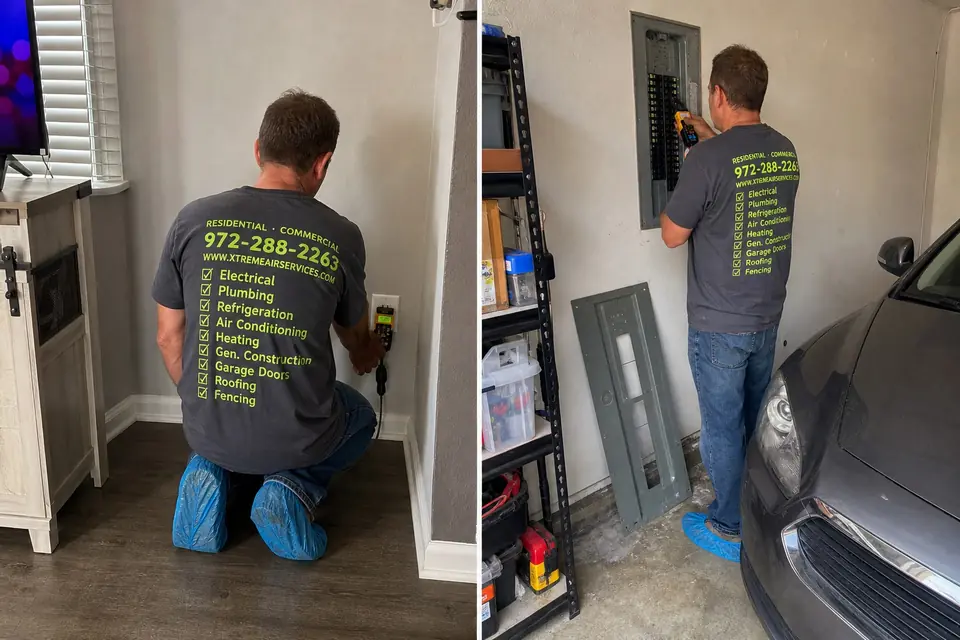
When our team handles the visit, you get on-site diagnosis and a written summary of what we found and what we recommend. Repairs or other fixes that turn up aren’t part of the troubleshooting fee. Pricing is upfront and approved by you before any work starts, so there’s no meter running while you wait.
Here’s what the numbers look like. Our most common troubleshooting job, which is tracking down a dead outlet, a tripping breaker, or a fault that comes and goes, runs $100 to $200. Electrical troubleshooting in general falls in a typical range of $100 to $350. Where your job lands depends on how complex the fault is, the size of your home and how many circuits it has, how easy the wiring is to reach, and whether special test equipment is needed.
There’s also a service-call fee of $26 to $99. If you choose Xtreme Air Services to make the repair, that fee is credited toward the repair, and the troubleshooting fee is often credited too. Financing isn’t typically offered for a job this size, but it is available on larger repairs and replacements, like a panel upgrade.
The person at your door is a licensed technician who has been background-checked and drug-tested. Electrical trouble doesn’t wait for a weekday either, and there’s no extra charge for nights or weekends. Same-day service is available, so you don’t have to spend days wondering what’s behind that dead outlet.
When the visit’s done, you’ll have a clear answer in writing. You can fix it with us, get a second opinion, or wait if the problem isn’t urgent. Either way, you’re making the choice with the facts in hand.
Call now
Not sure what your Electrical troubleshooting project needs? Ask us.
Call Today, Get Service Today. Xtreme Air Services — West Plano is ready to help.
What a Diagnostic Visit Costs and What Changes the Price
You’ve seen the numbers above. The real question is where your problem lands in that range. A few things decide it, and none of them are mysterious once you see them in a real home.
The most common troubleshooting jobs fall in the $100 to $200 range. The rest of the typical range comes from four things:
- How complex the fault is. A breaker that trips every time you run the space heater is usually a quick trace. A light that flickers once a week with no pattern takes longer to catch, because the fault has to show itself or leave a clue behind.
- Your home’s size and circuit count. A bigger house with more circuits gives a fault more places to hide. A dead run of outlets on a circuit that feeds three rooms takes more checking than a single bad switch.
- Access. A panel in an open garage is easy. Wiring in a Plano attic in August, or a splice buried behind a finished wall, takes more time and care to reach.
- Special test equipment. Some faults can’t be found with basic testing. If your problem needs specialized tools to pin down, that can add to the cost.
It also helps to know how electrical diagnosis is priced in general, since not every company does it the same way. Some electricians bill by the hour. That can sound fine until you have an intermittent fault that takes a while to track down, and the bill keeps climbing while you watch. Others quote a price up front, so you know the cost before work starts. With our team, pricing is upfront and you approve it first, so a slow-to-show fault doesn’t turn into a surprise.
Keep one more thing in mind. The troubleshooting fee pays for the answer, not the fix. If the cause turns out to be a worn breaker or a loose connection, that repair is priced on its own. If it points to something bigger, like a panel that’s maxed out, you’ll know that before any money goes toward it.
Whoever you call, these questions will tell you a lot before anyone shows up:
- Is there a service-call fee, and does it get credited if I go ahead with the repair?
- Is the diagnosis a set price, or are you billing by the hour?
- Will I get what you find and what you recommend in writing?
- Is the repair priced separately, and do I approve it before you start?
- Does the price go up at night or on weekends?
A company that answers those clearly on the phone will most likely be clear in your home too. If you get vague answers, that tells you something too.
If you’re not sure where your problem fits, tell us what you’re seeing when you call. Mention how often it happens, which rooms are affected, and where your panel is. That gives you a better sense of what to expect before a technician ever knocks on your door.
Call 469-217-9095
Watch Our Video
See How We Handle Electrical troubleshooting in Plano
Xtreme Air Services — West Plano
Signs You Need Troubleshooting Now Versus a Simple Reset
Not every dead outlet needs a technician. Plenty of electrical hiccups are one-time events you can clear yourself in a couple of minutes. The trick is knowing which ones are a simple reset and which ones are trying to tell you something.
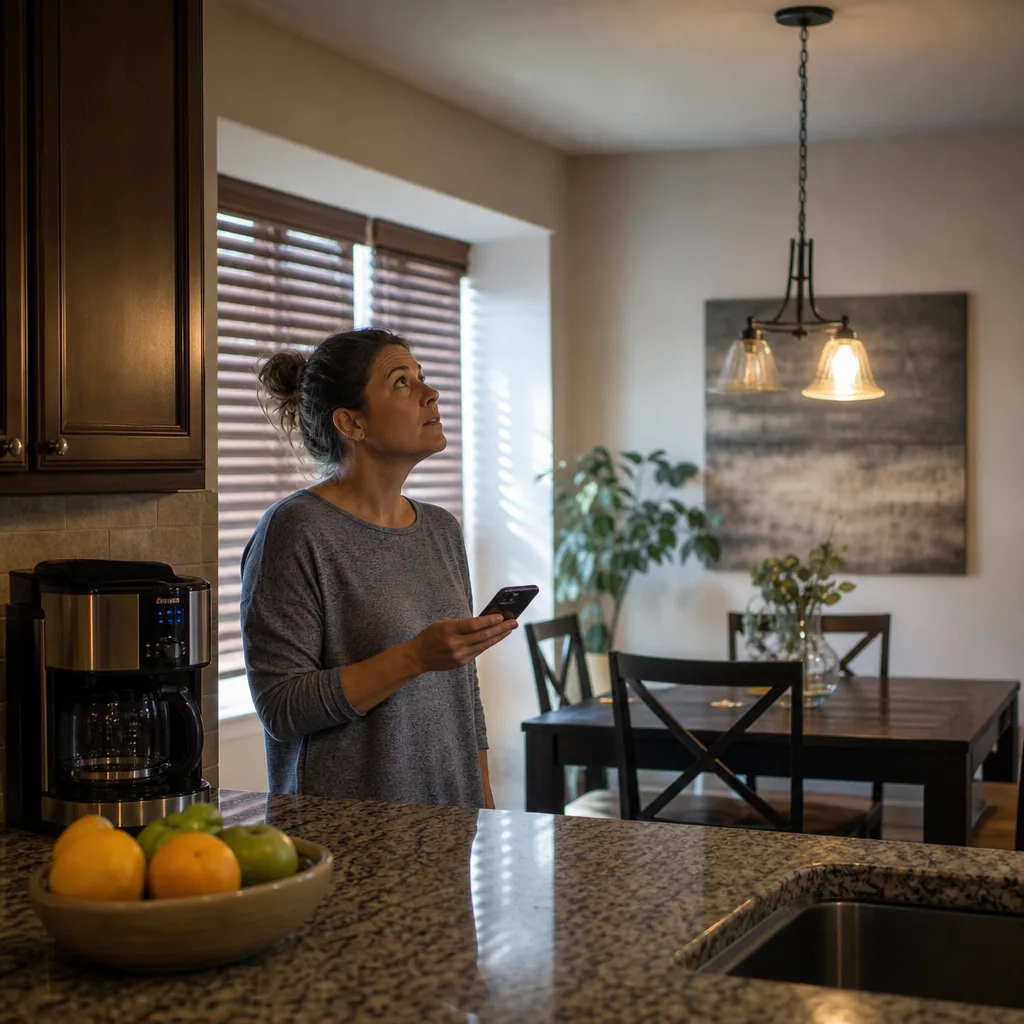
You can usually handle it yourself if:
- A breaker tripped once when you ran a space heater and a hair dryer on the same circuit. Unplug one, reset the breaker, and move the heavy load to a different outlet. If it stays on, you’re done.
- A bathroom, kitchen, garage, or outdoor outlet went dead. Look for a GFCI outlet nearby, the kind with test and reset buttons. One GFCI can protect several outlets down the line, so the one that tripped may be in a different room. Press reset and check again.
- A single lamp or fixture quit. Try a new bulb and make sure the wall switch is on before you assume the wiring’s bad.
- Your whole street lost power, or your neighbors are dark too. That’s an outage on the utility side, not a wiring fault in your home. In Plano, Oncor handles the lines and the restore. A troubleshooting visit won’t speed that up.
It’s also fine to wait and watch. If a breaker tripped once months ago and hasn’t done it since, you don’t need to book anything today. Jot down what was running at the time. If it happens again, that note will help whoever traces it.
It’s time for troubleshooting, and sooner is better, if:
- The same breaker trips again right after you reset it, or it won’t reset at all.
- You keep resetting the same breaker every few days. A breaker isn’t meant to be a daily switch.
- You smell something hot or burning near an outlet, switch, or the panel, or you see scorch marks or melted plastic.
- An outlet or switch plate feels warm, buzzes, or sparks when you plug something in.
- You feel a tingle or a shock from an appliance, fixture, or faucet.
- Lights flicker or dim in more than one room, or every time your AC kicks on during a Plano summer afternoon.
- Part of your house has power and part doesn’t, while your neighbors are fine.
- A GFCI won’t reset, or it trips again as soon as you press the button.
If you notice heat, a burning smell, or sparks, stop using that outlet or fixture and leave its breaker off until someone checks it. Don’t keep flipping a breaker that won’t hold. Each reset sends power back into whatever caused the trip.
Here’s a simple way to think about it. One trip with an obvious cause, like too many things on one circuit, is the breaker doing its job. A trip with no clear cause, a trip that keeps coming back, or any sign of heat is a fault that hasn’t been found yet. Resetting it only hides the symptom. Finding where it starts is what makes it stop.
Frequently Asked Questions
Common questions about Electrical troubleshooting
How long does electrical troubleshooting usually take?
It depends on whether the fault shows itself right away. A breaker that trips on a clear pattern, like running a space heater and hair dryer together, is usually traced quickly. A fault that only happens once in a while takes longer, because it has to act up or leave a clue behind before it can be found.
Can a tripping breaker fix itself, or will it keep happening?
A breaker that tripped once with an obvious cause, like too many things plugged into one circuit, is usually fine once you spread out the load. But if the same breaker trips again right after you reset it, or trips every few days with no clear reason, that points to a fault that needs tracing, not a one-time fluke.
Should I worry if only part of my house loses power while my neighbors still have it?
Yes, that points to a problem inside your home’s wiring, not a utility outage. If your whole street or your neighbors are also dark, that is likely an Oncor outage and a troubleshooting visit will not speed up the restore. But if part of your house loses power while neighbors have theirs, the cause is usually one bad splice or one failing breaker inside your own system.
What should I check before assuming my outlet is broken?
Check for a nearby GFCI outlet first, since one GFCI can protect several outlets down the line. This is common in bathrooms, kitchens, garages, and outdoor outlets. Look for the outlet with test and reset buttons, press reset, and check your dead outlet again before calling anyone.
Ready to Get Started?
Call (469) 217-9095 Today, Get Service Today.