


Home Rewiring in Plano: Know What Your Home Needs
A straight answer on whether your house needs rewiring or a smaller repair, and what a full project involves.
What’s Covered on This Page
- Signs Your Home Needs Full Rewiring
- When You Don’t Need Full Home Rewiring
- What Happens During a Home Rewiring Project
- Permits and Inspection for Electrical Work in Plano
- What Drives the Cost of Home Rewiring
- Can I keep living in my house while the rewiring is happening?
- Will a rewire leave big holes in my walls?
- How do I know if my electrician is licensed to do this work?
- What if my home was supposedly rewired by a previous owner?
Signs Your Home Needs Full Rewiring
Wiring hides behind your walls, so you can’t look at it directly. What you can see is how your home acts. The key is a pattern. If you only have one problem, it’s usually just one problem. If you have problems in many rooms, the wiring itself may be the cause.
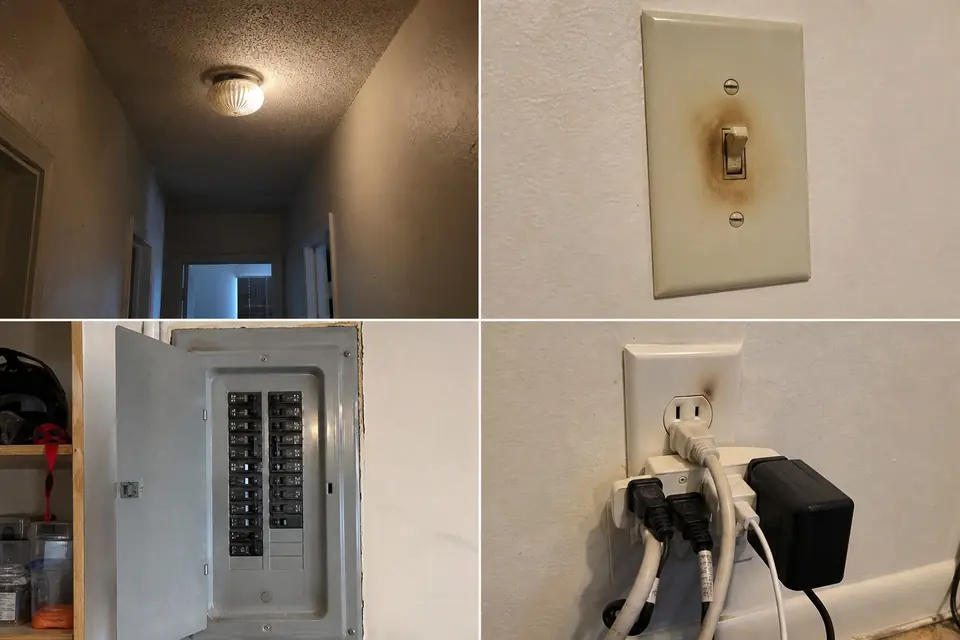
- Outlets, switch plates, or cover plates that feel warm or look scorched or brown around the edges.
- A burning plastic or hot smell near outlets, switches, or the panel, with no clear cause.
- Lights that flicker or dim in several rooms, not just when a big appliance kicks on.
- Breakers that trip on more than one circuit, even when you’re not running much.
- Two-prong outlets in most rooms. This often means there’s no ground wire anywhere in the house.
- Outlets that spark, buzz, or won’t hold a plug tight anymore.
- Wire that’s cracked, brittle, or crumbling where you can see it, like in the attic or at the panel.
- Dull silver wire instead of copper at outlets or the panel, which can mean aluminum branch wiring.
- A home inspector or insurance company has flagged the wiring as outdated or unsafe.
Your home’s age matters here. Plenty of Plano homes went up during the city’s big growth in the 1970s and 1980s. Some homes built from the mid-1960s to the mid-1970s used aluminum branch wiring. At the outlets and switches, aluminum can loosen and run hot over time. Homes from that era also weren’t built for today’s load of computers, TVs, chargers, and kitchen gadgets. In some of them, a handful of circuits are doing the work of many.
North Texas attics add one more strain. On slab homes, much of the wiring runs through the attic, and summer attic heat bakes that wire year after year. Older insulation on the wire can get stiff and crack. You might never notice until a light starts acting up or a breaker won’t stay on.
Here’s when you probably don’t need a full rewire. One outlet stopped working. One breaker trips when you run the microwave and the toaster at the same time. A single light flickers because the bulb is loose. A GFCI outlet in the bathroom popped and needs a reset. These are small fixes. Try resetting the GFCI or the breaker first. If the problem is limited to one spot, a simple repair is usually the right answer.
If you’re not sure which side of the line you’re on, start with an electrical safety inspection. A licensed electrician can open the panel, test circuits, and look at the wire in your attic and outlets. Then you’ll know if you need a targeted repair, a fix for one problem like aluminum wiring, or a full rewire.
When You Don’t Need Full Home Rewiring
A full rewire is a big job. It means opening walls, pulling new wire through your attic, and living around the work for a while. If your home has one clear problem, you can usually fix that problem and stop there. Here’s when a smaller job is the honest answer.
Your wiring is in good shape, but your panel isn’t. Some homes have solid copper wire behind the walls and an old or undersized panel feeding it. Breakers that won’t hold or a panel with no room for new circuits doesn’t always point to bad wire. In that case, an electrical panel replacement or upgrade may fix what you’re feeling without touching the walls.
You just need more power in one spot. Maybe the kitchen trips when the air fryer and coffee maker run together. Maybe you’re adding a home office, a freezer in the garage, or an EV charger. One or two dedicated circuits can take that load off the old ones. You don’t need to replace every wire in the house to fix one overworked room.
You have aluminum wiring, but it’s holding up. If you’ve spotted that dull silver wire, the risk sits mostly at the connections, where outlets and switches meet the wire. An electrician can check those points and talk you through repair options, from fixing the connections to aluminum wiring replacement. Full replacement is one choice, not the only one.
You have two-prong outlets in a few rooms. Ungrounded outlets don’t always mean a whole new system. Depending on what’s in the walls, ground wire installation on certain circuits, or GFCI protection at those outlets, can make them safer for everyday use. A licensed electrician can tell you which fits your home.
Your home is newer. Many Plano homes went up after the aluminum wiring years. Those homes often have copper wire and grounded outlets throughout. If your house falls in that group and you only have a problem here and there, you’re likely looking at a repair or a code correction, not a rewire.
Sometimes the honest answer is to wait. Your wiring may be aging, but an inspection may show nothing unsafe right now. If you’re planning a kitchen or bathroom remodel in the next year or two, it can make sense to fix any real hazards now and save the bigger rewire for the remodel. The walls will already be open, and you’ll pay for drywall repair once instead of twice. Just don’t wait on anything that’s warm, scorched, sparking, or giving off a burning smell.
- One problem area with good wire elsewhere: fix the area.
- An old panel with sound wiring: upgrade the panel.
- Not enough circuits for how you live now: add dedicated circuits.
- Aluminum wire with no signs of heat damage: look at connection repairs or aluminum wiring replacement.
- Aging but safe wiring with a remodel coming: fix the hazards now and rewire during the remodel.
The electrician who inspects your home should be able to show you why a smaller fix works or why it doesn’t. If you’re told you need a full rewire, ask what they found and where. You should get a clear answer you can see for yourself.
What Happens During a Home Rewiring Project
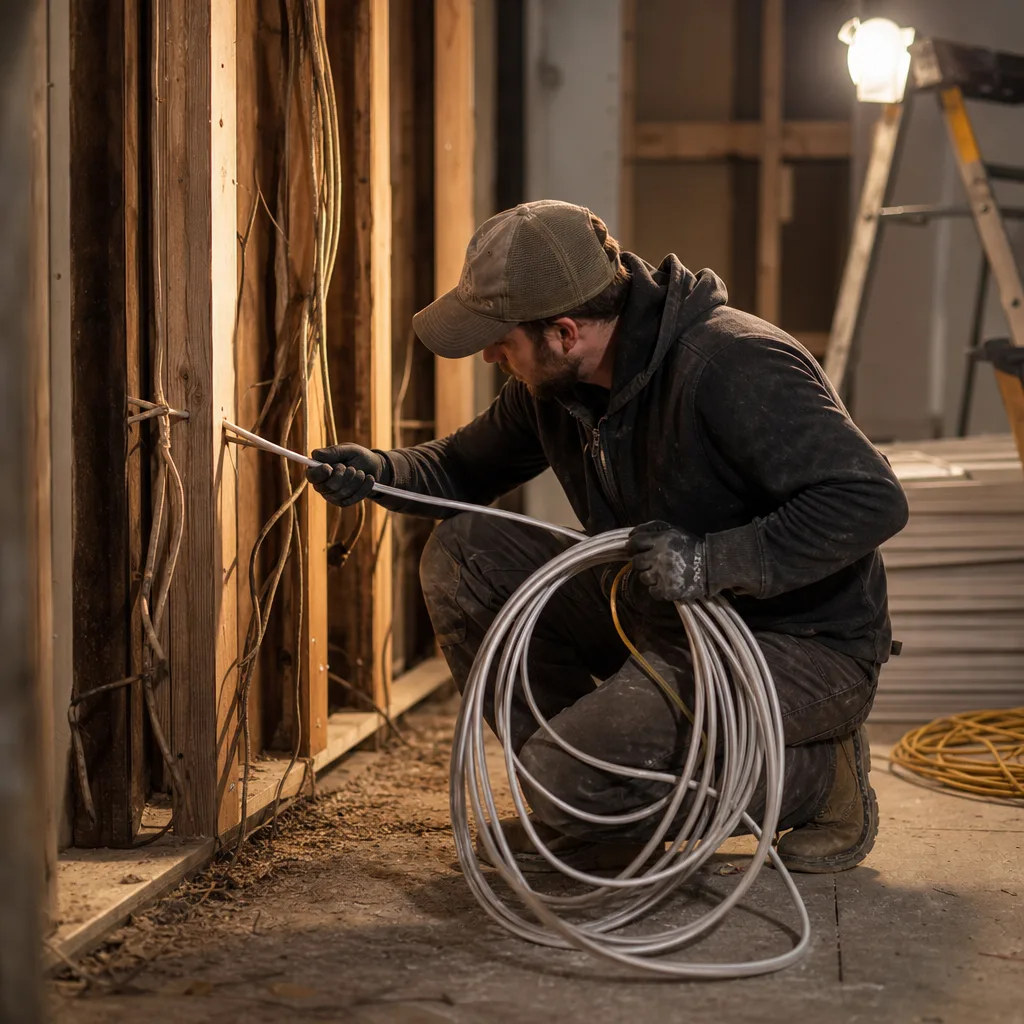
A rewire sounds like your house gets torn apart. It usually doesn’t. Most of the work happens in the attic and through small openings in your walls, not by gutting whole rooms. Here’s how a typical job goes, from first look to final test.
- Walk-through and plan. A licensed electrician maps your circuits, checks the panel, and looks at the wire in the attic and at your outlets. You’ll talk about how you use each room today, like a home office, a garage freezer, or a busy kitchen. That way the new circuits fit how you live now, not how a family lived when the house was built.
- Permit. A full rewire is permitted work, and the city sends an inspector to check it. Ask up front who pulls the permit and whether it’s in your price. Permits aren’t always part of a rewiring quote.
- Panel check. If your panel can’t safely handle the new circuits, it may need an upgrade before or during the rewire. You should know this before work starts, not halfway through.
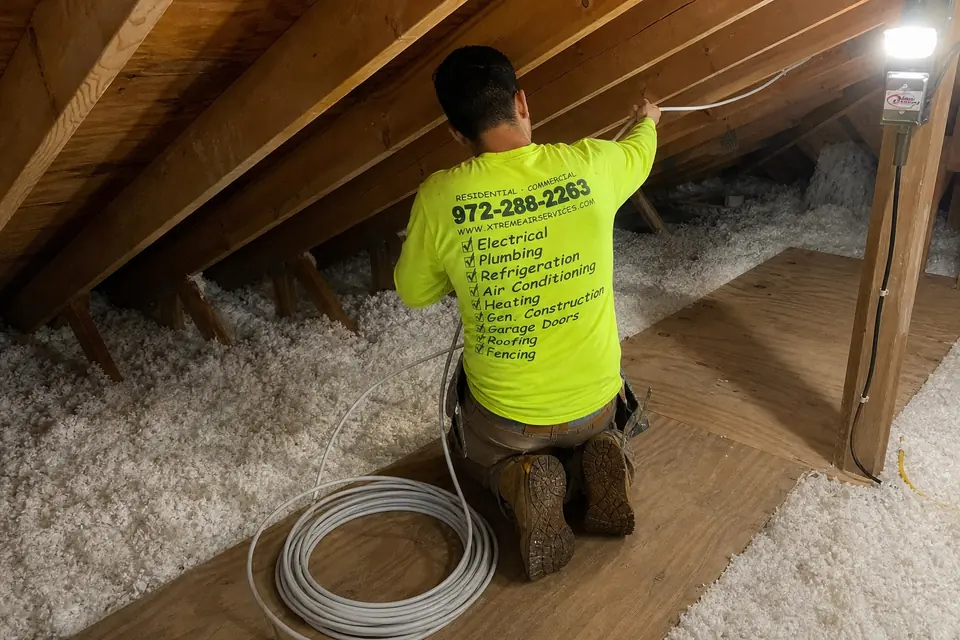
- Pulling new wire. Plano homes sit on slabs, so there’s no crawlspace under the floor to work from. New wire usually drops down from the attic into the walls. Electricians fish it through small holes cut near outlets, switches, and the ceiling line. Old wire is often cut off and left dead inside the wall, because pulling it out would mean tearing open much more drywall.
- New devices and grounding. Fresh outlets and switches go in, and every circuit gets a proper ground. GFCI protection goes where code calls for it, like kitchens, bathrooms, garages, and outdoor outlets.
- Inspection. The city inspector checks the work to make sure it meets code. Holes stay open until the work passes so the inspector can see what’s inside.
- Startup and testing. Each circuit is turned on and tested before the job is called done. You should be able to flip every switch and plug into every outlet without a problem.
Can you stay home during the work? Most families can. Power usually goes off one section at a time, so some rooms will be dark for part of the day while the rest of the house keeps running. It helps to pull furniture away from the walls, clear a path to your attic access, and keep pets in a closed room. If you have a choice, keep in mind that a North Texas attic in July is brutal to work in, and spring or fall can be easier on everyone.
How long it takes depends on your home’s size, how many circuits you need, how easy the attic and walls are to reach, and what shape the old wiring is in. A good electrician will give you a plan and a schedule before the first hole gets cut.
Before anyone starts, ask to see the circuit plan, which rooms lose power and when, and exactly what the quote covers. You should never have to guess what’s happening inside your own walls.
Have questions? We’re happy to help.
Call Today, Get Service Today. Xtreme Air Services — West Plano is ready to help.
Permits and Inspection for Electrical Work in Plano
Here’s the short answer. A full home rewire in Plano needs an electrical permit from the City of Plano, and in Texas a licensed electrician has to do the work. That permit isn’t just paperwork. It’s what brings a city inspector out to look at your new wire before your walls get closed up. It’s a second set of eyes on work you’ll never see again.
Electricians in Texas are licensed by the Texas Department of Licensing and Regulation, or TDLR. Before you hire anyone, ask for their license number. You can look it up yourself on the TDLR website in a couple of minutes. A licensed electrical contractor normally pulls the permit under their own license, so their name is on the work.
On a rewire, the inspector usually comes out twice:
- Rough-in inspection. This happens after the new wire is pulled and the boxes are set, but before outlets go in and before any holes get patched. The inspector checks that the wire is the right size for each breaker, that it’s secured properly, and that every circuit has a ground.
- Final inspection. This happens once outlets, switches, and the panel are finished. The inspector checks that GFCI and arc-fault protection are in the places code calls for, that the panel is labeled, and that everything works the way it should.
Why does this matter to you and not just the city? Think about the day you sell. A buyer’s home inspector may ask when the house was rewired and whether the work was permitted. If you have a permit on file and a passed final inspection, you have a clear answer. Without one, you may be asked to prove the work was done right, and that can mean opening walls again. The same goes for your insurance company if you ever have to file a claim. A passed inspection is your record that the job met code.
If a past owner says the house was already rewired, it’s worth asking the City of Plano whether a permit is on file for that work. If one isn’t, have the wiring checked before you count on it.
Watch for these red flags when you’re getting quotes:
- Someone offers to skip the permit to save you money.
- You’re asked to pull the permit yourself so the contractor doesn’t have to.
- The person can’t give you a license number, or the number doesn’t show up on TDLR.
- Nobody can tell you when the inspections will happen or what the inspector will check.
Permit costs can catch people off guard, so read your quote closely. With Xtreme Air Services, permits aren’t part of the standard rewiring price unless your quote says they are. That way you know before work starts whether that line item is included. We’re a licensed and insured electrical contractor, so the work is done under a license you can check.
Call 469-217-9095
Watch Our Video
See How We Handle Home rewiring in Plano
Xtreme Air Services — West Plano
What Drives the Cost of Home Rewiring
Let’s talk numbers. For Xtreme Air Services, a whole-home rewire typically runs $8,000-$20,000. Our most common job is replacing outdated or unsafe wiring throughout the home with new circuits, devices, and grounding, then inspecting and testing it. That job usually falls between $10,500-$15,000. We price it by your home’s size and the scope of the work, not by the hour.
That’s a wide range, so here’s what pushes your price toward one end or the other.
- Home size and number of circuits. A bigger house means more wire, more outlets, and more circuits. A home office, a garage freezer, or a busy kitchen can add circuits too, because you’re wiring for how you live today.
- Attic and wall access. Since Plano homes sit on slabs, new wire comes down from the attic. A roomy attic is quicker to work in. A low roof, deep insulation, or a two-story home where the upstairs floor blocks the path to first-floor walls takes more time and care.
- Condition of the old wiring. Brittle, heat-damaged, or aluminum wire can mean more boxes to replace and more connections to sort out along the way.
- Panel upgrades. If your panel can’t safely carry the new circuits, it may need an upgrade. That adds to the total, and you should know about it before work starts.
- Code upgrades. Today’s code asks for things older homes didn’t have, like GFCI and arc-fault protection in certain rooms. Bringing the home up to that standard is part of the work.
- Drywall repair and permits. These are real costs you’ll want to plan for, even though they aren’t part of our standard rewiring price unless your quote says so.
Two homes on the same street can land in very different spots. Picture a one-story house with an open attic and solid copper wire that just needs more circuits. Now picture a two-story house next door with aluminum wire and a panel that’s out of room. Same neighborhood, very different jobs. That’s why an honest quote starts with someone looking at your attic, your panel, and your outlets.
Getting started is easy on your wallet. Our service-call fee is $26-$99, and it’s credited toward the repair if you move forward with Xtreme Air Services. For a project this size, we also offer flexible financing on qualifying installations and larger jobs, on approved credit.
Whoever you hire, ask these questions before you sign:
- Is this a flat price for the full scope, or can it change once the walls are open?
- Does the quote include a panel upgrade, or is that separate?
- Are permits and drywall patching in this price?
- What happens if you find problems beyond the agreed scope?
You should get clear, written answers to every one of them. With our upfront flat-rate pricing, you’ll see and approve the price before any work begins, so there’s no meter running and no surprises.
Call 469-217-9095
Frequently Asked Questions
Common questions about Home rewiring
Can I keep living in my house while the rewiring is happening?
Yes, most families stay home during a rewire. Power usually goes off one section at a time, so some rooms go dark for part of the day while the rest of the house keeps running. Clear a path to your attic access and keep pets in a closed room to make the day easier for the crew.
Will a rewire leave big holes in my walls?
No, most of the work happens through small openings, not full wall removal. New wire typically drops from the attic down into the walls through holes cut near outlets, switches, and the ceiling line. Old wire is often left inside the wall rather than pulled out, since removing it would mean tearing open far more drywall. You’ll still want a drywall pro or a weekend of patching afterward.
How do I know if my electrician is licensed to do this work?
Ask for their license number and check it yourself on the TDLR website in a couple of minutes. Texas requires a licensed electrician for rewiring work, and a licensed contractor normally pulls the permit under their own name. If someone can’t give you a number, or offers to skip the permit to save money, treat that as a red flag.
What if my home was supposedly rewired by a previous owner?
Ask the City of Plano whether a permit is on file for that work before you count on it. A permit means an inspector checked the wire before the walls were closed up, which gives you a real record. If no permit shows up, it’s worth having the wiring checked so you’re not guessing what’s behind your walls.
Ready to Get Started?
Call (469) 217-9095 Today, Get Service Today.