If your shower temperature fluctuates in just one bathroom, the culprit is almost always the shower valve cartridge or pressure-balancing mechanism. If it happens at multiple fixtures at once, the problem is bigger: your water heater or household pressure supply. Turn on another hot faucet while the shower runs. If the temperature shifts there too, you’re dealing with a system-wide issue, not a bad valve.
TL;DR:
- Temperature fluctuations in a single shower usually result from a worn-out or improperly installed mixing valve or cartridge, not the water heater itself.
- If multiple fixtures experience temperature swings simultaneously, the cause is likely the water heater’s sediment buildup, defective dip tube, or household pressure issues.
- Diagnosing consistent temperature problems involves testing other hot water outlets during the shower and listening for noises indicating sediment or heater failure.
- Replacing a faulty shower valve cartridge is generally a simple DIY task, but problems involving multiple fixtures or the water heater require professional inspection.
- Regular maintenance, such as flushing the tank and replacing cartridges in hard-water areas, prevents most common causes of temperature inconsistency.
Table of Contents
- What Makes Shower Water Temperature Change In The First Place?
- How Do You Diagnose Inconsistent Shower Water Temperature?
- Fixing A Faulty Shower Valve Or Cartridge Yourself
- Could Your Water Heater Be Causing The Problem?
- When Should You Call A Plumber For Shower Temperature Problems?
- Preventing Shower Temperature Problems Before They Start
- How A Plumber Actually Diagnoses This Issue
- Get Your Shower Temperature Fixed For Good
- Sources
- FAQ
What Makes Shower Water Temperature Change In The First Place?
Every shower relies on a mixing valve to blend hot and cold water into a stable temperature. Two types dominate American homes. A pressure-balancing valve reacts to pressure changes between the hot and cold lines, shifting the mix to compensate when one side drops. A thermostatic valve goes a step further, using a heat-sensing element to hold an exact temperature regardless of what’s happening elsewhere in the house.
When either valve wears out or was never installed correctly, that regulation breaks down. But the valve isn’t the only variable. Temperature swings also trace back to:
- Water heater capacity that can’t keep pace with simultaneous hot water demand
- Sediment buildup inside the tank, which insulates the heating element and slows recovery
- A failed dip tube that lets cold water leak into the hot water outlet
- Municipal or well pressure fluctuations that hit your whole plumbing system at once
A pressure drop on either the hot or cold side changes what comes out of the showerhead, even if nothing is technically broken. That’s why the same symptom, hot then cold then hot again, can point to a $15 cartridge or a $1,500 water heater depending on what else is happening in the house.
How Do You Diagnose Inconsistent Shower Water Temperature?
Before you touch a tool, spend ten minutes gathering information. This tells you whether you’re chasing a fixture problem or a system problem, and it saves you from replacing a cartridge that was never the issue.
- Test other hot taps while the shower runs. Turn on a bathroom sink or kitchen faucet during your shower. If the temperature dips there too, the problem is upstream of the shower, likely the water heater or main pressure supply.
- Note the timing and pattern. Does it happen right after someone flushes a toilet or starts the dishwasher? Does it fade in and out randomly, or hit a few seconds after you turn the water on? Pressure or demand issues usually show up right when another fixture activates.
- Listen for loud heater cycling or banging pipes. Rattling, popping, or knocking sounds near the water heater often mean sediment buildup or a heating element working harder than it should.
Pro Tip: Run the dishwasher or washing machine on purpose while someone showers. If the temperature dips the moment the appliance starts pulling water, you’ve isolated a demand problem in under five minutes.
Fixing A Faulty Shower Valve Or Cartridge Yourself
If your diagnostic points to one shower only, the valve cartridge is the most likely fix, and it’s genuinely one of the more approachable DIY plumbing repairs. Technicians often replace the cartridge first because it’s the quickest fix and resolves the symptom in most single-fixture cases.
Here’s the process:
- Shut off the water supply to the shower, either at the fixture’s stop valves or the home’s main shutoff if there’s no local valve.
- Remove the handle, usually one screw hidden under a cap, then pull off the trim sleeve to expose the cartridge.
- Slide the old cartridge straight out (no twisting) and check it for mineral crust, a cracked O-ring, or a chalky white residue, all signs of wear.
- Take a photo of the cartridge or note the brand stamped on it before heading to the hardware store. Cartridges aren’t universal, and matching the wrong one won’t seal properly.
- Install the replacement, reassemble the handle, and turn the water back on slowly to check for leaks and consistent temperature.
A few things worth knowing before you start:
- Light mineral buildup can sometimes be cleaned with a vinegar soak, but a cracked or brittle cartridge needs full replacement.
- Pressure-balancing cartridges and thermostatic cartridges are different parts. Confirm which type your valve uses before ordering.
- Test by running the shower alone first, then with another fixture running, to confirm the fix actually solved the original complaint.
Stop and call a professional if you hit a cross-threaded fitting, a concealed valve body set into the wall with no visible access panel, or any sign that your water heater’s gas line or electrical connection is involved. Those aren’t beginner repairs, and a wrong move there carries real safety risk.
Could Your Water Heater Be Causing The Problem?
When multiple fixtures are affected, look at the water heater before you touch anything else. A cracked or shortened dip tube is one of the most common and most overlooked causes: it lets cold water leak straight into the hot water outlet, mimicking a supply problem when the heater itself is fine. Replacing the dip tube is usually far cheaper than replacing the whole tank.
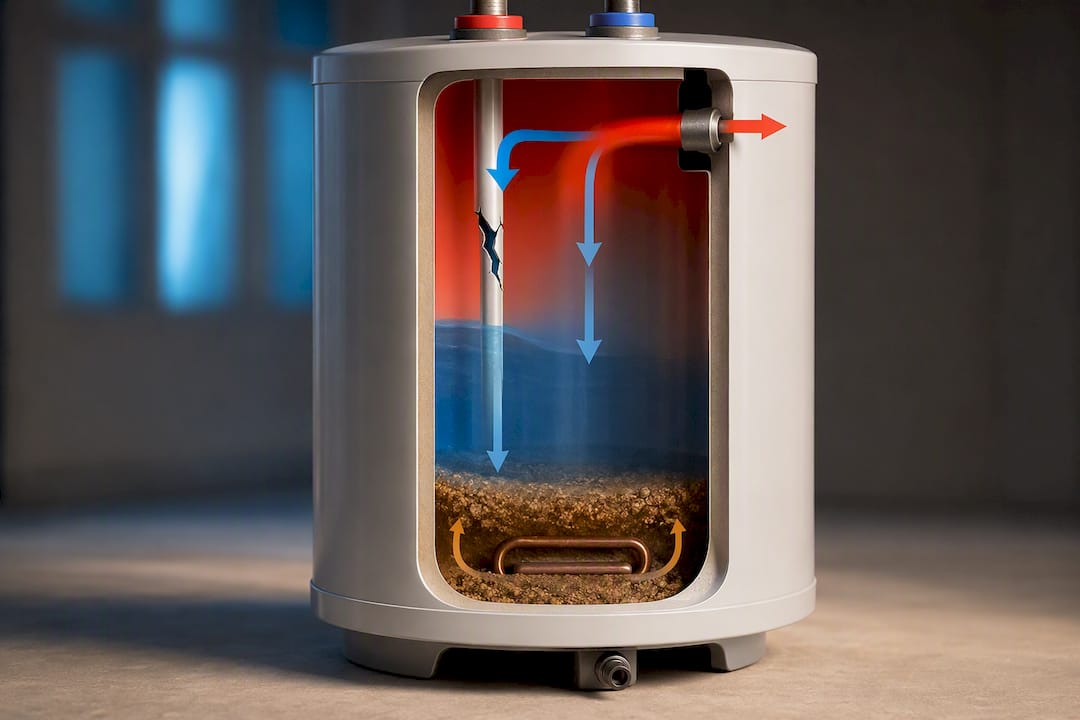
Sediment tells a different story. It settles at the bottom of a tank heater and insulates the burner or element from the water above it, which slows recovery time. You’ll notice it most as back-to-back showers running colder, or mornings when everyone’s routine overlaps.
A quick reality check: hot water demand peaks at predictable times, morning and evening routines strain most systems, and a tank that can’t recover fast enough will deliver a lukewarm shower to whoever showers last.
Ways to narrow it down and buy yourself time while you plan a fix:
- Space out hot water uses for a day and see if the fluctuation disappears entirely
- Avoid running the dishwasher or washer during peak shower hours
- Check your water heater’s temperature setting to confirm it hasn’t drifted low
- Watch for signs your unit is falling behind on capacity, especially if it’s nearing 10 years old
When Should You Call A Plumber For Shower Temperature Problems?
Call a licensed plumber once the problem hits more than one fixture, your water heater shows signs of failure, or you notice sudden scalding spikes instead of just cold dips. Those aren’t DIY situations, and waiting usually makes the eventual repair more expensive.
A professional visit typically covers a full valve inspection, a pressure test across your hot and cold lines, and a diagnostic check on the water heater itself, tank condition, thermostat accuracy, dip tube integrity, and recovery rate. That combination catches problems a homeowner can’t see from the outside.
Rough cost and time expectations:
- Cartridge replacement: often a same-visit repair, one of the lower-cost fixes on this list
- Valve replacement (especially concealed or thermostatic valves): more labor-intensive, sometimes requiring wall access
- Dip tube replacement: moderate cost, usually resolved in a single visit
- Water heater service or full replacement: the widest cost range, driven by unit size, fuel type, and whether it’s a repair or full swap
If you’re already suspecting the heater is the root cause, a plumber or water heater repair visit will confirm it faster than another round of guesswork.
Preventing Shower Temperature Problems Before They Start
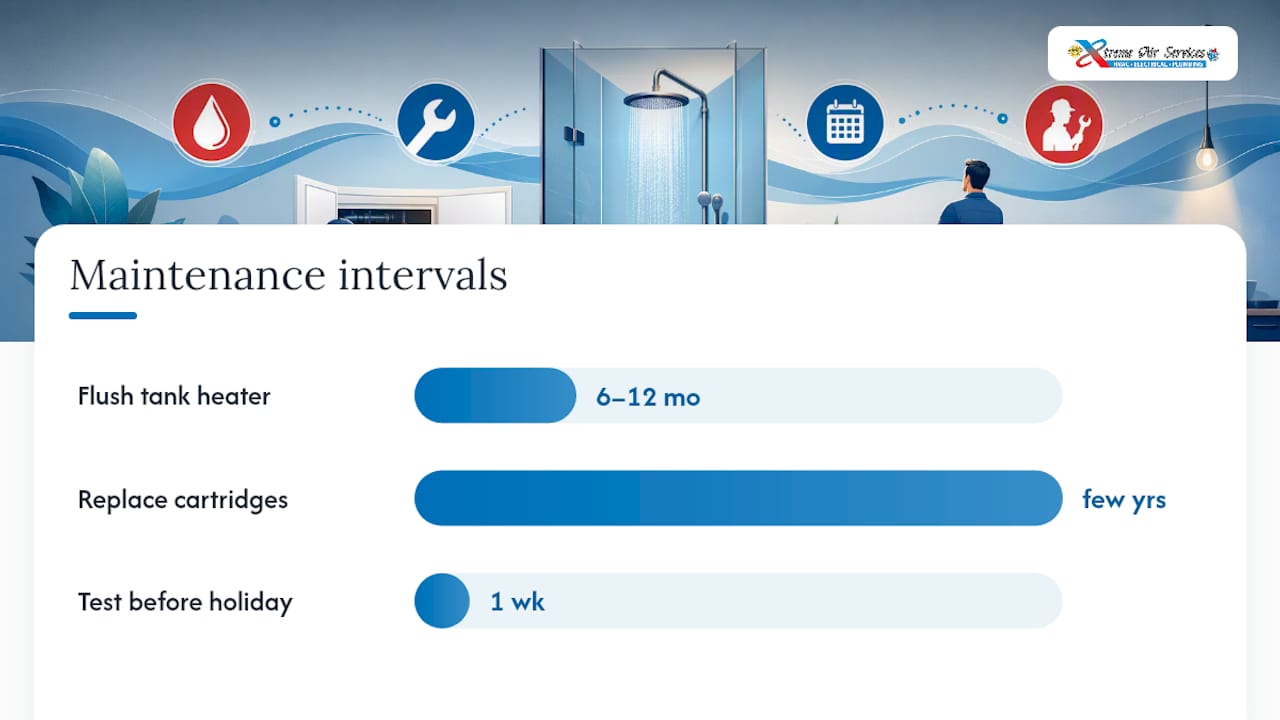
A little maintenance goes a long way toward keeping your shower temperature steady year-round. Flushing a tank water heater every 6 to 12 months clears out sediment before it starts insulating the heating element, and in hard-water areas, plan on descaling or replacing cartridges every few years rather than waiting for them to fail.
If you’re tired of chasing pressure swings, upgrading to a thermostatic valve solves the root problem instead of patching around it. Other worthwhile upgrades include a larger-capacity heater for bigger households or a water softener if mineral buildup is a recurring theme.
- Flush the tank twice a year
- Replace cartridges proactively in hard-water zones
- Check heater settings before winter and summer demand shifts
Pro Tip: Before a holiday when the whole house will be showering back-to-back, run a test morning a week ahead. It’s a lot easier to fix a weak heater on a Tuesday than during a house full of guests.
How A Plumber Actually Diagnoses This Issue
Most homeowners troubleshoot shower problems in isolation, checking one thing, guessing at another. Field technicians follow a set order for a reason: valve check first, then a pressure test across both supply lines, then a full heater inspection if the first two come back clean. That sequence rules out the cheap fix before assuming the expensive one.
Before a service visit, have your water heater’s age and fuel type handy, and note exactly which fixtures are affected and when. That single detail often cuts diagnostic time in half. If you’ve run through the checks above and you’re still stuck, an inspection settles it quickly instead of another week of guessing.
— Xtreme
Get Your Shower Temperature Fixed For Good
A worn cartridge or a tired water heater doesn’t fix itself, and another round of hot-cold-hot showers isn’t worth the aggravation. Local plumbing technicians can replace a valve cartridge in a single visit, and water heater specialists can diagnose a failing dip tube, sediment buildup, or a unit that’s simply outgrown your household’s demand.

What separates a one-off repair from a lasting fix is diagnosing the actual cause instead of guessing. If your water heater is part of the problem, a maintenance plan keeps sediment and wear from creeping back in. If it’s the valve, our plumbing team can get the right cartridge or a thermostatic upgrade installed without tearing into your bathroom wall unnecessarily. Book a diagnostic visit and get a straight answer about what’s actually causing your shower to run hot and cold, instead of another guess.
Sources
- How to Fix Inconsistent Water Temperature
- Why hot water feels inconsistent throughout the day – Rheem
- Why Does My Shower Water Temperature Keep Changing? – HowPlumbing
- Why Does My Shower Go Hot & Cold? Causes & Solutions | Aqualisa
FAQ
Why Does My Shower Get Hot Then Cold Then Hot Again?
This pattern, often called a cold water sandwich, typically happens when two hot water demands overlap, like a dishwasher cycle starting mid-shower, temporarily interrupting the flow of hot water before it recovers.
Why Does My Shower Not Regulate Temperature?
A pressure-balancing or thermostatic valve that’s worn out or clogged with mineral deposits loses its ability to compensate for pressure changes, letting temperature swing whenever another fixture draws water.
Why Does One Of My Showers Get Hotter Than The Other?
If only one shower runs hotter or colder than the rest of the house, the issue is almost always isolated to that fixture’s valve cartridge rather than a whole-house water heater problem.
Why Won’t My Shower Stay A Constant Temperature?
An aging pressure-balancing valve or a heater struggling with sediment buildup and recovery time are the two most common reasons a shower can’t hold steady, and testing another fixture while showering helps tell which one applies.
Should I Fix A Fluctuating Shower Myself Or Call A Plumber?
Cartridge replacement is a reasonable DIY project for most homeowners, but multi-fixture issues, concealed valves, or any sign of water heater failure call for a licensed plumber to avoid bigger repair bills later.