Water heater temperature adjustment is the process of setting your water heater thermostat to the right balance of safety, comfort, and energy savings. The U.S. Department of Energy recommends 120°F as the standard setpoint for most households. That single number reflects a careful balance: hot enough to prevent Legionella bacteria growth, cool enough to eliminate serious scald risk. Get it wrong in either direction and you pay for it, either in your energy bill or your safety.
What is the optimal water heater temperature for safety and energy savings?
The optimal water heater temperature for most households is 120°F. The DOE sets this as the default recommendation because it satisfies three competing demands at once: it kills common waterborne pathogens, it keeps your energy costs reasonable, and it delivers water hot enough for showers, dishwashers, and laundry.
The real cost of running too hot
Water at 140°F causes third-degree burns in under 5 seconds. Water at 120°F takes about 5 minutes to cause the same injury. That gap matters enormously if you have young children or elderly adults in your home. Running your heater at 140°F also costs you more every month without delivering meaningful comfort benefits for most households.
Lowering the temperature from 140°F to 120°F reduces energy costs by 6–10%, saving roughly $40–$60 per year. That is real money for a change that takes less than 15 minutes. The savings come from reduced standby heat loss, which is the energy your heater burns just to keep water hot while it sits in the tank.
When 120°F is not enough
Some households genuinely need higher storage temperatures. If anyone in your home is immunocompromised, elderly with a weakened immune system, or if you have very long pipe runs, storing water at 140°F with a thermostatic mixing valve compliant with ASSE 1017 is the right call. The mixing valve blends cold water into the hot supply line before it reaches your fixtures, so you get Legionella protection at the tank without scalding risk at the tap.
The 2024 International Residential Code supports this approach. Thermostatic mixing valves must deliver water at 120°F or below at fixtures when storage temperature is 140°F or higher, per the ASSE 1070 standard. This is not optional in jurisdictions that have adopted the 2024 IRC.
Pro Tip: If you run a dishwasher without a built-in heating element, check the manufacturer spec before dropping below 120°F. Some older models need at least 130°F to sanitize dishes properly.
Here is a quick reference for temperature settings and their trade-offs:
| Temperature | Scald risk | Bacteria risk | Energy use |
|---|---|---|---|
| Below 110°F | Very low | High (Legionella thrives) | Lowest |
| 110–119°F | Low | Moderate | Low |
| 120°F | Low | Low | Moderate |
| 130–139°F | Moderate | Very low | Higher |
| 140°F+ | High (burns in seconds) | Minimal | Highest |
How do you safely adjust the temperature on gas and electric water heaters?
Safe adjustment starts before you touch anything. Turn off the power to an electric heater at the circuit breaker. For a gas heater, you do not need to shut off the gas, but you should let the unit cool for at least an hour before opening access panels. Gather a flathead screwdriver, a non-contact voltage tester, and a cooking thermometer to verify the result.
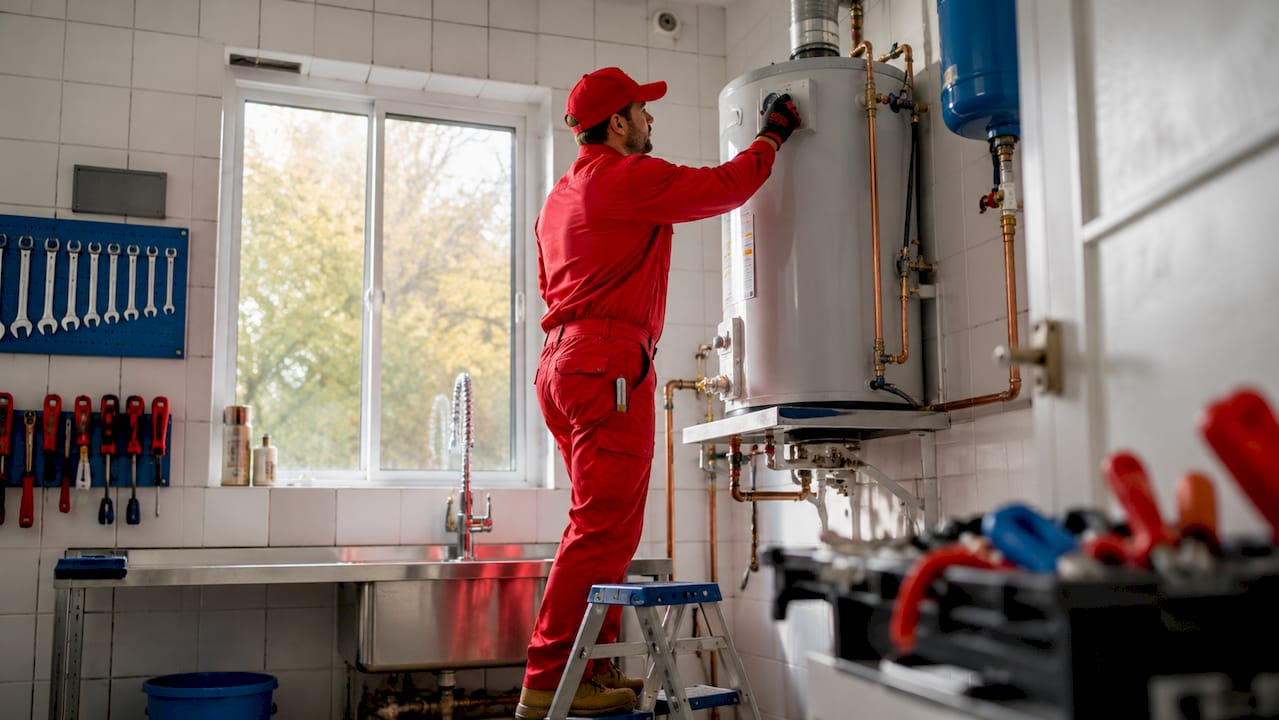
Adjusting a gas water heater
Gas water heaters are the simpler of the two. The thermostat dial sits on the gas valve near the bottom of the tank, usually labeled with settings like “Vacation,” “Low,” “Hot,” and “A” or “B” markings. Here is the process:
- Locate the dial on the gas control valve.
- Turn the dial to the desired setting. The “Hot” marking typically corresponds to around 120°F, but this varies by brand.
- Wait 2–3 hours for the water to reach the new temperature.
- Run hot water at a faucet for 60 seconds, then test with a thermometer.
- Adjust again if the reading is more than 5°F off your target.
The dial markings on gas heaters are notoriously imprecise. Always verify with a thermometer rather than trusting the label.
Adjusting an electric water heater
Electric water heaters require more steps because they have two thermostats: an upper and a lower. Both thermostats must be set to the same temperature to prevent inefficient cycling and premature element failure. Mismatched settings are one of the most common causes of inconsistent hot water and tripped high-limit switches.
- Switch off the circuit breaker for the water heater.
- Use a non-contact voltage tester to confirm power is off before touching anything.
- Remove the upper access panel and pull back the insulation.
- Locate the upper thermostat and use a flathead screwdriver to set it to 120°F.
- Replace the insulation and panel, then repeat the same steps for the lower access panel.
- Restore power at the breaker.
- Wait 2–3 hours, then test the water temperature at a faucet.
Pro Tip: Dual-element electric heaters operate with upper thermostat priority. Setting the upper thermostat about 10–15°F lower than the lower thermostat reduces the “stacking effect,” which is the buildup of extra-hot water at the top of the tank that causes temperature spikes.
One common pitfall: homeowners skip the voltage test and assume the breaker is off. A non-contact tester costs under $20 and takes 5 seconds to use. Do not skip it.
Should you adjust your water heater temperature seasonally?
Yes. Seasonal water temperature changes affect heater load, and small adjustments once or twice a year help maintain both efficiency and comfort. In winter, incoming groundwater is significantly colder, which means your heater works harder to reach the same setpoint. In summer, incoming water is warmer, so the heater coasts more easily.
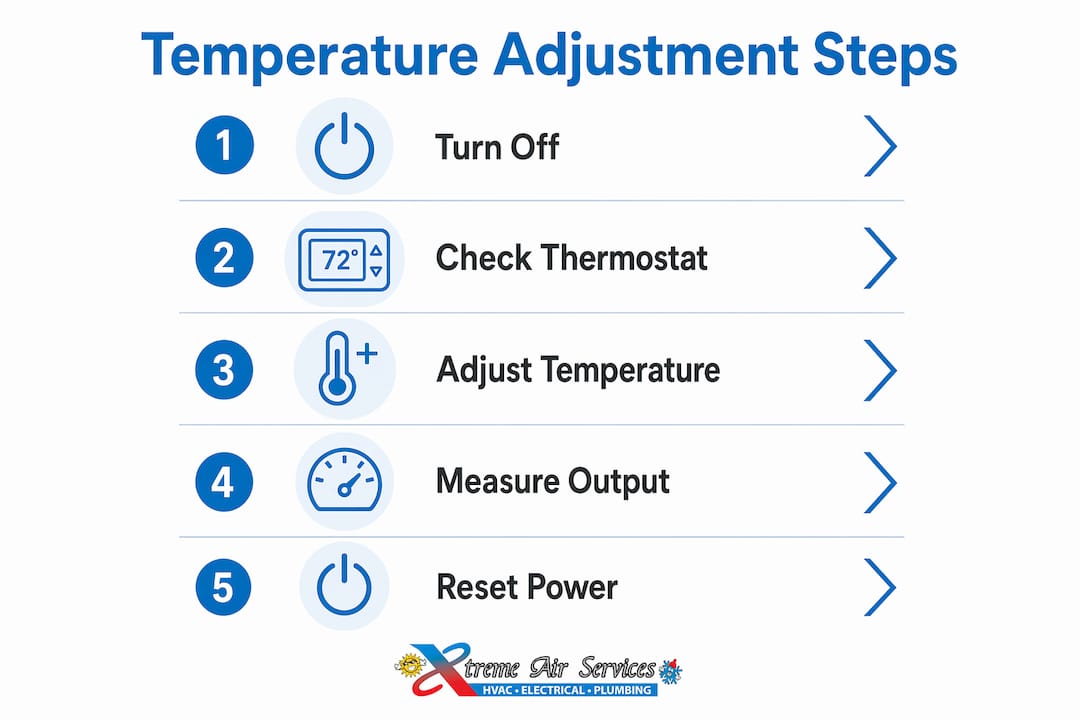
This is one of the most overlooked factors in home energy management. Your heater’s thermostat setting stays fixed, but the energy it burns to hit that temperature changes with the seasons. A quick check of your winter heating bill will often reveal a spike that is partly explained by your water heater working overtime against cold incoming water.
Signs you need to adjust your settings
Watch for these signals that your current setting no longer fits your household:
- Water feels lukewarm even at the highest tap setting, especially in winter.
- Your energy bill rises without a clear explanation in January or February.
- Household size changed. More people means more hot water demand, which can deplete the tank faster and make the water feel cooler.
- You added a new appliance like a dishwasher or washing machine that draws more hot water.
- You installed a low-flow showerhead, which may make 120°F feel cooler than before because less hot water mixes with cold.
A good rule of thumb: check your thermostat setting in october before winter sets in, and again in april as temperatures rise. That twice-yearly habit keeps your system running at the right balance year-round. Pair this check with your home plumbing maintenance checklist for a complete seasonal review.
Pro Tip: In summer, dropping your thermostat 5–10°F below your winter setting can cut standby energy loss without any noticeable comfort difference. The warmer incoming water compensates for the lower setpoint.
Experts advise balancing safety, comfort, and efficiency when setting water heater temperatures, and that balance shifts with the seasons. There is no single perfect number that works year-round for every home.
When should you call a professional for thermostat problems?
Some water heater problems go beyond a simple thermostat adjustment. Knowing the difference between a DIY fix and a professional repair protects both your safety and your equipment.
Common symptoms of thermostat failure
- Water stays scalding hot even after you lower the thermostat to its minimum setting. A thermostat stuck in the closed position is a dangerous condition that requires immediate replacement.
- Water never gets hot enough, even at the highest setting. This points to a failed heating element, a broken dip tube, or heavy sediment buildup at the bottom of the tank.
- The high-limit reset button trips repeatedly. A tripped high-limit switch indicates water temperature above 170°F, which is almost always caused by thermostat or element failure. Resetting it once is fine. If it trips again within days, the underlying component needs replacement.
- Temperature fluctuates wildly between showers. This often signals a failing thermostat, a dip tube that has broken and is mixing cold water into the hot supply, or sediment insulating the heating element.
A water heater thermostat that fails in the “on” position will keep heating water indefinitely. Without a functioning high-limit switch as a backup, tank pressure can build to dangerous levels. If your water is scalding hot and the thermostat is already at its lowest setting, shut off power to the unit immediately and call a licensed plumber.
Sediment buildup is a slow killer of water heater efficiency. Minerals from hard water settle at the bottom of the tank over time, insulating the heating element and forcing it to work harder. Flushing the tank once a year removes this buildup and extends the life of both the element and the thermostat. If you notice any of the signs your water heater is struggling, do not wait for a complete failure.
Pro Tip: Before calling a plumber, check whether your water heater is still under warranty. Most residential units carry a 6-year or 12-year warranty on the tank. A failed thermostat within that window may be covered at no cost.
Reducing heat loss from your water heating system is also part of a broader energy savings strategy for your home. Insulating hot water pipes and the tank itself can cut standby losses further, especially in unconditioned spaces like garages or basements.
Key Takeaways
Setting your water heater to 120°F is the single most effective step for balancing safety, energy savings, and comfort in most American homes.
| Point | Details |
|---|---|
| Start at 120°F | The DOE-recommended setpoint prevents scalding and limits Legionella risk for most households. |
| Verify with a thermometer | Dial markings on gas heaters are imprecise; always confirm the actual output temperature at the tap. |
| Match electric thermostats | Both upper and lower thermostats on electric heaters must be set identically to prevent cycling issues. |
| Adjust twice a year | Check settings in october and april to account for seasonal changes in incoming water temperature. |
| Call a pro for repeated resets | A high-limit switch that trips more than once signals thermostat or element failure requiring professional repair. |
What I’ve learned from years of water heater calls
After years of HVAC and plumbing work at Xtreme Air Services, the pattern I see most often is homeowners who set their water heater once and never touch it again. That works fine for a while. Then the seasons change, the household grows, or the thermostat quietly starts to fail, and suddenly the hot water is either scalding or barely warm.
The conventional wisdom says “set it to 120°F and forget it.” I disagree with the second half of that sentence. A water heater is not a set-and-forget appliance. It responds to incoming water temperature, household demand, sediment accumulation, and component wear. Treating it like a smoke detector you check once a decade is how you end up with a $1,200 emergency replacement instead of a $20 thermostat swap.
The other thing I see constantly: homeowners who crank the temperature to 140°F because they want hotter showers, without understanding that they are creating a scald hazard and paying more every month for the privilege. A thermostatic mixing valve solves this cleanly. You get the Legionella protection of 140°F storage and the scald safety of 120°F at the tap. It is a $50–$150 part that most plumbers can install in under an hour.
My honest advice: start at 120°F, verify it with a thermometer, and revisit the setting every spring and fall. If your thermostat trips the high-limit switch more than once, stop resetting it and call someone. That switch is the last line of defense between you and a dangerous pressure situation.
— Xtreme
Xtreme Air Services can help you get your water heater dialed in
Adjusting a thermostat is straightforward when everything is working correctly. When it is not, the right call is a licensed professional who can diagnose the actual problem rather than guess at it.
Xtreme Air Services provides plumbing, HVAC, and electrical services for homes across the Dallas area. Our team handles water heater thermostat replacements, element swaps, tank flushes, and full system inspections. If your hot water has been inconsistent, your energy bill has been climbing, or your high-limit switch keeps tripping, our HVAC maintenance plans include water heater checks as part of a full home system review. Schedule a visit and get your system running at the right temperature before the next season hits.
FAQ
What temperature should I set my water heater to?
The DOE recommends 120°F for most households. Homes with immunocompromised residents or very long pipe runs may need 140°F storage with a thermostatic mixing valve to prevent Legionella while avoiding scalding at the tap.
How much can I save by lowering my water heater temperature?
Dropping from 140°F to 120°F reduces energy costs by 6–10%, saving roughly $40–$60 per year. The savings come primarily from reduced standby heat loss while the water sits in the tank.
How do I check my actual water heater temperature?
Run hot water at the nearest faucet for 60 seconds, then hold a cooking thermometer under the stream. The reading should be within 5°F of your thermostat setting. If it is significantly higher or lower, adjust the thermostat and retest.
Why does my electric water heater keep tripping the reset button?
A high-limit reset button that trips repeatedly indicates water temperature above 170°F, which points to a failed thermostat or heating element. Reset it once, but if it trips again, shut off power and call a licensed plumber.
How often should I adjust my water heater settings?
Check your thermostat setting twice a year, ideally in october before winter and in april before summer. Seasonal changes in incoming groundwater temperature affect how hard your heater works to reach its setpoint.