

Choosing the right pipe for your home is one of those decisions that looks simple until you’re standing in the plumbing aisle staring at a wall of options. The types of home plumbing pipes available today range from flexible plastic tubing to rigid metal, and each one has a specific job it does well and conditions where it fails. Whether you’re repairing a burst line, renovating a bathroom, or planning a new build, picking the wrong material can cost you in repairs, code violations, or premature failure. This guide breaks down every major pipe type so you can make a confident, informed call before the work begins.
Table of Contents
- Key takeaways
- 1. PEX pipes: the flexible modern standard
- 2. Copper pipes: the proven long-term performer
- 3. PVC and CPVC pipes: understanding the plastic vs metal pipes debate
- 4. Galvanized steel, cast iron, and stainless steel: the older materials you might encounter
- 5. Side-by-side comparison of common pipe materials
- 6. Common plumbing pipe sizes and what they mean for your project
- 7. Practical tips for choosing the right pipe for your project
- My honest take on choosing pipe materials
- Ready to get your plumbing done right?
- FAQ
Key takeaways
| Point | Details |
|---|---|
| Match material to application | Supply lines need pressure-rated materials like PEX, copper, or CPVC; drainage systems use PVC or ABS. |
| PEX is the modern go-to | PEX offers flexibility, freeze resistance, and lower cost, but must be protected from sunlight. |
| Copper remains the gold standard | Copper handles heat and pressure reliably but costs more and requires professional soldering. |
| PVC has strict temperature limits | PVC is only safe for cold water and drain lines; CPVC is the hot-water-rated alternative. |
| Always check local codes first | Building codes vary by region and dictate which materials are approved for specific applications. |
1. PEX pipes: the flexible modern standard
PEX, short for cross-linked polyethylene, has become one of the most popular home plumbing materials in new residential construction over the last decade. And for good reason. It bends around corners without fittings, cuts easily with a simple tool, and costs significantly less than copper per linear foot.
Here is what makes PEX stand out among different plumbing pipe types:
- Flexibility: PEX can be routed through walls and around obstacles without the number of fittings that rigid pipe requires. Fewer fittings means fewer potential leak points.
- Freeze resistance: PEX expands under pressure, which gives it a meaningful advantage over rigid pipes in freezing temperatures. It can flex slightly rather than burst when water inside freezes.
- Temperature and pressure tolerance: PEX handles both hot and cold water supply lines, rated typically up to 200 degrees Fahrenheit at standard residential pressures.
- Cost: Material costs run 25 to 50 percent lower than copper in most markets, and installation labor is faster, which reduces total project costs.
- UV sensitivity: This is the big limitation. PEX degrades rapidly when exposed to ultraviolet light. It cannot be used outdoors without protection and should not be stored in direct sunlight.
PEX comes in three variants: PEX-A, PEX-B, and PEX-C. PEX-A is the most flexible and easiest to repair using an expansion fitting, but it carries the highest price tag. PEX-B is the most widely used and offers a solid balance of performance and cost. PEX-C is the stiffest of the three and less common in residential work.
Pro Tip: Store PEX coils in a shaded area and cover any exposed sections during installation. Even a few hours of direct sunlight exposure during a project can begin degrading the material, shortening its service life significantly.
2. Copper pipes: the proven long-term performer
Copper has been the benchmark for residential plumbing for over 70 years. Walk into almost any home built between 1950 and 2000, and you will find copper supply lines running through the walls. Its track record is hard to argue with.
Copper handles temperatures exceeding 140 degrees Fahrenheit without any thermal degradation, making it one of the best plumbing pipe options for hot water supply lines. It is also naturally antimicrobial, which matters for drinking water safety.
The advantages of copper plumbing pipes include:
- Longevity: Copper pipes routinely last 50 years or more when installed correctly and when water chemistry is not corrosive.
- Heat resistance: Safe for both hot and cold potable water supply applications, including high-demand systems.
- Rigidity: Copper holds its shape and resists physical damage better than plastic in exposed locations.
- Recyclability: Copper is fully recyclable, which is worth noting for environmentally conscious homeowners.
The drawbacks are real, though. Copper costs significantly more than plastic alternatives, and installation requires soldering, which demands skill and proper safety precautions. If you are not experienced with a torch, this is a job for a licensed plumber.
There is also the issue of water chemistry. Corrosive water chemistry can cause pinhole leaks in copper pipes over time, particularly in homes with acidic water. If your area has naturally acidic water, copper may not be the 50-year pipe you are expecting.
Copper remains the preferred choice for exposed applications, high-heat environments, and homeowners who prioritize longevity over upfront cost. Just factor in both material and labor when comparing it to PEX.
3. PVC and CPVC pipes: understanding the plastic vs metal pipes debate
Many homeowners use the terms PVC and CPVC interchangeably. They are not the same pipe, and using one where the other belongs can cause real problems.
PVC (polyvinyl chloride) is rigid, white or cream-colored, and extremely common in residential drain, waste, and vent systems. PVC and ABS are the standard materials for drain, waste, and vent applications because their smooth interior surfaces resist buildup and their chemical resistance handles what goes down your drains. However, PVC cannot handle water above 140 degrees Fahrenheit. Run hot water through a PVC supply line and you risk warping, joint failure, and leaks.
CPVC (chlorinated polyvinyl chloride) looks similar but is formulated to handle hot and cold water supply lines safely. The chlorination process raises its temperature tolerance well above standard PVC, making it a legitimate alternative to copper for supply lines at a lower cost.
Here is a side-by-side breakdown:
| Feature | PVC | CPVC |
|---|---|---|
| Temperature limit | Up to 140°F (cold/drain only) | Up to 200°F (hot and cold supply) |
| Typical use | Drain, waste, vent lines | Hot and cold water supply |
| Joining method | Solvent welding | Solvent welding |
| Cost | Lower | Moderate |
| UV resistance | Low | Low |
| Pressure rating | Lower (drain/gravity systems) | Higher (pressurized supply lines) |
Both materials are joined using solvent welding, which means applying a chemical primer and cement that fuses the pipe and fitting into one solid piece. It is a DIY-friendly method, but you must use the correct cement for each material. PVC cement on CPVC joints will fail.
Pro Tip: Check the pipe markings before you buy. Every code-compliant pipe is stamped with its material type, pressure rating, and applicable standards. If you are replacing an existing line, match the markings on the old pipe to select the correct replacement material.
4. Galvanized steel, cast iron, and stainless steel: the older materials you might encounter
If your home was built before 1970, there is a real chance you will run into one of these materials during a renovation. Knowing what you are looking at helps you decide whether to repair, replace, or leave it alone.
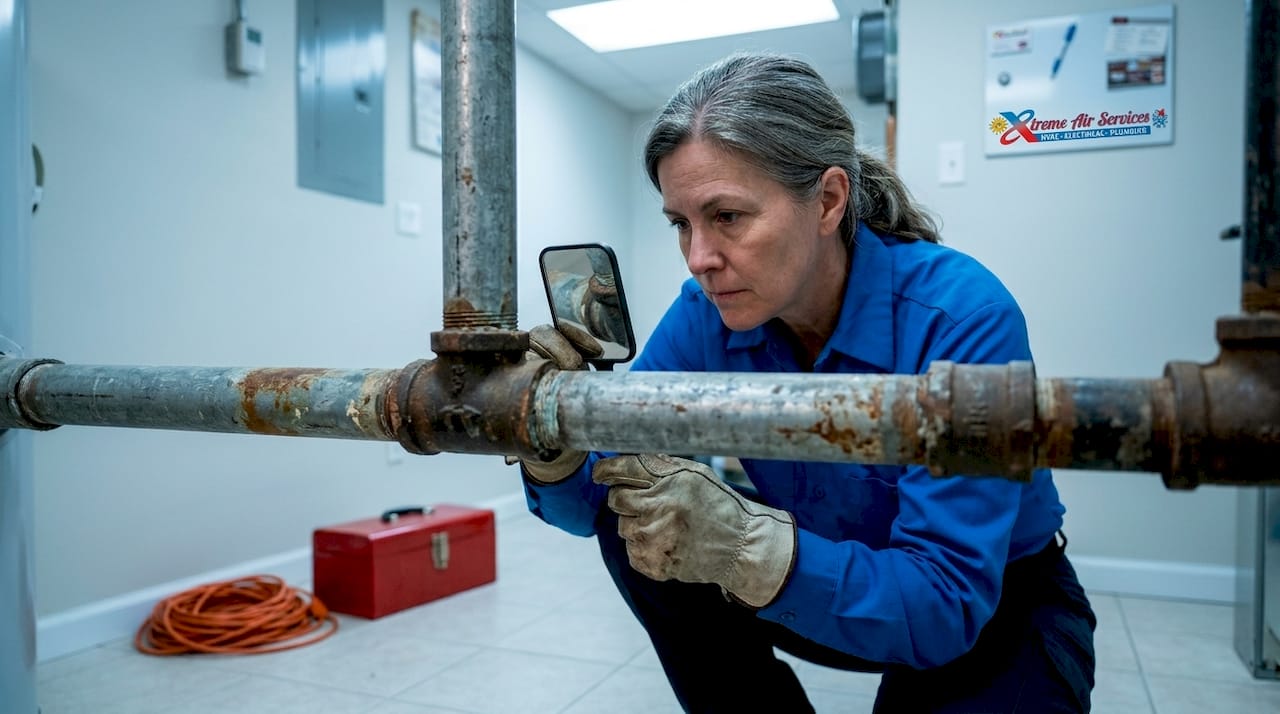
Galvanized steel was the standard supply pipe material for much of the early 20th century. It is steel coated with a layer of zinc to resist corrosion. The problem is that the zinc coating eventually breaks down from the inside out. Galvanized steel corrodes internally, leading to mineral buildup, restricted water flow, and eventually leaks. If you have galvanized pipes and your water pressure has been dropping over the years, the pipes are likely the cause. Replacement with copper or PEX is the standard recommendation.
Cast iron is still found in drain lines of older homes, and it actually performs well in one specific area: noise reduction. Cast iron drain pipes are significantly quieter than PVC when water flows through them. That is why some high-end new construction still specifies cast iron for drain stacks in multi-story homes. It is heavy, difficult to cut and join, and expensive, but it lasts a very long time when properly maintained.
Stainless steel is the least common of the three in residential settings. Stainless steel offers strong corrosion resistance but comes with a high price tag that pushes it toward commercial and specialty applications rather than standard home plumbing. You might see it in coastal homes where saltwater air accelerates corrosion on other metals, or in high-end kitchen installations.
The bottom line on these materials: if they are in good condition and not causing problems, you do not always need to replace them immediately. But if you are opening walls for a renovation, it is worth upgrading to modern materials rather than patching aging infrastructure.
5. Side-by-side comparison of common pipe materials
When you are weighing your options, a direct comparison cuts through the noise. Here is how the main types of home plumbing pipes stack up across the criteria that matter most for residential projects:
| Material | Best use | Temp rating | Lifespan | DIY-friendly | Relative cost |
|---|---|---|---|---|---|
| PEX | Hot/cold supply | Up to 200°F | 40-50 years | Yes | Low |
| Copper | Hot/cold supply | Up to 400°F | 50+ years | Moderate | High |
| PVC | Drain/waste/vent | Up to 140°F | 25-40 years | Yes | Low |
| CPVC | Hot/cold supply | Up to 200°F | 25-40 years | Yes | Moderate |
| Galvanized steel | Older supply lines | Up to 200°F | 20-50 years | No | Moderate |
| Cast iron | Drain lines | High | 50-100 years | No | High |
| Stainless steel | Specialty/commercial | Very high | 50+ years | No | Very high |
Matching pipe material to system conditions, including pressure, temperature, and water chemistry, is what separates a plumbing system that lasts decades from one that requires constant repairs. No single material wins across every category. The right choice depends on what the pipe needs to do.
Pressurized water supply lines require certified materials like copper, PEX, or CPVC. Using a drain-grade material like standard PVC on a pressurized supply line is a code violation and a leak waiting to happen. The reverse is also true: running copper supply pipe as a drain line is wasteful and unnecessary.
6. Common plumbing pipe sizes and what they mean for your project
Pipe sizing trips up a lot of homeowners. The number stamped on a pipe does not always reflect its actual outer diameter, which creates confusion at the hardware store.
For residential supply lines, the most common sizes are 1/2 inch and 3/4 inch. The 3/4-inch line typically serves as the main supply running from the meter or well into the home, while 1/2-inch branches feed individual fixtures like sinks, toilets, and showers. Using undersized pipe on a main supply line reduces water pressure throughout the house.
Drain lines follow different sizing conventions. A standard bathroom sink drain uses a 1.5-inch pipe. Toilets require a 3-inch or 4-inch drain. The main sewer line leaving the house is typically 4 inches in diameter. These sizes are not suggestions. They are set by code to handle the flow volume each fixture produces.
When replacing a section of pipe, always match the diameter of the existing line. Reducing pipe diameter mid-run creates a pressure drop and can cause slow drains or inadequate water pressure at fixtures. If you are unsure what size you need, bring a section of the old pipe to the supply house and have someone measure it properly.
7. Practical tips for choosing the right pipe for your project
Making the right call on pipe material comes down to answering a few specific questions before you buy anything.
- Identify the application first. Is this a supply line carrying pressurized water to a fixture, or a drain line moving wastewater by gravity? Supply lines need pressure-rated materials. Drain lines do not.
- Check your local building code. Local codes dictate which materials are approved for specific applications in your jurisdiction. Some areas restrict certain pipe materials or require permits for replacements. A quick call to your local building department before starting saves you from having to tear out work later.
- Factor in water chemistry. If your home has well water or your municipality reports acidic water, copper may develop pinhole leaks faster than expected. PEX or CPVC would be a smarter long-term choice.
- Assess your DIY skill level honestly. PEX and PVC are genuinely DIY-friendly materials with forgiving joining methods. Copper soldering and cast iron work require tools and skills that most homeowners do not have. Budget for professional labor if the material demands it.
- Plan for temperature exposure. Any pipe running through an unheated crawl space or exterior wall needs freeze protection. PEX handles this better than any rigid pipe option.
- Do not mix incompatible metals. Connecting copper directly to galvanized steel creates a galvanic reaction that accelerates corrosion at the joint. Use a dielectric union fitting when connecting dissimilar metals.
- Get the permit when required. Many jurisdictions require permits for plumbing work beyond simple fixture replacements. Unpermitted work can complicate home sales and void homeowner’s insurance claims.
My honest take on choosing pipe materials
I have seen a lot of plumbing decisions go sideways, and most of them share a common thread. The homeowner picked a material based on price alone without thinking about what the pipe actually needs to do for the next 30 years.
The biggest misconception I run into is that plastic pipes are somehow inferior to metal. That thinking is outdated. PEX outperforms copper in freeze-prone areas, costs less to install, and is easier to repair. CPVC has been reliably handling hot water supply in homes for decades. The plastic vs metal pipes debate is not really a debate anymore. It is about matching the right material to the right job.
What I have learned from watching installations succeed and fail is that the joint is almost always where problems start. A perfectly chosen pipe material paired with a rushed or incorrect connection will leak. Solvent-welded PVC with the wrong cement, copper with a cold solder joint, PEX with a fitting that was not fully seated. The pipe itself rarely fails. The connection does.
My advice to any homeowner doing research before a project: spend as much time understanding the joining method as you do comparing pipe materials. And if you are not confident in your ability to make a watertight connection, hire someone who is. The cost of a professional installation is almost always less than the cost of water damage from a failed DIY joint.
One more thing worth saying directly: do not skip the permit. I know it feels like bureaucratic friction, but local codes exist because certain combinations of materials and methods have failed in the field. The code is the collected lesson from those failures. Work with it, not around it.
— Xtreme
Ready to get your plumbing done right?
Understanding which pipe materials work best for your home is a solid first step. But knowing the theory and executing a code-compliant, watertight installation are two different things. At Xtreme Air Services, our licensed plumbing team handles everything from full pipe replacements to targeted repairs in residential homes. We work with PEX, copper, CPVC, and PVC across supply and drain systems, and we pull the permits so you do not have to worry about compliance.

Whether you are dealing with aging galvanized lines, planning a bathroom renovation, or facing an urgent leak, our team is ready to assess your system and recommend the right materials for your specific conditions. If you need a fast fix while planning a larger repair, this guide on temporary pipe repair covers your immediate options. Contact Xtreme Air Services today to schedule an inspection or get a project estimate.
FAQ
What is the best pipe material for home water supply lines?
PEX, copper, and CPVC are all approved for pressurized hot and cold water supply lines. PEX is the most cost-effective and DIY-friendly option for most homeowners, while copper offers the longest proven track record.
Can I use PVC pipe for hot water lines?
No. PVC cannot safely handle water above 140 degrees Fahrenheit and will warp or fail under hot water pressure. Use CPVC or PEX for any hot water supply application.
How do I know what size plumbing pipe I need?
For supply lines, 1/2-inch pipe feeds individual fixtures and 3/4-inch serves main supply runs. Drain lines are sized by fixture type, with toilets requiring 3-inch or 4-inch pipe. Always match the diameter of the existing line when making repairs.
Do I need a permit to replace plumbing pipes?
In most jurisdictions, replacing more than a short section of pipe or changing pipe materials requires a permit. Local building codes specify what work requires inspection. Check with your local building department before starting any significant plumbing project.
How long do home plumbing pipes typically last?
Lifespan varies by material. Copper can last 50 years or more, cast iron drain pipes often exceed 50 years, PEX and CPVC typically last 40 to 50 years, and galvanized steel often needs replacement after 20 to 40 years due to internal corrosion.
Need professional help? Explore our residential plumbing services.