
Most people assume their air conditioner makes cold air and pumps it into the house. That’s not how central air conditioning works. Your system is actually a heat-moving machine. It pulls heat from inside your home and dumps it outdoors, leaving the cooler air behind. Understanding this single idea changes how you think about every thermostat setting, filter change, and energy bill you get. This guide breaks down the key components, the refrigeration cycle, common problems, and how central AC compares to other cooling options so you can make smarter decisions about your home.
Table of Contents
- Key takeaways
- How central air conditioning works: the core idea
- The five components that make it all happen
- The refrigeration cycle, step by step
- Common issues and maintenance tips
- Central AC vs. other cooling options
- What years of HVAC work has taught me about AC
- Let Xtreme Air Services keep your system running right
- FAQ
Key takeaways
| Point | Details |
|---|---|
| AC moves heat, not cold | Your system transfers heat from indoors to outdoors rather than generating cold air. |
| Five components do all the work | The compressor, condenser coil, expansion device, evaporator coil, and air handler work as one system. |
| Refrigerant is the key player | Refrigerant shifts between liquid and gas to absorb and release heat throughout the cycle. |
| Maintenance prevents most failures | Dirty filters and clogged coils cause the majority of cooling problems and shortened lifespans. |
| Size and efficiency matter | An oversized or undersized unit wastes energy and reduces comfort regardless of how new it is. |
How central air conditioning works: the core idea
Before getting into components and cycles, let’s settle the biggest misconception in home cooling. Cold is not a substance your AC creates. It is simply the absence of heat. When your system runs, it extracts heat energy from your indoor air and pushes that energy outside. What remains inside feels cool because the heat has left the building, literally.
Central air conditioners circulate cool air through a network of supply and return ducts, reaching every room connected to the system. This whole-home reach is what separates central AC from a window unit sitting in one room. You get one consistent temperature throughout the house rather than cool pockets near the unit and sweltering corners everywhere else.
The system works continuously in a loop. Indoor air passes over a cold coil, gives up its heat to the refrigerant inside that coil, and then gets pushed back through your vents as cooler air. The refrigerant carries that heat outside, releases it, and cycles back in to absorb more. That loop, running dozens of times per hour, is the foundation of central AC operation.
The five components that make it all happen
Understanding central air systems becomes much easier once you know the job each part performs. Think of the system as an assembly line where each component hands off the job to the next.
The compressor is the engine of the entire operation. It takes low-pressure refrigerant gas and squeezes it into a high-pressure, high-temperature gas. The compressor consumes 60 to 70% of the system’s total electrical load, making it the most energy-hungry component in the whole setup. That pressure increase is what allows the refrigerant to release heat outdoors. Without it, the cycle stops completely.
The condenser coil sits in the outdoor unit alongside the compressor. Hot, pressurized refrigerant flows through this coil while a fan blows outdoor air over it. The heat from the refrigerant transfers into that outdoor air and disperses. By the time refrigerant leaves the condenser coil, it has changed from a hot gas into a warm liquid.
The expansion device is a small but critical piece of hardware. It creates a pressure drop that rapidly cools the liquid refrigerant before it enters your home. Think of it like releasing pressure from a pressurized spray can. The refrigerant drops in temperature dramatically, preparing it to absorb heat from your indoor air.
The evaporator coil is where the actual cooling of your air happens. This coil sits inside your air handler or on top of your furnace. Cold refrigerant flows through it, and your warm indoor air passes over it. Heat moves from the air into the refrigerant, and the now-cooler air continues on to your vents.
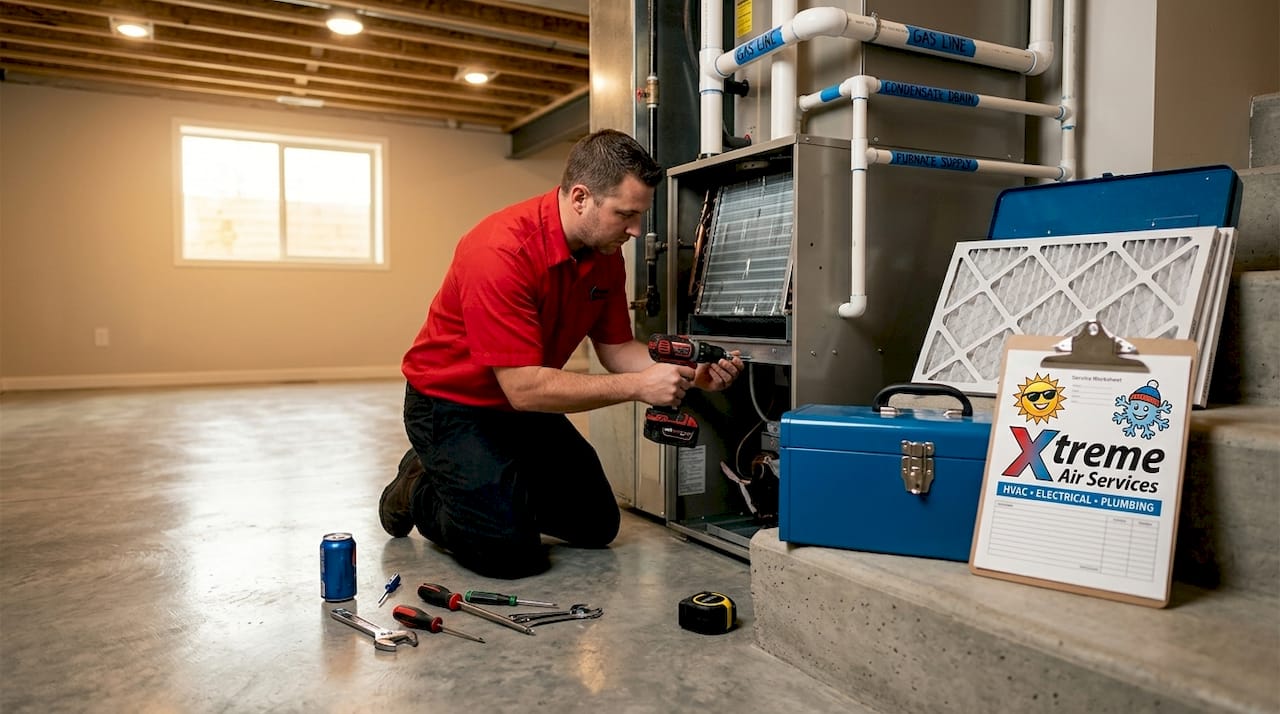
The air handler and blower are responsible for moving air across the evaporator coil and distributing it through your ducts. Upgrading to variable-speed ECM blowers can cut blower energy consumption by up to 75% compared to older single-speed motors. These motors also run quieter and maintain more consistent airflow, which makes a noticeable difference in comfort.
Pro Tip: If your home has rooms that never seem to cool down properly, check your return air vents before assuming the system is undersized. Blocked or too-few return vents starve the blower of airflow and hurt performance across the entire system.
The refrigeration cycle, step by step
The refrigeration cycle relies on phase changes to move heat from one place to another. Refrigerant shifting between liquid and gas is what makes the whole process possible. Here is exactly how it flows through your system on every cycle.
- Suction: Low-pressure refrigerant gas leaves the evaporator coil, now carrying the heat it absorbed from your indoor air. It travels toward the compressor.
- Compression: The compressor squeezes the gas, raising its pressure and temperature significantly. The refrigerant is now a hot, high-pressure gas.
- Condensation: This hot gas enters the condenser coil outdoors. The outdoor fan blows air across the coil, pulling heat out of the refrigerant. As it cools, the refrigerant condenses back into a liquid.
- Expansion: The liquid refrigerant passes through the expansion device, which drops the pressure rapidly. This causes the refrigerant to cool down to a very low temperature.
- Evaporation: The cold, low-pressure refrigerant enters the evaporator coil inside your home. Warm indoor air passes over the coil. Heat from your air transfers into the refrigerant, which boils back into a gas. Your air comes out cooler.
This five-step loop repeats continuously while your system runs. The refrigerant never gets “used up.” It just keeps circulating and carrying heat from inside to outside.
Two terms worth knowing are superheat and subcooling. Superheat refers to how much the refrigerant gas heats above its boiling point after leaving the evaporator coil. Subcooling refers to how much the liquid refrigerant cools below its condensing point before leaving the condenser coil. Technicians measure these values to confirm whether your system has the right amount of refrigerant and whether the cycle is running as designed.
| Stage | Location | Refrigerant state | What happens |
|---|---|---|---|
| Compression | Outdoor unit | Low-pressure gas → high-pressure gas | Pressure and temperature rise |
| Condensation | Condenser coil | Hot gas → warm liquid | Heat releases outdoors |
| Expansion | Expansion device | Warm liquid → cold liquid | Pressure drops, temperature falls |
| Evaporation | Evaporator coil | Cold liquid → low-pressure gas | Absorbs heat from indoor air |
Pro Tip: If your system is low on refrigerant, adding more without fixing the leak is like pouring water into a bucket with a hole. A certified technician should find and repair the leak before recharging the system.
Common issues and maintenance tips
Most central AC problems trace back to neglected maintenance. The good news is that many of the most damaging issues are completely preventable with basic upkeep.
- Change your air filter regularly. A dirty filter is the most common cause of a frozen evaporator coil. When airflow is restricted, the coil gets too cold, moisture freezes on it, and your system stops cooling. Check your filter monthly and replace it at least every 90 days, sooner if you have pets or allergies.
- Keep the outdoor unit clear. Leaves, grass clippings, and shrubs block condenser coil airflow. Aim for at least two feet of clearance around the unit and clean the fins gently with a hose each season.
- Listen for unusual sounds. A grinding noise from the outdoor unit often points to a failing capacitor or compressor bearing. Capacitors are relatively inexpensive to replace. Compressor repairs are not.
- Watch your energy bills. A sudden spike in cooling costs without a change in temperature settings often signals a refrigerant leak, dirty coils, or a failing compressor working harder to maintain output.
- Never ignore ice on the system. If you see ice on your refrigerant lines or evaporator coil, shut the system off immediately and let it defrost. Forcing defrost or scraping ice risks puncturing the coil, which turns a cheap fix into an expensive one.
- Use a programmable thermostat wisely. Running AC at extremely low temperatures without breaks accelerates wear on the compressor. Setting the thermostat to 78°F when you are home and a few degrees higher when you are away reduces strain and lowers bills.
- Schedule annual professional checkups. A well-maintained central HVAC system typically lasts 10 to 20 years. Annual tune-ups are what push systems toward the upper end of that range.
One more thing many homeowners miss: many modern central AC units do not have a physical reset button. If your system stops responding, the reset is done at the circuit breaker. Flip the breaker off, wait 30 seconds, then flip it back on. Always check your system manual before assuming something is broken.
Pro Tip: Homeowners often overlook simple fixes like changing filters or clearing debris from the outdoor unit. Doing these two things alone can prevent the majority of service calls and extend your system’s life by years.
Central AC vs. other cooling options
Understanding central air conditioning explained fully means knowing how it stacks up against the alternatives. Not every home or situation calls for the same solution.
| Feature | Central AC | Ductless mini-split | Window unit |
|---|---|---|---|
| Coverage | Whole home | Single zone or multi-zone | Single room |
| Installation cost | High | Moderate to high | Low |
| Energy efficiency | Moderate to high | Very high (inverter tech) | Low to moderate |
| Temperature consistency | Excellent | Excellent per zone | Limited to one room |
| Typical lifespan | 15 to 20 years | 15 to 20 years | 8 to 12 years |
| Requires ductwork | Yes | No | No |
Central AC wins on whole-home comfort and consistency. One system, one thermostat, every room at the same temperature. If you already have ductwork, the operating cost and convenience are hard to beat. The downside is that ducts can leak, adding energy waste you may not notice.
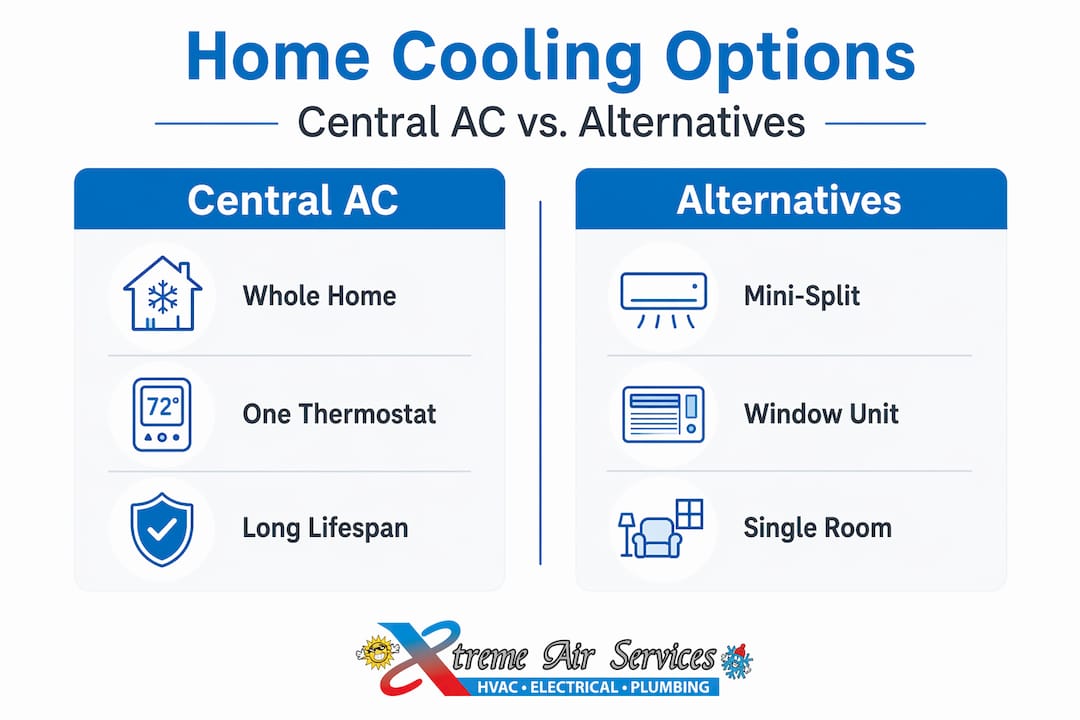
Ductless mini-splits use inverter-driven compressors that ramp up and down based on actual demand rather than cycling on and off at full power. This makes them more efficient for individual zones and a smart choice for home additions, converted garages, or older homes without existing ductwork. You can also combine smart home design with zoned cooling to maximize comfort and cut energy costs significantly.
Window units are fine for temporary or single-room cooling, but their short lifespan and low efficiency make them a poor long-term investment for whole-home comfort. Most units wear out within a decade, and their SEER ratings rarely match what a central system or mini-split can deliver.
System size matters more than most homeowners realize. An oversized central AC unit cools the house quickly but shuts off before it removes enough humidity, leaving the air feeling damp and clammy. An undersized unit runs constantly and never quite reaches the set temperature. Proper sizing, done through a Manual J load calculation, is the only reliable way to get this right.
What years of HVAC work has taught me about AC
I’ve seen homeowners spend thousands of dollars on compressor replacements that were entirely preventable. The pattern is almost always the same. The filter got ignored for six months, the evaporator coil froze repeatedly, the system strained to keep up, and eventually the compressor gave out. The repair bill was three times what a few filter changes and one annual checkup would have cost.
The biggest misconception I keep running into is that homeowners think their AC is “making cold” and that if the house feels cool, the system must be working fine. What they miss is that a struggling system can still produce some cooling while quietly developing problems that compound over time. Efficiency drops, energy bills creep up, and one hot July day the system just quits.
My honest advice: treat your AC the way you treat your car. You wouldn’t skip oil changes and wait for the engine to seize before taking action. The same logic applies here. Change filters, clean the outdoor unit each spring, and have a technician look at it once a year. That routine is what separates a system that lasts 12 years from one that lasts 20.
I also think too many people wait too long to decide between repairing and replacing. If your system is over 15 years old, inefficient by today’s standards, and needs a repair that costs more than half the price of a new unit, the math almost always favors replacement. Newer systems with higher SEER ratings pay back the investment through lower energy bills faster than most people expect. You can also explore smart solutions for efficient living that work alongside an upgraded system to stretch every dollar further.
— Xtreme Air Services
Let Xtreme Air Services keep your system running right
When something goes wrong with your AC, or you just want to make sure it keeps running at peak performance, having a trusted local team matters.
At Xtreme Air Services, we handle everything from routine annual tune-ups and filter inspections to refrigerant leak repairs, coil cleaning, and full system replacements. Our technicians know how air conditioning systems work from the inside out, and we give you straight answers about what your system actually needs rather than upselling repairs you don’t. Whether your system is struggling to cool, making strange sounds, or you haven’t had it serviced in years, we’re ready to help. Visit Xtreme Air Services to schedule your inspection or request a service call today.
FAQ
What does central air conditioning actually do?
Central air conditioning moves heat from inside your home to the outdoors using a refrigeration cycle, rather than generating cold air. The result is cooler, dehumidified air circulated through your ducts.
How does central AC circulate air through a home?
The air handler’s blower pulls warm indoor air through return ducts, passes it over the cold evaporator coil, and pushes the cooled air back through supply ducts into each room.
Why is my central AC running but not cooling?
The most common causes are a dirty air filter blocking airflow, a frozen evaporator coil, low refrigerant from a leak, or a failing capacitor. Start with the filter before calling a technician.
How long does a central air conditioning system last?
A well-maintained central AC system typically lasts 10 to 20 years, with high-efficiency models reaching the upper end of that range when serviced annually.
How often should I have my central AC professionally serviced?
Once a year, ideally in spring before the cooling season starts. Annual checkups catch refrigerant levels, coil condition, and electrical components before they turn into mid-summer failures.