

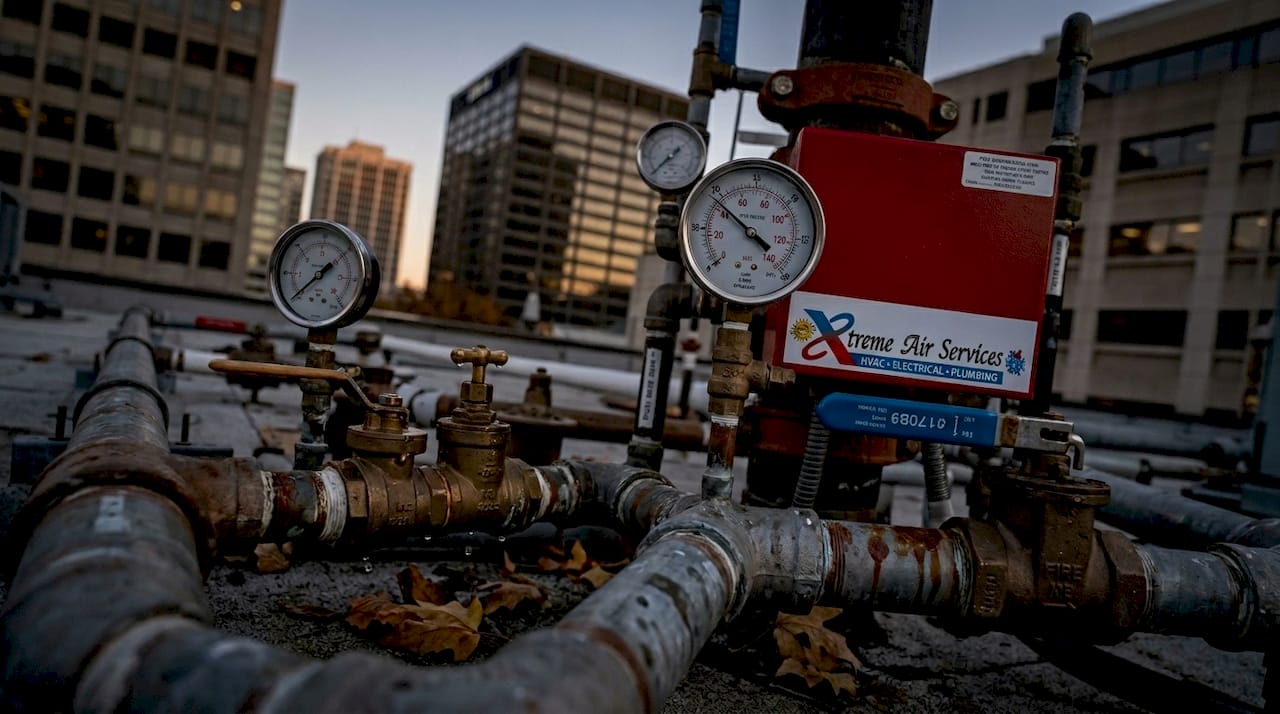
Fire suppression plumbing is the network of pipes, valves, backflow prevention assemblies, and pressure controls that delivers water reliably to sprinkler heads and standpipes when a fire occurs. Without this infrastructure, even the most advanced fire protection systems fail at the moment they are needed most. Property owners and facility managers who understand the role of fire suppression plumbing gain a direct advantage in meeting code requirements, passing inspections, and protecting lives. Standards from NFPA, the Uniform Plumbing Code (UPC), and the International Plumbing Code (IPC) define exactly how these systems must be built and maintained.
How plumbing components support fire suppression systems
The function of fire suppression plumbing goes well beyond running water to a sprinkler head. Every pipe diameter, valve position, and fitting choice directly affects how much water reaches a fire and how fast it gets there.
Backflow prevention: the most critical component
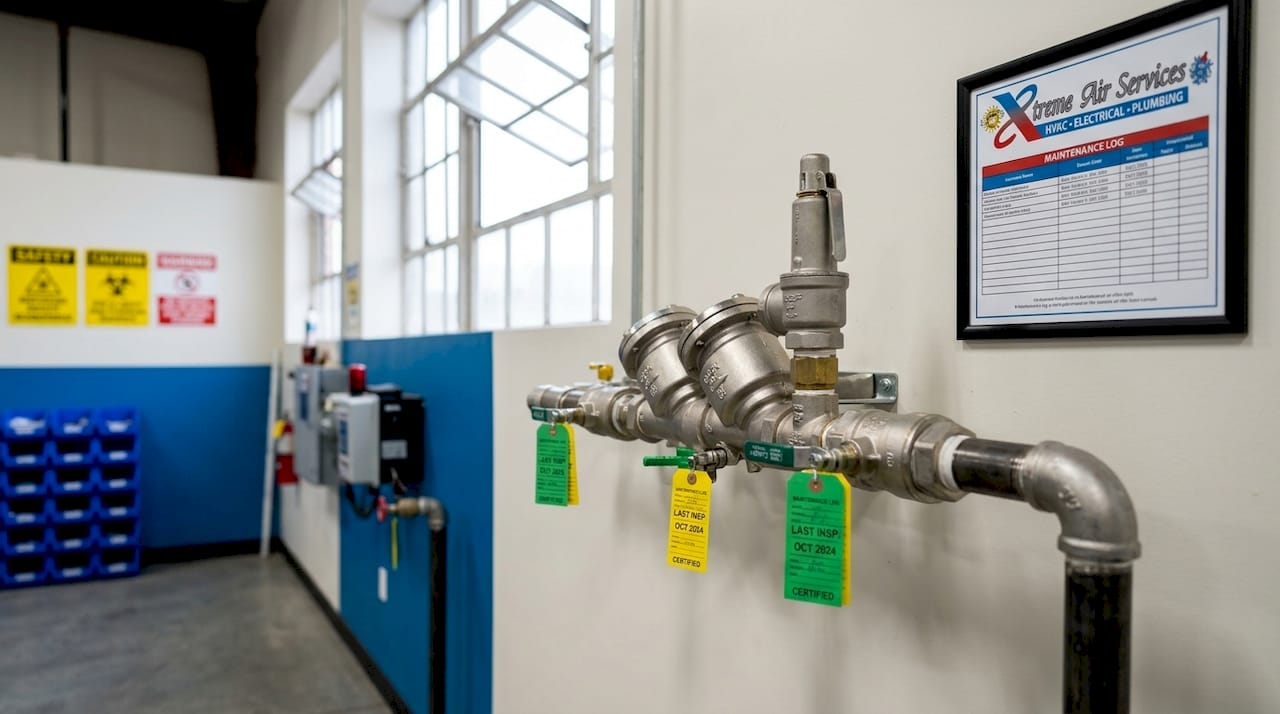
UPC Section 603.5.14 mandates that fire suppression systems connected to a potable water supply use testable backflow prevention assemblies. The four approved types are double check valve assemblies, detector assemblies, reduced pressure principle assemblies, and reduced pressure detector assemblies. Each type offers a different level of protection depending on the hazard classification of the building and its water use. Choosing the wrong assembly does not just create a code violation. It can contaminate the drinking water supply for an entire building or neighborhood.
Backflow prevention devices are life-safety-critical components, and their selection must balance protection level with hydraulic performance. A reduced pressure principle assembly provides the highest protection but also introduces the greatest pressure loss in the system. That pressure loss must be calculated into the hydraulic design from the start, or the sprinkler heads at the far end of the system will not receive adequate flow during a fire event.
Pro Tip: When reviewing bids for fire suppression installation, ask every contractor to show you the hydraulic calculation sheet. If it does not account for pressure loss across the backflow assembly, the design is incomplete.
Wet pipe vs. dry pipe systems
The two most common sprinkler system types have very different plumbing requirements. Wet pipe systems keep water in the pipes at all times, which means faster response but also greater risk of freeze damage in unheated spaces. Dry pipe systems use pressurized air to hold back water until a sprinkler head activates, making them the right choice for parking garages, attics, and cold storage areas.
The plumbing design for a dry system requires additional components including a dry pipe valve, air compressor, and accelerator. These parts add complexity to both installation and ongoing maintenance. Wet systems, by contrast, focus maintenance attention on valve operation and water quality. Knowing which system type you have determines what your inspection schedule looks like and what your plumber or fire protection contractor needs to check.
Valve supervision and control
Supervisory devices on control valves prevent accidental or intentional closure that would disable the system during an emergency. These devices include tamper switches wired to a fire alarm panel and physical locks on gate valves. If a valve is closed for maintenance and not reopened, the entire suppression system becomes non-functional. Valve supervision is not optional under NFPA standards. It is a required feature that gives facility managers real-time awareness of system status.
Understanding how your house plumbing works in relation to fire suppression connections helps you recognize when a valve closure or pressure drop signals a problem worth investigating immediately.
What regulatory standards govern the role of fire suppression plumbing
Fire suppression plumbing sits at the intersection of multiple codes, and each one governs a different phase of the system’s life. Knowing which code applies at which stage prevents costly mistakes during design, installation, and ongoing operation.
| Code | Scope | Key requirement |
|---|---|---|
| NFPA 13 | Sprinkler system installation | Design, materials, and spacing of sprinkler systems in new construction |
| NFPA 24 | Underground fire service mains | Hydrostatic testing and valve operation for buried supply piping |
| NFPA 25 | Inspection, testing, and maintenance | Ongoing ITM frequencies, recordkeeping, and owner responsibilities |
| IPC | Domestic plumbing | Potable water quality and pipe material standards |
| UPC Section 603.5.14 | Backflow prevention | Mandates testable assemblies for fire systems on potable supply |
NFPA 13 governs how a sprinkler system is designed and installed. Once the system is in service, NFPA 13 steps back and NFPA 25 takes over. NFPA 25 sets minimum frequencies for inspections, tests, and maintenance activities across the entire life of the building. This distinction matters because many property owners assume that passing the initial installation inspection means the system is compliant indefinitely. It does not.
Combination fire and domestic water lines must satisfy both IPC requirements for potable water and NFPA 24 requirements for fire protection, including hydrostatic pressure testing and valve operation verification. When a single underground pipe serves both functions, both sets of standards apply simultaneously. This is one of the most common sources of compliance gaps in older commercial buildings.
The Authority Having Jurisdiction (AHJ) is the local official who interprets and enforces these codes on your property. Building a good working relationship with your AHJ before an inspection is always more productive than resolving violations after the fact. Different jurisdictions sometimes adopt different editions of NFPA standards, so confirming which version applies to your building is a necessary first step.
Common challenges in managing fire suppression plumbing
Even well-designed systems develop problems over time. The challenges that catch property owners off guard most often are the ones that seem minor until they cause a system failure or a failed inspection, underscoring the ongoing role of fire suppression plumbing in day-to-day building safety.
-
Retrofitting backflow prevention without hydraulic re-evaluation. Adding a backflow assembly to an existing system introduces pressure loss that was never part of the original hydraulic design. Failure to re-evaluate hydraulics after a retrofit leads to underperforming systems that pass visual inspection but cannot deliver adequate water flow during an actual fire.
-
Ignoring dry system corrosion. Dry pipe systems are exposed to oxygen-rich air inside the pipes, which accelerates internal corrosion. This corrosion produces debris that can clog sprinkler heads or obstruct valves. Maintenance for dry systems must include internal pipe inspections at intervals specified by NFPA 25, not just external visual checks.
-
Failing to supervise valve status after maintenance work. Contractors performing unrelated work sometimes close fire system valves for convenience and fail to reopen them. Without supervisory alarms, this closure goes undetected. Facility managers must coordinate system shutdowns during any building work and verify valve status before signing off on completed work orders.
-
Inadequate documentation for AHJ inspections. ITM records must be retained and made available on request to the AHJ. Paper binders stored in a maintenance closet are technically compliant but practically unreliable. Digital records organized by component and date allow you to pull documentation in minutes rather than hours.
-
Freeze damage in wet pipe systems. Any wet pipe system running through an unheated space is at risk when temperatures drop. Frozen pipes crack, and the resulting water damage often exceeds the cost of the fire the system was meant to suppress. Heat trace cables, insulation, and seasonal temperature monitoring are the standard solutions.
Pro Tip: Before winter, walk every section of your wet pipe system that passes through an unheated space. If you find exposed pipe without insulation or heat trace, schedule the repair before the first freeze. One cracked pipe can impair an entire zone.
Understanding the types of plumbing pipes used in your building helps you identify which sections are most vulnerable to freeze damage or corrosion, since material choice directly affects maintenance requirements.
How to ensure compliance and optimize system reliability
Compliance with fire suppression plumbing standards is not a one-time event. It is an ongoing program with defined activities at monthly, annual, and multi-year intervals. Property owners who treat it as a program rather than a checklist consistently outperform those who react only when violations appear.
Here is what a structured compliance approach looks like in practice:
- Monthly visual inspections of sprinkler heads, control valves, and gauges can be performed by trained in-house staff. These checks confirm that heads are unobstructed, valves are in the open position, and gauges read within normal range.
- Annual tests including main drain tests, alarm valve tests, and backflow assembly tests require licensed contractors. Testing backflow prevention assemblies must be performed by certified testers familiar with NFPA standards to avoid disabling the system during servicing.
- Five-year internal inspections of pipe interiors check for corrosion, scale buildup, and obstruction. These are required by NFPA 25 and are often the first place serious problems are discovered.
- Recordkeeping should be digital and organized by component. Searchable, component-level ITM records improve readiness during AHJ inspections far beyond what paper binders can offer.
- Contractor relationships matter as much as the work itself. A licensed fire protection contractor who knows your building’s history can spot developing problems before they become violations. Rotating contractors to save money on annual tests often costs more in the long run when new contractors miss context that a familiar contractor would catch.
Facility managers should budget annually for NFPA 25 ITM cycles, since these costs differ significantly from the one-time expense of initial installation under NFPA 13. Treating ITM as a predictable operating expense rather than an emergency line item makes compliance sustainable over the full life of the building.
A home plumbing maintenance checklist gives residential property owners a practical starting point for tracking both domestic and fire suppression plumbing tasks in one place.
Key takeaways
The role of fire suppression plumbing requires correctly specified backflow prevention, hydraulically sound design, and a structured NFPA 25 inspection program to remain compliant and effective throughout a building’s life.
| Point | Details |
|---|---|
| Backflow prevention is mandatory | UPC Section 603.5.14 requires testable assemblies on all potable-water-supplied fire systems. |
| Hydraulic design must include pressure loss | Backflow assemblies reduce flow; retrofits require full hydraulic re-evaluation to maintain performance. |
| NFPA 13 vs. NFPA 25 | NFPA 13 governs installation; NFPA 25 governs all ongoing inspection, testing, and maintenance. |
| Valve supervision prevents silent failures | Supervisory devices alert facility managers when control valves are closed, keeping systems operational. |
| Digital records outperform paper | Component-level digital ITM records speed up AHJ inspections and prove ongoing compliance. |
What I’ve learned from years of fire suppression plumbing work
The most expensive fire suppression failures I have seen were not caused by bad installation. They were caused by good installations that nobody maintained. A system that passed its initial NFPA 13 inspection and then sat untouched for five years is not a compliant system. It is a liability waiting to be discovered.
The pressure loss issue with backflow prevention retrofits is the single most underestimated problem in this field. A property owner approves a backflow assembly upgrade because the AHJ requires it. The contractor installs it correctly. The system passes the post-installation test. Then, two years later, the hydraulic performance is quietly inadequate because nobody ran new calculations. The sprinkler heads at the end of the branch lines are not getting the flow density the original design specified. Nobody knows until there is a fire or a detailed inspection.
Valve supervision is another area where I see shortcuts that create real risk. Tamper switches and supervisory alarms are sometimes treated as optional add-ons rather than required safety features. A closed valve with no alarm is a system that looks operational but is not. That gap between appearance and reality is exactly where fire fatalities happen.
My advice to any property owner or facility manager is to build two habits. First, treat your ITM schedule as a non-negotiable operating commitment, the same way you treat your insurance premium. Second, keep your records in a format you can actually search and retrieve. When the AHJ shows up unannounced, the difference between a compliant property and a cited one is often just documentation.
Working with contractors who specialize in fire protection plumbing rather than general plumbing is worth the additional cost. The code knowledge gap between a generalist and a specialist is significant, and fire suppression systems are not the place to discover that gap.
— Xtreme
Keep your fire suppression plumbing compliant and reliable

Fire suppression plumbing is one of the most consequential systems in any building, and it deserves the same professional attention as your HVAC or electrical infrastructure. Xtreme Air Services provides licensed plumbing services for both residential and commercial properties in the Dallas area, including fire suppression system connections, backflow prevention installation, and ongoing maintenance support. Whether you need a full system inspection, a backflow assembly replacement, or help building an ITM schedule that satisfies your AHJ, the Xtreme Air Services team has the expertise to keep your property protected and code-compliant. Explore our plumbing services in Dallas or review our maintenance plan options to find the right level of ongoing support for your property.
FAQ
What is fire suppression plumbing?
Fire suppression plumbing is the system of pipes, valves, backflow prevention assemblies, and pressure controls that delivers water from the municipal supply to sprinkler heads and standpipes. It is the physical infrastructure that makes a fire protection system function during an emergency.
Why is backflow prevention required in fire suppression systems?
UPC Section 603.5.14 requires testable backflow prevention assemblies on all fire suppression systems connected to a potable water supply. Without them, fire system water can flow back into the drinking water supply and cause contamination.
What is the difference between NFPA 13 and NFPA 25?
NFPA 13 governs the design and installation of sprinkler systems in new construction, while NFPA 25 governs all inspection, testing, and maintenance activities once the system is in service. Both codes apply to the same system at different points in its life.
How often does a fire suppression system need to be inspected?
NFPA 25 requires visual inspections as frequently as monthly for some components, annual operational tests for valves and alarms, and internal pipe inspections every five years. Routine visual checks can be done by trained staff, but operational tests require licensed contractors.
What happens if I retrofit a backflow assembly without updating the hydraulic calculations?
Adding a backflow prevention assembly to an existing system introduces pressure loss that reduces water flow to sprinkler heads. Without updated hydraulic calculations, the system may appear compliant but deliver insufficient flow during a fire, undermining the entire purpose of the suppression system.
Recommended
Need professional help? Explore our commercial plumbing services.