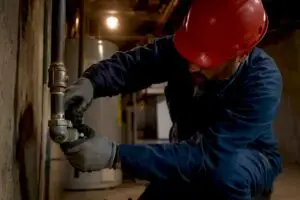
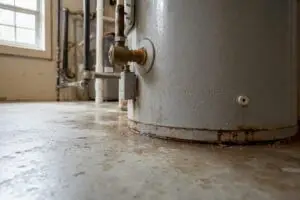
If your home’s static water pressure reads above 80 PSI, it’s higher than the safe range and worth acting on today. Test it with a gauge before touching anything else, and hold off running the dishwasher, washing machine, or water heater at full load until you know your number. In most cases, the lasting fix is a pressure-reducing valve (PRV), either adjusted or replaced by a licensed plumber.
TL;DR:
- Water pressure above 80 PSI often results from a failing or missing pressure regulator, especially if the reading exceeds 100 PSI, which poses a significant risk to home plumbing.
- Testing pressure at different times, especially overnight, helps identify if a pressure spike is consistent or caused by municipal variations, aiding accurate diagnosis.
- Adjusting or replacing a pressure regulator is the main fix, but it requires careful retesting and may involve a licensed plumber for safe and permanent resolution.
- High pressure causes gradual damage like leaks, water hammer, and premature appliance wear, making early detection and correction cost-effective.
- Readings above 100 PSI or persistent relief valve discharge demand professional intervention, including a thorough diagnostic at the meter and potentially installing expansion tanks or arrestors.
Table of Contents
- Checking Water Pressure Too High: How to Test It Yourself
- What Causes Excessively High Water Pressure
- Why High Water Pressure Damages Your Home Over Time
- How to Fix High Water Pressure Step by Step
- When High Water Pressure Means It’s Time to Call a Plumber
- How a service provider diagnoses high inlet pressure
- Why Waiting on High Pressure Costs More Than Fixing It
- Schedule a Pressure Inspection With Xtreme Air Services
- Where This Guide’s Numbers Come From
- Sources
- FAQ
Checking Water Pressure Too High: How to Test It Yourself
A $10 to $20 gauge from any hardware store settles the question in about five minutes. Screw it onto an outdoor hose bib, or the cold water line behind your washing machine if you don’t have exterior access, turn the spigot fully open, and read the dial.
Test with every fixture in the house off. That “static” reading is what your pipes sit at around the clock, and it’s the number that actually damages seals and valves over time. Testing at night often produces the highest reading of the day, since municipal demand drops and utility pressure tends to climb when fewer households are pulling water. If you only test at 2 p.m. on a Tuesday, you might miss the 11 p.m. spike that’s actually stressing your system.
Before you blame the water company, confirm your main shutoff valve is fully open. A partially closed valve can create odd, inconsistent readings that mimic a supply problem when it’s really just a valve that never got turned all the way back on.
Here’s how to read the number once you have it:
- Below 40 PSI: low pressure, a different problem entirely
- 40 to 60 PSI: ideal range for most homes
- 60 to 80 PSI: upper normal, generally safe but worth monitoring
- Above 80 PSI: high, and most plumbing codes flag this as the trigger for a pressure regulator
- Above 100 PSI: very high, with real risk to fixtures and appliances
Pro Tip: Test at two different times, once in the afternoon and once close to midnight, and write both numbers down. That gap tells a plumber more about your situation than a single reading ever could.
For a repeatable check, follow this order every time:
- Locate an outdoor hose bib or the washing machine hookup
- Confirm the main shutoff is fully open
- Attach the gauge and turn the water on fully
- Record the static reading with nothing else running
- Repeat at a different time of day and compare
What Causes Excessively High Water Pressure
Municipal supply is the most common culprit. Utilities push water through the distribution system at pressures that vary by elevation and time of day, and homes at the bottom of a hill or close to a pump station often see naturally higher incoming pressure than neighbors a few blocks away.
A missing or failing PRV is the second big cause. Every home should have one installed at the service entry near the meter, and when that valve wears out or was never installed, whatever pressure the utility sends comes straight into your pipes unregulated.
Thermal expansion is the sneaky one. In a “closed” plumbing system, typically one with a check valve or PRV that prevents backflow into the street, heated water in the tank expands and has nowhere to go, spiking pressure inside the house even when the incoming supply is normal.
A few other things worth ruling out:
- A partially closed or faulty valve somewhere in the house plumbing
- A recently installed check valve that turned an open system into a closed one
- Elevation changes in your neighborhood’s distribution system
- A PRV that was set correctly years ago but has since drifted
Why High Water Pressure Damages Your Home Over Time
Pressure above 80 PSI doesn’t announce itself with a flood on day one. It works slowly, and that’s what makes it dangerous. Constant strain on rubber washers, supply lines, and appliance valves shortens their lifespan and raises leak risk everywhere water touches a seal.
Water hammer, that loud banging when a faucet or washing machine valve shuts off, is one of the earliest warning signs. It’s the sound of water slamming to a stop inside pipes that were never designed to handle the force behind it, and left alone it loosens pipe joints and fittings over months of repeated impact.
The water heater carries its own specific risk. Excessive pressure can push the temperature and pressure relief valve to discharge more often than it should, which InspectAPedia’s guidance on high water pressure flags as a real hazard alongside banging pipes and running toilets. A relief valve that keeps dripping or releasing water isn’t a nuisance to ignore. It’s doing its job because something upstream is wrong.
Risk generally tracks the number on your gauge:
- 60 to 80 PSI: low risk, normal wear
- 80 to 100 PSI: moderate risk, expect premature fixture and appliance wear
- Above 100 PSI: high risk, active threat to seals, connections, and the water heater
How to Fix High Water Pressure Step by Step
Start with the gauge test from earlier. If your static reading sits above 80 PSI, locate your PRV, usually a bell-shaped valve near the main shutoff where the water line enters the house, and check whether it has an adjustment screw on top.
Here’s the order most homeowners can safely follow:
- Confirm the high reading with a second test at a different time of day
- Find the PRV and note its condition (corrosion, leaks, age)
- If comfortable, turn the adjustment screw a quarter turn at a time, then retest
- If pressure doesn’t respond to small adjustments, stop and call a plumber
- If there’s no PRV at all, installing one is a professional job, not a DIY project
Adjusting an existing PRV in small increments is reasonable for a confident homeowner. Replacing one is a different job entirely. It requires shutting off the main water supply, draining the line, and working directly on the service connection, and a licensed plumber will pressure test the system afterward to confirm the fix actually held.
If thermal expansion is part of the problem, an expansion tank installed near the water heater gives that expanding water somewhere to go instead of pressurizing your pipes. Water hammer arrestors, small air-cushioned fittings installed near noisy valves, solve the banging-pipe problem directly. Loose pipes benefit from added supports, and any fixture that’s already failing under the strain, a dripping faucet with a brand-new washer, a toilet that runs no matter how many times you replace the flapper, should just be replaced rather than repaired again.
- Never attempt soldering or work on the meter side of your plumbing without a licensed plumber
- Always shut off the main and relieve pressure before touching any valve
- Retest after every adjustment, don’t assume it worked
Pro Tip: If you replace a fixture and it fails again within weeks, the fixture was never the problem. High pressure is, and no amount of new washers will fix a valve that’s just going to blow out again.
When High Water Pressure Means It’s Time to Call a Plumber
Some situations skip DIY entirely. A reading above 100 PSI, a relief valve that keeps discharging, a visible leak at a fitting, or pressure that swings wildly from test to test all point to a problem beyond a quarter-turn adjustment.
Before you hire someone, ask a few direct questions: where exactly is the PRV located, does the job require a permit in your area, and will they document before-and-after pressure readings on the invoice. That last point matters more than it sounds. Professionals typically set outgoing pressure to a target around 50 to 60 PSI and record the readings as proof the fix worked, so you have something in writing if a problem resurfaces later.
Costs vary by region, but a basic pressure diagnostic runs modest, a full pressure regulator replacement costs more depending on accessibility and part quality, and adding an expansion tank is typically a smaller add-on to that job. Get a written work order before work begins, not after.
- Rapidly changing readings between tests
- Any relief valve discharge from the water heater
- Visible leaks at fittings or connections
- A reading above 100 PSI on two separate tests
How a service provider diagnoses high inlet pressure
A proper diagnostic starts at the meter, not at a faucet. Technicians gauge static pressure first, then run fixtures to check pressure under load, which separates a real supply-side problem from something isolated to one part of the house.
From there, the PRV gets inspected for diaphragm wear and correct setting, and the water heater’s expansion tank and pressure relief valve both get checked to rule out trapped thermal expansion. If a PRV needs replacing, the sequence typically runs PRV first, expansion tank second, arrestors and pipe repairs as needed after that.
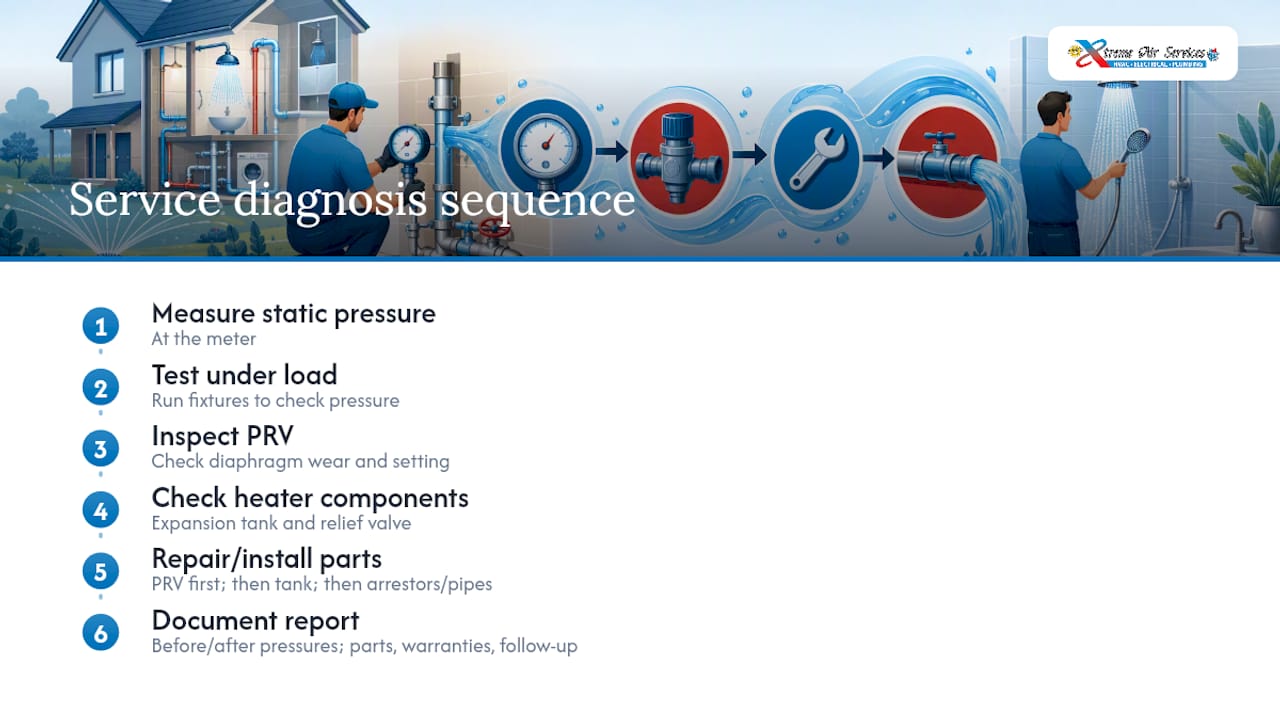
Every service report should include the before-and-after pressure readings, the parts installed with their warranty terms, and any follow-up recommendations. If your last plumber didn’t hand you those numbers, ask for them next time. For homeowners managing more than the plumbing side, the home plumbing maintenance checklist is a useful reference for what to track between visits.
Why Waiting on High Pressure Costs More Than Fixing It
The math here isn’t complicated. A PRV adjustment or replacement costs a fraction of what a burst supply line or a flooded water heater closet costs once high pressure finally wins. We’d rather see homeowners catch this during a routine check than during a Saturday morning emergency call.
Add a pressure check to your annual maintenance routine and write the number down every time. Most fixes, once done right, are permanent. You’re not signing up for a recurring hassle. You’re closing out a problem for good.
— Xtreme
Schedule a Pressure Inspection With Xtreme Air Services
Xtreme Air Services runs full pressure diagnostics the way it’s supposed to be done: gauge testing at the meter, load testing under real household use, and a full PRV and expansion tank inspection before anyone touches a wrench.

A typical visit includes static and loaded pressure readings, a PRV inspection or replacement if needed, expansion tank installation where thermal expansion is driving the problem, and water-hammer arrestors for pipes that bang every time a valve closes. You’ll get before-and-after numbers on the service report, along with warranty terms on any parts installed, so there’s a paper trail if anything needs a follow-up. Most PRV jobs wrap up in a single visit. If you’ve already caught a high reading on your own gauge, or you just want a professional to confirm what “normal” looks like for your house, book a plumbing service visit and get it settled before it turns into a bigger repair.
Where This Guide’s Numbers Come From
The pressure ranges and testing steps in this guide draw from municipal utility guidance on testing pressure at the meter, documented diagnostic and repair steps from licensed plumbing resources, and homeowner-tested gauge methods. If your readings seem off or inconsistent, your local water utility can test pressure directly at the meter to confirm whether the issue starts before or after it reaches your home. Homeowners on private wells should also review how well water systems differ from municipal supply before assuming the same thresholds apply.
Sources
- Water pressure and flow troubleshooting — Portland Water
- Water Pressure Too High: Dangers — InspectAPedia
FAQ
How do you fix high water pressure?
Test with a gauge to confirm the reading, then adjust or replace the pressure-reducing valve at the service entry. If pressure stays above 80 PSI after adjustment, or there’s no PRV installed, a licensed plumber needs to install or replace one.
What is a dangerously high water pressure?
Readings above 100 PSI are considered high risk, with real potential for pipe damage, fixture failure, and water-heater relief valve problems. Anything consistently above 80 PSI is outside the normal range and worth addressing.
Is 90 PSI too high for house water pressure?
Yes. Most plumbing codes and utilities set 80 PSI as the threshold that triggers a required PRV, so 90 PSI sits well above the recommended range and should be corrected.
Why would my water pressure suddenly be high?
A sudden spike usually points to a failing PRV, a recently closed system trapping thermal expansion, or a change in municipal supply pressure in your area. Test again at a different time of day to see whether the spike is constant or intermittent before assuming the worst.