


Insulation is defined as a building material that slows heat transfer between the inside of your home and the outside air, making it the single most important factor in year-round indoor comfort. Understanding why insulation matters for home comfort starts with one fact: without it, your heating and cooling systems fight a losing battle against the weather. Proper insulation decreases heat flow so your HVAC system works less, indoor temperatures stay stable, and your energy bills drop. The industry term for this resistance to heat flow is R-value, and every insulation decision in your home traces back to it.
Why insulation matters for home comfort and energy bills
Insulation controls heat flow, and heat flow is what determines whether your home feels comfortable or not. In winter, heat generated by your furnace tries to escape through your walls, ceiling, and floors. In summer, outdoor heat pushes inward through those same surfaces. Insulation resists heat flow, keeping conditioned air where it belongs and reducing how hard your HVAC system has to work.
R-value measures how well insulation resists heat transfer. The higher the R-value, the better the material performs. A wall with R-13 fiberglass batts loses heat far faster than one with R-21 mineral wool. That difference shows up directly on your utility bill and in how evenly your rooms stay warm or cool.
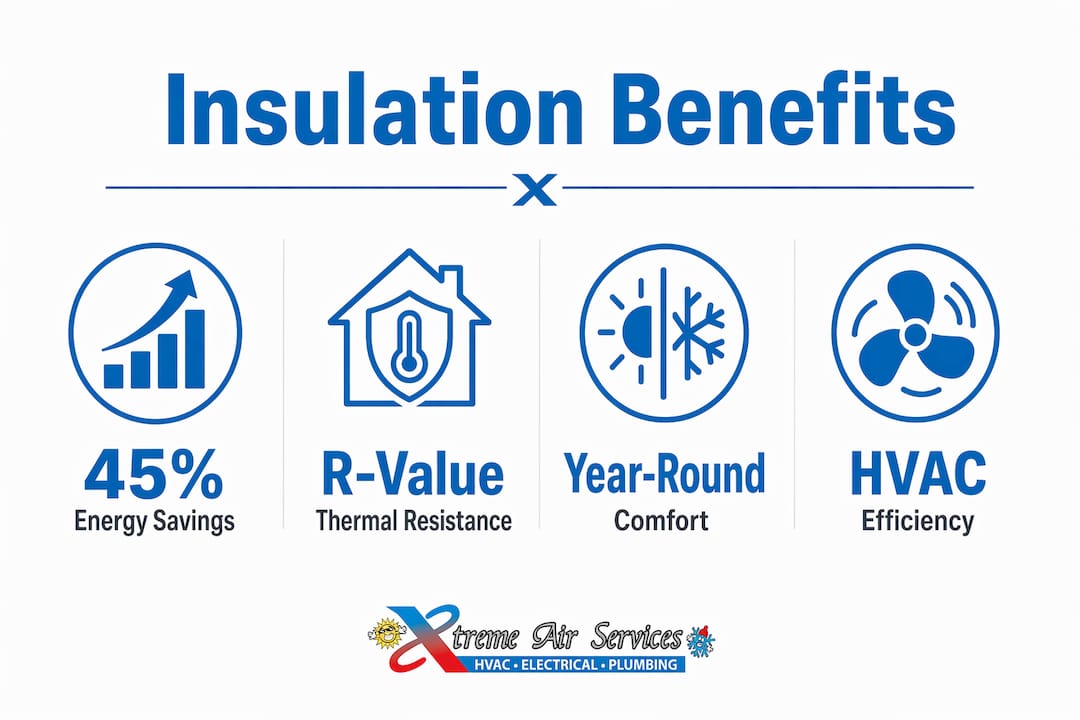
The practical impact is significant. Upgrading insulation can reduce heating and cooling bills by up to 45%. That number reflects real savings for a typical U.S. home spending $1,500 or more per year on energy. Fewer hot and cold spots, less HVAC cycling, and a quieter system are all direct results of better thermal resistance.
Here is what poor insulation actually looks like in practice:
- Rooms that feel cold near exterior walls even when the thermostat reads 70°F
- A second floor that is noticeably hotter than the first floor in July
- A furnace or air conditioner that runs almost continuously during extreme weather
- Condensation on interior walls or window frames in winter
Each of these symptoms points to heat moving through your building envelope unchecked. Insulation is the fix, not a bigger HVAC unit.
Why is attic insulation so critical for year-round comfort?
The attic is the single highest-impact location for insulation in most U.S. homes. Warm air rises, which means heat generated in winter heads straight for your ceiling and escapes through an under-insulated attic. In summer, a sun-baked roof deck can push attic temperatures above 150°F, and that heat radiates downward into your living space. Attics dominate heat transfer because of this physics, making attic insulation the most cost-effective upgrade most homeowners can make.
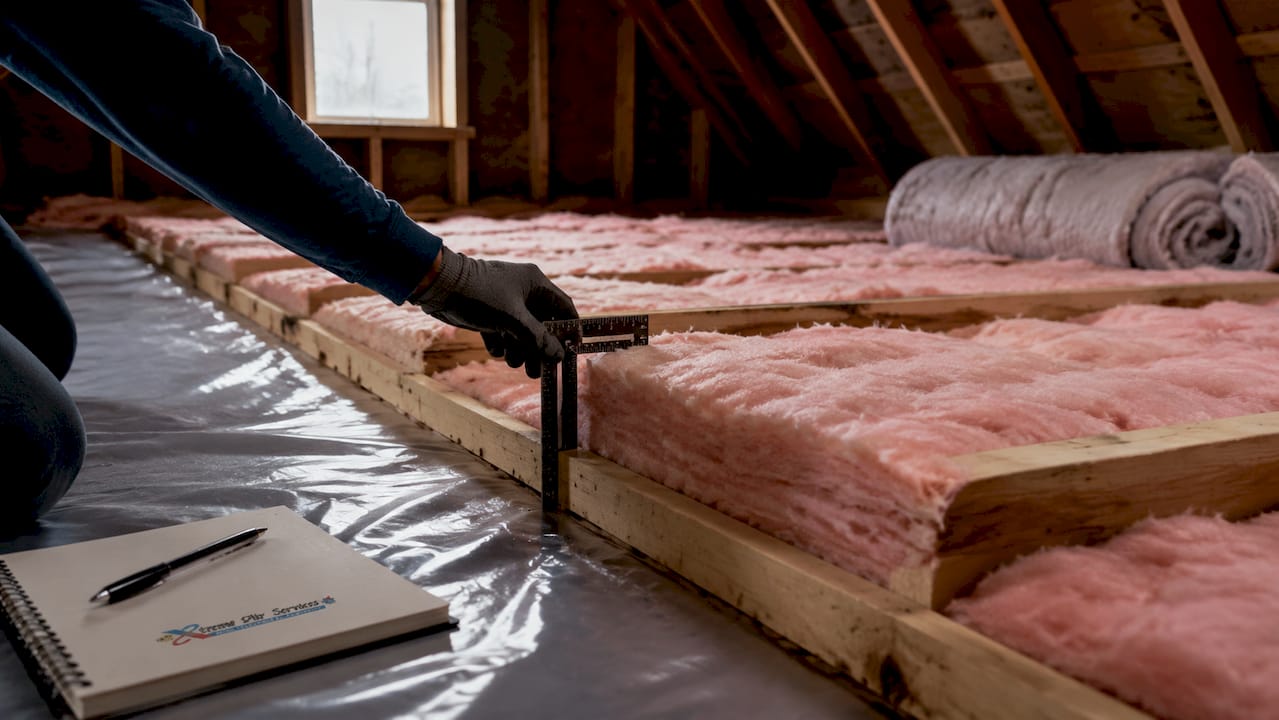
The Department of Energy and University of Maryland Extension both recommend attic insulation to at least R-49 for cold and mixed climates, with R-60 as the ideal target. Most older homes fall well short of that. If your attic has only a few inches of fiberglass batts laid between joists, you are likely losing a significant portion of your conditioned air through the ceiling every day.
The benefits of proper attic insulation include:
- Stable indoor temperatures from floor to ceiling, not just near the thermostat
- Reduced strain on your air conditioner during Texas summers
- Lower risk of ice dams in climates with freezing winters
- A quieter home, since insulation also absorbs sound
Pro Tip: Before adding new insulation over existing material, check for moisture damage or mold. Wet insulation loses most of its R-value and can harbor mold that spreads into your living space. A professional inspection catches this before you seal the problem in.
Radiant barriers are worth considering in hot climates like Texas. A radiant barrier installed on the underside of roof rafters reflects radiant heat before it enters the attic space, reducing cooling loads without adding bulk. This works especially well when combined with adequate blown-in cellulose or fiberglass on the attic floor.
Does installation quality affect insulation performance?
Correct installation is as important as the insulation material itself. Compressed insulation has a reduced R-value and will not deliver the performance listed on the label. A fiberglass batt rated R-19 that is stuffed into a 2×4 wall cavity and compressed to fit delivers significantly less than R-19. This is one of the most common and costly mistakes in home insulation.
Air sealing works alongside insulation and is not optional. Gaps around electrical outlets, plumbing penetrations, recessed lights, and attic hatches allow conditioned air to escape and outdoor air to infiltrate. Combining insulation with air sealing produces better comfort gains than insulation alone. Sealing these gaps before adding insulation is the correct sequence, not an afterthought.
Moisture control is the third leg of this system. Ignoring moisture and air leakage undermines insulation’s effectiveness and harms indoor air quality. Vapor barriers, proper ventilation, and moisture-resistant insulation materials all play a role in keeping your insulation dry and performing at full capacity for decades.
Here is the correct installation sequence for maximum benefit:
- Identify and seal all air leaks first, including around pipes, wires, and ceiling fixtures.
- Install a vapor barrier where required by your climate zone.
- Add insulation to the correct depth and density for your target R-value.
- Verify that insulation is not compressed against framing members or blocking soffit vents.
- Schedule a blower door test to confirm air sealing effectiveness after the work is complete.
Pro Tip: Thermal bridging is a real performance killer. Heat travels through wood studs and metal framing even when insulation fills the cavities between them. Adding continuous rigid foam board on the exterior of walls breaks this bridge and meaningfully improves whole-wall R-value.
Fiberglass vs. cellulose vs. foam board: which is best for comfort?
Insulation materials vary widely in performance, cost, and installation requirements. Choosing the right material depends on your climate, your home’s design, and the specific area you are insulating. No single material wins in every situation.
Fiberglass batts are the most common choice in U.S. homes because they are affordable and easy to install in standard stud bays. Blown-in cellulose, made from recycled paper treated with fire retardant, fills irregular spaces and achieves higher density, which reduces air infiltration better than batts. Spray foam, either open-cell or closed-cell, seals and insulates simultaneously, making it the top performer for air sealing in attics and crawl spaces. Rigid foam board adds R-value to exterior walls without taking up interior space.
| Material | R-Value per Inch | Best Use | Key Advantage |
|---|---|---|---|
| Fiberglass Batts | R-2.9 to R-3.8 | Wall cavities, floors | Low cost, widely available |
| Blown-In Cellulose | R-3.2 to R-3.8 | Attics, existing walls | Fills gaps, high density |
| Closed-Cell Spray Foam | R-6.0 to R-7.0 | Attics, crawl spaces | Air seals and insulates |
| Rigid Foam Board | R-3.8 to R-6.5 | Exterior walls, basements | Breaks thermal bridges |
| Radiant Barrier | Reflects 97% radiant heat | Attic rafters | Reduces summer cooling load |
In hot climates like Dallas or Irving, Texas, closed-cell spray foam in the attic and a radiant barrier on the roof deck is a high-performance combination. In mixed climates, blown-in cellulose on the attic floor paired with fiberglass batts in walls covers most comfort needs at a reasonable cost. The goal is matching material to location, not picking one product for the whole house.
How can homeowners improve insulation and indoor comfort?
Start with an honest assessment of what you already have. Pull back the attic hatch and measure the depth of existing insulation. If you see less than 10–11 inches of fiberglass or cellulose, you are likely under-insulated for most U.S. climates. Check exterior walls by removing an outlet cover on an outside wall and probing the cavity. Many homes built before 1980 have little or no wall insulation.
Prioritize upgrades in this order based on return on investment:
- Attic floor: Highest impact, most accessible, lowest cost per square foot
- Crawl space or basement: Prevents cold floors and moisture problems
- Exterior walls: Higher cost but significant comfort improvement in older homes
- Rim joists: Often overlooked, but a major source of air infiltration in basements
Knowing when to hire a professional matters. Air sealing and spray foam application require experience and equipment. Blown-in insulation in existing walls requires drilling and patching. DIY fiberglass batts in an open attic are reasonable for a handy homeowner, but anything involving vapor barriers, spray foam, or moisture remediation is better left to a licensed contractor.
Insulation upgrades work best when paired with a well-maintained HVAC system. A programmable thermostat compounds the savings from better insulation by running your system only when needed. If your air conditioner is struggling even after insulation improvements, common AC problems like refrigerant leaks or dirty coils may be reducing efficiency independently of your insulation. Insulation and HVAC work as a system, and both need attention to deliver maximum comfort.
Key takeaways
Proper insulation is the most cost-effective investment a homeowner can make for year-round comfort, energy savings, and a healthier indoor environment.
| Point | Details |
|---|---|
| R-value drives performance | Higher R-value means better heat resistance; match R-value targets to your climate zone. |
| Attic is the top priority | Insulate the attic to at least R-49 to stop the biggest source of heat loss and gain. |
| Installation quality matters | Compressed or poorly placed insulation loses R-value; follow the correct sequence every time. |
| Air sealing amplifies results | Seal gaps before adding insulation to prevent drafts from bypassing your thermal barrier. |
| Material choice affects outcomes | Match insulation type to location; spray foam for attics and crawl spaces, batts for wall cavities. |
What i’ve learned after years of seeing homes without enough insulation
Most homeowners I talk to assume their comfort problems come from an aging HVAC unit. They replace a perfectly functional furnace or air conditioner and still feel drafts in January or sweat through August. The real culprit, almost every time, is insufficient attic insulation. The HVAC system was never the problem. It was fighting a building envelope that could not hold conditioned air.
The misconception I see most often is treating insulation as a one-time installation that never needs attention. Insulation settles, gets compressed by foot traffic in attics, absorbs moisture from roof leaks, and degrades over decades. A home insulated in 1985 may be performing at a fraction of its original R-value today. Checking your insulation every 10 years is not excessive. It is responsible ownership.
The other thing I want homeowners to understand is that ventilation and insulation are not opposites. Some people hear “seal your home tightly” and worry about air quality. The answer is not to leave gaps. The answer is to seal the building envelope properly and then add controlled mechanical ventilation, like an energy recovery ventilator, to bring in fresh air on your terms. That combination gives you comfort, efficiency, and healthy indoor air simultaneously.
Insulation is not glamorous. It sits in your walls and attic where you never see it. But it is the reason one house costs $90 a month to heat and the identical house next door costs $220. That gap is real, and it is fixable. Treat insulation as a long-term investment in your home’s performance, not a line item to minimize during a renovation.
— Xtreme
Let Xtremeairservices help you get the comfort you deserve
If your home has cold spots in winter, rooms that overheat in summer, or energy bills that keep climbing, the problem likely starts with your insulation and extends to your HVAC system. Xtremeairservices provides professional HVAC services, maintenance, and home comfort solutions for homeowners across Dallas, Plano, Irving, and Sunnyvale, TX.

A well-insulated home and a properly maintained HVAC system work together to deliver consistent temperatures and lower utility costs year-round. Xtremeairservices offers HVAC maintenance plans designed to keep your system running at peak efficiency, especially after insulation upgrades that change how your home manages heat. If you are ready to stop guessing and start solving your comfort problems, contact Xtremeairservices today for a consultation.
FAQ
What is home insulation and how does it work?
Home insulation is a material installed in walls, attics, floors, and crawl spaces to slow the transfer of heat between indoors and outdoors. It works by trapping air or reflecting radiant heat, reducing how much energy your heating and cooling system needs to maintain a comfortable temperature.
How much can proper insulation reduce my energy bills?
Upgrading insulation can reduce heating and cooling costs by up to 45%, according to the Insulation Industry Assurance Association. The exact savings depend on your current insulation levels, climate, and home size.
What r-value does my attic need?
Most U.S. homes in cold or mixed climates need attic insulation rated at least R-49, with R-60 recommended for maximum efficiency. Homes in hot climates like Texas also benefit from R-49 or higher combined with a radiant barrier.
Does insulation help with both heating and cooling?
Yes. Insulation slows heat loss in winter and heat gain in summer, so it improves comfort and reduces energy use in both seasons. This is why the importance of home insulation applies year-round, not just during cold months.
When should i hire a professional for insulation work?
Hire a professional for spray foam application, blown-in insulation in existing walls, moisture remediation, and any work involving vapor barriers. DIY is reasonable for adding fiberglass batts to an open, dry attic with no existing moisture issues.


