
An AC unit freezes up when the evaporator coil surface temperature drops below 32°F while humid air passes over it, causing moisture to condense and turn into ice. This is not a freak occurrence. It is a direct signal that something is wrong with airflow, refrigerant charge, or a related component. Left unaddressed, frozen air conditioning problems can destroy your compressor, turning a $35 filter fix into a $2,800 repair. Whether you manage a single home or a commercial facility with multiple air handling units, understanding what triggers AC unit ice formation puts you in control before the damage compounds.
Why does my AC unit freeze up?
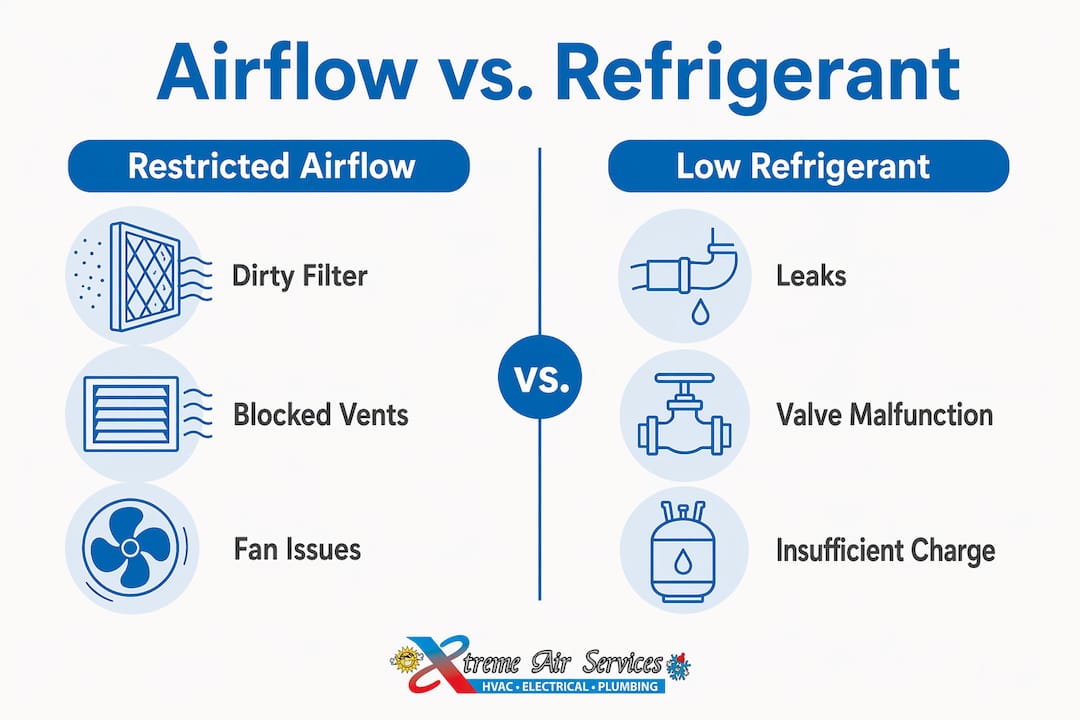
The two root causes of a frozen evaporator coil are restricted airflow and low refrigerant charge. Every other contributing factor traces back to one of these two mechanisms. When the evaporator coil cannot absorb enough heat from the air moving across it, its surface temperature plunges below freezing. Moisture in the air then freezes on contact, and the ice layer grows thicker with every passing hour.
How restricted airflow causes coil freeze
Airflow restriction is the most common trigger, and a dirty air filter is the single most frequent culprit. A clogged filter blocks the volume of warm air reaching the coil. Less warm air means less heat transfer to the refrigerant, so the coil gets colder and colder until it crosses the 32°F threshold. A filter that blocks light when held up to a window needs to be replaced immediately.
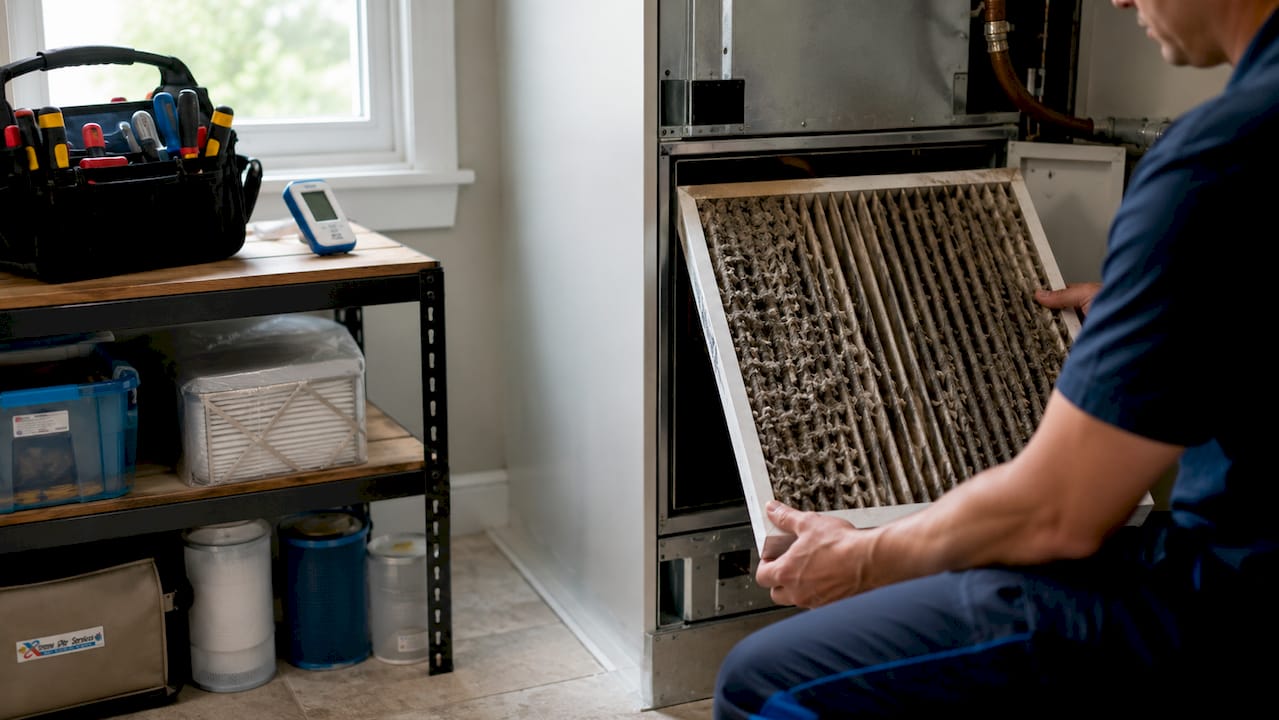
Beyond the filter, closed or blocked return and supply vents restrict the air circuit just as effectively. A single blocked return vent in a large home can reduce system airflow enough to initiate AC unit frost build-up. A dirty evaporator coil compounds the problem because the layer of dust and debris acts as insulation, further reducing heat absorption. A failed or weak blower motor is the most serious airflow cause because no filter change will fix it.
How low refrigerant causes coil freeze
Low refrigerant is counterintuitive to most homeowners. You might expect less refrigerant to mean less cooling, not more ice. The physics work differently. When refrigerant charge drops below design level, the pressure inside the evaporator coil falls, and so does the refrigerant’s boiling point. The coil gets colder than it should, and ice forms even with adequate airflow. Refrigerant is not consumed during normal operation. Low refrigerant always means a leak exists somewhere in the system.
Secondary causes worth knowing
A stuck or malfunctioning expansion valve can restrict refrigerant flow into the coil, mimicking the effect of low charge. A faulty thermostat that runs the compressor continuously without cycling off gives the coil no recovery time, accelerating freeze formation. Running AC when outdoor temperatures drop below 60°F also triggers freeze because refrigerant pressure falls with ambient temperature. Residential systems are designed to operate above roughly 65°F outdoors. Running them during cool spring or fall nights is a common and overlooked cause of AC unit ice build-up.
Airflow vs. refrigerant: quick comparison
| Cause | Key symptom | DIY check | Requires technician? |
|---|---|---|---|
| Dirty air filter | Weak airflow at vents | Hold filter to light | No (replace filter) |
| Blocked vents | Uneven room cooling | Walk and check all vents | No (open vents) |
| Dirty evaporator coil | Gradual performance loss | Visual inspection | Usually yes |
| Failed blower motor | Little to no airflow | Check airflow at registers | Yes |
| Low refrigerant (leak) | Ice plus warm air output | None safe for homeowner | Yes (EPA certified) |
| Stuck expansion valve | Freeze despite good airflow | None safe for homeowner | Yes |
Pro Tip: Replace your air filter before doing any other diagnosis. A $15 to $35 filter swap eliminates the most common cause in under five minutes and gives you a clean baseline for further troubleshooting.
How to safely troubleshoot a frozen AC unit
Diagnosing a frozen AC unit correctly prevents you from making the problem worse. Follow these steps in order before calling a technician.
-
Turn the thermostat to “off” and set the fan to “on.” This circulates room-temperature air across the coil without running the compressor, which is the safest and most effective way to thaw the ice. Never chip at ice with a tool or apply a heat gun. Thermal shock can crack the coil and turn a repair into a full replacement.
-
Allow 2 to 24 hours for a complete thaw. The thaw time depends on how much ice has accumulated. Place towels around the indoor unit and check the condensate drain pan for overflow. A pan full of water indicates significant ice build-up.
-
Inspect and replace the air filter. Pull the filter and hold it up to a light source. If you cannot see light through it, replace it. Note the MERV rating on the existing filter. Filters above MERV 13 can restrict airflow in systems not designed for high-resistance media.
-
Check every supply and return vent in the building. Walk the entire space. Furniture, rugs, and storage boxes frequently block return grilles without anyone noticing. Open every vent fully and remove any obstructions.
-
Restart the system and check airflow at multiple supply registers. Hold your hand near each register. Weak airflow after filter replacement and open vents points to a blower motor problem or ductwork restriction, both of which require a technician.
-
Monitor for re-freeze within 24 hours. If the unit freezes again after you have replaced the filter and confirmed open vents, the cause is almost certainly low refrigerant or a blower issue. Recurring freeze after thaw is the clearest indicator that a professional diagnosis is needed.
Pro Tip: Take a photo of the ice formation before you start the thaw. The location of the ice tells a technician a lot. Ice concentrated on the suction line rather than the coil face often points directly to low refrigerant.
Do not attempt to add refrigerant yourself. EPA Section 608 requires certified technicians to handle refrigerants. Beyond the legal requirement, adding refrigerant without finding and repairing the leak is a temporary fix that fails again within weeks. A certified technician uses leak detection equipment to locate the breach, repair it, and then recharge the system to the manufacturer’s specification. For a broader look at common AC problems beyond freeze-ups, Xtreme Air Services has a detailed breakdown worth reviewing.
What damage does a frozen AC coil cause, and how do you prevent it?
Ignoring AC unit freezing issues is not a “wait and see” situation. The consequences escalate quickly and the repair bills reflect that.
The compressor damage mechanism. When ice spreads from the evaporator coil to the suction line, liquid refrigerant can travel back to the compressor. Compressors are designed to compress gas, not liquid. This condition, called liquid slugging, causes mechanical failure. Compressor repair or replacement runs between $900 and $2,800 depending on system size and unit age. That cost dwarfs the price of a filter, a coil cleaning, or even a refrigerant leak repair. Compressor failure in an older unit often makes repair versus replacement the more pressing question.
Ice spreading to the suction line. Once ice moves past the coil and onto the suction line, the freeze-up has progressed from a maintenance issue to a mechanical emergency. At this stage, running the system even briefly risks the compressor. The only correct action is to shut the system off completely and call a technician.
Prevention strategies that actually work:
- Change air filters every 30 to 90 days depending on household conditions. Homes with pets or high dust levels need monthly changes. A clean filter is the single most cost-effective freeze prevention measure available.
- Schedule annual professional coil cleaning. Evaporator coils accumulate a thin film of dust and biological growth over time. This layer reduces heat transfer efficiency and raises freeze risk even when airflow appears normal.
- Keep all supply and return vents fully open and unobstructed year-round. Closing vents in unused rooms does not save energy. It increases static pressure and reduces airflow across the coil.
- Set the thermostat no lower than 68°F during operation. Extremely low setpoints push the coil temperature closer to the freezing threshold, especially during humid weather.
- Avoid running the AC when outdoor temperatures fall below 60°F. Use the fan-only mode or open windows instead during cool weather.
- Schedule a certified HVAC inspection annually. A technician checks refrigerant charge, blower motor performance, coil condition, and expansion valve function. Catching a slow refrigerant leak early costs far less than a compressor replacement later.
Following a structured HVAC maintenance routine addresses most of these prevention steps in a single annual visit.
How homeowners and facility managers should handle freeze risks differently
Residential and commercial freeze-up management share the same physics but differ significantly in scale, complexity, and the consequences of getting it wrong.
Residential freeze-up management
For homeowners, the freeze-up checklist is manageable. Filter changes, vent checks, and annual professional service cover the vast majority of freeze risk. The main failure mode is neglect. Filters go unchanged for six months, a vent gets blocked by a new piece of furniture, and the system freezes on the hottest day of July. Xtreme Air Services sees this pattern repeatedly. The fix is a calendar reminder and a $20 filter, not a service call.
Commercial facility management
Commercial HVAC systems face a different challenge. Air handling units in office buildings, retail spaces, and industrial facilities run continuously, often at variable loads. A filter that would last 90 days in a home may need replacement in 30 days in a high-traffic commercial space. Fixed replacement schedules miss this variability entirely.
Condition-based monitoring is the standard for commercial freeze prevention. This means measuring static pressure rise across filters and tracking supply fan amp trends rather than relying on a calendar. When pressure drop across a filter exceeds the manufacturer’s design threshold, the filter gets changed regardless of how recently it was installed. This approach catches restriction before it causes a freeze.
| Management approach | Residential | Commercial |
|---|---|---|
| Filter replacement trigger | Calendar schedule (30-90 days) | Pressure drop measurement |
| Airflow verification | Manual vent check | Static pressure and fan amp trending |
| Refrigerant service | Annual inspection | Scheduled plus condition-triggered |
| Freeze risk period | Summer peaks and cool shoulder seasons | Year-round due to continuous operation |
| Monitoring tools | Thermostat and visual inspection | Building automation system (BAS) alerts |
Rooftop units and large air handling units also require lockout controls that prevent the compressor from running when outdoor ambient temperatures fall below the system’s design minimum. Many commercial controllers include this as a programmable parameter. Facilities managers who have not verified this setting on their rooftop units should do so before the next cool season. Xtreme Air Services provides rooftop HVAC servicing specifically for property managers navigating these operational requirements.
Pro Tip: For commercial facilities, install differential pressure gauges across air handler filter banks. The $50 to $150 per unit investment pays for itself the first time it prevents a coil freeze that would have shut down a production floor or retail space.
For facilities considering HVAC zoning controls as part of a broader airflow management strategy, proper zone balancing also reduces the pressure imbalances that contribute to coil freeze in multi-zone commercial systems.
Key takeaways
An AC unit freezes up because restricted airflow or low refrigerant charge drops the evaporator coil below 32°F, and the fix depends entirely on which cause is driving the ice formation.
| Point | Details |
|---|---|
| Root cause is always heat transfer failure | Either restricted airflow or low refrigerant prevents the coil from absorbing enough heat. |
| Dirty filter is the first thing to check | A $15 to $35 filter replacement resolves the most common freeze cause in minutes. |
| Recurring freeze means call a technician | Re-freezing within 24 hours after a thaw indicates refrigerant leak or blower failure. |
| Running frozen AC risks compressor damage | Liquid slugging from ice on the suction line can cause $900 to $2,800 in compressor repairs. |
| Commercial systems need pressure-based monitoring | Fixed calendar filter changes miss variable load conditions that cause commercial coil freeze. |
What I’ve learned from years of freeze-up calls
The pattern Xtreme Air Services sees most often is not ignorance. It is impatience. A homeowner discovers ice on their unit, turns the system off, waits two hours, and restarts it. The system runs for a few hours, freezes again, and now they call. What they did not do was replace the filter, check the vents, or wait long enough for a complete thaw. A partial thaw leaves residual ice that accelerates the next freeze cycle.
The second most common mistake is the DIY refrigerant refill. Homeowners buy refrigerant canisters at hardware stores and add charge without finding the leak. The system cools for a few weeks, then freezes again, and by the time a technician arrives, the refrigerant charge is wrong in both directions because the original leak is still active. This creates a diagnostic mess and usually costs more to correct than a proper leak repair would have from the start.
The uncomfortable truth about AC freeze-ups is that most of them are preventable with a $20 filter and a 15-minute annual vent check. The ones that are not preventable at the homeowner level, specifically refrigerant leaks and blower motor failures, require a certified technician regardless of how much you read about them online. Knowing which category your problem falls into is the most valuable thing this article can give you. If the filter is clean, the vents are open, and the unit still freezes, stop running it and make the call.
— Xtreme
Stop AC freeze-ups before they cost you a compressor
If your unit has frozen more than once this season, or if you have not had a professional HVAC inspection in over a year, the risk of compressor damage is real and growing. Xtreme Air Services offers HVAC maintenance plans designed to keep airflow optimal, refrigerant levels correct, and coil surfaces clean year-round. Certified technicians handle refrigerant leak detection and repair in full compliance with EPA Section 608 requirements, so you are never left with a temporary patch that fails in three weeks.
Whether you need a one-time diagnostic for a frozen unit or a recurring maintenance plan for a commercial facility, Xtreme Air Services provides AC repair services with the technical depth to find the actual cause, not just the symptom. Schedule a diagnostic visit today and stop the freeze cycle for good.
FAQ
What causes an AC unit to freeze up in summer?
An AC unit freezes up in summer when the evaporator coil drops below 32°F due to restricted airflow from a dirty filter or blocked vents, or due to low refrigerant from a leak. High summer humidity accelerates ice formation once the coil surface crosses the freezing threshold.
How do I unfreeze my AC unit safely?
Turn the thermostat to “off” and set the fan to “on” to circulate warm air across the coil without running the compressor. Allow 2 to 24 hours for a complete thaw and never use a heat gun or sharp tool to chip the ice.
Can I add refrigerant myself to fix a frozen AC?
No. EPA Section 608 requires certified technicians to handle refrigerants, and adding refrigerant without repairing the underlying leak only delays the next freeze by a few weeks. A certified technician locates the leak, repairs it, and recharges the system correctly.
How do I know if my frozen AC needs a technician?
If the unit re-freezes within 24 hours after a complete thaw and filter replacement, the cause is almost certainly a refrigerant leak or blower motor failure. Both require professional diagnosis and repair.
How often should I change my filter to prevent AC freezing?
Change your air filter every 30 to 90 days depending on your environment. Homes with pets or high dust levels need monthly changes. A filter that blocks light when held up to a window is already overdue and is actively restricting airflow.
Recommended
- Common AC Problems Homeowners Face And How To Fix Them
- Common Commercial Cooling System Failures To Fix Now
Need professional help? Explore our air conditioning repair.