

UV Air Purifier Installation in Sunnyvale: Stop Mold and Odor at the Source
In-duct UV light that stops mold and bacteria from growing on the coil, where attic heat and humidity let it take hold.
What’s Covered on This Page
- Signs Your HVAC System Needs UV Air Purification
- In-Duct UV Systems Versus Portable Purifiers
- When UV Light Isn’t the Right Fix
- What Happens During Installation
- Bulb Life, Maintenance, and Ozone Safety
- How fast can you get someone out to look at my system?
- What happens when the technician shows up?
- Why do so many Sunnyvale homes have mold problems near the AC coil?
- How often do I need to replace the UV bulb?
- Will a UV light fix the dust and pollen problems in my house?
- Should I get a portable purifier instead of an in-duct system?
Signs Your HVAC System Needs UV Air Purification
Most homeowners don’t think about air quality until something smells wrong, and that’s usually the first clue. A musty, damp odor coming through the vents, especially right when the AC kicks on, almost always points to moisture and growth sitting somewhere in your system.
- A musty or mildew smell that shows up when the AC runs
- Family members catching the same cold or cough over and over
- Visible mold or black residue near the evaporator coil or vents
- Dust building up faster than it used to, even with a clean filter
- Allergy symptoms that don’t improve after replacing the air filter
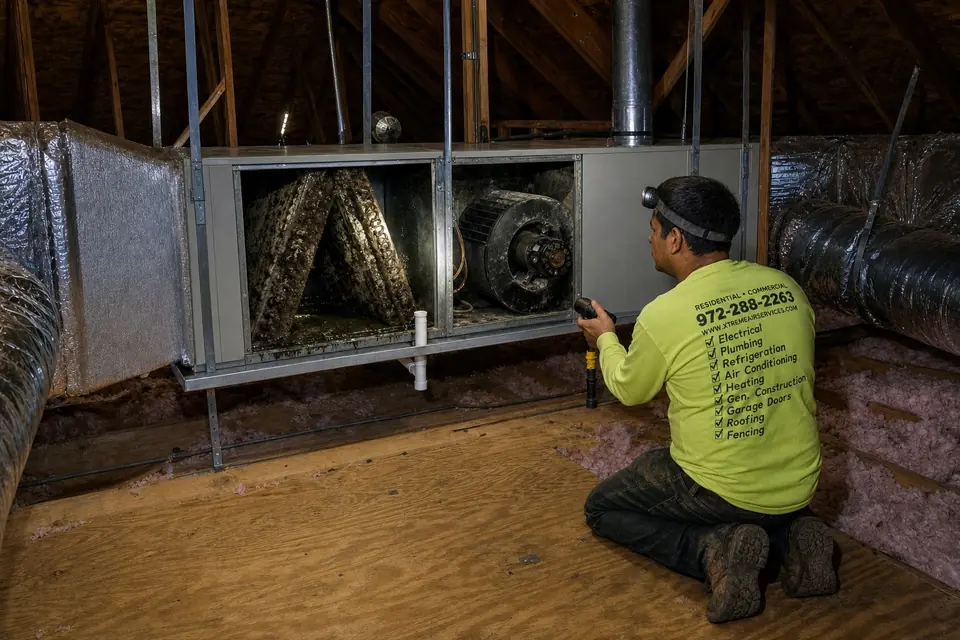
Ever open a supply vent and catch a whiff of something a little off? That’s usually not the filter’s fault, it’s biological growth sitting on the coil or in the duct runs. We see this every single week in Sunnyvale homes with attic-mounted HVAC systems. The attic traps heat and humidity for months at a stretch, and that combination is exactly what mold and bacteria need to take hold in the ductwork.
None of these signs mean your whole system is failing. But they do mean the air moving through your home needs more than a filter can give it. Our licensed and insured technicians can take a look and tell you straight whether UV air purifier installation makes sense for what’s going on in your ducts.
In-Duct UV Systems Versus Portable Purifiers
So which one actually fits your house? Portable purifiers sit in a room and clean the air in that room, nothing more. An in-duct UV system mounts inside your ductwork near the coil or plenum and treats every cubic foot of air moving through your whole HVAC system. That’s the real difference. One handles a bedroom. The other handles the whole house, every time the blower runs.
- Coverage: portable units clean one room, in-duct systems treat air across every vent in the home
- Runtime: portables only work while plugged in and turned on, in-duct systems run with your HVAC cycle automatically
- Noise and clutter: portables take up floor space and hum, in-duct units are hidden inside the ductwork
- Access: portables need no installation, in-duct systems need a technician with real access to your plenum or coil area
- Maintenance: both need bulb changes, but in-duct systems are tied to your existing HVAC service schedule
Here’s the part folks don’t think about until we’re standing in the attic. A lot of Sunnyvale homes run their HVAC equipment up in the attic space, which means the plenum access for an in-duct UV install is up there too, not in a hallway closet. That changes the job a little, tighter workspace, summer heat overhead, and it’s exactly why a professional install matters more than a shelf unit you plug in yourself.
If you’ve got allergies flaring in one room, a portable might genuinely be enough. But if you’re dealing with musty smells from the whole system, mold on a coil, or air quality trouble that shows up in every room, in-duct is the one built to fix it.
When UV Light Isn’t the Right Fix
UV air purifier installation isn’t a fix for everything, and we’ll tell you that straight. A UV light kills mold spores, bacteria, and some viruses as air passes across your coil. That’s its job. Dust on the shelves, pet hair on the vents, or sneezing every spring when the oak pollen hits, that’s not a UV problem, that’s a filtration problem. Most folks calling about a dusty house need a better filter or a filtration upgrade, not UV.
If your ducts are leaking in the attic, and a lot of older Sunnyvale homes have runs that have sagged or separated over the years, UV won’t fix that. Sealing the duct is the actual repair. Same goes for a sharp, specific smell, like sewer gas or something dead in the attic. UV handles airborne biological growth. It does not chase down a single source odor or patch a hole.
And if your system’s on its last leg already, weak airflow, short cycling, a compressor that sounds rough, adding a UV light to a dying unit is putting good money into a system on its way out. 80 six days a week.
Not sure which bucket you’re in? That’s genuinely common, and it’s a fair question to ask before you spend a dime. A quick look at your system tells us fast whether UV solves your actual problem or whether something else does.
Not sure what your UV air purifier installation project needs? Ask us.
Call Today, Get Service Today. Xtreme Air Services is ready to help.
What Happens During Installation
Most folks picture a big mess. It’s not.
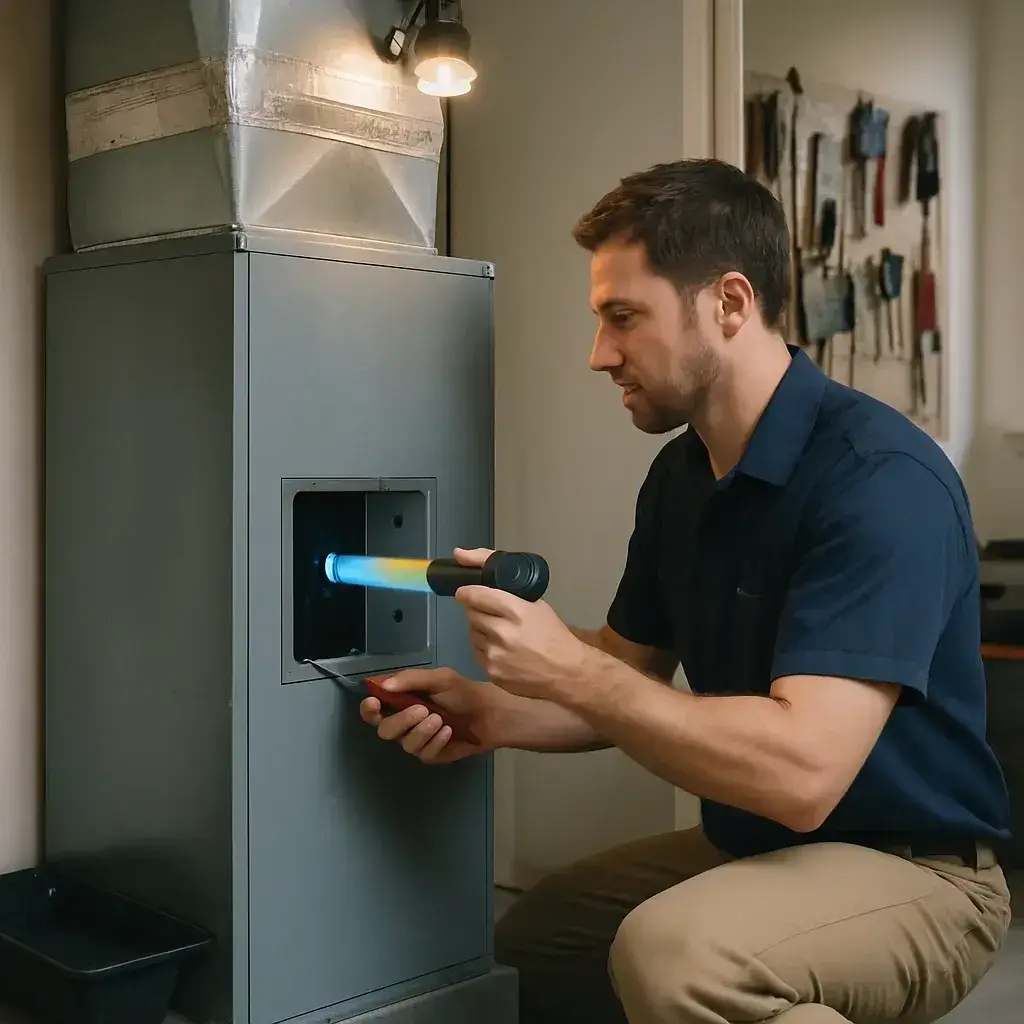
A UV air purifier installation is a focused job, and it usually fits inside a single visit. Our technician sizes up your system first, checks your ductwork, and figures out the best spot for the UV lamp near your coil. That’s where mold and bacteria like to build up, especially in Sunnyvale homes with attic-mounted HVAC systems where summer heat keeps that coil damp for hours after the AC shuts off.
- We inspect your existing ductwork and coil area to confirm the UV unit will fit and function the way it should.
- We mount the UV lamp housing in the air handler, positioned to hit the coil and airflow path directly.
- We connect the unit to your existing electrical setup using standard connections, no rewiring unless something’s off.
- We run startup and testing on the unit to confirm the lamp fires and the safety interlock works.
- We haul away any old parts or packaging before we leave.
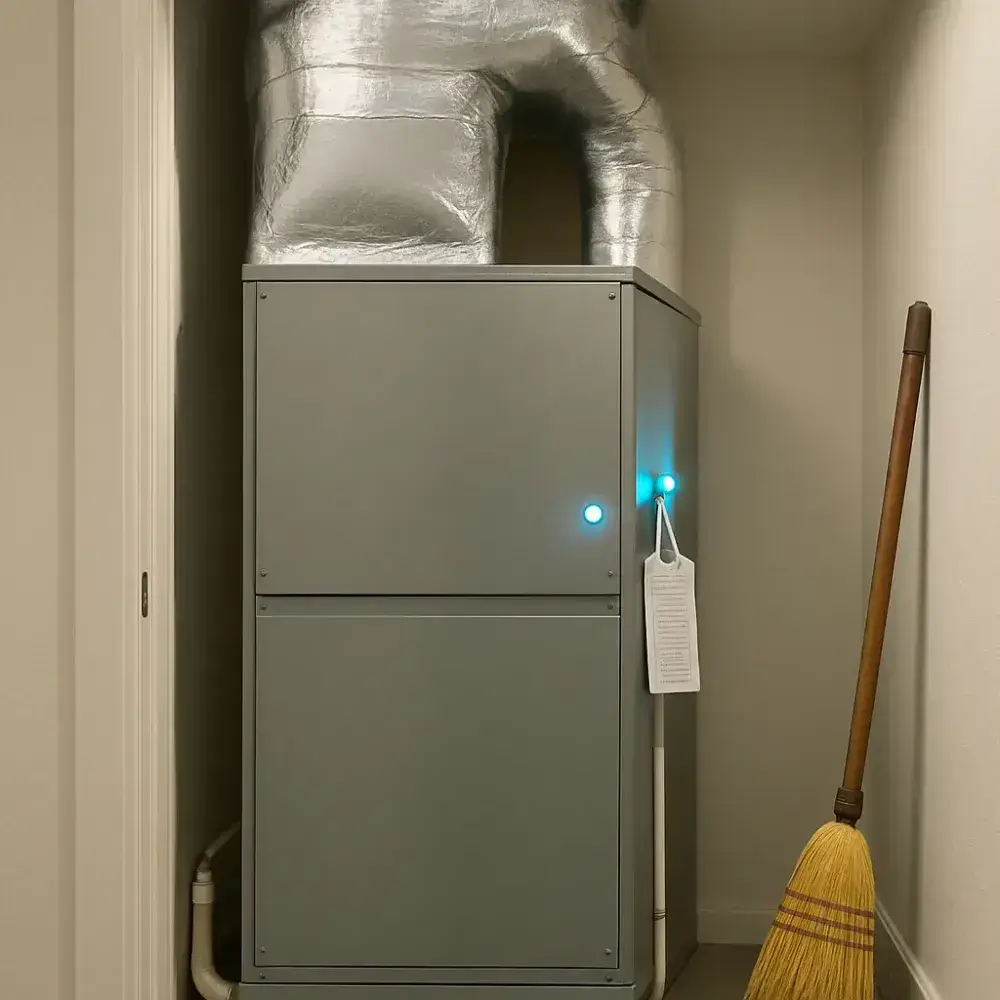
- We walk you through bulb replacement timing and what the indicator light means.
Nine times out of ten, the whole thing wraps up in under two hours.
Bulb Life, Maintenance, and Ozone Safety
A UV bulb doesn’t last forever. Most bulbs lose their germ-killing strength long before they burn out, so the light can look fine while doing almost nothing. That’s the tricky part.
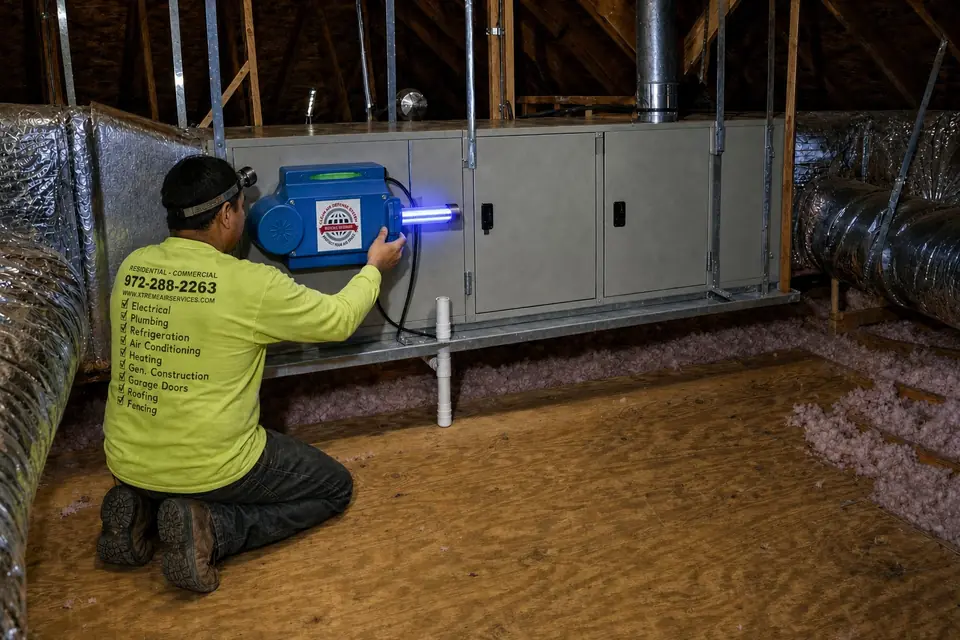
We tell customers to think of the bulb like a filter with a shelf life. It works quietly in the background, then one day it’s just not pulling its weight anymore. Swapping it out during your regular HVAC maintenance visit keeps the system doing its job without you having to remember a separate date on the calendar.
Now, about ozone. This comes up a lot, and it’s a fair question. Older ionizing air cleaners could produce ozone as a byproduct, and ozone irritates lungs instead of helping them. The UV-C systems we install work differently, they use light in a specific wavelength range designed to disrupt germs, not to create ozone as part of the process. Ask any installer to explain how their specific system handles this before you sign off, and don’t accept a vague answer.
Maintenance itself is simple on our end. We check bulb output, inspect the housing seal, and make sure nothing’s cracked or loose near the ductwork connection.
But don’t go pull the housing open yourself to peek at the bulb. These sit close to electrical connections and sheet metal edges inside your air handler, and it’s not worth a cut hand or a shock over a bulb you can’t diagnose by looking at anyway.
Frequently Asked Questions
Common questions about UV air purifier installation
How fast can you get someone out to look at my system?
We schedule most UV air purifier installation visits within a few days of your call. During busy summer months, when Sunnyvale attics trap heat and humidity fastest, we try to move quicker for musty smell complaints since that usually means mold is already active. When you call, tell us what you’re smelling or seeing near the vents. That helps us figure out how soon you need a technician on site versus when a routine appointment works fine.
What happens when the technician shows up?
Your technician starts by inspecting your ductwork and coil area before touching anything. This takes just a few minutes and confirms the UV unit will fit and work the way it should in your specific setup. From there, most installs wrap up in under two hours. You’ll get a walkthrough on bulb replacement timing and what the indicator light means before we leave, so you’re not guessing later.
Why do so many Sunnyvale homes have mold problems near the AC coil?
Attic-mounted HVAC systems are common in Sunnyvale, and that’s usually the root cause. Attics trap heat and humidity for months, and that damp, warm environment is exactly what mold and bacteria need to grow on your coil. We see this pattern every week in homes with this setup. It’s also why plenum access for installation is often up in the attic instead of a hallway closet, which changes how the job gets done.
How often do I need to replace the UV bulb?
Most UV bulbs lose their germ-killing strength before they burn out, so you can’t judge bulb life by whether the light still glows. We walk you through the expected replacement timing during your installation and explain what your unit’s indicator light is telling you. Staying on that schedule keeps the system doing its job instead of running a bulb that looks fine but isn’t killing anything anymore.
Will a UV light fix the dust and pollen problems in my house?
No, UV light targets mold, bacteria, and airborne biological growth, not dust or pollen. If you’re dealing with a dusty house or spring allergy flare-ups, that’s a filtration issue, not a UV one. A better filter or filtration upgrade solves that problem instead. We’ll take a quick look at what’s going on in your system so you spend money on the fix that matches your real issue.
Should I get a portable purifier instead of an in-duct system?
It depends on where your problem is showing up. A portable unit only cleans the air in the one room it sits in, which can be enough if allergies are bothering you in a single bedroom. But if musty smells are coming from your whole system or mold is showing up on the coil, an in-duct system treats every room your HVAC reaches, automatically, every time the blower runs.
Ready to Get Started?
Call 972-288-2263 Today, Get Service Today.