


AC Compressor Replacement in Sunnyvale: Confirmed Diagnosis Before Any Swap
Compressor testing and replacement for Sunnyvale homes, with the diagnosis confirmed before we quote a new unit.
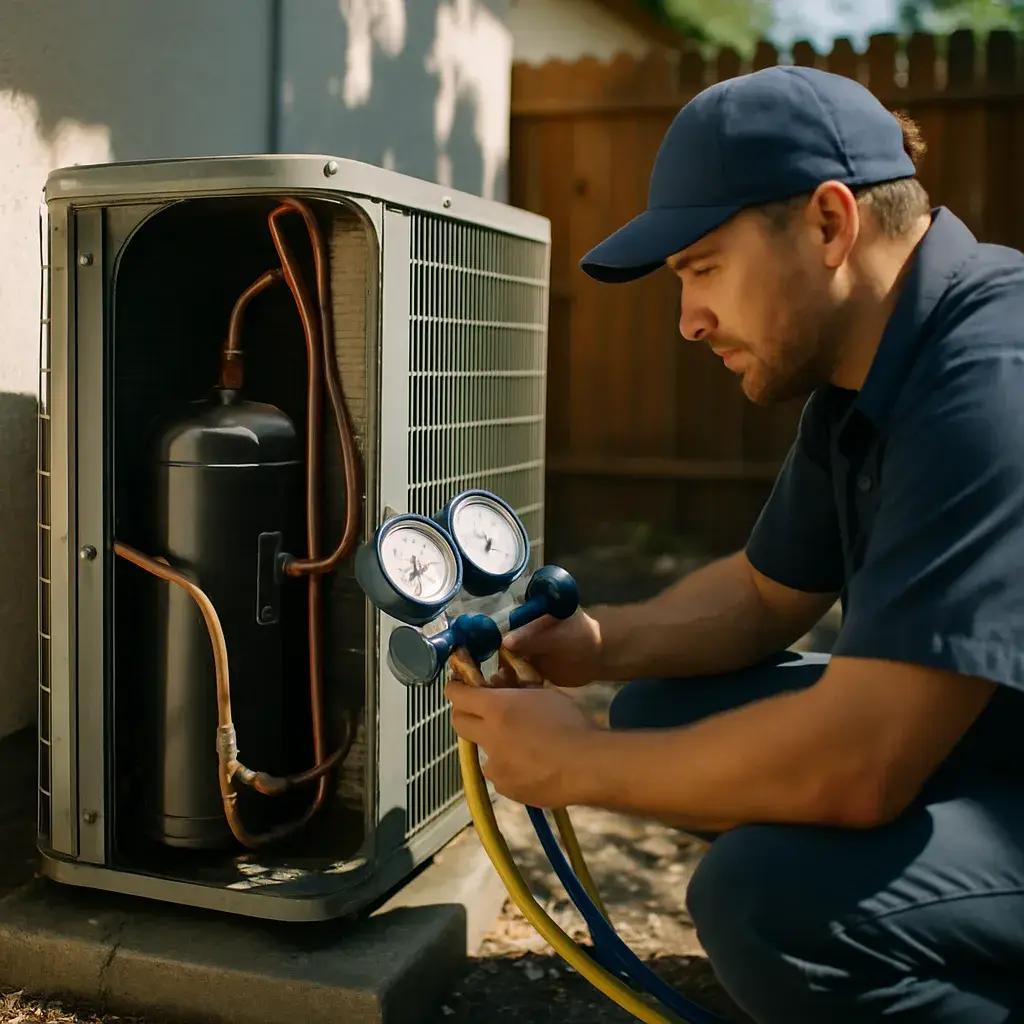
What’s Covered on This Page
- Signs Your AC Compressor Is Failing
- When the Real Problem Isn’t the Compressor
- Compressor-Only Replacement vs. Full System Replacement
- What Happens During a Professional Compressor Swap
- Verifying the Repair Before the Technician Leaves
- How fast can you get someone out to look at my AC compressor in Sunnyvale?
- What happens when a technician checks my AC compressor?
- Why do Sunnyvale homes seem to have more AC compressor problems in summer?
- How long does AC compressor replacement usually take?
- Should I replace just the compressor or the whole AC system?
- Can a bad capacitor really be mistaken for a failed compressor?
Signs Your AC Compressor Is Failing
The compressor is the heart of your outdoor unit. When it starts failing, it rarely just quits overnight. It sends warning signs first, and most homeowners miss them until the house won’t cool down at all.
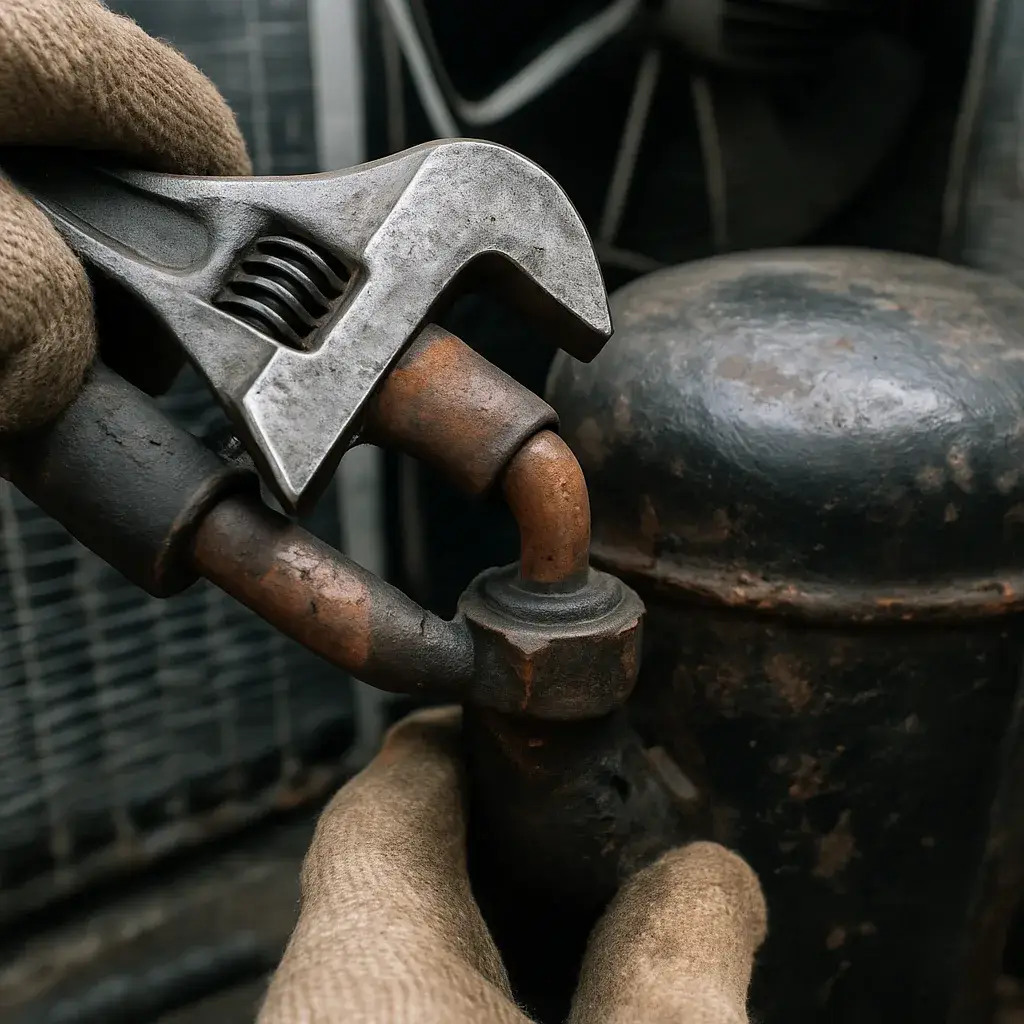
Hear a hard clunk or bang the second the outdoor unit fires up? That’s not normal, and neither is a loud hum where you’d expect a fan to be spinning. We hear the same story every August: the AC ran fine for years, then one brutal week it just gave up.
- Warm or barely cool air even with the thermostat set low
- A hard clunk, hiss, or grinding noise from the outdoor unit
- The breaker trips repeatedly when the AC tries to start
- The outdoor unit hums but the fan won’t turn
- Ice building up on the refrigerant line even in summer
The compressor hums but the fan stays still. That’s usually a seized rotor or a burnt start winding, not a quick fix. Once a compressor grinds or locks up, there’s no coaxing it back to life. Sunnyvale summers push highs into the upper 90s for weeks straight, and that heat load is what pushes an aging, weakening compressor past its breaking point. No hissing. No humming. Just a house that won’t cool down no matter how low you set the thermostat.
When the Real Problem Isn’t the Compressor
Most Sunnyvale homeowners call an AC technician expecting to hear the words compressor replacement, but that diagnosis is often wrong. A compressor is the most expensive part in the system, and several cheaper components can produce nearly identical symptoms: a unit that hums but won’t start, short cycles, blows warm air, or trips the breaker. Before accepting a compressor quote, it’s worth understanding what else could be happening.
A failed run capacitor is one of the most common culprits. This small cylindrical part stores the electrical charge that kicks the compressor and condenser fan into motion. When it weakens from heat exposure, common after a Sunnyvale summer where outdoor units bake in direct sun, the compressor may hum and struggle to start without ever being damaged. A capacitor swap typically costs a fraction of compressor work and can resolve the issue in one visit.
The contactor, a relay switch that sends power to the compressor and fan, can also pit and corrode over time. This happens especially in units exposed to irrigation runoff or humidity. A worn contactor causes intermittent power delivery that looks exactly like compressor failure on hot afternoons when the system works hardest.
Dirty or frozen evaporator coils are another frequent impostor. Reduced airflow from a clogged filter or coil buildup causes the coil to ice over. That can make the compressor cycle off on protective limits. Homeowners often assume the compressor died when really the system is starving for airflow. Sunnyvale neighborhoods with mature landscaping tend to see more leaf litter, mulch, and dust drawn into outdoor units, which speeds up this problem.
A failing condenser fan motor can also cause the compressor to overheat and shut down on its internal protector, mimicking compressor failure without the compressor itself being at fault. Replacing a fan motor is less invasive and less costly.
- Clear leaves, mulch, and grass clippings from at least two feet around the outdoor unit
- Check and replace the air filter if it’s visibly gray, clogged, or hasn’t been changed in 60 to 90 days
- Listen for a humming sound without startup, which often points to a capacitor rather than the compressor
- Check the breaker panel for a tripped switch before assuming major failure
A trustworthy technician tests capacitors, contactors, coil condition, and fan motor amperage before ever recommending compressor replacement. This diagnosis-first approach protects homeowners from paying for major repairs they don’t need.
Compressor-Only Replacement vs. Full System Replacement
When a compressor fails, Sunnyvale homeowners face a genuine fork in the road: replace just the compressor, or treat the failure as a signal to upgrade the entire system. A compressor-only swap makes sense when the rest of the system, including the coil, air handler, and ductwork, is in good condition and still under a reasonable service life, typically under ten to twelve years old. In these cases, a technician sources a matching or compatible compressor and restores the system to working order without touching the rest of the equipment.
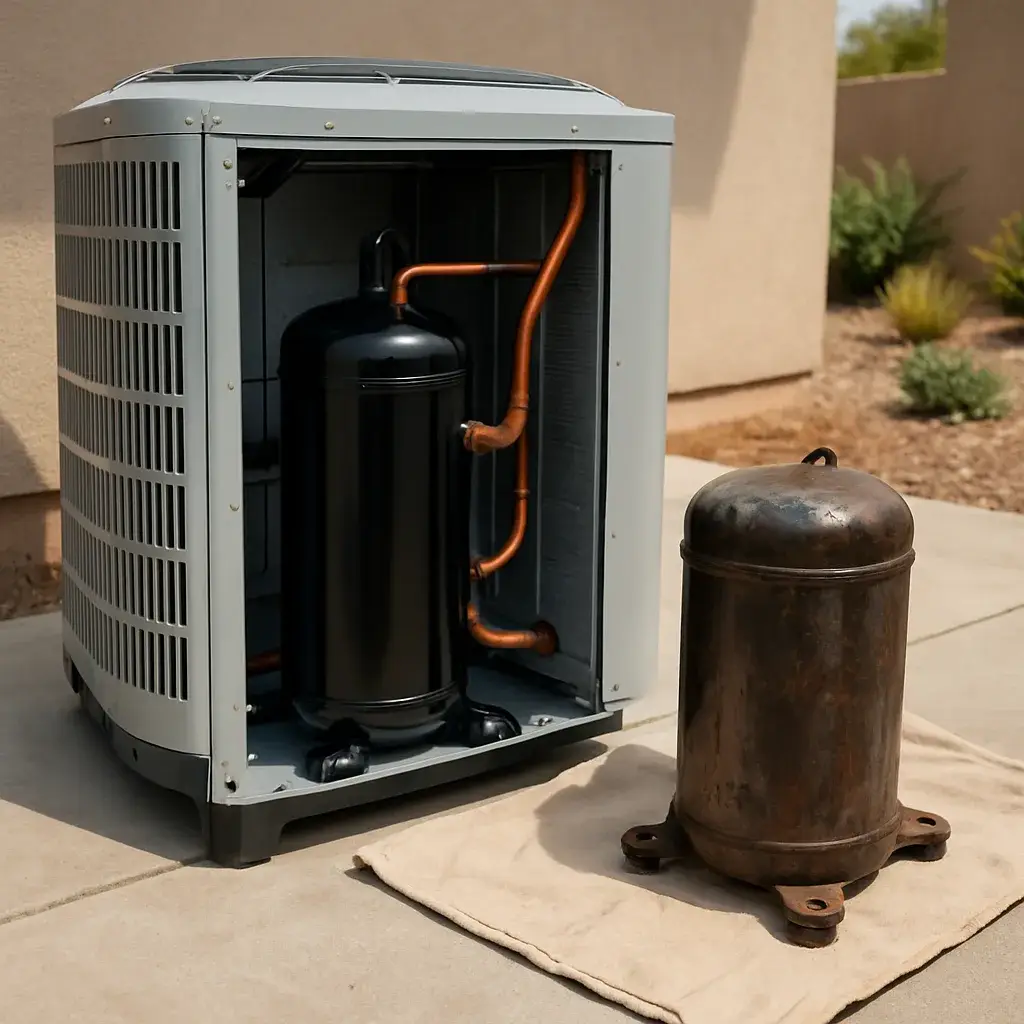
Full system replacement becomes the smarter choice when the compressor failure coincides with an aging unit, usually twelve to fifteen years or older, or when the existing system uses R-410A refrigerant that is being phased down under the EPA AIM Act. As R-410A supply tightens and pricing climbs, sourcing a same-spec compressor for older units grows harder and less cost-effective over time. The DOE SEER2 minimum efficiency standard, effective January 1, 2023, changed testing procedures and equipment specifications, so some older compressors and coils are no longer perfectly compatible with parts manufactured to current standards. In these situations, patching the old system may only buy a short-term fix before another component fails.
- System age near or past twelve years favors full replacement over a compressor-only repair
- R-410A equipment faces rising costs and shrinking part availability under the AIM Act phase-down
- SEER2 compliance can limit compatible replacement parts on pre-2023 systems
- A single-fault system with a healthy coil and ductwork is a good candidate for compressor-only replacement
- Recurring compressor failures often signal a larger underlying system problem
Pricing for either path follows a flat, quote-based model common across the industry, similar to figures reported in Angi’s cost guide, rather than a fixed rate sheet. Technicians calculate a project-specific quote based on system tonnage, the SEER2 rating of replacement equipment, access difficulty to the outdoor unit, ductwork condition, and any permit requirements from the Town of Sunnyvale. Exact costs are best confirmed during an on-site evaluation. Visit our cost guide page for a detailed breakdown of what drives pricing.
Thinking about AC compressor replacement? Let’s talk.
Call Today, Get Service Today. Xtreme Air Services is ready to help.
What Happens During a Professional Compressor Swap
Sunnyvale homeowners scheduling a compressor replacement often ask what happens once a technician arrives. A professional swap is not a quick parts-and-labor transaction. It follows a defined sequence built to confirm the diagnosis, match equipment correctly, and protect the rest of the system from damage during installation. Summer temperatures in Sunnyvale regularly push into the upper 90s and beyond, so technicians move efficiently, but every step still gets verified before the system is closed up and powered on.
- Diagnostic confirmation: before any parts are ordered, the technician re-verifies compressor failure using amperage readings, refrigerant tests, and electrical checks to rule out capacitor or contactor issues that mimic compressor failure.
- Tonnage and SEER2 matching: the tech reviews your home’s existing tonnage, airflow, and SEER2 rating to select a replacement compressor that matches your system’s design specs, since a mismatched compressor can cause short cycling or reduced efficiency.
- Old unit removal: refrigerant is recovered per EPA regulations, electrical connections are disconnected, and the failed compressor is unbolted and removed from the outdoor unit housing.
- New compressor installation: the replacement is connected using existing refrigerant lines whenever line condition allows, which saves labor time and avoids unnecessary cutting or brazing throughout the copper lineset.
- System startup and testing: once wired and charged, the unit is started under load, and the technician checks suction and discharge pressures, superheat, subcooling, amp draw, and airflow to confirm normal operation before leaving the property.
During the swap, homeowners should expect some noise and vibration as the old compressor is unbolted and the new one is set into place. This is especially true if the unit sits on a concrete pad near a bedroom window or patio, common in many Sunnyvale homes. Cooling will be temporarily unavailable while the outdoor unit is offline, typically for the bulk of the appointment. Once the new compressor is running and pressures stabilize, the technician monitors the system through a full cooling cycle rather than leaving right after startup, checking for unusual sounds, vibration, or drift that could point to a loose connection or airflow restriction.
This methodical sequence, confirming failure, matching specifications, installing carefully, then testing under real conditions, is what separates a licensed replacement from a rushed part swap that risks repeat failures.
Verifying the Repair Before the Technician Leaves
Setting the new compressor in place isn’t the finish line. A compressor that looks installed right can still fail in a month if nobody checks the numbers behind it. That’s why the system gets run through real tests before anyone packs up a tool.
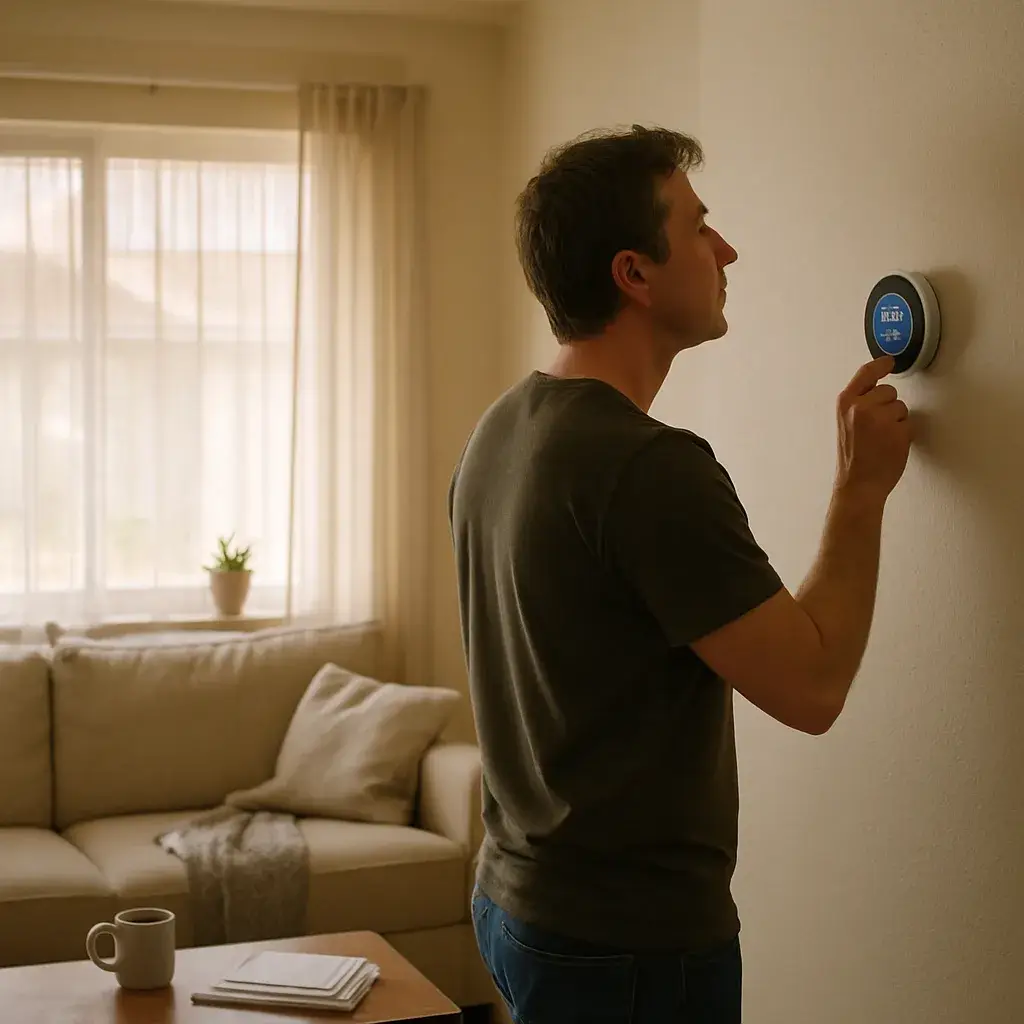
Here’s what gets checked before the job is called done:
- Refrigerant and charge, matched to the new compressor’s rating
- Amp draw on the compressor, compared against the data plate
- Suction and discharge line temperatures for proper heat transfer
- Airflow at the vents, checked room by room, not just at the unit
- Thermostat cycling, making sure the system starts, runs steady, and shuts off clean
Ever wonder why some compressor jobs fail again within a year? It’s usually a skipped step right here, an undercharge or a wiring connection nobody tested under load. A compressor working too hard because of low refrigerant will burn out early, and the homeowner is right back where they started.
You’ll know it’s done right when you feel it. The system kicks on quiet, cool air hits the vents within minutes, and the thermostat holds its number without the unit short-cycling on and off. A good technician walks you through the readings in plain English before leaving your home, so you’re not just trusting a closed panel and a handshake.
That last check takes maybe ten extra minutes. It’s the difference between a compressor that lasts and one you’re calling about again by August.
Frequently Asked Questions
Common questions about AC compressor replacement
How fast can you get someone out to look at my AC compressor in Sunnyvale?
We can usually get to your home within a day, especially during peak summer heat. Compressor problems get worse fast once they start, so we treat these calls with urgency. When you call, tell us what you’re hearing or seeing, like a clunk on startup or warm air from the vents. That helps us bring the right tools and parts on the first visit. Sunnyvale summers push units hard, so we keep our schedule flexible for compressor emergencies.
What happens when a technician checks my AC compressor?
We start by testing the capacitor, contactor, coil, and fan motor before touching the compressor itself. Most calls that sound like compressor failure turn out to be one of these cheaper parts. We check your breaker panel, look at the outdoor unit for debris, and measure amperage on the compressor while it runs. This keeps you from paying for major work you don’t need. You’ll get a clear answer about what’s wrong before we recommend any repair.
Why do Sunnyvale homes seem to have more AC compressor problems in summer?
Sunnyvale summers push highs into the upper 90s for weeks, and that heat load is what breaks down an aging compressor. Homes with mature landscaping also draw more leaf litter, mulch, and dust into outdoor units, which chokes airflow over time. Units that bake in direct sun all day also wear out capacitors faster, which can mimic compressor failure. If your system has run fine for years and suddenly struggles in a heat wave, the outdoor unit’s condition is often the reason.
How long does AC compressor replacement usually take?
A straightforward compressor-only swap on a healthy system can often be finished in one visit. If the coil, refrigerant type, or age of the system raises questions, we may need extra time to confirm parts are compatible. Systems over ten to twelve years old sometimes take longer because matching a compressor to older equipment isn’t always simple. We’ll give you a clear timeline once we’ve inspected your specific unit and confirmed what’s needed.
Should I replace just the compressor or the whole AC system?
It depends on the age and condition of your system, not just the compressor. If your coil, air handler, and ductwork are solid and the system is under ten to twelve years old, a compressor-only swap is usually the smart move. Once a system passes twelve to fifteen years, or runs on R-410A refrigerant facing supply cuts under the AIM Act, full replacement often makes more sense. We’ll walk you through both options before you decide.
Can a bad capacitor really be mistaken for a failed compressor?
Yes, and it happens more than most homeowners expect. A weak capacitor can’t deliver the electrical charge that starts the compressor, so it hums and struggles without ever being damaged. This is common after a Sunnyvale summer where outdoor units sit in direct sun for months. A capacitor swap is a quick fix compared to compressor work. That’s why we always test the capacitor first instead of jumping straight to a compressor diagnosis.
Ready to Get Started?
Call 972-288-2263 Today, Get Service Today.