


Ventilation System Installation in Sunnyvale That Keeps Buildings Breathing Easy
Exhaust and supply sized to the building’s actual load, then tested at every register – so the air reaches the far end of the floor plate, not just the thermostat.
What’s Covered on This Page
- Signs Your Building Needs a New Ventilation System
- When a Repair or Duct Cleaning Is the Smarter Fix
- How Ventilation System Installation Works, Start to Finish
- What Drives Ventilation Installation Costs Up or Down
- Commercial and Industrial Ventilation Needs Along the US-80 Corridor in Sunnyvale
- How long does a ventilation system installation take in Sunnyvale?
- How do I know if I need a new ventilation system or just duct repair?
- What can I expect when the technician arrives for installation?
- Why does my Sunnyvale building have uneven temperatures between spaces?
- Do older Sunnyvale buildings need code upgrades during installation?
- What happens after my new ventilation system is installed?
Signs Your Building Needs a New Ventilation System
Some spaces in your building run cold while others feel stuffy no matter what the thermostat says. That’s rarely a thermostat problem. The ductwork or air handler is struggling to move air where it needs to go.
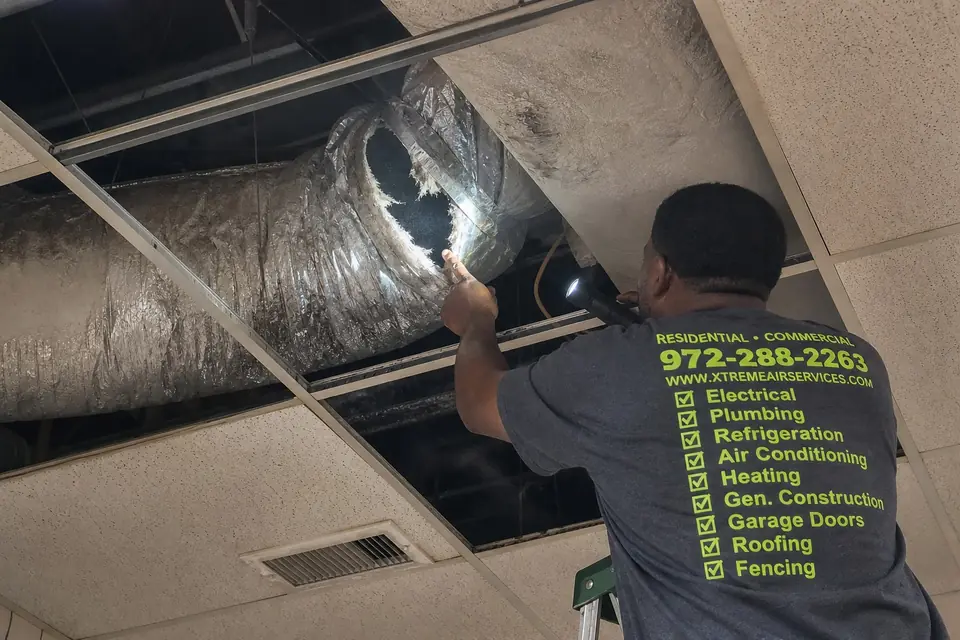
Sunnyvale has older buildings with duct runs through unconditioned space and newer construction with tighter, better-sealed systems. In the older stock we routinely find collapsed flex duct and gaps at the joints. That is conditioned air you are paying for that never reaches the space.
- Rooms that never match the thermostat setting, especially back bedrooms or additions
- A musty or stale smell when the system kicks on
- Visible dust buildup around vents or a thin film on furniture
- Higher indoor humidity than outside, even with the AC running
- Whistling or rattling from the vents when air moves through them
- A system that’s been patched more than once in the last few years
Your ductwork may be original to a building put up before code updates changed duct-sizing standards. If so, equipment upgrades alone won’t fix the airflow. The duct has to match the load because this is a design issue, not a repair issue.
When a Repair or Duct Cleaning Is the Smarter Fix
Not every airflow problem means you need a new system. Sometimes the cause is dirty ductwork or a loose connection somewhere overhead.
Many Sunnyvale buildings run ductwork through unconditioned space, and Texas summers make that brutally hot. Heat and dust build up, seals dry out, and older ducts start leaking. Air escapes before it ever reaches the diffusers. That’s a sealing or cleaning problem, not an installation problem.
How do you know which problem you have? These signs usually point to a smaller fix instead of a full installation.
- One or two spaces run warm or stuffy while the rest of the building feels fine
- You notice dust or a musty smell coming from the vents, but airflow is otherwise steady
- The ductwork is less than ten years old and still in decent shape
- A register or two feels weak, but the main trunk lines are solid
- You just moved in and want the system inspected before assuming the worst
If that sounds like your building, the honest answer is probably a duct inspection, duct sealing, or air duct cleaning. You may not need a full ventilation system installation. We see this every week. People call worried that they need a whole new setup, but one bad connection or neglected filter is often the cause.
Full installation makes sense when the ductwork is old, undersized, damaged beyond patching, or poorly laid out for the building. Otherwise, fix what’s already there first.
How Ventilation System Installation Works, Start to Finish
What happens once you book? The work isn’t as complicated as it sounds, but it’s not a quick swap either. Here’s how it goes, step by step.
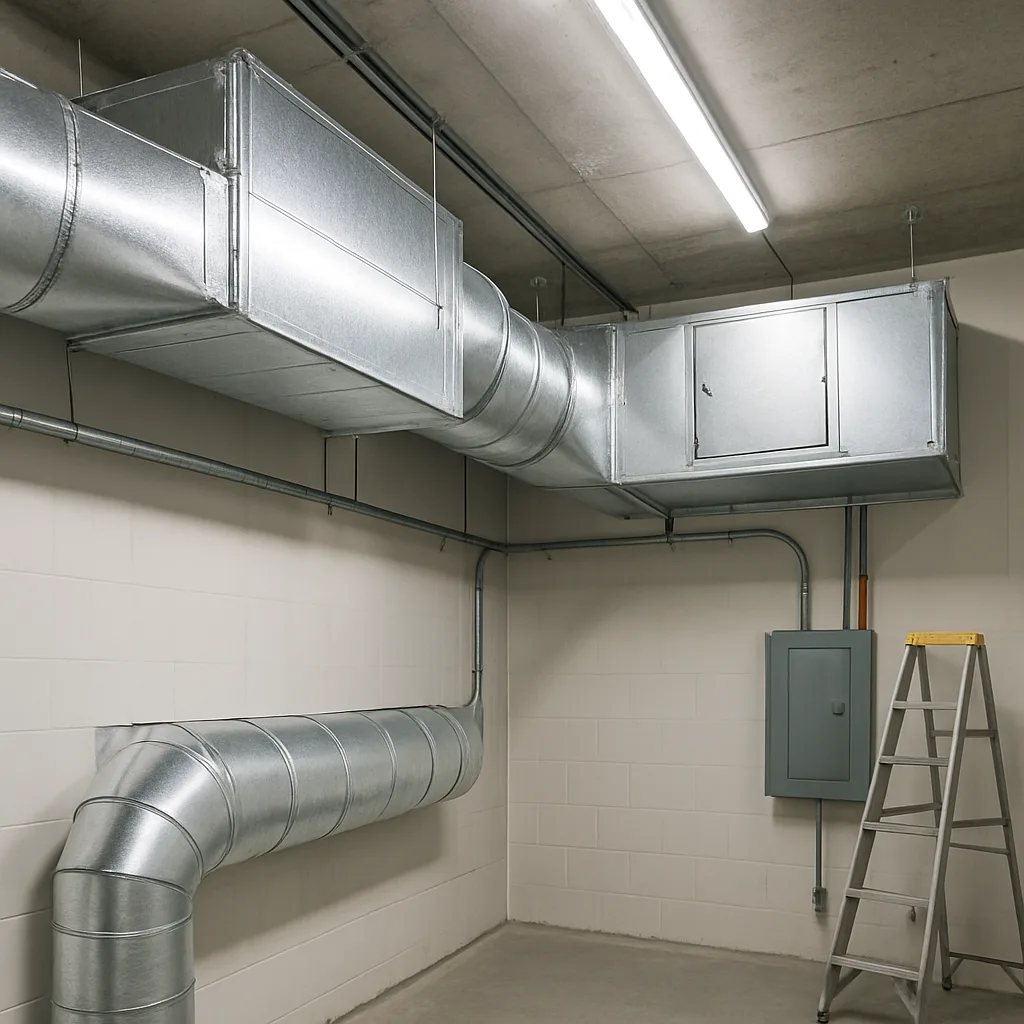
- We show up and take a close look at your setup. Existing ductwork, wiring, ceiling and roof access, and the current unit’s location all matter.
- We size the equipment for the building. Tonnage and efficiency rating have to match the square footage and how the envelope holds heat.
- We explain the plan and flat-rate price before anyone touches a tool. There are no surprises once the work starts.
- We remove the old equipment and haul it away. You won’t have a heavy, awkward unit sitting in your driveway.
- We install the new system and connect it to your existing ductwork and wiring. Then we seal every joint tightly.
- We start the system and test airflow at the registers. We also check refrigerant levels and confirm the thermostat communicates with the equipment.
- Before leaving, we explain the new equipment, filters, thermostat settings, and anything else you should know.
Most jobs like this take one day. A single-story building off Sunnyvale School Road moves quickly if the existing ductwork is in decent shape. There is nothing to rebuild, so we connect the system and get it running. A building with older, undersized ducts takes longer. The airflow must be right, or the new equipment won’t perform at its rated level.
We test before we leave, every time.
That last check matters more than you may think. A system installed without testing under real load can leave you with weak airflow. It can also cause the thermostat and equipment to work against each other. Xtreme Air Services is a Trane Comfort Specialist. That status includes startup and testing standards we follow on every installation, not just the big ones.
Have questions? We’re happy to help.
Call Today, Get Service Today. Xtreme Air Services is ready to help.
What Drives Ventilation Installation Costs Up or Down
Here’s the honest answer: it depends on what’s behind your walls and ceiling. A typical ventilation system installation runs from $2,800 to $5,400 for a standard like-for-like job. That type of job uses your existing connections without major rework. Bigger jobs or projects needing new ductwork can push the overall range to $1,500 to $8,000. The spread is wide because every building and installation is different.
The biggest factor is equipment size and efficiency. A unit with the wrong tonnage will short cycle or run constantly. Correct sizing matters more than the price tag on the box. Brand and model matter too, as does access. A system in a tight ceiling space takes longer to install than one in an open mechanical room. That extra labor time appears on the invoice.
- Condition of existing ductwork, wiring, or plumbing tied into the system
- Whether code upgrades are needed to bring the installation up to current standards
- Permit requirements for your specific project
- Any custom sheet metal fabrication for awkward spaces or older buildings
Most quotes include equipment, materials, standard connections, startup and testing, and removal of your old unit. Unless stated up front, they may exclude duct modifications, electrical or plumbing changes, code corrections, and permits. Ask about each item before you sign anything.
We charge a $26 to $99 service call fee. That fee is credited toward your repair if you move forward with us. Financing is also available on qualifying installations, so a bigger job doesn’t have to wait.
Commercial and Industrial Ventilation Needs Along the US-80 Corridor in Sunnyvale
Drive the US-80 corridor through Sunnyvale and you will see the mix we work with every week. Older retail and office buildings still run duct systems tucked into hot, unconditioned space, most of them sized for far smaller equipment decades ago. Newer warehouses and distribution buildings near the corridor need industrial ventilation sized for open floor space and equipment heat loads. One size does not fit both.
A smaller commercial job usually starts with the ceiling layout and the existing supply and return runs. We also check whether the ductwork can carry a properly sized system without dumping air into a 100-degree plenum. Undersized or leaky duct is a real problem here, because it loses conditioned air before it reaches the space.
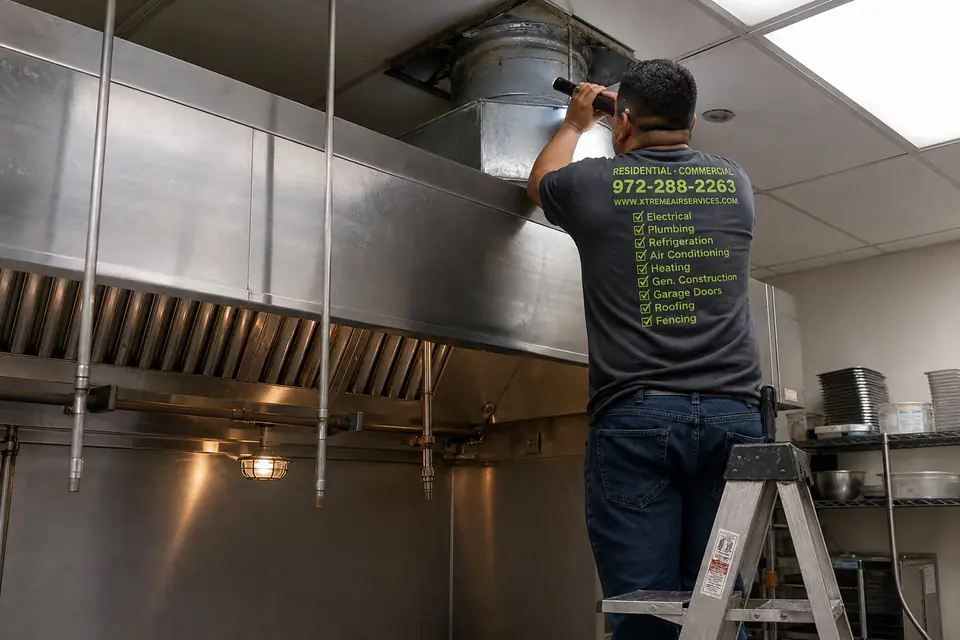
Commercial jobs along the corridor look different. A restaurant needs commercial kitchen ventilation and exhaust hood installation that meets fire code, not just adequate airflow. A warehouse or light industrial space may need make-up air systems. These systems keep exhaust fans from pulling negative pressure through the whole building. We’ve handled both types of jobs in the same week.
- Older Sunnyvale buildings: duct runs through unconditioned space, tighter access, and a higher risk of leakage
- Newer subdivisions: better duct layouts that may be undersized for room additions
- Retail and restaurant spaces on the corridor: exhaust hood and make-up air code requirements
- Warehouse and light industrial buildings: open-space ventilation and equipment heat loads
Before anyone quotes the job, the building type has to drive the plan, not the other way around.
Frequently Asked Questions
Common questions about Ventilation system installation
How long does a ventilation system installation take in Sunnyvale?
Most installations take one full day if your existing ductwork is in good shape. A single-story building off Sunnyvale School Road with solid existing ductwork moves fast because there is nothing to rebuild. Buildings with older or undersized ducts take longer, since airflow has to be corrected before the new equipment can perform right. We test every system before leaving, so plan for a full day even on simpler jobs.
How do I know if I need a new ventilation system or just duct repair?
You probably need repair, not a full installation, if only one or two spaces feel off while the rest of the building is fine. Unconditioned space in Sunnyvale gets brutally hot, which dries out duct seals and causes leaks in ductwork still under ten years old. If your main trunk lines are solid and it’s just one weak register, a duct inspection or sealing job usually solves it without a full system swap.
What can I expect when the technician arrives for installation?
We start by inspecting the existing ductwork, wiring, and access before touching any equipment. Then we size the new unit to match the building’s square footage and heat load. You’ll hear the full plan before any work begins, so there are no surprises mid-job. Once installed, we test airflow at every register and check refrigerant levels before we consider the job done.
Why does my Sunnyvale building have uneven temperatures between spaces?
Uneven temperatures usually mean the ductwork cannot move air where it needs to go, not a thermostat problem. Older Sunnyvale buildings often run duct through unconditioned space, where years of heat collapse flex duct and open up joints. Those gaps let conditioned air escape before it reaches the space. If patched ductwork keeps failing, the duct sizing no longer matches the building’s actual load.
Do older Sunnyvale buildings need code upgrades during installation?
Sometimes, yes. Buildings put up before duct-sizing code updates often have ductwork that no longer matches modern equipment requirements. When that’s the case, we bring the connections up to current standards as part of the installation, and permit requirements may apply depending on the scope of work. This step protects your new system’s performance, since correctly sized ductwork is what lets the equipment run at its rated efficiency.
What happens after my new ventilation system is installed?
We test the system under real load before we leave, checking airflow at every register and confirming the thermostat communicates properly with the equipment. This step catches weak airflow or thermostat mismatches before they become a problem you notice later. We also walk you through the new equipment, filter locations, and thermostat settings, so you know exactly how to run your system from day one.
Ready to Get Started?
Call 972-288-2263 Today, Get Service Today.