


Emergency / No-Heat Furnace Repair in Dallas
When the heat quits, know whether it's an emergency tonight or can wait until morning – and what a repair visit involves.
What’s Covered on This Page
- Why Dallas Furnaces Pick the Worst Night to Fail
- Signs Your No-Heat Problem Is a True Emergency
- Checks to Run Before You Call for Emergency Service
- What Happens During an Emergency Furnace Repair Visit
- What Emergency Furnace Repair Costs in Dallas
- How do I keep my house warm while I wait for a technician?
- What counts as an emergency HVAC service versus a regular repair call?
Why Dallas Furnaces Pick the Worst Night to Fail
It isn’t bad luck. It’s how heating works in North Texas. Your AC runs for months, but your furnace may only work a handful of weeks each winter. It sits quiet from spring through fall. Then a cold front blows through, the temperature falls fast, and your furnace goes from resting to running almost nonstop overnight.
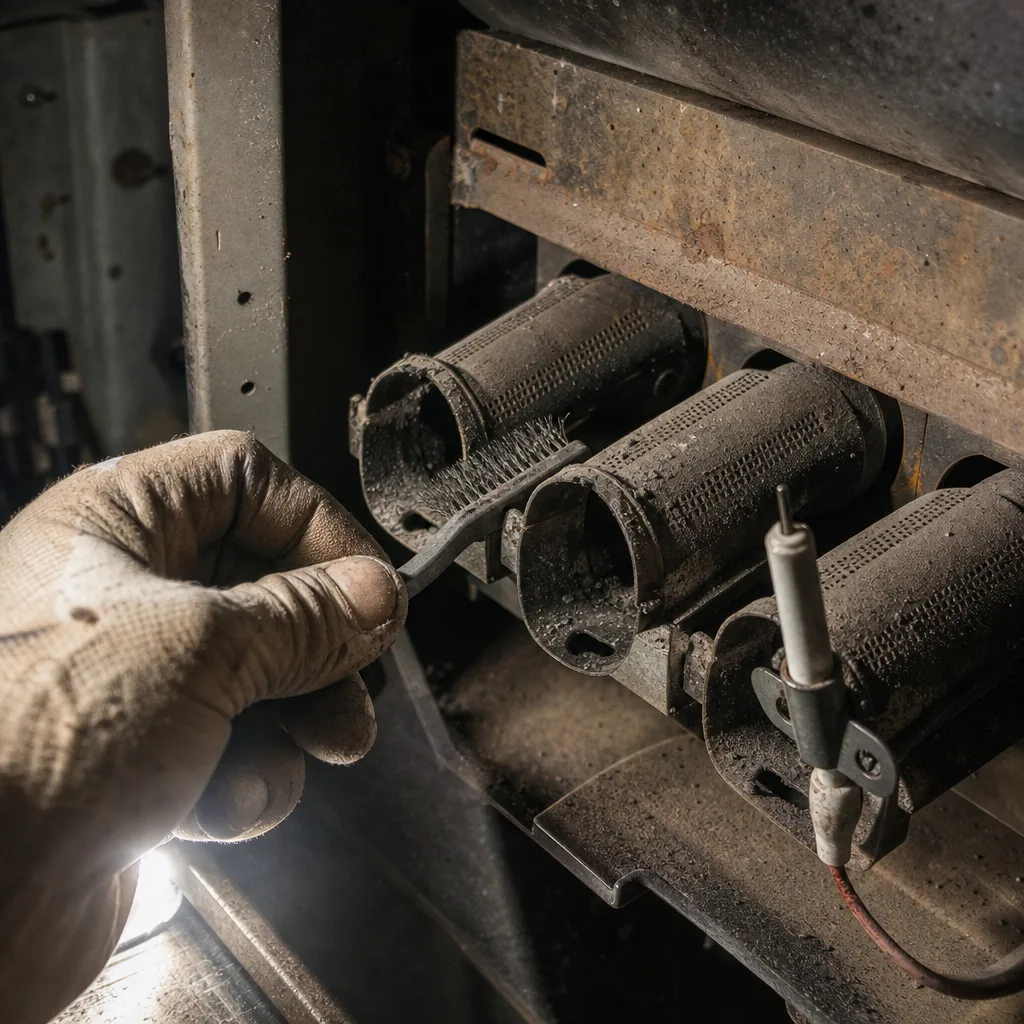
That jump is hard on parts that have been sitting. Dust settles inside the cabinet. The filter that served your AC all summer is often full by the time you switch to heat. A part that was already weak at the end of last winter doesn’t get any stronger in the off-season. It just waits for the first long, cold night to quit.
These are the parts that most often stop a furnace on that first cold night:
- The ignitor. It glows hot to light the gas, and every heat-up adds stress. Eventually it cracks, and the burners can’t light.
- The flame sensor. It confirms the burners are lit. A thin layer of dust or grime can make it miss the flame, so the furnace shuts itself off.
- A clogged filter. Too little airflow lets the furnace run too hot, and a safety switch shuts it down to protect it.
- The blower motor. If it won’t spin, warm air can’t reach your vents, even when the burners are lit.
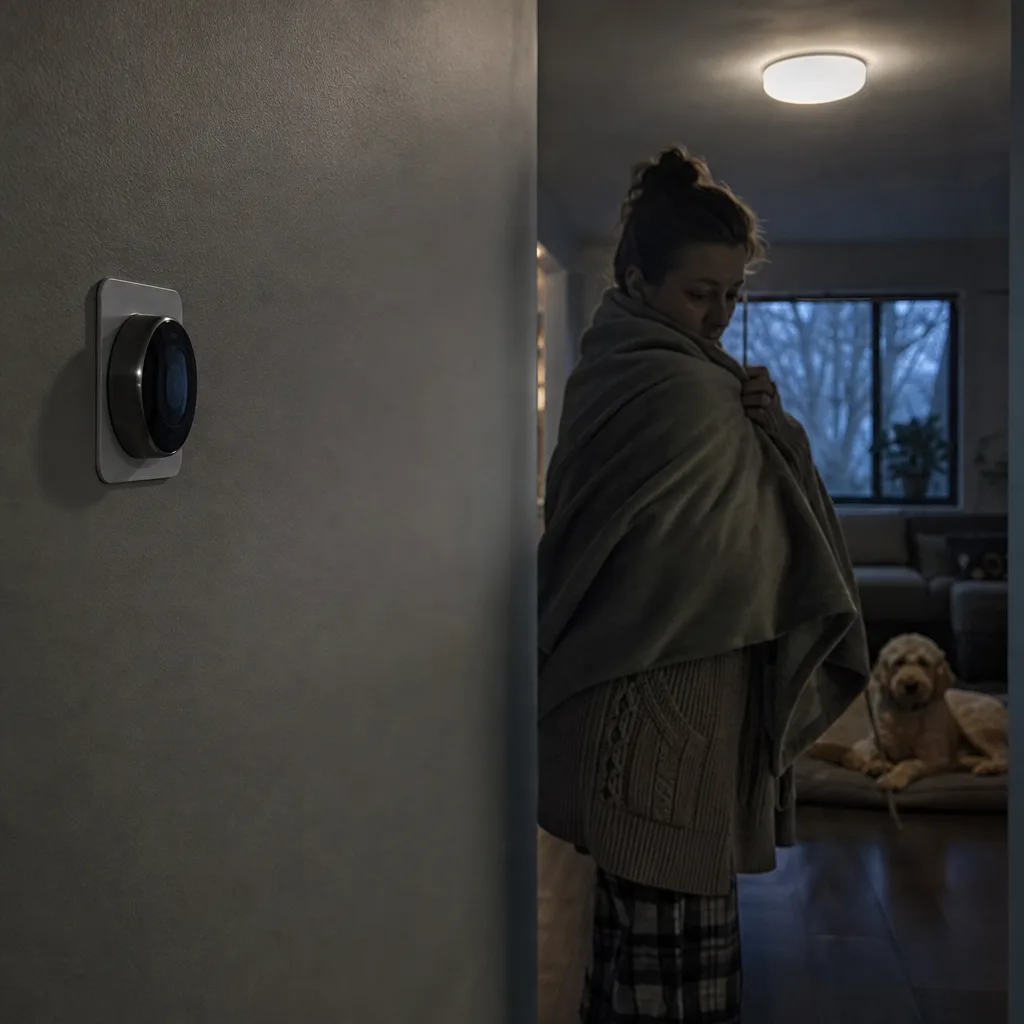
- The thermostat. Dead batteries or a bad setting can make a working furnace look broken.
Where your furnace sits matters too. Many Dallas homes have the furnace in the attic. All summer, that attic bakes in Texas heat, and the wiring and parts up there sit in it for months. Then winter asks those same parts to fire up in a cold attic, over and over, through the night. That’s a lot of swing for one machine.
Timing plays a part as well. Your furnace works hardest in the middle of the night, when it’s coldest outside. So if a part is on its last legs, that’s usually when it fails. You wake up at 2 a.m. to a cold house, not at noon on a Tuesday.
Here’s the reassuring part. A furnace that quits on the first cold night usually has one tired part, not a dead system. Most of our no-heat calls come down to a single common failure we fix on the first visit. And because furnaces don’t break on a schedule, we don’t charge extra for nights or weekends. You shouldn’t pay more just because the cold front showed up after dark.
Signs Your No-Heat Problem Is a True Emergency
Not every cold house is an emergency. Some are, though, and it helps to know the difference before you pick up the phone at midnight. Here’s how we’d sort it out if you were standing in your kitchen asking us.
First, a few signs aren’t really a heating problem at all. They’re a safety problem, and they come before anything else:
- You smell gas, like rotten eggs, near the furnace or anywhere in the house.
- Your carbon monoxide alarm is going off.
- You smell burning plastic or hot wiring, or you see smoke or scorch marks near the furnace.
- The furnace keeps tripping the same breaker every time it tries to start.
A gas smell or a CO alarm means you should follow your gas company’s emergency guidance first. Furnace repair comes after everyone is safe. Once that’s handled, we can find what caused it, and we also offer carbon monoxide testing so you know the air in your home is clear.
Next are the signs that the cold itself is the emergency. Call tonight if any of these fit your home:
- A hard freeze is coming, and the temperature inside is dropping a few degrees every hour.
- Someone in your home is a baby, an older adult, or a person with a health condition that cold makes worse.
- You have water lines in the attic or along outside walls. In a lot of Dallas homes, that’s exactly where they run, and a long freezing night with no heat puts them at real risk.
- It’s a weekend or holiday, and waiting for a weekday means two or three nights without heat.
Frozen pipes are the part people forget. A cold night is miserable. A burst pipe in the attic can soak your ceilings and floors, and that’s a much bigger repair than a furnace part.
Now the honest part. Sometimes it can wait, and you don’t need to pay for a rushed visit. If it’s 50 degrees outside, the sun’s coming up, and your house is holding at 64, you’re uncomfortable, not in danger. The same goes if you’ve got a safe backup heat source and nobody at home is at risk. In those cases, call in the morning and book a regular same-day visit. You’ll get the same repair without the stress of a 2 a.m. wait.
It’s also worth a quick look at the thermostat before you call. If the screen is blank or set to cool, that may be the whole problem, and you just saved yourself a service call.
If you’re still not sure which side of the line you’re on, call and ask. A real person will help you decide, even if the answer is that it’s fine to wait until morning.
Call 469-213-3107
Checks to Run Before You Call for Emergency Service
Before you call, take five minutes and walk through a few simple checks. None of them need tools or any special skill. If one of them brings your heat back, great. You’re warm tonight, and you skipped the service-call fee. If none of them work, you’ll still have useful details to share when you call.
- Thermostat. Make sure it’s set to Heat, not Cool or Off. Set the target a few degrees above the room temperature. If the screen is faint or blank, swap in fresh batteries. Then give the furnace a few minutes to respond. Many furnaces wait a moment before they start.
- Breaker. Find the breaker for your furnace in your electrical panel. If it’s tripped, flip it all the way off, then back on, one time. If it trips again, leave it off. That’s the repeat-tripping sign covered above, and it needs a technician.
- Furnace switch. Most furnaces have a regular light switch on or near the unit. In many Dallas homes it’s up in the attic next to the furnace, and it’s easy to bump while you’re storing holiday boxes. Make sure it’s on.
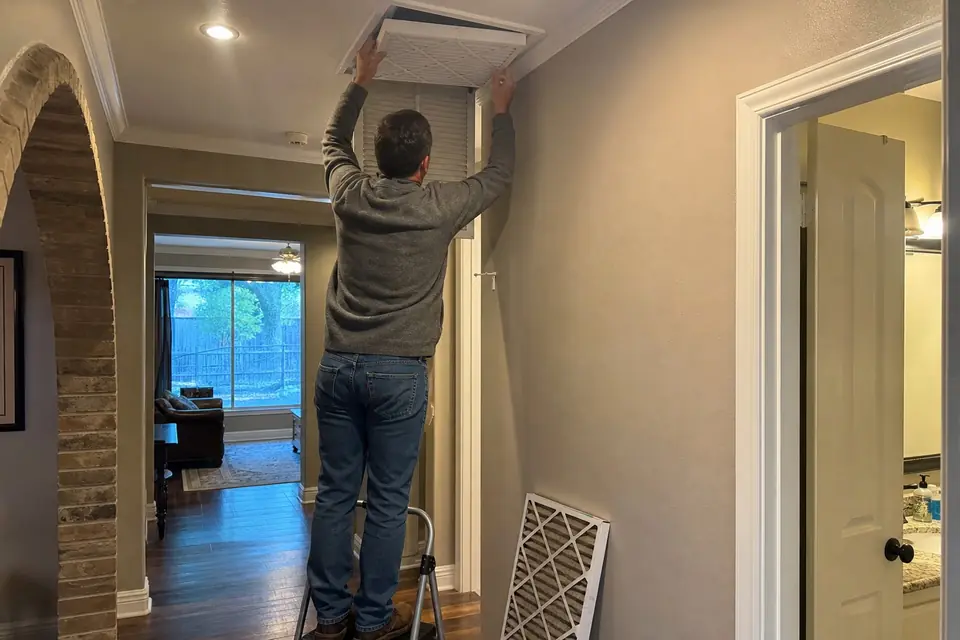
- Filter. Pull it out and hold it up to a light. If you can’t see light through it, put in a new one. Many slab-on-grade ranch homes have the filter behind a return grille in a hallway ceiling or wall, not at the furnace itself.
- Door panel. Furnaces have a safety switch that keeps them off when the front panel isn’t seated. If someone recently changed the filter at the unit, press the panel firmly back into place.
- Drain line. High-efficiency furnaces make water and drain it away through a small pipe. If that line clogs, a float switch can shut the furnace off. Look for standing water in the pan or around the base of the unit.
While you’re at the furnace, check for a small window on the panel with a blinking light. That light flashes a code, and a label inside the door usually explains what the blinks mean. You don’t have to figure it out. Just count the blinks and tell us when you call. It can point straight to the problem, like a flame that won’t stay lit or a pressure switch that’s tripped.
Here’s where your part stops. Don’t take off inner panels. Don’t touch the gas valve, the ignitor, or the wiring. Don’t keep resetting the furnace over and over to force it to run. Those safety shutoffs are there for a reason. Running the system again and again can turn a single worn part into a bigger repair.
So if you’ve checked the thermostat, breaker, switch, filter, panel, and drain line, and the house is still cold, you’ve done everything a homeowner should do. What’s left is the kind of failure that needs a technician with the right meter and the right part on the truck.
Have questions? We’re happy to help.
Call Today, Get Service Today. Xtreme Air Services — North Dallas is ready to help.
What Happens During an Emergency Furnace Repair Visit
When a technician gets to your door, the job is simple to say and takes skill to do. Find the part that stopped your heat, repair or replace it, and make sure your furnace runs right before anyone packs up. Here’s how that plays out, so nothing feels like a mystery at 1 a.m.
First, a word on who’s walking into your home. Our technicians are licensed and insured, background-checked, and drug-tested. Our HVAC work is done under Texas license #TACLA29023C. You’re letting someone in late at night, and that should feel safe.
- You share what you found. Tell the technician the blink code you counted, whether the breaker tripped, and what the filter looked like. Those details from your earlier checks can cut straight to the likely cause.
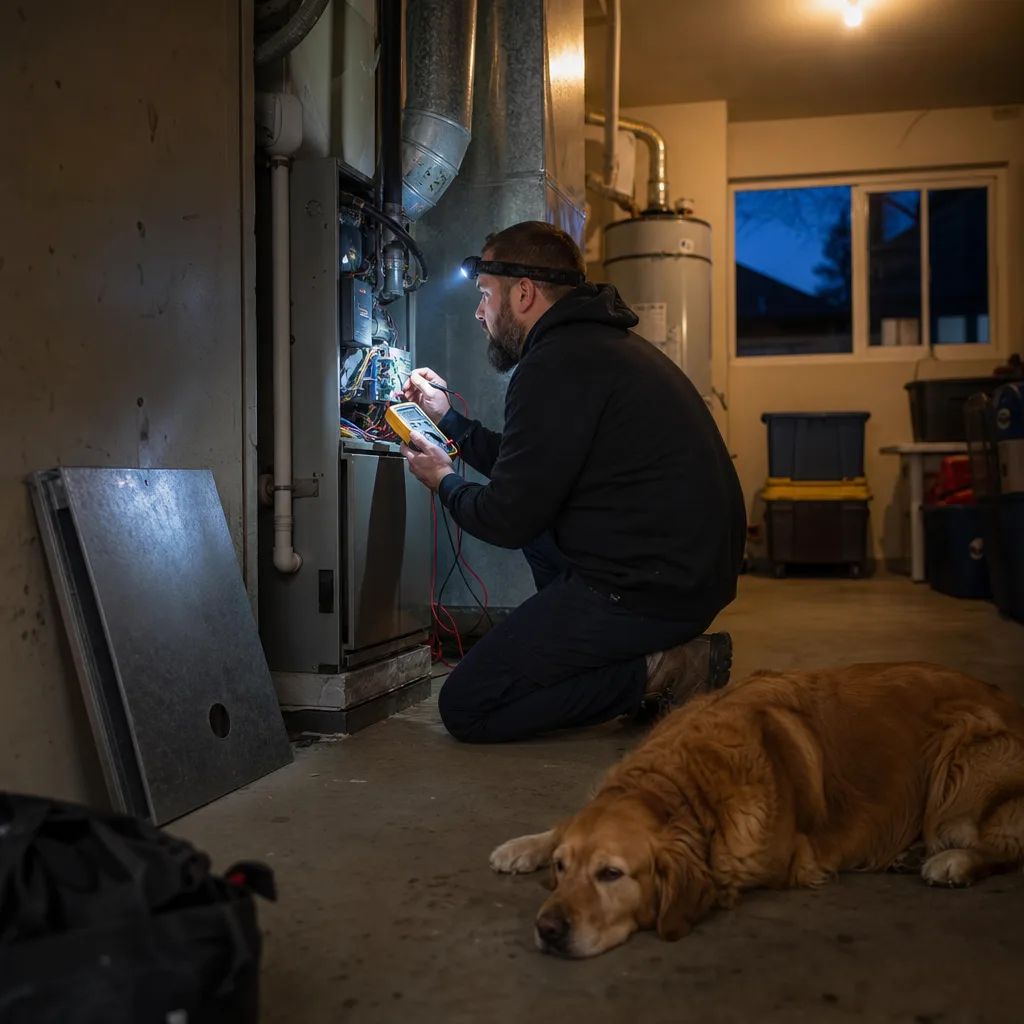
- The technician finds the failed part. This means testing, not guessing. A furnace starts up in a set order: the thermostat calls for heat, a small fan clears the burner area, the ignitor glows, the gas lights, the flame sensor confirms the flame, and the blower sends warm air to your vents. Wherever that chain breaks points to the part, and a meter confirms it before anything gets swapped.
- You get the price before work starts. You’ll hear an upfront flat-rate price for the repair, and nothing happens until you approve it. There’s no meter running while you decide. The $26-$99 service-call fee is credited toward the repair if you go ahead with us.
- The repair gets done. Diagnosis, labor, and the standard replacement part are all included. For most no-heat calls, that’s the whole story: one worn part, replaced on the same visit.
- Your furnace gets tested and the area gets cleaned up. The technician runs the furnace and watches it light, stay lit, and push warm air through your vents. Testing and cleanup are part of the job, not extras.
Sometimes testing turns up more than one problem. A second part might be failing, or a major component might be worn out. Additional failed parts, major components, code upgrades, and permits aren’t part of the standard repair. They’re quoted separately, so you’ll hear about them and get a clear price before anything changes. If the news points toward a bigger repair or a replacement, financing is available for those. You won’t be pushed into a big decision at 2 a.m. You can get your heat back first and plan the rest in daylight.
You can help the visit go faster, especially if your furnace is in the attic like it is in so many Dallas homes. Clear a path to the pull-down ladder. Move any holiday boxes stacked around the unit, and turn on whatever attic light you have. If you have pets, put them in another room. A technician working in a tight, dark attic gets your heat back sooner when the furnace is easy to reach.
When the visit is done, you should know three things. You’ll know what broke, what was done about it, and that your furnace has been tested and is running on its own. That’s how you get back to sleep in a warm house.
Watch Our Video
See How We Handle Emergency / no-heat furnace repair in Dallas
Xtreme Air Services — North Dallas
What Emergency Furnace Repair Costs in Dallas
Most of our emergency no-heat furnace repairs land between $200 and $525. That’s the price range for the most common job: find the failed part, repair or replace it, and make sure your furnace runs right. Our typical range for this work is $200-$900. The higher end covers the tougher nights, not the usual ones.
So why a range and not one flat number on this page? Because nobody knows what broke until it’s tested. A cracked ignitor and a failed control board both leave you with a cold house. They’re very different parts, though, and they don’t cost the same.
Here’s what moves the price up or down:
- How bad the failure is. A dirty flame sensor is a smaller fix than a blower motor that’s burned out.
- Part cost and availability. Some parts are common and easy to get. Others cost more or take longer to find.
- Your furnace’s age and brand. Parts for an older furnace can be harder to track down than parts for a newer one.
- Whether more than one part failed. Sometimes one tired part wears out a second one. Each added part gets its own price before anything changes.
- After-hours timing. Some companies charge more for nights, weekends, and holidays. We don’t. A 2 a.m. call on a Sunday costs the same as a Tuesday afternoon.
That last point matters most on a freezing night. Cold fronts in Dallas don’t wait for business hours, and you shouldn’t have to choose between waiting until Monday or paying a premium to stay warm tonight.
Your $26-$99 service-call fee counts toward the repair if you go ahead with us, as covered above. For a repair this size, financing usually isn’t needed. It’s there if the news turns into a bigger repair or a replacement.
Whoever you call, ask these questions before a technician heads your way. Good answers tell you a company plans to be straight with you:
- Do you charge extra for nights, weekends, or holidays?
- Will I get a flat price before work starts, or do you bill by the hour?
- What does the service-call fee cover, and does it count toward the repair?
- Is the part included in the price, or is it added on later?
- If you find a second problem, will you tell me and price it before you fix it?
With hourly billing, a tough attic job or a hard-to-find part can raise your bill while you wait. With an upfront flat-rate price, you know the number first and decide from there. That’s how we do it, and nothing gets fixed until you say yes.
Call 469-213-3107
Frequently Asked Questions
Common questions about Emergency / no-heat furnace repair
How do I keep my house warm while I wait for a technician?
Close off unused rooms and gather everyone into one space to share body heat and any safe backup warmth, like extra blankets or a fireplace. Keep the attic access and interior doors shut to hold heat in. Avoid running a gas oven for heat since that’s a carbon monoxide risk. If you have a safe electric space heater, use it in one room while you wait, especially overnight when temperatures drop fastest.
What counts as an emergency HVAC service versus a regular repair call?
An emergency HVAC service means a technician responds the same night or as soon as possible, not on the next open slot, because the problem affects safety or comfort right away. A gas smell, a tripped breaker that won’t reset, or a house dropping fast toward freezing on a hard freeze night all count. A furnace that’s just a little weak on a mild 55-degree day can usually wait for a regular same-day visit instead.
Ready to Get Started?
Call (469) 213-3107 Today, Get Service Today.