


Heating System Repair in Dallas: Know the Fix and the Cost Before You Call
Furnace and heat pump problems fixed on the first visit, with an honest call on repair versus replace.
What’s Covered on This Page
- Signs Your Furnace Needs Repair Now, Not Later
- Checks to Make Before You Call for Repair
- Why Dallas Furnaces Often Fail on the First Cold Night
- What Happens During a Heating System Repair Visit
- What Heating System Repair Costs in Dallas and What’s Included
- What is the $5000 rule for HVAC?
- Can a furnace problem cause higher electric or gas bills even before it fully breaks down?
- Is it safe to keep resetting a breaker that trips every time my heat turns on?
Signs Your Furnace Needs Repair Now, Not Later
Dallas winters are mostly mild, and that’s part of what makes a breakdown so frustrating. Your furnace can sit quiet for weeks, and then a cold front drops the temperature overnight. That’s the night a weak part finally gives out. If you know the warning signs, you can catch a problem before it leaves your family in a cold house.
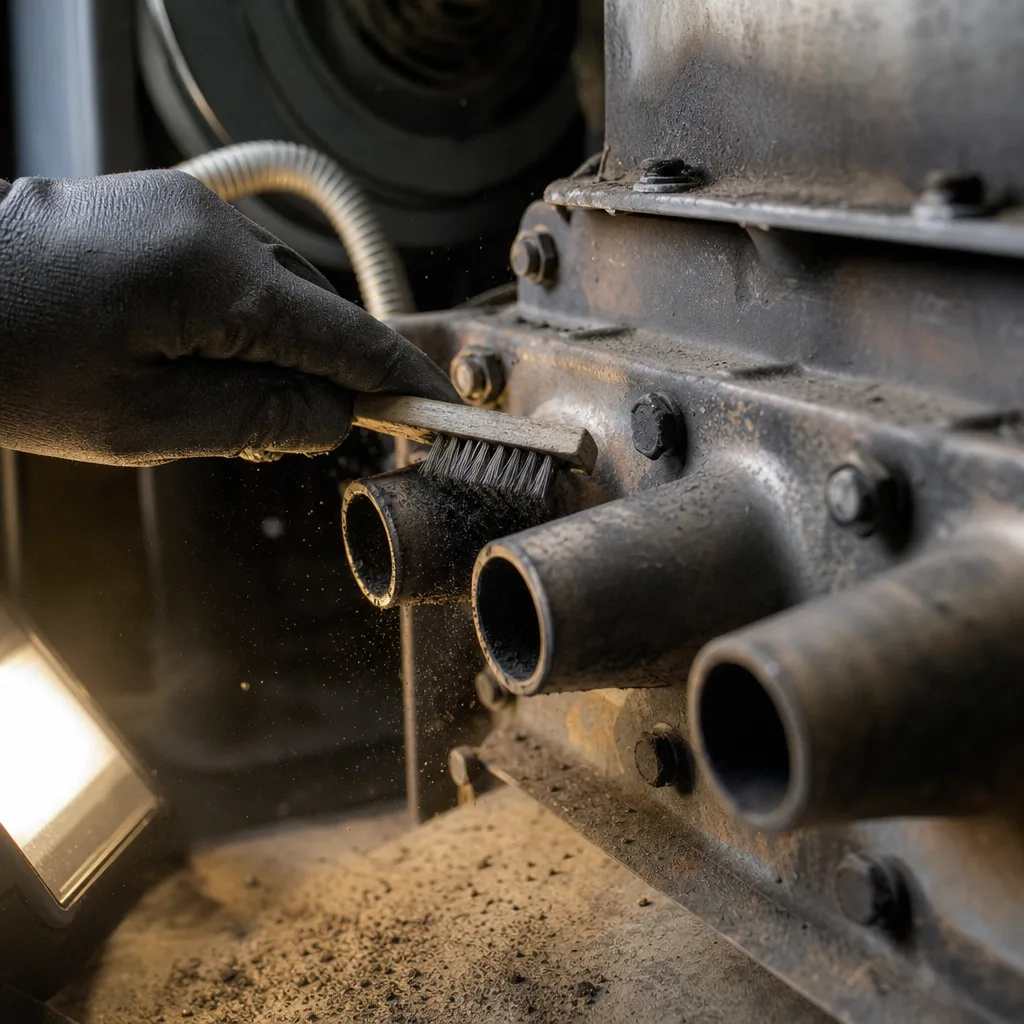
These signs mean you should call for a repair now:
- No heat at all, or air from the vents that feels cool or barely warm while the thermostat is calling for heat.
- Clicking with no flame. You hear the furnace try to start, but it never lights. That often points to a worn ignitor.
- The burners light and then shut off a few seconds later, over and over. A dirty flame sensor is a common cause.
- New banging, grinding, or squealing. These sounds often come from the blower motor or its parts, and they get worse fast.
- A breaker that trips every time the heat kicks on. That’s an electrical problem, and it shouldn’t be reset again and again.
- A yellow or flickering burner flame where you’d normally see steady blue. It can mean the fuel isn’t burning cleanly, and a technician should check it.
If you smell gas or your carbon monoxide alarm goes off, that isn’t a repair question. Follow your gas company’s instructions and your alarm’s safety steps first. Once everyone is safe, we can handle carbon monoxide testing and a full furnace safety inspection.
Many Dallas homes have the furnace or air handler up in the attic. That makes it easy to miss early warning signs like a rattle, a burning smell, or water around the unit. If you can hear something new coming from the attic hatch, take it seriously, even if the house still feels warm.
These signs are worth fixing soon, but they usually aren’t an emergency:
- Gas or electric bills that keep rising when the weather hasn’t changed much.
- One or two rooms that stay colder than the rest of the house.
- A furnace that runs longer than it used to before it reaches the set temperature.
- A heat pump that runs nonstop on cold days or builds up frost that doesn’t clear on its own.
With these, your home is still getting heat. You’ve got time to set up a visit at a convenient hour. Don’t let them drag on through the season, though. A part that’s struggling today is often the one that quits during the next hard freeze.
Not sure which group your problem fits? Describe what you’re hearing and seeing when you call, and a real person will help you sort it out. If it turns out you need help tonight, nights and weekends cost no extra, so the clock shouldn’t make the decision for you.
Checks to Make Before You Call for Repair
Before you pick up the phone, take five minutes to rule out the simple stuff. A surprising number of no-heat calls come down to a setting, a switch, or a filter, and if one of these checks gets your heat back, you don’t need a technician. That’s a good outcome, and we’d rather you know it.
- Check the thermostat. Make sure it’s set to Heat, not Cool or Off, and set it a few degrees above the room temperature. If the screen is blank or dim, put in fresh batteries. A dead thermostat can look exactly like a dead furnace.
- Look at the breaker panel. Find the breaker for your furnace or air handler. If it’s tripped, reset it once. If it trips again, leave it off and call, because that points to the electrical problem described above.
- Find the furnace power switch. It looks like a regular light switch and sits on or near the unit. In many Dallas homes that means the attic or a hall closet, and it’s easy to bump off while you’re storing boxes.
- Make sure the front panel is on tight. Most furnaces have a safety switch behind the door. If the panel isn’t seated all the way, the furnace won’t run at all.
- Pull the air filter. If it’s gray, matted, or bowed, swap it for a clean one. A clogged filter chokes airflow, and the furnace can overheat and shut itself off to stay safe.
- Open your vents. Walk the house and check that supply registers are open and not blocked by rugs, beds, or couches. Closed vents can make one room feel like the heat is broken.
- Check your other gas appliances. If your stove or gas water heater works, your gas supply is probably fine and the problem is in the furnace itself.
- Clear the outdoor unit if you have a heat pump. Leaves, trash, or anything stacked against it can cut down on how well it heats.
Give the system 10 to 15 minutes after any change. Some furnaces wait a few minutes before they try to start again.
If you’ve worked through the list and the house is still cold, it’s time for a technician. Before you call, jot down a few things. Note which checks you already tried, what you hear when the thermostat calls for heat, and whether the furnace is gas or electric or you have a heat pump. If you can safely see the label on the unit, the brand and model number help too.
That information helps us figure out what’s likely wrong before anyone gets to your door. It also means you won’t pay for someone to flip a switch you already checked. A clear description is the quickest way to get your home warm again.
Why Dallas Furnaces Often Fail on the First Cold Night
Your furnace doesn’t wear out on the coldest night. It wears out over months, and the first cold night is simply when you find out. In Dallas, the heat can sit unused from spring until late fall while your AC does all the work. Then a front blows through, your thermostat calls for heat for the first time in months, and every weak part gets tested at once.
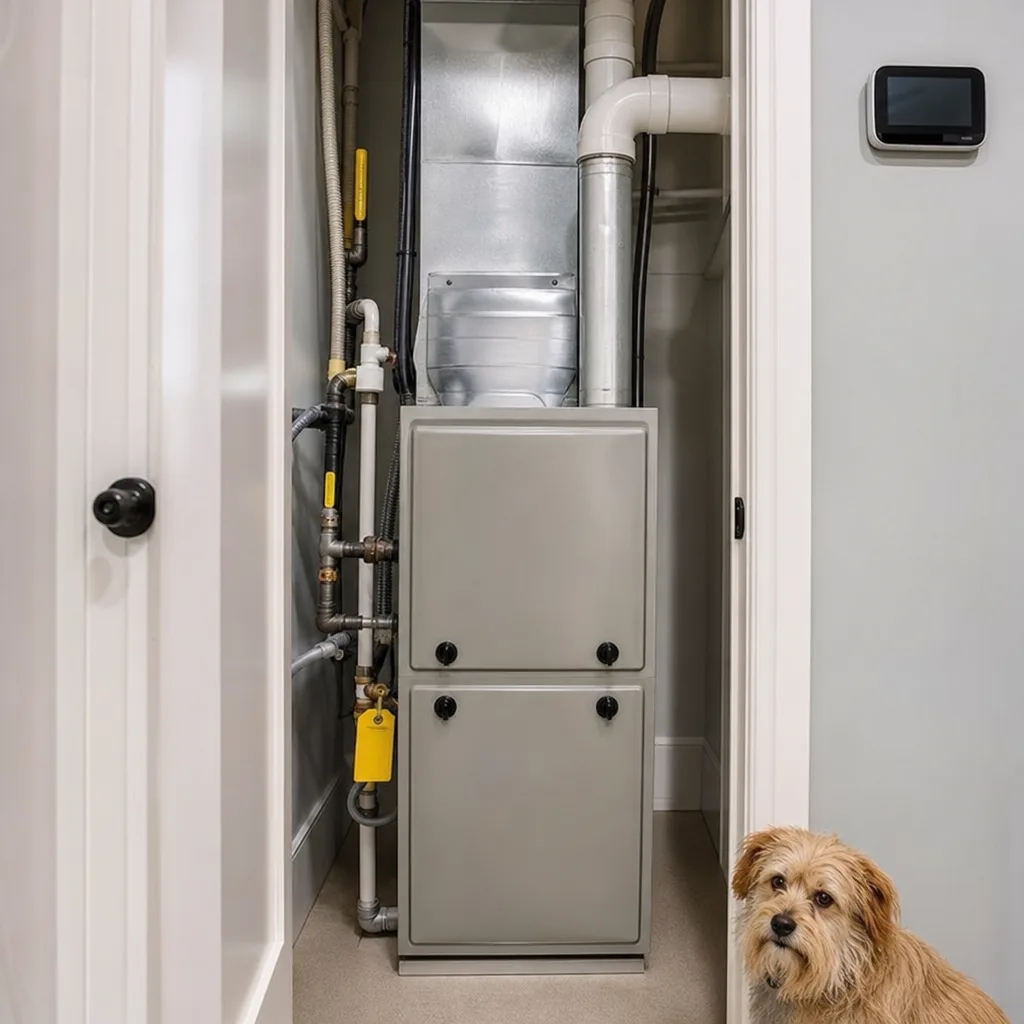
Here’s what happens inside your system during that long off-season:
- Dust settles on the parts that light your burners. Months of sitting leave a film on the flame sensor and burners. That’s why the start-then-shut-off problem from the warning signs above so often shows up on day one of heating season.
- The ignitor is fragile. Most modern gas furnaces light with a hot surface ignitor, a small part that glows red hot every time the furnace starts. It gets brittle with age. A crack that formed last winter may not show up until the first start this year.
- Your attic is hard on equipment. If your furnace or air handler is in the attic, it bakes in summer heat and then sits in a cold attic all winter. Those big temperature swings wear on wiring, connections, and the control board.
- The blower worked all summer. In most central systems, the same blower moves air for both cooling and heating. A Dallas summer puts a lot of hours on that motor and its capacitor, the small part that helps it start. If they’re worn out by fall, heating season can be what finishes them off.
- Heat pump backup heat hasn’t run in a year. Many heat pumps have electric heat strips that kick in when it gets really cold. They can sit idle until the first hard freeze, so a burned-out strip or a bad relay stays hidden until you need it most.
Age plays a part too. Dallas has plenty of established homes with furnaces that have been through many winters, along with newer builds that have younger equipment. Older systems have more worn parts waiting for a reason to quit, and a sudden cold snap gives them one.
Timing makes it harder. When a front drops the temperature across the city overnight, thousands of homes need heat at the same moment. HVAC phones all over the area tend to ring the next morning. That’s why a part that limped along in October can turn into a long, cold wait in December.
Here’s the good news. A furnace that quits on the first cold night usually doesn’t mean the whole system is done. Most heating repair calls come down to a single common failure that gets fixed on the first visit. Often that’s an ignitor, a sensor, or a capacitor. In most cases you’re looking at a repair, not a replacement.
The easiest way to skip that first-night surprise is to test your heat before you need it. On a cool fall afternoon, set your thermostat to Heat and let it run for a few minutes. If something’s wrong, you’ll find out while the weather’s still mild and getting a visit is easy. A fall heating tune-up is also a good time to catch a worn ignitor or a weak capacitor before the first real freeze.
Ready when you are – get in touch today.
Call Today, Get Service Today. Xtreme Air Services — Oak Lawn is ready to help.
What Happens During a Heating System Repair Visit
A heating repair visit has three jobs. Find the part that failed, fix or replace it, and prove your system runs right before anyone leaves. You’ll know what’s wrong and what it costs before any work begins.
Here’s how the visit plays out, step by step.
- Clear the way. If your furnace or air handler is in the attic, move anything stacked under the hatch and make sure the pull-down ladder is easy to reach. If it’s in a closet, clear a little space in front of the door. This saves time and keeps your things out of the way.
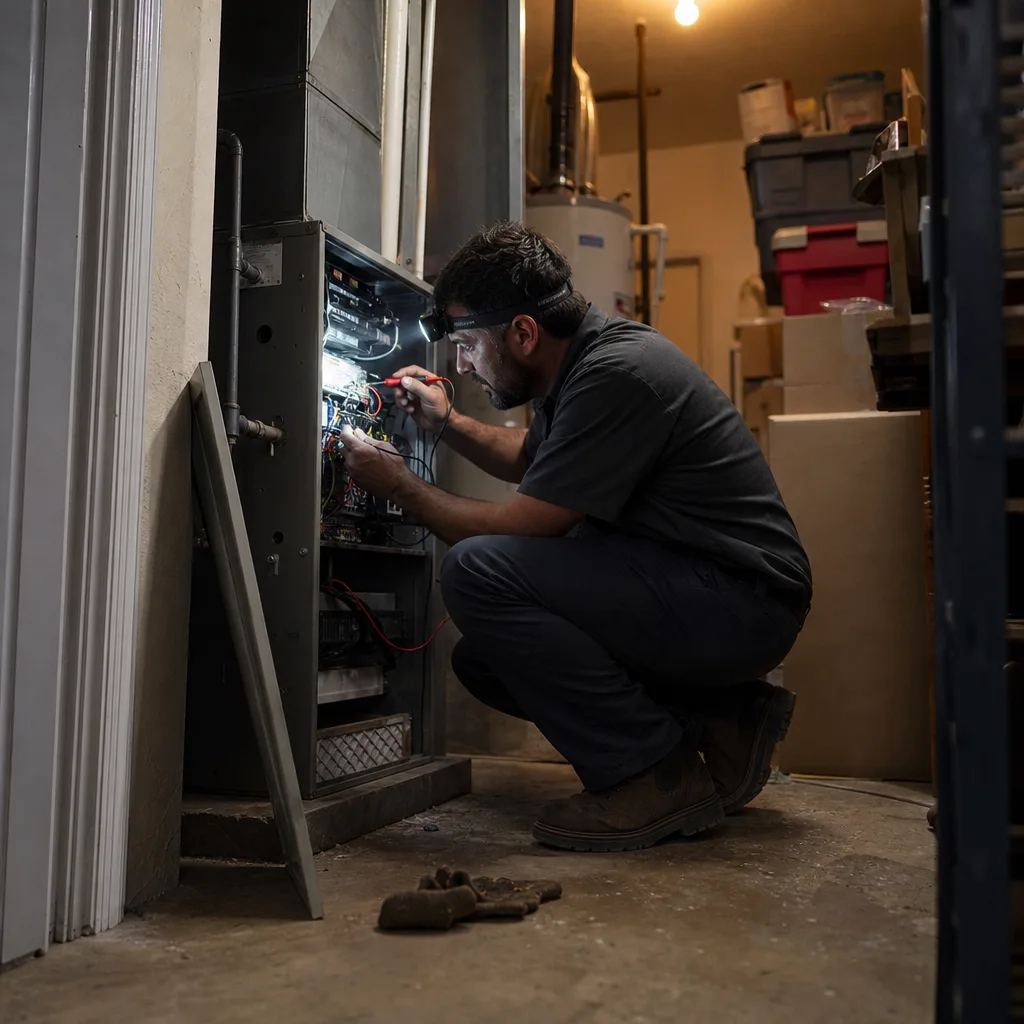
- Find the real cause. Our licensed, background-checked and drug-tested technician starts with what you told us on the phone, including any checks you already tried. On a gas furnace, that usually means watching a full start-up and testing the parts that commonly fail, like the ignitor, flame sensor, capacitor, and safety switches. On a heat pump, the backup heat strips and outdoor unit get checked too. The goal is to find the part that’s broken, not to swap parts until something works.
- See the price first. Once the problem is clear, you get an upfront flat-rate price for the fix. You approve it before work starts. There’s no meter running while the technician works, so a tricky part doesn’t make your bill climb.
- Make the repair. The technician repairs or replaces the failed part. If more than one part has failed, you’ll hear about each one and decide what to do.
- Test it and clean up. The system gets run through a full heating cycle to make sure it lights, stays lit, and pushes warm air through your vents. Then the work area gets cleaned up before your technician heads out.
Most heating repairs run $150 to $400. Our broader range for heating repair is $150 to $700, depending on what failed. That price includes the diagnosis, the labor, the standard replacement part, testing, and cleanup.
There’s a service-call fee of $26 to $99. If you go ahead with the repair, that fee is credited toward it. If you decide not to, you’ve still got a clear answer about what’s wrong with your system.
Some things aren’t part of a standard repair price. Extra failed parts, major components, code upgrades, and permits are quoted separately. If the visit turns up one of these, you’ll see that price before anything moves forward. You won’t find it as a surprise on the final bill.
What pushes a price up or down? It comes down to how much failed, what the part costs and how easy it is to get, and your equipment’s age and brand. Older systems in long-established Dallas homes can need parts that take longer to find. Calling at 9 p.m. or on a Sunday doesn’t change the price, because nights and weekends cost no extra.
Financing usually isn’t needed for a repair this size. If the visit shows your system needs a major repair or a replacement, financing options are available for those larger jobs.
Watch Our Video
See How We Handle Heating system repair in Dallas
Xtreme Air Services — Oak Lawn
What Heating System Repair Costs in Dallas and What’s Included
You already know the ballpark from the visit breakdown above. What matters just as much is how that price gets built, because two companies can fix the same part and hand you very different bills. Here’s how to tell a fair heating repair quote from one that leaves you guessing.
In this trade, repairs are usually priced one of two ways. Hourly pricing, sometimes called time and materials, charges for every hour on the job plus the parts. If the technician gets stuck in a hot Dallas attic or has to make a run for a part, your bill keeps climbing. Flat-rate pricing sets one price for the repair before the work starts. You know the number, you say yes or no, and it doesn’t change because the job took longer. That’s how we price heating repairs, and it’s why you won’t watch a clock while someone works in your home.
Whoever you call, a fair repair quote should make these things clear:
- The exact part that failed, named in plain English, like the ignitor, flame sensor, or capacitor.
- One total price for that repair, not a loose estimate that can grow later.
- What’s included in that price and what isn’t.
- Whether any other part looks worn, and what fixing it would cost if you choose to.
- Whether the service-call fee counts toward the repair if you go ahead.
A few questions are worth asking before you say yes:
- Is this the price I’ll pay, or could it change once you start?
- Do you charge more for nights, weekends, or holidays?
- Can you show me the failed part?
- Is this repair needed today, or can it wait?
That last question matters. A good technician will tell you when something is worn but still working, so you can plan for it instead of paying for it on the spot. You should never feel rushed into a second repair you didn’t ask about.
Sometimes the number does get bigger, and that isn’t always a red flag. If a visit turns up a major component problem, or several parts have failed at once, the honest answer may be a larger repair or a conversation about replacing the system. That’s more likely on older furnaces in long-established Dallas homes that have run through many winters. In that case, you should get a clear price for each path, repair or replacement, and the time to think it over. Larger jobs like these are where financing comes in.
Our goal is simple. You should know what’s wrong, what it costs, and what your options are before anything gets fixed. Our licensed and insured technicians work under HVAC License #TACLA29023C, and as a Trane Comfort Specialist, we work on heating equipment every day.
Call 469-269-6373
Frequently Asked Questions
Common questions about Heating system repair
What is the $5000 rule for HVAC?
It’s a rule of thumb some technicians use to help you decide between repair and replacement. You multiply the age of your furnace by the repair cost, and if that number tops $5,000, replacement is usually the smarter money move. A 15-year-old furnace with an $800 repair would score 12,000, which leans toward replacing. It’s just a guideline, though. A technician checking your system can tell you whether your specific repair makes more sense than a replacement.
Can a furnace problem cause higher electric or gas bills even before it fully breaks down?
Yes, a struggling furnace often uses more fuel before it quits completely. If your bills are climbing without a change in weather, a part like the blower motor or a dirty flame sensor may be forcing the system to work harder to reach the same temperature. This is one of the signs worth fixing soon rather than waiting, since a part that’s struggling today is often the one that fails during the next hard freeze.
Is it safe to keep resetting a breaker that trips every time my heat turns on?
No, you shouldn’t keep resetting it. A breaker that trips every time the furnace starts points to an electrical problem, not a fluke. Reset it once, and if it trips again, leave it off and call for a repair instead of flipping it back on repeatedly. Repeated resets can mask a wiring or component issue that gets worse the longer it’s ignored.
Ready to Get Started?
Call (469) 269-6373 Today, Get Service Today.