


Boiler Repair in Dallas: Find a Technician Who Works on Boilers
Residential and commercial boilers repaired by finding the part that failed – and the system tested before we leave.
What’s Covered on This Page
- Confirm Your Contractor Services Boilers
- Signs Your Boiler Needs a Repair Call
- What Happens During a Boiler Repair Visit
- Repair or Replace: Making the Right Call on an Older Boiler
- When It’s Not a Boiler Problem
- How long does a boiler usually last before it needs replacing?
- What does a boiler service call usually cost?
- Is fixing a boiler usually expensive?
Confirm Your Contractor Services Boilers
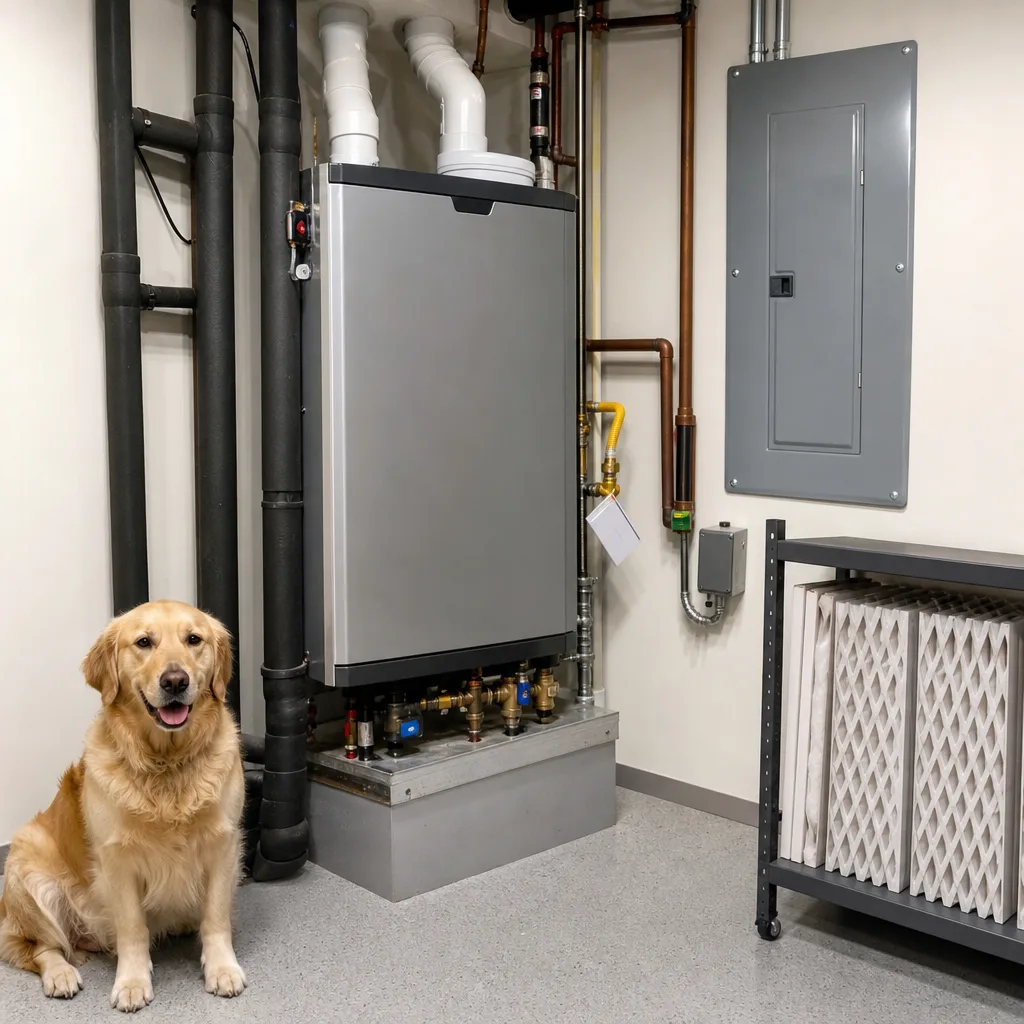
Here’s something a lot of people don’t find out until the truck is already in the driveway. Most houses around Dallas run on a furnace or a heat pump that pushes warm air through ducts. A boiler works a different way. It heats water and sends it through pipes to radiators, baseboards, or radiant floors. The parts are different and the problems are different. A tech who spends most of the winter on furnaces may not be the right person for your boiler.
If boilers are rare in your area, the company you’d call for your AC might not work on them at all. Some won’t tell you that until they’ve already charged a service call. So ask before you book.
These questions take two minutes on the phone and tell you a lot:
- Do you repair boilers, or just furnaces and heat pumps? Ask for a plain yes or no.
- Have you worked on a system like mine? Hot-water and steam boilers aren’t the same, and a home boiler isn’t the same as a commercial one.
- Will you look at the whole loop? A boiler that won’t heat may have a pump, valve, or pressure problem, not just a burner problem.
- Whose license covers the work? A boiler can involve gas, water, and electrical parts all at once.
- How do you price it? You want to hear the price before the work starts, not after.
That fourth question matters more than most folks think. A boiler isn’t just a heating appliance. It’s tied into your water lines, often your gas line, and its own controls and wiring. When one company only covers part of that, you can end up waiting on a second trade before your heat comes back.
So here’s where we stand. Boiler repair is on our service list, along with boiler servicing, boiler safety inspections, hydronic heating, and pump repair. Xtreme Air Services is a licensed and insured HVAC, plumbing, and electrical contractor. Our HVAC license number is TACLA29023C, and you’re welcome to check it. That means one team can handle the heating side, the water side, and the electrical side of your boiler. You won’t have to call three companies and try to line up their schedules.
On pricing, we use upfront flat-rate pricing. You approve the price before any work begins, so there’s no meter running while someone figures things out.
If a company dodges any of these questions, or says they’ll “take a look” without saying whether they’ve worked on boilers, believe them. Keep calling until you get straight answers. Your heat, and your money, are worth it.
Signs Your Boiler Needs a Repair Call
Your boiler usually tells you something’s wrong before it quits. If you notice cold rooms, odd noises, water where it shouldn’t be, or a pressure gauge that won’t hold steady, it’s time for a repair call. Catching it early often means fixing one part instead of chasing several.
In Dallas, boilers sit idle for months while the AC does all the work. Then a cold front blows in, everyone turns the heat on the same night, and a part that’s been quietly wearing out finally gives up. That first cold snap is when most folks find out their boiler needs help. It’s also a good reason to pay attention to small warning signs in the fall.
Here’s what to watch for:
- No heat, or only some rooms warm up. If one radiator or baseboard stays cold while others heat, the problem may be a pump, a stuck valve, or air in the loop.
- Pressure that keeps dropping or climbing. A gauge that falls every few days usually means water is getting out somewhere. A gauge that runs high can mean a valve or expansion tank problem.
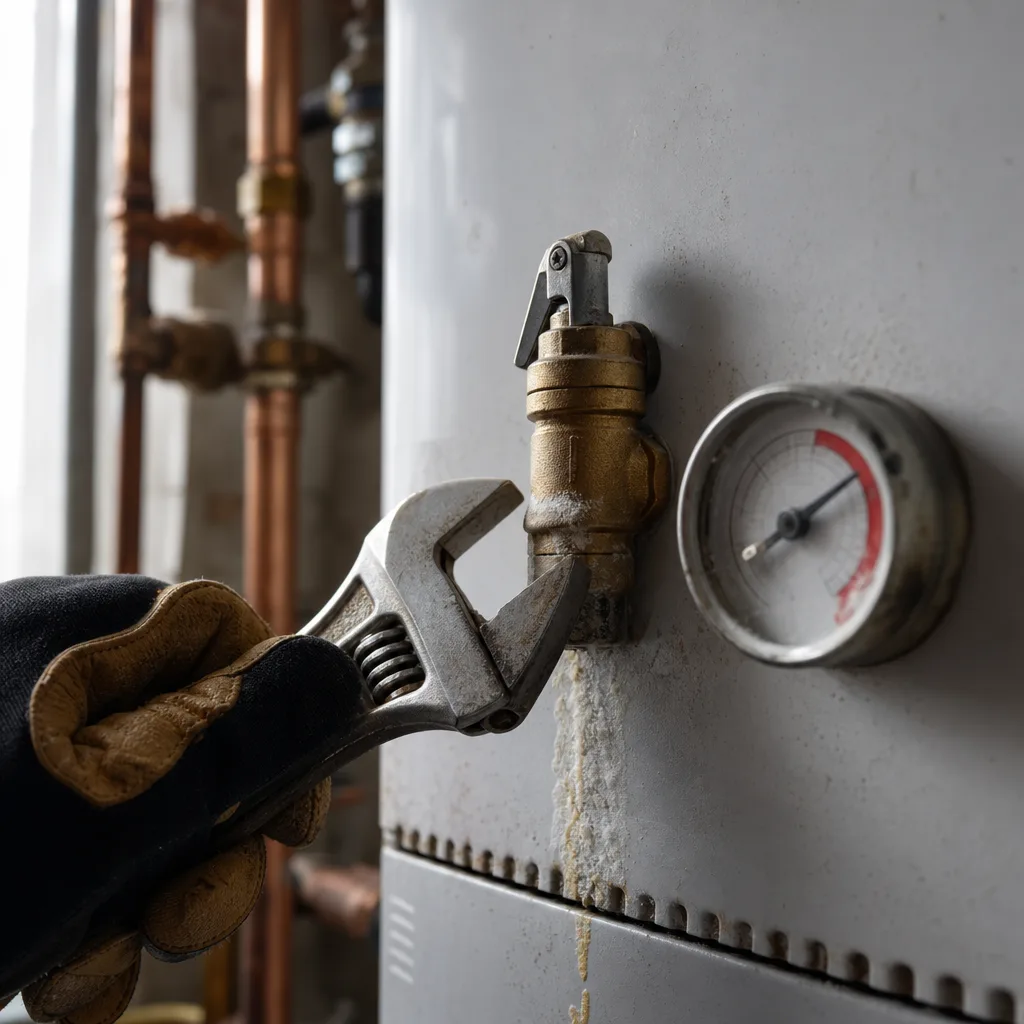
- Water on the floor or dripping pipes. Even a slow drip near the boiler or from the relief valve is worth a look. Small leaks rarely fix themselves.
- Banging, gurgling, or a sound like a kettle about to boil. That kettle sound often comes from mineral scale inside the system. North Texas water is hard, and that scale can build up over the years.
- The boiler keeps shutting off or won’t light. If it starts, runs a minute, and stops, or flashes an error code over and over, something in the controls, ignition, or sensors needs attention.
- A yellow or flickering flame instead of a steady blue one. That can mean the burner isn’t burning cleanly and should be checked.
- Gas bills going up for no clear reason. A boiler working harder to heat the same house is often a boiler that’s struggling.
Before you call, check the simple stuff. Make sure the thermostat is set to heat and turned up above the room temperature. Check that the boiler’s power switch is on and the breaker hasn’t tripped. If the thermostat runs on batteries, try fresh ones. If one of those brings your heat back, you don’t need us, and that’s a good day.
If those checks don’t help, or you’re seeing more than one sign at once, don’t keep resetting the boiler and hoping. Repeated restarts can hide the real problem and put extra wear on parts that are already tired. Write down what you’re noticing, like which rooms are cold, what the pressure gauge reads, and what the noise sounds like. That helps a technician find the failed part faster, and that can keep your repair smaller.
One more thing. Don’t let a small leak or a low-pressure boiler ride until the next freeze. A system that’s already struggling is more likely to fail on the coldest night, when you need it most and when everyone else is calling too.
What Happens During a Boiler Repair Visit
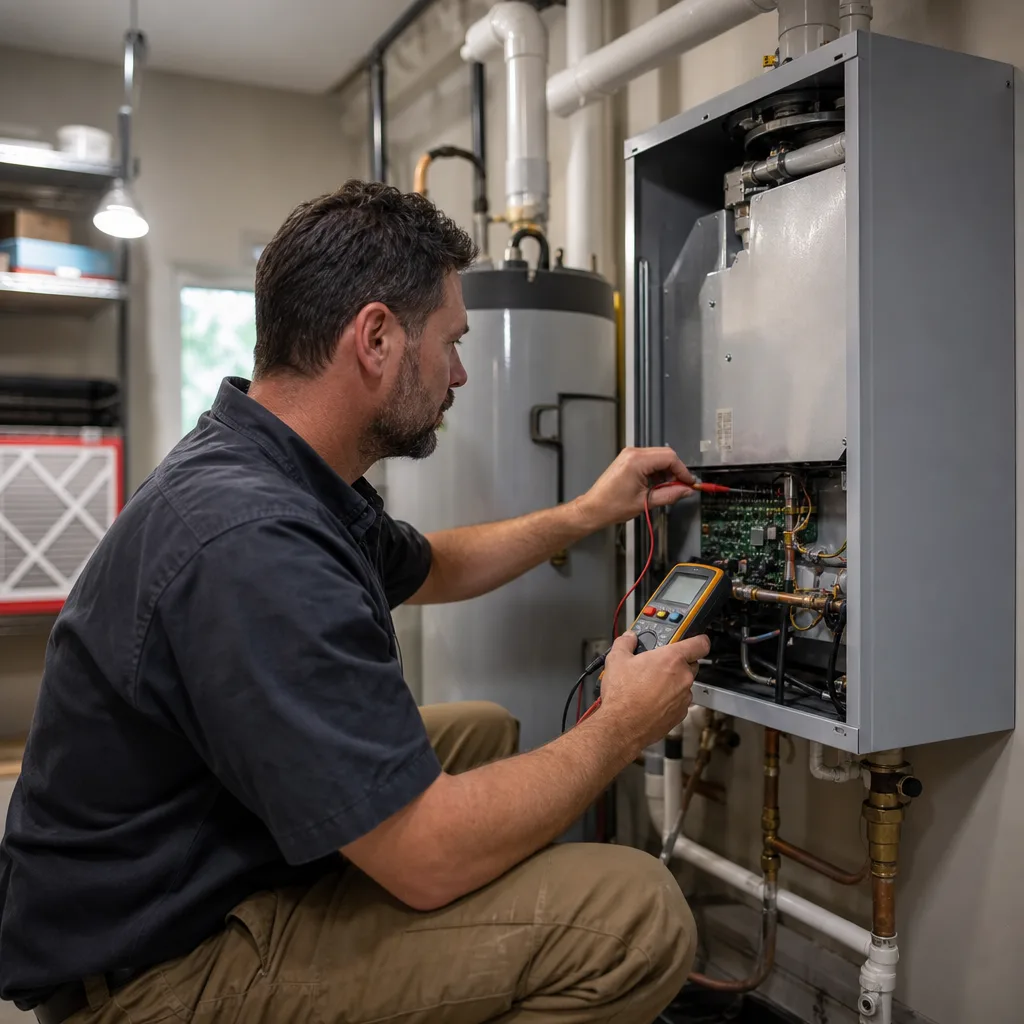
A boiler repair visit comes down to three jobs. Find the part that failed, repair or replace it, and make sure the whole system heats the way it should before anyone packs up. That’s how we do our most common boiler repair. Most of those calls turn out to be one common failure that gets fixed on the first visit.
It starts with what you’ve noticed. The cold rooms, gauge readings, and noises you wrote down give the technician a head start. A good boiler diagnosis doesn’t stop at the burner. It looks at the whole loop, because the trouble is often somewhere you can’t see from the front of the boiler. Expect the tech to check things like these:
- System pressure, read both cold and while running, to spot a leak or a waterlogged expansion tank.
- The circulator pump, which moves hot water to your radiators or baseboards.
- Zone valves, which can stick shut and leave one part of the house cold.
- Ignition, flame sensor, and controls, including any error codes the boiler has stored.
- The relief valve and pipe fittings for drips or mineral crust.
- The flue and venting, so exhaust leaves your home the way it should.
Once the failed part is found, you should hear what broke and why in plain English. You’ll also get the price before any work starts, since we approve everything up front. The service call runs $26-$99, and that fee is credited toward the repair if you go ahead with Xtreme Air Services. If you decide not to, you still walk away knowing exactly what’s wrong.
Here’s what the repair price covers and what it doesn’t, so nothing catches you off guard.
- Included: diagnosis, labor, the standard replacement part, testing, and cleanup.
- Quoted separately: additional failed parts, major components, code upgrades, or permits.
Why would a second part come up? On an older boiler, one failure can hide another. Say a worn pump gets replaced and hot water finally reaches every zone. Now a zone valve that’s been sitting idle all summer may show it’s sticking too. If that happens, you get a separate price for it and you decide. Nobody adds it to your bill on their own.
The last step is the one that matters most to you, which is proof the fix worked. Before the visit is done, you should see the boiler run through a full heating cycle. Every radiator or baseboard should warm up, not just the ones closest to the boiler. The pressure gauge should hold steady once the system is hot, and there should be no drips at the new part or the fittings around it. If air got into the loop during the repair, it should be bled out so you don’t hear gurgling that night.
Ask to see these things for yourself. A tech who’s done the job right will be glad to show you. Then you can go to bed in a warm house without wondering if you’ll be calling again in the morning.
Need help with Boiler repair?
Call Today, Get Service Today. Xtreme Air Services — North Dallas is ready to help.
Repair or Replace: Making the Right Call on an Older Boiler
An old boiler isn’t automatically a dead boiler. If the problem is one worn part and the rest of the system is in decent shape, repairing it is usually the smart money. Replacement starts to make sense when the core of the boiler is failing, parts are hard to get, or you’re paying for a new repair every winter.
Boilers are built to last, and a lot of the parts that wear out are small and replaceable. Pumps, zone valves, igniters, sensors, and relief valves can all be swapped without touching the boiler itself. So don’t let anyone talk you into a new system just because yours has some years on it. Age is a reason to look closer. It isn’t a reason to replace.
Here’s what tips the decision toward replacement:
- The heat exchanger is cracked or leaking. That’s the heart of the boiler, and a failure there is usually where repair stops making sense.
- Parts are scarce or no longer made. On older equipment, a part that’s hard to find can mean a long wait in a cold house and a high price when it finally shows up.
- Several parts are failing at once. One failure is a repair. Three at the same time often points to a system that’s worn out all over.
- You’ve had repair calls winter after winter. If each cold snap brings a new problem, those bills add up fast.
- Your gas bills keep climbing even after repairs. A boiler that has to work harder every year to heat the same space is telling you something.
Cost helps put this in perspective. Most of our boiler repairs fall between $300 and $2,000, and the most common job, finding one failed part and fixing it, runs $300-$1,100. What moves the price up or down is the size of the failure, what the part costs and how easy it is to get, the age and brand of your boiler, and whether more than one part has failed. Major components are quoted separately, so if your repair lands there, you’ll see that number before anything happens.
Ask yourself a simple question. If you put that money into this boiler today, do you expect it to carry you through the next few winters? If the answer is yes, repair it. If the tech is finding scale damage, corrosion, and tired parts everywhere they look, it may be time to talk about boiler replacement instead.
Budget matters too. Financing usually isn’t offered for smaller repairs, but it’s available on larger repairs and replacements. That means a bigger job doesn’t have to come out of your pocket all at once.
Whatever you choose, it should be your call, made with real information. You should hear which parts are failing, what a repair would cost, and what replacement would involve, all before you commit to anything. We’d rather fix your boiler and see it run for years than sell you one you didn’t need.
Call 469-213-3107
Watch Our Video
See How We Handle Boiler repair in Dallas
Xtreme Air Services — North Dallas
When It’s Not a Boiler Problem
Not every cold room or strange sound means your boiler is broken. Sometimes the boiler is doing exactly what it should. Sometimes the problem is somewhere else in your home. And sometimes you can fix it yourself in five minutes. Here’s how to tell before you pay for a service call.
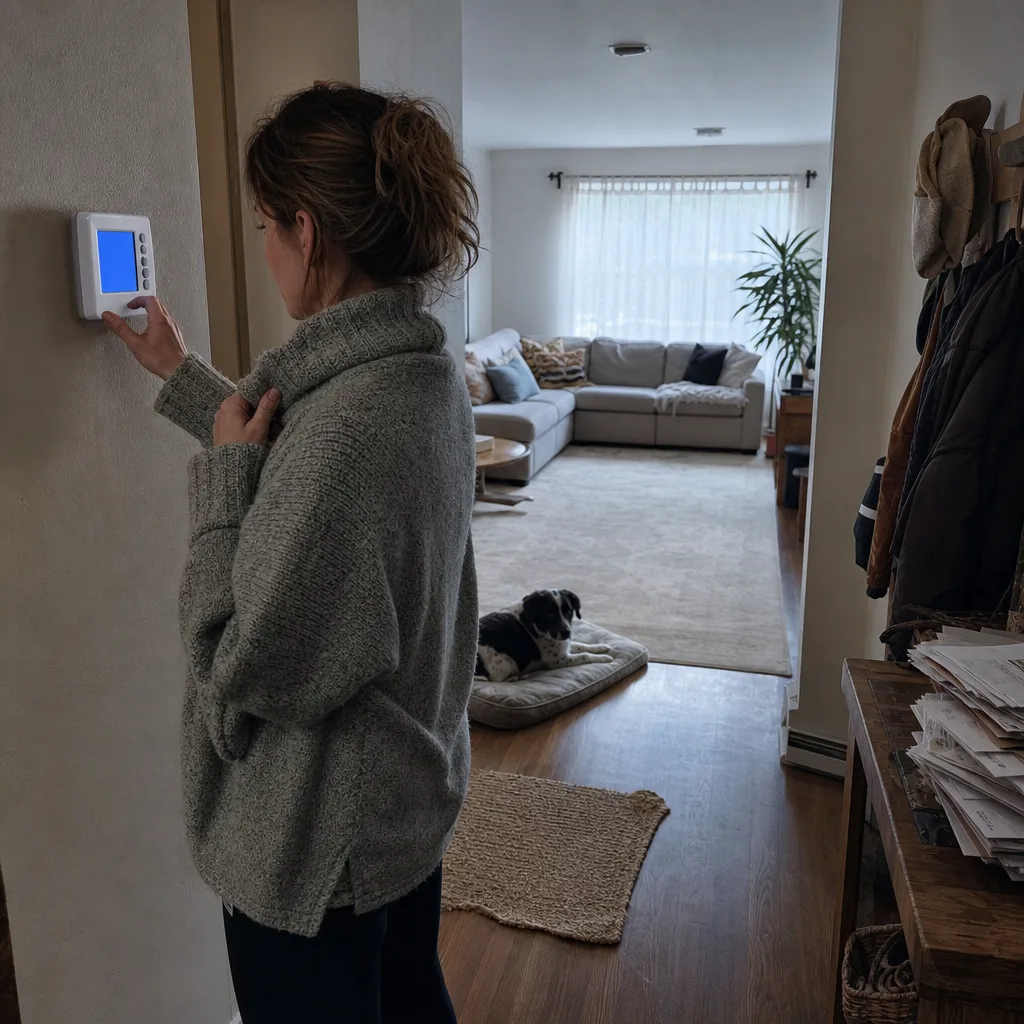
Start with the most basic question. Do you have a boiler? If warm air blows out of vents in your floors or ceilings, you have a furnace or a heat pump, not a boiler. That’s the setup in most Dallas homes. It’s an easy mix-up when you’ve just moved in. A no-heat problem with that kind of system needs furnace or heat pump repair instead.
Next, think about your hot water. If your showers have gone cold but the house is warm, the trouble is usually your water heater, not the boiler. The one exception is a combi boiler, which handles both heat and tap water in one unit. If you have a separate tank or tankless heater, that’s a water heater repair.
Some things that sound like trouble are just how boilers work:
- Slow warm-up. Boilers heat your home more gently than forced air. After a hard cold front, radiators and especially radiant floors can take a while to catch up. Slow isn’t the same as broken.
- Light ticking or creaking. Pipes grow a little as they heat up and shrink as they cool down. A soft tick when the heat cycles on is normal. Loud banging isn’t.
- Pressure that rises a bit when the boiler is hot. Water expands as it heats, so the gauge climbs some while the system runs. That’s expected. A gauge that keeps climbing toward the relief valve setting is a different story.
- One cool radiator with a closed valve. Check that its knob is open and that a couch, curtain, or rug isn’t covering a baseboard. Blocked heaters can’t warm the room.
A radiator that’s warm at the bottom and cool at the top usually has trapped air. A lot of owners bleed their own radiators as routine upkeep. If you’re comfortable doing that and the heat comes back, you’ve saved yourself a call. If the air keeps returning every few days, something is letting it in, and that’s worth having looked at.
Then there are problems that stop your boiler but don’t start in it. If the power is out on your street, your boiler can’t run its pump or controls, even if it burns gas. Wait for Oncor to restore power before you assume anything broke. A smart thermostat that’s lost its settings or Wi-Fi connection can look like a dead boiler too, and that needs thermostat repair. A breaker that keeps tripping every time the boiler starts may point to a wiring issue, which is an electrical troubleshooting job. A leak far from the boiler, like a pipe in a wall, is usually a plumbing leak repair.
If you’ve ruled all of this out and the boiler still won’t heat your home, then it really is a boiler problem. At that point, the signs and the repair visit covered above are your next step.
Frequently Asked Questions
Common questions about Boiler repair
How long does a boiler usually last before it needs replacing?
Most boilers last 15 to 20 years with regular care. Hard water in North Texas can speed up mineral scale buildup inside the tank and pipes, which shortens that lifespan if the system never gets checked. A boiler nearing 20 years that’s also needing frequent repairs is a sign to start talking about replacement instead of another fix.
What does a boiler service call usually cost?
Our boiler service call runs $26-$99, and that fee is credited toward the repair if you move forward with us. You’ll always get a full price before any work starts, so you know exactly what you’re paying before you commit.
Is fixing a boiler usually expensive?
It depends on what’s broken, but most boiler repairs land between $300 and $2,000. A single failed part, like a pump or valve, typically runs $300-$1,100. Bigger components cost more and get quoted separately, so you’ll never be surprised by the number.
Ready to Get Started?
Call (469) 213-3107 Today, Get Service Today.