


Heat Pump Installation in Frisco: What to Know Before You Buy
Heat pumps that cool in summer and heat in winter, sized for Frisco's mixed climate and installed to spec.
What’s Covered on This Page
- Heat Pumps Are Built for Frisco’s Mixed Climate
- Signs It’s Time to Replace Instead of Repair
- When a Repair Might Solve It Instead
- What a Standard Installation Includes
- What Drives Your Installation Cost
- How many hours a day should a heat pump run in winter?
- What is the major disadvantage of a heat pump?
- Can I keep my heat pump running fine with just basic upkeep, or will I always need repairs eventually?
Heat Pumps Are Built for Frisco’s Mixed Climate
Here’s the simple version. A heat pump doesn’t burn fuel to make heat. It moves heat. In summer, it pulls heat out of your house and sends it outside, just like a regular air conditioner. In winter, it runs that process in reverse and pulls heat from the outdoor air into your home. Even on a 40-degree morning, there’s still heat in that air to grab.
That’s why it fits Frisco so well. Your system spends most of its life cooling. Summers here are long and hot, and your equipment works hard from late spring well into fall. Winters are mostly mild, with plenty of days in the 40s and 50s. Those are the temperatures where a heat pump heats efficiently. One system handles both jobs, so you don’t need a separate furnace for heating.
Then there are the cold snaps. North Texas usually gets a few hard freezes each winter, and every so often an arctic front holds temperatures well below freezing for days. As it gets colder outside, a heat pump has less heat to pull from the air, so it has to work harder. A properly installed system handles that in three ways:
- Backup heat. Most heat pumps have electric heat strips in the indoor unit. They kick on when the heat pump can’t keep up alone, so your home stays warm on the coldest nights.
- Defrost mode. On cold, damp days, frost builds up on the outdoor coil. The system switches over for a few minutes to melt it off. If you see steam rising from the outdoor unit, that’s normal.
- Variable-speed equipment. Many high-efficiency models can speed up or slow down instead of just switching on and off. They hold their heating output better as temperatures drop, so they lean less on backup heat.
When you shop, you’ll see two efficiency ratings. SEER2 tells you how well the system cools for the energy it uses. HSPF2 tells you the same thing for heating. Higher numbers mean lower bills. Because Frisco summers run so long, the cooling rating usually matters most for your bills. A solid heating rating still pays off in winter, since it means less time running on backup heat, which costs more to run.
Your home matters as much as the weather. Many Frisco homes are in newer subdivisions, and lots of them have the indoor unit and ductwork in the attic. Those attics get very hot in summer and cold in winter. Leaky or poorly insulated ducts up there waste the heating and cooling your heat pump just made. Size matters too. A unit that’s too big cools the house fast, then shuts off before it pulls the moisture out of the air. Your home ends up cool but clammy, and the system wears out faster from starting and stopping.
So the climate gives you a good reason to choose a heat pump. Whether it feels great in your home depends on getting the size, the equipment, and the install right for your house.
Signs It’s Time to Replace Instead of Repair
Not every broken system needs to be replaced. A lot of them just need a part. The real question is whether the money you put into a repair today buys you years of comfort or just a few more months. Here’s how to tell the difference.
These signs point toward replacing your system:
- It’s well into its second decade. Most heat pumps and AC units wear out somewhere in the 10 to 15 year range. In Frisco, your outdoor unit runs hard for most of the year, so it can age faster than the calendar suggests.
- The compressor or outdoor coil failed on an older unit. These are the most expensive parts in the system. Putting a new compressor into a worn-out unit often means paying close to replacement money for a system that still has old parts waiting to fail.
- It runs on R-22 refrigerant. Systems built before about 2010 often use R-22, which is no longer produced in the U.S. What’s left is scarce and expensive, so every leak repair and recharge costs more than it should.
- You’re calling for repairs every season. One repair a year on an older system adds up fast. If you’re on a first-name basis with your repair tech, that’s a sign.
- Your bills keep climbing for no clear reason. An aging heat pump slowly loses efficiency. In winter, it may lean on backup heat much more than it should, and that shows up on your electric bill.
- Your home never feels right. You might have hot upstairs bedrooms in July, a house that stays sticky even when it’s cool, or rooms that won’t warm up during a cold snap. Sometimes that’s the duct system. Sometimes the system was the wrong size from day one, and no repair will fix that.
A simple rule many homeowners use is to multiply the repair cost by the age of the system. If the number is close to what a new system costs, replacement usually makes more sense. It’s not a perfect formula, but it’s a good gut check.
Repair is the better call when:
- Your system is less than about 10 years old and has been reliable.
- The problem is a smaller part, like a capacitor, contactor, fan motor, or thermostat. These fixes are common and usually much cheaper than people expect.
- It’s a one-time breakdown, not a pattern.
- Your bills and comfort were fine until the day it quit.
If that sounds like your system, fix it and keep it running. Replacing a healthy system just because it hit a hiccup doesn’t make sense.
Not sure which side you’re on? That’s what a diagnostic visit is for. Our service-call fee is $26 to $99, and it’s credited toward the repair if you move forward with Xtreme Air Services. You’ll get upfront flat-rate pricing before any work starts, so you can compare the repair cost against a replacement with real numbers in front of you, not guesses.
When a Repair Might Solve It Instead
Plenty of systems that seem dead aren’t. Before you start pricing a new heat pump, rule out the simple stuff. Some of it you can check yourself in five minutes, for free.
Start with these:
- The air filter. A clogged filter chokes airflow. Your system runs and runs but barely heats or cools, and in summer the indoor coil can freeze over. If the filter looks gray and caked, swap it and give the system a few hours.
- The thermostat. Make sure it’s set to Heat or Cool, not Off or Fan. Check whether it’s set to a schedule you forgot about. If it runs on batteries and the screen is blank or dim, put in fresh ones.
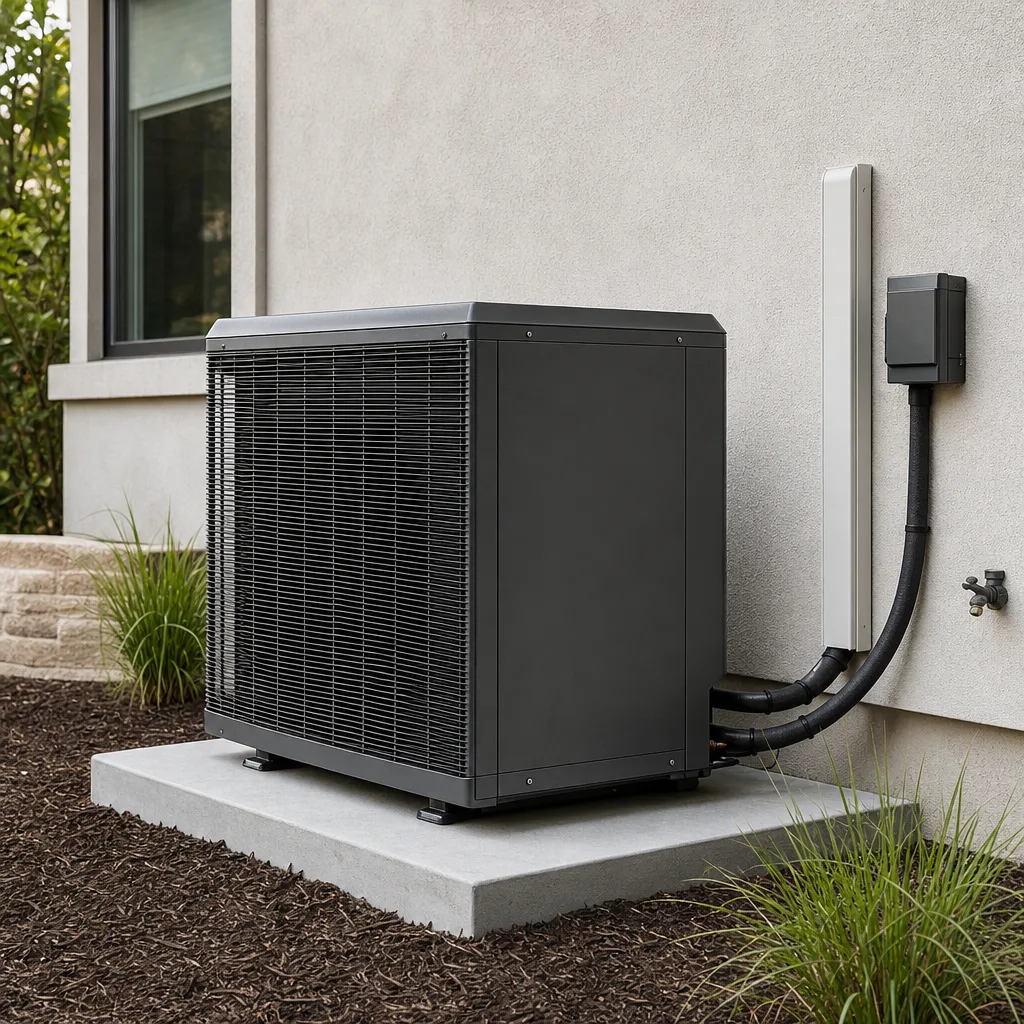
- The breaker. Your heat pump usually has its own breaker in the panel and a shutoff switch near the outdoor unit. If one tripped, reset it once. If it trips again, leave it off and call a pro, because something is pulling too much power.
- The outdoor unit. Leaves, grass clippings, or a fence pushed too close can starve it for air. Give it a couple of feet of open space on every side.
- Emergency heat. If someone flipped the thermostat to Emergency or Aux Heat, the system skips the heat pump and runs only the backup strips. Your home stays warm, but your electric bill jumps. Switching back to regular Heat fixes it.
Some problems need a technician but still aren’t replacement problems. An outdoor unit that stays caked in solid ice for hours, well past a normal defrost cycle, usually points to a sensor, a defrost control, or low refrigerant. A refrigerant leak on a system that’s only a few years old is worth finding and fixing. Hail can bend the thin metal fins on the outdoor coil, which hurts airflow, but that damage can often be straightened or repaired without touching the rest of the system.
Here’s the one that surprises people. Some comfort problems won’t go away with a new heat pump, no matter how good it is. If your upstairs bedrooms run hot while the downstairs feels fine, or one room never gets warm, the cause is often the ducts or the layout, not the equipment. In a lot of Frisco homes, those ducts run through a hot attic. Leaky or crushed ducts waste the air before it ever reaches the room. A brand-new system pushing air through the same bad ducts will give you the same hot bedroom with a bigger bill attached.
In that case, duct sealing or repair may do more for your comfort than new equipment. For a two-story home where the floors just won’t balance, a zoning system lets each area get its own temperature. Either fix can cost far less than a full install.
And if your current system is fairly new and working fine, and you’re only curious about a heat pump, there’s no rush. Keep it maintained and plan the switch for when it wears out. Replacing good equipment early rarely pays for itself.
Need help with Heat pump installation?
Call Today, Get Service Today. Xtreme Air Services — Frisco is ready to help.
What a Standard Installation Includes
Once you’ve decided to replace, the next question is simple. What am I paying for? Here are our real numbers, so you’re not guessing.
Heat pump installations with Xtreme Air Services typically run $5,000 to $12,000. Our most common job is a standard like-for-like swap that uses your existing connections with no major changes. That job runs $6,400 to $9,200.
A standard installation includes:
- The equipment and materials
- Professional installation
- Standard connections to your existing setup
- Startup and testing, so you know the system heats and cools the way it should before the job is done
- Haul-away of your old unit, so it doesn’t sit in your side yard
Some things aren’t included unless your quote says so. These are duct, electrical, or plumbing modifications, code corrections, and permits. That isn’t a trick. Every house is different, and nobody can price those items fairly until someone has looked at your home.
Here’s what moves your price up or down:
- Size and efficiency. A bigger system or a higher SEER2 rating costs more upfront. It can cost less to run every month.
- Brand and model. A basic single-speed unit and a variable-speed model are priced very differently.
- Ease of access. A unit that’s easy to reach takes less labor than one tucked into a tight Frisco attic on a summer afternoon.
- Condition of what’s already there. Ductwork, wiring, and plumbing in good shape keep the job simple. Worn or undersized parts add work.
- Code upgrades and permits. Older setups sometimes need updates to meet current requirements.
- Custom fabrication. If the new equipment doesn’t line up with your old connections, parts may need to be custom-built to fit.
Think about a common case. Your current system is 15 years old, the ducts are in decent shape, and the new heat pump is about the same size. That’s close to the standard job. Now picture a home where the ducts in the attic need repair, or the electrical has to be updated for the new unit. That job lands higher in the range. It’s still the same heat pump, just more work to do it right.
When you compare quotes from anyone, ask these questions:
- Is the price based on a load calculation for my home, or just the size of my old unit?
- Are permits included, or will they be added later?
- Does the price include startup, testing, and removing the old unit?
- What happens if you find duct or electrical problems once the work starts?
With us, you get upfront flat-rate pricing before any work starts. If something outside a standard install is needed, you’ll hear about it and approve it first. There’s no meter running.
If the full cost feels like a lot at once, flexible financing is available on qualifying installations, on approved credit. That way you can choose the right system for your home instead of settling for whatever fits this month’s budget.
Watch Our Video
See How We Handle Heat pump installation in Frisco
Xtreme Air Services — Frisco
What Drives Your Installation Cost
You’ve already seen the list of things that move the price. Here’s what those factors look like in an actual Frisco house. Once you know them, a quote makes sense when you read it, and you can spot one that’s leaving something out.

- One system or two. Lots of two-story homes have two separate systems, one for each floor. Replacing both doubles the equipment and much of the labor. If only one has failed, some homeowners replace that one now and plan for the other later. Ask whether that makes sense for your house.
- Switching from a gas furnace. If you have an AC with a gas furnace today, moving to a heat pump changes the indoor side too. An air handler with electric heat strips takes the furnace’s place. Those heat strips pull a lot of power, so your circuit and panel have to handle the load. That electrical work isn’t part of a standard swap. If your panel is already maxed out, an electrical panel upgrade may need to be part of the plan.
- Heat strip size. Bigger heat strips keep you warmer when an arctic front parks over North Texas for days. They also need heavier wire and a bigger breaker. The goal is strips sized to your home, not the biggest ones on the truck.
- The refrigerant lines. Two copper lines connect your indoor and outdoor units. Sometimes they can be cleaned and reused. Other times they need to be replaced, because they’re the wrong size for the new unit, they’re damaged, or they’re worn out. Replacing lines that run through finished walls or a packed attic takes more time than replacing lines that are easy to reach.
- Matching the indoor and outdoor units. A heat pump only reaches its rated efficiency when the outdoor unit and indoor coil are built to work together. Swapping just the outdoor unit can look cheaper on paper. It may never deliver the SEER2 and HSPF2 numbers you paid for, and the mismatch can put extra strain on the system.
- What’s already in the attic. In homes where the air handler sits in the attic, the drain pan and condensate line under it matter. A rusted pan or a clogged or poorly routed drain line usually gets replaced during the install, so a leak doesn’t end up staining your ceiling later.
Picture two neighbors on the same street with the same size house. One already has a heat pump, the copper lines are in good shape, and the attic setup is clean. The other is switching from a gas furnace, needs a new circuit for the heat strips, and has a rusty drain pan. Both get a new heat pump, but the second job has more steps, so it costs more.
This is also why the lowest quote isn’t always the cheapest system to own. A price that skips the matched coil or ignores the heat strip circuit can turn into a second bill later, or a system that never works the way it should. A good quote spells out each of these items, so you know what you’re paying for and why.
Frequently Asked Questions
Common questions about Heat pump installation
How many hours a day should a heat pump run in winter?
A heat pump should run in long, steady cycles rather than short bursts, often several hours at a time on cold days. This is normal behavior, not a sign of trouble. Heat pumps are built to run longer at a lower output instead of blasting heat and shutting off like a furnace. If yours is running nonstop during a mild Frisco day in the 50s, that usually points to a sizing or airflow problem worth having checked.
What is the major disadvantage of a heat pump?
The main drawback is reduced heating power during hard freezes, when the system leans on backup electric heat strips that cost more to run. North Texas usually sees a few of these cold snaps each winter. A correctly sized system with the right backup heat and defrost settings keeps your home warm through them, but it does mean your electric bill can jump for a few days during an arctic front.
Can I keep my heat pump running fine with just basic upkeep, or will I always need repairs eventually?
Basic upkeep like changing the filter and keeping the outdoor unit clear of debris goes a long way, but every heat pump eventually needs repairs as parts wear out. Most systems last 10 to 15 years before major components like the compressor start failing. Staying on top of small fixes, like a clogged filter or a tripped breaker, can prevent bigger problems and help your system reach the end of that range without surprises.
Ready to Get Started?
Call (469) 490-3595 Today, Get Service Today.