


One-Stop Commercial HVAC, Refrigeration, Plumbing & Electrical Service in Allen
One licensed team for your building's HVAC, refrigeration, plumbing and electrical, instead of juggling four contractors.
What’s Covered on This Page
- One Accountable Team Replaces Separate Vendor Calls
- Texas Summer Heat Raises the Stakes for Building Uptime
- What One-Stop Commercial Service Covers for Your Building
- How Pricing Works for Multi-Trade Commercial Work
- When a Single-Trade Call Is Enough
- Can I add a trade later if I start with just HVAC and refrigeration?
- How fast can someone get to my building if two systems fail at once?
- Do I need to know which trade is at fault before I call?
- What should I check in my lease before calling for service?
One Accountable Team Replaces Separate Vendor Calls
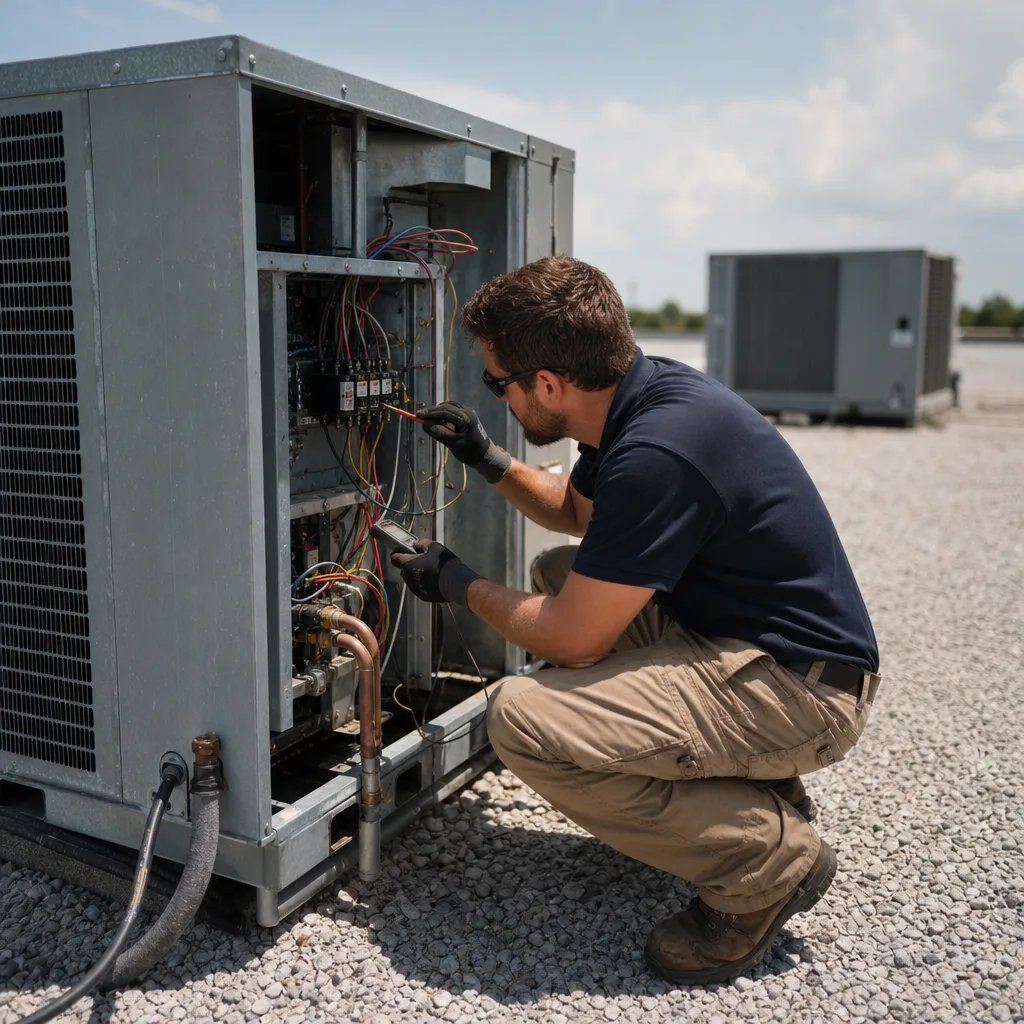
Here’s the headache most business owners know too well. Your walk-in cooler is running warm on a Friday afternoon. The refrigeration tech shows up and says the compressor is fine, but the breaker keeps tripping, so you need an electrician. The electrician comes Monday, finds nothing wrong with the panel, and says it’s a refrigeration issue. Meanwhile, you’ve thrown out product and lost two days.
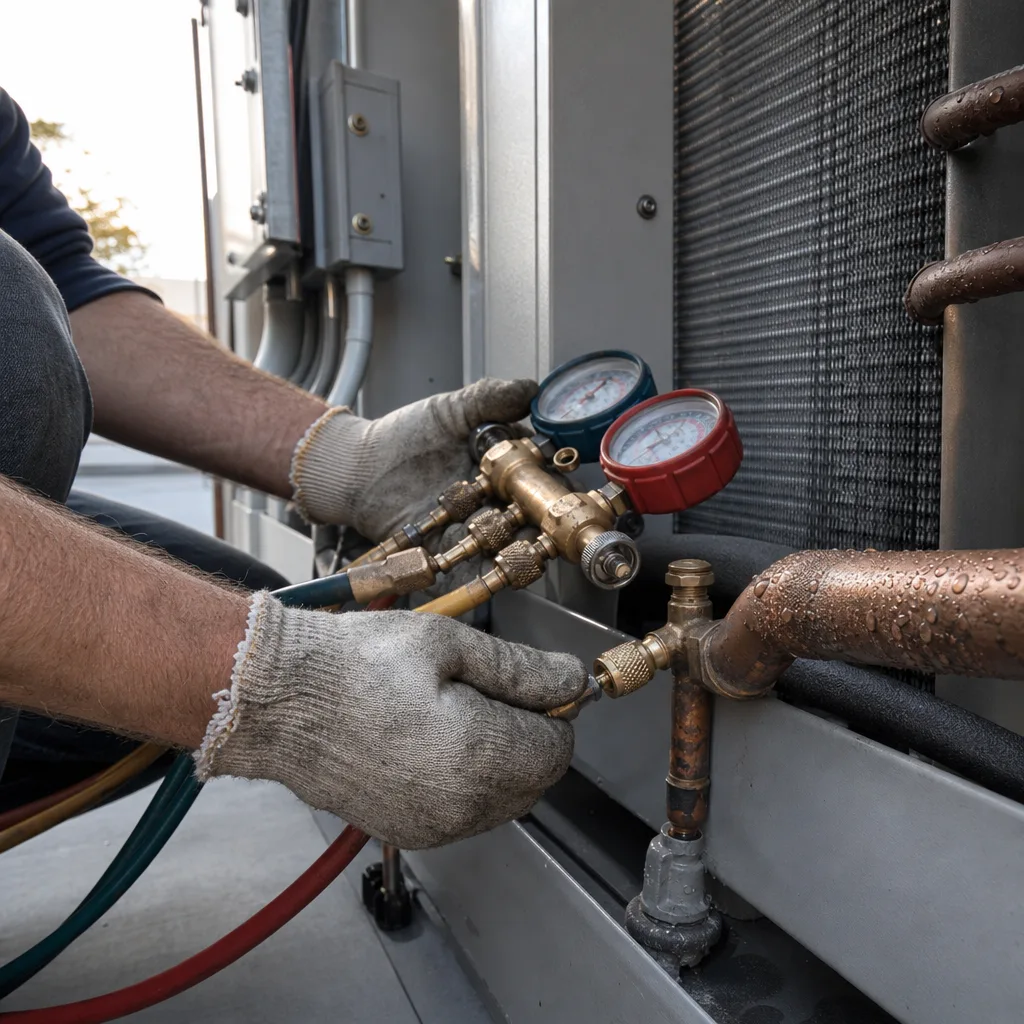
That gap between trades is where your time and money disappear. Building problems don’t care whose job they are. A rooftop unit’s drain line backs up and floods a ceiling. A water heater trips a circuit. An ice machine needs a water line and a dedicated outlet before it can run. Each of those touches two trades at once.
With one-stop commercial service, there’s no handoff and no finger-pointing. Our team covers commercial HVAC, refrigeration, plumbing, and electrical, so the person looking at your problem can follow it wherever it leads. If the cooler issue turns out to be electrical, it’s still our problem to solve, not a reason to send you to someone else.
Here’s what that changes for your business day to day:
- One phone number. You don’t have to figure out which trade to call first. Our phones are answered around the clock, and you talk to a real person.
- One plan. A problem that touches two or three systems gets one diagnosis and one fix, not separate visits stacked across the week.
- One price conversation. You get upfront pricing before work starts, instead of piecing together bills from several vendors.
- One set of people in your building. Our licensed and insured technicians are background-checked, which matters when they’re working around your staff, tenants, or customers.
- One record of your building. The team servicing your rooftop units also knows your water heater and your panel, so nothing falls between the cracks.
This matters even more in North Texas. A July heat wave pushes rooftop units and walk-in coolers hard, often at the same moment. A sudden winter cold front can stress pipes, heaters, and power all at once. When more than one system acts up on the same day, you need one team that can respond the same day and sort out what’s connected, not three vendors on three different schedules.
We set the scope for each building, so the service fits what you have. A small office with two rooftop units needs something very different from a restaurant running walk-in coolers, ice machines, a commercial water heater, and a full kitchen’s worth of circuits. Either way, you get one accountable team based right here in Allen on W McDermott Dr, close enough to show up when it counts.
Texas Summer Heat Raises the Stakes for Building Uptime
In a North Texas summer, your building isn’t one system under stress. It’s every system under stress at the same time, and the weak spots tend to show up on the hottest afternoon of the week, right when you’re busiest.
Here’s why. Almost every piece of equipment that keeps your business open works by moving heat from inside to outside. When the outdoor air is already brutal, that job gets harder for all of them at once:
- Rooftop units sit on flat roofs that soak up sun all day. Their condenser coils have to dump heat into air that’s already scorching, so they run longer and work harder. A dirty coil or a weak capacitor that got by in April can quit in July.
- Walk-in coolers and freezers face the same hot air at their condensers. Doors also open more often on busy summer days, so the box has more warm air to pull out.
- Ice machines make less ice when the room around them is hot, and that happens just when your customers want more of it.
- Your electrical system carries its heaviest load when every compressor and fan in the building is running hard. Loose connections and tired breakers run hotter under that load, and that’s when nuisance trips start.
- Condensate drains have more water to move when your units run nonstop. A partly clogged line can back up and spill into a ceiling or onto a floor.
Notice how those problems overlap. A rooftop unit struggling with a dirty coil pulls more power and can trip a breaker. That breaker might also feed part of your kitchen. A clogged drain line is an HVAC problem until it becomes a plumbing and water-damage problem. In the heat, one small issue rarely stays in its own lane.
That’s why getting ahead of summer works best when one team looks at the whole building in the same visit. A spring check from separate vendors can leave gaps. The HVAC tech may never open your panel, and the electrician may never look at your rooftop units. When one team covers both, the person who finds a compressor drawing too much power can also check the circuit feeding it, and you don’t have to schedule that as a second job.
A good pre-summer look at a commercial building usually covers:
- Cleaning condenser coils on rooftop units and refrigeration equipment
- Testing capacitors, contactors, and fan motors before peak load
- Clearing condensate drain lines and checking drain pans
- Checking refrigerant levels and looking for leaks
- Tightening electrical connections and checking breakers that serve major equipment
- Making sure walk-in door gaskets seal tight
Scheduling that work in spring, before the first long stretch of hot days, gives you time to fix what turns up on your schedule instead of the weather’s. It’s also the kind of planned work our commercial preventive maintenance is built around, scoped to the equipment your building has.
Some things will still fail, even with good upkeep, because summer is hard on equipment. When that happens, you’re calling a team that already knows your rooftop units, your coolers, and your panel. Our phones are answered around the clock, and same-day service is available, so a breakdown on a hot afternoon gets handled that day instead of turning into lost product or a closed door.
What One-Stop Commercial Service Covers for Your Building
One-stop commercial service covers the four trades that keep most businesses open: HVAC, refrigeration, plumbing, and electrical. You don’t have to sign up for all four. We build the scope around the equipment in your building, so you’re only paying for what you have.
Here’s what falls under each trade:
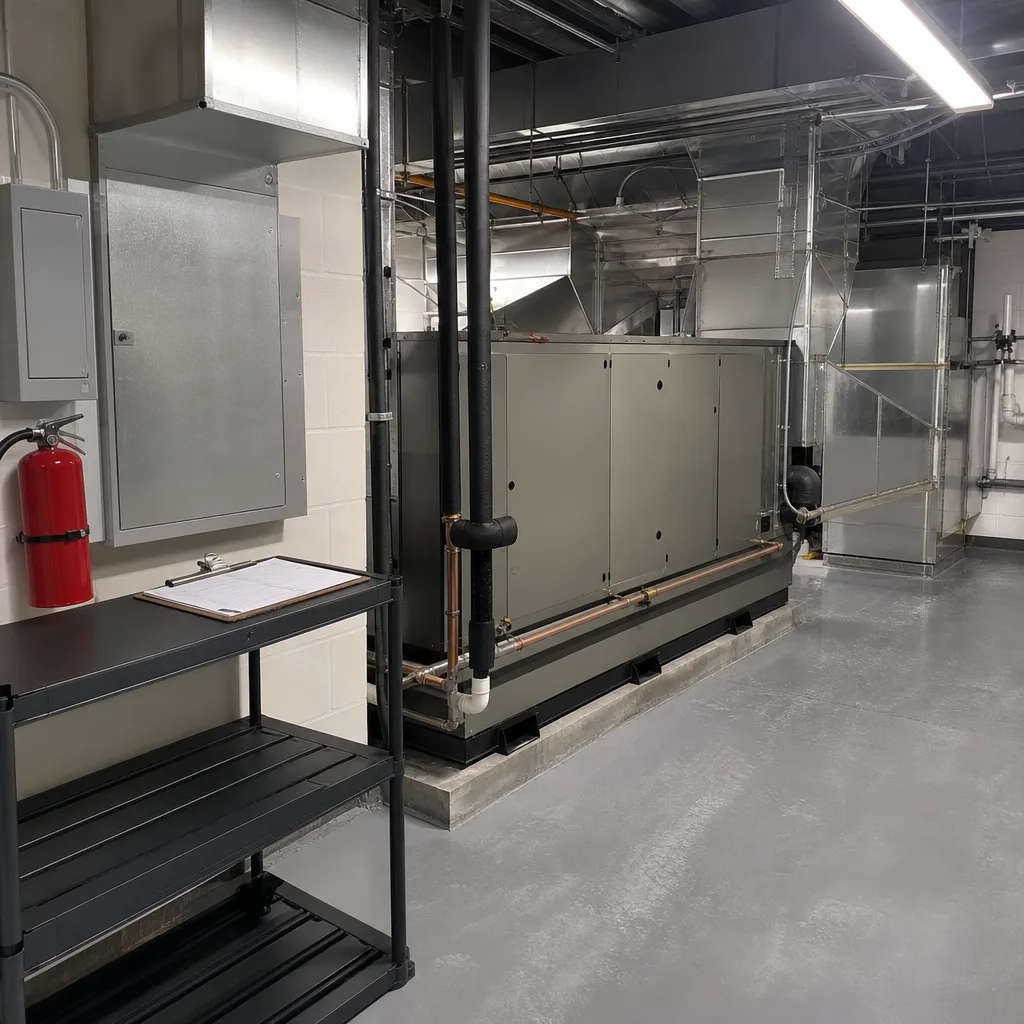
- Commercial HVAC: rooftop unit (RTU) service, commercial HVAC repair and maintenance, commercial ductwork, make-up air systems, and building automation and controls that run your schedules and setpoints.
- Refrigeration: walk-in cooler repair, walk-in freezer repair, ice machine installation and repair, refrigeration leak detection, and commercial refrigeration installation.
- Kitchen ventilation: commercial kitchen ventilation and exhaust hood installation, which tie your cooking line to your HVAC and make-up air.
- Plumbing: commercial plumbing, commercial water heaters, drain cleaning, hydro jetting, and backflow testing.
- Electrical: commercial electrical work, electrical troubleshooting, panel repair and upgrades, dedicated circuits for new equipment, and surge protection.
- Backup power: commercial generator installation, for businesses that can’t afford to go dark when the grid does.
Picture a dental office in a strip center off McDermott. It might only need two rooftop units, a water heater, and a panel looked after. A restaurant next door has walk-ins, an ice machine, a hood system, grease-heavy drains, and a long list of dedicated circuits. Both get one-stop service. They just get very different scopes.
Scope and pricing are set per building, and the price is quote-based. Four things move it up or down:
- Building size. More square footage usually means more equipment and more ground to cover.
- Number of systems. Three rooftop units and two walk-ins take more work than one of each.
- Service frequency. How often you want the team on site changes the scope.
- The mix of trades covered. HVAC and refrigeration only is a different quote than all four trades.
What’s included is coordinated multi-trade service under one vendor. That’s the core of it. Anything outside that is itemized per the scope you agree to, so you’ll see it in writing before work starts. Large installs, like a new rooftop unit, a walk-in freezer, or a commercial generator, are quoted separately. They don’t get folded into your regular service. For qualifying installations and larger jobs, flexible financing is available on approved credit.
If you call us out for a repair, there’s a $26 to $99 service-call fee. That fee is credited toward the repair if you go ahead with Xtreme Air Services, so you’re not paying twice just to find out what’s wrong.
Not sure which bucket your equipment fits in? That’s normal. Most owners don’t keep a list of every unit on the roof or every circuit in the panel. A walk-through of your building sorts that out, and the quote you get reflects what’s really there.
Not sure what your One-stop commercial service project needs? Ask us.
Call Today, Get Service Today. Xtreme Air Services — Allen is ready to help.
How Pricing Works for Multi-Trade Commercial Work
Most commercial service gets priced one of three ways. Knowing which one you’re looking at makes any quote easier to judge.
- Time and materials. You pay an hourly labor rate plus parts. The final bill isn’t known until the job is done, and a slow diagnosis costs you more.
- Flat-rate per repair. You get one price for the fix before work starts. If the job runs long, that’s on the contractor, not you.
- Service agreement. You agree on a set scope of planned visits for your building, and repairs that come up are priced on top of that scope.
With separate vendors, you can end up mixing all three. Your HVAC company bills by the hour, your plumber charges flat rates, and your electrician has a minimum charge. Each one sends its own truck, charges its own trip fee, and sends its own invoice. When a problem crosses trades, like the walk-in cooler and the tripping breaker above, you can pay two companies to diagnose the same problem and still not have it fixed.
Here’s how we keep it simple. Your ongoing service is quote-based and set for your building, using the factors covered above. When something breaks, you get upfront flat-rate pricing that you approve before any work starts. No meter running while a tech hunts for the cause. And there’s no extra charge for nights or weekends, which matters for a business, because equipment doesn’t wait for Monday morning to quit.
One vendor won’t always have the lowest line-item rate. That’s honest. But a single rate is the wrong number to compare. Look at what you spent last year across every vendor: all the trip fees, the repeat visits, the hours your manager spent on the phone lining up three schedules, and the product or sales you lost while two trades argued over whose problem it was. That total is what you’re really comparing against.
Whoever you hire, ask these questions before you sign anything:
- Do I approve the price before the work starts, or do I find out after?
- Do you charge more for nights, weekends, or holidays?
- Is there a trip or service-call fee, and is it credited if I go ahead with the repair?
- What’s in my scope, and what gets quoted separately?
- Which trades do your own people handle, and which get sent to a subcontractor?
- Are your technicians licensed, insured, and background-checked?
The fifth question matters more than it looks. A company that subcontracts half the work is still handing you off, just with an extra layer in between. Our licensed and insured, background-checked team covers HVAC, refrigeration, plumbing, and electrical, so the answers stay the same no matter which system acts up.
Call 469-299-8996
Watch Our Video
See How We Handle One-stop commercial service in Allen
Xtreme Air Services — Allen
When a Single-Trade Call Is Enough
Not every business needs one team for four trades. If your building is simple, your vendors already show up, or someone else handles most of your systems, a single call to a single trade may be all you need. Here’s how to tell.
You probably don’t need one-stop service if any of these sound like you:
- Your landlord handles the building. Many leases put the roof units, main plumbing, and electrical service on the property owner. If your lease covers those, your only job may be calling the property manager. Read your lease before you hire anyone, so you don’t pay for work your landlord already owes you.
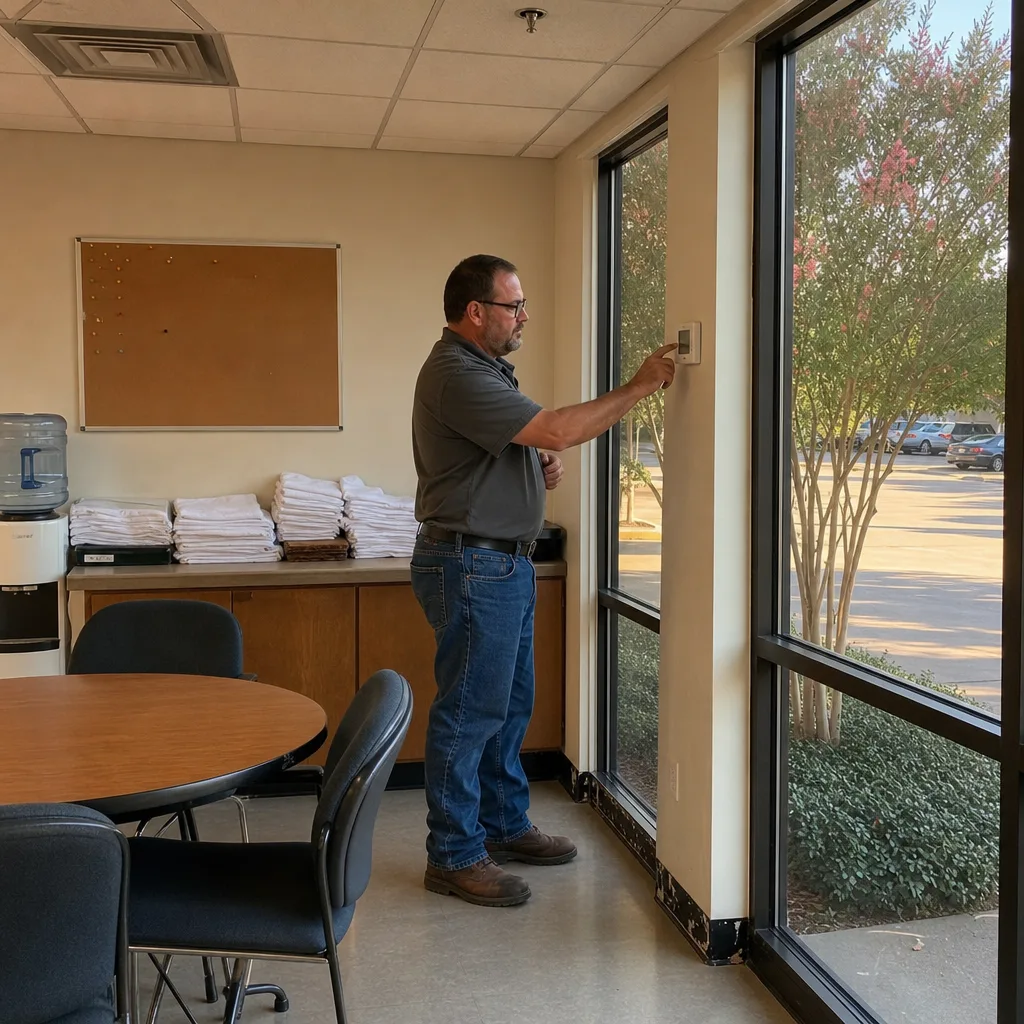
- You have one system and it’s working. A small office with one rooftop unit and no kitchen, coolers, or special equipment doesn’t have much that crosses trades. A yearly HVAC tune-up from a good HVAC company may cover it.
- Your current vendors are doing right by you. If your refrigeration tech answers the phone, your plumber shows up on time, and problems get fixed the first time, don’t fix what isn’t broken. Switching vendors just to have fewer names in your phone isn’t a good enough reason.
- It’s a one-off job. A dripping faucet in the break room, a dead light fixture, or a new outlet for a copier is a single-trade job. Call the trade you need and move on.
- It’s routine upkeep your staff can handle. Swapping air filters on a set schedule, keeping boxes and trash away from outdoor units, and keeping walk-in doors shut during rush hour don’t need a service visit.
There’s no shame in any of those. A lot of businesses run fine for years with one or two trusted vendors and a lease that covers the rest.
What changes the answer is how your problems behave, not how many systems you own. Watch for these patterns over the next few months:
- The same problem keeps coming back after more than one vendor has looked at it.
- Two vendors have told you the problem belongs to the other one.
- Your manager spends real time each month lining up schedules, chasing invoices, or waiting on callbacks.
- You’re adding equipment, like a walk-in, an ice machine, or a new kitchen line, that needs plumbing and electrical work before it can run.
- A single breakdown has cost you a day of sales or a load of product.
If none of those happen to you, stay with what works and call a single trade when something breaks. If two or three of them sound familiar, the problem isn’t any one vendor. It’s the gaps between them, and that’s a different decision.
One more honest point. If you’re a tenant and you aren’t sure what your landlord covers, find that out first. Getting the lease straight can save you more money than any service agreement, ours included.
Frequently Asked Questions
Common questions about One-stop commercial service
Can I add a trade later if I start with just HVAC and refrigeration?
Yes, you can start small and expand your scope later. Scope and pricing are set per building, so if you add plumbing or electrical coverage down the road, your quote simply adjusts to the new mix of trades. This works well if you’re testing out one-stop service before committing to full coverage.
How fast can someone get to my building if two systems fail at once?
Same-day service is available six days a week, which matters most when problems overlap, like a rooftop unit drawing too much power and tripping a breaker feeding your kitchen. Since one team covers HVAC, refrigeration, plumbing, and electrical, the technician who shows up can follow the problem across trades instead of waiting on a second vendor to be scheduled.
Do I need to know which trade is at fault before I call?
No, you don’t need to diagnose anything before calling. That’s the point of one-stop service: you call one number, and the technician figures out whether it’s HVAC, refrigeration, plumbing, or electrical once they’re on site, instead of you guessing wrong and waiting for a second company.
What should I check in my lease before calling for service?
Check whether your lease puts the rooftop units, main plumbing, or electrical service on your landlord instead of you. Many commercial leases in Allen assign that equipment to the property owner, so reading your lease first can save you from paying for a repair your landlord already owes you.
Ready to Get Started?
Call (469) 299-8996 Today, Get Service Today.