


Cooling Tower Installation in Dallas: Repair, Replace, or Rebuild?
Cooling tower installs for commercial chilled-water plants, with the permit and mechanical code requirements explained.
What’s Covered on This Page
- Know Whether You Need a Repair or a Full Installation
- What Drives Cooling Tower Installation Cost
- What Happens During a Commercial Tower Installation
- Permits and Licensing for Commercial Mechanical Work in Dallas
- One Contractor for Installation, Electrical, and Plumbing Tie-Ins
- How long does a cooling tower installation take once work starts?
- Can my cooling tower keep running while a new one is being installed?
- Does a new cooling tower need its own water treatment plan?
Know Whether You Need a Repair or a Full Installation
Not every tower that acts up needs to be replaced. A cooling tower is a box of working parts: a fan, a motor, a pump, spray nozzles, fill (the honeycomb material the water trickles over), and a basin that catches the water. When one of those parts wears out, you replace that part, not the whole tower. If someone jumps straight to a new install without checking the parts first, it’s fair to ask why.
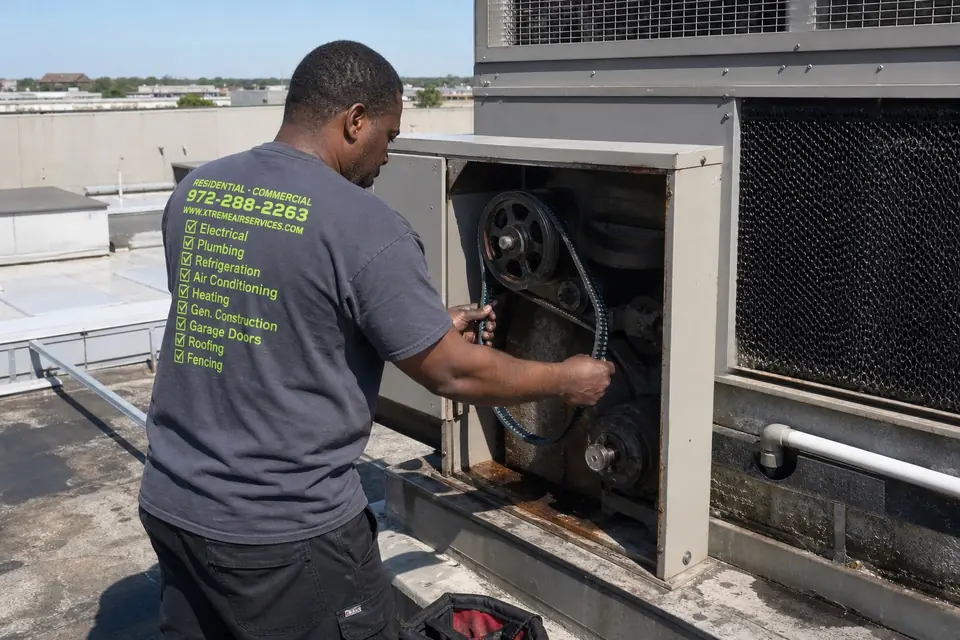
These problems are usually worth fixing:
- A fan motor that hums, trips, or won’t start
- A noisy or leaking circulation pump
- Clogged spray nozzles that leave dry spots on the fill
- Fill that’s caked with scale in one area but solid everywhere else
- A small leak at a fitting or seam that’s easy to reach
- Belts, bearings, or a gearbox that’s starting to whine
If your tower is sound and the trouble traces back to one or two of these, a repair can get you back up and running. Pump work is its own job, and our team handles pump installation and repair too.
It’s time to talk about a new installation when you see signs like these:
- Rust that’s eaten through the basin or the frame, not just surface rust
- Leaks in several places at once, or new leaks right after the last fix
- Fill that’s sagging or crumbling throughout the whole tower
- Repair bills that keep stacking up every season
- A tower that can’t keep up anymore because your building’s cooling load has grown
- Replacement parts that are hard to find for an older model
Dallas is hard on cooling towers. Our summers are long and hot, so towers here run hard for months at a stretch. North Texas water is also hard, and that mineral content leaves scale on the fill and in the basin over time. A tower that’s been fighting scale and heat for years can reach the point where you’re paying to patch something that’s worn out all over. When that happens, putting the money toward a new tower usually makes more sense than another round of repairs.
Here’s a simple way to think about it. Picture your tower sputtering through another July afternoon while your tenants or your process need steady cooling. If it’s one bad part on a solid tower, fix it. If you can’t remember the last month it ran without a problem, start planning the replacement before it picks the worst day to quit.
You don’t have to guess. Our licensed and insured technicians can look at your tower and tell you straight which way it’s heading. Our service-call fee is $26-$99, and it’s credited toward the repair if you move forward with Xtreme Air Services. If a repair is the honest answer, that’s what we’ll tell you.
What Drives Cooling Tower Installation Cost
Here’s the honest answer up front. A cooling tower installation with Xtreme Air Services typically runs $10,000-$100,000. That’s a wide range because cooling towers come in very different sizes and setups.
Our most common job is a standard like-for-like swap. That means the new tower uses your existing connections and needs no major changes. It covers the equipment and materials, professional installation, startup, and testing. That job usually lands at $28,000-$64,000.
Where your project falls depends on a handful of things.
- Size and capacity. A tower is sized in tons, which tells you how much heat it can pull out of your building. A bigger cooling load needs a bigger tower, and that costs more.
- Efficiency. A tower built to run more efficiently can cost more up front but may save on energy and water over the years it runs.
- Brand and model. Different towers carry different price tags for the same job.
- Ease of access. A tower on the ground next to the building is simpler to swap than one on a tight rooftop. The harder it is to get the old tower out and the new one in, the more the job takes.
- Condition of what’s already there. If the piping, wiring, or plumbing feeding your current tower is in rough shape, it may need work before the new tower can hook up.
- Code upgrades and permits. Older installs sometimes don’t meet today’s code, and bringing them up to date adds cost.
- Custom fabrication. If a new tower doesn’t line up with your old footprint or connections, parts may need to be built to fit.
Dallas heat plays into the size question too. Our summers keep towers running hard for months, so sizing the new tower to your real cooling load matters. A tower that’s too small for a hot July will struggle. One that’s far too big costs you more than it should.
You should also know exactly what your price covers before you sign anything. Here’s how it breaks down for us.
- Included: equipment and materials, professional installation, standard connections, startup and testing, and haul-away of the old unit.
- Not included unless your quote says so: duct, electrical, or plumbing changes, code corrections, and permits.
That second list is where surprise bills usually come from. If your building needs any of those extras, it should be spelled out before work starts. That way you’re comparing real numbers, not a low starting price that grows once the old tower comes down.
When you’re getting quotes, ask each contractor a few simple questions. Is this a like-for-like swap or does it need changes? Are permits in the price? What happens if the existing piping or wiring needs work? Clear answers to those tell you a lot about who you’re dealing with.
A new cooling tower is a big expense, and you don’t always have to pay it all at once. Flexible financing is available on qualifying installations and larger jobs, on approved credit. Our upfront flat-rate pricing means you’ll see the number before we start, not after.
What Happens During a Commercial Tower Installation
A cooling tower swap is a planned project, not a surprise. Most of the work happens before the old tower comes down. Knowing the steps helps you plan around your tenants, your staff, or your process, so the day your cooling goes offline doesn’t catch anyone off guard.
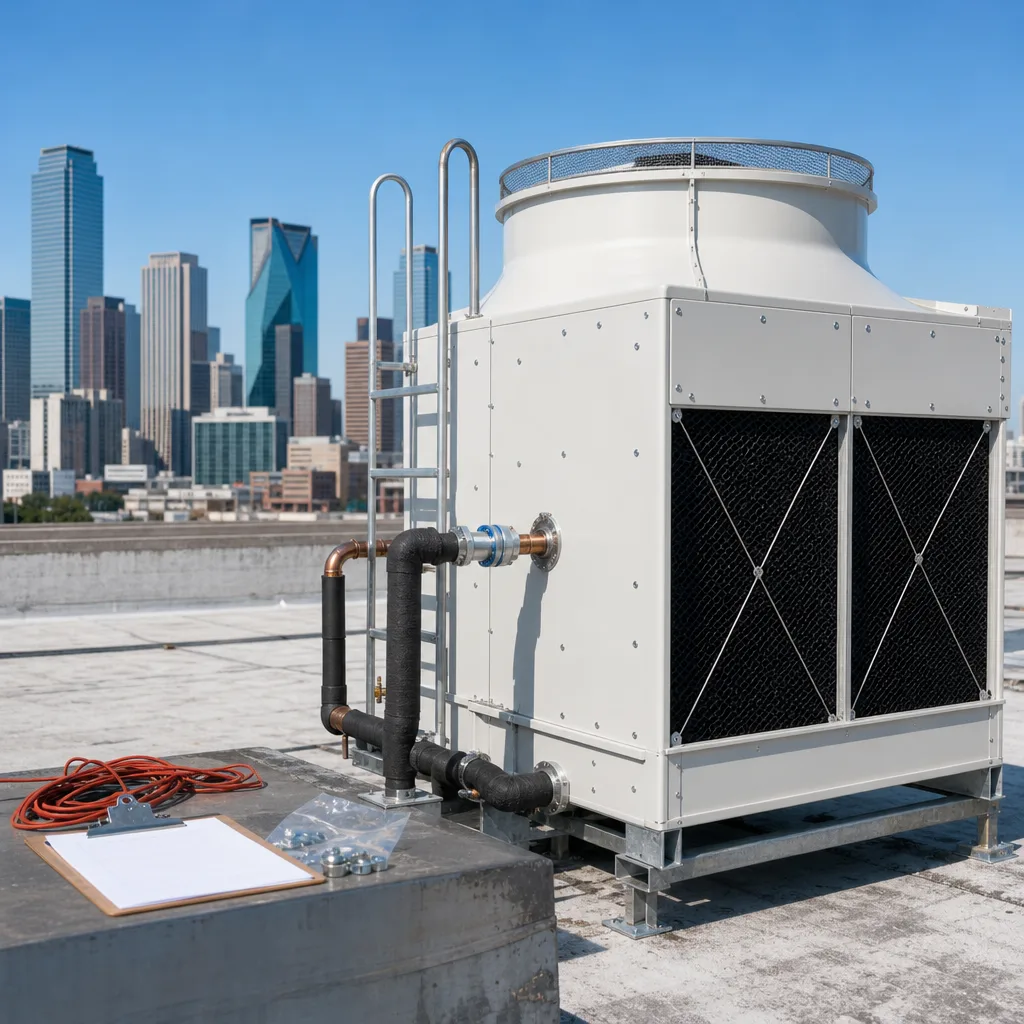
Here’s how a commercial installation typically unfolds.
- Site check and sizing. Someone looks at your current tower, the piping and wiring that feed it, and where it sits. They also confirm the new tower matches your building’s real cooling load.
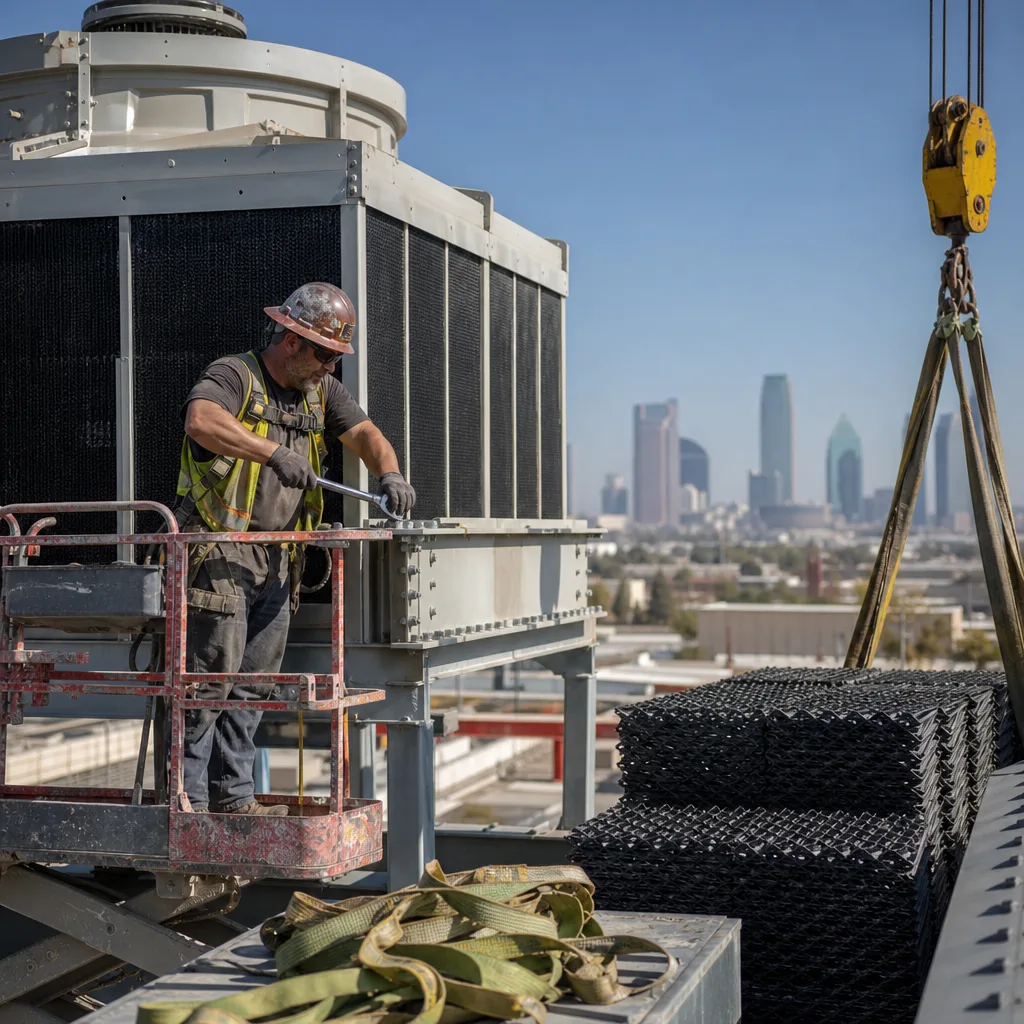
- Structure and access. A rooftop tower full of water is heavy. The roof or pad has to carry the new unit, and there has to be a way to get the old one out and the new one in. On many rooftops, that means a crane.
- Paperwork and scheduling. Permits get pulled if your job needs them. The shutdown date gets set around your business, not the other way around.
- Shutdown and removal. The old tower is drained and disconnected from water, piping, and power, then lifted out and hauled away.
- Setting the new tower. The new unit is placed, leveled, and secured. A tower that isn’t level can spread water unevenly over the fill and wear parts faster.
- Connections. Supply and return piping, the makeup water line that tops off the basin, the drain, and the electrical feed to the fan and pump all get hooked up.
- Startup and testing. The basin is filled, and the system runs while each part is checked.
That last step is where you find out whether the job was done right the first time. A good startup checks that the fan spins the right way, the pump moves the water it should, the spray nozzles wet the fill evenly with no dry spots, and the tower runs without leaks or heavy shaking. If any of that is off, the time to fix it is now, while the crew is still on site.
Timing matters in Dallas. Our summers keep towers working hard for months, and nobody wants their cooling down in the middle of July. If your old tower is still holding on, plan the swap for a cooler stretch of the year, when your building needs less cooling and a short shutdown is easier to live with. If it’s already failing, ask about a plan to keep your most critical spaces cool while the work gets done.
Start water treatment on day one. North Texas water is hard, and that’s what leaves scale on fill and basins. A brand-new tower can start building scale right away if nobody’s treating the water. Before the crew leaves, make sure you know who’s handling treatment and how often the tower should be checked.
Before you sign off, walk the job with the installer. Ask them to show you the startup readings, point out the shutoffs, and tell you what normal sounds and looks like for your new tower. That way you’ll spot trouble early instead of finding it on the hottest day of the year.
Have questions? We’re happy to help.
Call Today, Get Service Today. Xtreme Air Services — Oak Lawn is ready to help.
Permits and Licensing for Commercial Mechanical Work in Dallas
A new cooling tower isn’t just a box set on a roof. It ties into your building’s piping, your water supply, and your electrical system. In Dallas, swapping out commercial mechanical equipment usually means pulling a permit with the city and passing an inspection when the work is done. The person doing the work should also hold the right state license for each trade the job touches.
In Texas, HVAC and refrigeration contractors are licensed by the Texas Department of Licensing and Regulation, or TDLR. That license is what lets a contractor legally pull mechanical permits and do this kind of work. Ours is HVAC License #TACLA29023C, and you’re welcome to look it up before you hire us.
A cooling tower install crosses into more than one trade. Here’s what it usually touches:
- Mechanical: the tower itself, plus the supply and return piping that carries water to and from your chiller or equipment.
- Plumbing: the makeup water line that refills the basin, the drain, and backflow protection so tower water can’t flow back into your drinking water.
- Electrical: the power feed and controls for the fan motor and the circulation pump.
- Structural: a rooftop tower full of water is heavy, so the city may want proof that your roof or pad can hold it.
When different companies handle each piece, it’s easy for something to fall through the cracks. One crew assumes the other pulled the permit. Nobody owns the backflow device. Then the inspector shows up and the job stalls while your cooling stays offline. We’re a licensed and insured HVAC, plumbing, and electrical contractor, so one team is accountable for all of it. Plumbing work falls under our master plumber, Larry Breedlove, and our backflow testing service covers the makeup line.
Skipping the permit can feel like a way to save time. It isn’t. Unpermitted mechanical work can cause trouble with your insurance, with a future sale or lease of the building, or with a city inspection down the road. If something goes wrong later, you don’t want to be the one explaining why there’s no record of the install.
Remember, permits aren’t in our standard price unless your quote says so. That’s why it pays to ask up front. Before you hire anyone, ask these questions:
- What’s your TDLR license number, and whose name goes on the permit?
- Is the permit cost in my quote, or is it extra?
- Who schedules the inspection and meets the inspector?
- Who handles the plumbing, electrical, and backflow parts of the job?
- Will you need a structural check for my roof or pad?
A contractor who does this work the right way will answer every one of those without hesitating. If you get vague answers or a shrug about permits, that tells you something before any money changes hands.
Call 469-269-6373
Watch Our Video
See How We Handle Cooling tower installation in Dallas
Xtreme Air Services — Oak Lawn
One Contractor for Installation, Electrical, and Plumbing Tie-Ins
A cooling tower doesn’t work alone. It needs power for the fan and the pump, water to fill the basin, a drain, and piping that runs back to your chiller or equipment. Those tie-ins are where many installs go sideways. They’re also where it helps most to have one company handle the whole job.
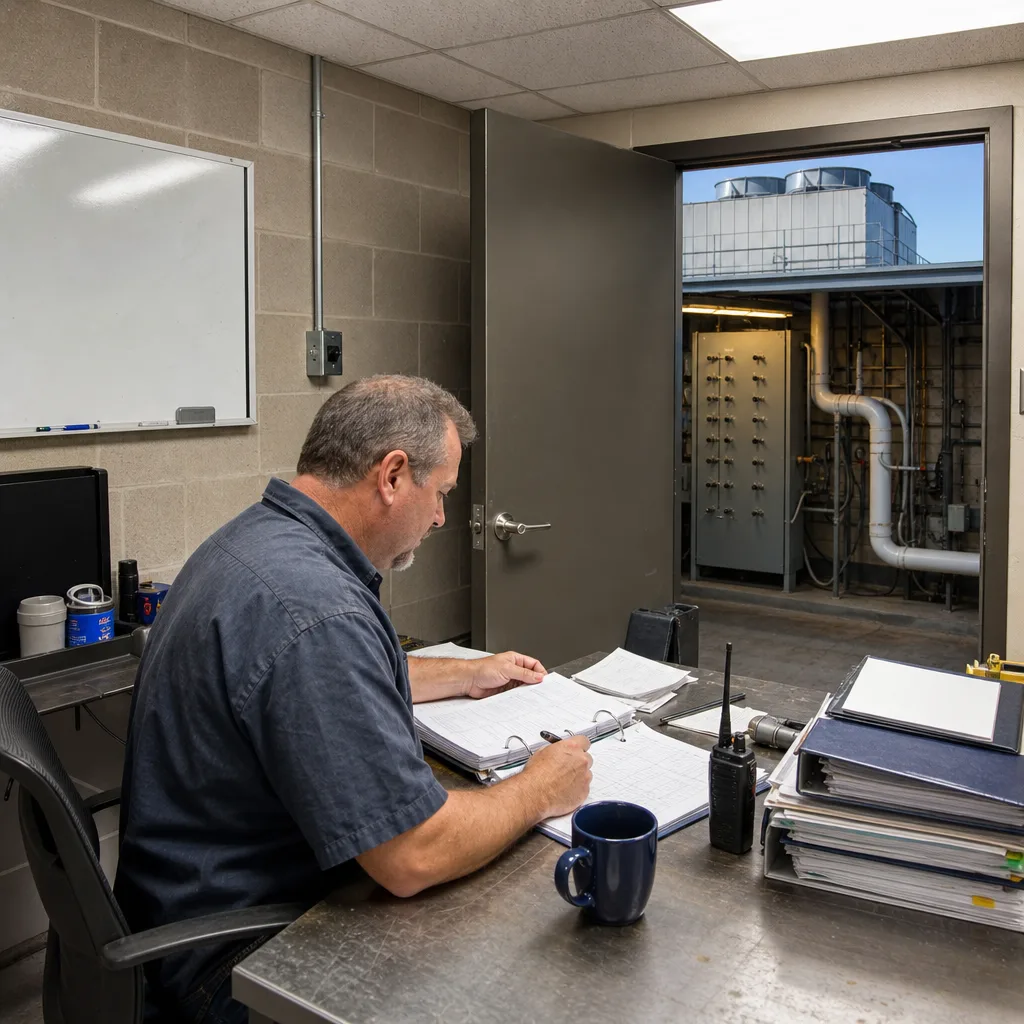
Picture how it goes with three separate contractors. The tower crew sets the new unit and leaves. The electrician can’t come until Thursday. The plumber shows up and finds the makeup line in the wrong spot. Your new tower sits on the roof doing nothing while your building runs warm, and everyone points at someone else. Every day of that gap is another day your cooling is down.
With one team, the people setting the tower also know where the wires and pipes need to land. Here’s what that changes for you:
- One shutdown window. The mechanical, electrical, and plumbing work can be planned into the same stretch, so your cooling is offline for as short a time as possible.
- One number to call. If something’s off at startup, you don’t have to figure out whose problem it is.
- A fuller quote. Electrical and plumbing changes aren’t in our standard price unless your quote says so. One company that can price the tower and those changes together means you see the whole number before work starts.
- One crew for the inspector. The people who did the work are the people answering the questions.
On the electrical side, a tower usually needs a power feed and a disconnect for the fan motor, power to the circulation pump, and controls that tell the fan when to run. If your new tower has a bigger motor than the old one, the existing wire or breaker may not be sized for it. You want that caught on paper, not when a breaker trips on the first 100-degree afternoon in August.
On the plumbing side, the makeup water line, the drain, and the supply and return piping all have to line up with the new tower’s connections. If the new footprint doesn’t match the old one, those lines may need to move. In Dallas, where hard water already works against your tower, a makeup line and drain that are set up right make water treatment easier to keep up with.
Your tower is also only one piece of the system. Our team handles chiller installation, pump installation and repair, and building automation as well, so the equipment your tower feeds doesn’t have to be someone else’s mystery.
Xtreme Air Services is a licensed and insured HVAC, plumbing, and electrical contractor with licensed, background-checked technicians. We’re a Trane Comfort Specialist with a 4.8-star reputation across more than 2,900 reviews on Google, Angi, and HomeAdvisor. That’s one accountable local team for your tower and every connection it depends on.
Call 469-269-6373
Frequently Asked Questions
Common questions about Cooling tower installation
How long does a cooling tower installation take once work starts?
Most of the heavy lifting happens before the old tower ever comes down, so the actual shutdown window is kept as short as possible. The crew preps the site, checks structure and access, pulls any permits, and lines up a crane if needed, all before disconnecting your current tower. That planning is what keeps your building’s cooling offline for the shortest time possible, instead of guessing once the old unit is already drained.
Can my cooling tower keep running while a new one is being installed?
If your old tower is still holding on, the swap can usually be scheduled for a cooler stretch of the year when your building needs less cooling. That makes a short shutdown easier to live with. If your tower is already failing, ask about a plan to keep your most critical spaces cool during the work, since Dallas summers keep towers running hard for months at a time.
Does a new cooling tower need its own water treatment plan?
Yes, water treatment should start on day one, not months later. North Texas water is hard, and that mineral content builds scale on fill and in the basin fast, even on a brand-new tower. Before the crew leaves, confirm who is handling ongoing treatment and how often the tower will be checked, so scale doesn’t start working against you right away.
Ready to Get Started?
Call (469) 269-6373 Today, Get Service Today.