


Boiler Repair in Plano: Get the Right Fix, Not a Guess
Residential and commercial boilers repaired by finding the part that failed – and the system tested before we leave.
What’s Covered on This Page
- Furnace or Boiler: Confirm What You Have Before You Call
- Signs Your Boiler Needs Repair
- How a Boiler Repair Visit Works
- What Boiler Repair Costs and What Changes the Price
- Questions to Ask Before You Hire for Boiler Repair
- Does a plumber fix boilers, or do I need an HVAC company?
- Is zip code 75074 part of Plano, Texas?
Furnace or Boiler: Confirm What You Have Before You Call
Here’s something that trips up a lot of folks. Most homes in North Texas heat with forced air, which means a furnace or a heat pump, not a boiler. So if you’re searching for boiler repair, take a quick look first. It’ll save you time on the phone, and it means we can send the right parts with the right tech.
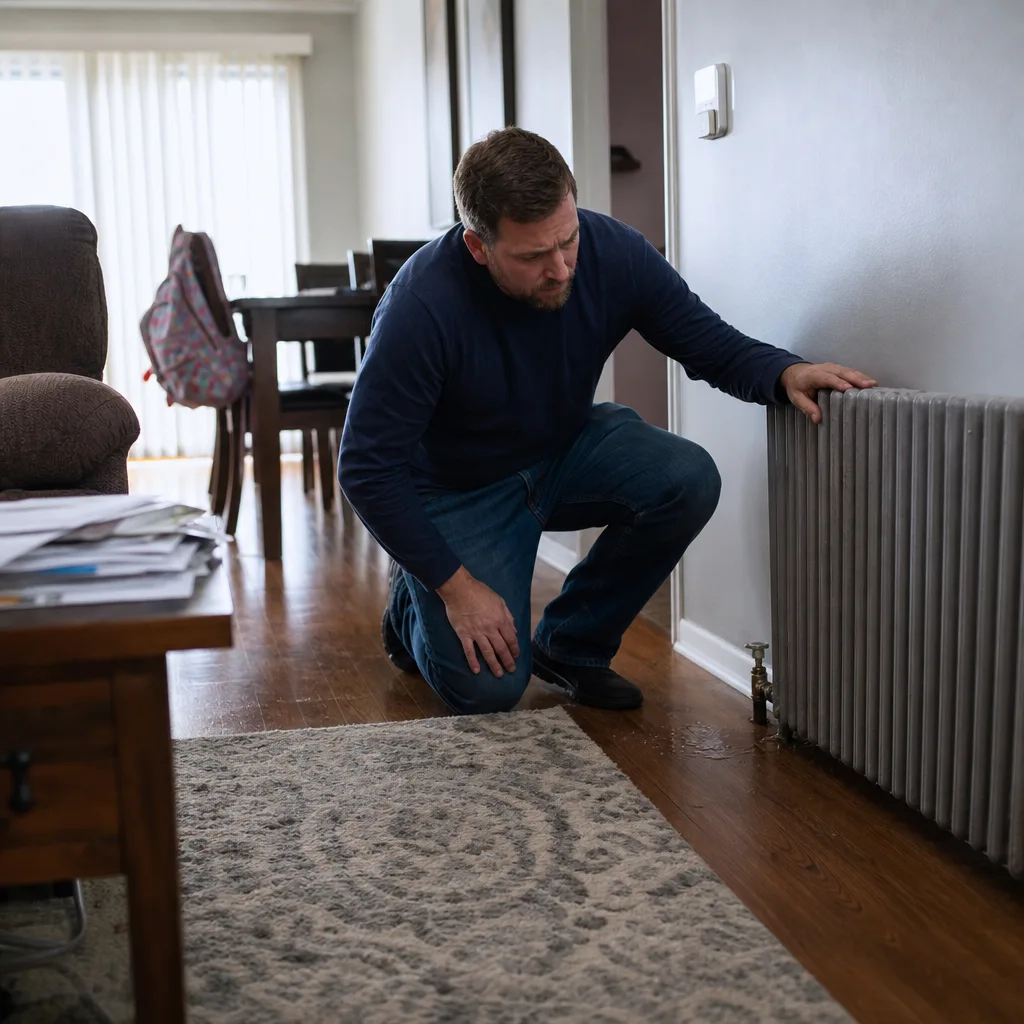
The easiest test is your vents. Hold your hand up to a floor or ceiling register when the heat is on. If warm air is blowing out, you’ve got a furnace or heat pump. Boilers don’t blow air. They warm your space with hot water, so the heat comes off something solid, like a radiator, a metal baseboard strip along the wall, or a warm floor.
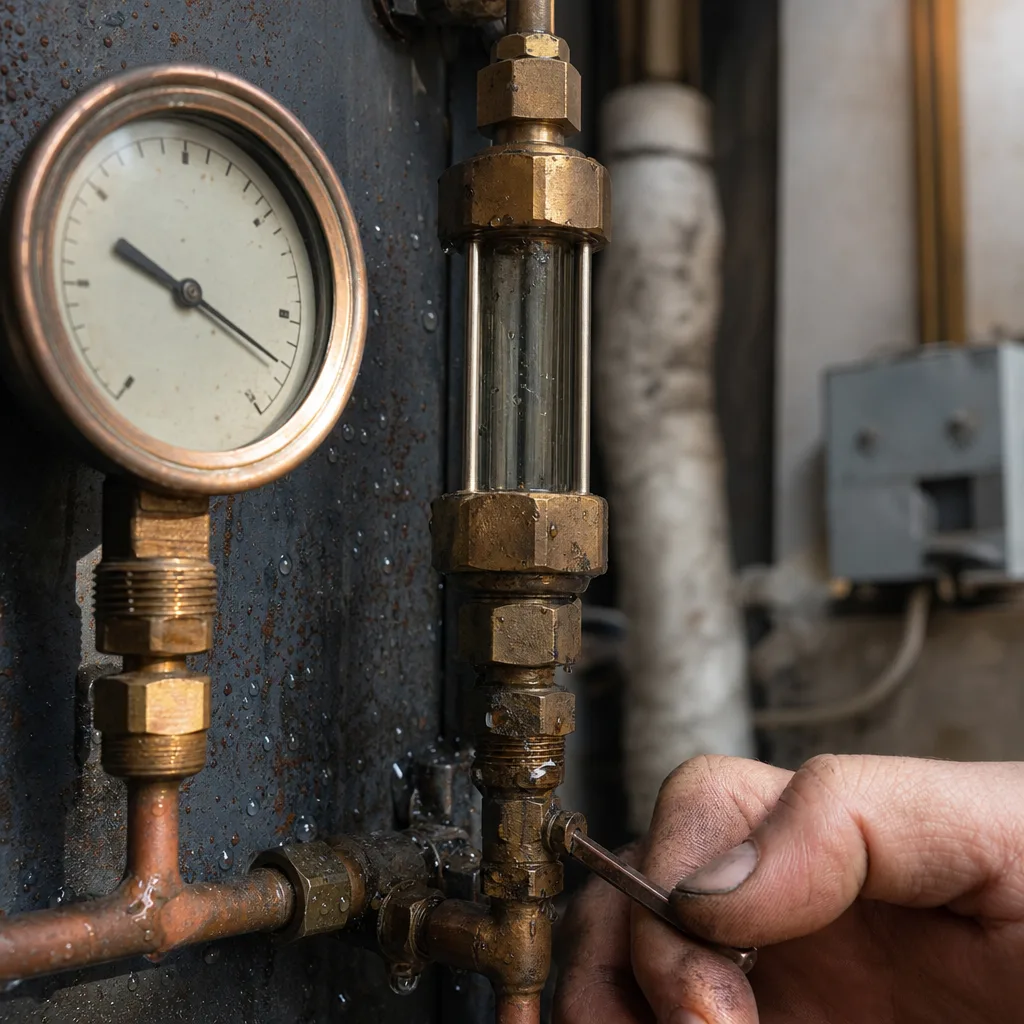
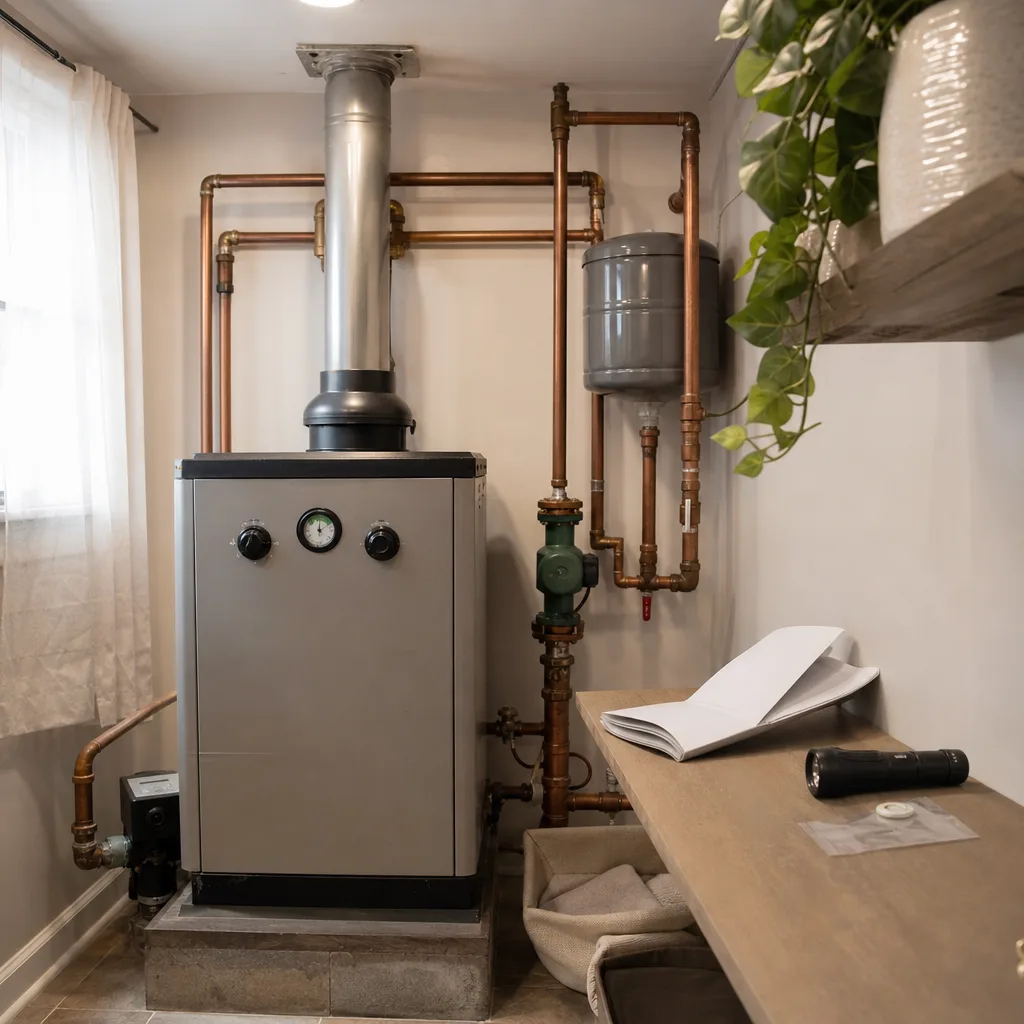
Next, look at the equipment itself. A boiler usually has a few things a furnace doesn’t:
- A round pressure gauge on the front or side, often reading pressure and temperature together
- Water pipes running in and out, and no big metal ductwork attached
- A small pump on one of the pipes that moves the hot water through the system
- A small tank on the piping, called an expansion tank, that gives the water room to grow as it heats
A furnace looks different. It’s a metal cabinet, usually in the attic, a closet, or the garage, with wide ducts coming off the top or sides. You’ll often find an air filter slot nearby too.
One more mix-up is common. A tall tank in your garage that feeds hot water to your showers and sinks is almost always a water heater, not a boiler. They both heat water, but a water heater doesn’t heat your rooms. If that’s the unit giving you trouble, it’s a different repair.
Business owners are more likely to have a true boiler, especially in older commercial buildings or places with radiant floor heat. If you manage a building and you’re not sure what’s in the mechanical room, the gauge and pipe checks above still work.
If it turns out you have a furnace, that’s fine. Our team handles gas furnace repair too, so you’re still calling the right people. You don’t need to have it all figured out. Just tell us what you see.
When you call, these few details help us plan the visit. Tell us whether air blows from your vents or the heat comes from radiators or baseboards. Read off the brand name on the unit’s label if you can see it. If there’s a pressure gauge, tell us the number it shows. Then describe what’s going on, like no heat at all, some rooms cold, odd noises, or water around the unit. You don’t need to open any panels or touch anything to gather this. Looking is enough.
Signs Your Boiler Needs Repair
Most boiler trouble shows up as a change you can notice. The heat isn’t as strong as it was, a sound is new, or there’s water where there shouldn’t be. You don’t need to know which part failed. You just need to notice what changed and when it started.
Here are the signs that usually mean it’s time for a repair visit:
- No heat at all. The thermostat is calling for heat, but the radiators or baseboards stay cold.
- Some rooms warm, others cold. One radiator heats up fine while another down the hall barely gets warm. Sometimes a radiator is warm at the bottom and cool at the top.
- New noises. Banging, knocking, gurgling, or a rumble that sounds like a kettle about to boil. A boiler should run with a low, steady hum.
- A gauge reading that keeps moving. If the pressure gauge you checked earlier keeps dropping, or keeps creeping higher than it used to sit, something in the system isn’t holding steady.
- Water around the unit or along the pipes. Drips, damp spots, rust stains, or a small puddle under the boiler or near the pump.
- A burner or pilot that won’t stay lit. The boiler starts, shuts off, and tries again. Or a warning light or error code shows on the front panel.
- Short cycling. The boiler clicks on and off every few minutes instead of running long, even cycles.
- Heat that takes forever. Your home used to warm up in a reasonable time, and now it drags all evening.
A higher gas bill with no change in how you use your heat can point the same way. A boiler that’s working harder to do the same job often has a part that’s wearing out.
Some signs are easy to brush off. A little gurgle or one cool radiator doesn’t feel urgent in early winter. In North Texas, though, cold fronts can roll in fast. A small problem you’ve lived with for weeks can turn into a no-heat night when the temperature drops overnight. It’s much easier to fix a weak part on a mild afternoon than in the middle of a freeze.
Before you call, check two simple things. Make sure your thermostat is set to heat and set above the room temperature. If it runs on batteries, try fresh ones. Then make sure the boiler’s power switch is on and the breaker hasn’t tripped. If either of those was the problem, you just saved yourself a service call, and that’s a good thing.
If the thermostat and power are fine and you’re still seeing any of the signs above, it’s a repair. Write down what you noticed. Note whether the sound comes when the boiler starts or while it runs, which rooms are cold, and what the gauge reads. Those details point a technician toward the cause faster. That helps get your heat back on and the job done right the first time.
For businesses, pay attention to tenant or staff complaints about uneven heat. Those reports often show up before anyone looks at the boiler. Catching them early helps keep your building comfortable and your day running.
How a Boiler Repair Visit Works
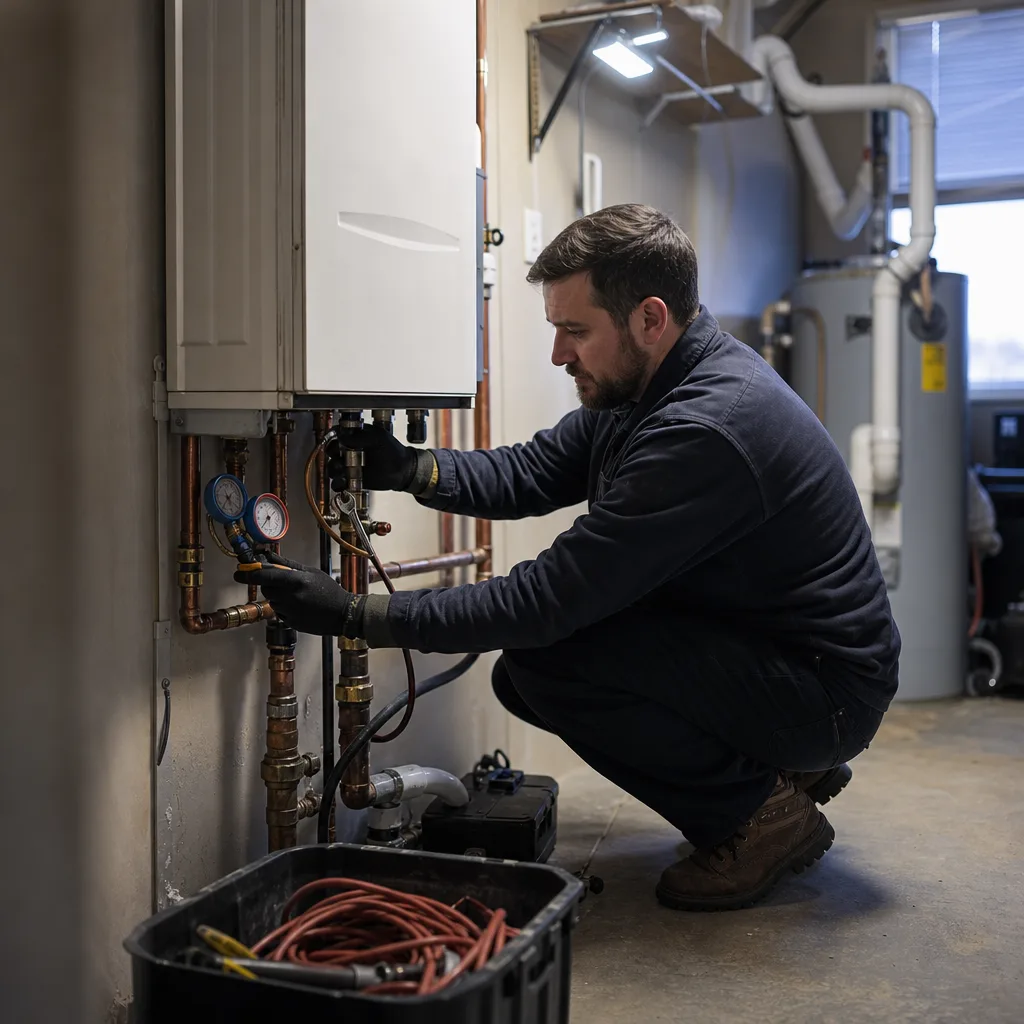
A boiler repair visit has one goal: find the part that failed, fix it, and make sure your heat works again before we leave. Most calls come down to a single common failure that gets fixed on the first visit. Here’s what that looks like from your side, step by step.
It starts with a phone call. You’ll talk to a real person, not a menu. Share the details you gathered earlier, like what the gauge reads, which rooms are cold, and what the boiler is doing. Same-day service is available. Our office is at 5055 W Park Blvd in Plano, and nights and weekends cost no extra. So if a cold front blows in on a Saturday night, you’re not paying more just because of the clock.
A licensed technician comes to your door. Our team members are background-checked and drug-tested, and they treat your home with respect. The tech’s first job is to find out why the boiler stopped doing its job.
Once the tech finds the cause, you get a price before any work starts. We use upfront flat-rate pricing, and you approve the price first. There’s no meter running while the tech works, and no surprise line items at the end. If you’d rather think it over, that’s your call.
Here’s how the numbers break down for this kind of job:
- Service-call fee: $26 to $99. It’s credited toward the repair if you go ahead with Xtreme Air Services.
- Most common boiler repair, one failed part found and fixed: $300 to $1,100.
- Typical range for boiler repairs overall: $300 to $2,000.
- Included in the repair price: diagnosis, labor, the standard replacement part, testing, and cleanup.
- Not included unless quoted separately: extra failed parts, major components, code upgrades, or permits.
Where your job lands in that range depends on a few things. These include how much failed, what the part costs and how easy it is to get, the age and brand of your boiler, and whether more than one part gave out. An older boiler with a hard-to-find part will cost more than a newer one that needs a common part. If the tech finds a second problem along the way, you’ll hear about it and see a price before anything changes.
After the repair, the tech runs the system and checks that it’s heating the way it should. That means radiators or baseboards warming up and the boiler running smoothly. Then the work area gets cleaned up. You shouldn’t find old parts or a mess left behind.
For business owners, the same steps apply. You’ll get a clear price you can approve before work starts, and the goal is to get your building warm again so your tenants, staff, and customers aren’t left in the cold.
Need help with Boiler repair?
Call Today, Get Service Today. Xtreme Air Services — West Plano is ready to help.
What Boiler Repair Costs and What Changes the Price
Your repair price comes down to two things: what failed and how hard the part is to get. We laid out our ranges and what’s included in the visit section above. Here’s how to make sense of a quote, whether it’s ours or someone else’s.
Boiler repair is usually priced one of two ways. Some companies charge by the hour, plus parts. With that model, your bill grows if the job runs long, if the tech has to leave to pick up a part, or if a fitting is stuck. Other companies use flat-rate pricing. You see one price for the job and approve it before any work starts. We use upfront flat-rate pricing, so a stubborn valve doesn’t change what you pay. Whichever company you call, ask which model you’re getting before anyone opens up the boiler.
These are the things that push a boiler repair price higher:
- A hard-to-find part. Older boilers and less common brands can mean a pricier part or a wait while it’s ordered.
- More than one failure. Sometimes one problem leads to another, like a slow leak that drips onto the controls. Each failed part is its own repair.
- A major component. The heat exchanger is the part that passes heat from the flame to the water. A part like that costs far more than a sensor or a valve, and it’s quoted separately.
- Code or permit work. If the fix means updating venting or gas piping to meet current code, that gets quoted separately. You’ll see it as its own line, so it doesn’t get buried.
The thing that keeps a price down is simple. It’s one common part caught early, before it causes trouble for the parts around it. The time of day won’t push your price up either. We charge no extra for nights or weekends.
So should you repair your boiler or replace it? A big quote doesn’t automatically mean you need a new boiler. Ask the tech to walk you through both options if your boiler is older, has needed several repairs lately, or needs a major component. A fair answer weighs the repair price against how much life the boiler likely has left. It doesn’t just push the bigger sale. If you do face a larger repair or a replacement, financing is available, so you don’t have to put it off.
Before you approve work from any company, ask these questions:
- Is this one flat price, or hourly plus parts?
- Does the service-call fee go toward the repair if I go ahead?
- What does this price include, and what would cost extra?
- If you find a second problem, will I see a new price before you start on it?
- Will this job need a permit, and is that included in the quote?
If you manage a building, add one more question: how quickly can the part be sourced? A boiler that’s down for days costs you in tenant complaints and lost work time. That can matter more than a small gap between two quotes. Clear answers to these questions tell you a lot about who you’re letting into your home or building.
Watch Our Video
See How We Handle Boiler repair in Plano
Xtreme Air Services — West Plano
Questions to Ask Before You Hire for Boiler Repair
Price matters, but it’s not the only thing to check. A boiler runs on gas, water, and electricity all at once, so you want someone who’s licensed, knows hot-water heat, and won’t leave you guessing. These questions take about two minutes on the phone, and the answers tell you a lot.
- Are you licensed in Texas, and what’s your license number? A real contractor will give it to you right away. Ours is HVAC License #TACLA29023C, and you can look it up with the Texas Department of Licensing and Regulation.
- Are you insured? If something goes wrong in your home, you shouldn’t be the one paying for it. We’re licensed and insured.
- Do you work on boilers, or mostly furnaces? Most North Texas homes heat with forced air, so plenty of heating companies rarely open up a boiler. Ask directly whether they repair hot-water systems with radiators, baseboards, or floor tubing.
- Who’s coming to my door? You’re letting a stranger into your home. Our technicians are background-checked and drug-tested before they ever ring your bell.
- Will you look at safety while you’re here? A gas boiler that isn’t burning or venting right can put carbon monoxide in the air. Ask if the company can check for it. We offer carbon monoxide testing if you want peace of mind.
- What if the problem isn’t the boiler itself? Sometimes the trouble is a gas line, a pump, or the wiring that feeds the unit. A company that covers HVAC, plumbing, and electrical can handle all of it without sending you to a second contractor.
- When can you get here, and does that change the price? If your heat quits during a cold front, waiting until Monday is a long, cold weekend. We offer same-day service, and nights and weekends cost no extra.
Then check what other people say. Read the company’s reviews and look for patterns. Did they show up when they said they would? Did they explain the problem in plain words? Did people feel treated fairly? Our team has earned a 4.8-star rating across more than 2,900 reviews on Google, Angi, and HomeAdvisor. That comes from your neighbors across North Texas, not from us.
A few answers should make you pause. Be careful if a company won’t give you a license number, gives you a firm repair price over the phone before anyone has seen the boiler, or pushes you to replace it on the spot. A good tech finds the cause first, then talks you through your options.
If you manage a building, ask one more thing. Can they come back for routine boiler servicing so you’re not stuck with surprise breakdowns every winter? A company that already knows your mechanical room can get your heat back on faster next time.
Call 469-217-9095
Frequently Asked Questions
Common questions about Boiler repair
Does a plumber fix boilers, or do I need an HVAC company?
A boiler problem usually calls for an HVAC technician, not a plumber. Boilers burn gas and run on electrical controls, so you want someone who diagnoses heating systems, not just pipes. Our team handles gas furnace repair and boiler repair, so you’re calling the right people either way.
Is zip code 75074 part of Plano, Texas?
Yes, 75074 is one of the zip codes that covers Plano, Texas. If you’re in that area and your heat stops working, same-day service is available with no extra charge for nights or weekends.
Ready to Get Started?
Call (469) 217-9095 Today, Get Service Today.